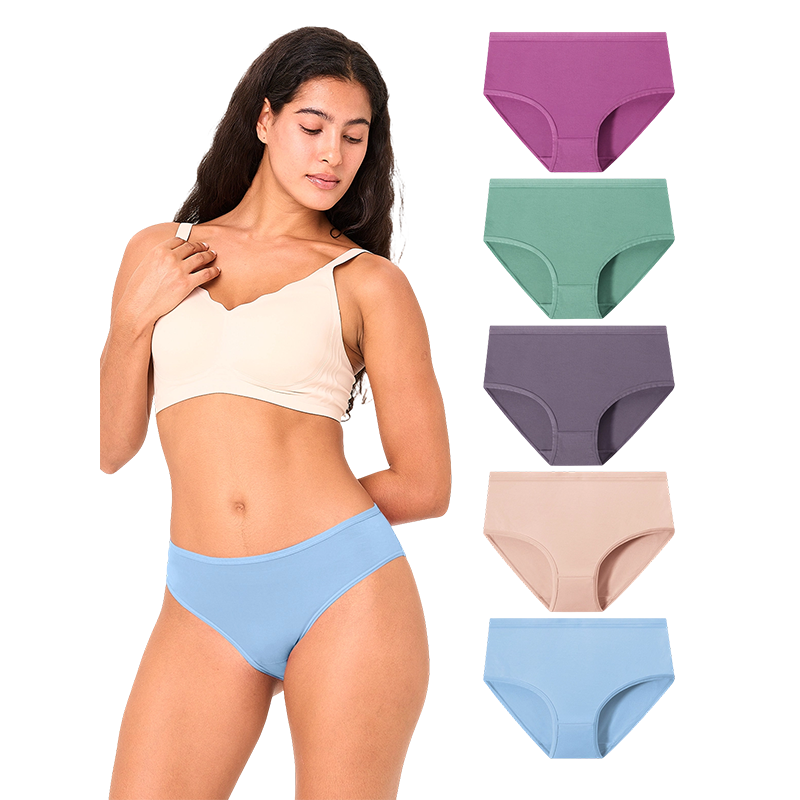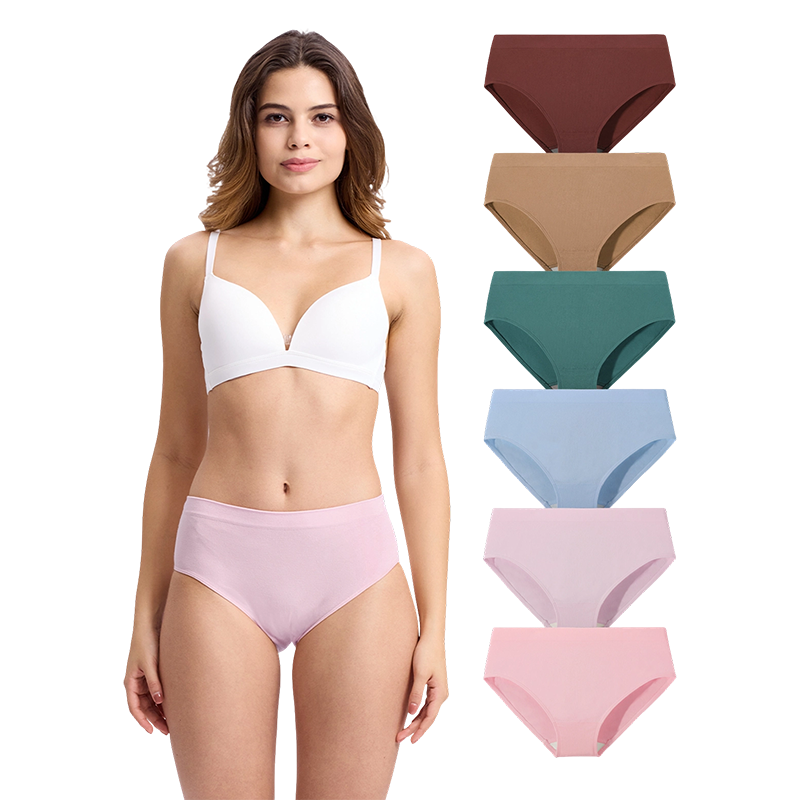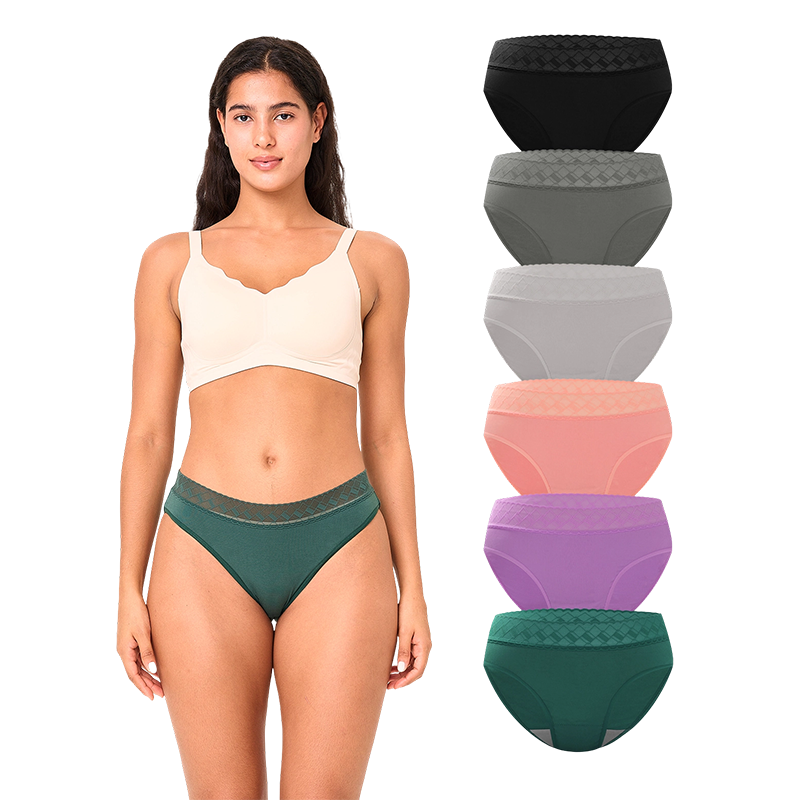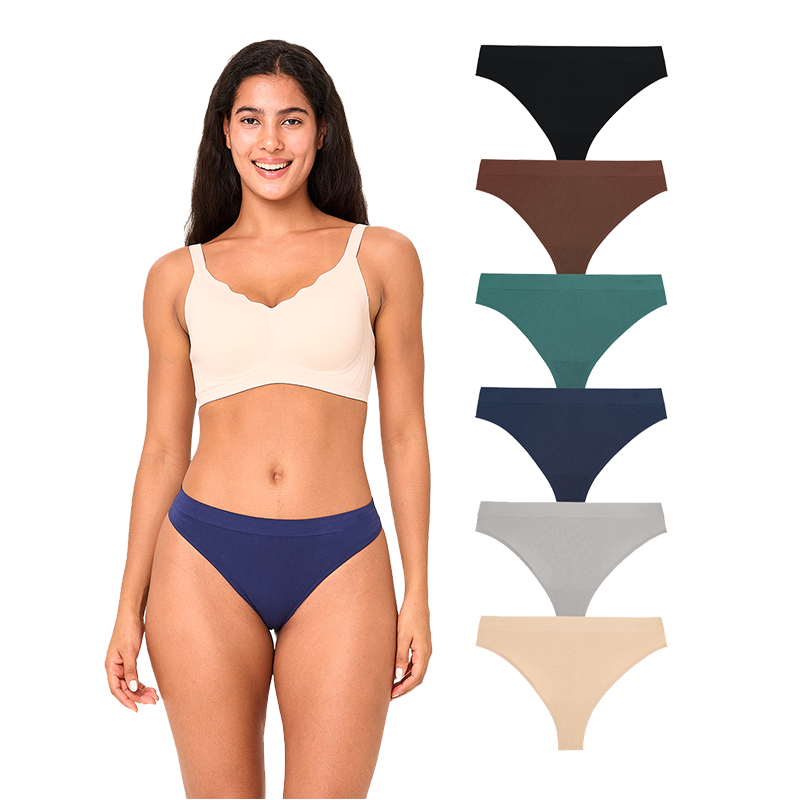
Content
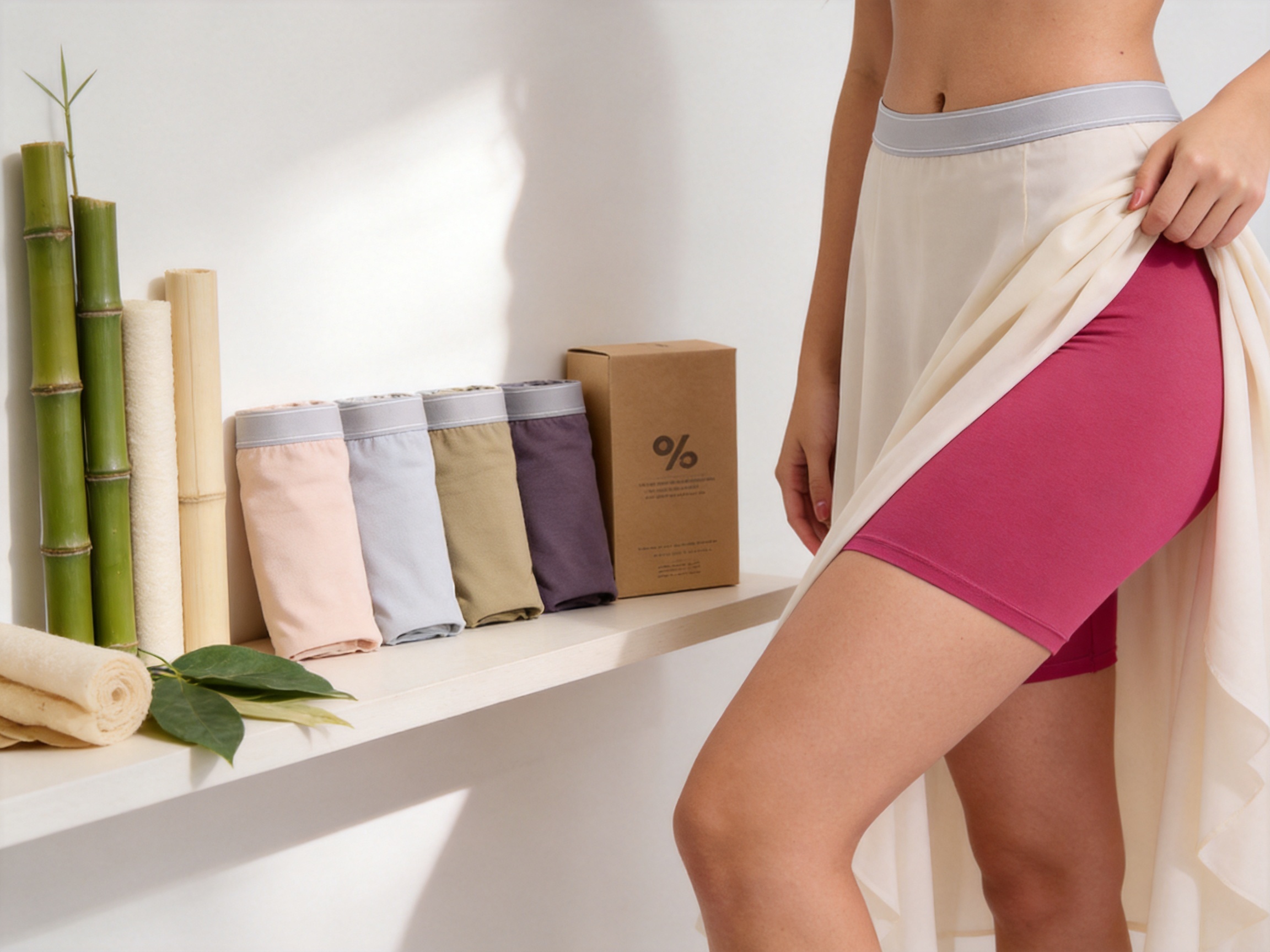
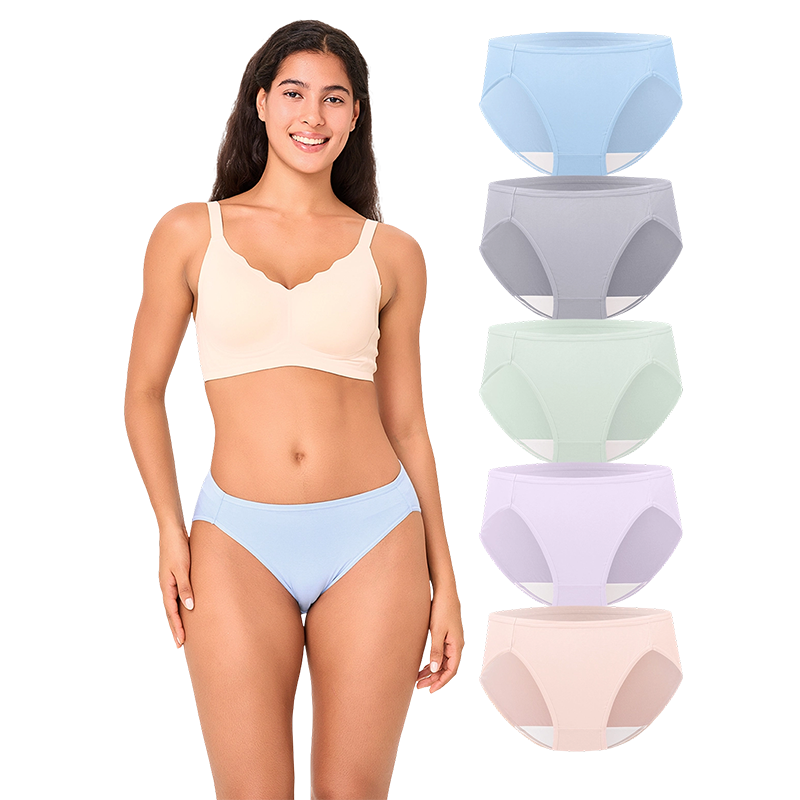
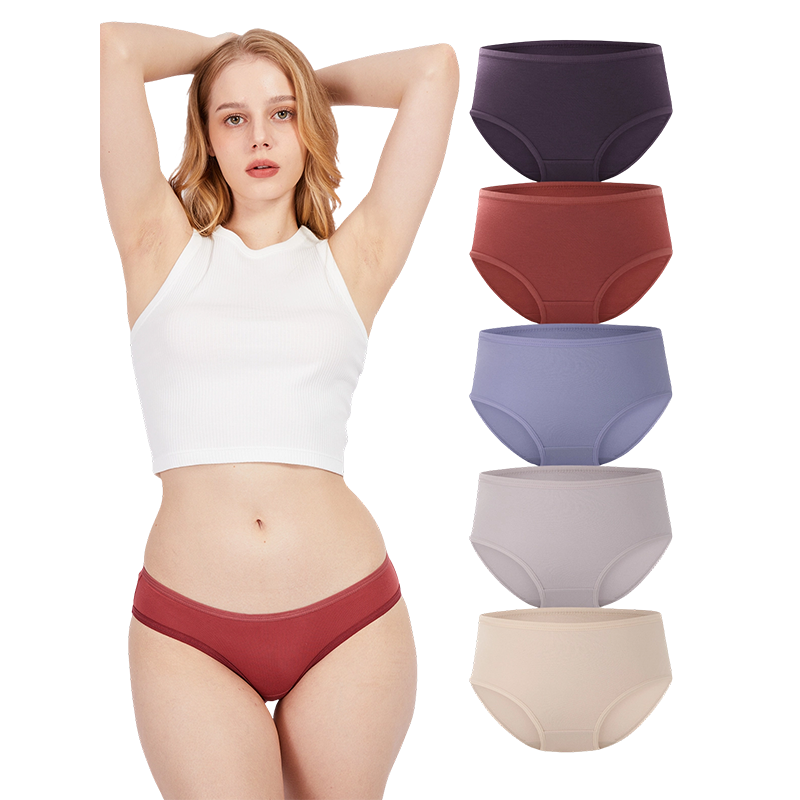
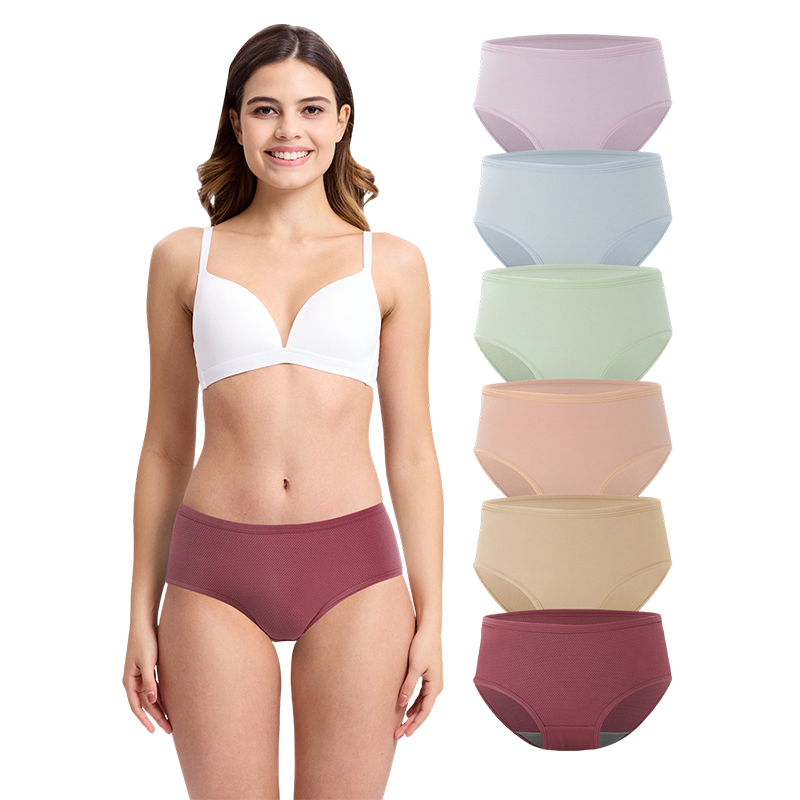
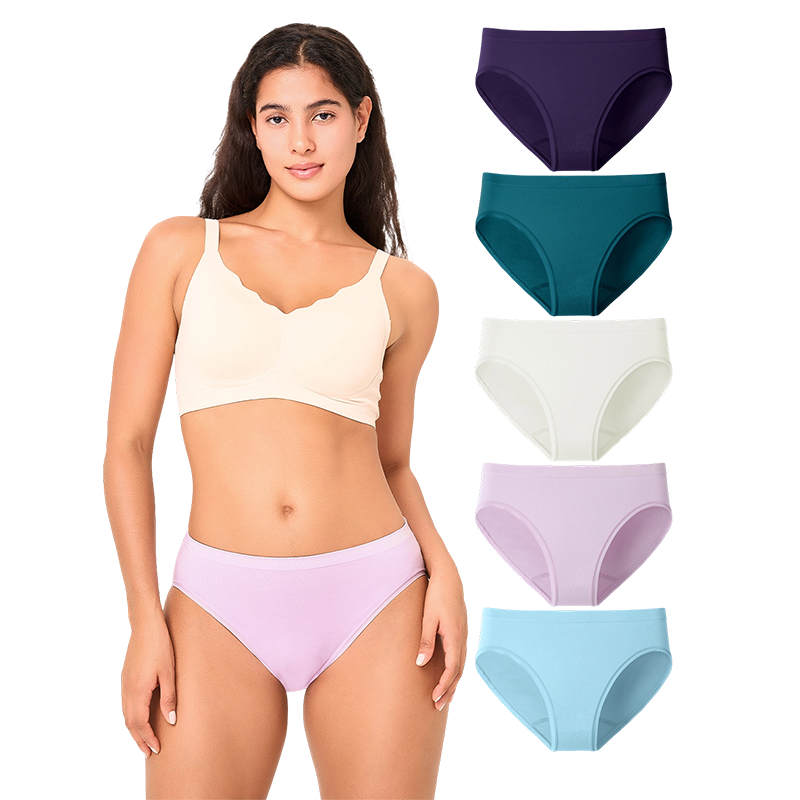
Women’s boxer boyshorts made from 92% viscose made from bamboo and 8% spandex offer a practical combination of breathability, stretch, coverage, and everyday comfort. This design uses a high-rise waistband, a 6–7 inch inseam, tagless construction, and an all-over coverage profile to help reduce thigh chafing and provide reliable wear under skirts, dresses, trousers, and loungewear.
For buyers seeking a premium breathable underwear supplier, this product is particularly suitable for OEM and ODM programs that require sustainable fiber content, FSC-certified sourcing, flexible customization, and dependable production support. The manufacturer behind the product has operated in the textile industry since 2001 and provides underwear research, manufacturing, sales, and customized product services for customers in Europe, North America, and China.
Compared with basic cotton briefs, short-leg underwear, and poorly fitted synthetic boyshorts, these bamboo viscose boxer boyshorts are positioned around four practical advantages: improved airflow, a smoother feel against the skin, more secure coverage, and better resistance to movement-related discomfort. Their value is strongest in collections aimed at women who want modest coverage without the bulk or restrictive feel of traditional shorts.
| Product element | Specification or benefit | Commercial relevance |
|---|---|---|
| Product type | Women’s boxer boyshorts | Suitable for everyday, dress, lounge, and anti-chafing underwear ranges |
| Main fabric | 92% viscose made from bamboo, 8% spandex | Combines a soft hand feel with stretch and recovery |
| Waist design | High-rise, wide waistband | Sits at the natural waist and supports a secure fit |
| Leg length | Approximately 6–7 inch inseam | Provides additional thigh coverage and helps prevent chafing |
| Construction details | Tagless and seamless design | Reduces common sources of irritation and visible lines |
| Certification reference | FSC certified | Supports responsible fiber sourcing communication |
| Supply model | OEM and ODM production | Suitable for private labels, retailers, and customized collections |
Women’s underwear shoppers increasingly look for more than minimal fabric and a decorative silhouette. They want garments that remain comfortable through commutes, workdays, travel, light activity, and long periods of sitting. Boxer boyshorts answer that need by extending coverage across the hips and upper thighs while maintaining the familiar function of underwear.
The design is especially useful for women who dislike narrow leg openings. Conventional briefs can shift upward during walking or sitting, leaving the inner thigh exposed to friction. A longer boxer-style leg distributes coverage over a larger area and creates a smoother layer beneath clothing. The 6–7 inch inseam in this product is long enough to address common chafing concerns while remaining more discreet and lighter than a separate pair of shorts.
The high-rise waistband also changes how the garment feels during wear. Instead of ending below the abdomen, it sits at the natural waist and creates a stable upper edge. A wide waistband can spread pressure over a broader area than a narrow elastic band, helping the underwear stay in place without relying on excessive tightness.
This combination gives the product several retail positions. It can be marketed as daily women’s underwear, anti-chafing underwear, breathable bamboo underwear, high-waisted boyshorts, dress-support underwear, or a comfort-focused alternative to traditional briefs. A retailer can choose the most relevant positioning according to its customer base without changing the core product architecture.
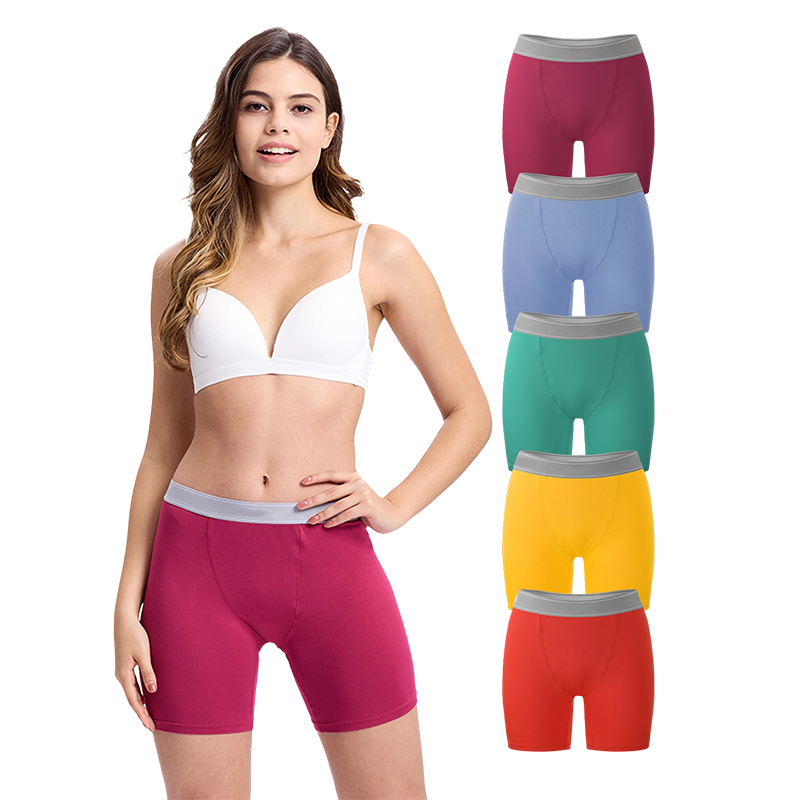
Women’s Boxer Boyshorts
The fabric composition is 92% viscose made from bamboo and 8% spandex. This ratio gives the product a high proportion of bamboo-derived cellulosic fiber while reserving enough stretch fiber for body movement, fit retention, and recovery after wear.
Viscose made from bamboo is valued in underwear applications for its lightweight hand feel and smooth surface. These properties matter because underwear remains in continuous contact with sensitive areas of the body. Rough texture, bulky seams, stiff elastics, or poor moisture management can quickly turn a visually attractive garment into an uncomfortable one.
The smoothness of the fabric supports a clean next-to-skin experience. It also helps the garment layer more easily under skirts, dresses, wide-leg trousers, and fitted clothing. Buyers should still conduct their own fit and opacity testing for each color and size, but the lightweight fabric platform is well suited to close-fitting underwear.
The product information states that bamboo viscose can deliver up to 4.5 times more airflow than cotton. Airflow performance depends on yarn construction, fabric weight, knitting structure, finishing, garment fit, and testing method, so this figure should be used in marketing only with supporting test documentation. As a product benefit, however, the intended message is direct: the fabric is designed to feel light and breathable rather than dense and stuffy.
Breathability has practical value in several use situations. During warm weather, it can help reduce the heavy sensation associated with less air-permeable fabrics. During office work or travel, it can improve comfort when the wearer remains seated for long periods. Under skirts and dresses, it provides coverage without requiring a separate bulky underlayer.
Breathability should not be confused with a guarantee of dryness in every climate or activity level. Underwear performance depends on the wearer, garment fit, temperature, humidity, and movement. A responsible product description can state that the fabric is designed for lightweight airflow and fresh-feeling comfort while avoiding absolute claims.
Spandex supports stretch and recovery. In boxer boyshorts, this function is important because the garment must accommodate sitting, walking, bending, and changes in posture without losing its shape. The fabric needs enough flexibility to follow the body while returning toward its original dimensions after movement.
An appropriate stretch balance can also reduce the need for excessive waistband tension. When the fabric itself contributes to fit, the garment can feel secure without depending entirely on a tight elastic band. This is particularly useful in a high-rise design, where comfort around the waist is essential to repeat purchase.
Stretch performance should be verified through supplier testing and buyer sampling. Key checks include widthwise stretch, lengthwise stretch, recovery after repeated extension, seam behavior, pilling, colorfastness, and dimensional stability after washing. These checks help ensure that the initial fit remains consistent across the product’s usable life.
Design purpose: Each component of these boxer boyshorts addresses a specific comfort or fit concern rather than serving only a decorative function.
The high-rise waistband is designed to sit at the natural waist. This placement can provide a more secure feeling than low-rise underwear, especially when worn under high-waisted trousers, skirts, and dresses. It also creates a continuous layer across the lower abdomen and reduces the likelihood that the top edge will fall below the wearer’s preferred position.
The wide shape is important because it distributes contact across a wider section of the body. A narrow waistband can concentrate pressure into one line, while a wider band may feel more stable and less likely to roll when correctly sized. The final result depends on the elastic specification, fabric tension, waistband construction, and size grading, so these elements should be reviewed during product development.
The longer leg is one of the clearest differences between these boxer boyshorts and standard women’s briefs. It extends coverage over the upper thigh, where skin-to-skin contact can cause irritation during walking, exercise, hot weather, or extended wear.
Length also influences styling. A short-leg underwear garment can function as a discreet base layer under dresses and skirts, giving wearers greater confidence during movement. It may reduce the need for separate anti-chafing shorts, which makes the product easier to include in a compact travel wardrobe.
Buyers should evaluate leg opening pressure carefully. A longer inseam is useful only when the leg remains comfortable and does not bind. Product sampling should include walking, sitting, stair climbing, and repeated wash testing to confirm that the hem remains flat and does not ride upward.
Traditional sewn-in labels can create friction, bunching, and visual clutter. A tagless design removes the physical label from the back waist area, which is often exposed to repeated movement and pressure from outer clothing.
For private-label programs, tagless construction also creates a cleaner branding surface. Care information, size information, and brand identification can be handled through approved printed methods or other label solutions, subject to wash durability and regulatory requirements in the destination market.
The product information identifies a seamless design intended to reduce tags and friction and create a smooth feel. Seamless construction can help minimize hard edges and visible transitions under clothing. It is particularly attractive to customers who want a low-distraction base layer beneath fitted garments.
Seamless does not mean that every part of the garment is free from all structural transitions. Buyers should request a construction sample and review the waistband, leg openings, gusset area, and any joining points. The best production result combines smooth construction with reliable stretch recovery and sufficient durability.
| Alternative | Typical limitation | Potential advantage of bamboo boxer boyshorts |
|---|---|---|
| Basic cotton briefs | Less thigh coverage and possible bulk after absorbing moisture | Longer leg, lightweight bamboo viscose platform, and stretch recovery |
| Low-rise briefs | May shift below the natural waist or feel less secure with high-rise clothing | High-rise placement and wide waistband |
| Short-leg boyshorts | May provide limited protection against upper-thigh chafing | Approximately 6–7 inch inseam for extended coverage |
| Heavy synthetic underwear | Can feel warm or less natural against the skin | High proportion of bamboo-derived viscose and lightweight hand feel |
| Separate anti-chafing shorts | Adds another garment layer and may be too bulky for some outfits | Combines underwear function and thigh coverage in one garment |
This comparison is a product-positioning guide, not a universal claim that one fiber or silhouette is best for every wearer. Cotton, microfiber, modal, recycled synthetics, and other fabrics can perform well when properly engineered. The advantage of this product is the way several features work together: bamboo viscose softness, spandex stretch, a high-rise waist, longer legs, and smooth construction.
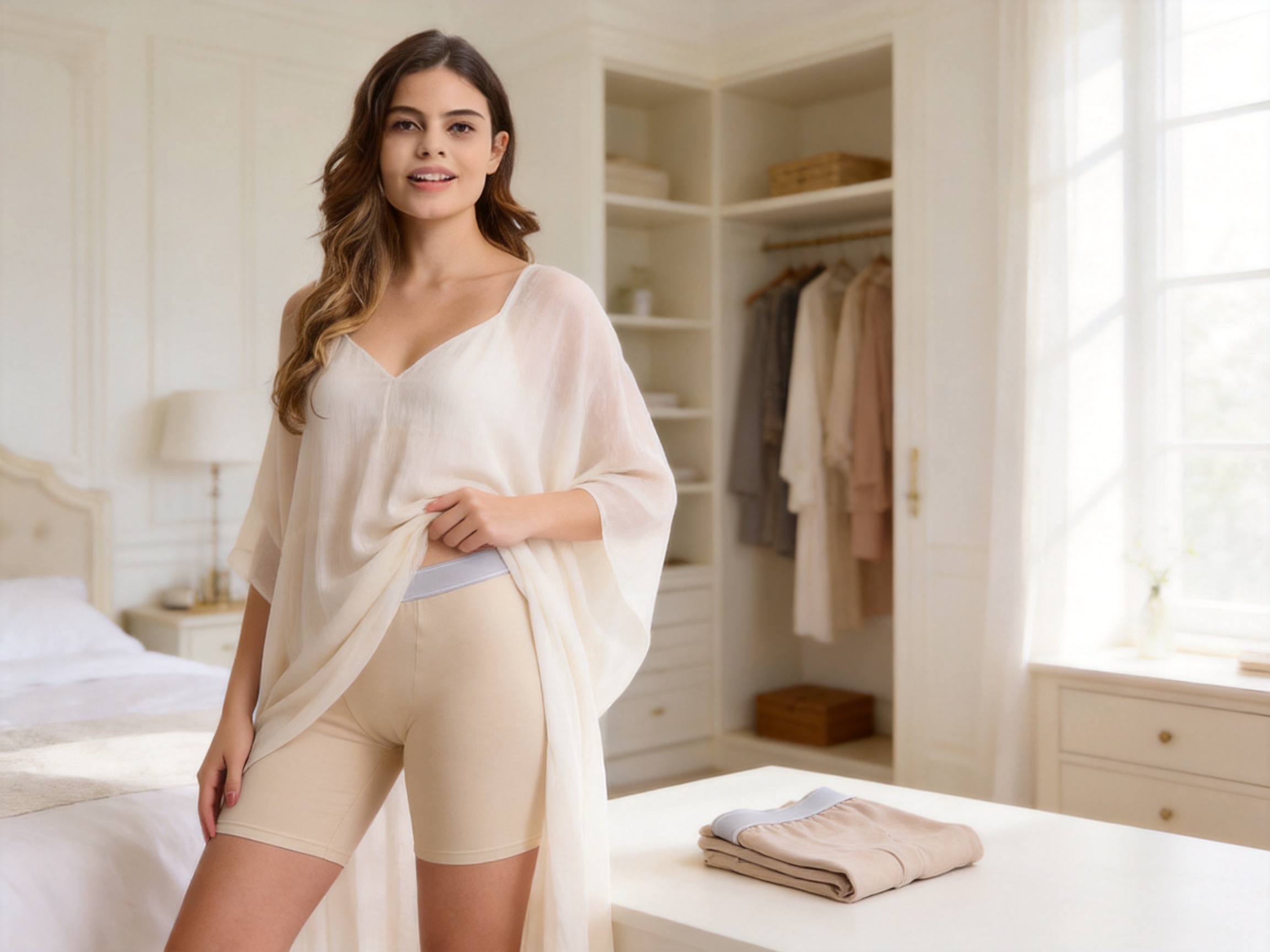
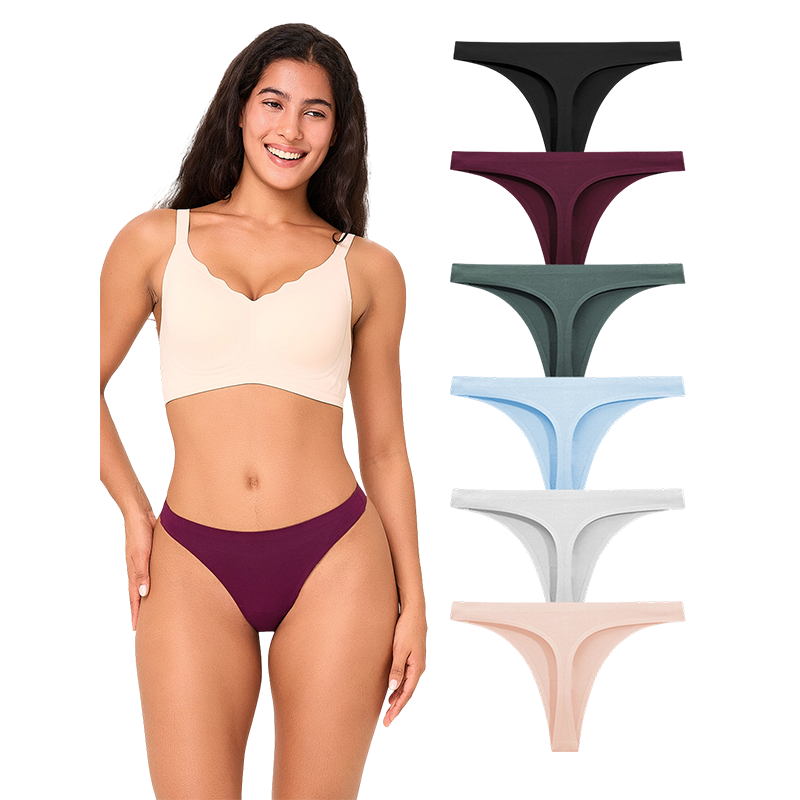
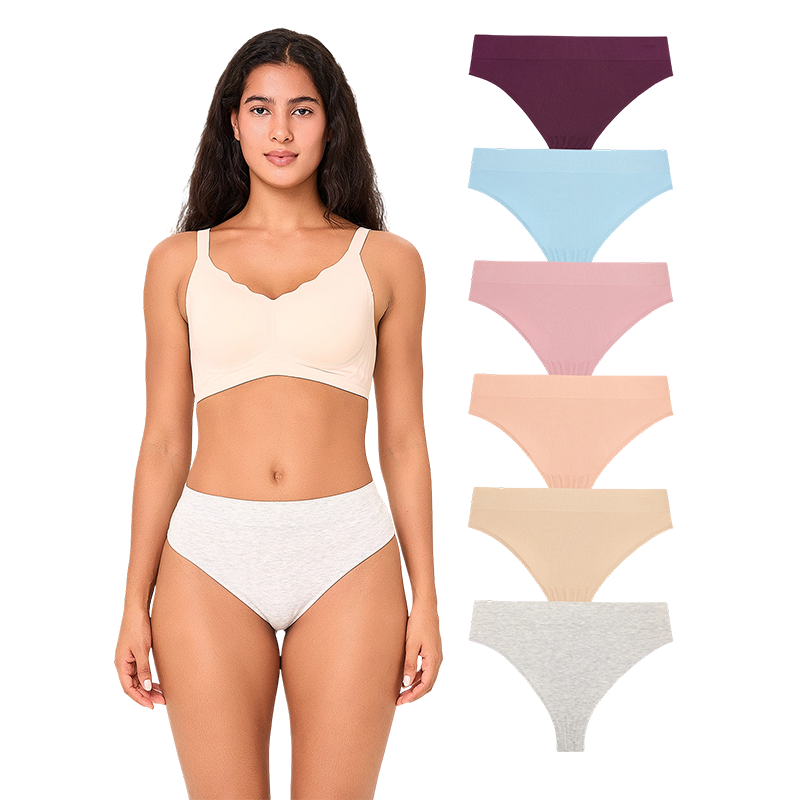
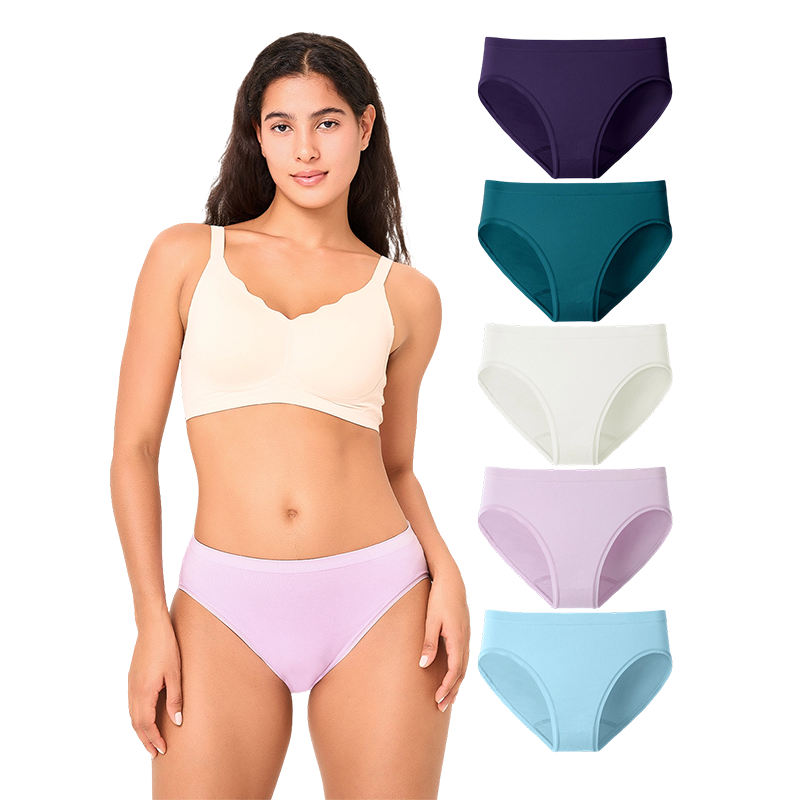
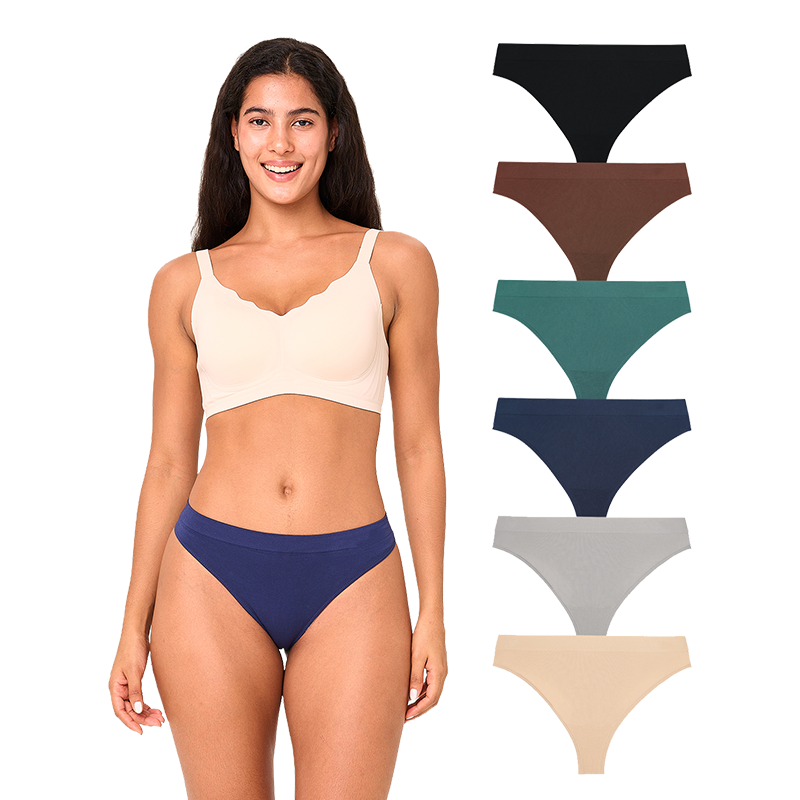
The product can serve as a core item in an everyday underwear collection. Its neutral functional design is easy to explain to customers: soft bamboo viscose, flexible fit, secure waist, and longer thigh coverage. Retailers can build a basic color assortment around black, white, nude, gray, or seasonal shades, subject to color development and minimum order requirements.
Women who wear skirts and dresses often want extra coverage without the appearance or weight of conventional shorts. These boyshorts are designed to stay in place throughout the day and can act as a discreet base layer. The longer leg length is especially relevant for customers who experience thigh friction when walking.
Travel customers value garments that perform multiple functions and pack efficiently. A boxer boyshort can provide underwear coverage, anti-chafing support, and a smoother underlayer under dresses. Bamboo viscose’s lightweight positioning also makes it appropriate for warm-weather product stories, provided the final fabric weight and care performance meet the intended market requirements.
FSC certification provides a useful sustainability point for collections that communicate responsible forest-based fiber sourcing. It should be presented accurately alongside the specific certificate scope and transaction documentation. Buyers should avoid treating one certification as proof of every environmental or social attribute. A credible product page can explain the certified fiber source while separately describing manufacturing standards, chemical management, labor compliance, and packaging choices.
The boxer silhouette is a strong option for fit programs that prioritize coverage and security. It can appeal to customers who prefer more fabric around the hip and thigh, as well as those who do not feel comfortable in narrow-cut briefs. To serve a broad customer base, brands should review size grading, rise measurements, leg opening measurements, and stretch behavior rather than relying only on standard size labels.
The manufacturing partner is Nantong Tianhong Textile Technology Co., Ltd., a textile company established in 2001 in Nantong, Jiangsu Province. Nantong is widely recognized as an important textile manufacturing area in China, giving the company access to an established regional production ecosystem, material suppliers, technical resources, and garment-industry experience.
The company specializes in the research, manufacturing, and sales of underwear products. This specialization matters for buyers because underwear production requires more than general garment capacity. Fabric softness, intimate fit, elastic control, seam comfort, gusset construction, hygiene handling, color consistency, and wash durability all need to be considered during product development.
The company provides OEM and ODM services. OEM production allows a buyer to bring its own specifications, brand identity, packaging requirements, and market positioning to a manufacturing program. ODM production can provide a faster starting point through an existing product concept that can then be adjusted in areas such as fabric, color, size range, waistband treatment, labeling, packaging, and fit.
Long-term partnerships with customers in Europe, North America, and China indicate experience working across different commercial expectations. These markets may differ in labeling rules, packaging requirements, sizing systems, testing documentation, consumer preferences, and sustainability language. A supplier familiar with international programs can help buyers identify the information that must be confirmed before bulk production.
A specialized underwear manufacturer can refine the product through repeated evaluation of fabric behavior and garment fit. For this boyshort design, development priorities may include waist comfort, leg stability, fabric opacity, stretch recovery, pilling resistance, colorfastness, dimensional stability, and resistance to seam distortion.
Buyers should ask for a structured development process. A practical sequence includes a design brief, fabric confirmation, first sample, fit review, revised sample, pre-production sample, testing, bulk approval, and final inspection. Each stage should record measurements and changes so that the approved sample remains the production reference.
The company emphasizes traceable supply chain management. For bamboo viscose underwear, traceability can cover the fiber source, yarn or fabric supplier, dyeing and finishing records, production batches, inspection documents, and shipment records. The depth of traceability should be confirmed for each order, especially when a buyer’s marketing claims depend on certified materials.
Traceability supports more consistent quality control. If a shade, hand feel, shrinkage result, or performance issue appears during production, batch records can help identify the relevant material lot and processing stage. This is valuable for brands that intend to reorder the same style across several seasons.
The company reports product or facility-related certifications and standards including FSC, OCS, OEKO-TEX 100, GOTS, WRAP, and BSCI. The precise scope of each certificate should be verified before it is used in commercial claims. Certifications can apply to different parts of a supply chain, different materials, or different facilities, and they may have expiration dates and transaction requirements.
FSC is relevant to responsible forest-based materials. OCS and GOTS relate to organic content and processing requirements when the applicable product and supply chain meet the relevant standard. OEKO-TEX 100 focuses on harmful-substance testing for certified articles. WRAP and BSCI relate to social compliance systems, although buyers should confirm the specific audit status and applicable facility.
For a professional sourcing program, certificates should be treated as working documents rather than decorative marketing badges. Buyers should request current copies, certificate numbers where applicable, scope information, transaction certificates when required, and confirmation that the production facility and material used for the order are covered.
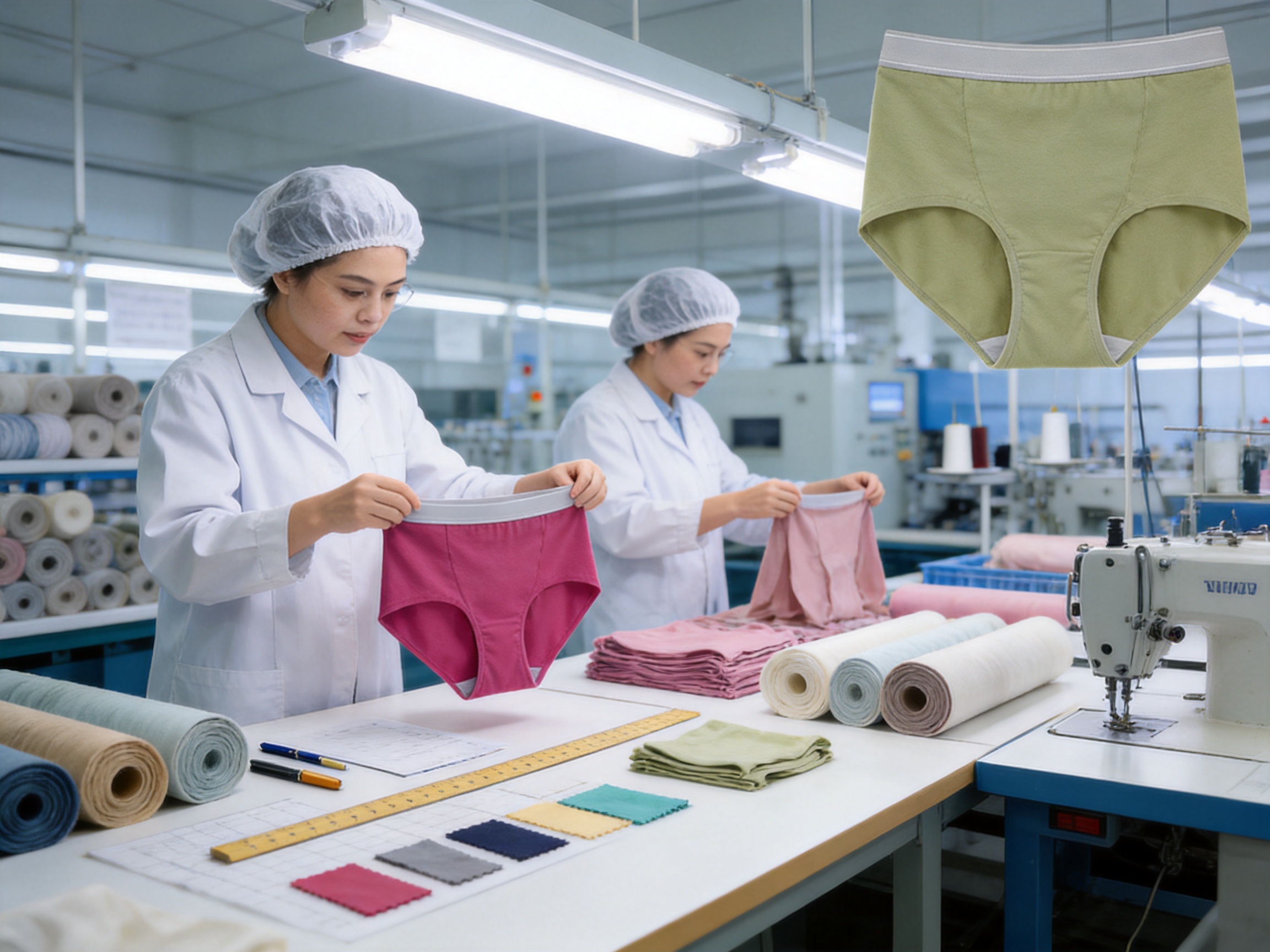
A premium breathable underwear program needs quality control at material, production, and finished-garment stages. The following checklist provides a useful framework for buyers developing this product.
Confirm the stated composition of 92% bamboo-derived viscose and 8% spandex through supplier documentation and, where required, independent laboratory testing. Review fabric weight, width, stretch, recovery, color consistency, pilling performance, and dimensional stability. The approved fabric should be clearly identified by article number and batch reference.
Measure the waist, hip, front rise, back rise, inseam, leg opening, gusset width, and overall length against the approved specification. Measurements should be taken according to a consistent method because stretch garments can produce different results depending on whether they are measured relaxed or extended.
Fit testing should include multiple body sizes rather than relying on a single sample. A high-rise waistband must remain comfortable without rolling, and the longer leg must remain in position without creating excessive pressure. The garment should be evaluated under common clothing types as well as during normal movement.
Inspect the waistband attachment, leg openings, gusset, body panels, and any bonded or seamless areas. Look for skipped stitches, uneven tension, exposed threads, puckering, needle damage, weak joins, and distortion. Tagless printing or labeling should be checked for legibility and resistance to washing.
Useful tests may include colorfastness to washing and perspiration, shrinkage, pilling, stretch recovery, seam strength, elastic recovery, and laundering performance. The exact test package should reflect the target market and the buyer’s product standards.
Before shipment, confirm size assortment, color assortment, labeling, folding, polybag or packaging requirements, carton marks, barcode data, and carton quantities. Final inspection should compare production goods with the approved pre-production sample and written specifications.
OEM and ODM buyers can use this style as a foundation rather than a fixed retail item. The most important customization decisions should be discussed before sample development.
Discuss fabric weight, softness, stretch ratio, surface finish, opacity, and color range. Any change in fabric can affect fit, recovery, and production settings.
Confirm waistband width, firmness, covered or integrated construction, logo placement, and tolerance for compression.
Provide a complete measurement chart and identify the target customer. Size labels should be aligned with the destination market.
Discuss color cards, printed care information, packaging, hangtags, barcodes, cartons, and retail-ready presentation.
Color development should include laboratory dips or approved color standards where appropriate. Bamboo viscose may display different visual characteristics across shades, so a buyer should approve the actual fabric rather than selecting a color only from a digital image.
Packaging can reinforce the product’s positioning. A comfort-focused brand may use a clean paper sleeve, recyclable packaging, or a multi-pack format. The packaging should communicate the fiber composition and care instructions accurately and should not imply that the product is organic unless the required organic certification and chain-of-custody conditions are satisfied.
Bamboo-derived viscose is often selected because it connects a soft underwear product with a renewable plant-based raw-material story. That story needs precise wording. Viscose is a regenerated cellulosic fiber, not raw bamboo fabric. The fiber is produced through a manufacturing process that converts cellulose into a spinnable form, so environmental claims should reflect the verified production system rather than suggesting that the garment is made directly from untreated bamboo.
FSC certification can support responsible sourcing claims when the certified material and supply chain are covered by the relevant documentation. Buyers should confirm whether the certification applies to the fiber, fabric, finished product, or another stage of the supply chain.
Claims such as “organic bamboo underwear” require particular care. Bamboo itself is not normally described as an organic textile fiber in the same way as certified organic cotton. If a marketing program uses the term “organic,” it should be supported by the applicable certification and permitted claim language. A safer product description for the supplied specification is “women’s boxer boyshorts made with bamboo-derived viscose” or “FSC-certified bamboo viscose underwear,” subject to documentation.
Sustainability also includes product life. A durable garment that keeps its shape, remains comfortable, and survives repeated laundering can create practical value for the wearer. Care instructions should be tested and written clearly. Brands may also reduce environmental impact through right-sized packaging, consolidated shipping, efficient color planning, and accurate demand forecasting.
A retail listing should make the core benefits easy to understand within a few seconds. The strongest opening message can focus on breathable bamboo viscose, high-rise comfort, longer thigh coverage, and a smooth tagless feel.
Useful feature bullets include:
Retail copy should also include care instructions, available sizes, fit guidance, color information, and any limitations relevant to the product. Customers should know whether the garment is intended for everyday wear, moderate activity, sleepwear layering, or other uses. Clear information reduces returns and helps the product reach customers who will appreciate its silhouette.
Product photography should show the waistband height, leg length, fabric surface, side profile, and garment scale. Close-up images can communicate the smoothness of the fabric and the absence of a sewn-in tag. Buyers should ensure that images reflect the production sample and do not exaggerate opacity, stretch, or compression.
These questions help convert a promising product concept into a controlled purchasing program. They also give the buyer a basis for comparing suppliers on more than unit price. Underwear quality often depends on fit engineering, fabric control, communication, documentation, and repeatability.
Yes. The product is designed for everyday comfort, with a soft bamboo viscose fabric platform, stretch content, a high-rise waistband, and extended leg coverage. The final suitability depends on correct sizing and the wearer’s personal preferences.
The longer legs are designed to reduce skin-to-skin contact across the upper thighs, which can help address a common source of chafing. Results vary according to body shape, movement, temperature, garment fit, and the amount of friction experienced by the wearer.
The stated composition is 92% viscose made from bamboo and 8% spandex. Buyers should confirm the composition through the supplier’s material documentation and any testing required for the target market.
They are designed to provide a lightweight, breathable feel. The supplied product information references up to 4.5 times more airflow than cotton, but airflow results depend on the test method and fabric construction. A buyer should request supporting test information before using a precise comparative claim in advertising.
The wide waistband is designed to sit securely at the natural waist and remain in place. Actual performance depends on size selection, elastic tension, fabric stretch recovery, body shape, and garment construction. Fit testing should be completed before bulk approval.
The product information identifies a seamless design intended to reduce friction and create a smooth feel. Buyers should review a physical sample to understand the exact construction around the waistband, leg openings, gusset, and any joining areas.
Yes. The manufacturer provides OEM and ODM services. Potential customization areas include fabric, colors, sizing, waistband treatment, printed branding, labels, packaging, and assortment planning. Availability depends on the technical requirements and order volume.
FSC certification relates to responsible sourcing within the covered forest-based material supply chain. The buyer should confirm the current certificate, its scope, and the documentation required for the specific bamboo-derived viscose used in the order.
No. Bamboo viscose is a regenerated cellulosic fiber made from bamboo-derived cellulose. The terms “organic” and “certified organic” should be used only when the relevant material and supply chain meet the required standard and documentation conditions.
It is well suited to customers who want more coverage than a brief, a higher waist, a softer next-to-skin feel, and protection from upper-thigh friction. It can also appeal to shoppers seeking plant-based fiber content and a smoother underlayer beneath dresses and skirts.
The product addresses a clearly defined consumer need rather than relying on a purely seasonal trend. Thigh coverage, breathable comfort, high-rise fit, and smooth construction are durable purchase motivations. These features can support repeat sales because customers who find a comfortable everyday underwear style often return for additional colors and multi-packs.
The style also offers room for market segmentation. A retailer can position it as premium bamboo underwear, anti-chafing women’s underwear, high-waisted boxer briefs, sustainable comfort underwear, or a dress-friendly base layer. The same basic product can support different packaging stories while maintaining a consistent technical foundation.
From a manufacturing perspective, the product is appropriate for a supplier with dedicated underwear expertise, material knowledge, OEM/ODM capability, certification awareness, and experience with international clients. The manufacturer’s history since 2001 and focus on natural-fiber fabrics and underwear products provide a relevant foundation for buyers that need more than a one-time commodity purchase.
The best commercial results will come from disciplined development. Buyers should approve the fabric, confirm the fit, validate the certifications, test the finished garment, and establish clear inspection standards. When those steps are managed carefully, bamboo viscose women’s boxer boyshorts can become a reliable addition to comfort-led and sustainability-conscious underwear collections.
For retailers, brands, and distributors searching for premium breathable underwear, these women’s boxer boyshorts provide a balanced product proposition: 92% bamboo-derived viscose for a soft, lightweight feel; 8% spandex for flexible movement; a wide high-rise waistband for stability; and a 6–7 inch inseam for meaningful thigh coverage.
The product’s strongest competitive distinction is the combination of coverage and comfort. It is not simply a longer brief, nor is it a separate pair of shorts. It is an integrated underwear solution designed for women who want a secure fit, fewer friction points, and a smoother experience under daily clothing.
The manufacturing proposition adds further value. Specialized underwear production, OEM/ODM support, traceable supply chain management, international customer experience, and certification awareness give buyers a practical starting point for building a dependable private-label program. Before committing to bulk production, buyers should request samples, confirm current documentation, perform fit and performance testing, and align every sustainability claim with the evidence available for the actual order.
1. Product specification sheet for women’s boxer boyshorts: fiber composition, waistband design, inseam, construction, coverage, and certification information.
2. Forest Stewardship Council, principles and requirements for responsible forest-based material sourcing and chain-of-custody claims.
3. Organic Content Standard, guidance on verifying organically produced material content and supply-chain documentation.
4. Global Organic Textile Standard, criteria for organic fibers, processing, environmental management, and social compliance in textile products.
5. OEKO-TEX Standard 100, framework for testing textile articles for harmful substances.
6. World Health Organization, guidance on textile-related skin comfort, hygiene, and consumer product safety considerations.
7. International Organization for Standardization, textile testing principles for fiber composition, dimensional stability, colorfastness, and performance.
8. Manufacturer company information concerning underwear research, manufacturing, OEM/ODM services, certifications, and supply-chain management.

Copyright © Nantong Tianhong Textile Technology Co., Ltd. All Rights Reserved.
 Room 806, Building D, Jingyang Plaza, Chongchuan District, Nantong City, Jiangsu Province,china


 English
 Español
 русский
 عربى
عربى