Content
Men’s underwear is no longer judged only by appearance. Today’s consumers expect a brief to provide reliable support, freedom of movement, moisture management, durability, and a comfortable fit throughout the day. Retailers and private-label brands also require products that can be manufactured consistently, customized efficiently, and supported by a dependable supply chain. The Polyester Spandex Mesh-Ventilated Briefs, identified as THDY-031, are designed to meet these combined expectations.
This product combines a lightweight polyester-spandex mesh fabric with a distinctive triangular brief construction. The result is a garment that balances coverage and support while promoting airflow in areas where heat and moisture can accumulate. Its streamlined silhouette is suitable for daily wear, active lifestyles, travel, and consumers who prefer a modern alternative to traditional cotton briefs.
Behind the product is Nantong Tianhong Textile Technology Co., Ltd., an underwear manufacturer based in Nantong, Jiangsu Province, China. Established in 2001, the company specializes in underwear research, manufacturing, sales, and OEM/ODM services. Its experience in textile production, functional fabrics, quality management, and customized development supports the consistent manufacture of products such as THDY-031.
This article examines the product’s design, fabric technology, construction, comfort, performance, customization potential, and manufacturing advantages. It also explains why a well-engineered mesh brief can offer important benefits over heavier, less ventilated, or less precisely constructed competitors.
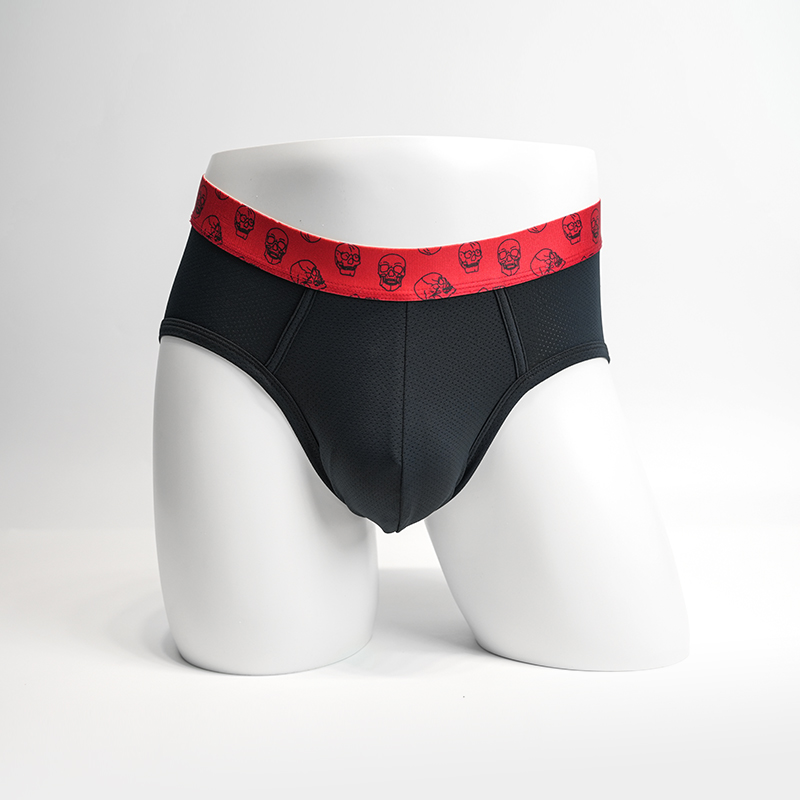
Polyester Spandex Mesh-Ventilated Briefs
The Polyester Spandex Mesh-Ventilated Briefs are men’s briefs made from a polyester-spandex mesh clothing fabric. The material is selected for its combination of light weight, resilience, stretch, and breathability. Polyester contributes strength, shape retention, and resistance to repeated wear, while spandex provides elasticity for a closer, more adaptive fit.
The brief uses a distinctive triangular shape that provides a contemporary appearance while supporting the body in a structured manner. Unlike loose boxer shorts, the brief design keeps the garment close to the body. Unlike rigid or overly compressive underwear, the stretch construction allows natural movement during walking, sitting, bending, commuting, exercise, and everyday work.
The garment is identified by the product code THDY-031, making it suitable for organized product development, sampling, catalog management, and private-label programs. The design can serve as a finished retail product or as a foundation for further OEM/ODM adjustments, including color, branding, packaging, labeling, and selected construction details.
Key product characteristics include:
• Polyester-spandex mesh fabric for lightness, stretch, and ventilation.
• A triangular brief shape designed for supportive coverage.
• A ventilated construction that encourages airflow and helps manage heat and moisture.
• A crotch bottom stitched with four needles and six lines for reinforced durability.
• A smooth, weightless feel suitable for extended daily wear.
• A modern silhouette that can appeal to fashion-conscious and performance-oriented customers.
• OEM/ODM suitability for brands seeking a customizable men’s underwear program.
Fabric is one of the most important factors in underwear performance. The garment remains in close contact with sensitive skin for many hours, often under additional layers of clothing. A material that is too heavy can trap heat. A material with insufficient stretch can restrict movement. A material with poor recovery can lose its shape after repeated wear and washing.
The polyester-spandex mesh used for THDY-031 addresses these concerns through a balanced fiber combination. Polyester is widely used in performance apparel because it is lightweight, durable, and capable of maintaining a stable structure. It can also be engineered into fine, open mesh constructions that support air circulation without making the garment excessively bulky.
Spandex adds controlled stretch. This is especially important in briefs because the garment must accommodate movement while remaining securely positioned. Stretch allows the fabric to follow the body instead of pulling against it. It can also help reduce bunching, provided that the pattern, elastic components, and sewing specifications are correctly coordinated.
The mesh structure contributes another important advantage: ventilation. A breathable construction permits air to move more freely through the fabric than many dense, heavy, or tightly woven alternatives. Improved airflow can help reduce the feeling of warmth and dampness during daily activities. While no garment can eliminate perspiration or odor in every situation, a ventilated brief can support a fresher and more comfortable wearing environment.
The material is also appropriate for brands that want a performance-oriented product without the high weight or bulk associated with some traditional underwear fabrics. A lighter garment can be easier to pack, more comfortable beneath fitted trousers, and more suitable for warm climates or active use.
Polyester offers a practical foundation for a durable underwear product. It is resistant to normal wear and can maintain its appearance and structure when produced and finished correctly. Its relatively low weight allows manufacturers to create garments that feel light on the body while still offering functional strength.
Polyester also supports consistent production. It can be knitted or woven into controlled fabric structures, dyed in a wide range of colors, and combined with elastic fibers to achieve different levels of stretch and recovery. For a manufacturer serving OEM and ODM customers, this versatility helps support multiple product concepts and market requirements.
Spandex is valued for its exceptional elasticity. In underwear, this elasticity helps the brief conform to the body and recover after stretching. It can improve comfort during movement and support a closer, cleaner appearance under clothing.
However, spandex alone does not determine fit. The final result depends on fiber ratios, fabric weight, pattern engineering, garment dimensions, waistband construction, sewing tension, and quality control. The value of THDY-031 lies in the coordination of these elements rather than in the presence of stretch fiber alone.
Mesh introduces a functional surface structure that can improve ventilation and reduce the dense feeling associated with conventional fabrics. It can be particularly useful in warm environments, during extended periods of sitting, while traveling, or during moderate physical activity.
Mesh also gives the product a visually distinctive character. The open structure communicates performance and modernity, helping the product stand out from plain, opaque briefs. For fashion and sports-inspired underwear collections, this appearance can be an important selling point.
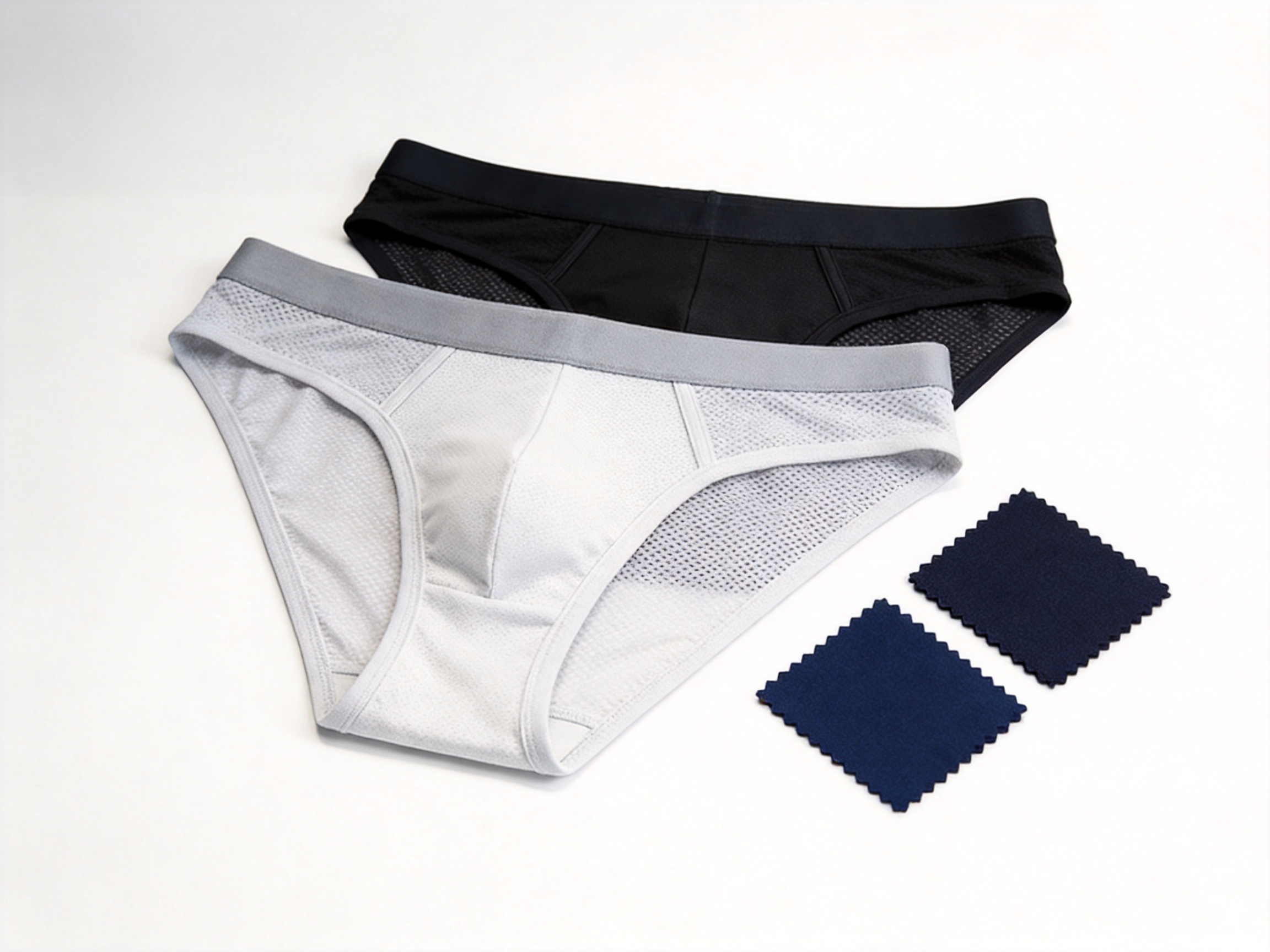
The triangular shape is central to the design identity of THDY-031. It creates a modern interpretation of the classic brief by combining a compact profile with strategically shaped coverage. The construction is intended to support the front and lower body while preserving freedom around the legs.
A well-designed brief should remain stable without feeling excessively tight. It must provide enough structure to prevent unwanted movement, yet it should not create uncomfortable pressure. The triangular pattern helps manufacturers balance these requirements through the shape of the front panel, the leg openings, the crotch area, and the waistband.
The design can also reduce unnecessary fabric around the upper thigh compared with longer boxer-brief styles. This may appeal to consumers who dislike additional material under close-fitting trousers or who prefer a greater range of leg movement. At the same time, it provides more coverage than many minimal-cut underwear styles.
Support is influenced by several interacting features:
• The front panel shape helps organize the garment around the body.
• Stretch fabric enables the brief to adapt to different movements and body positions.
• A secure waistband helps hold the garment in place.
• The leg openings help define the silhouette and reduce excessive shifting.
• Reinforced crotch construction supports a high-stress area of the garment.
For brands, this combination offers an opportunity to position the product between basic everyday underwear and specialized performance apparel. It can be marketed as a versatile brief for consumers who want comfort and functionality without an overly technical or athletic appearance.
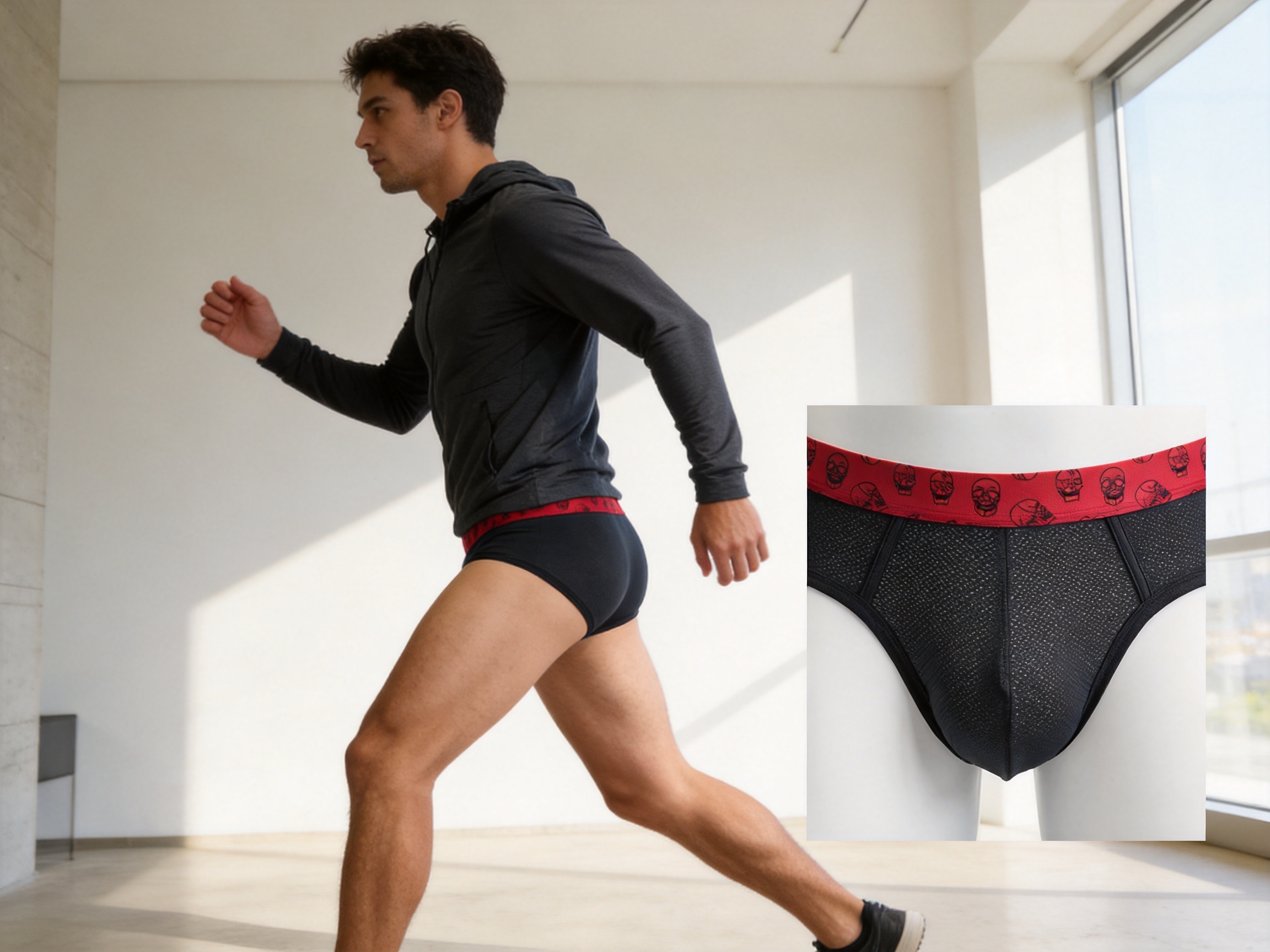
Heat and moisture are common sources of discomfort in underwear. When airflow is limited, the wearer may experience a warmer and less comfortable feeling, particularly during commuting, extended workdays, travel, or exercise. A mesh-ventilated construction helps address this issue by creating a more breathable fabric surface.
The THDY-031 design allows air to circulate through the mesh structure. This does not mean that the garment prevents perspiration, but it can support the evaporation and dispersal of moisture more effectively than a dense, poorly ventilated material. The result is a more comfortable experience for consumers who live in warm climates or remain physically active throughout the day.
Ventilation can also contribute to odor management. Odor is affected by sweat, skin oils, bacteria, washing habits, climate, and the amount of time a garment is worn. No standard underwear product should be described as a complete odor-prevention solution. Nevertheless, a fabric that supports airflow and reduces prolonged dampness may help create conditions that feel fresher when combined with appropriate personal hygiene and regular laundering.
This performance is valuable for several consumer groups:
• Office workers who sit for long periods.
• Commuters who move between indoor and outdoor environments.
• Travelers who need lightweight and packable garments.
• Customers living in humid or hot regions.
• Consumers who prefer breathable underwear for everyday use.
• Active users seeking less restrictive garments for light exercise and movement.
The crotch area is one of the most demanding zones in any pair of underwear. It is exposed to repeated stretching, friction, body movement, washing, and changes in tension when the wearer sits or bends. A weak seam in this area can lead to early failure even when the fabric itself remains in good condition.
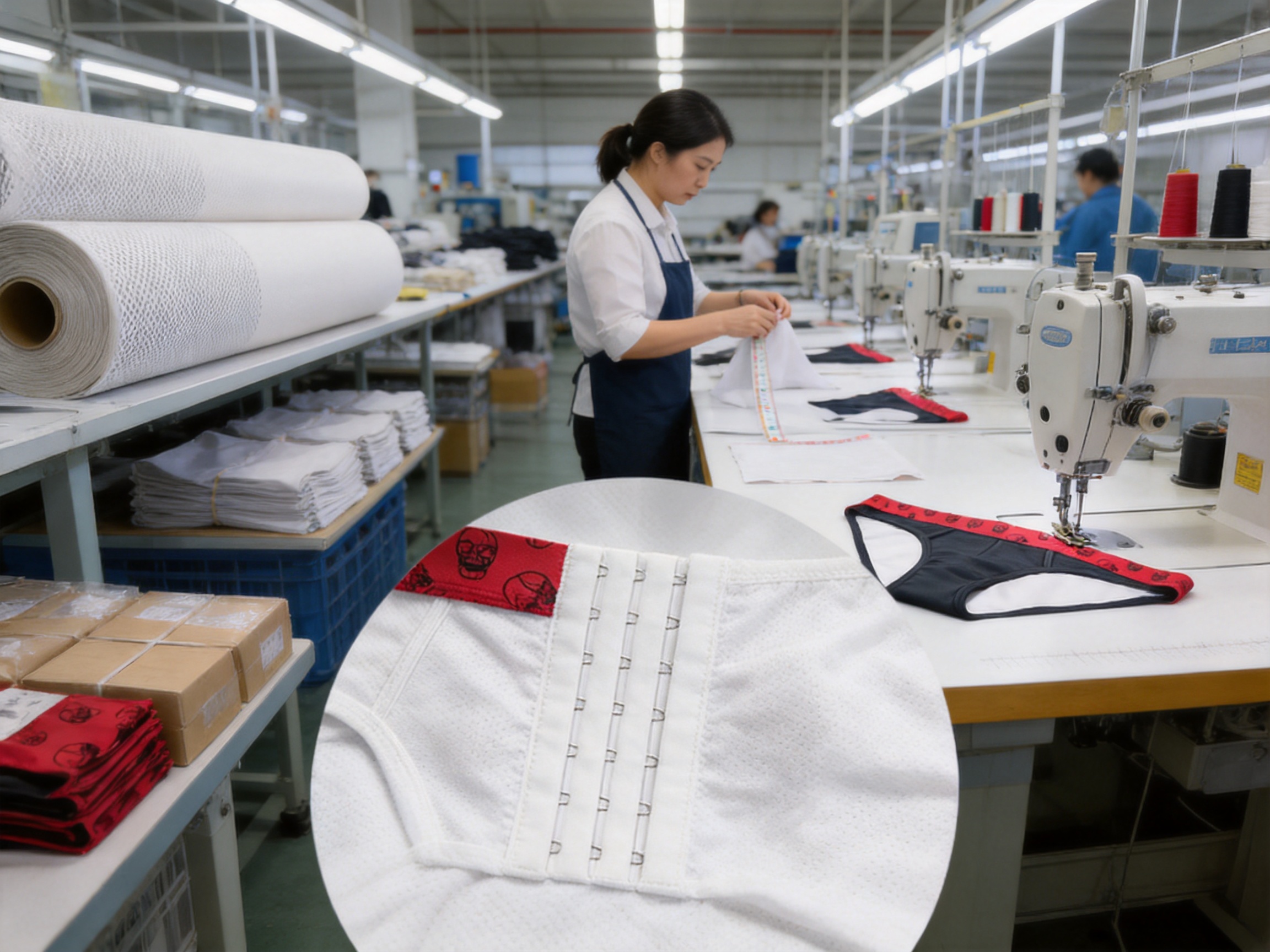
THDY-031 features a crotch bottom stitched with four needles and six lines. This reinforced sewing specification is an important manufacturing detail because it provides a stronger and more stable connection in a high-stress area. Multiple lines of stitching distribute tension more effectively than a single basic seam, reducing the risk that stress will be concentrated in one narrow line.
Four-needle, six-line sewing can also contribute to a cleaner and more professional interior finish when properly controlled. The seam must still be evaluated for stitch balance, thread tension, elasticity, and comfort. Reinforcement should not create excessive bulk or roughness against the skin. The manufacturer’s technical process therefore needs to balance strength with softness and flexibility.
For private-label buyers, reinforced crotch construction can be a meaningful quality differentiator. Many low-cost underwear products compete primarily on price and may reduce stitch density or reinforcement in areas that are not immediately visible. A carefully constructed product can deliver greater long-term value because it is designed for repeated use rather than short-term appearance alone.
THDY-031 is positioned to compete with several types of men’s underwear, including basic cotton briefs, heavy synthetic briefs, loose boxer shorts, and unstructured low-cost mesh products. Its advantages are not based on a single feature but on the combination of fabric, shape, ventilation, support, and reinforced manufacturing.
Cotton briefs remain popular because of their familiar hand feel and natural fiber association. However, dense cotton can feel heavier when damp and may dry more slowly than lightweight synthetic mesh. Cotton can also lose shape more readily if the fabric and finishing are not carefully selected.
THDY-031 offers a lighter alternative with stretch recovery and a more ventilated construction. It is especially suitable for consumers who prioritize quick-drying comfort, performance styling, and reduced bulk. The polyester-spandex composition also allows the garment to maintain a close fit during movement.
Not all polyester underwear provides the same performance. A solid polyester fabric may be durable but can feel less breathable than an open mesh structure. A poorly patterned brief may also ride up, shift, or create unnecessary pressure.
THDY-031 combines polyester with spandex and uses a mesh structure, triangular pattern, and reinforced crotch. These details give it a more developed performance profile than a basic, non-stretch polyester brief.
Loose boxer shorts provide relaxed coverage, but they may bunch beneath fitted trousers and may not provide the same level of body support. Their extra fabric can also make them feel warmer for some users.
The triangular brief format offers a closer fit with less material around the upper leg. It is therefore a practical choice for customers who want support and freedom of movement without the bulk of a loose boxer silhouette.
Mesh alone does not guarantee a high-quality garment. If the fabric is too thin, the seams are weak, or the pattern is poorly balanced, a mesh brief may lose shape or feel uncomfortable. The four-needle and six-line crotch construction gives THDY-031 an important distinction because it demonstrates attention to structural durability.
Consistent production is equally important. A professional manufacturer must control fabric specifications, cutting accuracy, sewing quality, stretch behavior, finishing, inspection, and packing. These process controls help transform a good concept into a reliable finished product.
| Product Attribute | THDY-031 Mesh-Ventilated Briefs | Heavy Cotton Briefs | Loose Boxer Shorts | Basic Non-Stretch Synthetic Briefs |
|---|---|---|---|---|
| Fabric weight | Lightweight mesh construction | Often medium to heavy, depending on fabric | Medium, with additional body coverage | Usually light to medium |
| Stretch and recovery | Supported by spandex content | Varies by cotton and elastane blend | Often limited unless stretch fibers are added | May be limited or inconsistent |
| Airflow | Enhanced through mesh ventilation | Depends on fabric density | Can be acceptable but may be reduced by extra layers | Depends on fabric structure |
| Body support | Close triangular brief construction | Generally supportive, depending on pattern | Relaxed rather than close-fitting | Varies widely |
| Crotch reinforcement | Four-needle, six-line stitching | Varies by manufacturer | Varies by manufacturer | May use basic seam construction |
| Suitability for warm climates | Strong due to lightweight mesh and airflow | Can feel warmer when dense or damp | Varies according to fabric and fit | Depends on ventilation and finish |
Comfort is not created by fiber content alone. It depends on how the fabric interacts with the human body and how the garment is assembled. A soft fabric can still be uncomfortable if the seams are poorly positioned, the leg openings are too tight, or the waistband loses elasticity.
For a product such as THDY-031, comfort engineering includes the relationship between fabric stretch, pattern dimensions, seam placement, and garment tension. The triangular front shape should provide sufficient room and support without excessive compression. The leg openings should remain stable while allowing the upper legs to move naturally.
Lightweight fabric can reduce the sensation of wearing an additional layer. This is particularly valuable under formal trousers, denim, uniforms, or slim-cut apparel. The garment’s lower bulk may also reduce visible lines under clothing, depending on the selected size, color, waistband design, and outer garment.
The inner seam finish is also important. A strong seam should not automatically be a rough seam. Manufacturing teams need to control thread type, stitch density, seam allowance, and thread tension to produce a construction that is both durable and suitable for close skin contact.
Consumers have different preferences, so a responsible product description should avoid claiming that one fit is ideal for every body type. Instead, THDY-031 can be presented as a modern, close-fitting brief with stretch, ventilation, and structured support. Accurate size charts and professional fitting samples remain essential for achieving customer satisfaction.
Nantong Tianhong Textile Technology Co., Ltd. was established in 2001 and is located in Nantong, one of China’s important textile manufacturing centers. Its location provides access to a developed textile ecosystem, including fabric resources, garment production expertise, technical services, logistics, and supporting suppliers.
The company specializes in the research, manufacturing, and sales of underwear products. This integrated specialization is valuable for buyers because underwear requires detailed knowledge of stretch fabrics, close-to-skin comfort, fit, seam engineering, elastic application, grading, and quality inspection.
The company also provides OEM and ODM services for recognized labels. OEM production enables a customer to manufacture according to an established design, technical package, or brand specification. ODM support allows the manufacturer to contribute product development knowledge, fabric selection, construction advice, sampling, and design adjustments. For a mesh brief, this distinction can help brands move from an initial concept to a production-ready garment more efficiently.
Research and development are important in functional underwear because small changes can produce meaningful differences in comfort and durability. Fabric composition, mesh openness, stretch ratio, waistband tension, front-panel dimensions, leg-opening shape, and seam placement all influence the final user experience.
A manufacturer with long-term underwear experience can evaluate these factors during development rather than treating them as isolated decisions. The THDY-031 concept reflects this type of product coordination by combining a functional textile, a performance-oriented shape, and a reinforced crotch detail.
For brands seeking customization, development support may include sample refinement, fit adjustments, material alternatives, color development, logo placement, labeling, packaging, and production documentation. The exact scope depends on the customer’s requirements and agreed technical specifications.
A professional manufacturing process for mesh briefs begins with material verification. Fabric should be checked for composition, weight, width, stretch, recovery, color consistency, surface defects, and dimensional stability. These checks help ensure that the material used in bulk production matches the approved sample.
Pattern making and grading follow material confirmation. The pattern must account for the stretch behavior of the fabric rather than treating it like a rigid textile. Different sizes need to preserve the intended fit and support while adapting appropriately to body dimensions.
During cutting, accurate alignment and controlled tension are important. Mesh fabrics may require careful handling to prevent distortion. Panels should be cut consistently so that the finished garments maintain a stable shape and balanced appearance.
Sewing is the next major stage. Operators assemble the front, back, crotch, waistband, and leg-opening components according to the approved construction. The four-needle and six-line crotch stitching is a key specification that requires suitable equipment, correct thread tension, and consistent operator technique.
Finishing may include thread trimming, seam inspection, pressing or shaping where appropriate, label application, and final appearance checks. Each garment should be evaluated for sewing defects, skipped stitches, loose threads, uneven seams, fabric damage, incorrect labeling, and measurement deviations.
Finally, approved garments are folded, packed, and prepared for shipment according to customer instructions. Packaging can be developed for retail presentation, e-commerce fulfillment, wholesale distribution, or private-label brand standards.
Quality management is particularly important for underwear because the product is worn close to the skin and is expected to withstand repeated laundering. Nantong Tianhong emphasizes traceable supply chain management and sustainable development as part of its business approach.
Traceability can help buyers identify material sources, production stages, inspection records, and shipment information. It also supports more effective response when a quality issue occurs. For brands, a traceable process can improve internal compliance, customer communication, and supplier evaluation.
The company’s stated certifications and standards include FSC, OCS, OEKO-TEX 100, GOTS, WRAP, and BSCI. Certification applicability depends on the specific material, facility, order, and documentation requirements. Buyers should confirm which certifications apply to a particular product and production batch before making marketing claims.
THDY-031 can function as a ready product concept or as a starting point for brand-specific development. Private-label buyers may request changes that align the brief with their target audience, price point, regional market, or brand identity.
Potential customization areas include:
• Fabric composition and stretch ratio.
• Mesh structure and fabric weight.
• Seasonal colors and fashion color palettes.
• Waistband width and branding method.
• Logo printing, jacquard weaving, heat transfer, or label application.
• Packaging format and retail presentation.
• Size range and grading standards.
• Front-panel proportions and leg-opening dimensions.
• Care labels, fiber labels, barcodes, and compliance information.
• Single-pack, multi-pack, gift-box, or e-commerce packaging.
ODM customers may benefit from technical recommendations during the development stage. For example, the manufacturer can help determine whether a particular mesh is appropriate for the target retail price, whether a waistband construction matches the expected level of support, or whether a proposed color and finish are suitable for the production process.
OEM customers with established specifications can use the company’s manufacturing capability to reproduce an approved design consistently. In both cases, clear communication is essential. A complete technical package should define fabric composition, measurements, tolerances, stitch specifications, color standards, labels, packaging, inspection requirements, and approved sample references.
Sustainability is increasingly important in the underwear market. Customers and retailers want to understand how products are made, what materials are used, and whether suppliers maintain responsible working conditions. A durable garment can contribute to more responsible consumption because it is less likely to require frequent replacement.
THDY-031 uses a durable and lightweight synthetic blend. Polyester and spandex are not the same as organic natural fibers, so product communication should describe the actual composition accurately. The product’s sustainability advantages should be discussed in terms of durability, lightweight material use, long-term wear potential, and responsible manufacturing practices rather than unsupported environmental claims.
Nantong Tianhong’s company information emphasizes environmentally friendly functional fabrics, sustainable development, and traceable supply chain management. Its listed standards and certifications provide a framework for responsible production, although buyers should verify certification scope for each order.
Manufacturing efficiency can also support sustainability. Accurate cutting, controlled production, reduced defect rates, appropriate packaging, and durable construction can help minimize material waste. Product development that anticipates actual consumer needs may reduce returns and improve the useful life of each garment.
Brands can strengthen responsible product communication by providing clear fiber content, washing instructions, size guidance, and realistic performance descriptions. Honest labeling helps consumers care for the garment correctly and make informed purchasing decisions.
Proper care can help preserve the elasticity, mesh structure, color, and seam strength of polyester-spandex underwear. Consumers should follow the care instructions supplied with the final product because washing recommendations may vary according to fabric finishing, dyes, elastics, and accessories.
In general, gentle washing and avoiding excessive heat can help protect spandex fibers. High temperatures may accelerate the loss of elasticity in some stretch fabrics. Strong bleaching agents may also affect color and fiber performance. A suitable detergent, moderate washing cycle, and careful drying method can support longer wear life.
Mesh should be handled with attention to snagging risks. Washing the garment with similar items and avoiding contact with sharp hooks or rough hardware may help protect the open fabric structure. If the product is packed for travel, folding rather than compressing it against abrasive objects can help preserve its appearance.
For retail brands, including clear care instructions is a practical way to improve customer satisfaction. It can also reduce complaints caused by unsuitable washing practices and demonstrate attention to product quality beyond the point of sale.
The product can be positioned across several market segments. Its lightweight mesh and stretch construction make it suitable for everyday performance underwear. Its triangular design provides a fashion element that may appeal to customers seeking a contemporary silhouette. Its reinforced crotch construction supports a quality-focused positioning.
Potential market applications include:
• Everyday men’s underwear collections.
• Warm-climate and summer underwear ranges.
• Travel and lightweight essentials.
• Sport-inspired lifestyle collections.
• Private-label e-commerce brands.
• Multipack programs for department stores and supermarkets.
• Premium basics collections emphasizing construction quality.
• Promotional or customized underwear programs.
The product can be offered as an individual premium brief or included in a coordinated collection. A brand may develop matching colors, complementary men’s styles, or a broader functional underwear range using the same fabric family.
For wholesale buyers, the strongest commercial message is the combination of comfort and practical engineering. Consumers do not need to choose between a fashionable silhouette and useful performance. The triangular design creates visual distinction, while the breathable mesh, stretch fiber, and reinforced crotch address everyday functional requirements.
Accurate product communication is important for protecting consumer trust. Suitable descriptions may emphasize lightweight mesh, breathable construction, flexible fit, modern triangular styling, reinforced crotch stitching, and suitability for everyday wear.
Claims should be supported by the actual product and any relevant testing or certification. Phrases such as “promotes airflow,” “helps manage the feeling of moisture,” and “designed for lightweight comfort” are generally more precise than absolute claims about preventing sweat or odor in all conditions.
Retail descriptions should also identify the actual fiber composition. Because the product is made from polyester and spandex mesh, it should not be marketed as organic bamboo underwear unless a separately developed product uses certified bamboo-derived material. Clear distinction between different product lines helps brands comply with labeling expectations and avoid misleading consumers.
A product’s success depends on more than the initial design. The manufacturer must be able to reproduce the approved sample at commercial scale while maintaining fabric consistency, sewing quality, measurements, packaging accuracy, and delivery coordination.
Nantong Tianhong’s long operating history, underwear specialization, and OEM/ODM experience provide a strong foundation for this type of partnership. Its relationships with clients in Europe, North America, and China indicate experience serving multiple market expectations, although each new project still requires individual technical confirmation and quality approval.
International buyers may also value the company’s location in Nantong, a major textile industry hub. Access to textile resources and garment expertise can support more efficient sampling, material development, and production coordination. A specialized supplier may be better equipped to identify practical solutions for stretch mesh construction than a general garment factory with limited underwear experience.
Communication remains a shared responsibility. Buyers should provide accurate product requirements, approve samples carefully, define acceptable tolerances, and confirm testing or certification needs before bulk production. The manufacturer should communicate material availability, production timelines, technical limitations, and inspection results clearly.
Before placing a production order, buyers can evaluate THDY-031 or a customized version using a structured checklist.
Fabric evaluation should include fiber composition, weight, stretch, recovery, colorfastness, surface uniformity, mesh stability, and resistance to snagging. The approved fabric should be clearly documented so that bulk production can be compared against the development sample.
Fit evaluation should include waist comfort, front-panel support, leg-opening stability, crotch coverage, movement comfort, and appearance beneath clothing. Samples should be tested on appropriate fit models or through a structured fitting process.
Construction evaluation should focus on the crotch reinforcement, seam consistency, thread tension, waistband attachment, leg-opening finish, labels, and overall appearance. The four-needle and six-line stitching should be confirmed against the agreed specification.
Wear testing should examine comfort during sitting, walking, bending, and normal daily activity. Where appropriate, buyers can conduct repeated washing tests to evaluate shrinkage, color change, elasticity, seam strength, and fabric appearance.
Packaging evaluation should verify folding, size identification, barcodes, care labels, brand information, carton markings, and protection during transportation. These details can influence warehouse efficiency and retail presentation.
The briefs are made from polyester-spandex mesh clothing fabric. Polyester provides lightweight durability and structural stability, while spandex contributes stretch and fit recovery. The mesh structure is intended to promote airflow.
The product uses a distinctive triangular shape that gives it a modern appearance and a close, supportive fit. It is designed to provide structured coverage while leaving the upper leg relatively free from excess fabric.
The lightweight mesh construction is suitable for consumers who prefer increased airflow and reduced bulk in warm conditions. Actual comfort will also depend on the wearer’s activity level, clothing layers, personal preferences, and local climate.
No garment can prevent perspiration or odor in every circumstance. The ventilated mesh may help manage the feeling of heat and moisture by supporting airflow. Regular washing and appropriate personal hygiene remain necessary for freshness.
The crotch bottom is stitched with four needles and six lines. This construction is intended to improve seam strength and distribute stress in an area that experiences frequent movement and tension.
Yes. The product is designed as a lightweight everyday brief with stretch, ventilation, support, and durable construction. It may also be suitable for travel, warm weather, and moderate daily activity.
As an OEM/ODM product, it may be adapted according to the buyer’s requirements. Potential options include fabric specifications, colors, branding, labels, packaging, sizing, and selected fit or construction details. Customization should be confirmed during technical development.
The product described here uses polyester-spandex mesh, not organic bamboo fabric. A separate bamboo or natural-fiber style may be developed if the buyer requires it. Fiber content and certification claims must match the material used in the finished garment.
Buyers should confirm the fabric composition, measurements, tolerances, size range, colors, sewing specifications, labels, packaging, testing requirements, certification scope, order quantity, delivery schedule, and approved pre-production sample.
Nantong Tianhong Textile Technology Co., Ltd. is located in Nantong, Jiangsu Province, China, a significant textile manufacturing center. The company has specialized in underwear-related research, manufacturing, and sales since 2001.
The company’s stated standards and certifications include FSC, OCS, OEKO-TEX 100, GOTS, WRAP, and BSCI. Buyers should verify the current status and applicability of each certification for the specific product, facility, material, and order.
Polyester Spandex Mesh-Ventilated Briefs offer a practical combination of lightweight comfort, stretch, ventilation, modern design, and reinforced construction. The THDY-031 product is differentiated by its triangular brief shape, polyester-spandex mesh fabric, airflow-oriented construction, and four-needle, six-line crotch stitching.
Compared with heavier cotton styles, the product can provide a lighter and more performance-focused wearing experience. Compared with loose boxer shorts, it offers a closer fit with less upper-leg bulk. Compared with basic synthetic briefs, its mesh structure, spandex content, modern pattern, and reinforced crotch provide a more complete performance profile.
For brands and wholesalers, the product also represents a flexible OEM/ODM opportunity. Nantong Tianhong Textile Technology Co., Ltd. brings long-term experience in underwear manufacturing, product development, international cooperation, functional fabrics, and traceable supply chain management. Its location in Nantong provides access to a mature textile industry environment, while its stated certifications and responsible manufacturing focus support quality-conscious sourcing.
The strongest value of THDY-031 is its balanced design. It is not defined by appearance alone, nor by a single technical claim. Instead, it combines fabric engineering, pattern design, ventilation, comfort, seam reinforcement, and manufacturing experience in one versatile men’s underwear product. With accurate sizing, responsible care, and properly verified production specifications, these briefs can serve as a strong addition to everyday, performance-inspired, and private-label underwear collections.
1. Product information supplied for Polyester Spandex Mesh-Ventilated Briefs, product code THDY-031.
2. Company information supplied for Nantong Tianhong Textile Technology Co., Ltd.
3. General textile engineering principles relating to polyester, spandex, mesh construction, stretch recovery, and garment seam durability.
4. General apparel quality-control practices for fabric inspection, garment measurement, sewing inspection, care labeling, and pre-production approval.
5. General responsible sourcing principles concerning supply chain traceability, textile certifications, workplace standards, and accurate product communication.

Copyright © Nantong Tianhong Textile Technology Co., Ltd. All Rights Reserved.
 Room 806, Building D, Jingyang Plaza, Chongchuan District, Nantong City, Jiangsu Province,china


 English
 Español
 русский
 عربى
عربى