Content
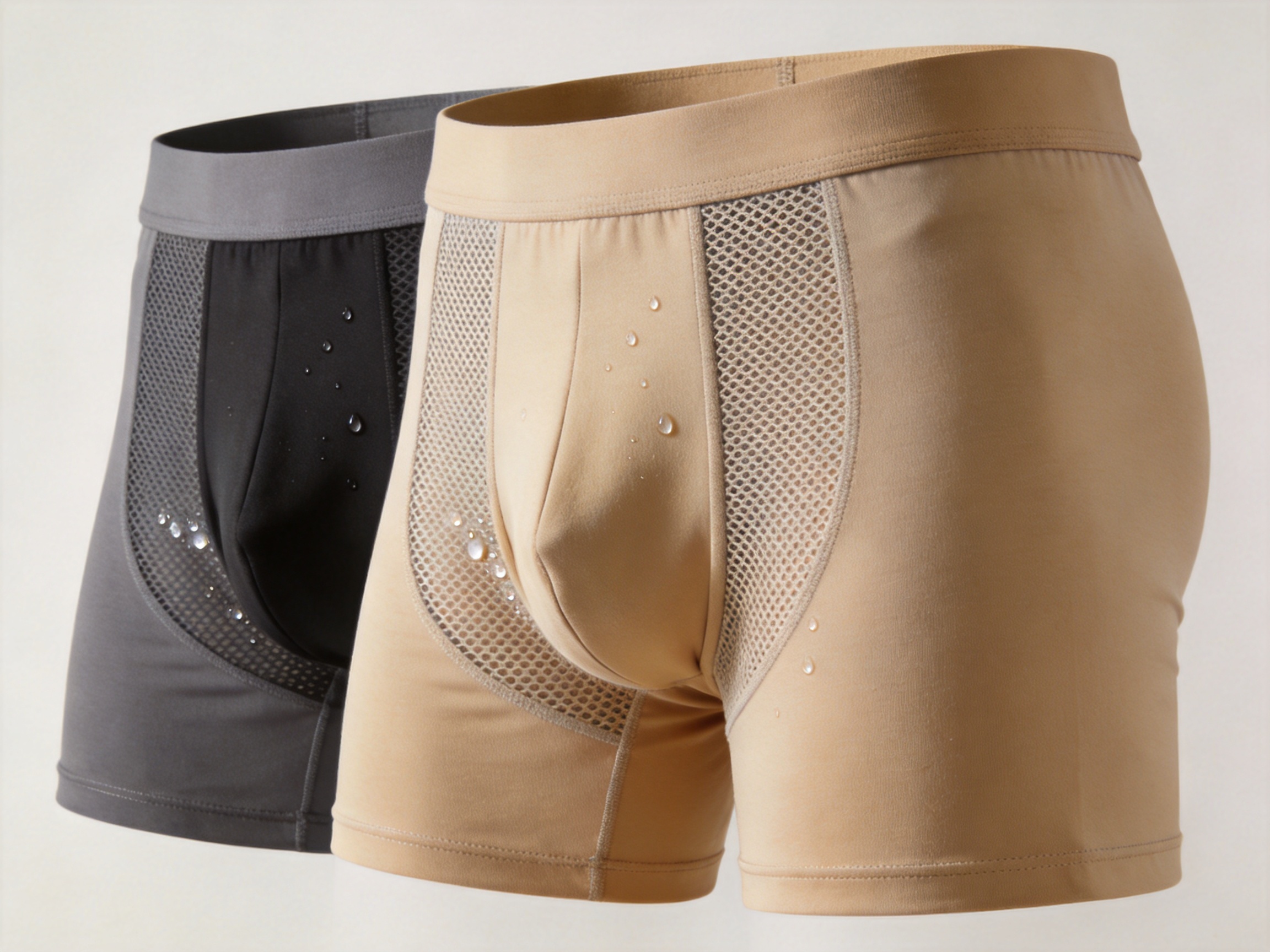
Mesh Panel Boxer Briefs are designed for men who want breathable daily underwear with reliable moisture management, low-friction comfort, and a secure fit. The product combines bamboo mesh with bamboo jersey to create airflow in targeted areas while maintaining the coverage and support expected from a boxer brief. Its sweat-wicking fabric helps move moisture away from the skin, and the elastic waistband helps the garment stay in place during work, travel, exercise, and everyday movement.
For underwear brands, retailers, and importers, this style is well suited to premium breathable underwear collections and organic bamboo underwear programs. Its strongest competitive advantages are the use of bamboo-based fabrics, a mesh-panel construction, practical comfort engineering, and the flexibility of OEM/ODM development. The manufacturer behind the product has operated in textile manufacturing since 2001 and supports custom product development, sustainable material sourcing, quality control, and international supply-chain cooperation.
Buyers evaluating this product should confirm the final fiber composition, fabric weight, color standards, waistband specifications, size range, packaging, testing documents, and certification requirements before placing a production order. These details determine how the boxer briefs perform in a specific market and whether they meet a retailer’s sustainability and compliance policy.
| Product element | Specification or benefit |
|---|---|
| Product name | Mesh Panel Man’s Boxer Briefs |
| Product reference | THDY-035 |
| Product category | Men’s Boxer Briefs |
| Main fabric direction | Bamboo mesh and bamboo jersey |
| Primary comfort features | Breathability, moisture management, reduced irritation, and a secure elastic waistband |
| Customization model | OEM and ODM product development |
| Recommended market position | Premium breathable underwear and sustainable bamboo underwear collections |
The product is identified as a men’s boxer brief rather than a loose boxer short. That distinction matters. Boxer briefs are normally selected by customers who want close-to-body support, a cleaner silhouette under trousers, and reduced fabric movement around the upper leg. The mesh-panel approach adds ventilation without changing the basic function of the garment.
Underwear sits next to the skin for long periods, often beneath trousers, workwear, uniforms, sports clothing, or travel garments. Heat and moisture can accumulate in areas where airflow is limited. A fabric system that allows air exchange and manages perspiration can make the difference between a product that feels comfortable throughout the day and one that becomes heavy, damp, or irritating.
Mesh construction addresses airflow through the structure of the fabric. Instead of presenting a completely dense surface across every area, mesh contains an open or more breathable structure that can help release heat and moisture. In a boxer brief, mesh panels can be positioned where ventilation is most useful while bamboo jersey can provide coverage, softness, and a smoother hand feel in other sections.
Bamboo-based textile materials are valued in underwear because they can offer a soft touch and a comfortable drape when properly processed and knitted. Bamboo viscose or other bamboo-derived fibers can be blended or constructed into jersey and mesh fabrics for lightweight apparel. The final performance depends on the specific fiber type, yarn, knitting method, finishing process, fabric weight, and garment construction.
For buyers, “bamboo” should not be treated as a complete technical specification. A responsible product brief should identify the exact fiber composition and request supporting documentation. For example, the buyer may need to distinguish between bamboo viscose, bamboo lyocell, bamboo blended with other fibers, or a fabric marketed through a particular chain-of-custody standard. The manufacturer can then match the material selection to the target market, performance requirements, and certification policy.
The product description emphasizes sweat-wicking performance. In practical terms, a moisture-managing underwear fabric should help spread perspiration across a larger surface area, allowing it to evaporate more efficiently than moisture trapped in a dense, non-breathable layer. The result can be a drier sensation during commuting, office work, walking, travel, and moderate activity.
Moisture management is influenced by more than fiber selection. The fabric’s knit structure, yarn fineness, finishing treatment, seam placement, garment fit, and washing condition all affect the result. A well-designed development process therefore evaluates the complete garment rather than relying only on a fiber claim.
Buyer takeaway: Ask for both material documentation and finished-garment performance testing. A bamboo label may support product positioning, but construction quality determines how the boxer briefs feel in actual use.
The key product advantage is not simply the presence of mesh. It is the combination of different fabric structures in one garment. Bamboo mesh can be used to increase ventilation, while bamboo jersey can help preserve coverage, softness, and a smooth appearance. This creates a more targeted design than using one fabric uniformly across the entire boxer brief.
Mesh panels can be placed in zones where heat tends to build up. This helps the brand communicate a specific performance benefit without turning the entire garment into an open, highly visible mesh style. Targeted ventilation is particularly useful for customers who want breathable underwear but still prefer a refined, everyday appearance.
A fully open mesh garment may not suit every customer, climate, or retail channel. Combining mesh with bamboo jersey supports a broader use case. The boxer brief can retain a familiar silhouette and sufficient coverage while incorporating a lighter, more ventilated area.
The product is presented as helping eliminate irritation. No underwear can guarantee the same result for every wearer, but construction choices can reduce common causes of discomfort. A soft fabric hand, carefully finished seams, an appropriate fit, and a stable waistband can minimize rubbing. Panel transitions should be smooth, and seam allowances should be controlled so that the garment does not create hard pressure points.
The elastic waistband is intended to keep the boxer briefs secure during movement. A successful waistband must balance recovery and comfort. If it is too loose, the garment may shift. If it is too tight, it may leave pressure marks or become uncomfortable during extended wear. Development sampling should assess the waistband on multiple body sizes and after repeated washing.
The style can be positioned for customers seeking premium basics, breathable workday underwear, travel underwear, warm-weather essentials, or sustainable fiber alternatives. It can also serve as a foundation for a wider men’s underwear range that includes briefs, undershirts, trunks, sleepwear, and coordinated family products.
Competitor products often rely on a single jersey fabric, synthetic performance fabric, or a standard cotton-elastane construction. Those materials can perform well, but they address different customer priorities. A premium bamboo mesh boxer brief competes by combining natural-fiber positioning, softness, airflow, and a more considered construction.
| Evaluation point | Standard single-fabric boxer brief | Mesh panel bamboo boxer brief |
|---|---|---|
| Airflow | Depends mainly on the density and weight of one fabric | Targeted ventilation through a mesh-and-jersey construction |
| Material story | May focus on cotton, polyester, nylon, or a blend | Bamboo-based fabric supports a soft, sustainable product narrative when properly documented |
| Moisture comfort | Varies significantly by fiber, knit, and finishing | Designed around sweat-wicking bamboo fabric and improved ventilation |
| Design differentiation | Often depends on color, waistband branding, or packaging | Fabric zoning and mesh panels create a functional point of difference |
| Best selling message | Everyday support and basic comfort | Breathable comfort, moisture management, and bamboo-based softness |
This comparison does not mean that every bamboo boxer brief is automatically better than every cotton or synthetic product. Performance depends on manufacturing quality and the needs of the target customer. The stronger commercial argument is that the product offers a clear combination of benefits that many standard styles do not provide in one garment.
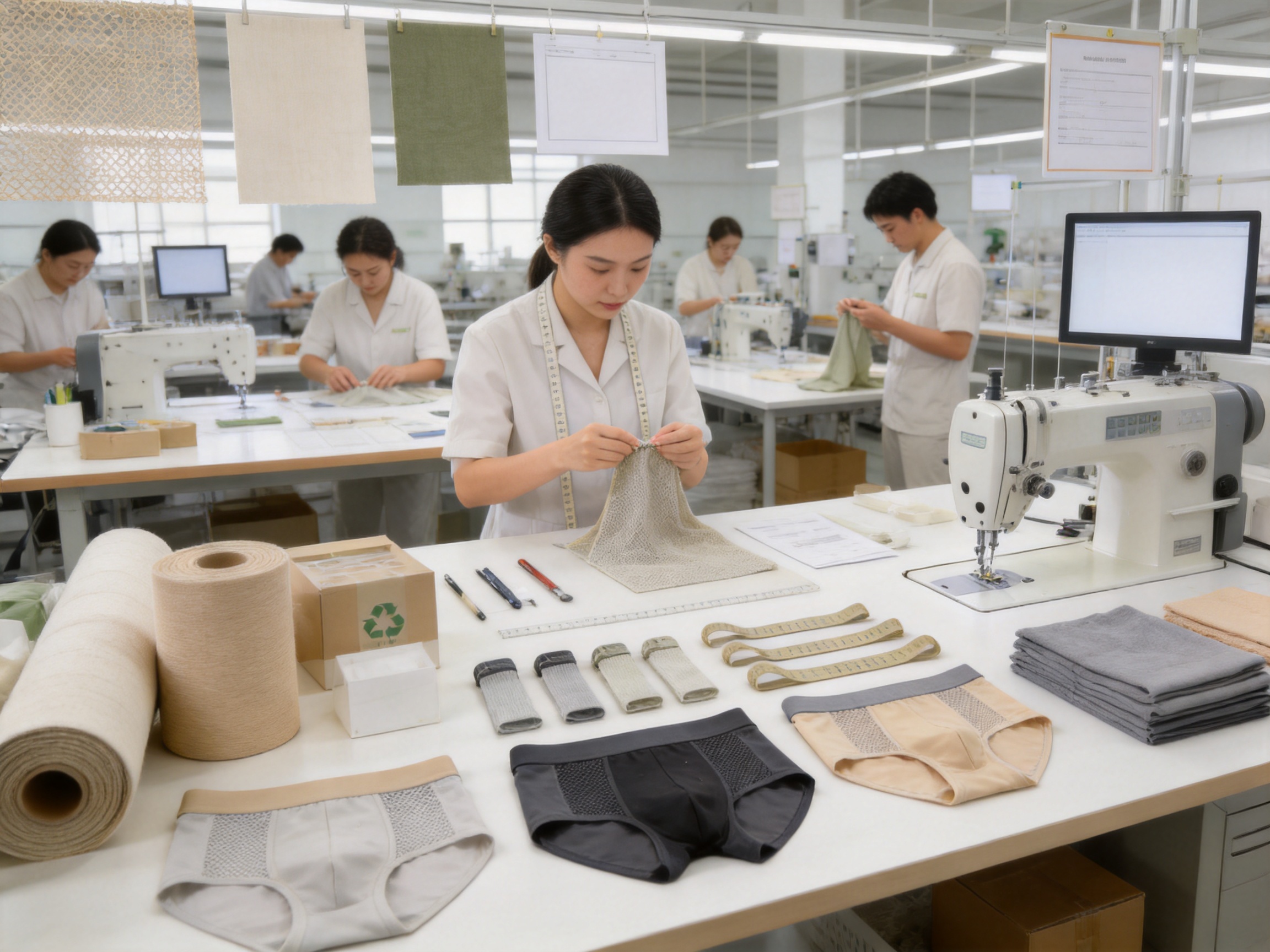
The product is supplied by Nantong Tianhong Textile Technology Co., Ltd., a textile company established in 2001 in Nantong, Jiangsu Province. Nantong is recognized as an important textile manufacturing area in China, providing access to fabric development, garment production, technical labor, logistics, and related supply-chain resources.
The company specializes in the research, manufacturing, and sales of underwear products. Its business includes OEM and ODM services for established labels, which is important for buyers that need more than a ready-made catalog item. OEM production can support a brand’s specifications, labels, packaging, and approved materials. ODM development can help a buyer adapt an existing concept or create a product with changes to fabric, panel placement, colors, trims, sizing, and presentation.
Underwear development requires coordination between fabric selection and garment engineering. A mesh panel cannot be evaluated separately from the jersey body, because the two materials may have different stretch, recovery, shrinkage, thickness, and behavior during sewing. A capable manufacturer must consider these differences when developing the pattern and production process.
For this boxer brief, the development sequence can include material confirmation, fabric testing, pattern review, prototype sewing, fitting, wash evaluation, and pre-production approval. Each stage helps reduce the risk of panel distortion, seam discomfort, waistband failure, color variation, or unexpected shrinkage.
The manufacturer’s textile focus supports coordination among bamboo mesh, bamboo jersey, elastic components, sewing thread, labels, and packaging. The final product should have a consistent hand feel and visual identity. If the waistband is excessively rigid while the body fabric is soft, the comfort message becomes weaker. If the mesh stretches differently from the jersey, the garment may lose shape or create tension at the panel seam.
Buyers should request a component list during development. This list can cover the main fabric, secondary fabric, elastane content, waistband elastic, sewing thread, labels, care label, hangtag, polybag or carton packaging, and any finishing agents. Clear component control supports repeat production and simplifies compliance reviews.
A structured quality program should inspect materials before cutting, monitor sewing during production, and examine finished garments before packing. Typical checkpoints include fabric width, weight, color, stretch, recovery, surface defects, panel alignment, seam quality, waistband attachment, size measurements, label accuracy, and packaging count.
Because underwear is worn close to the skin, buyers may also require testing for restricted substances, colorfastness, dimensional stability, pilling, seam strength, and laundering performance. The exact test list should reflect the destination market and the retailer’s internal standard.
The company describes a focus on traceable supply-chain management and environmentally friendly functional fabrics. Traceability can help buyers understand where fibers, fabrics, trims, and finished garments originate. It also creates a more practical foundation for sustainability claims, because brands can connect product information with supplier records and supporting documents.
Traceability is especially relevant when a collection uses words such as “organic,” “responsible,” “sustainable,” or “certified.” These claims should be supported by current documentation and should describe the actual product being sold. A company-level certification does not automatically mean that every product or every material carries the same certification scope.
Bamboo-based underwear often attracts customers who are searching for alternatives to conventional materials. The environmental profile of a finished bamboo textile depends on the fiber conversion method, chemical management, energy use, water use, dyeing, transportation, garment durability, and end-of-life pathway. A product should therefore be presented with precise, verifiable language rather than broad environmental promises.
The manufacturer identifies certifications and standards associated with its product and supply-chain activities, including FSC, OCS, OEKO-TEX 100, GOTS, WRAP, and BSCI. Buyers should confirm which standard applies to the specific product, facility, material, or transaction. Certification scope, validity, license details, and chain-of-custody requirements can vary.
| Buyer question | Why it matters |
|---|---|
| What is the exact fiber composition? | It determines labeling, care instructions, product claims, and regulatory requirements. |
| Is the bamboo fiber covered by a relevant chain-of-custody document? | It helps verify the basis of a certified or responsible-material claim. |
| Does the finished garment meet chemical-safety requirements? | Underwear has direct skin contact and may be subject to buyer or market restrictions. |
| Can the supplier provide current certificates and test reports? | Current documents support due diligence and reduce unsupported marketing claims. |
| How durable is the garment after washing? | Longer wear can support customer satisfaction and reduce premature replacement. |
For retail copy, a safe approach is to describe the observable product benefits first: bamboo-based fabric, breathable mesh panels, sweat-wicking construction, elastic waistband, and comfort-focused design. Add sustainability language only after the relevant documentation has been checked for the exact production order.
Brands considering THDY-035 or a similar style should prepare a development brief before requesting samples. A precise brief reduces repeated revisions and allows the factory to identify technical constraints early.
Decide whether the boxer briefs are intended for premium basics, active commuting, travel, hot climates, sustainable lifestyle retail, or general everyday use. Each position affects the preferred fabric weight, leg length, support level, color range, packaging, and price point.
Specify the desired bamboo fiber type, blend percentage, mesh openness, jersey weight, stretch direction, recovery, hand feel, and finish. If the brand has a restricted-substance list or approved fiber policy, provide it at the beginning of development.
Fit should be reviewed on the full intended size range, not only on one sample size. Check the rise, pouch shape, leg opening, inseam, waistband height, side seam position, panel placement, and body coverage. A premium underwear product should feel secure without producing excessive pressure.
Wear testing should cover sitting, walking, bending, climbing stairs, and normal daily movement. Test the boxer briefs under the types of trousers or shorts used by the target customer. Observe whether the leg openings ride up, whether the waistband rolls, whether the mesh creates visible lines, and whether seams remain comfortable after extended wear.
Wash samples according to the intended care label and compare them with unwashed samples. Inspect shrinkage, color change, pilling, elastic recovery, mesh distortion, seam puckering, and surface softness. If the product is positioned as premium underwear, wash performance should be part of the approval decision rather than an afterthought.
Confirm the waistband logo method, woven or printed labels, care label language, size marking, barcode, carton markings, folding method, and retail packaging. Sustainable packaging can be considered, but it should still protect the garments from moisture, dirt, and handling damage during transport.
The approved sample should be retained as a reference for bulk production. The technical file should include measurements, tolerances, fabric standards, color references, label artwork, packaging specifications, test requirements, and inspection procedures.
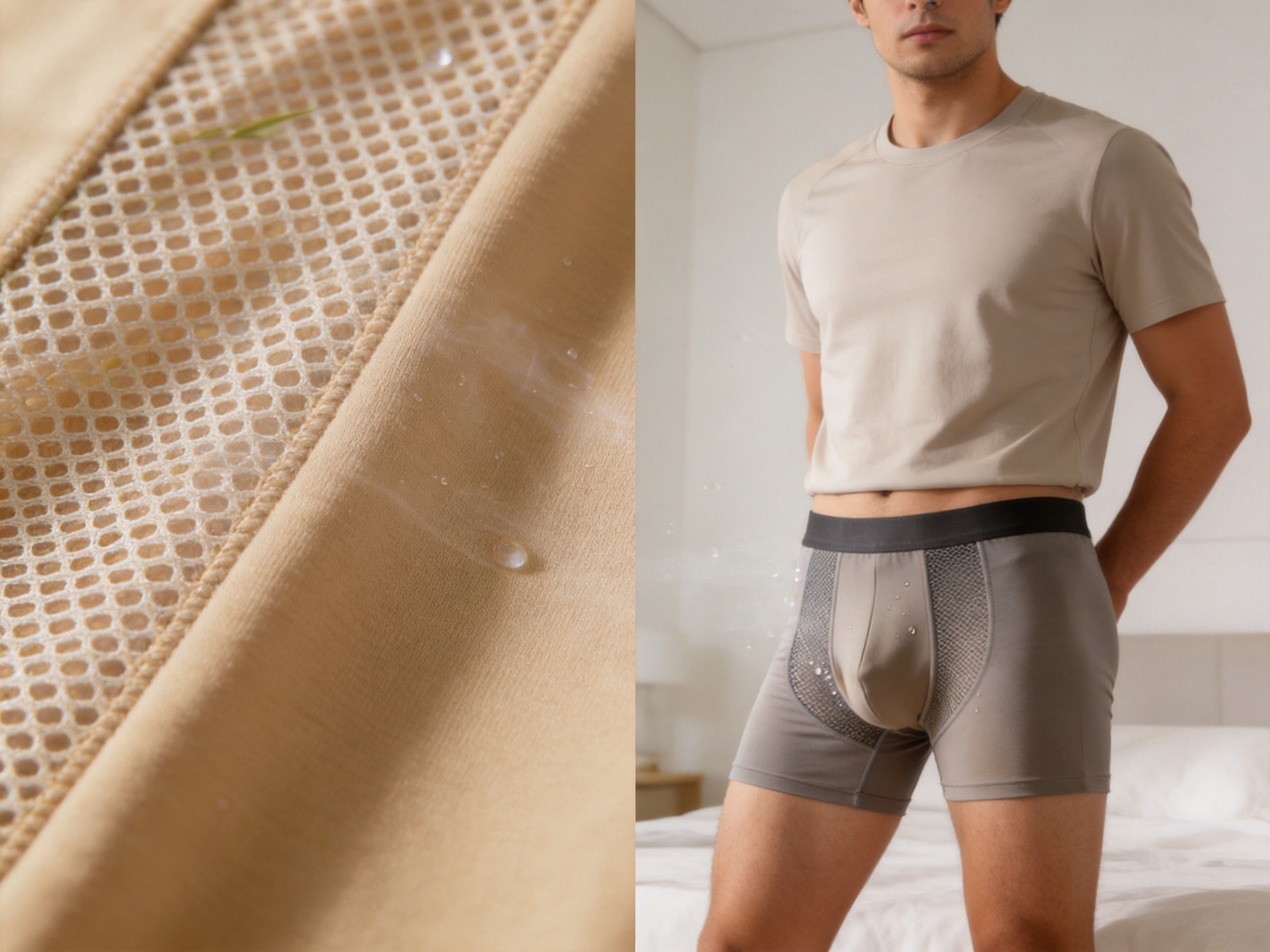
Small details often determine whether a customer becomes a repeat buyer. The bamboo fiber story may attract the initial purchase, but fit and durability determine whether the product earns long-term trust.
The waistband should recover after movement and washing while remaining comfortable during extended wear. Its width, tension, attachment stitch, and softness should be reviewed together.
The leg opening should stay in position without squeezing the upper thigh. Recovery and binding tension are especially important for customers who wear the product during active movement.
The seam joining mesh and jersey should be smooth, secure, and visually consistent. Differences in stretch should not create rippling or uncomfortable tension.
The fabric and elastic should retain acceptable appearance and function after the washing conditions communicated to customers.
Buyers should also review colorfastness because underwear is frequently washed and may be worn beneath light-colored clothing. Neutral shades such as black, white, gray, navy, and skin tones can support a core collection, while seasonal colors may be introduced after the base quality is approved.
The product fits a premium comfort story rather than a low-cost commodity story. Retail copy can focus on the following customer-facing benefits:
Breathable mesh panels help promote airflow in high-heat areas.
Bamboo-based fabric delivers a soft next-to-skin feel when correctly processed and finished.
Sweat-wicking construction helps manage moisture during daily wear.
The boxer brief silhouette offers close-to-body coverage and a secure fit.
An elastic waistband helps the garment remain stable during movement.
OEM and ODM options allow brands to customize the product for their own market.
Search-focused product pages can use phrases such as “premium breathable underwear,” “organic bamboo underwear,” “bamboo mesh boxer briefs,” “moisture-wicking men’s underwear,” and “custom bamboo underwear manufacturer.” These keywords should be placed naturally in the title, introduction, specifications, image alt text, and FAQ content. The wording should still match the verified product details and final certification status.
Begin with a direct benefit statement, followed by fabric composition, construction details, fit information, care instructions, testing or certification information, customization options, and an inquiry form. Buyers want to know not only what the product feels like, but also whether the supplier can reproduce it consistently at commercial volume.
A ready design can be adapted into a private-label product through changes to branding, colors, packaging, and selected measurements. An ODM project can go further by modifying the mesh placement, rise, inseam, waistband, pouch construction, fabric blend, or product family.
Potential customization areas include:
Brand logo application on the waistband or internal label.
Custom color matching for core and seasonal collections.
Alternative mesh openness or panel dimensions.
Different leg lengths for brief, trunk, and longer boxer brief silhouettes.
Adjusted rise and pouch proportions for regional fit preferences.
Custom size grading and extended size ranges.
Retail packaging, barcode labeling, and carton presentation.
Material changes that support a buyer’s fiber or certification policy.
Customization should be controlled through sample approvals. Every change can affect cost, production time, minimum order quantity, and testing requirements. A more open mesh may improve airflow but affect opacity. A heavier waistband may improve stability but change the hand feel. A longer leg may reduce ride-up for some customers but alter the silhouette. The factory and buyer should evaluate these trade-offs together.
The following checklist can help an importer or brand prepare a pre-production review:
| Area | Review items |
|---|---|
| Fabric | Composition, weight, width, stretch, recovery, shade, hand feel, mesh regularity, and surface defects |
| Fit | Waist, rise, inseam, leg opening, pouch, side seam, and size grading |
| Sewing | Stitch density, seam strength, thread tension, skipped stitches, loose threads, and panel alignment |
| Comfort | Seam smoothness, waistband pressure, leg-opening pressure, fabric softness, and movement stability |
| Performance | Moisture management, breathability, dimensional stability, pilling, colorfastness, and elastic recovery |
| Compliance | Fiber labeling, chemical safety, social compliance, certification scope, and destination-market requirements |
| Packing | Folding, labels, barcodes, polybags, cartons, quantity, and shipping marks |
A third-party inspection may be appropriate for larger orders or for brands with strict retail requirements. Inspection criteria should be agreed before production begins so that the factory and buyer use the same acceptance standard.
Care instructions should be based on actual testing of the final fabric and trim combination. Bamboo-based fabrics may require careful washing guidance to preserve softness, shape, and color. The final care label should state the approved washing temperature, drying method, ironing restrictions, and any warnings relating to bleach or aggressive chemicals.
Customers can generally protect the life of underwear by washing it according to the care label, avoiding excessive heat when not approved, separating strong-color garments during the first washes, and allowing sufficient drying. Brands should not publish care instructions based on assumptions; they should use the supplier’s tested recommendation for the finished product.
They are men’s boxer briefs made with a combination of bamboo mesh and bamboo jersey. The mesh panels are intended to improve airflow, while the jersey sections provide coverage and a soft, comfortable base. The style also includes an elastic waistband for a secure fit.
Yes. The design is intended for daily use, including work, travel, commuting, and general activities. The close-fitting boxer brief shape provides coverage beneath clothing, while the mesh construction is designed to support ventilation and moisture comfort.
The product is designed with sweat-wicking bamboo fabric to help manage moisture. Actual performance depends on the final fiber composition, fabric construction, finishing, fit, and care. Brands should request testing or sample evaluation before making detailed performance claims.
Bamboo mesh generally has a more open and breathable structure, while bamboo jersey is commonly used for a smoother, more continuous surface with comfortable stretch and coverage. Combining the two allows ventilation to be targeted without making the entire garment highly open.
Yes. The manufacturer provides OEM and ODM services. Possible customizations include fabric selection, color, size grading, waistband branding, mesh-panel placement, packaging, labels, and other garment specifications, subject to development and production requirements.
The product is promoted within an organic bamboo underwear and sustainable underwear manufacturing context, but buyers should confirm the exact fiber composition and certification scope for the specific order. “Organic” should only be used in final retail claims when the relevant material and product documentation supports it.
The manufacturer identifies standards and certifications including FSC, OCS, OEKO-TEX 100, GOTS, WRAP, and BSCI within its company and supply-chain information. Buyers should request current documents and verify whether they apply to the specific material, factory, product, and production period.
Buyers should review the fabric, fit, sewing, comfort, wash performance, colorfastness, shrinkage, waistband recovery, mesh stability, and compliance documentation. Wear testing on multiple body sizes and inspection after repeated washing can reveal issues that are not visible on an unwashed sample.
It is suited to underwear brands, retailers, importers, and private-label programs seeking a premium breathable underwear style with bamboo-based fabric, targeted ventilation, sweat-wicking positioning, and OEM/ODM flexibility.
Nantong Tianhong Textile Technology Co., Ltd. is located in Nantong, Jiangsu Province, China. The company has specialized in underwear research, manufacturing, and sales since 2001 and serves clients in Europe, North America, and China.
Before requesting a quotation, a buyer can send the following information to make the discussion more productive:
Target market and intended retail positioning.
Required fiber composition and any approved-material list.
Target size range and measurement chart.
Preferred colors and color-matching standard.
Logo, label, packaging, and barcode requirements.
Expected order quantity and delivery schedule.
Required testing, certification, and social-compliance documents.
Desired mesh placement, leg length, rise, and waistband details.
Destination country and applicable import or labeling rules.
Sample approval process and inspection requirements.
A clear inquiry allows the manufacturer to recommend suitable materials and identify any changes that could affect price, lead time, minimum order quantity, or compliance. It also makes it easier to compare quotations from different suppliers on the same technical basis.
Mesh Panel Boxer Briefs offer a practical product proposition: breathable construction, bamboo-based softness, moisture-management positioning, close-to-body support, and a secure elastic waistband. These benefits address common consumer concerns without relying on an overly specialized silhouette.
The product also gives brands several ways to differentiate their collections. The mesh panel can become a recognizable design signature. Bamboo jersey can support a softer premium hand feel. Sustainability documentation can strengthen responsible-material communication when properly verified. OEM/ODM capabilities allow the same basic concept to be adapted for different markets, body shapes, price levels, and packaging strategies.
The supplier’s long operating history, underwear specialization, textile research focus, international customer experience, and stated commitment to environmentally friendly functional fabrics provide a useful manufacturing foundation. Buyers still need to approve the exact product and documents for each order, but the combination of product engineering and factory capability makes this style suitable for a considered private-label or branded underwear program.
For a buyer searching for a premium breathable underwear manufacturer, the most effective next step is to request a technical discussion and development sample. Confirm the bamboo fiber type, mesh and jersey specifications, fit chart, test plan, certification scope, MOQ, production schedule, and packaging requirements before moving to bulk approval.
1. Product specification for Mesh Panel Man’s Boxer Briefs, reference THDY-035.
2. Manufacturer-provided company information for Nantong Tianhong Textile Technology Co., Ltd.
3. Manufacturer-provided information on bamboo mesh, bamboo jersey, moisture management, and OEM/ODM underwear production.
4. International Organization for Standardization, guidance and standards related to textile testing, fiber composition, colorfastness, and dimensional stability.
5. OEKO-TEX Association, general framework for textile product safety and harmful-substance testing.
6. Global Organic Textile Standard, general requirements for certified organic fibers, processing, manufacturing, and labeling.
7. Organic Content Standard, general chain-of-custody and organic-material verification principles.
8. Forest Stewardship Council, general principles for responsible material sourcing and chain-of-custody systems.
9. WRAP, general principles for responsible production and workplace compliance.
10. BSCI-related social compliance guidance for responsible supply-chain management.

Copyright © Nantong Tianhong Textile Technology Co., Ltd. All Rights Reserved.
 Room 806, Building D, Jingyang Plaza, Chongchuan District, Nantong City, Jiangsu Province,china


 English
 Español
 русский
 عربى