Content
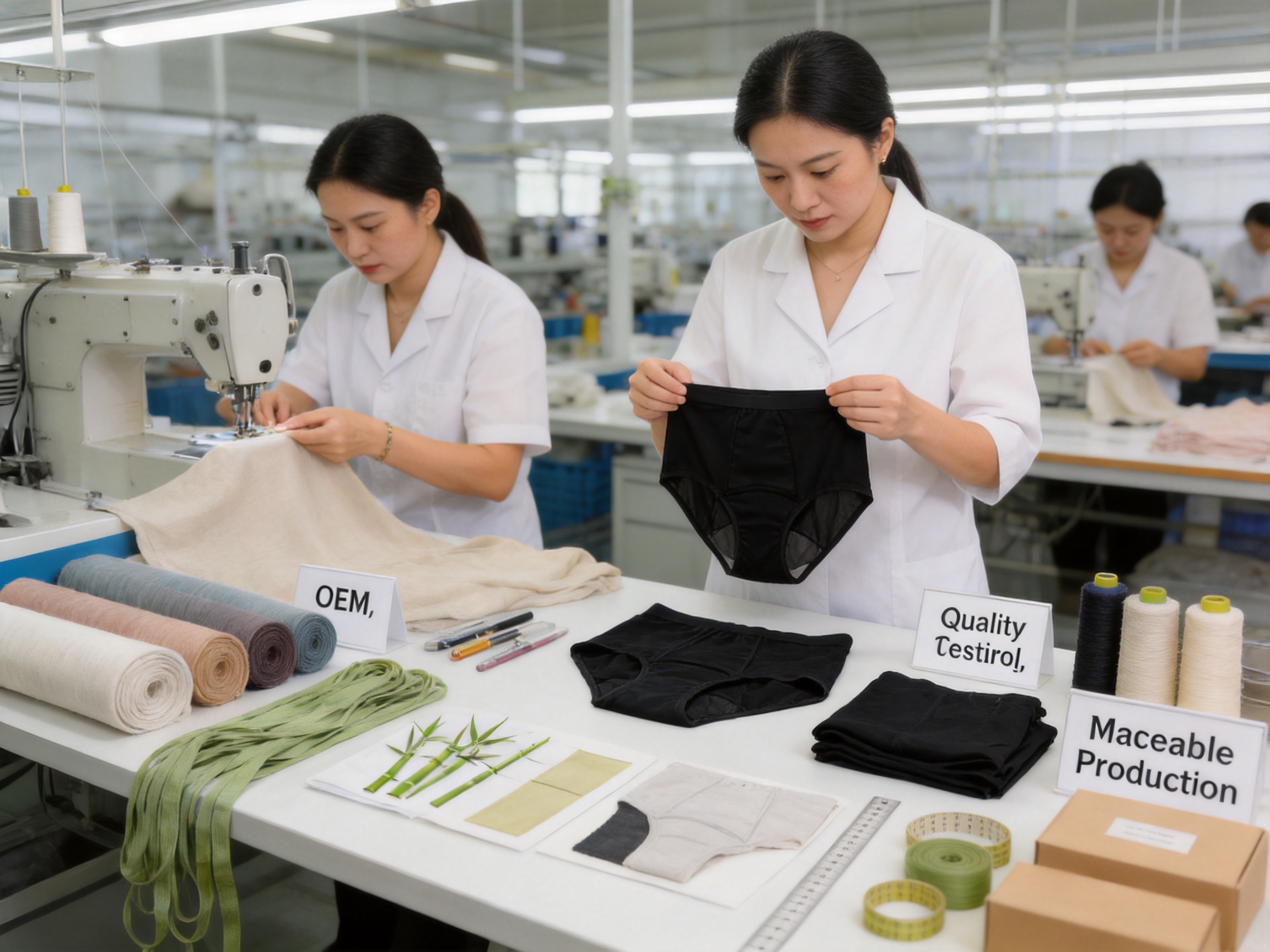
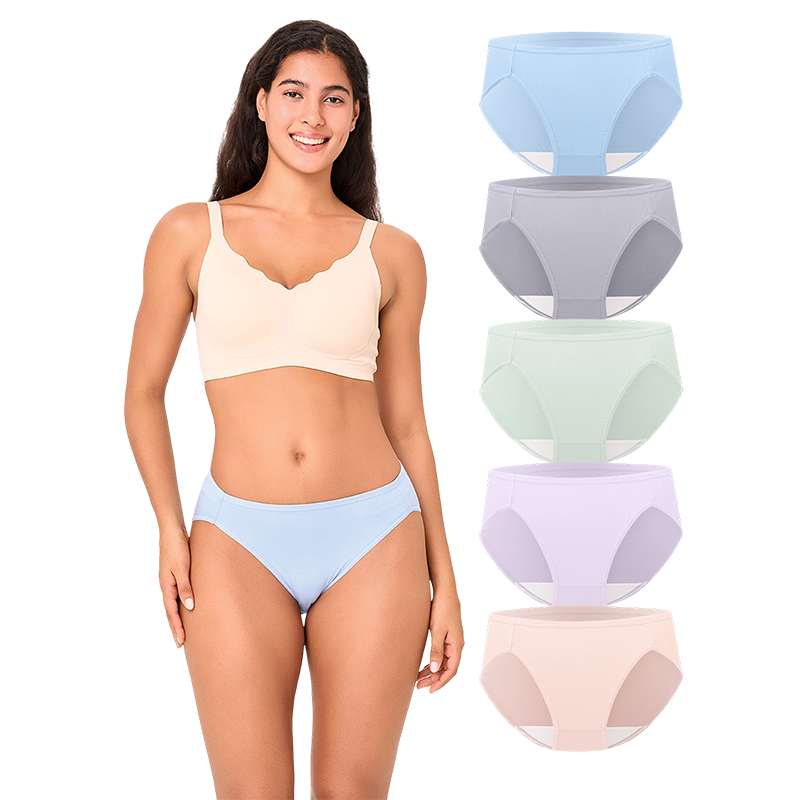
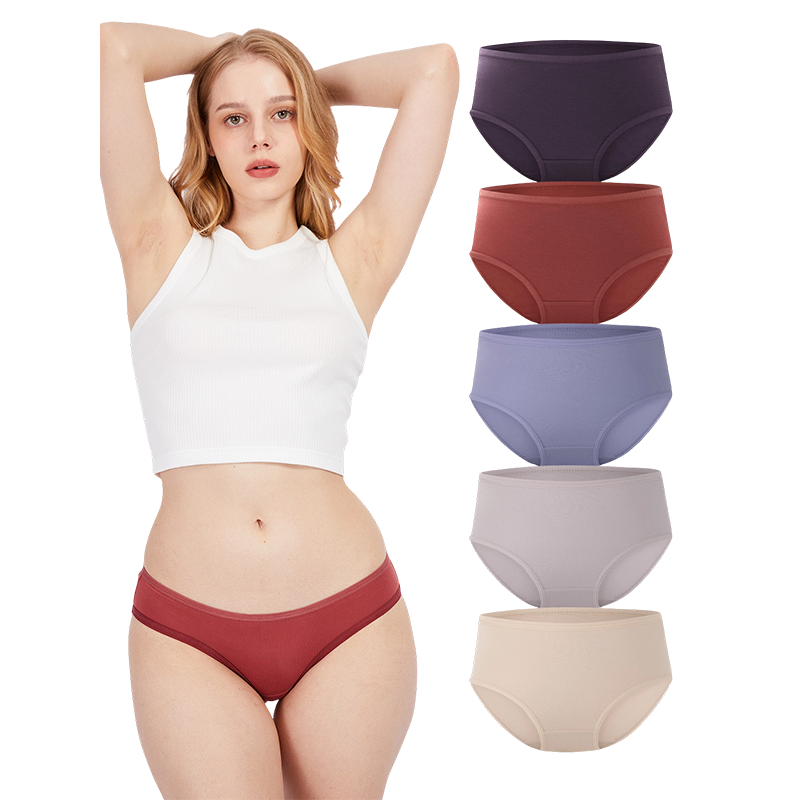
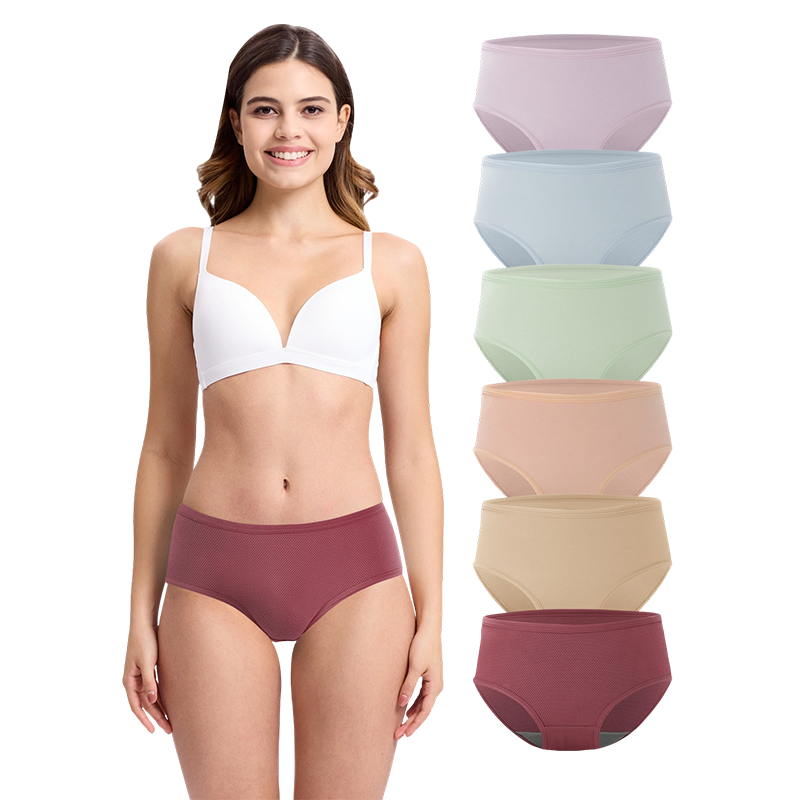
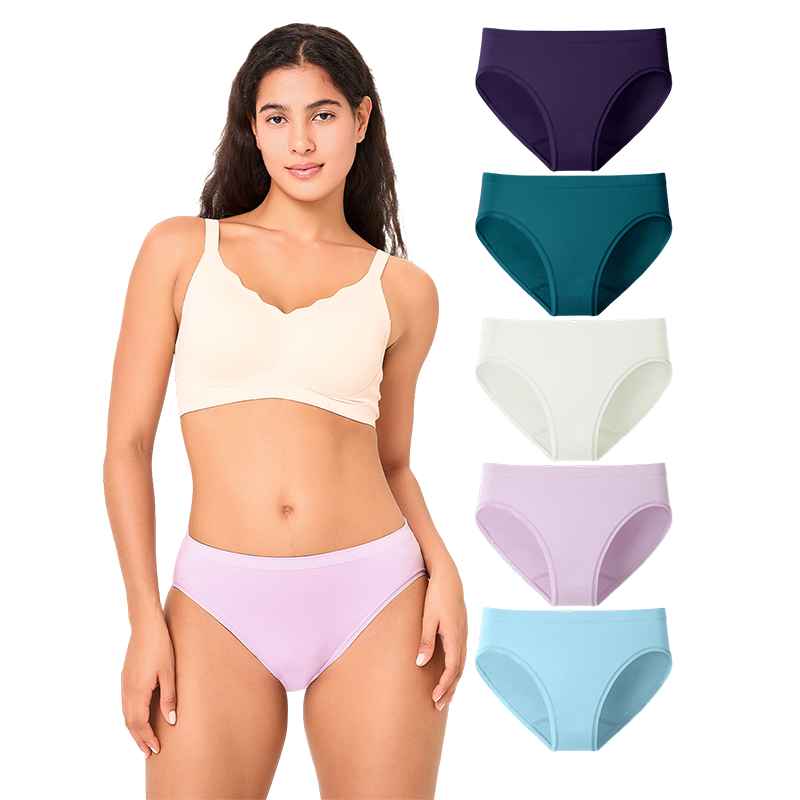
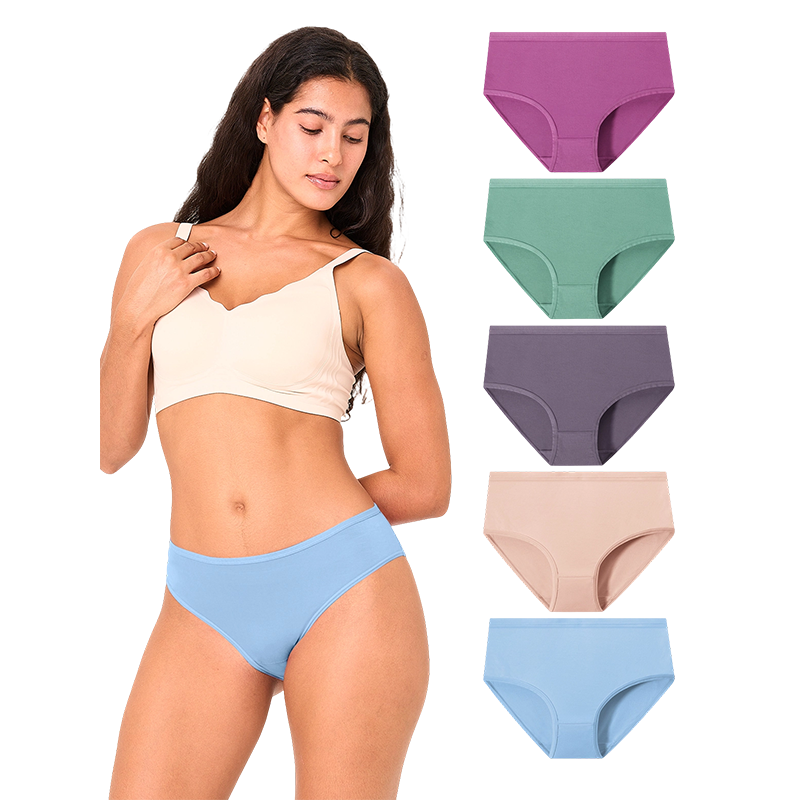
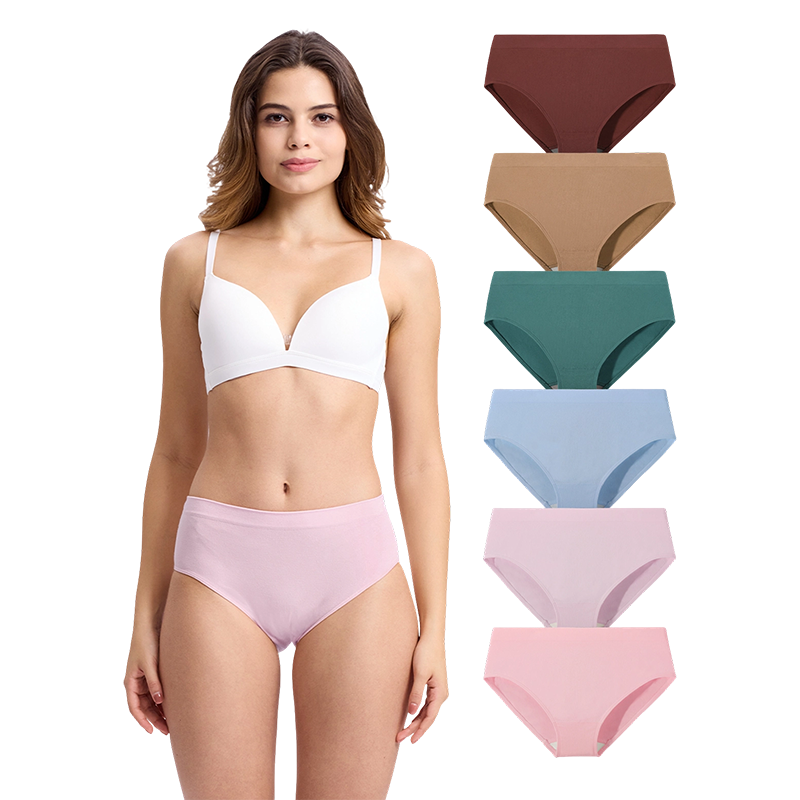
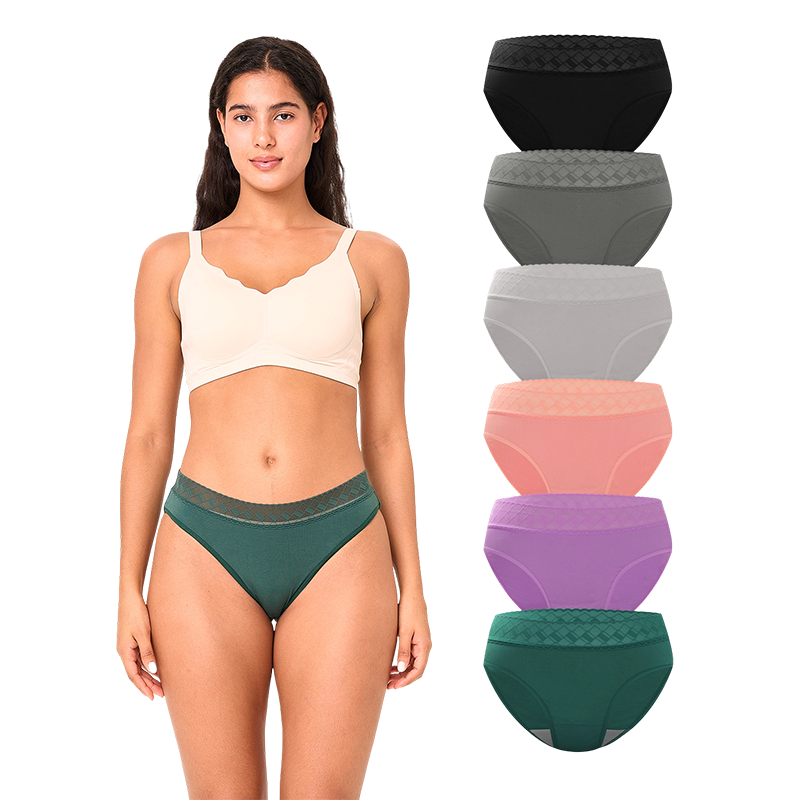
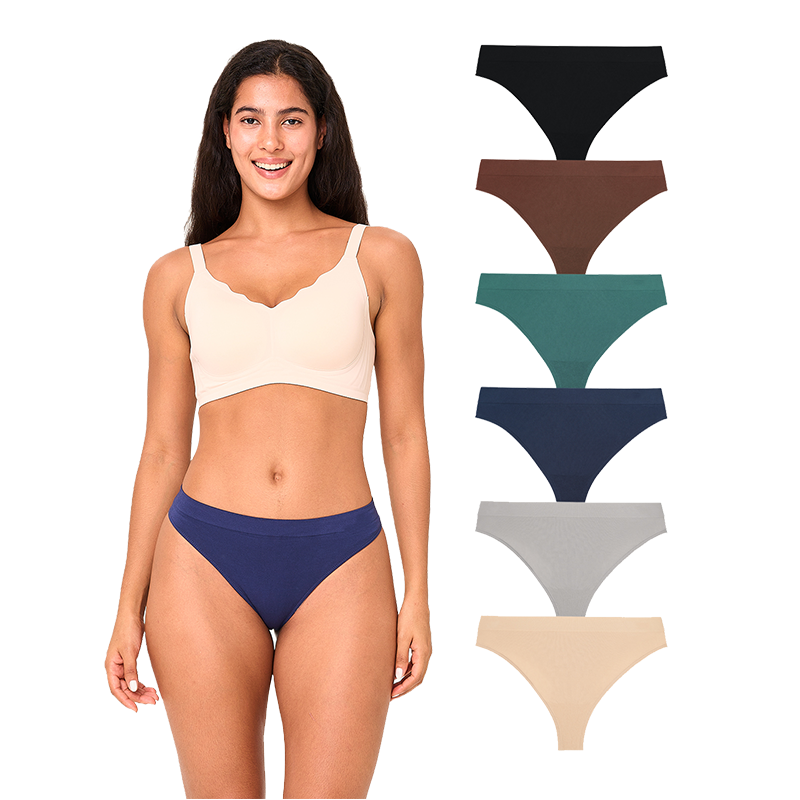
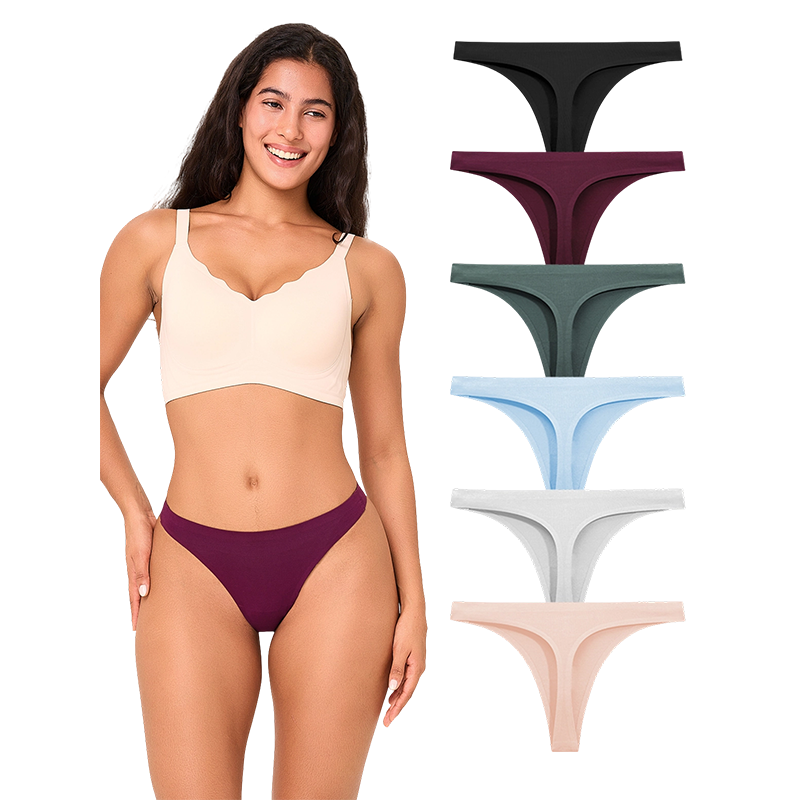
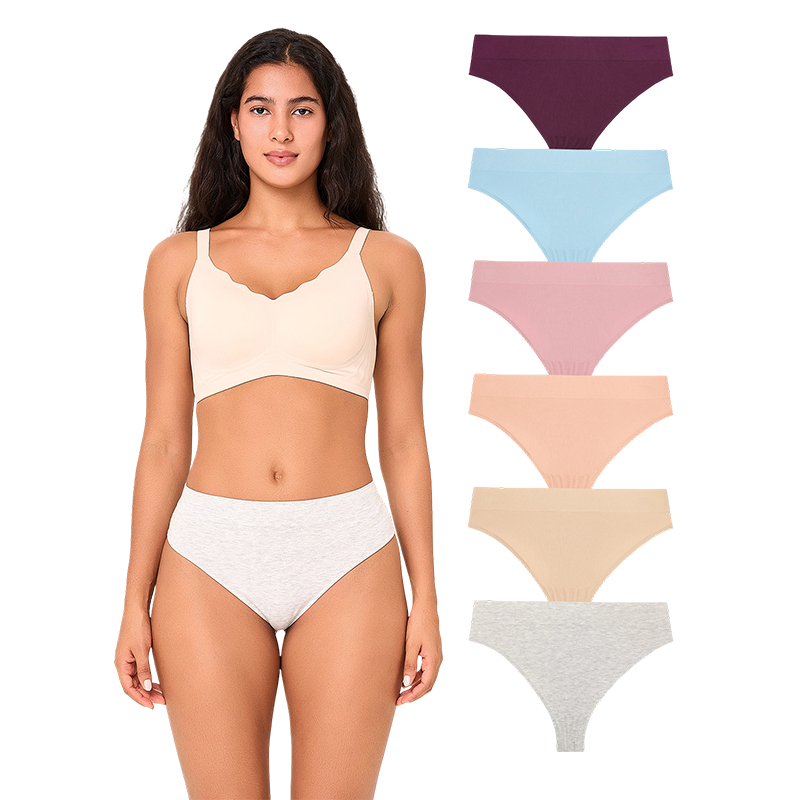
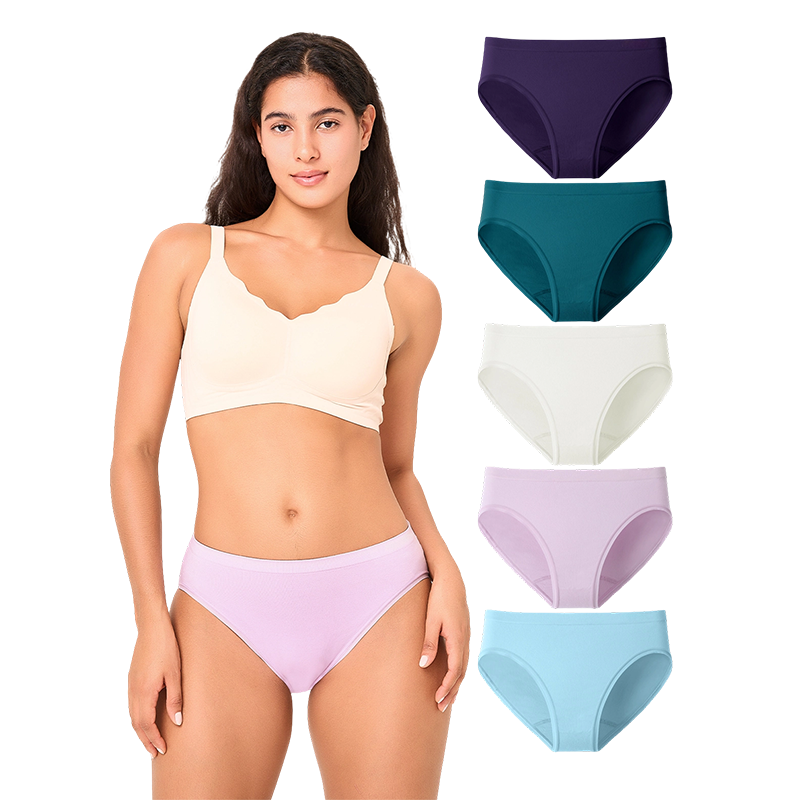
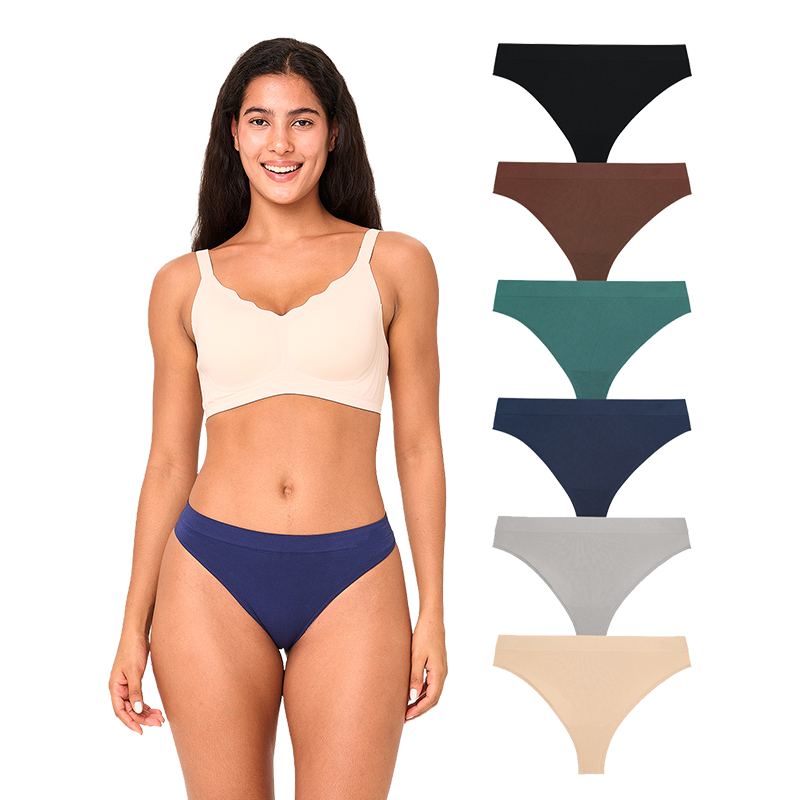
High-waisted period panties made with bamboo fiber, a multi-layer absorbent structure, and a breathable TPU barrier provide a reusable alternative to disposable menstrual products. This design combines full lower-abdominal coverage, soft stretch comfort, leak-resistant protection, and a more polished fit than many basic period underwear styles.
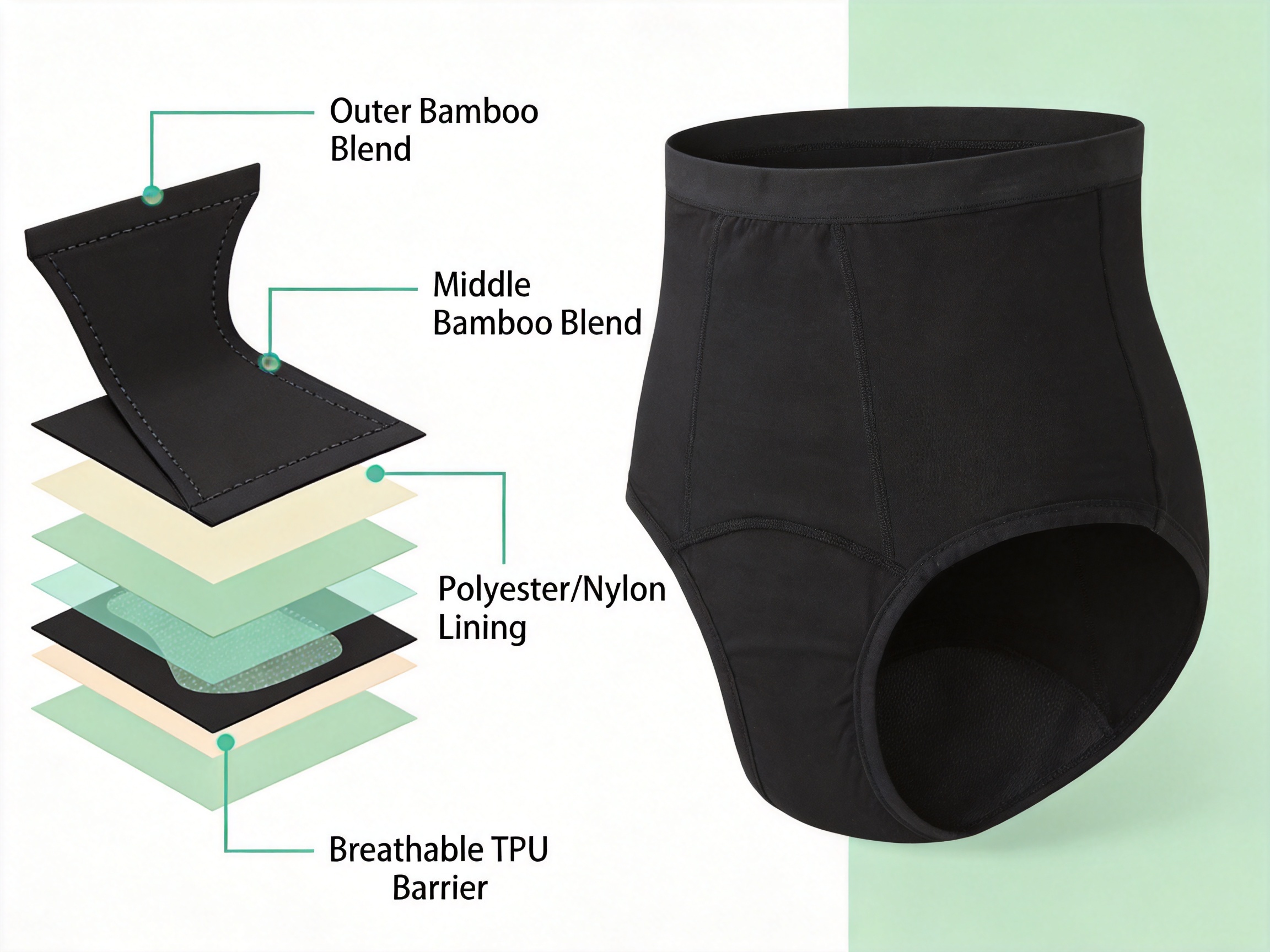
The featured period panties use a body fabric made from 95% bamboo fiber and 5% spandex. The lining combines 80% polyester and 20% nylon, while the middle layer uses another 95% bamboo fiber and 5% spandex blend. A breathable TPU layer adds functional protection. Three-needle, five-line stitching supports seam strength and helps the garment withstand repeated wear and washing.
For brands, retailers, and private-label buyers, this product offers a practical foundation for an OEM or ODM menstrual underwear collection. Nantong Tianhong Textile Technology Co., Ltd. supports product research, manufacturing, customization, and international supply for underwear clients. Its textile expertise, production experience, sustainable-material focus, and quality-management certifications make it suitable for buyers seeking premium breathable underwear and organic bamboo underwear solutions.
Menstrual underwear has moved from a niche product into a regular category within intimate apparel. Consumers now look for reusable menstrual protection that feels like ordinary underwear, fits securely, and reduces dependence on disposable pads and tampons. Product expectations have also become more demanding. Shoppers want soft fabrics, attractive silhouettes, dependable coverage, breathable construction, and easy care instructions in one garment.
High-waisted period panties respond to several of these needs at the same time. The higher rise covers more of the abdomen and back than a low-rise brief. That additional coverage can create a more secure feeling during sleep, travel, work, exercise, or long periods away from home. It also gives brands a shape that works well with contemporary underwear collections and extended-size ranges.
Comfort remains central to the buying decision. Menstrual products are worn for several hours, and many users experience increased sensitivity during their period. A rough gusset, tight waistband, poorly placed seams, or non-breathable barrier can quickly damage the wearing experience. The featured construction addresses these concerns through bamboo-based fabric, elastic stretch, a soft-touch lining, a functional middle layer, and a breathable TPU film.
For manufacturers and buyers, the category also presents an opportunity to differentiate through materials and engineering rather than relying only on color or decoration. A well-designed period panty can communicate sustainability, comfort, technical performance, and long-term value in a single product.
| Product element | Construction or material | Buyer benefit |
|---|---|---|
| Silhouette | High-waisted period panty | Greater abdominal and back coverage with a secure fit |
| Main body fabric | 95% bamboo fiber and 5% spandex | Soft hand feel, stretch, and breathable comfort |
| Lining | 80% polyester and 20% nylon | Durable contact layer with a smooth, gentle touch |
| Middle layer | 95% bamboo fiber and 5% spandex | Adds structure and supports the multi-layer wearing experience |
| Barrier | Breathable TPU | Helps create a leak-resistant protective zone |
| Seam method | Three-needle, five-line stitching | Reinforced construction for repeated use |
Material percentages describe the specified composition of each component. Final buyers should request a technical specification sheet, approved sample, test report, and care label before making product-performance or environmental claims in retail packaging.
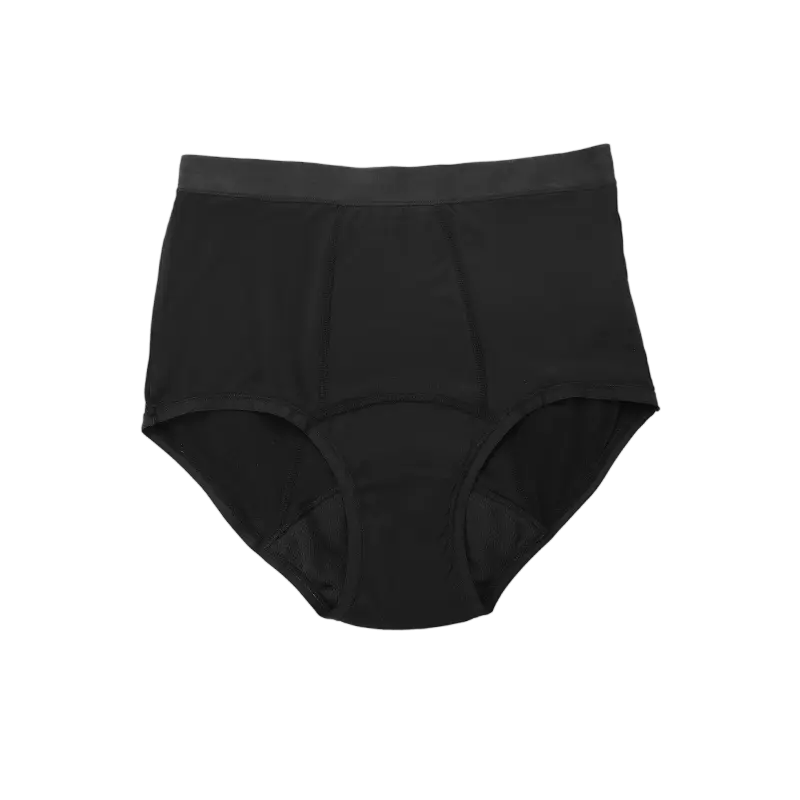
High-Waisted Period Panties
The rise of a period panty affects both comfort and perceived security. A high-waisted design extends above the hips and provides additional coverage across the lower stomach. This can be especially useful for users who prefer a stable fit during overnight wear or who dislike the feeling of a waistband sitting directly across the hip bones.
Higher coverage also supports product positioning. A brand can present the style as a combination of menstrual care and everyday shaping-inspired comfort without describing it as medical compression. The silhouette works under high-waisted trousers, skirts, dresses, and sleepwear. It can also appeal to consumers who prefer fuller underwear independent of menstruation.
The waist height should be evaluated together with elastic recovery, leg opening tension, gusset width, and size grading. A high rise alone does not guarantee comfort. Poor pattern development may cause rolling, digging, or excess fabric. A professional manufacturer should test the garment on multiple body sizes and assess the fit after washing, not only on a fresh sample.
When reviewing a high-waisted period panty sample, check whether the waistband stays flat while the wearer sits, bends, and walks. Examine whether the gusset remains centered and whether the rear protection extends far enough for the intended use. Test the leg openings for pressure marks after several hours. Review the front rise and back rise separately because a comfortable front fit does not always indicate sufficient rear coverage.
Brands should define their target customer before finalizing the pattern. A sleep-focused style may need a wider rear absorbent zone and a softer waistband. An activewear-oriented style may require closer leg openings and faster-drying fabric. A premium everyday style may emphasize smooth edges, minimal bulk, and a refined appearance under clothing.
The body fabric uses 95% bamboo fiber and 5% spandex. Bamboo-based textile materials are often selected for their soft touch and comfortable moisture-handling properties. The addition of spandex gives the garment stretch, helping it move with the body while maintaining a close fit around the waist and hips.
Softness matters particularly in period underwear because the garment remains in close contact with sensitive skin for extended periods. A smooth fabric can reduce the distracting sensation associated with coarse fibers or stiff elastic. The bamboo-rich blend also gives the product a natural-material story that can support a sustainable underwear collection, provided the final fiber designation and certification documentation are accurately stated.
Breathability should be considered as part of the entire product system rather than attributed to one fabric alone. The body material, lining, middle layer, TPU barrier, seam density, gusset width, and garment fit all influence airflow and humidity. A breathable TPU layer is designed to provide protective function while avoiding the fully sealed feeling associated with some impermeable films.
Marketing teams should avoid presenting bamboo fiber as a guarantee against irritation, odor, infection, or medical conditions. Those claims require appropriate evidence and may be regulated in different markets. A safer product description focuses on the documented material composition, soft hand feel, breathable construction, reusable design, and intended menstrual-care function.
Five percent spandex is a measured component rather than a decorative detail. It contributes to stretch and recovery in the body and middle layers. For period underwear, controlled stretch helps the gusset stay closer to the body, which supports comfort and reduces shifting during movement.
Stretch performance depends on yarn quality, knitting or fabric construction, finishing, cutting direction, and sewing tension. A product can contain the correct spandex percentage and still feel too tight or too loose if the pattern is not graded properly. This is why sample fitting, wash testing, and size-set approval are important steps in OEM and ODM production.
The product is built from several functional layers rather than a single fabric. Each component has a separate role. The lining creates the skin-facing contact surface. The middle layer supports the internal construction. The TPU barrier helps resist fluid transfer. The outer body fabric completes the garment’s appearance and provides stretch comfort.
This type of engineering gives manufacturers more control over product performance than a standard brief with an added pad. The absorbent or moisture-managing area can be integrated into the garment, reducing movement between components. The result is a cleaner product profile and a more consistent user experience when the pattern and sewing process are correctly controlled.
The supplied specifications identify the body, lining, middle layer, and breathable TPU. They do not state a specific absorbency volume, wear duration, or protection level. Those performance details should not be assumed from the material list. Buyers should establish a test method and agree on the required performance before production.
Absorbency testing should use a defined liquid volume, application rate, waiting period, and evaluation method. Leak-resistance testing should examine both the front and rear edges of the protective area. Wash durability testing should simulate the care process shown on the final label. Dimensional stability testing should measure waistband, leg opening, gusset length, and overall rise before and after washing.
Testing should also assess seam security, fabric pilling, colorfastness, odor after drying, TPU adhesion, and edge curling. If the product will be sold in more than one market, the buyer should review the applicable textile labeling, chemical-restriction, consumer-product, and menstrual-product requirements for each destination.
Buyer checkpoint: Do not use terms such as “overnight,” “heavy flow,” “all-day,” or “leak-proof” on packaging until the finished product has passed documented tests that support those claims.
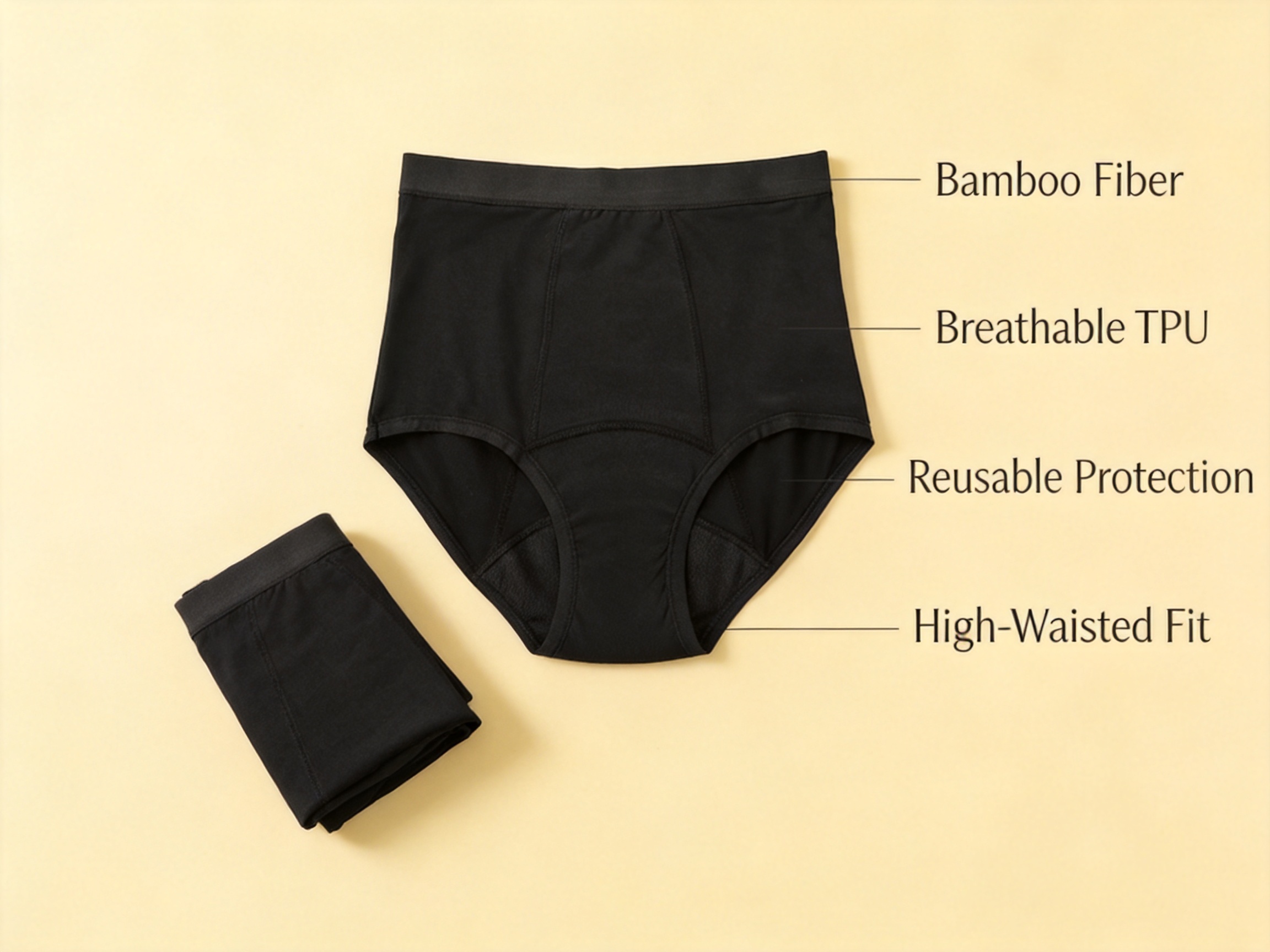
Thermoplastic polyurethane, commonly called TPU, is used in the product as a breathable protective layer. In menstrual underwear, the barrier must perform a difficult balancing task: it should help reduce leakage while preserving flexibility and avoiding an unnecessarily plastic or sealed sensation.
TPU can be integrated into a layered gusset structure, where it works with the lining and middle layer to create a protective zone. The final performance depends on film thickness, permeability, bonding method, coverage area, edge construction, and laundering conditions. A breathable barrier is not automatically the same as a fully waterproof barrier, and product claims should match the specific test results.
From a design perspective, the TPU layer should be placed where it provides useful protection without extending farther than necessary. Excess material may increase stiffness or bulk. Insufficient edge coverage may reduce protection during sitting, sleeping, or movement. The transition between the TPU area and the surrounding fabric also requires careful sewing and inspection.
A good menstrual underwear design does not treat protection and comfort as opposing goals. The barrier can be thin, flexible, and carefully shaped. The lining can soften the contact surface. The outer bamboo-rich layer can improve the hand feel of the garment. The high-waisted pattern can hold the layers in position without excessive compression.
Consumers often compare period panties with disposable pads. A reusable integrated product may feel less bulky because it does not require a separate adhesive pad. It may also reduce pad shifting during movement. However, fit and absorbency remain individual. Brands should provide clear guidance explaining when to change the garment and how to select a suitable style for light, moderate, or heavier menstrual days.
Three-needle, five-line stitching is specified for this product. This seam format is commonly associated with strong, stable construction in stretch garments. It can help distribute tension across the seam rather than concentrating stress in a single thread line.
Repeated washing is one of the major differences between period panties and disposable menstrual products. A reusable garment must maintain its shape, seams, elastic recovery, and protective-layer integrity over time. Sewing quality therefore affects both customer satisfaction and the brand’s return rate.
Seam engineering should be reviewed at the waistband, leg openings, gusset edges, and points where layered materials meet. The machine setting must match the fabric stretch and thickness. Excessive thread tension can create puckering or restrict movement. Insufficient tension can produce loose loops or seam openings. Needle selection, thread quality, operator skill, and in-line inspection all influence the final result.
The construction method is an advantage when it is supported by disciplined quality control. A named stitch format alone is not proof of durability. Buyers should request seam samples, conduct stretch testing, inspect the reverse side of the garment, and perform wash trials on production-intent materials.
The period underwear market includes simple cotton briefs, disposable-looking reusable inserts, athletic styles, lace-trimmed designs, and highly engineered menstrual garments. Competition is therefore not limited to one product type. The featured style can compete through a combination of comfort, coverage, materials, and manufacturing discipline.
A bamboo-rich body and middle layer create a clear comfort proposition. Compared with basic synthetic-only underwear, the product can offer a softer, more natural-feeling touch. Compared with non-stretch cotton briefs, the spandex content can support improved flexibility and closer body conformity.
The high-waisted silhouette gives the product a fuller profile than low-rise period panties. That can appeal to users who want additional abdominal coverage, especially at night or during long working days. It also creates a visually distinct style for a brand’s menstrual-care range.
The lining, middle layer, and breathable TPU barrier are incorporated into the garment. This integrated approach can offer a more stable wearing experience than a loose insert or separate pad. The product can be positioned as underwear first, rather than as a disposable product replacement that happens to be washable.
Three-needle, five-line sewing supports the durability message when production is properly controlled. Reusability is a central part of the value proposition, so seam strength and wash resistance deserve as much attention as fabric selection.
For private-label buyers, differentiation may come from customized colors, sizes, labels, packaging, gusset dimensions, waistband treatments, and product bundles. A manufacturer with underwear-specific expertise can help translate a brand brief into a manufacturable product rather than treating the garment as a generic cut-and-sew item.
Nantong Tianhong Textile Technology Co., Ltd. was established in 2001 and is located in Nantong, Jiangsu Province, a major textile manufacturing area in China. The company specializes in underwear research, manufacturing, and sales, with OEM and ODM services for established labels and clients in Europe, North America, and China.
This background is relevant to period underwear because the category requires coordination between textile selection, intimate-apparel patterning, layered construction, sewing, testing, and supply-chain management. A supplier that understands underwear production can address fit and comfort at the same time as technical protection.
The company identifies sustainable development, environmentally friendly functional fabrics, and traceable supply chain management as areas of focus. It also reports certifications and standards including FSC, OCS, OEKO-TEX 100, GOTS, WRAP, and BSCI. The exact scope, current validity, facility coverage, and product applicability should be confirmed during the buyer’s approval process. Certification names should be used in sales materials only when the relevant documentation supports the specific claim.
The buyer defines the target user, size range, intended menstrual flow, desired coverage, colors, branding, packaging, and sales market.
The factory confirms the bamboo fiber blend, spandex content, lining, middle layer, TPU specification, thread, elastic, labels, and packaging components.
Technicians develop the high-waisted silhouette, gusset shape, rise, leg opening, seam allowance, and size grading according to the approved brief.
Samples are sewn using production-intent materials so the buyer can assess fit, comfort, layer placement, appearance, and construction quality.
The sample is evaluated for absorbency, leakage resistance, wash durability, dimensional stability, stretch recovery, colorfastness, and seam performance.
Approved materials are cut, layered, sewn, inspected, finished, packed, and prepared for shipment under the agreed quality standard.
The workflow should remain documented from the initial brief through final inspection. A buyer’s approval should cover not only the visual sample but also the construction specification. Changes to the TPU, lining, elastic, thread, or fabric finish can alter performance even if the garment looks similar.
Traceability helps a brand identify where fibers, fabrics, trims, and finished goods originated. It also supports more accurate sustainability communication. Buyers should request fiber-content records, transaction certificates where relevant, test reports, batch information, and production records appropriate to the order and market.
Environmental claims require careful wording. Bamboo-derived materials may be promoted as part of a preferred-fiber strategy, but the precise fiber name and processing method must be verified. The phrase “organic bamboo” should not be used automatically simply because a product contains bamboo fiber. Organic status depends on the certified source and applicable standard.
Care instructions should be finalized with the factory after wash testing. In general, users should follow the product label, rinse or wash the garment promptly after use, avoid harsh chemicals unless specifically approved, and dry the panties thoroughly before storage. High heat may affect elastic recovery, fabric dimensions, or TPU performance, depending on the material specification.
Brands should provide practical care information rather than vague sustainability language. The consumer needs to know whether the garment can be machine washed, whether a laundry bag is recommended, whether fabric softener should be avoided, and whether tumble drying is permitted. Clear instructions help protect product performance and reduce unnecessary returns.
Period panties should not be marketed as permanently leak-proof. Their useful life depends on wear frequency, washing conditions, body fit, menstrual flow, and the garment’s tested capacity. A responsible product page explains the intended use and encourages users to select a suitable absorbency level or combine the garment with another menstrual product when appropriate.
This high-waisted period panty is suitable for underwear brands building a reusable menstrual-care line, retailers adding bamboo-based intimate apparel, hospitality or wellness businesses developing private-label products, and distributors seeking a customizable women’s underwear category.
It may appeal to consumers who prefer fuller coverage, soft fabrics, reusable products, and an underwear-like appearance. The style can be offered as a standalone product or as part of a wider range that includes different rises, colors, absorbency levels, and sizes.
Retailers should segment the product carefully. A customer searching for overnight coverage may prioritize rear gusset length and high-rise comfort. A customer looking for daily wear may prioritize thinness and invisibility under clothing. A customer focused on sustainability may want verified fiber and factory certifications. One product can serve several segments, but the product page should not make unsupported claims to satisfy all of them at once.
What absorbency or liquid-capacity result can the finished product demonstrate under an agreed test method?
What sizes are available, and can the factory provide a complete size chart with garment measurements?
Can the waistband, leg opening, gusset dimensions, color, label, packaging, and logo be customized?
Which certifications apply to the actual materials and production facility used for the order?
What are the minimum order quantities for standard and customized products?
Which wash-care instructions are supported by testing on the final production materials?
How are TPU bonding, seam strength, colorfastness, and dimensional stability inspected?
What is the approval process for pre-production samples and bulk-production samples?
Which export documents and quality records are supplied with the shipment?
How does the factory manage batch traceability and corrective action if a quality issue appears?
The product can serve as a base for a customized collection rather than a fixed commodity item. A brand may develop a signature waistband, add woven labels, choose a color palette, adjust the rise, refine the gusset, and create packaging that explains the multi-layer construction.
Customization should begin with the wearer’s needs. If the target market includes petite customers, grading should preserve the proportion between waist height and gusset placement. If the line includes extended sizes, the factory should validate the larger sizes separately rather than simply enlarging the smallest pattern. Larger sizes may require changes to elastic width, seam reinforcement, gusset geometry, and fabric recovery.
Color selection also affects production planning. Dark colors can support confidence and reduce visible staining, while lighter colors may communicate softness and freshness. The chosen dye process should be evaluated for colorfastness and compliance with the destination market. Packaging should explain material percentages accurately and should not imply certification that has not been verified.
The high-waisted shape provides additional front and back coverage, which may make it comfortable for sleep. However, overnight suitability depends on the wearer’s menstrual flow, size selection, gusset coverage, and the product’s tested absorbency. The finished product should not be labeled for overnight use unless performance testing supports that claim.
The body and middle layers use a bamboo fiber and spandex blend, and the protective construction includes a breathable TPU layer. Breathability is influenced by the complete garment system, including fit, fabric weight, layer thickness, and seam design. Buyers should request technical test information if breathability is a major selling point.
No. “Bamboo fiber” describes the material used in the specified composition, while “organic” refers to verified sourcing and certification requirements. A brand should confirm the exact fiber type and supporting documents before using organic claims on product pages or packaging.
The lining forms part of the skin-facing and internal construction. The specified blend is selected for durability and a gentle touch. Its final performance depends on fabric construction, finishing, and how it is joined to the other layers.
No. It is a strong construction approach, but durability also depends on thread quality, stitch density, sewing tension, fabric stretch, TPU integration, washing, and inspection. A buyer should confirm durability through physical testing rather than relying on the stitch description alone.
OEM and ODM projects can typically involve changes to color, labels, packaging, sizing, pattern details, and selected materials. The available options, minimum order quantities, lead times, and development charges should be confirmed directly with the manufacturer before sampling.
Consumers should follow the final care label. The product should generally be washed promptly after use, dried completely, and protected from care conditions that may damage stretch fibers or the TPU layer. The exact instructions should be based on testing with the approved production materials.
They can provide reusable menstrual protection, but suitability varies by flow, activity, wear duration, and personal preference. Some users may choose period panties alone, while others may combine them with another product during heavier days. Product education should support informed selection rather than promise universal replacement.
The importer should verify fiber content, labeling, test reports, chemical compliance, wash instructions, packaging claims, certification scope, production quality, size accuracy, and market-specific regulations. The approved sample should match the bulk-production specification.
Menstrual underwear combines intimate fit with technical textile performance. A supplier may be able to sew a basic brief without having the equipment, knowledge, or quality systems needed for layered menstrual products. An experienced underwear manufacturer can coordinate pattern engineering, fabric selection, multi-layer assembly, elastic application, seam control, and final inspection.
Nantong Tianhong’s focus on underwear products and OEM/ODM service provides a relevant manufacturing foundation for this category. Its history since 2001, location in a major textile hub, international customer experience, and stated emphasis on functional and environmentally responsible fabrics support the needs of buyers developing a premium breathable underwear range.
International cooperation also requires communication beyond production. Technical files, sample approvals, packaging artwork, inspection standards, shipping documents, and corrective-action procedures all affect a project’s success. A supplier that can manage these details gives a brand more control over quality and launch timing.
This high-waisted period panty combines a fuller silhouette with bamboo-rich fabric, stretch comfort, a multi-layer protective structure, breathable TPU, and three-needle, five-line stitching. Those features create a strong product proposition for brands seeking reusable menstrual underwear that feels softer and more refined than a basic synthetic brief.
The product’s competitive value should be built on verified performance rather than broad claims. Material composition, absorbency, leak resistance, wash life, breathability, and certification status should be documented through samples and testing. When those details are controlled, the garment can support a credible premium underwear range for retailers, private-label brands, and distributors.
Nantong Tianhong Textile Technology Co., Ltd. brings long-term underwear manufacturing experience, OEM/ODM capability, functional-fabric expertise, and a stated commitment to sustainable supply-chain development. For buyers looking for a custom high-waisted period panty, the next step is to request a technical pack, size chart, production sample, testing plan, certification documentation, and quotation based on the intended market.
1. Product specification supplied for High-Waisted Period Panties, including fiber composition, layer construction, breathable TPU, and three-needle, five-line sewing details.
2. Nantong Tianhong Textile Technology Co., Ltd. company information supplied for this article, including establishment history, OEM/ODM services, textile specialization, and international customer base.
3. International Organization for Standardization. ISO 3758, Textiles—Care Labelling Code Using Symbols.
4. Global Organic Textile Standard. GOTS quality and processing criteria for certified organic textiles.
5. OEKO-TEX Association. Standard 100 requirements for testing harmful substances in textiles and textile components.
6. Forest Stewardship Council. Chain-of-custody principles for responsible material traceability where applicable.
7. Textile Exchange. Preferred Fiber and Materials guidance for responsible fiber sourcing and sustainability communication.
8. WRAP. Principles for ethical manufacturing, workplace standards, and responsible production.

Copyright © Nantong Tianhong Textile Technology Co., Ltd. All Rights Reserved.
 Room 806, Building D, Jingyang Plaza, Chongchuan District, Nantong City, Jiangsu Province,china

 English
 Español
 русский
 عربى