Content
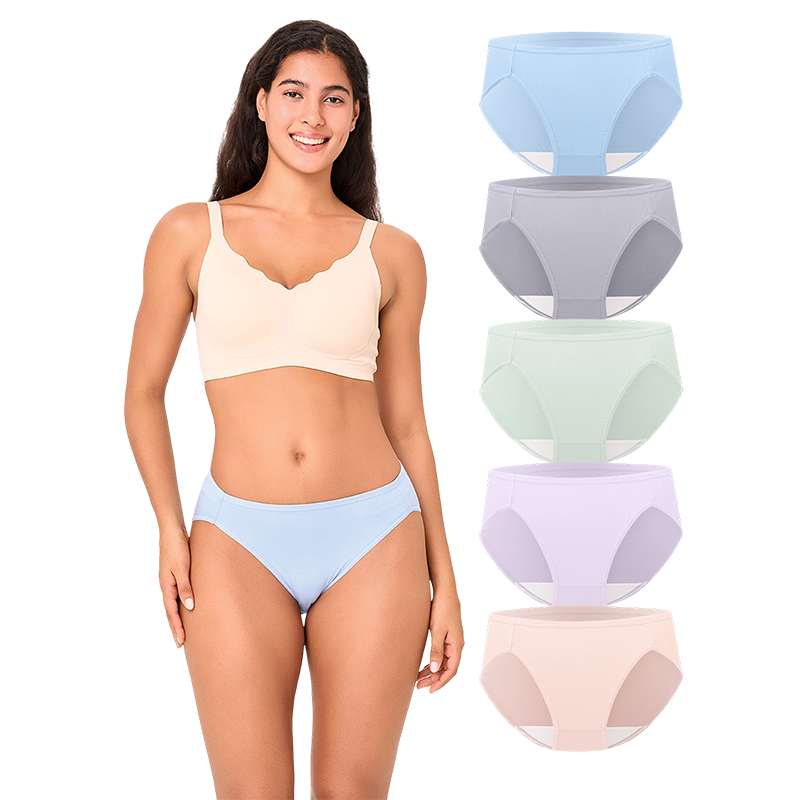
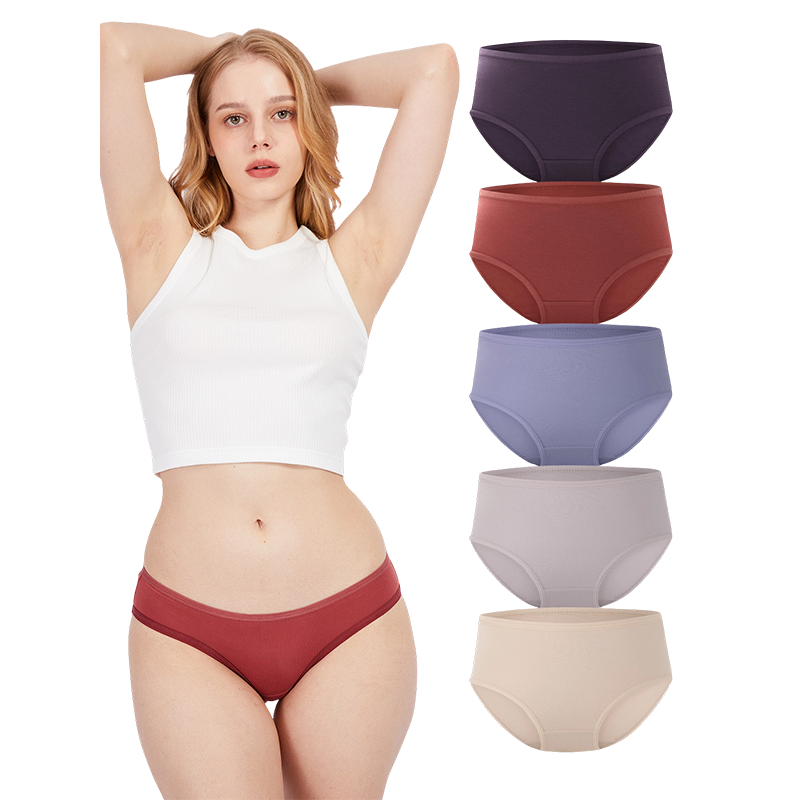
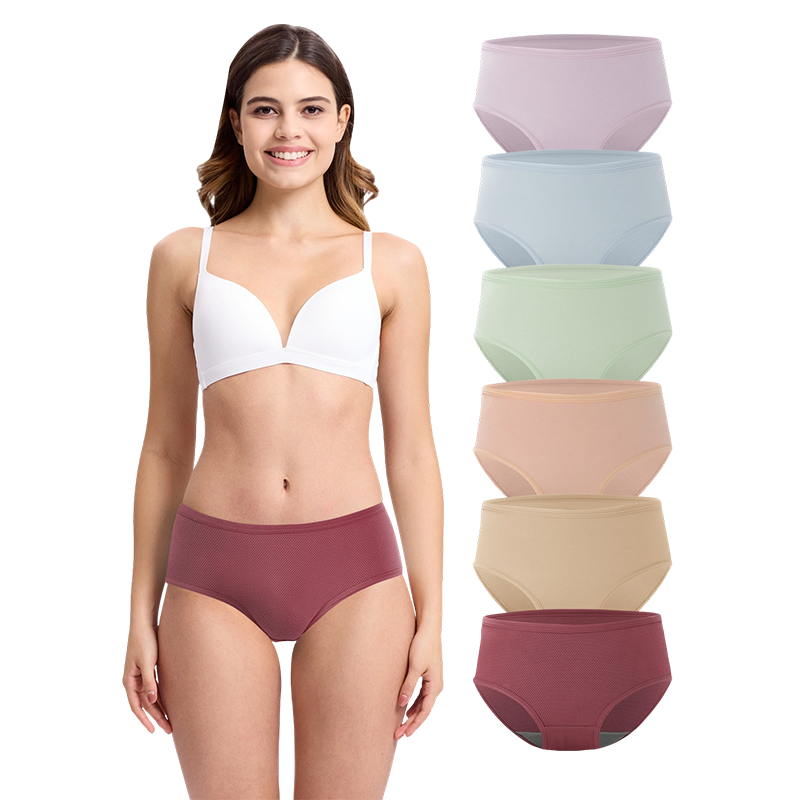
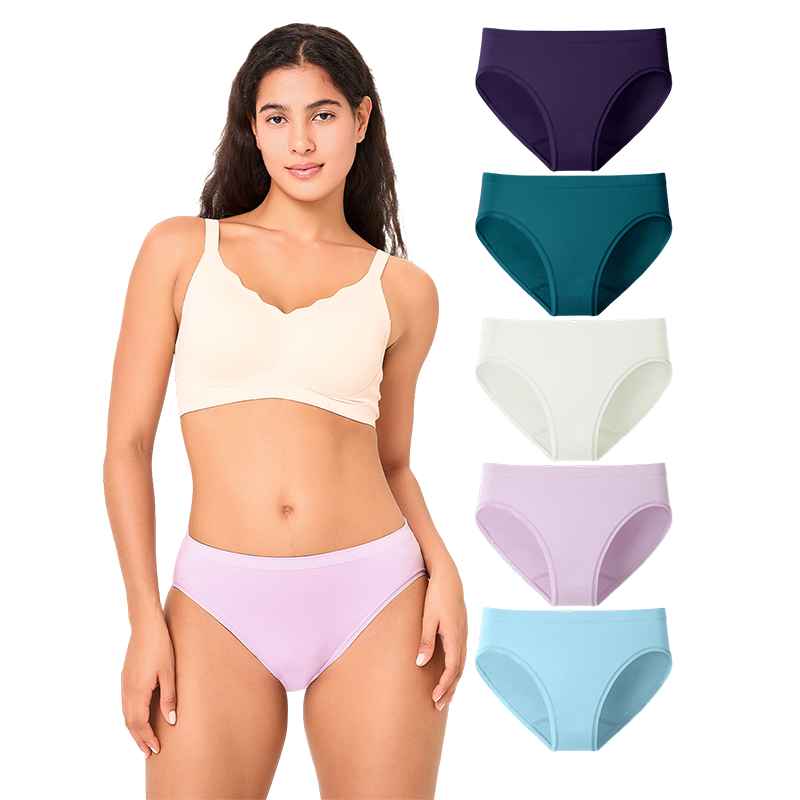
Girls’ briefs with cartoon prints are a strong choice for children’s underwear collections that need comfort, easy movement, cheerful styling, and dependable everyday performance. The THDY-020 design combines printed fabric, a continuous fold-over waistband, self-fabric binding around the leg openings, and a brief silhouette that provides practical coverage without unnecessary bulk.
Compared with basic children’s briefs, this design offers a more finished appearance, improved edge comfort, better shape retention, and a closer fit around the waist and legs. The cartoon print supports age-appropriate visual appeal, while the construction details help the garment remain comfortable during school, play, travel, and sleep.
For retailers, importers, private labels, and distributors, the product is also suitable for OEM and ODM development. Its simple but effective construction can be adapted through fabric selection, print artwork, colorways, size grading, labels, packaging, and production quantities. The manufacturer behind the product has experience in underwear research, manufacturing, supply-chain management, functional textiles, and international OEM/ODM cooperation.
Buyers evaluating this type of product should focus on four areas: fabric comfort, waistband engineering, leg-opening finishing, and quality-control consistency. These factors determine whether a girls’ brief performs better than a low-cost basic style after repeated washing and daily wear.
THDY-020 is a girls’ brief designed around a familiar and commercially reliable underwear shape. The brief silhouette provides coverage across the front and back while keeping the leg line relatively open. This makes it suitable for everyday use beneath school uniforms, dresses, skirts, casual clothing, and sleepwear.
The key visual feature is the cartoon print. Printed fabric gives the garment a playful identity and allows brands to create coordinated collections for different age groups. Instead of relying only on a solid color or a decorative trim, the print becomes part of the fabric surface, giving the product a complete and consistent appearance.
The construction uses a continuous waistband with folded edges. This detail creates a smooth transition at the waist and helps reduce the hard, exposed feeling that can occur with poorly finished elastic or rough seams. The leg openings use self-fabric binding, meaning the edge is finished with fabric that coordinates with the body material. This supports a neat appearance and helps the leg openings sit close to the body.
The product information identifies the material generally as printed fabric. Buyers seeking a specific fiber composition should confirm the final blend, weight, stretch percentage, colorfastness requirements, and testing standard with the factory during sampling. This is particularly important when the product will be sold under claims such as organic, recycled, bamboo-based, cotton-rich, or sensitive-skin friendly.
Product snapshot
Product: Girls’ Briefs with Cartoon Prints
Product code: THDY-020
Category: Girls’ Underwear
Style: Brief silhouette
Design: Cartoon-printed fabric
Waist finish: Continuous fold-over waistband
Leg finish: Self-fabric binding
Commercial use: Retail collections, private labels, OEM programs, and ODM development
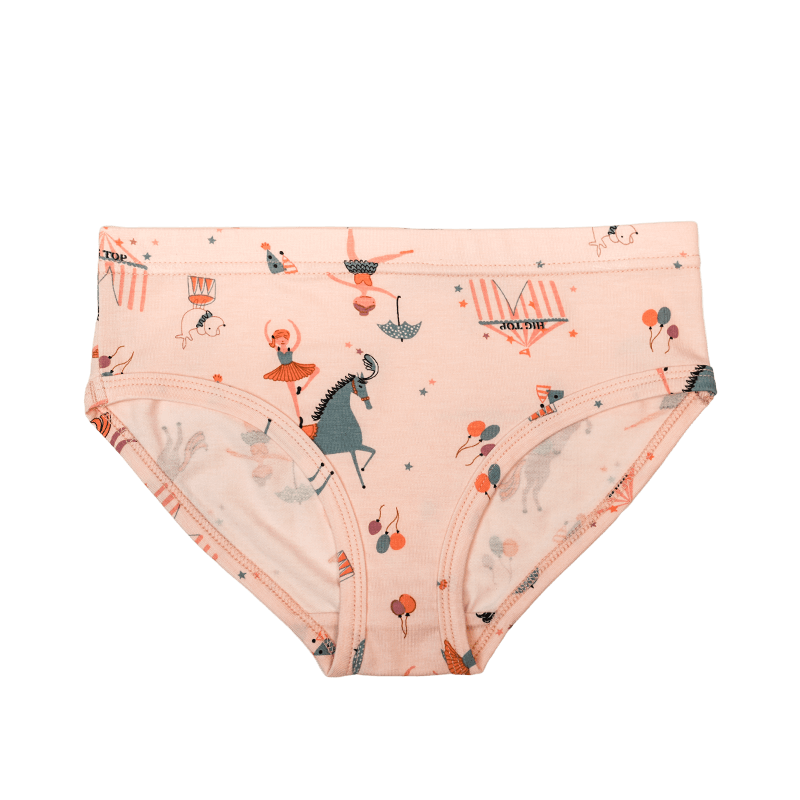
Girls' Briefs with Cartoon Prints
Children’s underwear must do more than look attractive. It needs to stay in position, feel soft against active skin, tolerate frequent laundering, and fit under other clothes without creating visible lines or irritating pressure points. A successful brief design balances these requirements rather than maximizing only one of them.
The brief shape is widely used because it offers a practical balance between coverage and freedom. It covers the areas that parents generally expect from daily underwear while leaving the upper leg relatively unrestricted. Children can walk, run, sit, climb, and play without the fabric extending too far down the thigh.
A brief also works well under many types of children’s clothing. It can be worn beneath dresses, skirts, trousers, leggings, uniforms, and pajamas. When the pattern is correctly graded, the garment avoids excessive fabric at the hip and upper leg, helping outer garments sit more smoothly.
Visual design is a major purchase factor in children’s apparel. Cartoon prints can make basic underwear more engaging for children and easier for parents to identify as age-appropriate. A collection can use different characters, repeat patterns, colors, and print scales to create a recognizable product family.
Printed fabric also allows a manufacturer or private label to build a stronger assortment without changing the underlying pattern. A single proven brief block can support multiple seasonal prints, color stories, and packaging concepts. This can reduce development complexity for buyers while keeping the retail range visually varied.
The waistband is one of the most sensitive areas of children’s underwear. A waistband that is too tight may leave marks or cause discomfort. One that is too loose may roll, shift, or fail to keep the brief in place. The continuous fold-over construction used in THDY-020 is intended to create a smooth, integrated waist edge rather than a bulky or sharply exposed finish.
The folded edge contours the waist and creates a clean transition between the body fabric and the top edge. This may be especially useful for children who are sensitive to rough elastic, thick waist seams, or uneven internal finishes. Final comfort still depends on the elastic specification, seam allowance, size grading, and production quality, so these elements should be checked during fit approval.
Leg openings experience repeated movement and friction. If the edge is unfinished or poorly controlled, it can curl, stretch out, or feel abrasive. Self-fabric binding gives the edge a bordered finish that follows the body material and helps create a more controlled opening.
This finishing method can provide three practical benefits. First, it improves visual neatness. Second, it helps distribute tension around the leg rather than concentrating it at a narrow raw edge. Third, it can support a more secure fit that stays closer to the body while the child moves.
Self-fabric binding is not automatically comfortable in every execution. The binding width, stitch density, stretch recovery, thread selection, and seam placement all matter. A professional production process must verify that the finished edge remains flexible and does not become stiff after washing.
Many low-priced girls’ briefs use a basic body pattern with exposed elastic, narrow seam allowances, limited print development, and minimal finishing. Such products may meet a low initial cost target, but they can create problems in comfort, appearance, and durability. THDY-020 is positioned around construction details that make the product feel more considered and complete.
| Evaluation area | Basic low-cost brief | THDY-020 design advantage | Buyer value |
|---|---|---|---|
| Waist finish | May use a more exposed or bulky elastic edge | Continuous fold-over waistband creates a smoother transition | Improved comfort and a cleaner appearance |
| Leg openings | Raw, narrow, or less controlled edges may shift | Self-fabric binding supports a personalized leg fit | Better edge definition and stay-in-place performance |
| Visual design | Solid colors or limited decoration | Cartoon-printed fabric creates a playful collection identity | Stronger shelf appeal and child engagement |
| Product development | Often limited to a fixed catalog style | Suitable for print, color, label, packaging, and fabric adaptation | More flexibility for private-label programs |
| Daily wear | Performance depends heavily on basic construction quality | Integrated finishing targets comfort, durability, and stability | Better potential for repeat purchases and lower complaint rates |
These advantages should be verified through physical samples rather than assumed from a product description alone. A serious buyer should compare the product with competing samples after laundering, stretching, and extended wear. The comparison should include waistband recovery, print appearance, seam comfort, leg-opening stability, and dimensional change.
Comfort in children’s underwear is created by the interaction of several components. Fabric softness matters, but it is only one part of the result. Pattern shape, stretch, seam position, finishing pressure, moisture handling, and garment weight all influence how the product feels during the day.
The printed fabric should be selected for a soft hand, suitable recovery, and enough flexibility for the intended size range. A fabric that stretches easily but does not recover may cause the brief to loosen over time. A fabric that recovers aggressively may feel restrictive if the pattern or elastic is not adjusted accordingly.
For children’s underwear, buyers should request fabric details such as fiber composition, fabric weight, width, stretch percentage, recovery percentage, pilling performance, colorfastness, and shrinkage. If the product is intended for warm climates, air permeability and moisture management may be important. For cooler markets, a slightly denser fabric may provide a more substantial hand.
Internal seams should be smooth, secure, and appropriate for the fabric’s stretch. Excess thread ends, skipped stitches, uneven seam allowance, or thread tension problems can create discomfort. The gusset and crotch area deserve particular attention because this zone receives movement, moisture, and repeated washing.
A production sample should be inspected from both sides. Buyers should run a finger along the waistband and leg openings, examine the inside of the crotch seam, and check whether any binding ends create a hard point. These simple checks often reveal quality problems that are not visible in product photographs.
Children rarely remain still while wearing underwear. They bend, stretch, sit on the floor, run, and change posture repeatedly. The brief therefore needs enough recovery at the waist and leg openings to return to position after movement.
The THDY-020 construction addresses this need through the integrated waistband and bordered leg openings. The waistband helps anchor the garment around the torso, while the leg finish helps maintain a controlled opening. Correct pattern grading remains essential. A waistband that is comfortable in a standing fit may still shift during activity if the rise, hip width, or leg curve is not balanced.
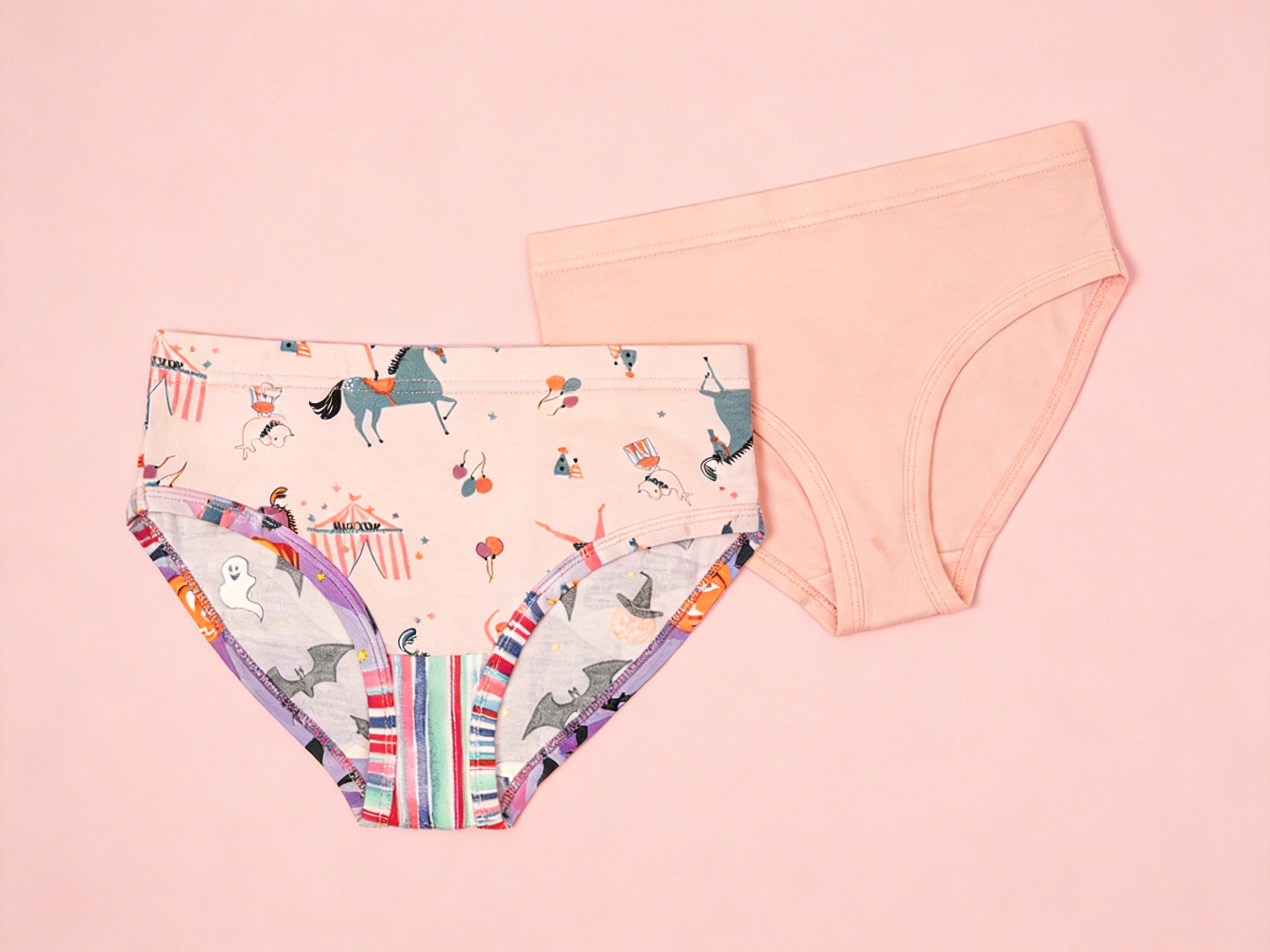
A high-quality girls’ brief is the result of coordinated manufacturing stages rather than one isolated sewing technique. The manufacturer must control materials, printing, cutting, sewing, finishing, inspection, and packing as one connected process.
Production begins with a review of the product specification. The technical team confirms the pattern, size range, fabric composition, print placement, waistband construction, leg-opening method, label position, thread type, packaging requirements, and inspection criteria.
For an OEM or ODM buyer, this stage is where commercial expectations become measurable instructions. Statements such as “soft,” “comfortable,” or “durable” should be supported by practical specifications. Examples include a maximum shrinkage percentage, minimum colorfastness grade, acceptable measurement tolerance, seam strength target, and approved appearance standard.
Printed fabric production requires control of artwork, color references, repeat size, registration, print penetration, and surface appearance. Cartoon artwork must be checked for scale and alignment so that the final brief looks balanced across the front, back, and side panels.
Before bulk cutting, the fabric should be evaluated for shade variation, print defects, streaks, holes, contamination, and width consistency. If several colorways are produced, each color should be approved against the buyer’s reference standard. A small difference in print color can change the appearance of an entire children’s collection.
Fabric relaxation is also important. Knitted materials may change dimension after unwinding or resting. Allowing the fabric to relax before cutting can improve measurement consistency and reduce unexpected shrinkage after production.
The pattern must reflect the intended brief coverage, rise, leg shape, waist position, and fabric stretch. Children’s sizes should not be created by simply enlarging or reducing one base size. Proportions change as children grow, so the rise, hip, waist, and leg-opening measurements need to be reviewed across the full range.
Pattern grading should also consider the construction method. A fold-over waistband may require a different top-edge allowance from an exposed elastic waistband. Self-fabric binding changes the finished measurement and must be included accurately in the pattern engineering.
Cutting accuracy affects both appearance and fit. Printed fabric may require matching or controlled placement, particularly when the cartoon pattern has a clear direction. Panels should be cut according to the approved marker and checked for distortion.
Bundles should be organized by size, colorway, and production section. Clear bundle management reduces the chance of mixed sizes, mismatched shades, or incorrect print combinations entering the sewing line.
The sewing line assembles the body panels, crotch area, waistband, and leg openings according to the approved operation sequence. Stitch selection should match the stretch and weight of the fabric. Stitches that are too tight can restrict stretch or cause seam puckering. Stitches that are too loose may reduce durability.
The waistband must be folded evenly and secured without excessive tension. The fold should remain smooth around the entire circumference. The self-fabric binding at the leg openings must also be applied consistently, with even width and a balanced stretch. Operators should monitor seam quality throughout production rather than relying only on final inspection.
After sewing, garments are checked for loose threads, skipped stitches, open seams, stains, distortion, print defects, and measurement deviations. Careful thread trimming improves appearance and reduces the possibility of loose threads causing irritation.
Pressing should be controlled according to the fabric and print. Excessive heat may affect color, hand feel, elastic recovery, or surface appearance. The finished product should be folded and packed only after it has reached the required inspection standard.
Children’s underwear often requires precise size and color identification because small products can be difficult to distinguish after folding. Packaging should clearly communicate size, fiber content, care instructions, country of origin, and any required regulatory information for the destination market.
For private-label orders, the factory can coordinate brand labels, size labels, care labels, hangtags, cartons, and polybags according to the buyer’s packaging specification. Packaging materials and labeling claims should be reviewed before bulk production to prevent costly relabeling.
Nantong Tianhong Textile Technology Co., Ltd. was established in 2001 in Nantong, Jiangsu, a major textile manufacturing area in China. The company focuses on underwear research, manufacturing, and sales, and provides OEM/ODM products and services for labels in Europe, North America, and China.
This background is relevant to buyers who need more than a ready-made catalog item. An experienced underwear manufacturer can help translate a retail concept into a production-ready specification, identify construction risks, recommend suitable fabrics, and coordinate the stages required for repeatable bulk manufacturing.
OEM development allows a buyer to control the product identity while using an established production platform. For THDY-020, possible customization areas may include cartoon artwork, print repeat, base color, fabric composition, stretch level, size range, waistband treatment, label system, packaging, and assortment configuration.
ODM development can be useful when a buyer wants a faster route to market. The existing brief silhouette and construction can serve as a starting point, while the buyer adjusts the visual direction and commercial specifications. The final changes should be approved through samples and a written specification sheet.
The company states that it focuses on sustainable development, environmentally friendly functional fabrics, and traceable supply-chain management. These capabilities may be relevant to buyers developing natural-fiber or lower-impact underwear programs.
Material claims must be connected to the actual fabric used in the ordered product. A buyer requesting organic cotton, organic bamboo-derived fiber, recycled content, or another special material should require supporting documentation for the relevant production lot and certification scope. The general capability of a factory does not automatically make every product certified.
The company identifies certifications and assessments including FSC, OCS, OEKO-TEX Standard 100, GOTS, WRAP, and BSCI. These standards address different aspects of material sourcing, chemical safety, organic content, social responsibility, or workplace practices.
Buyers should confirm the current certificate status, certificate holder, scope, facility name, product category, and validity period before using any certification claim in marketing. A certificate may cover a specific facility or material chain rather than every product made by the company.
For children’s underwear, chemical and physical safety deserve close attention. Buyers should define age-range requirements, restricted substances testing, colorfastness, choking-hazard considerations for trims, and labeling rules for each destination market. The simplest product designs are often advantageous because they reduce the number of small components that could create safety or durability concerns.
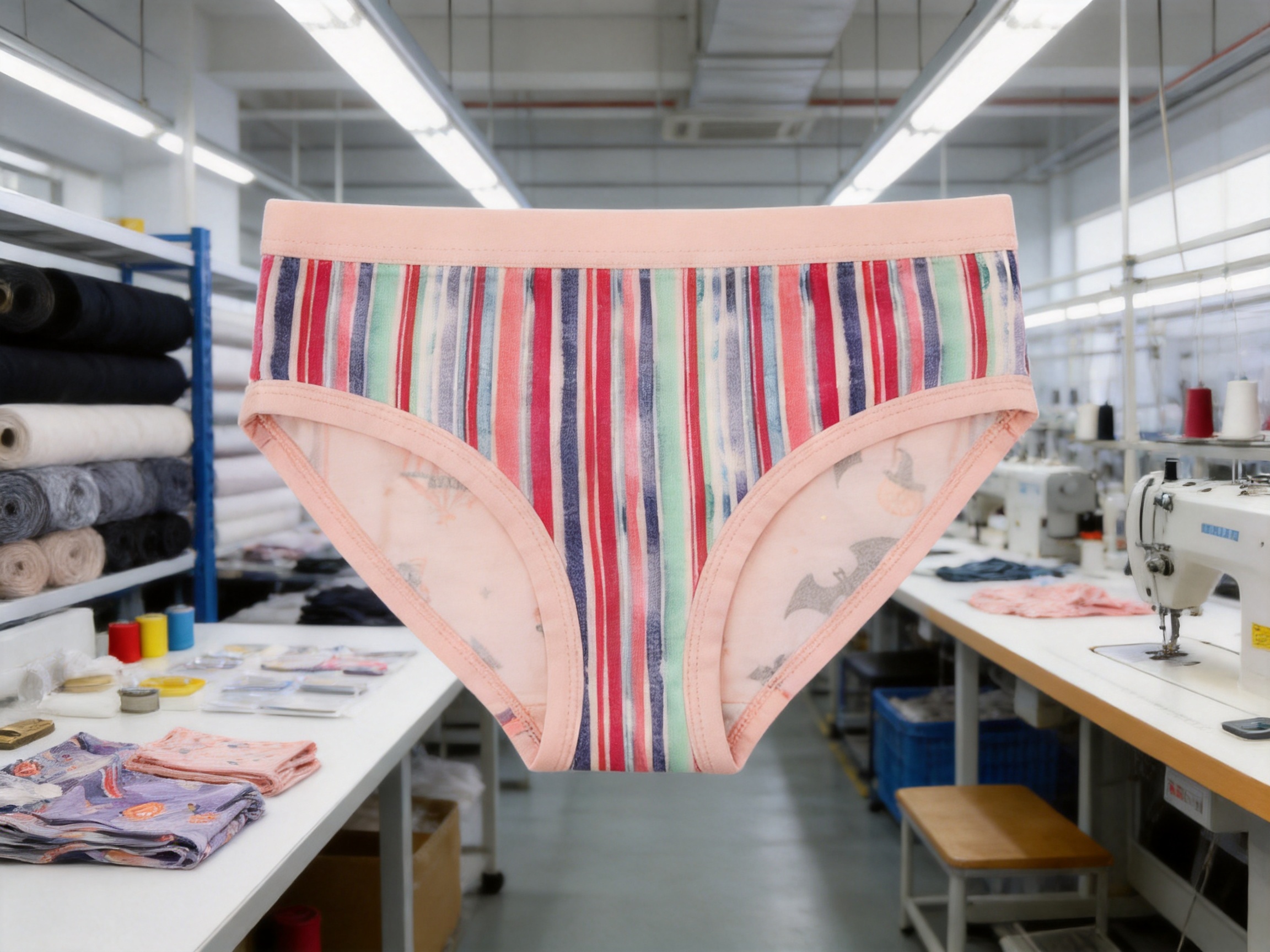
A practical inspection program should be established before bulk production. The following checklist can help buyers evaluate samples and finished goods.
Check whether the fabric has the approved hand feel, weight, stretch, and recovery. Review the cartoon print for sharpness, color consistency, placement, smudging, missing areas, and unwanted marks. Compare production fabric with the approved lab dip or print strike-off.
Inspect the fold-over edge for even width, smooth tension, secure stitching, and absence of twisting. Stretch the waistband gently and release it to confirm that it returns to position. Check the inside for exposed elastic, bulky seams, broken threads, or rough points.
Check the self-fabric binding for consistent width and balanced stretch. The binding should lie flat without waviness, excessive compression, or loose sections. Examine the join point and confirm that there is no hard lump likely to cause discomfort.
Measure the waist, hip, rise, front width, back width, leg opening, and side seam according to the approved measurement chart. Record the tolerance for each point. Fit-test the garment on an appropriate child-size form or approved fit model, while protecting privacy and following suitable safeguarding procedures.
Wash the sample according to the intended care label and inspect it after multiple cycles. Look for shrinkage, twisting, print fading, pilling, seam opening, waistband loss, binding distortion, and color transfer. A product that looks attractive before washing but loses shape quickly may create customer complaints and returns.
Confirm that fiber content, care symbols, size information, country-of-origin statements, importer details, and safety information meet the rules of the target market. Check carton counts, barcode accuracy, size ratios, color identification, and packing orientation before shipment.
THDY-020 can be developed as a single product or as the foundation of a wider girls’ underwear range. The most efficient customization strategy is to preserve the proven construction while changing the elements that matter most to the target customer.
Choose small repeat cartoons for a subtle appearance, larger motifs for stronger shelf impact, or coordinated prints for multi-pack assortments.
Use bright seasonal colors, soft tonal palettes, or retailer-specific color stories while retaining the same brief construction.
Specify the required fiber blend, fabric weight, stretch, recovery, moisture performance, and certification needs for the target market.
Add woven labels, printed care labels, size systems, branded packaging, multipack formats, and retail-ready barcode solutions.
Buyers should avoid changing too many variables at once during the first development round. A more efficient process is to approve the base fit and construction first, then evaluate print and packaging variations. This makes it easier to identify whether a problem comes from pattern, fabric, finishing, or artwork.
A structured workflow reduces sample revisions and protects the production schedule.
Step 1: Define the target market. Confirm the children’s age range, intended climate, retail position, target price, size system, and expected care routine.
Step 2: Send a complete brief. Include reference images, preferred fabric information, print files, color references, measurements, labels, packaging requirements, and testing expectations.
Step 3: Review the first sample. Check fit, comfort, print scale, waistband pressure, leg-opening stability, sewing quality, and overall appearance.
Step 4: Approve technical details. Create a final specification sheet with measurement tolerances, approved materials, construction drawings, artwork, labels, and packing instructions.
Step 5: Conduct pre-production approval. Review the fabric, print strike-off, size set, production sample, and packaging before bulk cutting.
Step 6: Monitor bulk production. Use in-line inspections to identify sewing, fabric, print, and measurement issues before the entire order is completed.
Step 7: Complete final inspection. Check finished goods against the approved standard and confirm carton assortment before shipment.
This workflow is especially useful for children’s underwear because small differences in waistband tension or leg-opening size can affect comfort. Early approval of these details is less expensive than correcting them after bulk production.
Girls’ briefs with cartoon prints can serve several retail positions. They may be sold as everyday basics, schoolwear essentials, sleepwear companions, multipack underwear, or coordinated seasonal collections. The best positioning depends on the fabric, packaging, certification evidence, and final price level.
For a value-focused range, the product can emphasize reliable coverage, cheerful prints, washable performance, and multipack convenience. For a more premium range, the presentation can highlight the smooth waistband, self-fabric leg binding, carefully selected fabric, print quality, certified materials where applicable, and responsible production practices.
Marketing language should remain precise. Claims such as “soft,” “breathable,” “organic,” “hypoallergenic,” or “eco-friendly” should be supported by the actual product specification and available testing or certification documents. Clear claims help retailers build trust and reduce the risk of misleading communication.
Packaging can also explain useful care information. Parents generally value products that are easy to wash, easy to identify by size, and comfortable for repeated daily use. A clear size guide and accurate fiber information are more valuable than excessive decorative copy.
Yes. The brief silhouette, continuous waistband, and self-fabric-bound leg openings are designed for everyday use. Suitability depends on selecting the correct size and confirming the final fabric and seam quality through sample evaluation.
Cartoon prints create a playful visual identity that can appeal to children and help parents distinguish the product from plain underwear. They also allow a retailer to create several colorways and multipacks from one stable construction.
The supplied product information describes the garment as made from printed fabric but does not confirm a bamboo composition for THDY-020. Buyers requesting organic bamboo-derived fabric should obtain the exact fiber specification and supporting certification documents for the ordered product.
A fold-over waistband creates a smoother, more integrated edge around the waist. It can reduce the exposed feeling of a hard elastic edge and help the garment maintain a neat silhouette. The final comfort depends on elastic tension, fabric stretch, seam quality, and correct sizing.
Self-fabric binding gives the leg opening a controlled, finished edge that matches the body fabric. It can improve appearance, help distribute tension, and support a closer fit. Binding width and sewing tension must be controlled to prevent stiffness or excessive pressure.
OEM and ODM buyers can discuss customization of print artwork, colors, fabric, labels, packaging, size ranges, and multipack formats. The factory should confirm which changes are available for the planned order quantity and production schedule.
Buyers should inspect the physical sample, measure the garment, conduct a fit review, wash the sample repeatedly, check print and colorfastness, examine the waistband and leg openings, and confirm the label and packaging information. Independent testing may also be required for the destination market.
Depending on the product claim and destination market, buyers may review OEKO-TEX Standard 100, GOTS, OCS, FSC, WRAP, BSCI, or other applicable documentation. Each certification has a different scope, so buyers should verify that the document applies to the specific material, facility, and order.
An RFQ should include the product code, estimated quantity, size breakdown, colorways, print requirements, fabric composition, target price, packaging format, delivery destination, testing requirements, certification needs, and requested delivery schedule. Complete information helps the factory prepare a more accurate quotation.
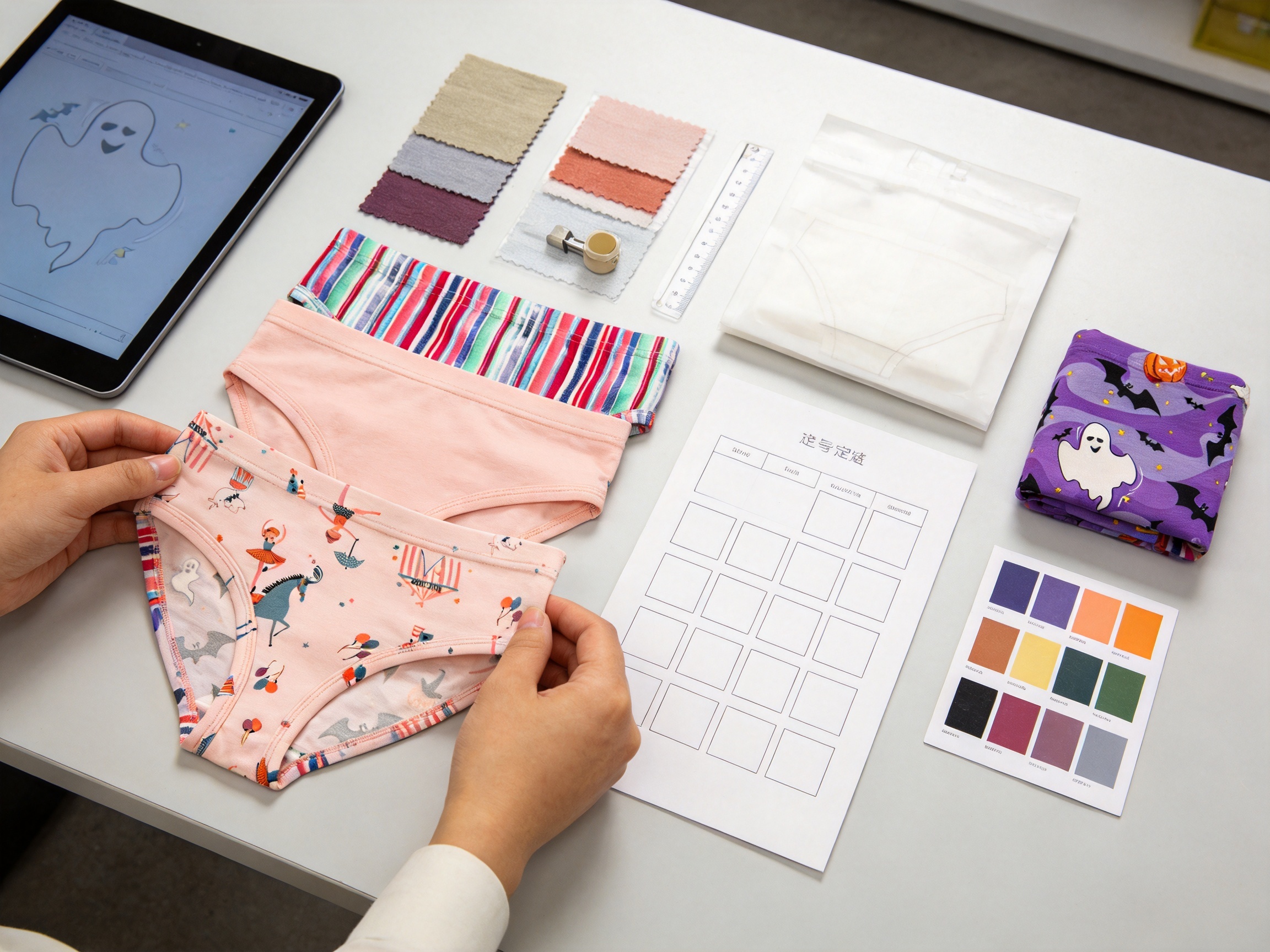
THDY-020 offers a balanced design for buyers looking for girls’ underwear that combines visual appeal with practical construction. The cartoon print supports child-friendly styling. The brief shape provides useful coverage and freedom of movement. The fold-over waistband is intended to create a smoother waist finish, while self-fabric binding at the leg openings contributes to a more controlled and durable edge.
The product’s strongest competitive position comes from the combination of details rather than from decoration alone. A plain brief may be cheaper to produce, but a carefully finished waistband and leg opening can improve the perceived quality of the entire garment. When supported by accurate sizing, stable fabric, controlled printing, and consistent sewing, these details may help reduce comfort complaints and improve repeat-purchase potential.
For businesses developing a private-label range, the product can function as a dependable base for print, color, fabric, label, and packaging customization. The manufacturer’s experience in underwear production, OEM/ODM cooperation, functional textiles, sustainable development, and supply-chain management offers a suitable foundation for buyers that need an organized development process rather than a one-time generic purchase.
The most responsible purchase decision comes from matching the product specification to the target market. Confirm the fabric composition, test the finished sample, verify the certification scope, approve the print and packaging, and establish measurable quality standards before bulk production. These steps turn an attractive children’s brief into a reliable commercial product.
1. Product specification for THDY-020 Girls’ Briefs with Cartoon Prints, including supplied construction, design, and product information.
2. Nantong Tianhong Textile Technology Co., Ltd., company profile and stated capabilities in underwear research, manufacturing, OEM/ODM services, textile development, and supply-chain management.
3. OEKO-TEX Association, Standard 100 principles for testing textiles for harmful substances.
4. Global Organic Textile Standard, criteria for organic fibers, processing, environmental management, and social responsibility in textile production.
5. Organic Content Standard, guidance for verifying organic material content through the supply chain.
6. FSC International, chain-of-custody principles for responsible forest-based materials.
7. WRAP, principles concerning lawful, humane, and ethical manufacturing practices.
8. Business Social Compliance Initiative, supplier-assessment principles for social responsibility and workplace conditions.
9. General textile quality-control practice covering fabric inspection, garment measurement, seam evaluation, colorfastness, laundering, and final inspection.

Copyright © Nantong Tianhong Textile Technology Co., Ltd. All Rights Reserved.
 Room 806, Building D, Jingyang Plaza, Chongchuan District, Nantong City, Jiangsu Province,china


 English
 Español
 русский
 عربى