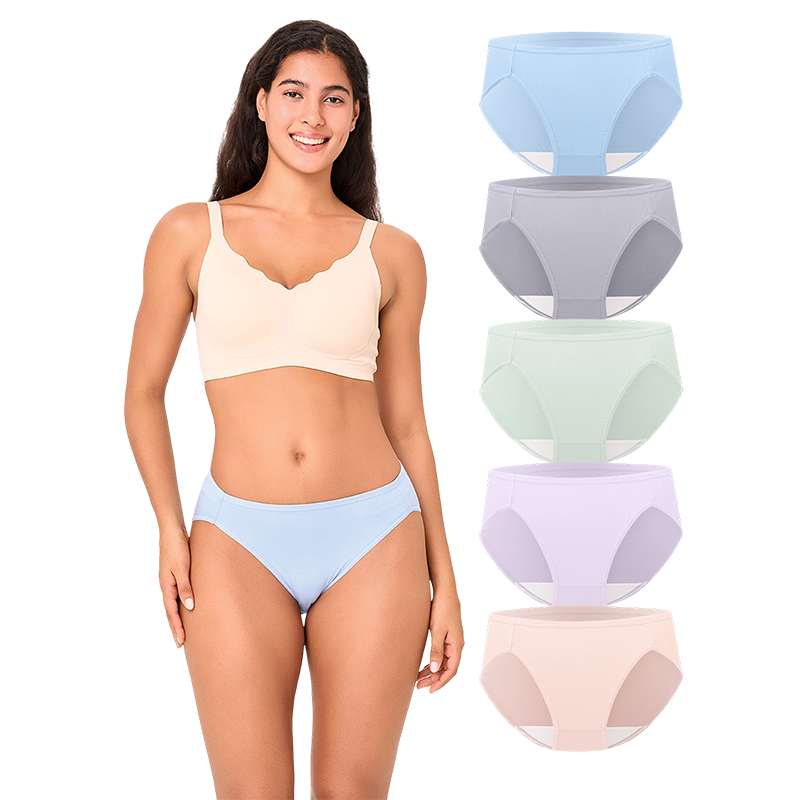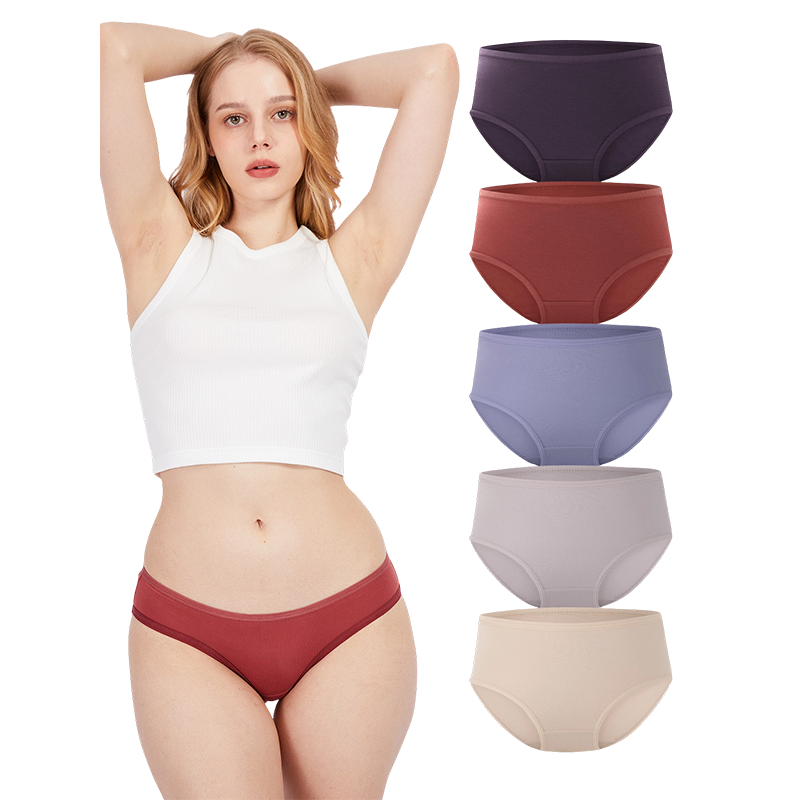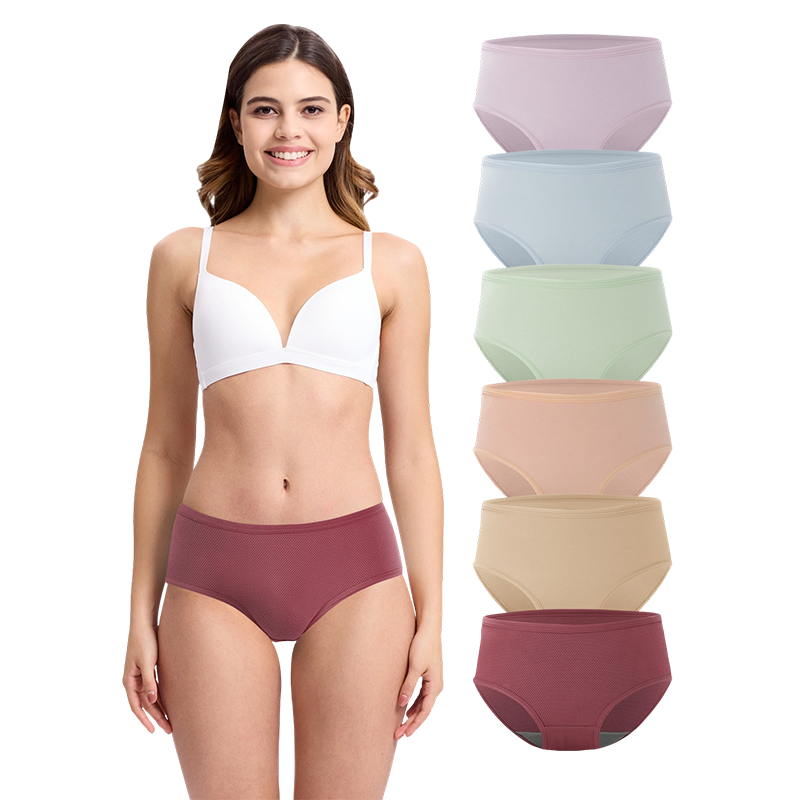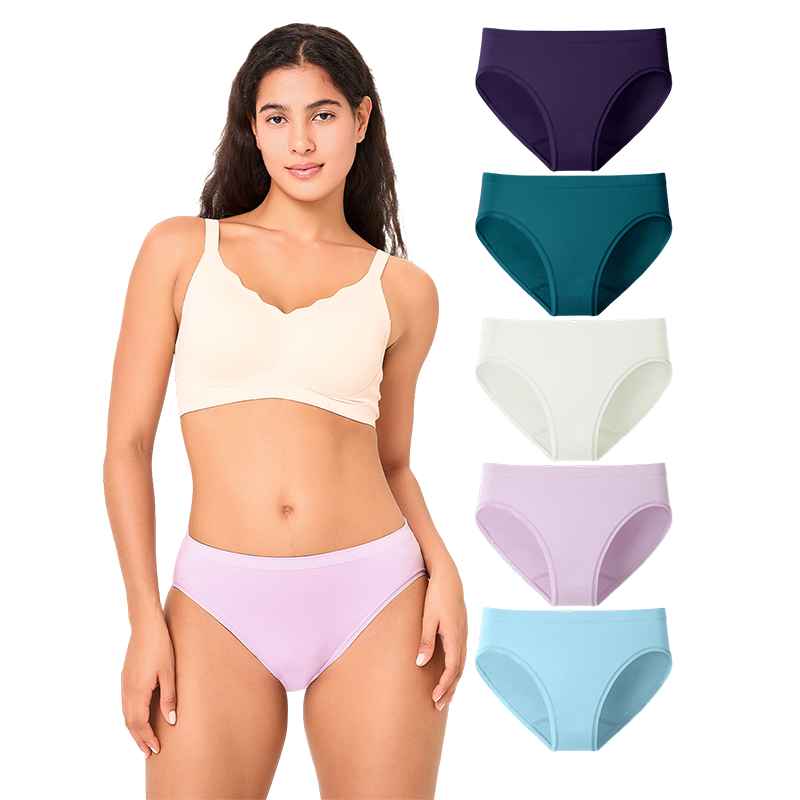
Content

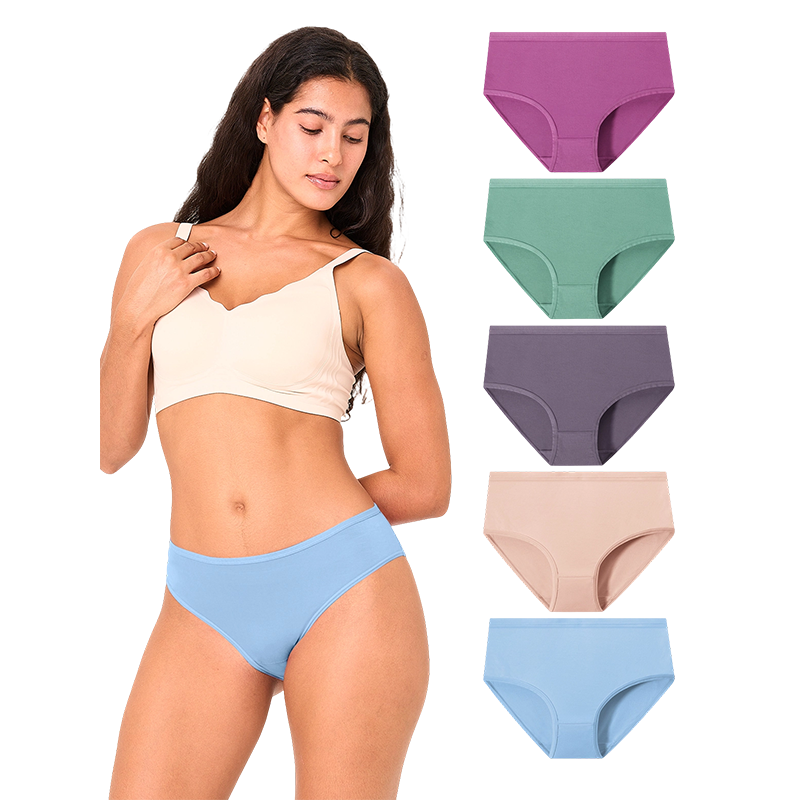
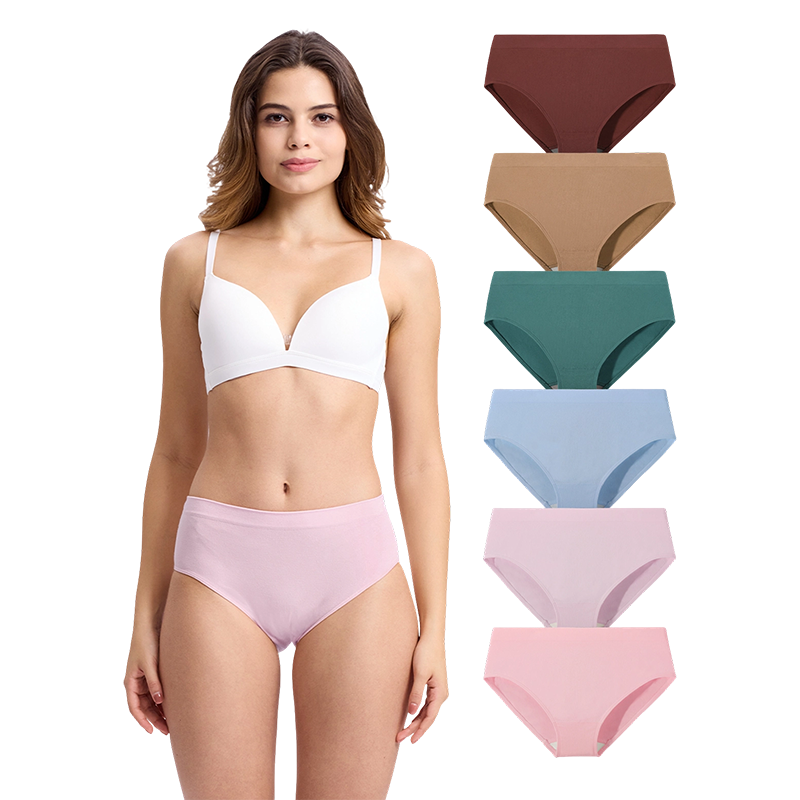
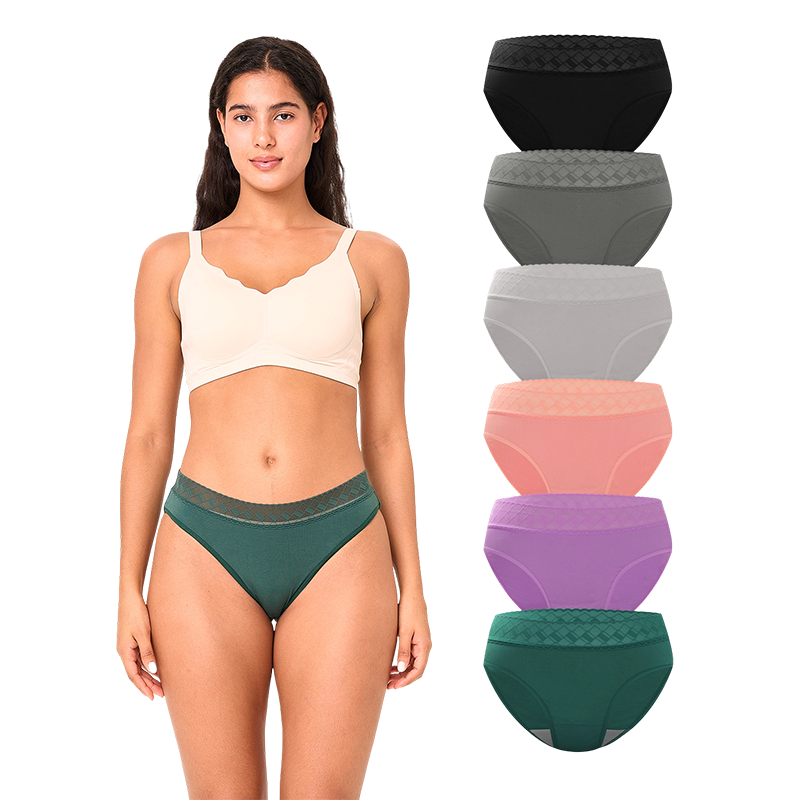
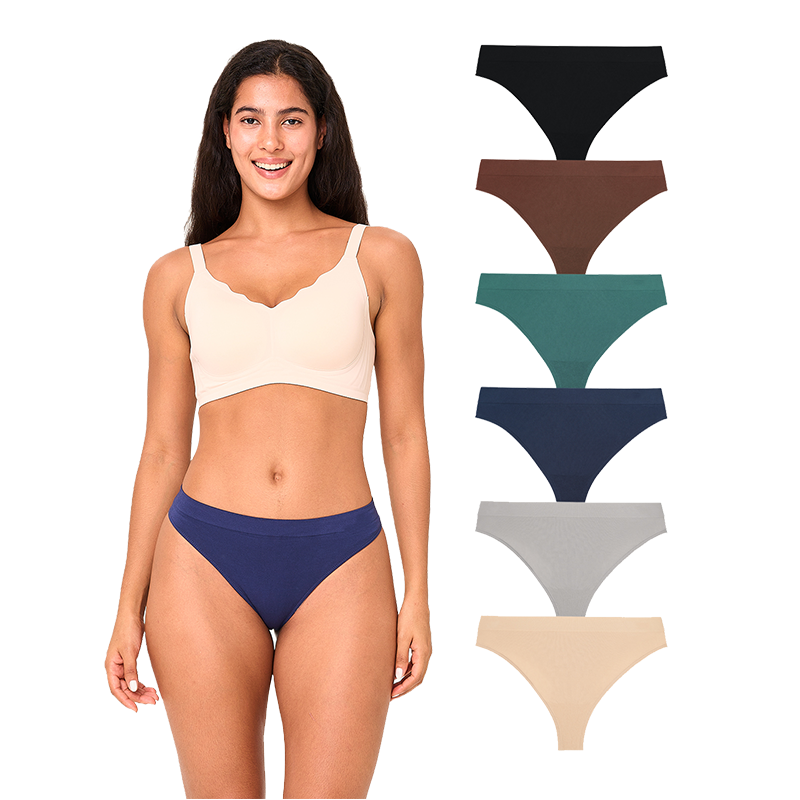
Quick Answer: Premium breathable organic bamboo underwear is a strong choice for brands seeking soft hand feel, moisture management, lightweight comfort, and a more responsible fiber story. The best products are not defined by bamboo content alone. They depend on verified fiber sourcing, controlled yarn and fabric production, accurate pattern engineering, durable sewing, reliable testing, and transparent supply-chain management. For buyers seeking OEM or ODM production, a qualified underwear manufacturer should be able to support fabric selection, fit development, branding, packaging, quality control, and certification documentation from one coordinated production system.
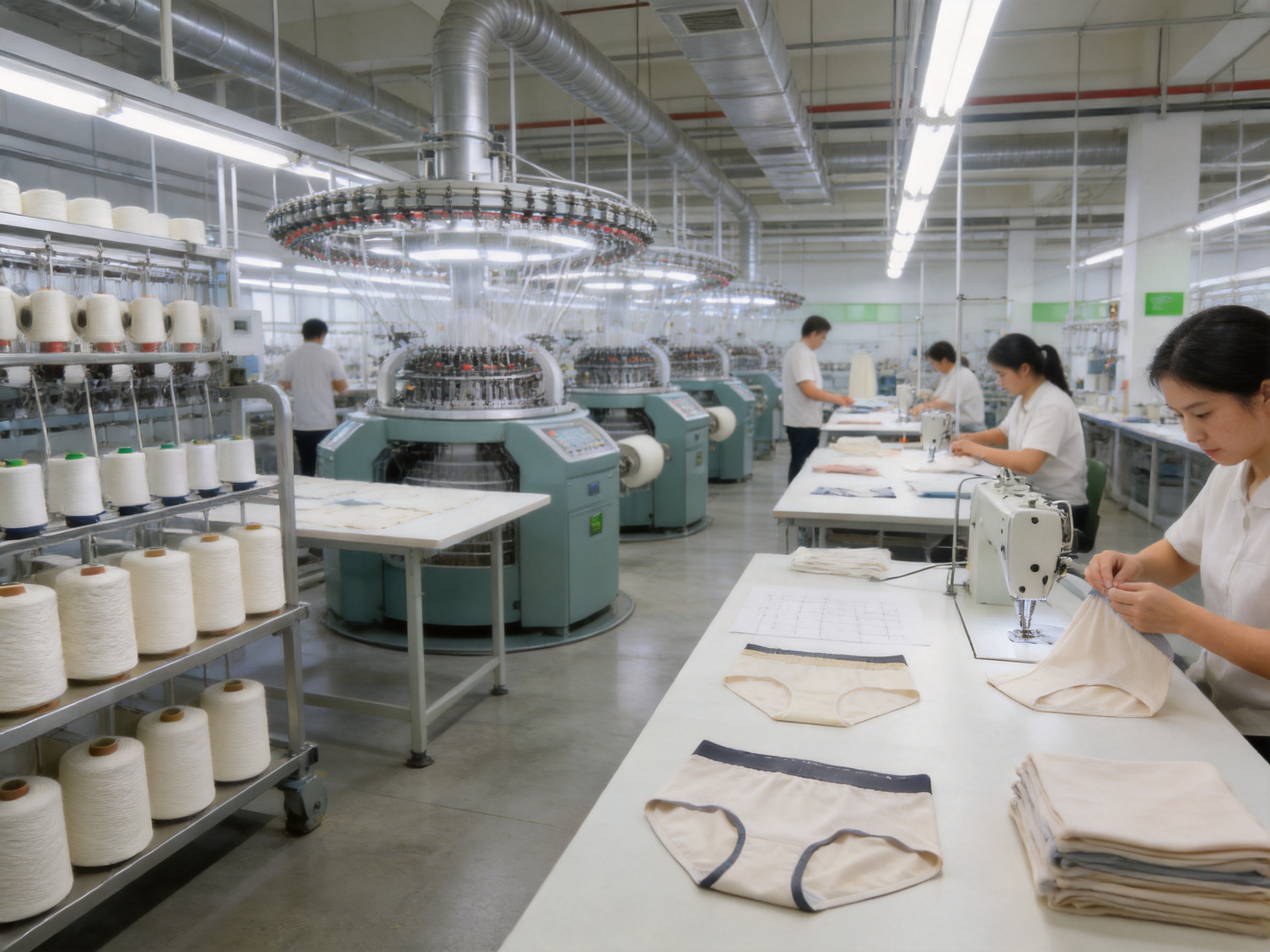
Nantong Tianhong Textile Technology Co., Ltd. is an established China OEM/ODM underwear manufacturer and factory serving customers in Europe, North America, and China. Founded in 2001 and located in Nantong, Jiangsu Province, the company focuses on research, manufacturing, and sales of underwear products. Its capabilities include customized underwear development, sustainable and functional fabric applications, traceable supply-chain management, and production for private labels. The company reports certifications and management qualifications associated with FSC, OCS, OEKO-TEX 100, GOTS, WRAP, and BSCI, subject to product scope and current certification status.
This guide explains what makes premium breathable underwear different, how organic bamboo textiles should be evaluated, which manufacturing stages affect final performance, and how clothing brands can plan an efficient OEM/ODM project.
Underwear is a high-contact garment. It sits close to sensitive skin, moves continuously with the body, and must remain comfortable through washing, sitting, walking, exercise, travel, and long working days. A premium product therefore requires more than an attractive fabric surface. It must combine softness, breathability, stretch recovery, stable sizing, clean construction, and reliable washing performance.
Budget underwear often competes mainly on purchase price. Premium breathable underwear competes on total wearing value. A better product may use more carefully selected yarns, improved fabric finishing, smoother elastics, stronger stitching, and more consistent quality control. These details can reduce customer complaints about pilling, rolling waistbands, sagging, rough seams, odor retention, color loss, or inconsistent fit.
For private-label brands, product quality also affects repeat purchase rates and online reviews. A consumer may forgive a simple design, but discomfort at the waistband, leg opening, or gusset can quickly lead to a negative product experience. This is why product development needs to begin with the intended wearer and use case rather than with a generic fabric claim.
Premium breathable organic bamboo underwear can offer several advantages when the fabric, garment construction, and finishing process are properly controlled:
Soft surface: Bamboo-derived cellulosic fibers are often selected for their smooth, comfortable hand feel. This can be particularly useful for everyday briefs, boxer briefs, bikini underwear, camisoles, and other garments worn directly against the skin.
Moisture comfort: A lightweight, absorbent cellulosic fabric can help manage perspiration and reduce the clammy sensation associated with some dense or poorly finished synthetic fabrics. Fabric weight, knit structure, finishing, and garment fit all influence actual performance.
Air permeability: Open or well-balanced knitted structures can support air exchange. Breathability is not determined by fiber type alone; yarn size, loop density, elastane percentage, finishing chemicals, and fabric thickness must also be considered.
Stretch and movement: A carefully engineered blend of bamboo-derived fiber and elastane can provide body-hugging comfort while allowing the garment to recover after movement. The correct elastane level depends on the style, target fit, and required support.
Lightweight construction: Many underwear products benefit from thin fabrics and low-profile seams. This helps reduce visible lines under clothing and improves comfort under trousers, skirts, uniforms, and activewear.
Responsible material positioning: Organic and certified material programs can support a brand’s sustainability communication when claims are accurate, traceable, and matched to the certification scope. A product should not be marketed as organic simply because it contains bamboo-derived fibers.
The term “bamboo underwear” can describe several different textile situations. Bamboo is generally processed into a regenerated cellulosic fiber before it becomes yarn. Common product descriptions may refer to bamboo viscose, bamboo rayon, or other bamboo-derived cellulose fibers. These terms should be checked against the actual fiber content, certification documents, and labeling requirements of the destination market.
Organic bamboo underwear normally combines three elements: a bamboo-derived cellulosic fiber, a supporting stretch fiber where required, and a documented chain of custody or organic certification system. The exact claim depends on how the fiber is sourced and processed. Buyers should request technical documentation rather than relying only on marketing language.
The raw bamboo plant may be cultivated under an organic agricultural program, but the fiber manufacturing process still requires evaluation. Organic claims can relate to the agricultural source, the textile processing chain, or the finished product certification. A buyer should confirm:
• The declared fiber composition and applicable product standard.
• The name and certification status of the fiber supplier.
• Whether the certification covers the finished underwear or only an input material.
• Whether elastane, sewing thread, labels, dyes, and accessories meet the required product rules.
• Whether transaction certificates or scope certificates are available for the relevant order.
• Whether labeling and environmental claims comply with the destination market.
Certifications such as OCS and GOTS may apply to different parts of an organic textile supply chain. FSC may relate to responsibly managed forest-based or other approved cellulosic fiber inputs, depending on the certified material and documentation. OEKO-TEX Standard 100 addresses harmful substances in tested textile products, while WRAP and BSCI relate to social compliance and responsible workplace management frameworks. These standards should not be presented as interchangeable. Each one answers a different sourcing or product question.
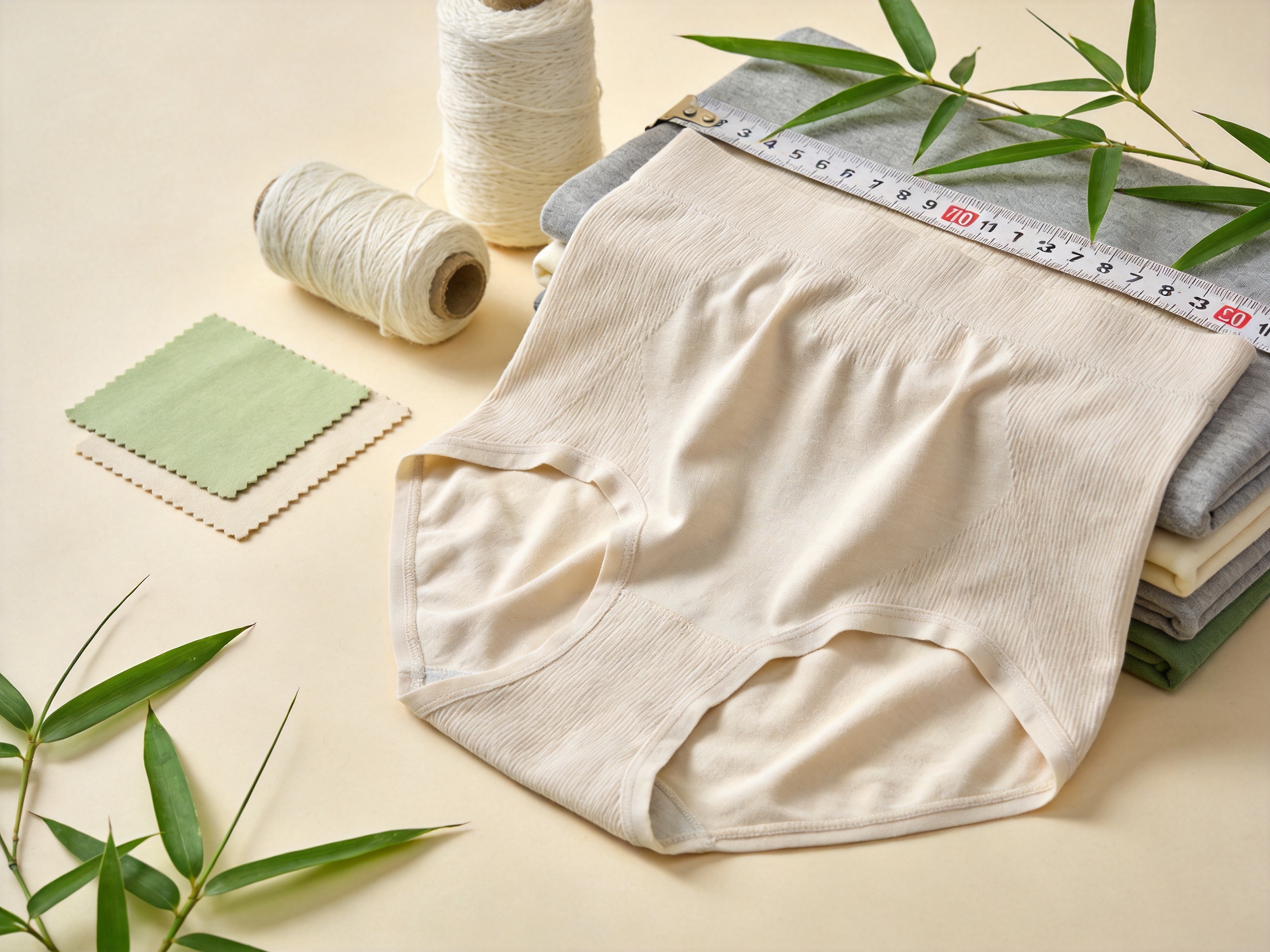
A practical underwear specification may use a bamboo-derived cellulosic fiber with elastane to balance softness and stretch. Some products may add another fiber to improve durability, recovery, drying speed, or cost control. The correct composition depends on the brand’s priority.
| Product priority | Specification factors to review | Questions for the manufacturer |
|---|---|---|
| Everyday softness | Fiber fineness, yarn quality, knitting structure, finishing, seam design | How is softness evaluated after repeated washing? |
| Breathability | Fabric weight, air permeability, loop density, moisture behavior | Can the factory provide fabric test data and approved lab reports? |
| Stretch recovery | Elastane percentage, knit construction, heat setting, waistband engineering | How is dimensional stability checked after washing and wear? |
| Organic positioning | Certified fiber content, chain of custody, transaction documentation | Which certification applies to the finished product and order? |
| Low-impact branding | Dye selection, finishing chemistry, packaging, waste controls | Which process records and restricted-substance tests are available? |
| Longer service life | Pilling resistance, seam strength, colorfastness, abrasion resistance | Which durability tests are included before bulk production? |
Nantong is widely recognized as an important textile production center in China. The local industrial environment provides access to textile mills, knitting facilities, dyeing and finishing suppliers, sewing factories, testing services, logistics providers, and accessory manufacturers. A company located within this ecosystem can coordinate product development and production with shorter communication paths between related suppliers.
For an underwear buyer, the value of a textile cluster is practical. Fabric problems can be investigated closer to the source. Yarn, knit structure, dyeing, finishing, cutting, and sewing teams can communicate more efficiently. Sampling and production decisions may move faster than they would in a fragmented supply chain involving unrelated suppliers in different regions.
Nantong Tianhong Textile Technology Co., Ltd. was established in 2001 and operates from Nantong, Jiangsu Province. Its stated business covers the research, manufacturing, and sales of underwear products. The company serves OEM and ODM customers, including established labels, and has developed long-term partnerships in Europe, North America, and China.
For a brand evaluating a premium breathable underwear factory, a long operating history can be useful, but it should be considered together with current equipment, quality systems, product-development capability, certification records, and communication performance. A supplier’s age alone does not guarantee product quality. The important question is whether its current systems can consistently deliver the requested specification.
Premium underwear manufacturing is a sequence of controlled decisions. Each stage influences the next one. A soft fabric can still produce an uncomfortable garment if the pattern is incorrect. A well-designed pattern can fail if elastics are applied with uneven tension. A beautiful sample can fail in bulk if color, stretch, or shrinkage is not controlled.
The process begins with a product brief. The buyer should define the target customer, intended retail position, product category, preferred fabric composition, size range, color palette, packaging format, expected order quantity, and sales channel.
A useful technical package may include a reference garment, flat sketches, measurement charts, construction details, fabric requirements, trim specifications, artwork files, labeling instructions, packaging requirements, and testing expectations. If the buyer only sends a photograph, the manufacturer must interpret many unknowns. This can increase sampling time and create disagreement over fit or appearance.
For organic bamboo underwear, the brief should also identify the required certification claim. “Bamboo underwear” is not a sufficient technical specification. The buyer should state whether the product needs an organic content claim, a particular certification, recycled packaging, restricted-substance testing, or a defined social-compliance requirement.
Fabric selection should be based on performance rather than name recognition. A supplier may recommend a bamboo-derived jersey, rib, interlock, stretch knit, or another construction depending on the garment style.
Important fabric parameters include composition, weight, width, stretch percentage, recovery, shrinkage, pilling performance, colorfastness, dimensional stability, surface appearance, and hand feel. A lightweight fabric may feel cool and comfortable but require stronger construction around the gusset and waistband. A heavier fabric may provide more coverage but reduce breathability or create visible lines.
Fabric approval should involve both a physical hand-feel review and measurable testing. The buyer should approve a swatch or lab dip under the intended lighting conditions and compare it with the approved standard during bulk production.
Knitting determines the basic loop structure, stretch behavior, surface appearance, and fabric stability. Technical adjustments may be needed to balance softness, recovery, coverage, and weight. A fabric designed for underwear should not be selected solely because it feels soft on a sample card.
Dyeing must control shade, levelness, color reproducibility, and chemical compliance. The factory should establish approved lab dips before bulk dyeing. Dark shades, bright colors, and heathered effects can require different process controls. Lot-to-lot shade variation is a common commercial risk if color approval and batch tracking are weak.
Finishing may influence hand feel, width, shrinkage, surface smoothness, and dimensional stability. Excessive softener can create an attractive first impression but may affect absorbency, transfer behavior, or washing performance. The correct finish is the one that supports the product specification over time.
Underwear fit depends on more than body measurements. The pattern must account for fabric stretch, recovery, garment ease, rise, leg opening, gusset shape, waistband position, and intended wearing activity.
For a close-fitting brief, the pattern should provide sufficient coverage without excessive fabric that can bunch or fold. For boxer briefs, the inseam and leg opening must balance support with freedom of movement. For women’s underwear, gusset width, lining, seam placement, and front-to-back shaping can strongly influence comfort.
Grading should preserve the design’s functional proportions across the size range. Simply enlarging every measurement by the same amount may produce poor fit in extended sizes. A competent OEM/ODM partner should be able to discuss grade rules, sample sizes, fit comments, and revision priorities.
Once fabric is approved and relaxed, cutting must account for grain direction, stretch direction, pattern alignment, shade grouping, and fabric utilization. Marker planning can reduce waste while maintaining correct garment performance.
Stretch fabrics require careful handling because tension during spreading can lead to inaccurate panels after relaxation. Operators should use appropriate cutting methods and verify the number of plies, panel count, notches, and size separation.
Underwear construction commonly uses overlock, flatlock, coverstitch, lockstitch, or specialized elastic-application operations. The selected seam must match the fabric thickness, stretch, and skin-contact requirements.
Flat or low-profile seams can reduce friction. Clean thread trimming and secure starts and ends help prevent loose threads. The waistband should be attached with controlled tension so that it lies flat without twisting or creating excessive pressure. Leg openings require similar attention because uneven elastic tension can cause discomfort and visual imbalance.
The gusset area deserves special inspection. It should be correctly positioned, securely sewn, free from puckering, and made with suitable lining or fabric layers. For products marketed as breathable, the gusset construction should support the intended moisture and airflow performance rather than adding unnecessary bulk.
Finished garments may require trimming, thread cleaning, light pressing, folding, labeling, metal detection where applicable, and final packing. Pressing temperature must be compatible with the fiber blend and elastane content.
Final inspection should include appearance, workmanship, measurement, labeling, shade, packaging, and carton details. AQL inspection may be used according to the buyer’s quality agreement, but internal inspections throughout production are also important. Detecting a problem at the cutting or sewing stage is less expensive than discovering it after packing.
A premium breathable underwear manufacturer should offer more than production capacity. Brand owners need a partner that can turn a concept into a repeatable commercial product. Nantong Tianhong’s stated focus on research, manufacturing, sales, OEM/ODM service, sustainable materials, functional fabrics, and traceable supply-chain management aligns with the needs of brands building a differentiated underwear range.
Supplier evaluation principle: Ask the factory to show how a claim becomes a controlled production requirement. If a supplier promotes softness, request fabric specifications and wash-performance evidence. If it promotes organic content, request certification scope and transaction documentation. If it promotes premium quality, request inspection procedures, measurement tolerances, and defect standards.
OEM production is suitable when the buyer has a clear design and requires the factory to manufacture it according to approved specifications. This model may involve buyer-supplied patterns, artwork, labels, fabric requirements, and packaging instructions.
The manufacturer’s role is to source or produce approved materials, prepare samples, organize production, conduct quality checks, and deliver the finished goods according to the purchase order. OEM is often useful for established brands with their own design and technical teams.
ODM production is useful when a brand needs assistance with style selection, fabric development, fit, colors, trims, packaging, and product line planning. The manufacturer may present existing blocks or develop new styles that the buyer can customize.
For emerging labels, ODM can reduce development time because the factory may already understand common underwear constructions, fabric behavior, and production constraints. The buyer should still confirm ownership of artwork, patterns, molds, custom developments, and any exclusive design elements in the commercial agreement.
Nantong Tianhong identifies environmentally friendly functional fabrics as an area of focus. For underwear brands, functional development may include moisture comfort, stretch recovery, lightweight construction, soft touch, low-profile seams, temperature comfort, or improved durability.
Functional claims need precise wording. “Breathable” may refer to air permeability, moisture vapor behavior, fabric structure, or consumer comfort. A buyer should define which performance attribute matters and request an appropriate test method. A factory that can connect product claims with measurable specifications is more useful than one that relies on general promotional language.
Traceability helps a brand understand where key materials come from and how they move through production. For organic bamboo underwear, records may include fiber certificates, yarn details, fabric lot information, dyeing records, inspection reports, cutting tickets, sewing records, and shipment documentation.
Traceability is especially important when a brand uses sustainability claims in product pages, hangtags, packaging, or advertising. Claims should match the available evidence. A traceable system also supports faster investigation when a color, measurement, or fabric issue appears in the market.
Certification can improve sourcing confidence, but only when the buyer understands what the certification covers. Different standards address different concerns. A certificate may apply to a facility, a material, a process, or a specific product transaction.
| Standard or framework | Typical sourcing relevance | Buyer verification point |
|---|---|---|
| FSC | Responsible sourcing and chain-of-custody systems for approved forest-based or related materials | Confirm the certified input, certificate scope, and product claim language |
| OCS | Organic material content and chain-of-custody requirements | Check whether the finished product and transaction are covered |
| OEKO-TEX Standard 100 | Testing for harmful substances in certified textile products | Review certificate number, product class, validity, and tested components |
| GOTS | Organic textile processing and related environmental and social criteria | Confirm scope, facility status, label grade, and transaction documentation |
| WRAP | Factory social-compliance principles and responsible workplace practices | Verify the current facility certificate and applicable production site |
| BSCI | Social-audit and supply-chain due-diligence framework | Review audit date, site identity, result, and buyer acceptance requirements |
Certification names should not be placed on a product label without confirming permitted usage, scope, and current validity. The factory should be able to identify which entity holds the certificate, which facility produces the order

Copyright © Nantong Tianhong Textile Technology Co., Ltd. All Rights Reserved.
 Room 806, Building D, Jingyang Plaza, Chongchuan District, Nantong City, Jiangsu Province,china



 English
 Español
 русский
 عربى