Content
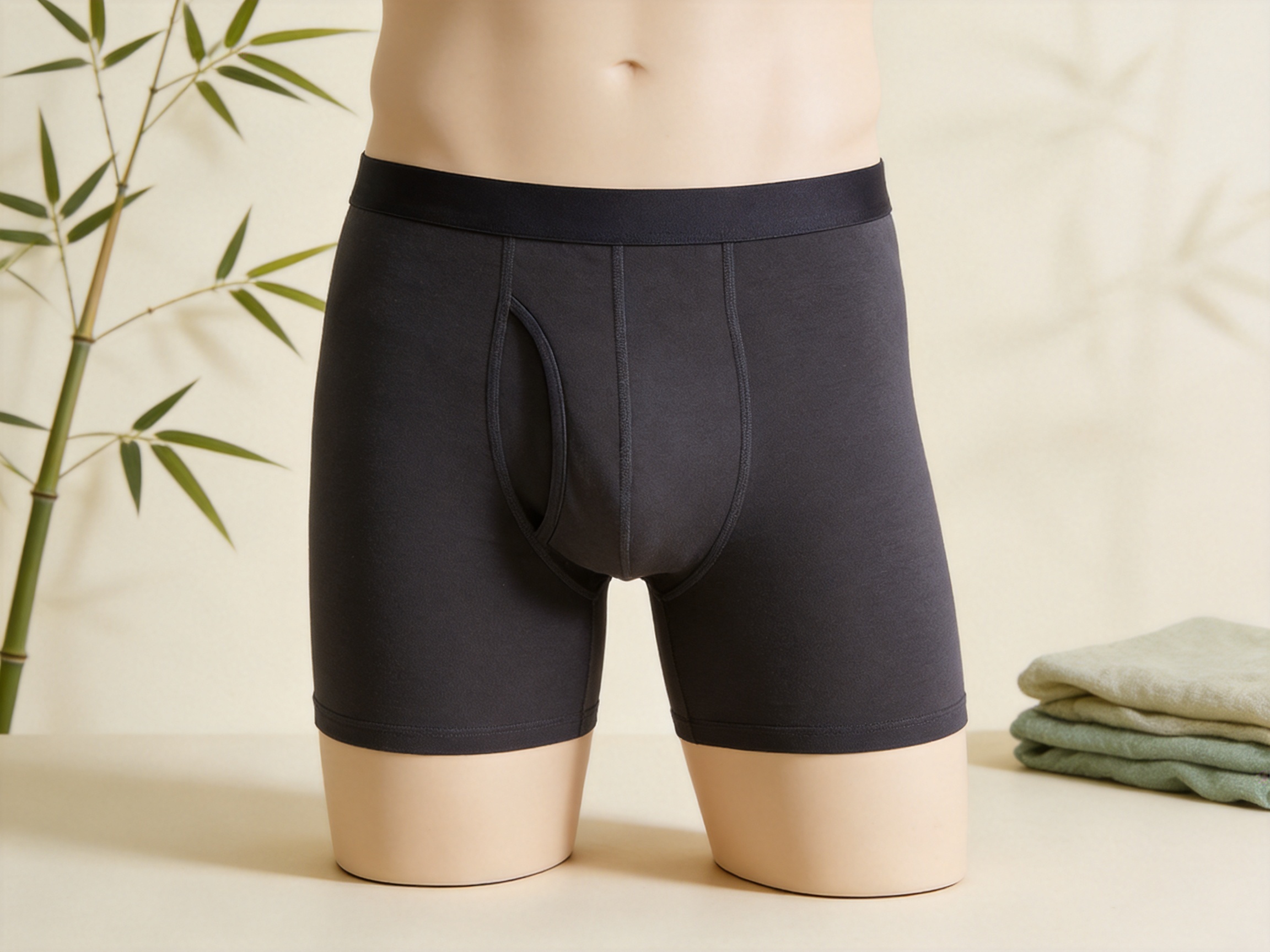
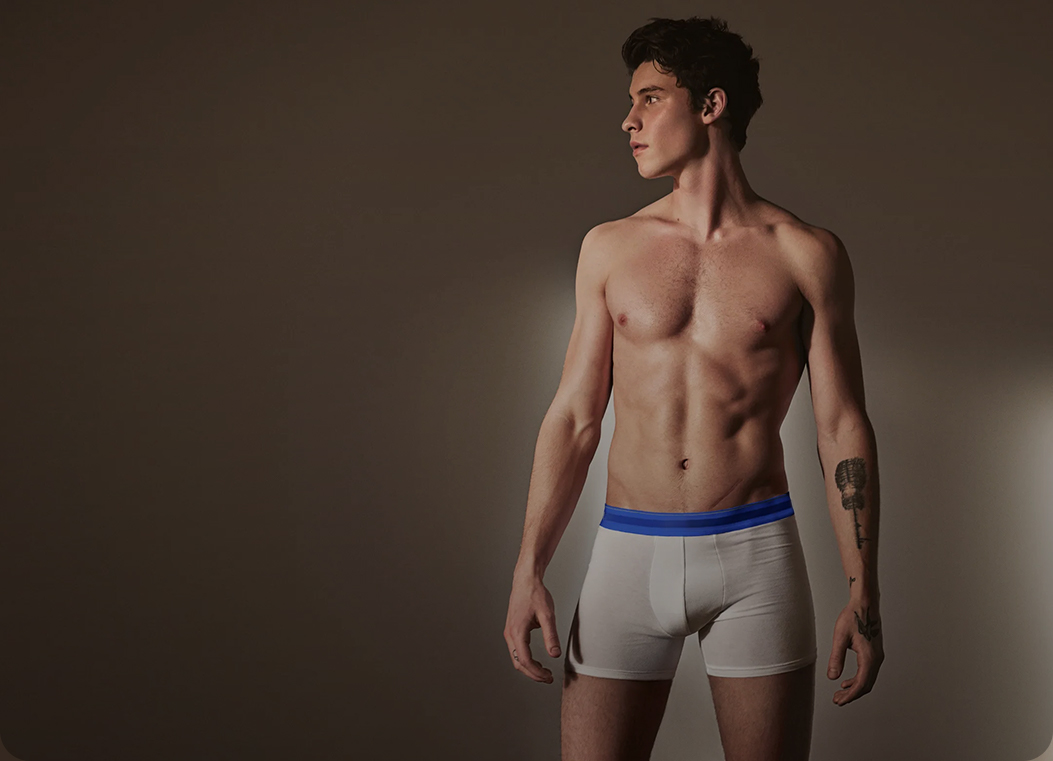
The No Ride-Up Men’s Boxer Briefs are designed for men who want breathable daily underwear with secure support, extended thigh coverage, and a smoother fit under clothing. Made from 92% viscose made from bamboo and 8% spandex, the fabric is lightweight, soft, flexible, and highly breathable. The boxer brief design combines a snug elastic waistband, a no-ride-up extended leg, an open-fly construction, a seamless back, and a tagless finish.
Compared with basic cotton boxer briefs, this design offers a softer hand feel, greater stretch recovery, improved airflow, and better coverage through the upper thigh. Compared with short-cut boxer briefs, it provides more protection against chafing and leg movement. Compared with low-quality bamboo underwear, it is supported by professional pattern engineering, quality-focused production, certification planning, and the OEM/ODM capabilities of Nantong Tianhong Textile Technology Co., Ltd.
For retailers, private-label brands, uniform suppliers, and underwear wholesalers, the product is a strong candidate for premium breathable underwear collections. Its fabric composition, size range from S to 3XL, FSC certification, and practical construction support positioning in everyday comfort, active lifestyles, sustainable apparel, and custom underwear programs.
Men’s underwear buyers increasingly look for more than a basic fabric and a simple cut. They want underwear that stays in place, feels comfortable during long workdays, performs during movement, and remains easy to wear under jeans, trousers, shorts, or sports clothing. Retailers are also seeking products that can support premium pricing without becoming difficult to explain to customers.
The No Ride-Up Men’s Boxer Briefs address these needs through a combination of fabric selection and functional construction. The product is not defined by one feature alone. Its value comes from how the bamboo viscose, spandex content, inseam length, waistband, fly design, back construction, and finishing details work together.
The extended boxer design provides additional thigh coverage without becoming as long or restrictive as some performance base-layer products. The inseam ranges from approximately 3.4 inches to 5.2 inches across sizes S through 3XL, with a stated variation of approximately plus or minus 0.2 inches. This range allows the garment to maintain a practical short-boxer silhouette while giving the leg enough length to resist riding upward during normal activity.
The product is suitable for daily wear, commuting, travel, office use, light exercise, walking, home routines, and active sessions. It is especially relevant to customers who dislike brief-style underwear but do not want a full-length athletic base layer.
Product positioning: Premium breathable men’s underwear with bamboo-derived viscose, flexible stretch, extended coverage, and a stable no-ride-up fit.
Best retail applications: Sustainable underwear collections, comfort essentials, private-label basics, travel underwear, warm-weather underwear, and premium everyday apparel.
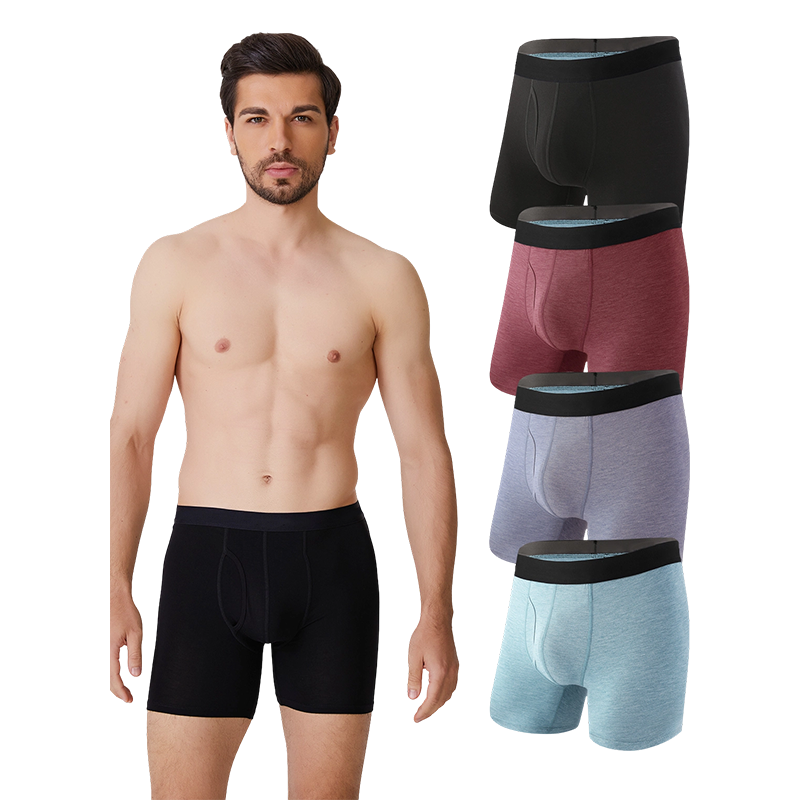
No Ride-Up Men's Boxer Briefs
The fabric contains 92% viscose made from bamboo and 8% spandex. This high bamboo-viscose ratio gives the boxer briefs a smooth and lightweight surface. Underwear is worn directly against sensitive skin, so rough texture, rigid seams, excessive heat, and poor moisture management can quickly become noticeable. A soft fabric helps reduce the sensation of friction during sitting, walking, and repeated movement.
Bamboo viscose is often selected for underwear because it can create a fluid, soft drape while remaining suitable for stretch garments when blended with elastane or spandex. In this design, the 8% spandex component contributes flexibility and recovery. The fabric can move with the body instead of pulling sharply when the wearer bends, sits, climbs stairs, or exercises.
The product information states that the bamboo-based fabric can provide airflow performance up to 4.5 times greater than cotton. The practical benefit is improved ventilation in a garment worn close to the body. Air movement can help the wearer feel less trapped and less overheated, particularly during warm weather, commuting, travel, or active sessions.
Breathability should not be treated as a promise that the garment eliminates perspiration. No underwear fabric can prevent the body from producing heat or moisture. A more accurate interpretation is that the fabric is engineered to support airflow and a lighter next-to-skin sensation. Fit, garment layering, climate, activity level, and laundering also influence comfort.
Spandex is important in boxer briefs because the garment must stretch across the hips, seat, and thighs while returning to its intended shape. A fabric with insufficient stretch may feel restrictive. A fabric with poor recovery may become loose after repeated wear. The 8% spandex blend is intended to provide a balance between movement and shape retention.
For product developers, this blend is useful because it supports a broad range of body movement without requiring an overly loose pattern. For consumers, the result is a closer fit that can reduce bunching beneath trousers and shorts. For retailers, the stretch content creates a clear selling point that can be explained without relying on vague performance language.
The elastic waistband is designed to stay snug without digging into the skin. This balance is essential. A waistband that is too loose may cause the garment to shift, while one that is too tight may leave pressure marks and create discomfort after several hours.
The waistband must work together with the body fabric. Even a high-quality waistband cannot compensate for a poorly balanced rise or an incorrect pattern. A stable fit depends on waist measurement, rise length, elastic tension, garment recovery, and the relationship between the waistband and the wearer’s torso. This is why boxer brief development requires more than simply adding elastic to a tube-shaped garment.
Ride-up occurs when the lower edge of the leg opening moves upward during walking, sitting, exercise, or friction against outer clothing. The extended boxer shape gives the leg opening more surface area and helps maintain coverage across the upper thigh.
The product title identifies the design as “No Ride-Up,” but customers should understand the phrase as a construction objective rather than an absolute guarantee for every body shape and activity. Fit, thigh circumference, garment size, movement intensity, and outer-layer friction all affect performance. A well-developed extended leg can significantly reduce ride-up compared with a shorter trunk or brief silhouette.
The open-fly design adds practical convenience for daily use. It allows the wearer to use the fly opening without moving the entire waistband or lowering the garment. This detail is particularly useful for workwear, travel, and situations where convenience matters.
Fly construction also affects the front fit. The opening must be positioned accurately and supported by stable sewing and clean finishing. Poorly balanced fly panels can create pulling, gaping, or uncomfortable bulk. A professional underwear manufacturer must consider the fly as part of the full pattern rather than as an isolated feature.
The seamless back construction helps create a smoother feel through the seat. Fewer bulky seams can reduce pressure points and make the garment less visible beneath close-fitting trousers. This is useful for consumers who prioritize a clean silhouette and a barely noticeable back panel.
The tagless design removes the irritation often caused by woven labels or stiff printed patches. This is a small detail, but it matters because labels sit against the upper back and may rub during movement. Tagless finishing also creates a cleaner internal appearance for private-label products.
Full coverage helps the boxer briefs remain appropriate for both active and everyday wear. The design covers the front, seat, and upper thigh more fully than briefs while avoiding the length of many athletic compression shorts.
Coverage also influences consumer confidence. Customers often reject underwear that shifts, exposes too much during movement, or leaves the thigh insufficiently covered. A balanced full-coverage pattern can make the garment more versatile and reduce the need to choose different underwear for work, travel, exercise, and relaxation.
| Feature | No Ride-Up Bamboo Boxer Briefs | Basic Cotton Boxer Briefs | Short-Cut Underwear |
|---|---|---|---|
| Main fiber profile | 92% bamboo viscose, 8% spandex | Commonly cotton with varying stretch content | Varies by product and may use less leg coverage |
| Hand feel | Smooth, lightweight, and soft | Comfortable but can feel heavier or rougher depending on yarn and finish | May feel light but offers less coverage |
| Thigh coverage | Extended short-boxer coverage | Depends on the cut | Usually limited |
| Movement support | Stretch blend and stable leg construction | Varies with spandex level and recovery | May shift more during movement |
| Airflow positioning | Designed for high breathability | Moderate and dependent on fabric weight | Depends on fiber and fabric structure |
| Branding comfort | Tagless design suitable for premium positioning | May use sewn labels | Varies by supplier |
This comparison does not mean every cotton or short-cut product performs poorly. Construction quality varies widely within every underwear category. The advantage of this design is that several desirable features are specified together: high bamboo-viscose content, stretch recovery, extended coverage, open fly, tagless construction, and a smooth back.
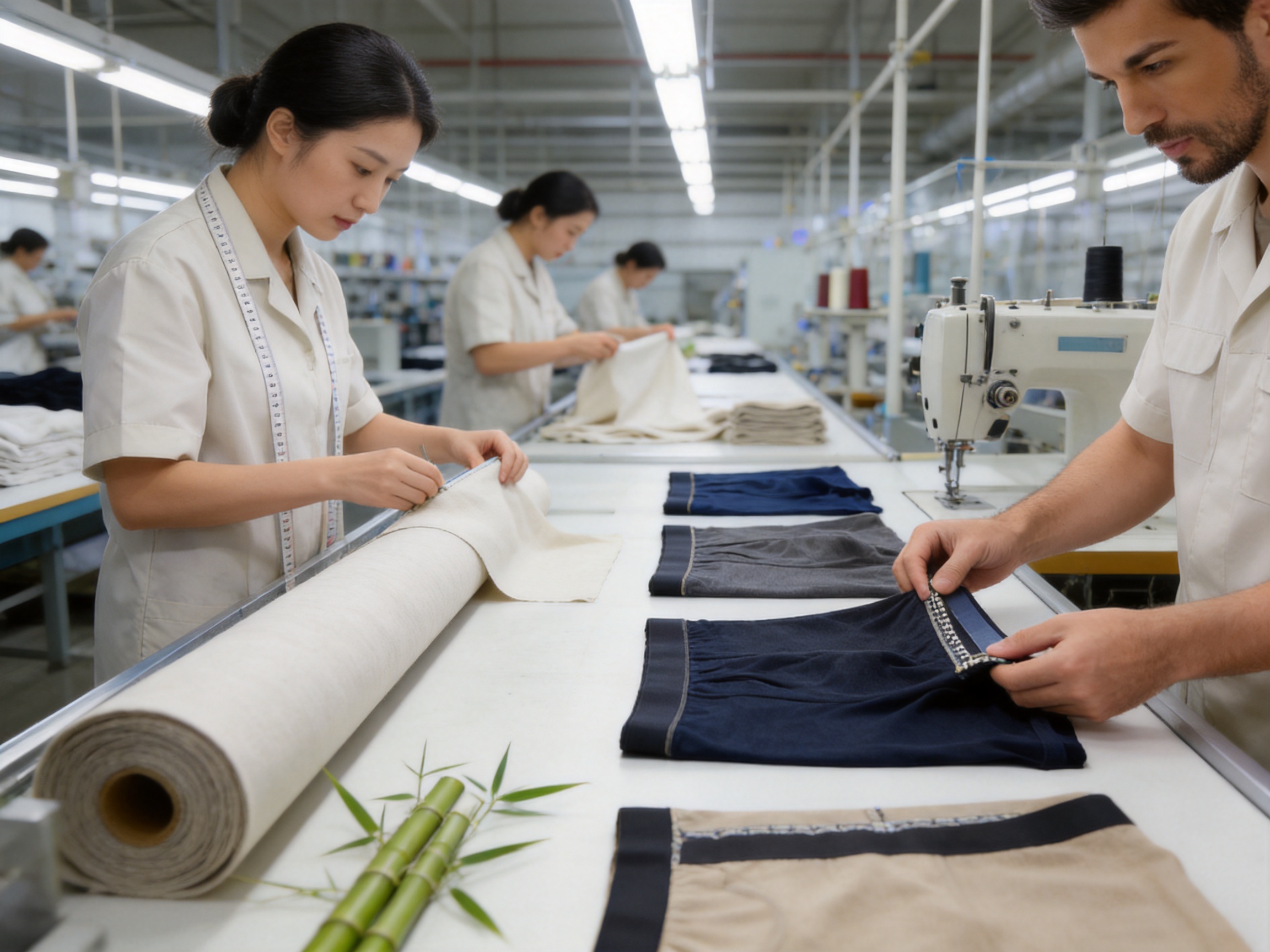
Underwear is a precision product. Small differences in rise, seam placement, elastic tension, or fabric recovery can change the way the finished garment feels. A capable manufacturer must control the product from material selection through final inspection.
The manufacturing process begins with the selected bamboo viscose and spandex fabric. The factory must confirm composition, weight, stretch, recovery, color, surface feel, and dimensional behavior before bulk production. Bamboo viscose fabrics can respond differently to washing, heat, tension, and finishing, so fabric approval should be based on measured performance rather than appearance alone.
For an OEM or ODM customer, the material stage is also the point where a product’s market position is established. A retailer selling premium breathable underwear needs consistent fabric feel from one production lot to the next. A private-label brand may also require color matching, customized fabric weight, or a specific level of stretch. Clear technical specifications reduce the risk of variation.
Pattern engineering determines how the boxer briefs sit on the body. The main areas include the waistband, front pouch, fly opening, rise, seat, leg opening, and inseam. Each area must be balanced with the others.
A longer inseam alone does not create a no-ride-up fit. The leg opening must have appropriate circumference and recovery. The seat must provide enough room without excess fabric. The rise must support the body without placing too much tension on the waistband. The front panels must allow movement while maintaining coverage. These relationships require sample evaluation and size grading.
The stated S-3XL size range provides a foundation for broader market coverage. Grading across sizes should preserve the intended design rather than simply enlarge every measurement by the same amount. Body proportions can change between size groups, so professional pattern development should review thigh width, rise, seat depth, and waistband length individually.
Stretch underwear fabric must be cut with attention to grain direction, tension, and panel alignment. If fabric is stretched during cutting, the finished pieces may contract later and create size inconsistencies. If the stretch direction is not controlled, the garment may lose balance between vertical and horizontal movement.
Accurate cutting supports consistent pairs across a production run. It also helps control fabric waste, which is relevant to cost management and resource efficiency. For custom programs, cutting accuracy is particularly important because the manufacturer must reproduce approved samples at scale.
Underwear seams must be secure but low-profile. Excessive thread bulk can undermine the comfort benefits of a soft fabric. Insufficient stitch security can lead to seam opening, especially at the fly, crotch, seat, and leg opening.
The seamless-back concept requires careful panel and seam planning. The objective is to reduce uncomfortable bulk while preserving structural strength. Thread tension, stitch density, seam allowance, and finishing consistency all influence the final result.
The waistband also requires controlled sewing. It must be attached evenly around the body, without twisting or creating concentrated pressure points. Uneven elastic insertion can cause one section to feel tighter than another and may affect the way the garment sits after washing.
Finishing includes thread trimming, seam inspection, label or tagless treatment, waistband review, fly inspection, and removal of visible defects. A premium underwear product should feel clean on the inside as well as look attractive from the outside.
For brands, clean finishing reduces customer complaints related to loose threads, scratchy edges, uneven seams, and inconsistent elastic. It also improves the product’s presentation when opened from retail packaging or an e-commerce shipment.
Quality control should cover raw materials, in-process production, and finished goods. Key checks may include fabric composition documentation, color consistency, dimensions, inseam length, waistband recovery, seam security, appearance, and packaging accuracy.
Nantong Tianhong Textile Technology Co., Ltd. highlights traceable supply chain management and certifications or compliance systems including FSC, OCS, OEKO-TEX 100, GOTS, WRAP, and BSCI. The specific certification applicable to a product should be confirmed for the relevant material, production batch, and customer requirement. Buyers should request current documentation rather than assuming that every certification applies automatically to every style.
Nantong is located in Jiangsu Province and is widely recognized as an important textile manufacturing area in China. The local industrial environment supports access to textile materials, garment production services, technical workers, logistics networks, and related supply-chain resources.
Nantong Tianhong Textile Technology Co., Ltd. was established in 2001 and focuses on the research, manufacturing, and sales of underwear products. The company provides OEM and ODM services for labels and has developed long-term partnerships with clients in Europe, North America, and China.
For an underwear buyer, this background matters because product performance is influenced by manufacturing experience. A factory familiar with underwear must understand close-to-skin comfort, stretch behavior, size grading, seam placement, elastic application, and repeated laundering. These requirements differ from those of many outerwear categories.
The company’s stated focus on sustainable development, environmentally friendly functional fabrics, and traceable supply chain management also supports buyers seeking more responsible product lines. Sustainability claims should be supported by relevant certificates, material records, and production documentation, but a structured compliance approach gives brands a stronger basis for product communication.
Manufacturing strength in practical terms: The supplier combines underwear specialization, OEM/ODM development, natural-fiber product knowledge, international customer experience, and certification-oriented supply-chain management.
The boxer brief can be used as a starting point for a private-label underwear range. An OEM program usually allows the buyer to specify branding, packaging, colors, sizes, and selected technical details while retaining an approved product structure. An ODM program may provide a more developed base design that can then be adapted for the buyer’s market.
Depending on production capabilities and order requirements, buyers may discuss custom colorways, waistband branding, packaging format, care labels, size labels, logo placement, carton configuration, and retail presentation. Product developers may also explore changes to inseam length, rise, fabric weight, stretch level, fly construction, or color assortment.
Customization should be approached carefully. Every change can affect fit, cost, minimum order quantity, testing, lead time, and product certification. For example, changing the fabric weight may affect breathability and drape. Changing the inseam may alter leg stability. Changing the waistband can influence comfort and recovery. A professional supplier should review the consequences before approving a revised specification.
Step one: Define the target customer. Decide whether the product is intended for office workers, travelers, athletes, sustainable-lifestyle shoppers, plus-size customers, or general daily wear.
Step two: Confirm the product brief. Specify fiber composition, size range, inseam targets, colors, waistband preferences, fly structure, branding requirements, packaging, and intended retail price.
Step three: Review the first sample. Evaluate the fit on more than one body type when possible. Check the waistband, pouch, rise, leg opening, seat coverage, seam feel, and visibility under clothing.
Step four: Test movement. Ask wear testers to sit, walk, bend, climb stairs, and perform light exercise. The aim is to identify ride-up, twisting, bunching, pressure, or excessive looseness.
Step five: Test laundering. Review dimensional stability, color retention, elastic recovery, seam appearance, fabric softness, and pilling after repeated care cycles appropriate to the product’s intended use.
Step six: Approve the production standard. Document measurements, tolerances, fabric details, approved colors, packaging, labeling, and inspection requirements before bulk production.
This sequence helps prevent a common sourcing problem: approving a visually attractive sample without testing how it performs after movement and laundering.
Buyers evaluating premium breathable underwear should review both the product and the supplier. The following checklist can be included in a sourcing file or pre-production meeting.
| Review area | Questions to ask | Why it matters |
|---|---|---|
| Fabric composition | Is the 92% bamboo viscose and 8% spandex composition documented? | Confirms product labeling and material consistency. |
| Certification | Which current certificates apply to the fabric and finished product? | Supports responsible sourcing and compliant marketing. |
| Fit | Are the rise, inseam, leg opening, and waistband measurements consistent? | Controls comfort and reduces returns. |
| Ride-up performance | Has the garment been tested during sitting, walking, and active movement? | Checks whether the extended leg performs as intended. |
| Seams | Are the back, crotch, fly, and leg seams smooth and secure? | Prevents irritation and premature failure. |
| Laundering | Does the fabric retain softness, size, color, and stretch after washing? | Protects long-term customer satisfaction. |
| Packaging | Are care instructions, fiber content, country-of-origin information, and size markings correct? | Supports retail compliance and customer care. |
A strong product page should translate technical specifications into practical benefits without making unsupported promises. The primary message can focus on soft breathable comfort, secure coverage, and a stable fit.
Useful product language includes “92% viscose made from bamboo,” “8% spandex for flexible movement,” “extended boxer brief coverage,” “tagless construction,” “open fly,” “seamless back,” “S-3XL sizing,” and “FSC certified,” provided that the certification statement matches the applicable product documentation.
Retailers should explain that the garment is designed for both active sessions and daily routines. This gives customers a clear use case without positioning the boxer briefs as specialized compression wear. The product can be presented as a versatile foundation garment for work, travel, leisure, walking, and moderate activity.
Care instructions should be displayed clearly. Bamboo viscose and spandex garments generally benefit from following the supplier’s recommended washing and drying instructions. Customers should avoid assuming that high heat is harmless. Excessive heat can affect elastic recovery, dimensions, surface softness, and garment life. The final care label should be based on verified testing and the supplier’s approved instructions.
Soft next-to-skin comfort: The bamboo-viscose-rich fabric is designed for a smooth and lightweight feel.
Breathable everyday wear: The fabric structure supports airflow for a fresher sensation during long periods of use.
Secure thigh coverage: The extended boxer silhouette helps keep more of the upper thigh covered.
Flexible movement: Spandex provides stretch for sitting, walking, bending, and active routines.
Reduced irritation: A tagless finish and smooth back construction minimize common sources of bulk and rubbing.
Convenient access: The open fly supports practical daily use.
Bamboo-derived viscose is often included in sustainable apparel collections because bamboo is a rapidly renewable plant resource and the resulting textile can provide a soft, lightweight hand feel. However, sustainability claims should be precise. The environmental profile of a textile depends on cultivation, pulping, chemical processing, energy use, water management, dyeing, finishing, transportation, product life, and end-of-life treatment.
For that reason, responsible product communication should avoid presenting bamboo viscose as automatically impact-free. A more accurate approach is to identify the verified material composition, explain the relevant certification, and avoid claims that exceed the available documentation.
FSC certification can support chain-of-custody or responsibly managed forest-related claims when the certification applies to the relevant material and product documentation. OCS, GOTS, OEKO-TEX 100, WRAP, and BSCI address different aspects of materials, chemical safety, social responsibility, or factory compliance. These standards are not interchangeable. Buyers should identify which standard answers which sourcing question.
Nantong Tianhong’s stated certification and compliance portfolio gives international customers a framework for discussing responsible production. The buyer should still confirm certificate scope, validity, product applicability, and audit status for each order.
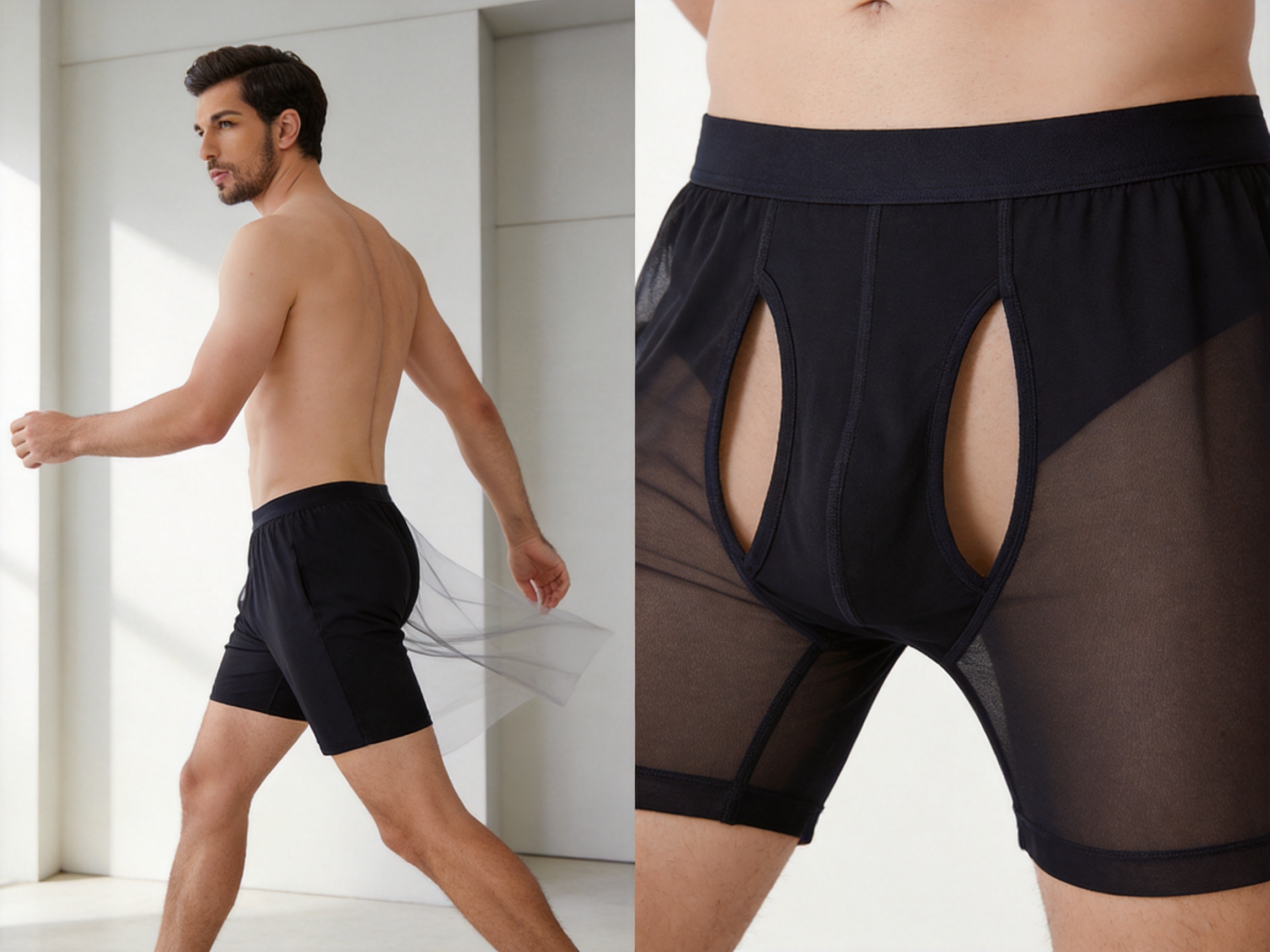
The product is offered across sizes S through 3XL, with inseam measurements ranging from approximately 3.4 inches to 5.2 inches depending on size. The stated tolerance is approximately plus or minus 0.2 inches. These figures should be presented as production specifications rather than a substitute for a complete size chart.
Retailers should provide waist and hip measurements in the preferred market measurement system. If selling internationally, dual-unit charts can reduce confusion. Product pages should also explain whether measurements are body measurements or garment measurements. A consumer’s body measurement and the flat measurement of a garment are not the same.
When selecting a size, the customer should consider waist comfort, hip and seat room, thigh circumference, preferred support level, and the effect of outer clothing. Choosing a size solely by height may produce an unsuitable fit. A waistband that feels secure but does not dig in is generally preferable to a larger size that shifts during movement.
For buyers developing a private-label size range, fit testing should include the smallest and largest sizes, not only the middle size. The 3XL sample should be reviewed for thigh coverage, waistband comfort, front room, leg opening stability, and seam placement. Grading that looks acceptable on a medium sample may not perform identically across the full range.
The premium underwear market is not defined only by luxury packaging or a high retail price. Customers expect tangible improvements that they can feel during use. The No Ride-Up Men’s Boxer Briefs have several features that can be converted into clear product value.
First, the bamboo-viscose-rich composition provides a distinct alternative to ordinary cotton underwear. The smooth surface, lightweight feel, and breathability create a recognizable material story.
Second, the design addresses a common complaint: legs that roll or move upward. The extended cut and stretch construction are directly related to this problem.
Third, the product balances coverage and freedom. It provides more thigh coverage than briefs while remaining shorter and less specialized than many athletic base layers.
Fourth, the tagless and seamless-back details target the tactile concerns that often drive underwear dissatisfaction. These details can make the product feel more refined even when the customer is wearing it beneath everyday clothing.
Fifth, the product is suitable for OEM and ODM development. A brand can build a collection around the base design by adjusting colors, packaging, branding, and selected construction details.
Finally, the manufacturer’s long operating history, underwear specialization, international customer experience, and certification-oriented systems support a more dependable sourcing conversation than a supplier offering only an unverified catalog image.
They are made from 92% viscose made from bamboo and 8% spandex. “Viscose made from bamboo” describes the textile fiber form used in the garment. Buyers should use the exact fiber wording shown on current product and compliance documentation.
The design combines a bamboo-viscose-rich fabric with an extended leg, no-ride-up construction objective, open fly, tagless finish, seamless back, full coverage, and a flexible waistband. The combination is intended to improve comfort, stability, and breathability.
No garment can guarantee identical performance for every person and every activity. The extended leg and stretch fabric are engineered to reduce ride-up, but results also depend on body shape, size selection, thigh circumference, movement, and outer clothing.
It is suitable for active sessions and daily routines. It is best positioned as versatile breathable underwear rather than highly specialized compression equipment. Customers performing high-intensity sport should compare the product’s support and moisture requirements with those of purpose-built athletic base layers.
The listed size range is S through 3XL. Retailers should publish the complete approved size chart, including waist, hip, rise, leg opening, and inseam information where available.
The inseam is approximately 3.4 inches to 5.2 inches across sizes S through 3XL, with a stated tolerance of approximately plus or minus 0.2 inches.
Yes. It uses an open-fly design intended to provide convenient access.
The design is tagless. The final labeling method should be confirmed for the customer’s private-label or regulatory requirements.
The 8% spandex content supports stretch and recovery. This helps the garment move with the body and return closer to its intended shape after use.
Nantong Tianhong provides OEM and ODM products and services. Buyers can discuss branding, packaging, colorways, size specifications, and other product requirements with the manufacturer. Custom changes should be reviewed for fit, cost, testing, minimum order quantity, and certification impact.
The company identifies certifications or compliance systems including FSC, OCS, OEKO-TEX 100, GOTS, WRAP, and BSCI. Buyers should verify which current certificate applies to the specific fabric, factory, production order, and claim being made.
Retailers should state the verified fiber composition and applicable certification without making absolute claims. A responsible description can focus on bamboo-derived viscose, certification-backed sourcing where applicable, and the manufacturer’s traceability approach.
For a retailer or brand considering this product, the next step should be a structured product review rather than a price-only comparison.
Begin with the technical pack. Confirm fiber composition, fabric weight, stretch percentage, size measurements, inseam tolerance, color standards, packaging, and care instructions.
Request current compliance documents. Match each document to the claim it supports. Confirm validity and scope before using certification language in marketing materials.
Approve fit through physical samples. Check the waistband, front, fly, seat, leg opening, and back construction on appropriate testers.
Conduct wear and wash trials. Assess comfort after extended wear and inspect the garment after repeated laundering.
Build a clear retail message. Lead with breathable comfort, smooth bamboo-derived fabric, secure extended coverage, flexible movement, and tagless construction.
Discuss the OEM/ODM roadmap. If the initial product performs well, explore coordinated colors, packaging, women’s underwear, children’s underwear, or other underwear categories supported by the supplier’s production capabilities.
The No Ride-Up Men’s Boxer Briefs offer a focused response to several common underwear problems: overheating, rough fabric, leg movement, insufficient thigh coverage, waistband discomfort, and irritating labels. The 92% bamboo viscose and 8% spandex composition creates the foundation for a soft, breathable, flexible garment, while the extended boxer cut and stable construction support everyday movement.
Its strongest competitive position comes from the combination of material and design rather than from one isolated specification. Bamboo-derived viscose provides a premium comfort story. Spandex supports movement. The longer inseam helps maintain coverage. The open fly adds convenience. The seamless back and tagless finish reduce bulk. FSC certification and the manufacturer’s broader compliance orientation support responsible product development when properly documented.
For brands and distributors, Nantong Tianhong Textile Technology Co., Ltd. offers the additional value of underwear-focused manufacturing, OEM/ODM development, international customer experience, and a supply-chain approach built around functional fabrics and traceability. Buyers should still complete normal sample, testing, certification, and quality-control procedures, but the product provides a strong technical base for a premium breathable underwear collection.
1. Product technical information for No Ride-Up Men’s Boxer Briefs: fiber composition, construction details, inseam range, certification statement, and intended use.
2. Nantong Tianhong Textile Technology Co., Ltd. company profile: manufacturing history, OEM/ODM services, textile specialization, international customer base, and supply-chain management approach.
3. Forest Stewardship Council, chain-of-custody and responsible material guidance.
4. Organic Content Standard and Global Organic Textile Standard guidance for textile certification and material claims.
5. OEKO-TEX Standard 100 guidance for testing textiles for harmful substances.
6. WRAP and BSCI reference materials concerning social compliance and responsible manufacturing practices.
7. General apparel product-development practice covering stretch fabric testing, garment measurement, size grading, seam evaluation, laundering trials, and finished-goods inspection.

Copyright © Nantong Tianhong Textile Technology Co., Ltd. All Rights Reserved.
 Room 806, Building D, Jingyang Plaza, Chongchuan District, Nantong City, Jiangsu Province,china


 English
 Español
 русский
 عربى