Content
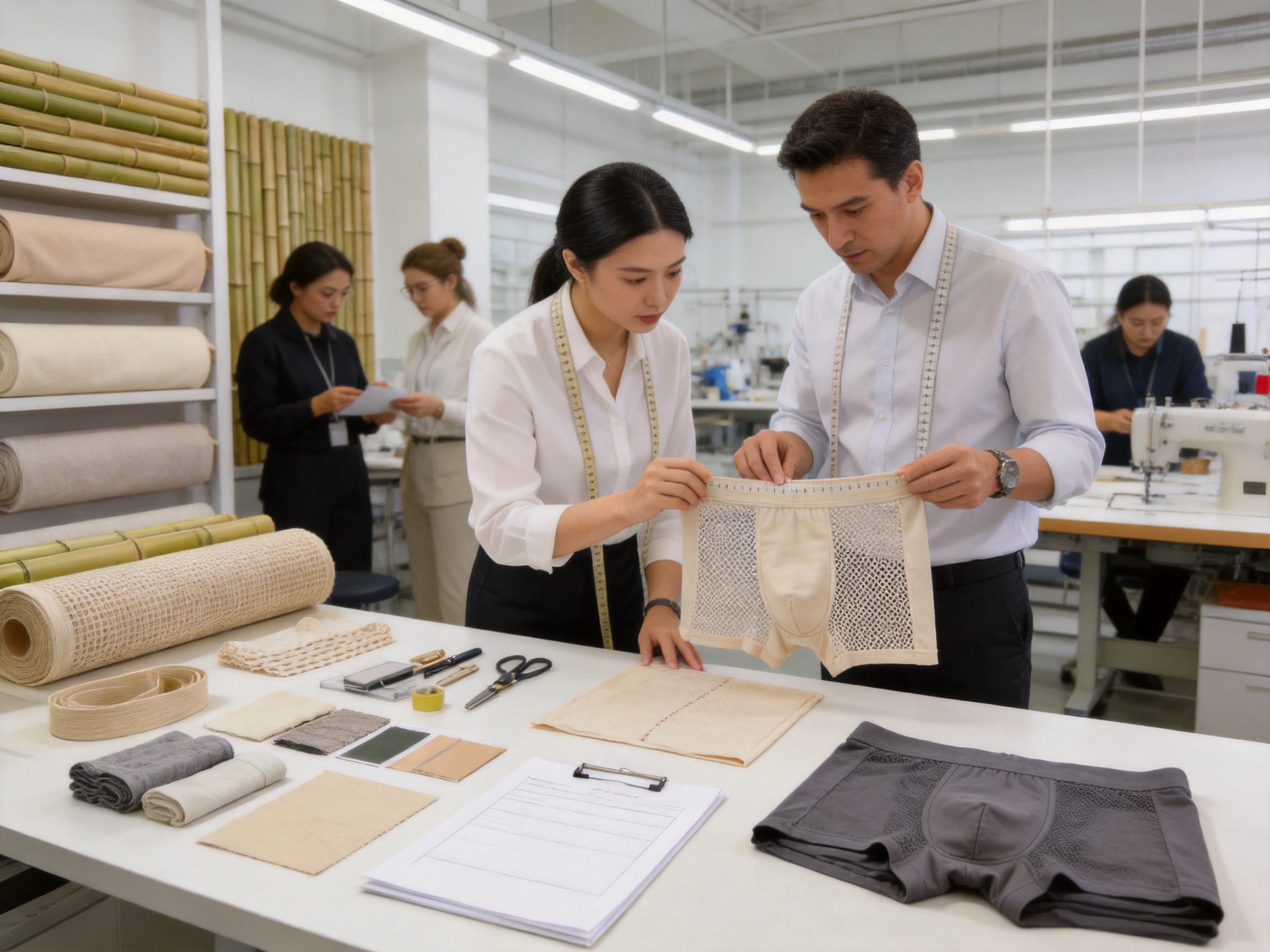
Quick Answer: Premium bamboo mesh boxer briefs are a strong choice for underwear brands seeking breathable, moisture-managing, comfortable, and customizable men’s underwear. The Mesh Panel Men’s Boxer Briefs, product code THDY-035, combine bamboo mesh with bamboo jersey to improve airflow while maintaining a supportive fit. Their sweat-wicking construction, soft hand feel, elastic waistband, and irritation-reducing design give them practical advantages over basic cotton boxer briefs and less breathable synthetic alternatives. For brands planning a private-label or wholesale launch, Nantong Tianhong Textile Technology Co., Ltd. offers OEM/ODM development, natural-fiber expertise, quality certifications, traceable supply chain management, and manufacturing experience dating back to 2001.
This product is designed for underwear companies that need more than a basic brief. It addresses the main performance requirements of modern men’s underwear: ventilation, moisture control, freedom of movement, everyday comfort, reliable recovery, and a clean appearance under clothing. The bamboo mesh panel creates a more breathable zone, while bamboo jersey supports softness and coverage in the main body. The combination gives buyers a practical route to premium breathable underwear without moving into highly complex or uncomfortable construction.
Men’s underwear sits close to the body for long periods, so fabric performance has a direct effect on comfort. Heat, perspiration, friction, and restricted airflow can make a basic pair feel uncomfortable even when the size is correct. A boxer brief must therefore do several jobs at once. It should hold its shape, provide enough coverage, move with the wearer, manage moisture, and avoid creating unnecessary pressure or irritation.
The Mesh Panel Men’s Boxer Briefs are built around these practical expectations. Bamboo mesh supports airflow in areas where ventilation is especially useful. Bamboo jersey adds a soft, comfortable surface for the main body of the garment. The sweat-wicking properties of the bamboo fabric help manage moisture rather than allowing it to remain against the skin. An elastic waistband provides a secure fit without relying on complicated hardware or bulky components.
These features support several high-value use cases:
Breathability is not simply a marketing term. It affects how quickly heat and moisture can move away from the body. Mesh construction introduces open structure into the fabric, increasing the potential for air exchange. When combined with a moisture-managing fiber, the result can feel drier and less clammy than a dense, poorly ventilated fabric.
Buyer takeaway: Brands searching for premium breathable underwear should evaluate fabric composition, mesh placement, moisture management, waistband security, seam comfort, size grading, and production support together. No single feature determines product quality.
The product is identified as THDY-035 and belongs to the Men’s Boxer Briefs category. Its principal materials are bamboo mesh and bamboo jersey. This pairing is central to the product’s positioning: it combines targeted ventilation with a softer, more stable body fabric.
| Product element | Function | Customer benefit |
|---|---|---|
| Bamboo mesh | Creates a more open, ventilated fabric structure | Improved airflow and a lighter sensation in warm or active conditions |
| Bamboo jersey | Provides a soft, comfortable body fabric | Gentle contact with the skin and suitable coverage for daily wear |
| Sweat-wicking bamboo fabric | Helps manage moisture generated during wear | A drier, more comfortable feeling over extended periods |
| Elastic waistband | Maintains the garment’s position around the waist | A secure fit that supports movement and everyday reliability |
| Boxer brief silhouette | Combines boxer coverage with a closer fit | Supportive wear under trousers, jeans, uniforms, and active clothing |
The product description emphasizes comfort and irritation reduction. That benefit depends on the complete garment system rather than fabric alone. A soft fiber, suitable stretch, smooth construction, correct size grading, and a well-designed waistband all contribute to how the underwear feels during movement. For OEM and ODM customers, these areas can be reviewed during development and sampling to create a product that matches the intended market position.
Some performance underwear designs use many panels, trims, and technical components. That approach can create a premium appearance, but it may also increase production complexity, cost, and the number of potential comfort points. A mesh panel boxer brief takes a more focused approach. It places breathable material where airflow is valuable while preserving a familiar boxer brief shape.
This balance can make the style easier for consumers to understand. The product looks like a wearable everyday basic rather than a specialized garment intended only for sport. For retailers, that broadens the potential customer base. For manufacturers and private-label buyers, it can simplify assortment planning because the same core style can serve comfort, active, travel, and natural-fiber collections.
Traditional cotton underwear can be comfortable, but a dense jersey construction may hold heat and moisture during long wear. The mesh panel changes the ventilation profile of the garment. Air can move more freely through the open textile structure, helping reduce the heavy or enclosed feeling associated with less breathable designs.
This does not mean mesh should replace all body fabric. Complete open-mesh construction may not provide the coverage or visual appearance desired for mainstream underwear. The panel approach offers a more controlled solution: ventilation where it is useful and a familiar, comfortable jersey structure where coverage and softness matter more.
Sweat-wicking bamboo fabric helps move moisture through the textile structure so that it can spread, evaporate, or be managed more efficiently. The practical goal is to reduce the amount of moisture sitting directly against the skin. This is relevant during commuting, travel, warm climates, long workdays, and light physical activity.
Moisture management should be distinguished from waterproofing. The fabric is intended to handle perspiration, not to block external water. Brands should describe this benefit accurately in product copy and should confirm performance claims through appropriate testing before publishing numerical statements.
Bamboo-based textiles are often selected for their soft hand feel. The bamboo jersey component can support a smooth, comfortable surface that is appropriate for close-to-skin use. When paired with construction that limits unnecessary rubbing, the garment can offer a more pleasant experience than rougher or poorly finished alternatives.
Comfort claims should be supported by practical product checks. Buyers should inspect the inside of the garment, waistband join, leg openings, seam allowances, and any label placement. A soft fiber cannot compensate for a rough seam or an overly tight elastic. OEM development should therefore evaluate the fabric and the construction as a single system.
The elastic waistband helps the boxer brief remain in position as the wearer walks, sits, bends, and changes posture. A stable waistband is especially important for boxer briefs because the garment is expected to provide close coverage without sliding or folding.
Fit quality depends on elastic width, recovery, tension, stitching, rise measurement, leg opening, and size grading. A waistband that is too loose may roll or move. One that is too tight can create pressure and discomfort. The right balance depends on the target market and should be confirmed through fit samples on appropriate body types.
Basic underwear is a crowded category. A product that simply claims to be soft may struggle to stand apart. Mesh panels, bamboo-based materials, moisture management, and a clear comfort benefit give brands more useful points of differentiation.
These features can support several retail messages:
Strong positioning should remain specific. Rather than making broad claims about every possible benefit, a brand can explain what the garment contains, how the panel works, where the product is intended to be worn, and how the fit supports daily movement.
The product uses two related but distinct fabric structures. Bamboo mesh is selected for ventilation, while bamboo jersey provides a more conventional surface for the main body. Understanding the difference helps buyers make better development and merchandising decisions.
Mesh is defined by its more open construction. Depending on yarn selection, knitting method, weight, and finishing, mesh can range from subtle and compact to highly open and lightweight. For underwear, the mesh must strike a careful balance. It needs to provide airflow without becoming too fragile, too transparent, or uncomfortable against the skin.
Important evaluation points include:
A good mesh panel should integrate visually and mechanically with the rest of the boxer brief. If the mesh stretches much more than the body fabric, the panel may bag out or create tension lines. If it stretches much less, it may restrict movement. Sampling and wash evaluation are essential for checking this relationship.
Jersey is a familiar knit structure for underwear because it can provide softness, flexibility, and comfortable drape. Bamboo jersey supports the main body of the boxer brief and helps create a smooth base around the mesh section. Its hand feel and coverage are useful for consumers who want breathable underwear without the exposed appearance of a full-mesh garment.
For buyers developing a premium breathable underwear line, the jersey should be assessed for surface smoothness, pilling resistance, color consistency, shrinkage, stretch recovery, and laundering performance. These factors influence both initial customer satisfaction and repeat purchase potential.
Bamboo-related product claims require careful documentation. Buyers should confirm the exact fiber composition, applicable certifications, chain-of-custody documentation, and permitted wording before using terms such as organic, sustainable, or environmentally friendly in consumer-facing materials.
The manufacturing company states that its product and supply chain work may be supported by certifications and standards including FSC, OCS, OEKO-TEX 100, GOTS, WRAP, and BSCI. The relevant certification depends on the specific material, facility, order, and production scope. A responsible buyer should request current documentation for the exact style and production batch rather than assuming that every certificate applies automatically to every product.
Specification discipline: Before approving bulk production, request a fabric specification sheet, fiber-content confirmation, color standard, weight tolerance, shrinkage information, stretch and recovery data, test requirements, and certification documents relevant to the order.
Long periods of sitting can increase heat and moisture buildup. A breathable panel and moisture-managing fabric can make the garment feel more comfortable through a full day.
Travel underwear needs to remain comfortable through changing temperatures, extended sitting, and limited opportunities for changing. Soft fabric and airflow are useful selling points.
The style is suitable for light activity and everyday movement where ventilation and moisture handling are valued, while its boxer brief shape maintains familiar coverage.
Bamboo materials and considered construction give consumers a reason to upgrade from ordinary multipacks.
The product should not be marketed as a substitute for specialized compression wear, medical garments, or high-intensity technical sports underwear unless additional testing and development support those claims. Its strongest position is premium everyday underwear with improved breathability and comfort.
The quality of a boxer brief depends on more than the selected fiber. Manufacturing control determines whether the finished product delivers consistent fit, appearance, durability, and comfort. Nantong Tianhong Textile Technology Co., Ltd. is based in Nantong, Jiangsu Province, a major Chinese textile production area, and has operated since 2001. The company specializes in the research, manufacturing, and sales of underwear products and provides OEM/ODM services for established labels.
This experience is relevant to buyers that need a development partner rather than a trading intermediary. An underwear manufacturer involved in product research and production can help coordinate fabric, pattern, construction, sampling, and bulk manufacturing decisions. That coordination is especially useful for a design such as THDY-035, where the mesh panel must work correctly with the bamboo jersey body and elastic waistband.
OEM production allows a brand to order an established product under its own label, subject to agreed specifications and packaging requirements. ODM development provides a broader design route, allowing the buyer to request changes to materials, colors, trims, labeling, packaging, measurements, or construction.
For the Mesh Panel Men’s Boxer Briefs, a private-label buyer may want to review:
The advantage of a structured OEM/ODM process is that these decisions can be documented before bulk manufacturing. That reduces ambiguity and gives the buyer measurable approval points.
The company describes a focus on sustainable development, environmentally friendly functional fabrics, and traceable supply chain management. This focus aligns with the product’s bamboo material and with the growing demand for underwear that combines comfort with more responsible sourcing considerations.
“Sustainable” should not be treated as a complete product specification. A buyer should examine the fiber source, processing route, dyeing and finishing, factory conditions, packaging, order quantities, product lifespan, and end-of-life considerations. A manufacturer with experience in certified and traceable materials can help organize this information, but final claims remain the responsibility of the brand using them.
The company identifies certifications and standards including OEKO-TEX 100, GOTS, OCS, FSC, WRAP, and BSCI within its broader product and manufacturing capabilities. These standards address different areas. Some focus on material content or organic fiber chain of custody. Others relate to harmful substances, social responsibility, workplace practices, or forest-related sourcing.
For a buyer, the correct process is to map each requirement to the specific order:
This approach is more reliable than placing a general certification logo on packaging without checking its relevance to the final product.
The exact factory workflow may vary by order, but a professional underwear program generally follows a sequence of technical controls. The purpose is to translate the product concept into a repeatable garment.
The buyer and manufacturing team establish the intended use, target price, size range, material requirements, color standards, construction details, branding, packaging, testing, and delivery expectations. This stage should identify whether the style is a standard OEM product or requires ODM modification.
Bamboo mesh, bamboo jersey, thread, elastic, labels, and packaging materials are reviewed against the approved specification. The team should confirm width, weight, stretch, recovery, color, hand feel, and compatibility between materials before cutting begins.
The boxer brief pattern is adjusted for the target consumer and size range. Key measurements include waist, rise, hip, thigh, leg opening, front coverage, and body length. Pattern grading should maintain the intended fit relationship across all sizes rather than simply scaling measurements mechanically.
A sample is produced for review. The buyer checks comfort, mobility, panel placement, waistband tension, seam position, leg opening behavior, appearance under clothing, and overall proportions. Fit comments should be recorded using measured points rather than general descriptions alone.
The sample is worn and laundered according to the intended care instructions. Review points include shrinkage, color change, pilling, mesh distortion, waistband recovery, seam strength, and changes in hand feel. Corrections should be made before bulk approval.
When production begins, fabric is checked for defects and laid according to the approved direction and marker. Mesh panel pieces must be cut consistently so that their position, orientation, and dimensions match the approved sample.
Operators assemble the body panels, mesh sections, leg openings, waistband, labels, and other components according to the construction specification. Seam type, thread tension, stitch density, and edge finishing influence comfort and durability.
Finished garments are checked for measurement tolerance, appearance, sewing defects, fabric issues, labeling, cleanliness, and packing accuracy. The inspection standard should be agreed in advance so that both parties use the same acceptance criteria.
This process demonstrates why manufacturing strength is a product advantage. The value of bamboo mesh is realized only when fabric sourcing, pattern engineering, sewing, finishing, inspection, and documentation are coordinated.
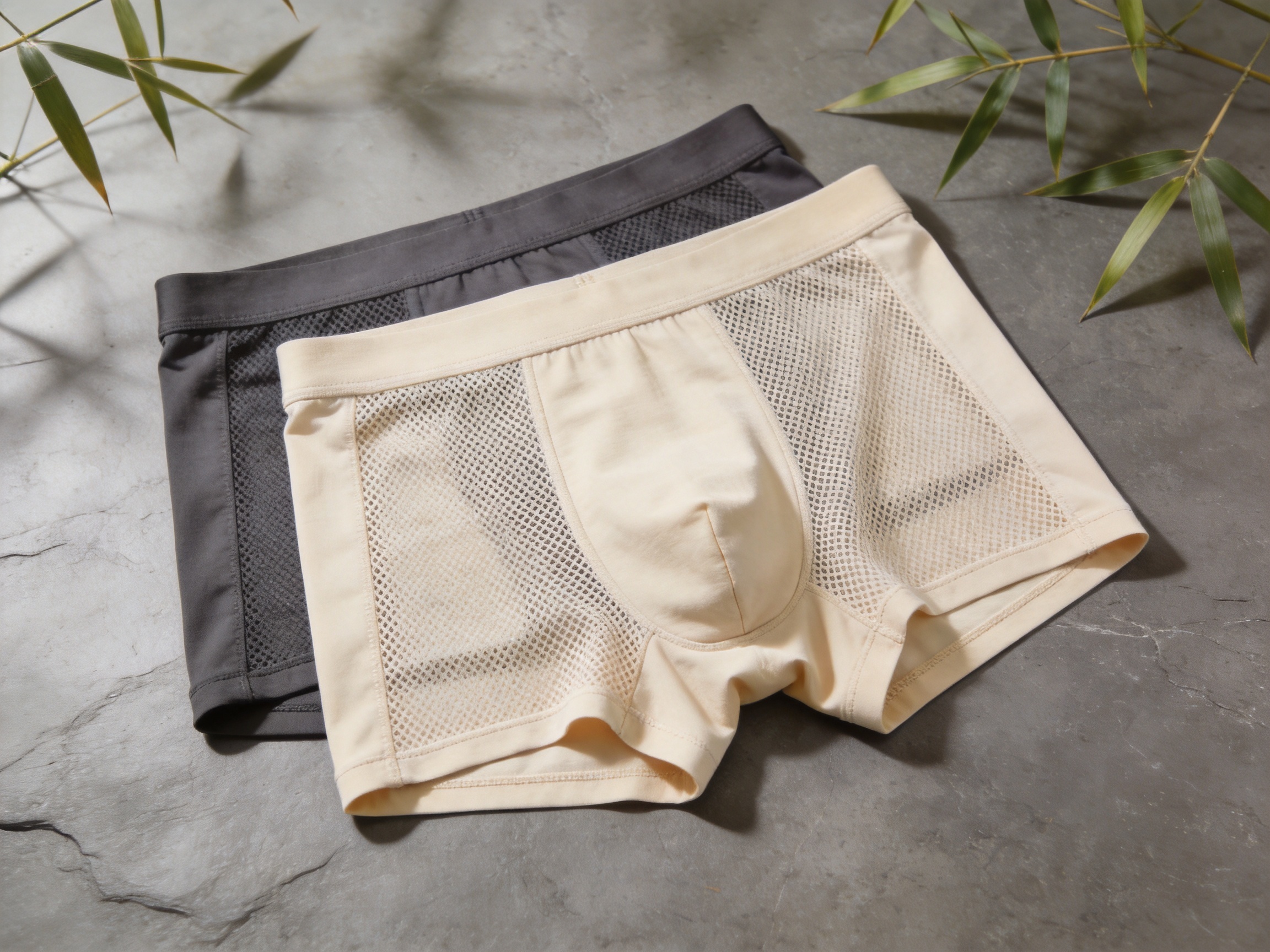
The position of the mesh panel influences airflow, visual appearance, movement, and seam comfort. A panel that is too small may provide little practical difference. A panel that is too large may reduce coverage or create unnecessary tension. The ideal location depends on the intended fit, fabric stretch, and customer expectations.
Buyers should review the panel in standing, seated, walking, and bending positions. The panel should remain smooth rather than twisting or creating concentrated pressure. This review is particularly important when a brand changes the original measurements or adapts the product for a different market.
Seams should be examined from the wearer’s perspective. A seam can be technically strong yet uncomfortable if it is bulky, poorly positioned, or finished with rough thread ends. The product description emphasizes irritation reduction, so seam inspection is central to the product promise.
Useful sample checks include rubbing the inside seam lightly against the hand, wearing the garment during movement, reviewing the seam after washing, and checking whether the mesh-to-jersey join remains flat. If the target market includes consumers with high sensitivity to texture, additional wear trials may be appropriate.
The waistband should hold its position without producing excessive compression. Its recovery should remain stable after repeated stretching and laundering. A brand may also choose a branded jacquard elastic or a covered elastic depending on price point and visual identity.
Branding on the waistband can improve shelf recognition, but it should not create a scratchy or stiff surface. The selected elastic, logo method, stitch construction, and internal finishing should be evaluated together.
Boxer briefs must balance close fit with freedom of movement. A leg opening that is too loose may ride upward or lose its clean appearance. A leg opening that is too tight may create pressure around the thigh. The right result depends on the fabric’s stretch and recovery, the pattern shape, and the wearer’s body proportions.
Fit testing should include multiple sizes and body types. A sample that works on one fit model does not automatically prove that the grade works throughout the range.
Buyers can use the following checklist during development and pre-shipment inspection.
| Inspection area | Questions to ask | Suggested approval evidence |
|---|---|---|
| Material identity | Does the fabric match the agreed bamboo mesh and bamboo jersey specification? | Fabric report, swatch approval, fiber-content documentation |
| Appearance | Are color, surface, panel position, and branding consistent? | Approved sample, color standard, visual inspection report |
| Measurements | Are waist, rise, length, thigh, and leg opening within tolerance? | Measurement chart and inspection records |
| Comfort | Are seams flat, labels unobtrusive, and the waistband comfortable? | Wear trial and internal construction review |
| Moisture and fabric performance | Are performance claims supported by appropriate tests? | Laboratory reports where required |
| Durability | Does the garment retain shape after laundering and repeated wear? | Wash test, stretch-recovery review, seam inspection |
| Compliance | Are relevant standards and certificates current and applicable? | Certificate copies and scope verification |
| Packing | Are labels, barcodes, quantities, and cartons correct? | Packing list, carton inspection, approved packaging sample |
Not every order requires the same testing program. Requirements may differ by destination market, retailer, product claim, and customer specification. The important point is to decide the inspection plan before production rather than relying on informal approval after shipment.
Nantong is recognized as an important textile manufacturing center in China. Its industrial ecosystem supports access to textile materials, garment manufacturing expertise, production services, and related supply chain resources. For an underwear buyer, location alone does not guarantee quality, but it can support more efficient coordination when the selected company has the appropriate technical and organizational capabilities.
Nantong Tianhong Textile Technology Co., Ltd. combines this regional manufacturing environment with a stated focus on underwear research, production, sales, and OEM/ODM service. The company has worked with labels and clients in Europe, North America, and China. Experience across these markets can be useful because buyers may have different expectations for labeling, testing, packaging, sizing, documentation, and social compliance.
The company’s stated mission centers on natural-fiber fabrics and underwear products, with an emphasis on research, innovation, comfort, sustainability, customization, and supply chain traceability. These capabilities align with brands that want to develop a premium breathable underwear range rather than purchase an undifferentiated commodity item.
A quotation is easier to evaluate when the product brief is specific. State whether the underwear is intended for a premium basics line, eco-conscious collection, travel range, active lifestyle assortment, or general daily wear. Include target retail price, expected annual quantity, size range, preferred colors, packaging requirements, and sales markets.
The supplied product profile confirms bamboo mesh, bamboo jersey, moisture management, breathability, comfort, and an elastic waistband. A buyer may also desire quick drying, anti-odor treatment, low-impact dyeing, recycled packaging, or a particular stretch percentage. Those additional features should be treated as development requirements rather than assumed properties.
A sample allows the buyer to evaluate the product in real conditions. Check the fit under the intended outer clothing, movement during walking and sitting, airflow, fabric softness, waistband behavior, and laundering response. If the item will be sold in several countries, review the size chart against local customer expectations.
OEM/ODM programs may have different minimum quantities for fabric colors, custom labels, packaging, and pattern changes. Ask whether the minimum applies per color, per size range, or per total order. Clarify sample charges, development timing, approval deadlines, and the procedure for changes after sample approval.
Product pages may use terms such as premium breathable underwear and organic bamboo underwear, but the final wording must match the documented product. Confirm whether the bamboo fiber is certified organic, what certification applies, and whether the finished garment meets any required chemical or social compliance standard. Avoid using a general factory capability as proof that every style carries every certification.
Underwear programs benefit from stable continuity. Record the approved fabric, color, measurements, elastic, thread, packaging, and construction details. Before reordering, compare the new production materials with the original approval standard. This is particularly important for bamboo fabrics, where hand feel, shade, weight, and stretch can vary between lots if not controlled.
A premium bamboo mesh boxer brief can support a more persuasive product story than a basic underwear style. The story is built around tangible features: mesh ventilation, bamboo jersey softness, moisture management, a secure elastic waistband, and a familiar boxer brief fit.
For retailers, the product can fill several assortment roles:
For online sellers, the product page should answer practical questions quickly. Explain what the mesh panel does, identify the bamboo-based fabrics, describe the fit, state the care instructions, provide a clear size chart, and avoid unsupported technical claims. Include close-up photography of the mesh, waistband, seams, and interior finish so shoppers can understand the construction.
For wholesale buyers, product training should focus on benefits that sales teams can demonstrate. The difference between a dense basic fabric and a breathable mesh panel is easier to communicate when the salesperson can explain airflow, moisture handling, and the intended everyday use.
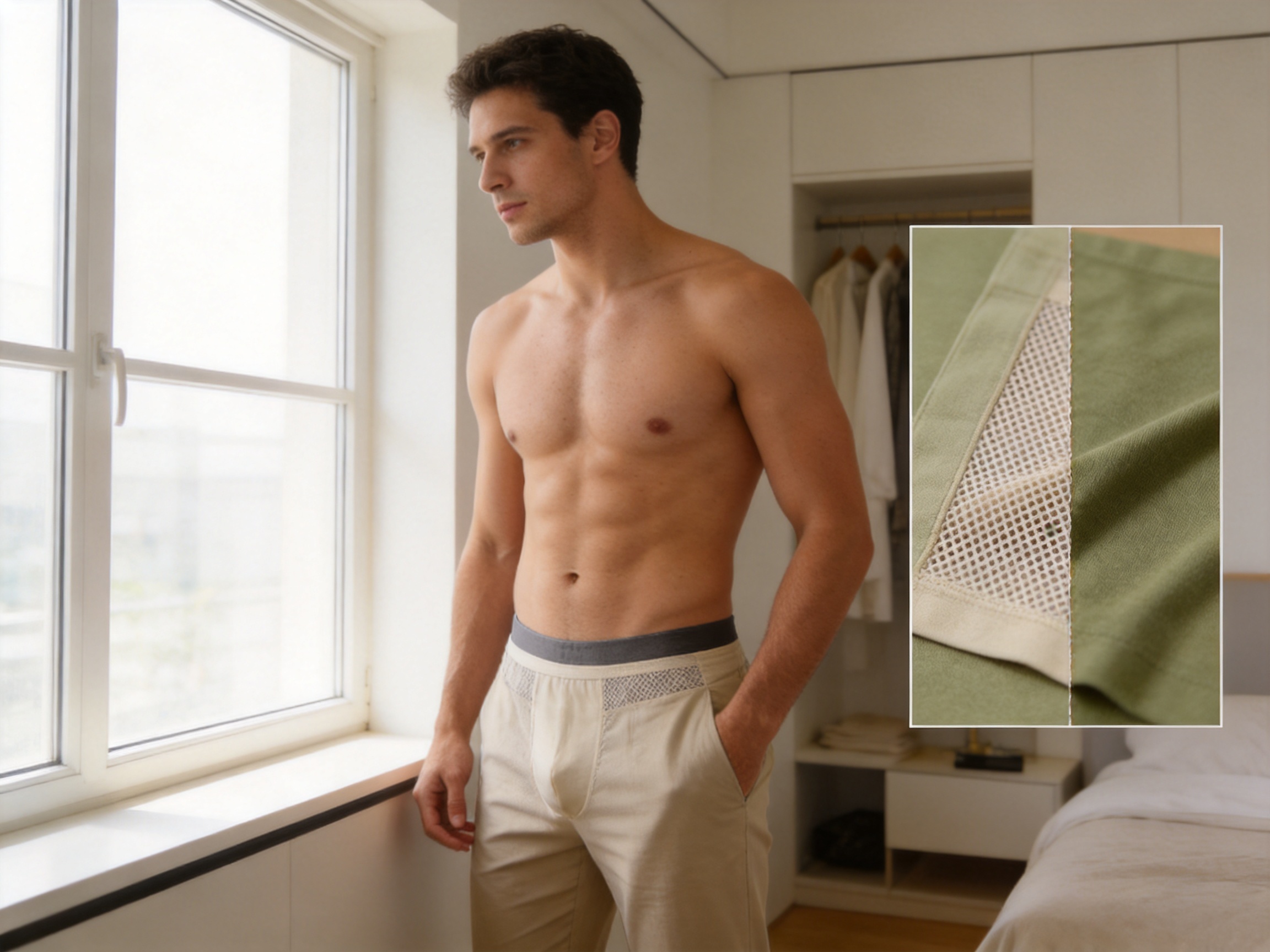
A strong product page for this style can follow a practical sequence.
This structure answers the most common buyer and consumer questions without making the page vague. It also supports search intent around premium breathable underwear and organic bamboo underwear by connecting those phrases to specific product attributes.
The product combines bamboo mesh with bamboo jersey. The mesh has a more open construction that supports airflow, while the bamboo jersey provides a soft main body fabric. This targeted design offers ventilation without making the entire garment an exposed open-mesh style.
Yes. The boxer brief silhouette, soft bamboo-based fabrics, moisture-managing construction, and elastic waistband are intended to support everyday comfort. They can be positioned for work, commuting, travel, warm weather, and general daily use.
The manufacturer provides OEM/ODM services. Buyers can discuss colors, labels, packaging, size grading, waistband branding, materials, panel dimensions, and other specifications during development. Exact customization options, minimum quantities, and costs should be confirmed for each project.
The product code supplied for the Mesh Panel Men’s Boxer Briefs is THDY-035.
The product description identifies the bamboo fabric as sweat-wicking and moisture-managing. This means the fabric is intended to help handle perspiration and support a drier feeling. Buyers should request test documentation before making quantified performance claims.
The company promotes organic bamboo underwear capabilities and identifies certifications including OCS and GOTS within its broader manufacturing and sourcing framework. The exact fiber status and certification applicability should be verified for the specific THDY-035 order, materials, factory scope, and destination market.
Request current certificates, scope documents, fiber-content records, chain-of-custody information, and relevant product testing. Confirm that the documents cover the materials and facilities used for the actual order. Use consumer-facing claims that match the evidence.
The principal advantage is targeted ventilation. Mesh can create more airflow than a dense fabric structure, while bamboo jersey provides softness and coverage. Standard cotton boxer briefs can still be comfortable, but the product’s mesh panel and moisture-management positioning offer additional differentiation for warm or active conditions.
They may suit light activity and active everyday use, but intense sports performance should not be assumed without product-specific testing. Brands targeting high-intensity sports should assess stretch recovery, support, abrasion resistance, drying rate, seam durability, and fit during vigorous movement.
Review fabric hand feel, mesh placement, fit, waistband tension, leg opening, seam comfort, label position, color, shrinkage, laundering performance, and appearance under clothing. Record all corrections in a written approval document before bulk production.
Nantong Tianhong Textile Technology Co., Ltd. is located in Nantong, Jiangsu Province, China, at Room 806, Building D, Jingyang Plaza, Chongchuan District, Nantong City.
The company states that it has established long-term partnerships with clients in Europe, North America, and China. Buyers should confirm current export documentation, destination-specific compliance, lead times, and shipping arrangements for each order.
To reduce delays, a buyer can prepare a specification sheet containing the following information:
| Section | Information to include |
|---|---|
| Product identity | THDY-035 or revised style number, product name, intended market |
| Materials | Bamboo mesh, bamboo jersey, exact fiber composition, weight, stretch, recovery |
| Fit | Size range, body measurements, tolerance, rise, thigh, leg opening, length |
| Construction | Panel placement, seam type, waistband specification, thread, label location |
| Colors | Approved color standards, dye requirements, colorfastness expectations |
| Performance | Moisture management, breathability, durability, wash, and applicable test methods |
| Compliance | Required certificates, restricted-substance requirements, social compliance documents |
| Branding | Logo, waistband treatment, woven or printed labels, packaging artwork |
| Logistics | Minimum order, delivery window, carton details, inspection, shipping terms |
A detailed specification protects both the buyer and the manufacturer. It gives the factory a clear production target and gives the buyer a measurable basis for approval.
The Mesh Panel Men’s Boxer Briefs offer a focused response to the most common weaknesses in ordinary underwear: limited airflow, trapped moisture, inconsistent fit, and weak product differentiation. Bamboo mesh contributes ventilation. Bamboo jersey contributes softness and coverage. Moisture-managing construction supports a drier wearing experience, while the elastic waistband helps keep the garment secure.
For brands, the style has commercial value because it can occupy the space between basic cotton underwear and highly specialized technical apparel. It is suitable for premium everyday collections, private-label programs, natural-fiber assortments, warm-weather ranges, travel underwear, and comfort-focused retail lines.
The manufacturing partner adds value through long-standing underwear industry experience, OEM/ODM service, natural-fiber and functional-fabric development, international customer experience, and a stated framework covering certification and supply chain traceability. Buyers should use that capability through a disciplined process: define the product brief, verify materials, approve fit samples, confirm relevant certifications, test the finished garment, and document the bulk standard.
When those steps are followed, THDY-035 can become more than a breathable basic. It can serve as a reliable, customizable foundation for premium breathable underwear and organic bamboo underwear collections aimed at consumers who expect comfort, responsible material choices, and consistent manufacturing quality.
1. Product specification supplied for Mesh Panel Men’s Boxer Briefs, product code THDY-035.
2. Company information supplied for Nantong Tianhong Textile Technology Co., Ltd., including manufacturing history, OEM/ODM services, international markets, and textile product specialization.
3. Certification and standards information supplied for FSC, OCS, OEKO-TEX 100, GOTS, WRAP, and BSCI-related capabilities.
4. General textile product-development principles covering fiber verification, fabric testing, garment fit approval, wash testing, quality inspection, and supply chain documentation.
5. General underwear design and manufacturing practices relating to mesh construction, moisture management, elastic waistband performance, seam comfort, size grading, and private-label production.

Copyright © Nantong Tianhong Textile Technology Co., Ltd. All Rights Reserved.
 Room 806, Building D, Jingyang Plaza, Chongchuan District, Nantong City, Jiangsu Province,china


 English
 Español
 русский
 عربى