Content
Men’s underwear has evolved from a basic necessity into an important part of everyday comfort, personal style, and responsible purchasing. Consumers increasingly expect underwear to provide more than simple coverage. They want soft fabrics, intelligent construction, reliable durability, an attractive appearance, and a manufacturing process that reflects modern environmental and quality standards. The Men's Luxurious Boxers, product code THDY-045, are designed to meet these expectations through a combination of bamboo viscose filament fabric, satin finishing, careful pattern development, and professional textile manufacturing expertise.
These premium men’s boxers are made from a bamboo viscose and Tencel-style satin fabric designed to deliver a smooth, refined hand feel. The fabric is gentle against the skin, naturally breathable, and suitable for long hours of daily wear. Its silk-like appearance creates an elevated alternative to ordinary cotton underwear, while its moisture-management properties help the wearer feel cooler and drier throughout the day. The result is an underwear product that combines practical performance with a luxurious visual and tactile experience.
Behind the product is an experienced textile manufacturer based in Nantong, Jiangsu Province, China. Since 2001, the company has specialized in the research, development, manufacturing, and sales of underwear products. Its capabilities include OEM and ODM services, sustainable fabric development, quality management, supply-chain traceability, and support for customers in Europe, North America, and China. This manufacturing background is important because a premium underwear product depends not only on the fabric selected but also on how the material is knitted, cut, sewn, inspected, packed, and delivered.
This article examines the product’s materials, comfort advantages, design characteristics, manufacturing process, quality strengths, customization potential, and competitive position. It also explains why bamboo viscose satin boxers can be a valuable choice for importers, retailers, private-label brands, and consumers seeking a more sophisticated form of everyday underwear.
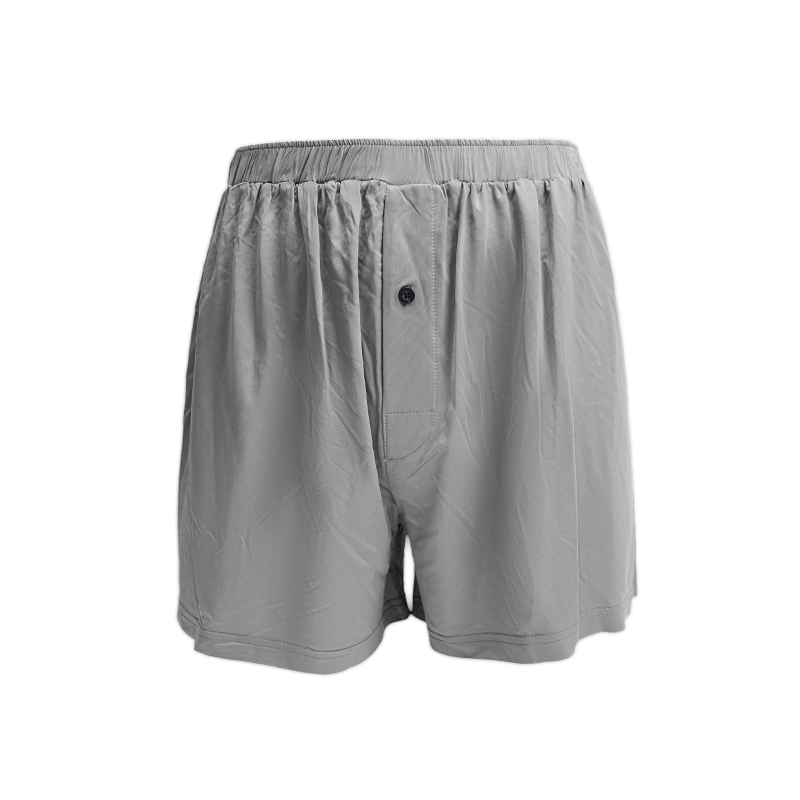
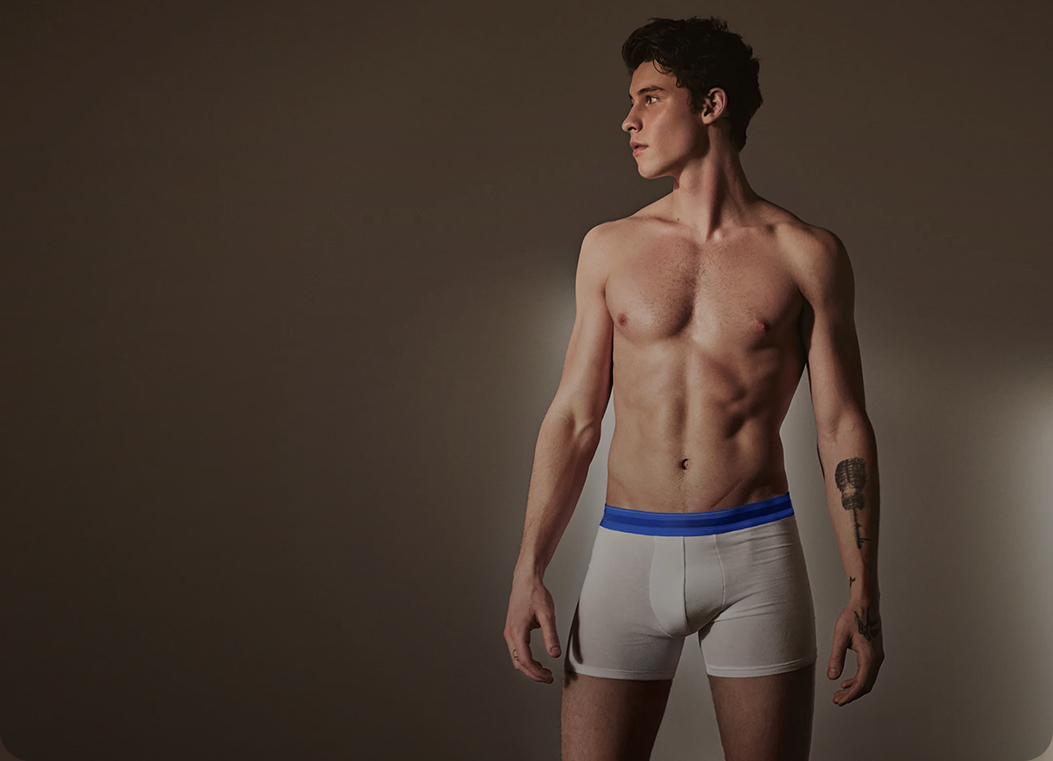
Men's Luxurious Boxers
The Men's Luxurious Boxers are positioned as premium men’s underwear for customers who value comfort, softness, breathability, and a polished appearance. They are not designed merely as low-cost basic underwear. Instead, they represent a higher-value product category in which fabric quality, finishing, construction, and presentation work together.
The product uses bamboo viscose filament in a satin-style fabric structure. Filament yarns can create a smooth surface with a more continuous appearance than many conventional short-staple yarns. When combined with a satin finish, the fabric reflects light softly and presents a refined, elegant appearance. The result is a pair of boxers that can appeal to consumers who enjoy the visual character of silk but require the practical comfort and durability of a modern regenerated-cellulose textile.
The product description emphasizes “Heaven Silk Satin,” a phrase that communicates the intended sensory experience: smooth, fluid, soft, and luxurious. Although the product is designed for daily wear, its appearance can give it a premium or giftable character. This makes it suitable for upscale underwear collections, private-label fashion lines, hotel and lifestyle products, and curated e-commerce stores.
The boxers are categorized as men’s boxers and are designed for everyday use. Their appeal is broad enough for different age groups and customer profiles. Some buyers may prioritize softness for workdays and travel, while others may be attracted by the satin appearance and premium feel. Retailers can position the product as a comfort-focused essential, a luxury basic, or an environmentally conscious alternative to conventional synthetic underwear.
The product code THDY-045 supports organized product management for manufacturers, wholesalers, and brand customers. A clear product code is useful in sampling, quotation, production scheduling, quality control, and repeat ordering. It also allows buyers to distinguish this style from other underwear models in a broader product catalog.
The central advantage of these boxers is the use of bamboo viscose satin fabric. Bamboo viscose is a regenerated cellulose fiber made from bamboo-derived cellulose. In textile production, bamboo cellulose is processed into a viscose solution and then regenerated into fiber. The resulting material can be spun or formed into yarns and developed into fabrics with a soft, smooth, and flexible handle.
For underwear, this type of fiber is valued because it can provide a comfortable surface against the skin. The fabric is designed to feel smooth rather than rough, making it appropriate for garments worn for extended periods. This is particularly relevant for underwear because the fabric remains in close contact with sensitive areas of the body during work, rest, exercise, and travel.
The satin construction enhances the visual and tactile characteristics of the material. Satin fabrics typically have a smooth face created by a particular yarn arrangement that allows longer surface floats. These floats can produce a gentle sheen and a fluid drape. In the case of premium boxers, the satin surface helps create a more luxurious impression than ordinary jersey or low-grade woven fabrics.
The fabric also supports a premium product story. Many consumers associate bamboo-derived textiles with softness, natural inspiration, and responsible material development. For brands, bamboo viscose can help create a differentiated product range that stands apart from standard polyester, basic cotton, and lower-cost blended underwear.
At the same time, responsible communication is essential. The environmental profile of bamboo viscose depends on the source of the bamboo, the chemical process used to regenerate the cellulose, factory wastewater management, energy consumption, and certification status. A professional manufacturer must therefore manage material sourcing and production documentation carefully. When supported by suitable certifications and traceable supply-chain records, bamboo viscose products can provide a stronger sustainability proposition than unverified textile claims.
Softness is one of the first qualities consumers notice when putting on underwear. A stiff or abrasive fabric can cause irritation, discomfort, and dissatisfaction even when the garment fits correctly. Bamboo viscose satin is designed to offer a smooth and gentle hand feel. Its surface can glide comfortably against the skin, reducing the rough sensation sometimes associated with coarse yarns or poorly finished fabrics.
The smooth surface is also valuable for customers who prefer a refined underwear experience. Rather than feeling like a purely utilitarian garment, the boxers can create a sense of daily indulgence. This emotional benefit can increase perceived product value and support higher retail positioning.
Men’s underwear must manage heat and moisture effectively. During normal activity, the body produces warmth and perspiration. If moisture remains trapped close to the skin, the wearer may feel clammy or uncomfortable. Bamboo viscose fabric is recognized for its soft, breathable character and its ability to support moisture movement through the textile structure.
The boxers are intended to help keep the wearer cool and dry during ordinary daily activities. Breathability can be especially helpful in warm climates, during commuting, while traveling, or when the wearer spends long periods sitting. The fabric’s fluid construction can support airflow and reduce the heavy, suffocating sensation associated with dense or non-breathable materials.
Breathability is also a strong market advantage. Many low-cost underwear products rely heavily on conventional polyester because of its low price and easy processing. While polyester can offer durability, it may not always provide the same soft, natural-feeling comfort. A bamboo viscose satin product gives brands an opportunity to offer a more balanced combination of smoothness, breathability, moisture management, and visual appeal.
Natural silk is admired for its softness, luster, and elegant drape, but it can be expensive and may require special care. Bamboo viscose satin offers a silk-like appearance and smoothness while supporting a more accessible product strategy. It can be manufactured for a wider market and incorporated into repeatable commercial production.
For retailers, this creates a useful middle ground. The boxers can be promoted as a premium-feel product without being limited to an ultra-luxury price segment. The satin surface can also strengthen product photography, packaging presentation, and in-store display. Underwear with a visible sheen and fluid drape may appear more distinctive than ordinary matte basics.
The versatile nature of the fabric allows the boxers to be used in multiple situations. They can be suitable for everyday workwear, relaxed home wear, travel, sleep, and special occasions. The product’s premium hand feel may be particularly attractive to customers who do not want separate underwear for ordinary and luxury use.
For travelers, softness and breathability can make a meaningful difference during long flights, hotel stays, and changes in climate. For office workers, a smooth fabric can provide comfort during extended periods of sitting. For customers who prioritize sleepwear comfort, the satin-like surface and flexible drape can support a relaxed nighttime experience.
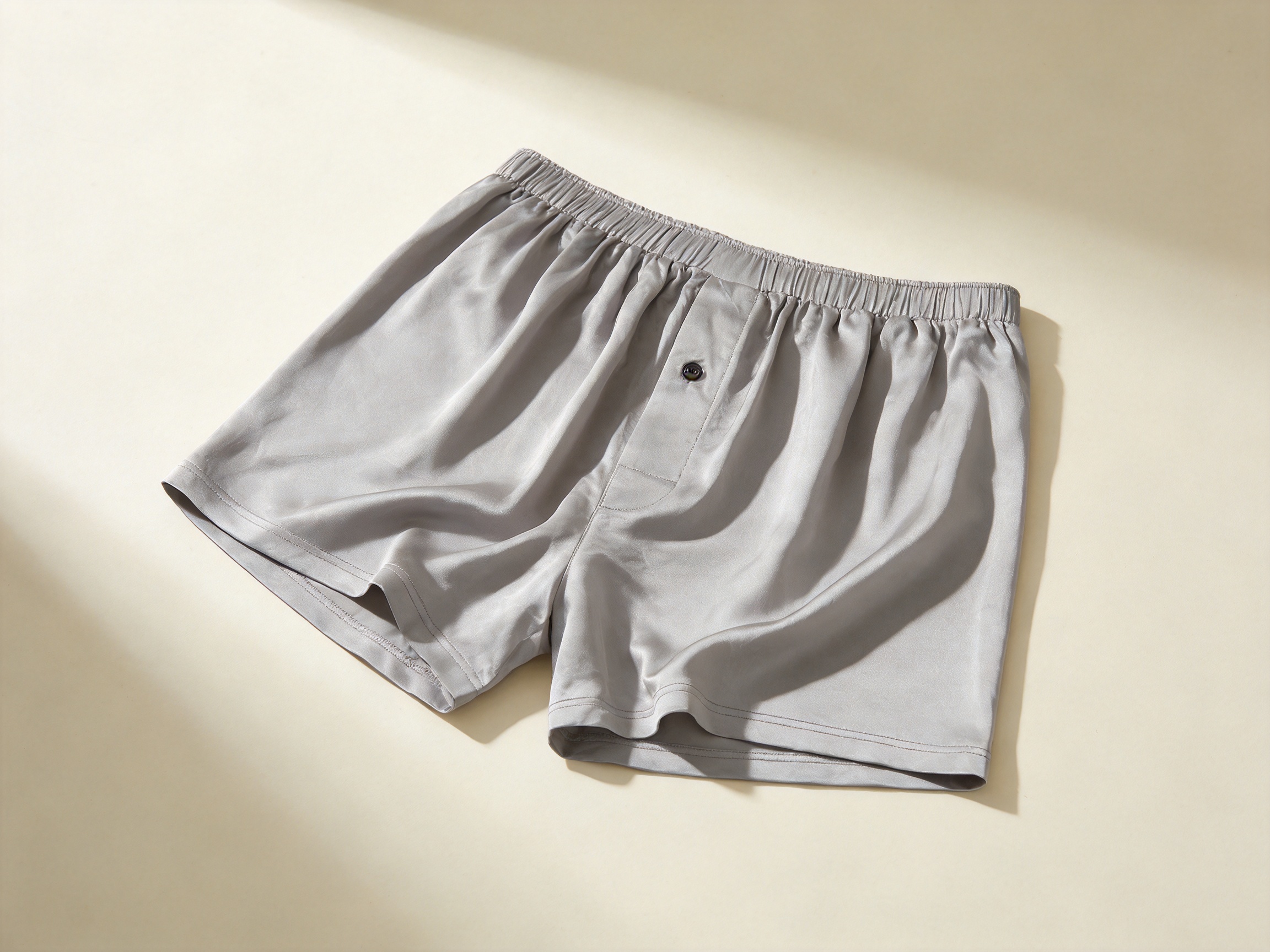
The men’s underwear market contains many products with similar silhouettes, but significant differences can exist in fabric, construction, sourcing, and quality control. The THDY-045 boxers are differentiated by the combination of bamboo viscose filament, satin finishing, premium positioning, and manufacturing support.
| Feature | THDY-045 Bamboo Viscose Satin Boxers | Basic Cotton Boxers | Low-Cost Polyester Boxers | Premium Silk Boxers |
|---|---|---|---|---|
| Surface feel | Smooth, soft, and silk-like | Soft but generally more matte and familiar | Can feel smooth but may be less natural against the skin | Very smooth and luxurious |
| Breathability | Designed for breathable daily comfort | Generally breathable, depending on weight and construction | Varies by fabric structure and blend | Generally breathable |
| Visual appearance | Refined satin sheen and fluid drape | Usually matte or lightly textured | May appear shiny, but not always luxurious | High natural luster |
| Product positioning | Premium comfort and accessible luxury | Mass-market essential | Value-focused basic | Luxury niche |
| Brand differentiation | Bamboo-derived material and premium finish | Limited unless supported by special construction | Often limited because of broad market use | Strong, but usually higher cost |
| OEM/ODM flexibility | Suitable for customized collections | Widely available but often highly commoditized | Widely available but price-driven | May require specialized sourcing and care instructions |
Cotton remains a popular underwear material because it is familiar, comfortable, and widely available. However, basic cotton boxers often have a matte appearance and a more conventional hand feel. They may also hold moisture for longer depending on the fabric weight, yarn type, and finishing treatment.
The bamboo viscose satin option offers a visibly more elevated alternative. Its smoother surface and gentle sheen can create a premium impression while maintaining the relaxed character required for daily underwear. Brands can use this distinction to develop a product range above standard cotton basics rather than competing only on price.
Basic cotton products are often sold in large volumes with limited differentiation. A bamboo viscose satin style can support more compelling storytelling around softness, design, responsible material choices, and luxury comfort. This can improve the product’s potential for online merchandising, gift packaging, and premium retail placement.
Polyester underwear is common in the value market because polyester fibers are economical, durable, and easy to process. However, the feel and breathability of polyester can vary significantly. Some consumers find low-cost polyester less comfortable for long periods, particularly in warm or humid conditions.
Bamboo viscose satin can provide a softer and more skin-friendly experience. It is especially attractive to consumers who prefer plant-derived or cellulose-based materials over fully synthetic fabrics. The fabric also gives the garment a more sophisticated appearance than many inexpensive polyester alternatives.
It is important to recognize that polyester can perform well in certain applications, including activewear and high-abrasion products. The advantage of THDY-045 is not that it replaces every possible underwear material, but that it serves customers seeking a softer, more breathable, more luxurious, and more naturally inspired daily-wear option.
Silk offers exceptional softness and natural luster, but its price, care requirements, and sourcing considerations may limit its suitability for broad commercial collections. Bamboo viscose satin can deliver a similar visual direction and a highly smooth hand feel while allowing brands to target a wider range of customers.
This positioning is commercially useful. Consumers can enjoy a premium experience without purchasing a product reserved only for special occasions. Retailers can also develop a repeat-purchase product that combines luxury styling with practical daily use.
Premium fabric alone does not guarantee a successful pair of boxers. Comfort depends on the relationship between fabric, pattern, seam placement, waistband construction, leg opening, and finishing. A professional underwear manufacturer must evaluate these elements together during product development.
The boxers are designed to support freedom of movement without sacrificing a neat appearance. A suitable boxer pattern should provide enough room for natural movement while avoiding excessive fabric that can bunch under trousers. The balance between ease and support is central to the product’s performance.
Pattern development begins with an analysis of target sizing, body shape, intended fit, and end-use requirements. The manufacturer can develop base patterns and adjust them according to customer specifications. Different markets may require different grading systems, size ranges, rise measurements, and leg proportions.
During sampling, the pattern is assessed on a fit model or through professional fitting procedures. Technicians review the waistband position, front rise, back rise, side seam balance, leg opening, and overall drape. Corrections are made before bulk production to reduce fit problems and ensure consistency.
For private-label customers, the pattern can serve as a foundation for further customization. Buyers may request a looser lounge fit, a shorter fashion fit, a longer leg, a modified waistband, or a particular front construction. These adjustments allow the same fabric platform to serve different market segments.
Underwear seams must be secure but comfortable. Excessive seam bulk can create pressure points, while loose or irregular stitching can reduce durability. Professional production requires suitable sewing machines, correct thread selection, controlled stitch density, and trained operators.
The seam allowance, stitch tension, and seam finishing should be compatible with the satin-style fabric. If tension is too high, the seam may pucker or restrict fabric movement. If tension is too low, the seam may open during wear or laundering. A controlled sewing process helps preserve the smooth appearance of the finished garment.
For a premium product, visual neatness is also important. Customers may inspect the inside of the garment, particularly when purchasing a higher-priced product. Clean seams, even stitching, balanced panels, and consistent finishing reinforce the impression of quality.
The waistband has a direct effect on comfort and product durability. It must remain secure without creating excessive pressure. The elastic should be selected according to the garment’s size range, fabric weight, and intended fit. The joining method must resist repeated stretching and washing.
For customized programs, buyers can choose waistband width, branding method, color, texture, and labeling. Options may include woven labels, printed logos, jacquard elastic, or minimalist unbranded finishes. The manufacturer can match the waistband to the brand’s visual identity while maintaining the comfort objectives of the product.
Satin fabrics can show color variation or surface differences if dyeing and finishing are not carefully controlled. Color approval should therefore be completed before bulk production. Laboratory dips, sample panels, and production standards help establish an agreed reference.
Quality teams should check shade consistency across rolls, panels, and finished garments. They should also review surface smoothness, luster, width, weight, shrinkage, and dimensional stability. These checks are particularly important for premium underwear because irregularities can be visible on the garment surface.
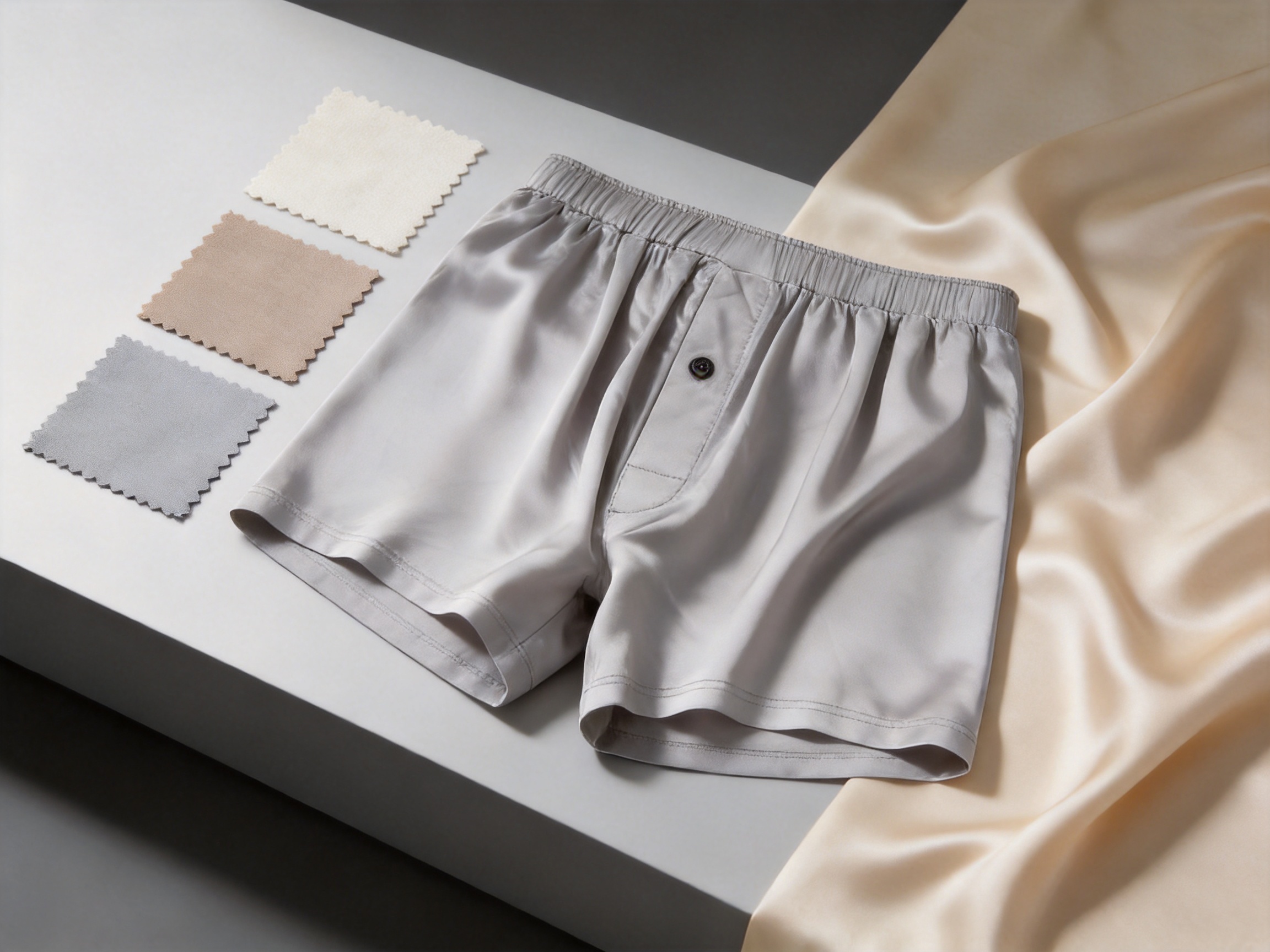
The manufacturer’s advanced production capabilities are a key strength behind the product. A premium underwear program requires coordination from raw-material selection through shipment. Each stage affects the final product’s appearance, comfort, durability, and commercial reliability.
The process begins with fabric research and product planning. The manufacturer evaluates the intended hand feel, drape, weight, stretch, color range, and performance requirements. Bamboo viscose filament and satin construction must be balanced so the fabric remains attractive while retaining adequate dimensional stability for underwear use.
Research and development teams may compare yarn specifications, knitting or weaving parameters, finishing methods, and blend options. The objective is to achieve a consistent fabric platform that can be reproduced across multiple production orders. This repeatability is essential for brands that need to maintain the same product quality over time.
The company’s focus on environmentally friendly functional fabrics gives it a useful foundation for developing products in the natural-fiber and regenerated-fiber categories. Its product strategy is not limited to one fabric type; it includes ongoing research into materials that combine comfort, performance, and sustainability considerations.
Before fabric enters cutting, it should be inspected for defects and measured against approved specifications. Inspection can include fabric width, weight, shade, surface appearance, yarn irregularities, holes, stains, streaks, and weaving or knitting faults.
Fabric relaxation is also important. Some textiles change slightly after being unrolled or exposed to the production environment. Allowing the material to relax before cutting can improve panel accuracy and reduce unexpected dimensional changes.
For satin-style fabrics, inspection should pay close attention to surface marks and luster variation. A small defect may become highly visible when the fabric reflects light. Experienced inspectors use suitable lighting and systematic inspection procedures to identify issues before the material is cut into garments.
Modern apparel production benefits from digital pattern-making systems. Computer-assisted design allows technicians to create, modify, grade, and store patterns with greater accuracy. It also supports faster sample revisions and more efficient communication with brand customers.
Marker planning helps arrange pattern pieces on the fabric to reduce waste. Because bamboo viscose fabrics may have a directional sheen or surface appearance, the marker must respect fabric direction and visual consistency. The most economical arrangement is not always acceptable if it causes panels to reflect light differently.
Efficient cutting reduces material loss, improves production economics, and supports more responsible use of resources. For OEM and ODM customers, this efficiency can contribute to competitive pricing without requiring the manufacturer to reduce fabric quality or workmanship.
Cutting accuracy affects the fit and appearance of every finished pair. Panels must be cut according to approved patterns, with careful control of notches, grain direction, seam allowances, and size identification. Inaccurate cutting can create uneven leg openings, twisted seams, or inconsistent waist measurements.
Production teams use cutting plans, layered fabric control, and inspection procedures to maintain consistency. Where appropriate, digital cutting equipment or carefully controlled manual cutting can be used according to order volume and material characteristics. The selected method should protect the satin surface and prevent distortion.
After cutting, panels are separated and organized by size, color, and production batch. Sewing operators assemble the garment in a defined sequence. Each operation should be standardized to control stitch quality and reduce variation between operators.
Typical production controls include thread tension checks, needle inspection, seam strength monitoring, and first-piece approval. Operators are trained to handle smooth fabrics without causing snags, puckering, or surface damage. A production supervisor monitors the line and coordinates corrective action when deviations occur.
For large orders, line balancing improves efficiency by assigning operations according to skill, machine capability, and production time. This approach helps maintain output while preserving quality. For smaller customized orders, flexible production arrangements may be more appropriate, especially during sampling or limited-edition development.
Finishing gives the garment its final shape and presentation. Loose threads are removed, seams are checked, and the product is pressed or steamed according to fabric requirements. Care must be taken with satin surfaces because excessive heat or pressure can affect luster and texture.
Final finishing may include folding, inserting care labels, attaching size labels, applying brand labels, and preparing the garment for packaging. If the product is marketed as premium underwear, packaging should protect the fabric and reinforce the quality message without creating unnecessary material waste.
Finished garments undergo final inspection before packing. Inspectors examine measurements, stitching, fabric appearance, labeling, cleanliness, and general workmanship. They may use approved samples and measurement charts as reference points.
Inspection can be performed throughout production rather than only at the end. In-line checks identify problems earlier, reducing rework and preventing defective units from moving to later stages. Final checks then confirm that the completed shipment meets the customer’s requirements.
Packing procedures should prevent crushing, staining, moisture exposure, and unnecessary friction. Carton quantity, size assortment, folding method, barcode requirements, and shipping marks can be customized for different customers and destinations.
A manufacturer’s quality system is especially important for underwear because the product is worn directly against the skin. Quality management should cover raw materials, chemical safety, colorfastness, physical performance, measurement consistency, workmanship, and packing.
The company has developed experience serving well-known labels and long-term clients in Europe, North America, and China. This type of international customer base generally requires attention to technical specifications, production documentation, delivery schedules, inspection standards, and compliance procedures.
The manufacturer’s stated certification and social-compliance framework includes standards such as FSC, OCS, OEKO-TEX Standard 100, GOTS, WRAP, and BSCI. The relevance of each certification depends on the specific material, facility, order, and product claim. Brands should confirm the current scope, validity, certificate holder, and product applicability before using any certification logo or sustainability statement in marketing.
OEKO-TEX Standard 100 is widely associated with testing textiles for harmful substances. For underwear, this type of material-safety consideration is highly relevant because the product has prolonged skin contact. Buyers can request applicable test reports and confirm whether the finished fabric or garment is covered by the relevant certification.
Material safety management can include restricted-substance controls, supplier declarations, laboratory testing, and production documentation. These measures help brands reduce compliance risk and provide more credible product information to consumers.
OCS and GOTS are associated with organic fiber claims under defined chain-of-custody and processing requirements. Not every bamboo viscose fabric qualifies as organic under these standards. Therefore, careful documentation is essential. If a customer wishes to market a product as organic, the exact fiber source, processing route, transaction records, and certification scope must be verified.
FSC-related documentation may be relevant when bamboo or other forest-based cellulosic materials are sourced through certified systems. Again, the product claim must match the actual certification and supply-chain records. Responsible manufacturers help customers avoid vague or unsupported environmental claims by maintaining traceability and providing appropriate documents.
WRAP and BSCI-related systems address different aspects of social responsibility and workplace practices. Ethical manufacturing increasingly influences purchasing decisions among global brands and consumers. A factory’s ability to demonstrate responsible labor practices can therefore become a competitive advantage in addition to being a compliance requirement.
Social compliance includes working-hour management, workplace safety, lawful employment, fair treatment, and appropriate facility conditions. For international buyers, a stable social-compliance system can reduce sourcing risk and support long-term cooperation.
Sustainability in underwear manufacturing involves more than selecting a bamboo-derived fiber. It includes raw-material sourcing, chemical management, energy use, water use, fabric efficiency, production waste, packaging, product life, and supply-chain transparency.
Bamboo is a rapidly renewable plant resource, which is one reason bamboo-derived fibers attract attention in the textile market. However, bamboo viscose production requires industrial processing to convert cellulose into usable textile fiber. The environmental benefits of the finished product therefore depend on how responsibly that processing is managed.
A capable manufacturer can support a more responsible product program through traceable sourcing, certified materials where applicable, controlled chemical use, wastewater management, efficient cutting, and durable construction. The boxers’ potential sustainability advantage is strongest when these elements are documented rather than presented as unsupported marketing language.
Durability is also part of sustainability. A garment that remains comfortable, attractive, and functional for a longer period does not need to be replaced as frequently. Consistent sewing, stable fabric finishing, reliable waistbands, and appropriate care instructions can all contribute to longer product life.
Packaging choices can further improve the overall product profile. Brands may select recycled or recyclable paper packaging, reduce unnecessary plastic, use compact folding methods, and optimize carton dimensions. The manufacturer can coordinate packaging specifications with the buyer’s retail and logistics strategy.
The product is suitable for OEM and ODM cooperation. OEM production allows a customer to manufacture according to an existing design, specification, brand identity, and packaging requirement. ODM cooperation gives the buyer access to the manufacturer’s product-development experience and enables the creation of a customized style based on a proven platform.
Private-label customers can use the THDY-045 concept as a foundation for a branded underwear collection. Customization may include logo placement, waistband branding, care labels, hangtags, folding methods, packaging, color selections, size ranges, and carton marks.
A private-label collection can also be expanded through coordinated colors or complementary styles. For example, a brand may develop matching bamboo viscose products for men, women, and children, provided that each garment is appropriately engineered for its intended wearer. The same material story can create consistency across a broader underwear range.
Samples allow buyers to assess fabric hand feel, color, fit, stitching, label placement, and packaging before bulk production. A professional sampling process should record revisions clearly so that the approved sample becomes an accurate reference for production.
Buyers may request changes to rise height, leg length, waistband pressure, front coverage, fabric weight, or finishing. The manufacturer’s technical team can evaluate whether each change is compatible with the material and target cost. This collaborative process is essential for developing a commercially successful product rather than simply reproducing a visual concept.
The boxers can be positioned in several ways depending on the customer’s distribution channel. A fashion retailer may emphasize satin luster and sophisticated styling. An eco-conscious brand may focus on bamboo-derived fibers and supply-chain transparency. A comfort brand may highlight breathability and softness. A travel or lifestyle company may present the boxers as a lightweight premium essential.
This flexibility is a competitive advantage for distributors and brand owners. The same technical product can support different marketing narratives when those narratives are based on verified characteristics and appropriate documentation.
Premium underwear can offer strong merchandising potential because it combines repeat purchase behavior with opportunities for product differentiation. Customers commonly replace underwear regularly, but they may also be willing to pay more for improved comfort and fabric quality.
The satin appearance makes the product visually suitable for digital commerce. Clear product photography can show the fabric’s surface, drape, and color depth. Written descriptions can explain the bamboo viscose composition, smooth hand feel, breathable character, and intended use. Together, these features can help the product stand out in crowded online marketplaces.
Giftability is another potential benefit. A pair of ordinary underwear may be viewed as purely functional, while a neatly packaged bamboo viscose satin product can be positioned as a personal luxury or thoughtful gift. Retailers can create seasonal collections, premium multipacks, or coordinated gift sets.
Higher perceived value may also improve gross-margin opportunities. The commercial result will depend on fabric cost, order quantity, packaging, market positioning, and distribution expenses, but the product’s premium characteristics provide more room for value-based pricing than an undifferentiated basic style.
For distributors, reliable OEM/ODM support can simplify product expansion. Instead of managing separate suppliers for fabric development, garment production, labels, packaging, and compliance documents, a coordinated manufacturer can provide a more integrated solution.
Marketing language should accurately describe the product’s strengths. Suitable communication may focus on bamboo viscose filament, satin texture, smooth skin feel, breathability, moisture management, refined appearance, and everyday comfort.
Brands should avoid making absolute claims such as “completely chemical-free,” “guaranteed antibacterial,” or “zero environmental impact” unless such claims are supported by specific test results and certification. Bamboo-derived textiles can be promoted responsibly without overstating their benefits.
A strong product description can explain that the fabric is designed to offer a soft, silk-like experience while supporting breathable daily wear. It can also mention that manufacturing is supported by professional textile research, quality control, and supply-chain management.
Care instructions should be clear and practical. Depending on the final fabric specification and approved testing results, recommendations may include gentle machine washing, low-temperature handling, avoiding harsh bleach, and careful drying. The final care label must be based on actual product testing and the customer’s compliance requirements.
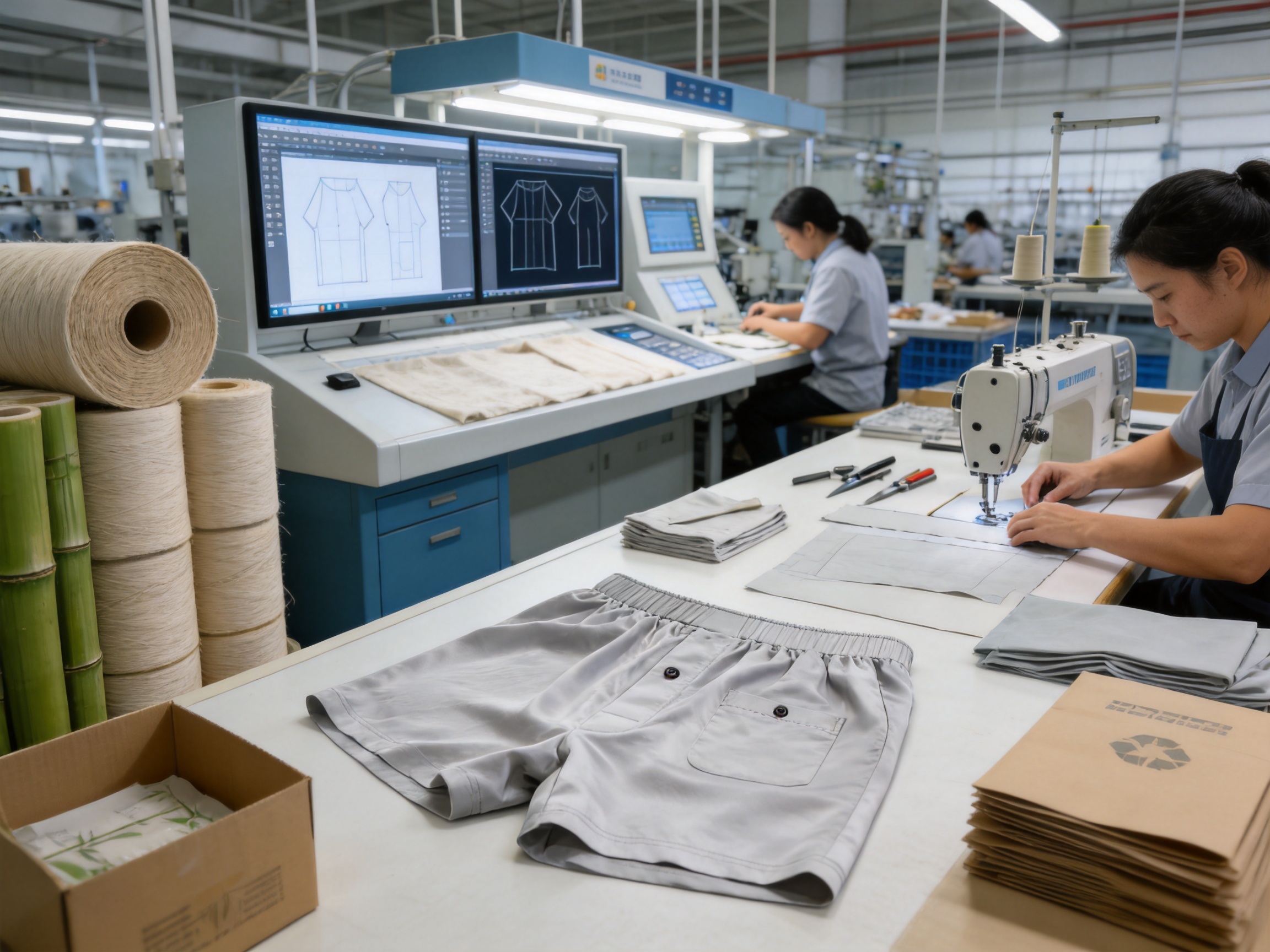
Manufacturing experience directly affects product consistency. A factory that has operated in the underwear and textile industry for many years is more likely to understand the practical challenges of fabric behavior, fit development, sewing quality, production planning, and international delivery.
The company was established in 2001 and operates in Nantong, a major textile center in China. Its location provides access to a developed textile ecosystem, including fabric suppliers, accessory providers, skilled labor, technical services, logistics networks, and testing resources.
The company specializes in research, manufacturing, and sales rather than serving only as a trading intermediary. This integrated capability can improve communication between design, fabric development, production, and quality teams. It may also support faster problem-solving when a buyer requests a design adjustment or encounters a production issue.
Long-term partnerships with customers in Europe, North America, and China indicate experience with different market expectations. These markets may vary in size standards, labeling regulations, packaging requirements, testing protocols, and delivery terms. Experience across several regions helps the manufacturer adapt its working procedures to different customer needs.
The stated mission of becoming a global leader in natural-fiber fabrics and underwear products reflects a focus on continuous research and innovation. For customers, this suggests an opportunity to work with a supplier that can support not only one purchase order but also future product development.
Buyers considering this product should evaluate the supplier through a structured process. First, confirm the exact composition and construction of the fabric. “Bamboo viscose,” “bamboo viscose filament,” “Tencel,” and “satin” may refer to different technical characteristics, so the final specification should be documented clearly.
Second, request a complete measurement chart and approved sample. Fit consistency is essential, especially when selling through international channels. The buyer should confirm tolerances, grading rules, waistband measurements, rise measurements, leg opening dimensions, and shrinkage expectations.
Third, discuss color standards and testing requirements. The buyer may need colorfastness to washing, rubbing, perspiration, and light, depending on the target market. Dimensional stability and seam strength may also be relevant.
Fourth, verify applicable certifications and factory-compliance documents. Certification names should not be treated as general promises. The buyer should check certificate validity, scope, facility address, material coverage, and whether the documentation applies to the specific order.
Fifth, establish production and inspection procedures. The purchase agreement should clarify sample approval, acceptable quality limits, inspection timing, defect classification, packaging requirements, and corrective-action procedures.
Finally, review communication and delivery capabilities. A supplier’s ability to respond clearly, provide accurate production updates, and manage documentation can be as important as the factory’s machinery. Reliable cooperation reduces risk during repeat orders and seasonal launches.
The THDY-045 design can be adapted for different market strategies. Brands seeking a minimalist luxury aesthetic may choose solid neutral colors, a discreet waistband logo, and refined packaging. Fashion-oriented brands may select seasonal colors, contrast details, or a more visible jacquard waistband.
Different fabric weights can serve different climates. A lighter version may be appropriate for hot weather, while a slightly denser fabric may provide a more substantial hand feel for cooler seasons. Any weight change should be tested for drape, opacity, durability, and drying behavior.
Size expansion can make the product more inclusive. A broader size range requires careful grading and fit evaluation rather than simply scaling the base pattern. Waistband stretch, front coverage, leg proportion, and rise balance may need to be adjusted for larger or smaller sizes.
Customers may also request coordinated collections. Bamboo viscose satin can potentially be used in other men’s underwear styles, women’s sleepwear, robes, camisoles, or accessories. A consistent material story can help brands create a recognizable comfort-focused collection.
The boxers are made from bamboo viscose filament fabric with a satin-style finish. The material is designed to provide a smooth, soft, breathable, and silk-like wearing experience.
Yes. They are designed for daily comfort and can be used for work, travel, relaxation, sleep, and other ordinary activities. Their soft surface and breathable character are intended for prolonged skin contact.
Basic cotton boxers typically have a matte appearance and familiar cotton hand feel. These boxers provide a smoother surface, a refined satin sheen, and a more luxurious drape while maintaining a practical daily-wear purpose.
The bamboo viscose fabric is designed to be breathable and moisture-managing, which may feel more comfortable than some low-cost polyester fabrics in warm conditions. Actual performance depends on fabric weight, construction, climate, activity level, and personal preference.
The satin fabric is designed to provide a silk-like smoothness and appearance. It should be understood as a bamboo viscose textile with a satin finish, not as natural silk. This gives buyers a premium sensory experience with a different fiber composition and commercial positioning.
Yes. OEM and ODM services can support customized branding, including waistband logos, labels, packaging, hangtags, and other approved brand elements. Details should be confirmed during sampling and quotation.
Fit elements such as rise, leg length, waistband construction, sizing, and overall ease can be reviewed during product development. Customization depends on the order requirements, fabric behavior, technical feasibility, and approved sample.
Yes. The manufacturer has experience serving customers in Europe, North America, and China. International buyers should still confirm the specific labeling, testing, packaging, and regulatory requirements of their destination market.
Organic status cannot be assumed solely because the fiber is derived from bamboo. Buyers should verify the exact certification, chain of custody, fiber source, and product scope. If an organic claim is required, the manufacturer should provide current documentation applicable to the specific product.
The manufacturer identifies standards and compliance systems including FSC, OCS, OEKO-TEX Standard 100, GOTS, WRAP, and BSCI. The applicable certification depends on the material and order. Buyers should request and verify current certificates before using them in commercial claims.
The correct care instructions should be based on the final fabric and garment testing. In general, gentle washing, moderate temperatures, careful drying, and avoidance of harsh bleaching agents may help preserve softness and surface appearance. The final care label should be approved before production.
Nantong is a major textile center with access to fabric suppliers, garment manufacturers, skilled workers, logistics providers, and technical resources. This industrial environment supports efficient textile development and integrated production.
Color customization can generally be discussed during development. Buyers should provide color references or approve laboratory samples before bulk production. Satin surfaces require careful shade and luster control to ensure consistency.
The premium positioning comes from the combination of bamboo viscose filament fabric, satin finishing, smooth hand feel, breathable comfort, refined appearance, careful garment construction, professional quality control, and the manufacturer’s OEM/ODM development capabilities.
The Men's Luxurious Boxers, THDY-045, offer a strong combination of comfort, appearance, material differentiation, and manufacturing support. Bamboo viscose satin fabric provides a smooth, soft, breathable, and silk-like experience that can appeal to consumers seeking a more refined alternative to ordinary underwear.
Compared with basic cotton and low-cost polyester products, the boxers offer stronger premium positioning and a more distinctive sensory experience. Compared with natural silk, they can provide a more commercially accessible route to luxury-inspired underwear. Their value is not based on one feature alone; it comes from the interaction of fabric selection, satin finishing, product design, workmanship, quality management, and supply-chain capability.
The manufacturer’s experience since 2001, location in Nantong’s textile industry hub, international customer base, OEM/ODM services, research focus, and stated certification framework provide important support for buyers seeking a dependable underwear partner. Its emphasis on natural-fiber fabrics, environmentally friendly functional materials, and traceable supply-chain management aligns with current market demand for more responsible and transparent products.
For retailers, wholesalers, and private-label brands, these boxers can serve as a premium core product, a luxury basic, or the starting point for a broader bamboo-fiber underwear collection. With appropriate customization, testing, documentation, packaging, and market communication, the product can compete on value rather than price alone.
Ultimately, the strongest advantage of bamboo viscose satin boxers is their ability to unite everyday practicality with a more elevated wearing experience. They are designed for men who want underwear that feels soft, remains breathable, looks sophisticated, and reflects the capabilities of a professional modern textile manufacturer.
1. Textile Exchange. Preferred Fiber and Materials Market Reports and guidance on responsible fiber sourcing.
2. International Organization for Standardization. ISO 3758, Textiles—Care labelling code using symbols.
3. OEKO-TEX Association. Standard 100 requirements for testing textiles for harmful substances.
4. Global Organic Textile Standard. Principles for organic-fiber processing, manufacturing, and chain-of-custody control.
5. Organic Content Standard. Requirements for verifying organically produced materials within textile supply chains.
6. Forest Stewardship Council. Chain-of-custody principles for forest-based and cellulose-derived materials.
7. Worldwide Responsible Accredited Production. Guidance on responsible and ethical garment manufacturing.
8. amfori. Business Social Compliance Initiative principles for responsible supply-chain management.
9. International Bureau for Standardisation of Man-Made Fibres. General technical considerations for regenerated cellulose fibers.
10. Textile industry technical literature on satin construction, regenerated cellulose fibers, moisture management, garment fit, and apparel quality control.

Copyright © Nantong Tianhong Textile Technology Co., Ltd. All Rights Reserved.
 Room 806, Building D, Jingyang Plaza, Chongchuan District, Nantong City, Jiangsu Province,china


 English
 Español
 русский
 عربى
عربى