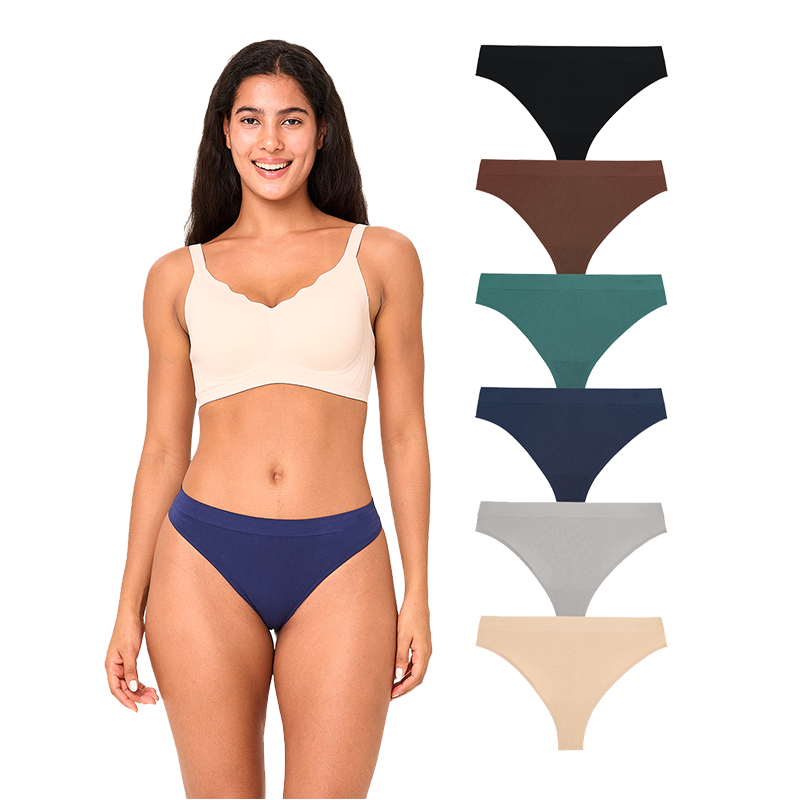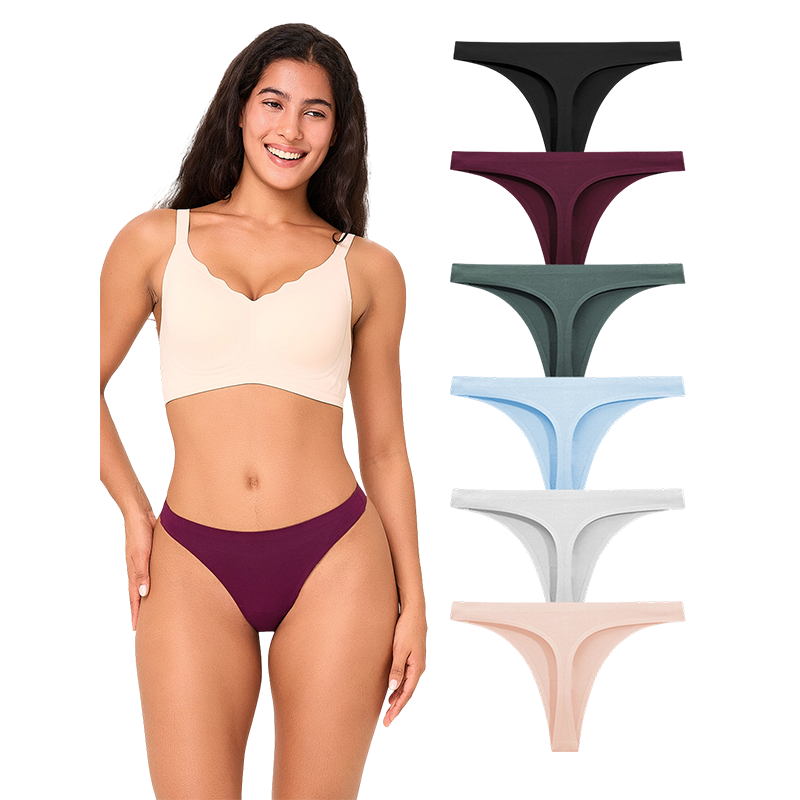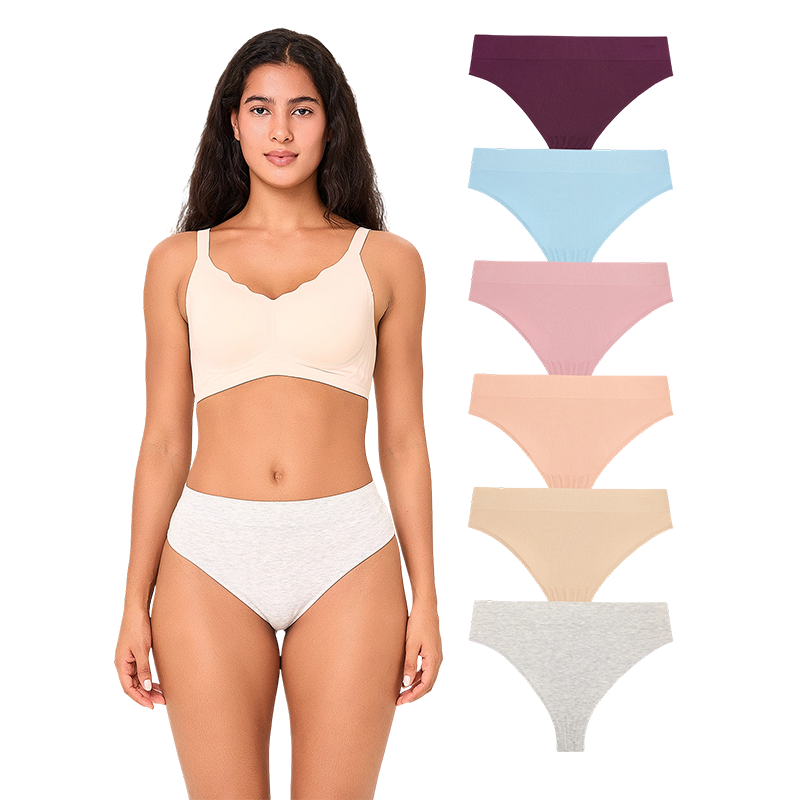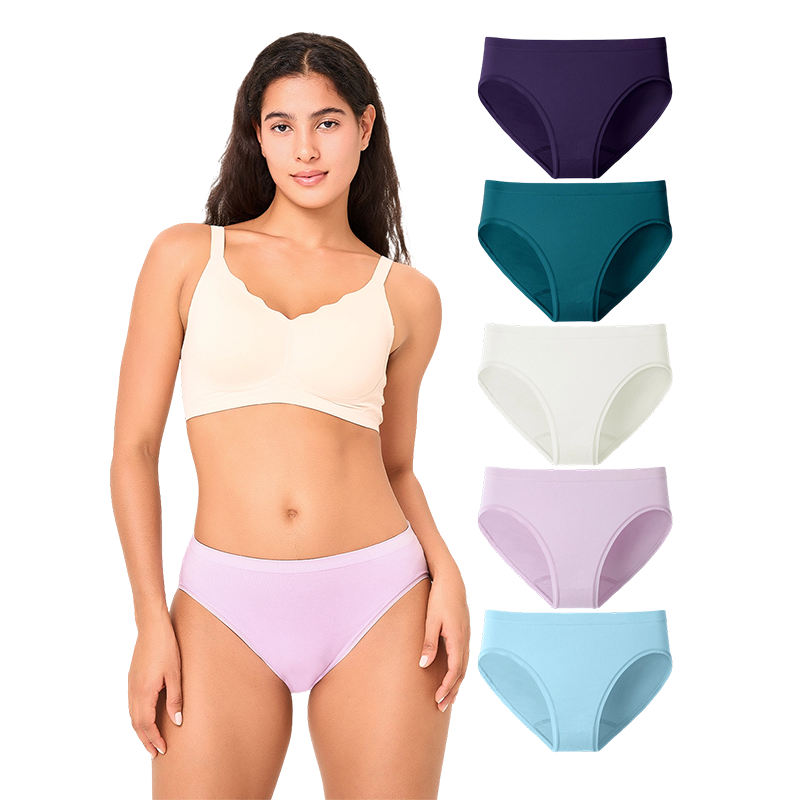
Content
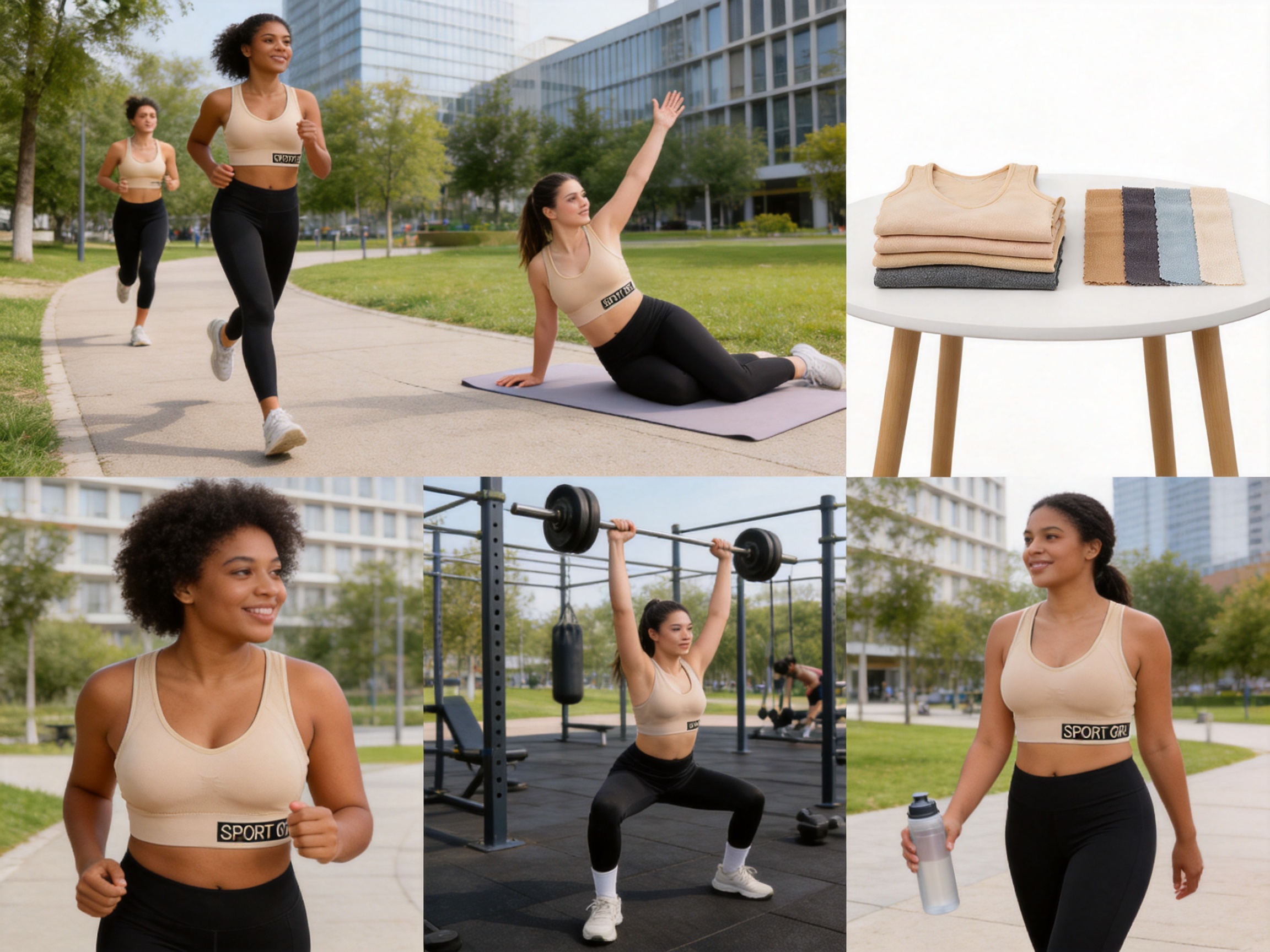
Sports and running bras are essential performance garments for women who want dependable support, comfort, and freedom of movement during exercise. Unlike ordinary bras, a well-designed sports bra must manage perspiration, reduce movement, remain comfortable through repeated activity, and support the body without creating pressure points. The right garment should feel secure during running, training, gym workouts, walking, cycling, and other active lifestyles while remaining breathable enough for extended wear.
Sports and Running Bras are developed to meet these demanding requirements through a combination of moisture-wicking fabrics, breathable construction, tailored shaping, strategic seam placement, and irritation-conscious finishing. As a women's seamless bra product, this design focuses on a smooth wearing experience and reduced friction. It is intended for consumers, retailers, private labels, and professional buyers seeking a practical combination of performance, comfort, and adaptable manufacturing support.
Modern consumers are increasingly aware that the quality of activewear depends on more than appearance. Fabric selection, knitting or cutting precision, sewing quality, finishing technology, inspection standards, and supply chain transparency all influence the final product. A sports bra may look attractive on a product page, but its true value is revealed when it is worn during movement, washed repeatedly, and used across different levels of exercise.
This product combines functional textile development with a comfort-focused design philosophy. Its advanced moisture-wicking materials help move perspiration away from the skin, while breathable structures support air circulation and temperature regulation. A tailored fit provides stability without unnecessarily restricting movement. Seam planning and the removal of irritating tags help create a smoother experience for users who may wear the garment for long training sessions or throughout an active day.
A sports bra must perform several tasks at the same time. It should provide support, maintain its shape, reduce uncomfortable movement, and help the wearer remain dry. These requirements can conflict if the product is not carefully engineered. A very firm garment may feel restrictive, while an overly flexible design may fail to provide sufficient stability. A thick fabric may offer coverage but reduce breathability, and a lightweight fabric may require carefully planned construction to deliver reliable support.
The development of Sports and Running Bras begins with a balanced understanding of these requirements. The garment is intended to support active movement while preserving natural mobility. This balance is important for running and sports because the body repeatedly changes direction, posture, and pace. The wearer needs a product that moves with the body rather than fighting against it.
Comfort is also a performance factor. When a bra causes rubbing, excessive heat, pressure, or distraction, the wearer may shorten a workout or avoid using the product altogether. Smooth finishing, breathable textile structures, and the absence of irritating tags help reduce these problems. The result is a product designed not merely to be worn during exercise, but to help the wearer remain focused on personal fitness goals.
For retailers and brands, functional performance also affects customer satisfaction and repeat purchases. A product that remains comfortable after repeated use can strengthen consumer trust. A product that combines performance features with a clean, versatile appearance may also appeal to a wider customer base, including fitness users, travelers, students, and consumers who prefer supportive everyday undergarments.
Perspiration management is one of the most important characteristics of sports underwear. During exercise, moisture that remains close to the skin can create a damp sensation, increase friction, and contribute to discomfort. Sports and Running Bras use advanced moisture-wicking fabrics designed to manage perspiration efficiently. Instead of allowing moisture to remain concentrated against the body, the material helps move it through the textile structure so that it can evaporate more effectively.
This feature is valuable for running, fitness classes, strength training, outdoor exercise, and other activities that produce heat. A drier wearing environment can help the wearer feel more comfortable throughout a workout. Moisture management also supports a cleaner and fresher product experience when the garment is cared for correctly.
Compared with basic cotton-only bra designs, moisture-wicking activewear can offer a more suitable solution for demanding exercise. Cotton may feel soft in everyday conditions, but it can retain moisture during intensive activity. A performance-oriented fabric system is designed specifically for the changing conditions created by movement and perspiration.
Breathability is closely related to moisture management. When warm air and perspiration are unable to move away from the skin, the garment may feel heavy or uncomfortable. Breathable materials help promote air exchange and support temperature regulation. This makes the product suitable for both indoor and outdoor activities where body temperature can rise quickly.
The breathable construction of Sports and Running Bras is especially important in areas where heat and moisture tend to accumulate. A thoughtful balance between coverage and ventilation allows the garment to provide support without creating an unnecessarily enclosed feeling. For consumers who exercise for extended periods, this can be a major advantage over thicker or less breathable alternatives.
Breathability also contributes to versatility. The product can be positioned for running, gym training, yoga-inspired movement, walking, fitness classes, and casual active lifestyles. Its performance focus does not limit it to one sport. Instead, it provides a foundation for a range of activities in which comfort and freedom of movement are important.
Support is a central requirement of any sports bra, but support should not be confused with excessive compression. A successful design creates stability while allowing the wearer to move naturally. The tailored fit of Sports and Running Bras is intended to provide this balance. It helps keep the garment in position during activity while preserving freedom of movement.
A stable fit may reduce the need for constant adjustment. This is particularly useful during running and repetitive training, when a shifting garment can interrupt concentration. A well-shaped bra should follow the body closely enough to remain secure, but not so tightly that it causes uncomfortable pressure or limits breathing.
For product developers, fit consistency is an important manufacturing objective. It depends on pattern accuracy, fabric behavior, size grading, elastic performance, and quality control. These factors must work together to create a dependable fit across available sizes. A product that is comfortable in one size but inconsistent in another can create returns and dissatisfaction, which is why fit evaluation and production inspection are essential.
The women's seamless bra category is associated with a smooth, low-irritation wearing experience. Sports and Running Bras use strategic seam placement to reduce areas of unnecessary contact and rubbing. The design also avoids irritating tags, helping the product feel more comfortable against the skin.
Seam planning is particularly important in sports underwear because repeated movement can magnify small construction problems. A seam that feels acceptable while standing may become irritating during running or stretching. By considering seam location, finishing, and the movement of the garment together, manufacturers can help reduce friction during exercise.
Seamless or smooth constructions may also create a cleaner appearance under athletic tops and everyday clothing. This gives the product an additional advantage over heavily seamed alternatives. The result is a bra that can function as performance wear while remaining visually discreet and comfortable for daily use.
Sports and Running Bras are designed to support movement rather than obstruct it. Exercise may involve arm elevation, forward bending, twisting, running, jumping, and changes in pace. The garment must accommodate these motions while maintaining a stable position.
A suitable stretch and recovery balance is important. The fabric needs enough flexibility to follow the body but sufficient recovery to return to its intended shape. If recovery is poor, the garment may loosen during wear. If the material is too rigid, the bra may feel restrictive. Careful material selection and production control help establish the desired balance.
Freedom of movement is an important competitive advantage because many consumers no longer separate performance from comfort. They expect activewear to provide both. A garment that offers support while allowing natural movement can appeal to serious athletes, casual exercisers, and people who wear sports bras as part of their everyday wardrobe.
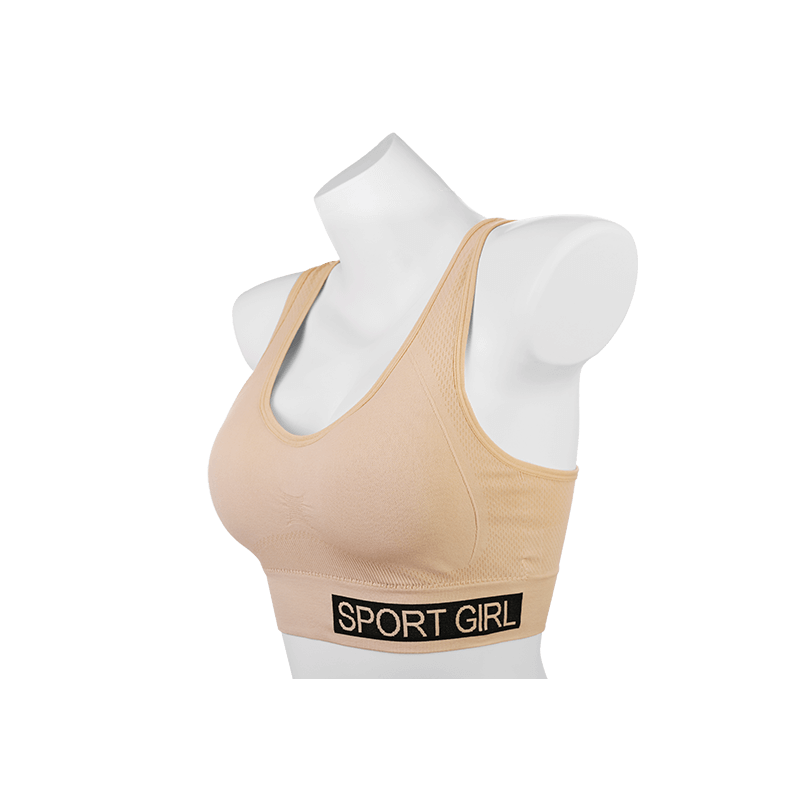
Sports & Running Bras
Sports and Running Bras are positioned as a performance-focused alternative to ordinary fashion bras and basic underwear products. Conventional bras may be designed primarily for appearance, general support, or everyday use. They may not include the moisture-wicking, breathable, flexible, and irritation-conscious features required for exercise.
Compared with standard non-performance underwear, this product offers a more specialized textile function. The use of advanced moisture-wicking fabrics helps address perspiration during activity, while breathable materials support a more comfortable temperature environment. These advantages are especially relevant for consumers who exercise frequently or live in warm and humid conditions.
Compared with highly rigid compression styles, the tailored fit is intended to provide stability without unnecessarily limiting movement. Some consumers prefer firm control, but overly restrictive products may cause discomfort or make it difficult to complete certain movements. A balanced construction can provide a broader comfort range for different users and activity levels.
Compared with heavily seamed sports bras, the seamless-oriented construction may reduce friction and create a smoother feel. Strategic seam placement and tag-free finishing are practical features that can make a difference during long workouts. The design is therefore competitive not only because of its appearance, but also because it addresses common points of dissatisfaction in active underwear.
| Product Feature | Benefit During Exercise | Value for Buyers and Brands |
|---|---|---|
| Moisture-wicking fabric | Helps manage perspiration and supports a drier feel | Strengthens performance positioning and user comfort |
| Breathable material structure | Supports airflow and temperature regulation | Suitable for multiple climates and active lifestyles |
| Tailored fit | Provides stability while preserving movement | Improves product usability across sports categories |
| Strategic seam placement | Helps reduce rubbing and pressure points | Supports a more comfortable premium product experience |
| No irritating tags | Creates a smoother sensation against the skin | Demonstrates attention to detail and wearer needs |
| Seamless bra category | Offers a clean feel and discreet appearance | Expands use from sports to everyday activewear |
The performance of an underwear product is strongly influenced by the fabric selected for it. For sports and running applications, material development must consider moisture transport, air permeability, stretch, recovery, softness, durability, color performance, and skin comfort. These characteristics cannot be evaluated independently. A fabric that performs well in one area may require adjustments in another area to create a balanced final product.
Advanced moisture-wicking fabrics are central to this product concept. Their role is to move perspiration through the textile and support evaporation. The specific result depends on fiber characteristics, yarn structure, fabric construction, finishing, garment shape, and the conditions in which the product is used. Professional textile manufacturing therefore requires control over the entire process rather than relying on a single fabric claim.
Breathable materials help provide a more comfortable microclimate between the skin and the garment. This is important because a sports bra remains close to the body during exercise. Airflow, moisture transfer, and thermal comfort should be considered when selecting and testing materials. A well-developed fabric can support the product's performance while retaining a soft hand feel suitable for close-to-skin wear.
Stretch and recovery are also essential. The product must adapt to different body movements and maintain a stable fit. After stretching, the material should return toward its original dimensions. This helps the bra remain supportive throughout repeated use. Production teams may assess these qualities through fabric testing, sample fitting, wear trials, and inspection after laundering.
For brands seeking sustainable product lines, fabric sourcing is increasingly important. Natural and environmentally responsible fiber programs may be considered depending on the desired performance profile, construction, and certification requirements. Nantong Tianhong Textile Technology Co., Ltd. focuses on environmentally friendly functional fabrics and sustainable development, providing a foundation for buyers interested in combining performance underwear with responsible material strategies.
The manufacturing process begins with product interpretation. A buyer's requirements may include target activity, intended consumer group, support level, size range, fabric preference, color direction, labeling needs, packaging, and certification expectations. These details are translated into technical specifications that guide design and production.
For Sports and Running Bras, technical planning must address body movement and close-to-skin comfort. Designers and technicians evaluate the relationship between the bra's shape, elastic areas, fabric stretch, seam locations, and support zones. The objective is to create a product that remains stable during movement while avoiding unnecessary bulk or restrictive pressure.
Pattern development is another important stage. Accurate patterns influence fit, fabric consumption, seam alignment, and production consistency. Grading converts the base size into additional sizes while attempting to preserve the intended proportions and performance. This process requires practical understanding of fabric behavior because stretch fabrics do not behave like rigid woven materials.
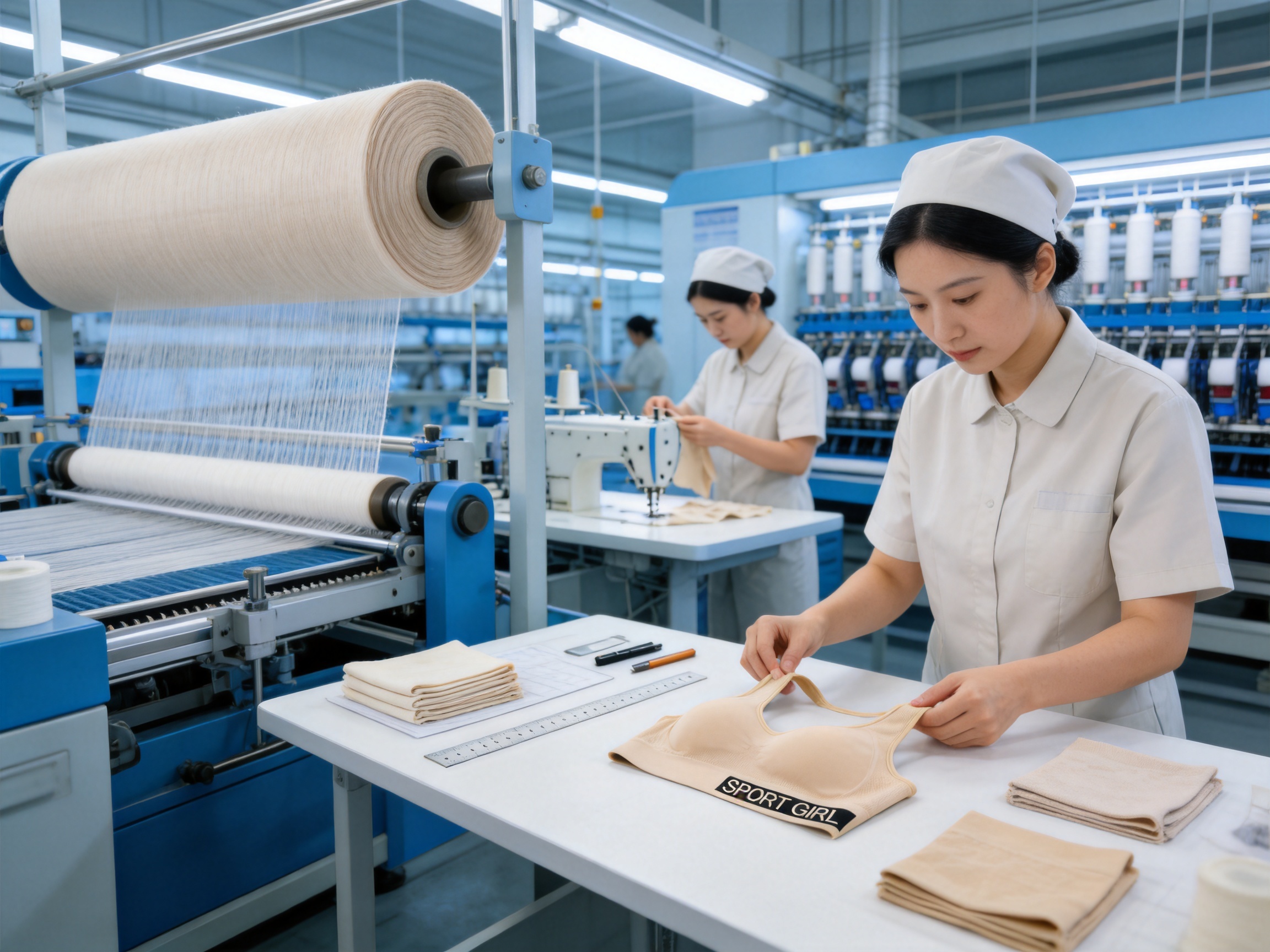
Before cutting or forming, incoming materials should be checked for quality and consistency. Inspection may consider color, width, weight, stretch, recovery, surface appearance, defects, and lot variation. Consistent fabric quality helps reduce production problems and supports a more uniform final product.
Fabric preparation may also include relaxation before cutting. Knitted or elastic materials can change dimensions after being unrolled or handled. Allowing the material to stabilize can improve cutting accuracy and reduce unexpected shrinkage or distortion. This is especially relevant to seamless or close-fitting products where small dimensional differences can affect comfort.
Color management is another aspect of preparation. If a buyer requires a particular shade, production teams must control color matching across fabric lots and components. Consistent color contributes to the perceived quality of the finished product, especially when bras are sold as part of coordinated underwear or activewear collections.
Depending on the product structure and production method, components may be cut from prepared fabric or formed through specialized knitting processes. Accuracy at this stage influences the alignment of panels, the shape of openings, and the balance of left and right sides. Poor accuracy can create twisting, uneven tension, or an inconsistent fit.
Seamless product development may reduce the number of traditional seams, but it does not eliminate the need for precision. The knitting structure, edge finishing, bonding, or remaining seams must all be controlled carefully. A seamless bra still requires thoughtful engineering around support zones, openings, straps, and elastic areas.
Production teams may use approved samples and technical reference standards to compare finished components with the intended design. Any deviations can then be assessed before large-scale production continues. This approach helps protect quality and reduces the risk of producing a large quantity of garments that require correction.
Where seams are necessary, their placement and construction are important to wearer comfort. Sports and Running Bras use strategic seam planning to help minimize irritation. Seam allowances, thread tension, stitch density, and finishing methods should be selected according to the fabric's stretch and the expected stress placed on each area.
Incorrect thread tension may cause puckering or restrict stretch. Excessive seam bulk may create pressure against the body. Insufficient reinforcement may reduce durability. Professional sewing control therefore involves more than visual appearance; it requires evaluation of how the seam behaves when the garment is stretched and worn.
Tag-free or tag-reduced finishing can further improve comfort. Product information may be printed or integrated through other methods where appropriate, helping avoid a rough label edge against the skin. This small detail can be particularly meaningful in performance garments because sweat and repetitive movement may increase sensitivity to irritation.
Elastic components help a sports bra maintain position and support. They must be selected and applied with attention to width, tension, recovery, softness, and durability. If an elastic band is too tight, it may create pressure. If it is too loose, the garment may shift during activity.
Support integration should be tested during movement rather than only in a static fitting. Wear trials can help identify whether the garment rides up, digs into the body, shifts at the shoulders, or restricts arm movement. Feedback from sample testing can then guide adjustments to the pattern, fabric, or elastic application.
Quality control continues after assembly. Finished products may be inspected for measurements, sewing defects, fabric flaws, stains, loose threads, color consistency, symmetry, label accuracy, and overall appearance. Measurement checks help verify that the production batch remains within approved tolerances.
Performance-oriented products may also undergo testing related to fabric behavior and durability. Depending on buyer requirements, evaluation can include moisture management, color fastness, dimensional stability, stretch recovery, seam strength, pilling resistance, and laundering performance. Testing standards should be selected according to the target market and product positioning.
Final packing protects the garments during storage and transportation. Folding, polybagging, carton arrangement, size separation, and labeling should be controlled to minimize handling damage and order confusion. A reliable packing process supports accurate shipment and helps the product reach distributors, retailers, or consumers in an acceptable condition.
Nantong Tianhong Textile Technology Co., Ltd. was established in 2001 and is located in Nantong, China, a major textile industry hub. The company's long operating history provides experience in the research, manufacturing, and sales of underwear products. This experience is relevant to buyers seeking a supplier that understands both product development and commercial production.
The company provides OEM and ODM products and services for recognized labels. OEM manufacturing enables buyers to produce garments according to their own specifications, branding, packaging, and market requirements. ODM services can support buyers that need assistance with product concepts, material selection, construction, and development. This flexibility is useful for retailers, private labels, importers, and brands with different levels of internal technical capability.
A key strength is the company's focus on functional fabrics and sustainable development. Performance underwear requires specialized textile knowledge because fabric behavior directly affects comfort and support. The company's attention to environmentally friendly functional fabrics can help buyers explore product programs that combine active performance with sustainability objectives.
Traceable supply chain management is another important strength. Traceability supports greater visibility from material sourcing through production and delivery. For brands operating in competitive markets, this can assist with documentation, quality management, compliance review, and communication with customers. It can also help buyers make more informed decisions when developing long-term product lines.
The company has established long-term partnerships with clients in Europe, North America, and China. Experience across multiple markets can support a broader understanding of customer expectations, product standards, labeling requirements, and commercial timelines. International market experience may also help buyers communicate specifications more efficiently during development and production.
Certification and compliance are important considerations in underwear manufacturing. The company reports products certified by standards and programs including FSC, OCS, OEKO-TEX 100, GOTS, WRAP, and BSCI. The relevance of each certification depends on the specific material, product, facility, and order. Buyers should confirm the applicable scope and documentation for each project, but the company's certification-oriented approach provides a useful foundation for responsible sourcing.
Research and innovation are central to the company's mission. The stated goal is to become a global leader in natural fiber fabrics and underwear products through continuous research and innovation. For Sports and Running Bras, this orientation may support ongoing improvement in fabric comfort, product construction, sustainable material use, and manufacturing efficiency.
Sports and Running Bras can be adapted for different market positions. A value-focused retailer may prioritize reliable performance, efficient production, and accessible pricing. A premium activewear label may emphasize fabric innovation, traceable sourcing, refined finishing, and certification. A lifestyle brand may focus on seamless comfort, versatile styling, and everyday wearability.
OEM development allows the buyer to define the desired product in detail. Specifications may include fabric composition, weight, stretch, color, support level, size range, logo placement, packaging, and quality requirements. The supplier then manufactures according to the approved standards. This approach can help maintain brand identity and create a consistent collection across multiple product categories.
ODM development offers a collaborative route for buyers that want to use an established product concept as a starting point. The supplier may support modifications to materials, colors, trims, labels, packaging, and construction. This can shorten the path from concept to market while still allowing the buyer to create a differentiated product offering.
Customization should be managed through clear samples and written specifications. Development samples allow the buyer to evaluate fit, comfort, support, fabric feel, appearance, and performance. Comments should be consolidated and returned in a structured format so that revisions can be tracked. Approved samples then serve as a reference for bulk production.
Brands should also consider how the bra will be marketed. Claims should accurately reflect the product's verified features. Moisture-wicking, breathability, seamless construction, sustainable materials, and certifications should be described according to test results and applicable documentation. Accurate communication protects consumer trust and reduces the risk of misleading claims.
Sustainability in underwear manufacturing involves more than choosing one environmentally preferred fiber. It may include raw material sourcing, energy use, water management, chemical control, worker welfare, production efficiency, packaging, durability, and supply chain transparency. A durable garment that remains useful over time may reduce the need for frequent replacement, while responsible sourcing can improve the broader environmental profile of the product.
Nantong Tianhong's focus on environmentally friendly functional fabrics and traceable supply chain management aligns with the growing demand for more responsible underwear production. The company also reports certification experience involving FSC, OCS, OEKO-TEX 100, GOTS, WRAP, and BSCI. These standards and programs address different aspects of forestry, organic content, textile safety, organic processing, workplace responsibility, and social compliance.
Buyers should evaluate sustainability according to the full product specification. If organic or natural fibers are required, the relevant certification must apply to the material and production chain used for the order. If textile safety is a priority, testing and certification should be confirmed for the final product. If social compliance is required, buyers should verify the relevant facility and audit documentation.
Product durability is also an important sustainability consideration. Sports bras are exposed to perspiration, repeated stretching, washing, and friction. A well-made product that retains its comfort and function through regular use can provide better long-term value than a garment that quickly loses shape or performance. Fabric selection, seam quality, elastic recovery, and laundering guidance all contribute to service life.
Sports and Running Bras are suitable for a wide range of active applications. Runners may value moisture management, stability, and reduced irritation during repetitive movement. Gym users may appreciate freedom of movement during strength and cardio training. Fitness class participants may benefit from breathable construction during high-energy sessions.
The product can also be positioned for walking, travel, outdoor recreation, and daily activewear. Some consumers prefer sports bras because they offer a secure fit and a simple, smooth appearance. The seamless-oriented construction may be especially suitable under fitted tops, lightweight shirts, and layered clothing.
Retailers can offer the product as part of a broader women's underwear collection. It may be grouped with seamless briefs, active underwear, functional base layers, or sustainable fiber products. The product's combination of performance and comfort makes it adaptable to different merchandising strategies.
For international buyers, the product may be developed for regional climate and lifestyle needs. Breathability and moisture management are especially valuable in warm or humid markets, while layering compatibility may be important in cooler climates. OEM and ODM flexibility allows product details to be adjusted according to the intended market.
Buyers should begin by defining the intended activity level and support expectation. A bra for light daily movement may require different construction from one intended for intensive running. The supplier should understand the target use before recommending fabric, fit, and support features.
Fabric evaluation should include hand feel, stretch, recovery, opacity, breathability, and moisture behavior. Buyers may request test reports or conduct independent testing when required. It is also useful to examine the fabric after washing because some performance characteristics can change with laundering.
Fit evaluation should involve multiple body types and sizes. A sample that fits one model well may not represent the entire size range. Buyers should review the garment during standing, bending, arm movement, stretching, and simulated exercise. Attention should be given to band comfort, strap position, neckline stability, side coverage, and overall movement.
Construction inspection should examine seam smoothness, thread tension, elastic attachment, symmetry, edge finishing, and label placement. Any component that touches the skin should be assessed for roughness or unnecessary pressure. Since the product is designed for exercise, inspection should include dynamic movement rather than relying only on a flat visual review.
Buyers should also review the supplier's production capabilities, quality system, certifications, social compliance documentation, communication process, and capacity. A technically attractive sample is valuable, but consistent bulk production is equally important. Clear approval procedures and documented standards help connect development quality with shipment quality.
Correct care helps preserve the performance and comfort of sports underwear. Consumers should follow the care instructions supplied with the product because the recommended method depends on the fabric and construction. In general, gentle washing, suitable detergent, and avoidance of excessive heat can help protect stretch and moisture-management properties.
High heat may affect elastic recovery, fabric dimensions, and surface appearance. Strong chemicals or unsuitable bleaching agents may also damage fibers or reduce color performance. Sports bras should be stored in a clean, dry environment and allowed to dry thoroughly after washing.
From a product development perspective, care instructions should be clear and easy to understand. Retailers and brands can improve customer satisfaction by providing practical guidance at the point of sale. Clear instructions may also reduce avoidable returns caused by shrinkage, deformation, or damage resulting from unsuitable laundering.
Sports and Running Bras are designed for active movement. They use moisture-wicking fabrics to help manage perspiration, breathable materials to support temperature regulation, and a tailored fit to provide stability during exercise. Strategic seam placement and the absence of irritating tags are also intended to improve comfort during repeated movement.
No. Although running is a primary application, the product may also be used for gym training, fitness classes, walking, outdoor activity, travel, and everyday activewear. The most suitable use depends on the individual's support needs and the final product specification.
The seamless bra category generally refers to designs that reduce traditional seams or use smooth construction methods to create a more comfortable, streamlined feel. In this product, strategic seam planning and irritation-conscious finishing help support a smooth experience against the skin.
Moisture-wicking fabric helps move perspiration away from the skin and through the textile structure, where it may evaporate more efficiently. This can reduce the damp sensation associated with exercise and help the wearer feel drier and more comfortable.
Yes. Breathability supports air movement and temperature regulation. When combined with moisture management, it can help reduce heat and dampness during activity. Breathability should be balanced with coverage and support so that the garment remains functional and comfortable.
A tailored fit is shaped to remain stable while allowing the body to move naturally. It should provide support without excessive tightness. The effectiveness of the fit depends on pattern accuracy, fabric stretch and recovery, elastic performance, and the relationship between the garment and the wearer's body.
Exercise involves repeated movement, which can make rough seams or tags more noticeable. Strategic seam placement helps reduce friction and pressure points, while tag-free finishing can create a smoother feeling against the skin. These details are especially valuable for long workouts and sensitive wearers.
Yes. Through OEM and ODM services, buyers may discuss material selection, colors, sizes, labels, packaging, product details, and other requirements. The exact customization options depend on the development plan, order specifications, and production capabilities.
The company reports experience with standards and programs including FSC, OCS, OEKO-TEX 100, GOTS, WRAP, and BSCI. The applicable certification depends on the material, product, facility, and order. Buyers should request current documentation and confirm that it covers the specific production arrangement.
Buyers should review the fabric, fit, support, stretch recovery, breathability, seam comfort, appearance, and laundering behavior. Testing should include movement such as running, bending, arm elevation, and stretching. Multiple sizes and body types should be evaluated whenever possible.
Traceability provides greater visibility into material sourcing, production stages, documentation, and compliance. It can help brands manage quality, respond to customer questions, support certification requirements, and build a more responsible long-term sourcing program.
Specialized underwear manufacturing requires knowledge of close-to-skin comfort, stretch materials, body fit, elastic behavior, sewing details, and repeated laundering. A general apparel supplier may be able to produce simple garments, but sports bras demand more focused technical experience because small construction differences can affect support and comfort.
Nantong Tianhong Textile Technology Co., Ltd. specializes in underwear research, manufacturing, and sales. Its experience since 2001, OEM and ODM capabilities, functional fabric focus, international partnerships, and certification-oriented approach make it a suitable manufacturing partner for buyers developing sports and running underwear.
The company's location in Nantong, a major textile industry hub, provides access to a broad textile manufacturing ecosystem. This can support material development, component sourcing, production coordination, and industry collaboration. Combined with a focus on research and innovation, the location contributes to a practical foundation for product development.
For brands, the main advantage of working with a specialized supplier is the ability to connect design intent with manufacturing execution. A supplier should understand why moisture-wicking performance matters, how seam placement affects movement, how elastic tension influences comfort, and how fabric recovery affects long-term fit. This knowledge helps transform a product concept into a reliable commercial garment.
Sports and Running Bras are designed for women who expect more from active underwear than basic coverage. Their key advantages include moisture-wicking fabric performance, breathability, temperature regulation, tailored support, freedom of movement, strategic seam placement, and a smoother tag-free wearing experience. These features help distinguish the product from ordinary bras and less specialized alternatives.
The product's value also depends on the manufacturing process behind it. Fabric inspection, technical planning, pattern development, precise construction, elastic integration, testing, and final quality control all influence the final result. A professional manufacturing partner must manage these stages carefully to deliver consistent performance across production quantities and size ranges.
Nantong Tianhong Textile Technology Co., Ltd. combines long-term underwear manufacturing experience with OEM and ODM services, functional fabric development, sustainable sourcing awareness, and traceable supply chain management. Its reported certifications and international market relationships provide additional support for brands and buyers seeking responsible, high-quality production.
For retailers, private labels, and established activewear companies, Sports and Running Bras offer an opportunity to build a product line around comfort, performance, and responsible manufacturing. With suitable customization, accurate testing, and clear quality standards, the product can serve a wide range of users and support a competitive position in the women's seamless underwear market.
1. Textile moisture management principles for sportswear and close-to-skin garments.
2. General technical guidance on stretch fabric recovery, dimensional stability, and garment fit.
3. General quality management practices for underwear cutting, sewing, finishing, inspection, and packing.
4. Organic textile and responsible fiber certification principles.
5. Textile product safety and harmful substance control requirements.
6. Social responsibility and ethical manufacturing guidance for apparel supply chains.
7. Product information supplied for Sports and Running Bras in the women's seamless bra category.
8. Company information supplied for Nantong Tianhong Textile Technology Co., Ltd., including manufacturing history, OEM and ODM services, functional fabric development, sustainability focus, and certification experience.

Copyright © Nantong Tianhong Textile Technology Co., Ltd. All Rights Reserved.
 Room 806, Building D, Jingyang Plaza, Chongchuan District, Nantong City, Jiangsu Province,china


 English
 Español
 русский
 عربى
عربى