Content
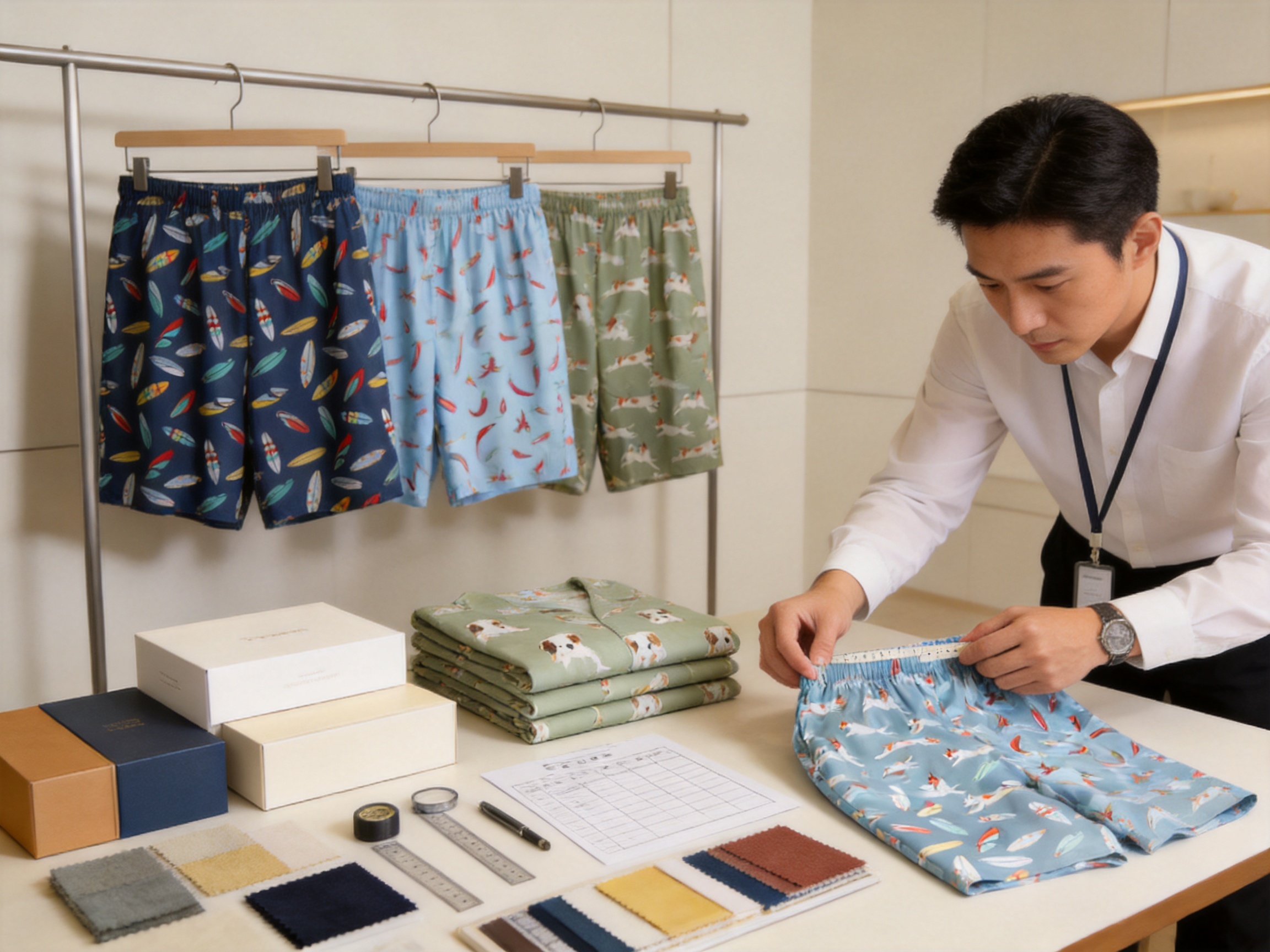
Quick Answer: Printed pajama shorts are a practical warm-weather sleepwear option because they combine a lightweight construction, breathable fabric, relaxed comfort, and expressive patterns. The best versions are made with carefully selected fibers, reliable stitching, stable printing, a comfortable waistband, and quality controls that prevent shrinkage, color bleeding, twisting, and seam failure. For retailers and private-label brands, a capable OEM/ODM manufacturer can further improve the product through fabric development, print customization, size grading, sampling, production inspection, and traceable supply-chain management. Printed Pajama Shorts are suitable for sleep, home lounging, hospitality programs, seasonal collections, and coordinated family or lifestyle ranges.
For buyers comparing suppliers, the product should be assessed on more than appearance. Fabric breathability, moisture management, softness, print durability, waistband recovery, pattern placement, construction accuracy, compliance documentation, and production communication all influence commercial performance. A supplier with experience in underwear and loungewear can help convert an attractive design into a repeatable, comfortable product that meets the expectations of modern consumers.
Sleepwear has become more versatile. Consumers no longer view pajama shorts only as a basic nighttime garment. A well-designed pair can serve as sleepwear, weekend loungewear, travel clothing, dormitory essentials, or part of a relaxed home wardrobe. This wider use creates demand for products that feel comfortable enough for sleeping but look polished enough for everyday indoor wear.
Printed pajama shorts respond to this demand through a combination of function and visual identity. The short silhouette is appropriate for warm climates and heated indoor environments, while printed surfaces make the product more distinctive than plain jersey or solid-color basics. Retailers can use prints to create seasonal stories, themed collections, gift sets, and coordinated family assortments.
The design also supports relatively efficient merchandising. A single base pattern can be adapted with multiple colors, motifs, or artwork variations. This allows a brand to test different visual directions without redesigning the entire garment. A reliable manufacturing partner can maintain the same fit and construction while changing the printed artwork for different customer segments.
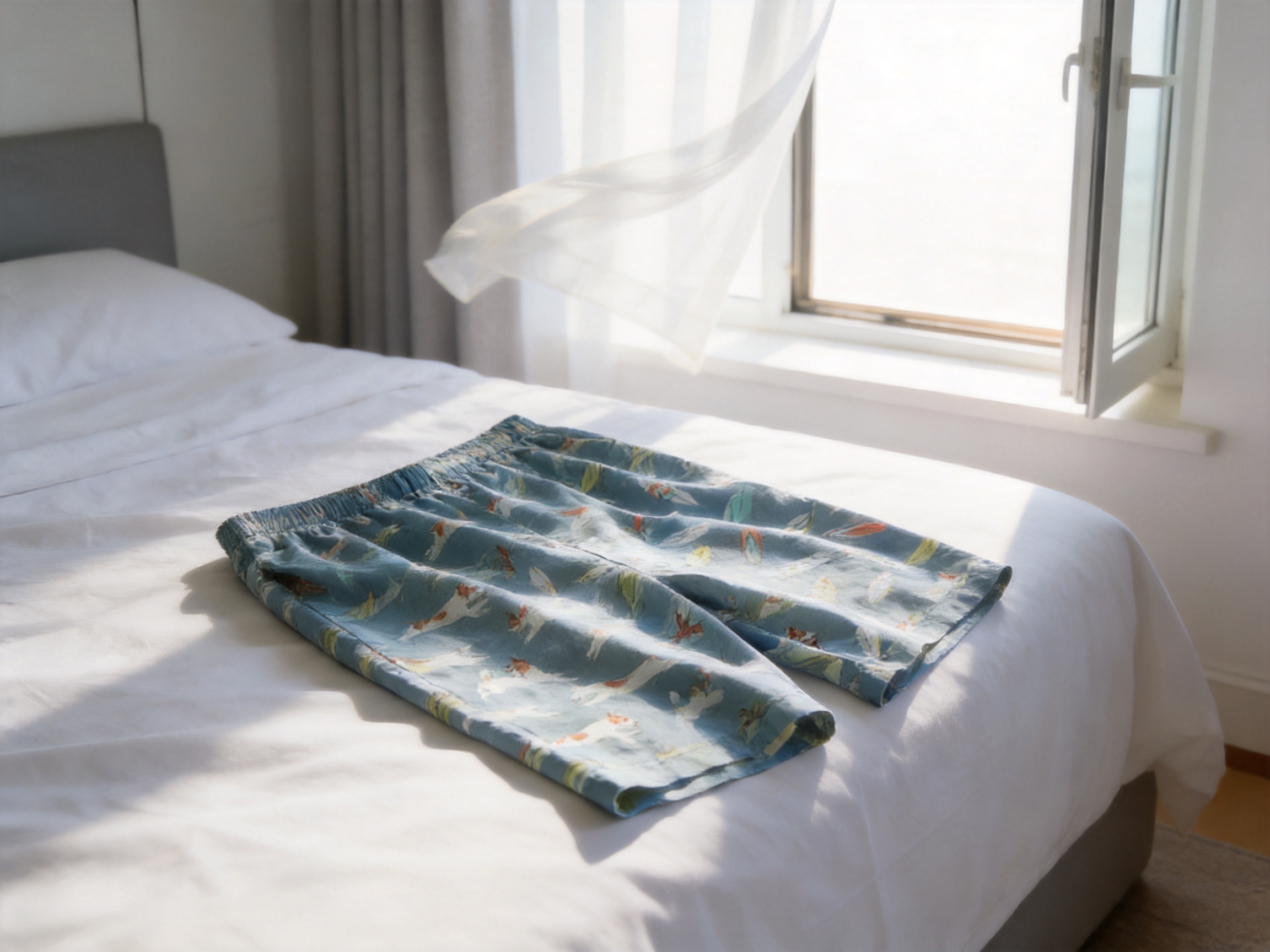
A lightweight pajama short generally uses less fabric than a full-length pajama bottom, which helps reduce bulk during warm weather. The shorter leg allows air to circulate around the lower body and gives the wearer more freedom when sitting, stretching, or moving around the home. When combined with a breathable textile, this construction can help create a cooler and less restrictive sleeping experience.
The relaxed shape is another important advantage. Sleepwear should not create pressure around the waist, hips, or thighs. A well-developed pajama short uses enough ease for movement without appearing excessively loose. The result should feel comfortable when lying down and remain presentable when the wearer walks around the home.
Printed designs also have a practical merchandising benefit. Patterns can make small marks, minor wrinkles, or normal signs of use less visible than they might be on a completely plain garment. This does not replace good care or quality fabric, but it can support a more forgiving appearance during regular home use.
Product quality comes from the interaction of several details rather than one feature. A soft fabric will not compensate for an uncomfortable waistband. A beautiful print will not create customer satisfaction if it cracks after washing. A well-made garment may still underperform if the size grading is inconsistent. Buyers should therefore review the product as a complete system.
| Quality area | What to evaluate | Why it matters |
|---|---|---|
| Fabric | Softness, breathability, weight, stretch, recovery, and surface feel | Determines comfort, temperature control, drape, and durability |
| Fit | Waist ease, rise, leg opening, side seam position, and size grading | Controls freedom of movement and reduces returns caused by poor sizing |
| Waistband | Elastic width, recovery, attachment strength, and skin comfort | Prevents digging, rolling, slipping, and premature relaxation |
| Color accuracy, hand feel, registration, wash resistance, and placement | Protects visual appeal and supports consistent brand presentation | |
| Construction | Seam strength, stitch density, hems, thread tension, and reinforcement | Improves service life and reduces defects during inspection |
| Compliance | Fiber information, restricted-substance controls, labeling, and social audits | Supports responsible selling across different markets |
Breathability is one of the main reasons shoppers choose pajama shorts. A breathable textile allows air and water vapor to move through the fabric more easily than a dense, poorly ventilated material. This can make a difference when the wearer sleeps in a warm room, uses thick bedding, or experiences seasonal heat.
The ideal fabric depends on the target market, price point, and desired hand feel. Common options may include cotton-rich blends, rayon-based fibers, modal-type materials, recycled fibers, or other lightweight constructions. Each fiber brings different characteristics related to moisture absorption, drying speed, drape, resilience, and print performance. The manufacturer should recommend a fabric after considering the intended use rather than selecting material only by price.
For brands interested in natural-fiber positioning, bamboo-derived viscose or other certified cellulosic options may be considered where appropriate. Such materials require accurate fiber naming, responsible sourcing, and appropriate certification claims. A product should not be marketed as organic, sustainable, or bamboo-based unless the actual fabric composition and supporting documentation justify that description.
Printed pajama shorts should provide a relaxed fit, but “relaxed” does not mean shapeless. The pattern needs enough room at the seat and thigh for sleeping and lounging. The rise should provide coverage without creating excess fabric that bunches under the waistband. The side seams should hang naturally, and the leg openings should remain comfortable when the wearer sits or bends.
Fit development normally begins with a base size and a technical pattern. The manufacturer then creates a sample, reviews measurements, and adjusts the pattern before grading it across the size range. A professional process should consider not only waist circumference but also hip width, front and back rise, inseam, outseam, thigh circumference, and leg opening.
Brands should request a complete measurement chart rather than approving a sample by appearance alone. A garment can look attractive on a model yet feel restrictive or oversized on the target customer. Measurement tolerances should be agreed before bulk production, and finished garments should be checked against those tolerances during inspection.
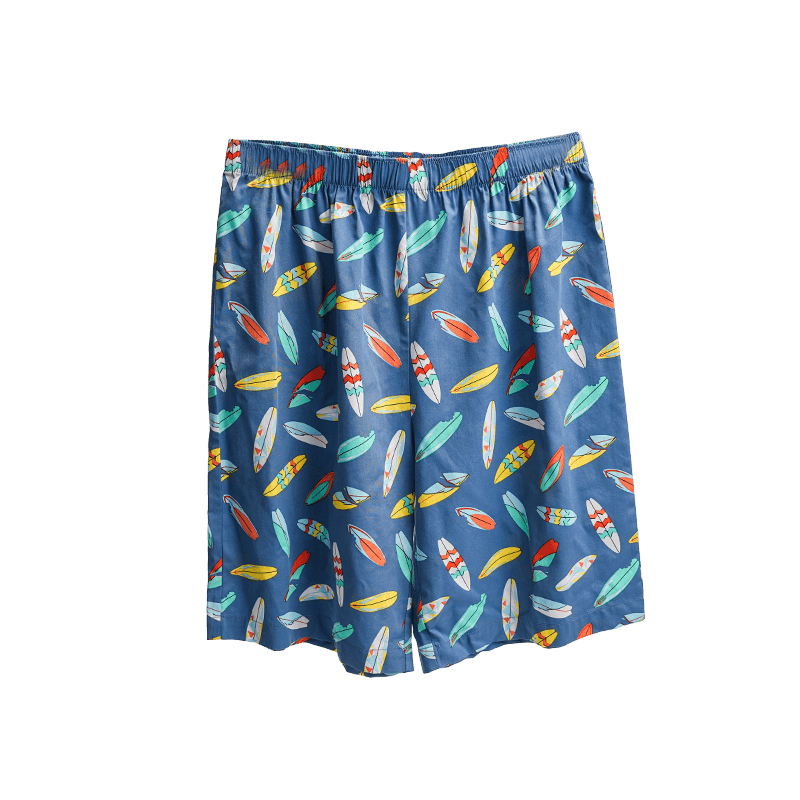
Printed Pajama Shorts
Prints give pajama shorts their strongest visual advantage. They can communicate personality, season, lifestyle, humor, or brand positioning in a single glance. A print may be subtle and tonal for a premium collection, colorful and playful for younger shoppers, or coordinated with robes, tops, socks, and accessories for a complete sleepwear story.
Small repeating motifs are a dependable choice for commercial sleepwear. Geometric elements, botanical shapes, food illustrations, abstract symbols, animals, stars, and seasonal icons can be arranged in all-over patterns. The scale of the motif should be selected in relation to the garment size. A pattern that looks balanced on a large digital file may appear crowded when reduced to a short leg panel.
Large placement prints create a more editorial appearance. They can be positioned on one leg, across the front, or near the hem. Placement artwork requires more careful cutting and sewing because the factory must align the print with the pattern pieces. It may generate more fabric waste than a simple repeating print, but it can also produce a stronger premium impression.
Stripes, checks, and directional motifs require additional attention to matching. Side seams should be reviewed to determine whether the lines need to meet. If alignment is part of the design expectation, the pattern and cutting plan must account for it from the beginning. A lower-cost production method may intentionally avoid matching, but that decision should be made openly with the buyer.
The printing method should match the fabric, artwork, production quantity, and required hand feel. Different technologies offer different balances between color intensity, surface softness, detail, production speed, and wash resistance. A manufacturer with an experienced sampling team can help compare these factors before bulk production.
Water-based approaches may be selected when a softer surface is desired, while other methods may be suitable for complex color effects, photographic details, or specific fiber blends. Digital printing can support shorter artwork runs and detailed images, while rotary or screen-based processes may be efficient for larger quantities and repeat production. The correct choice depends on the confirmed technical brief.
Print approval should include a physical strike-off or sample rather than relying only on a screen image. Monitor settings can distort color, and fabric absorbs ink differently depending on its composition and surface. The approved reference should identify the artwork version, color standard, scale, orientation, and placement. Bulk production should be compared against this reference.
Several problems can reduce the perceived value of printed pajama shorts:
• Misregistration can make fine outlines appear blurred or displaced.
• Uneven coverage can create pale areas or inconsistent color density.
• Excessive ink can make the fabric feel stiff or reduce its natural drape.
• Poor curing or fixation can cause color loss, cracking, or transfer during washing.
• Incorrect artwork scaling can make the pattern appear too large, too small, or visually unbalanced.
• Inaccurate placement can cause motifs to sit too close to seams or become partially hidden.
These risks are best controlled through pre-production approval, print testing, wash testing, and in-line inspection. A production team should record the approved parameters so repeat orders can maintain the same visual result.
Construction quality determines how the pajama short behaves after repeated wear and laundering. The garment should feel smooth against the skin, remain stable during movement, and resist common forms of failure such as open seams, loose threads, waistband distortion, and hem curling.
The waistband is one of the most important comfort points. A narrow elastic may create concentrated pressure, while an overly firm elastic can feel restrictive during sleep. A wider waistband can distribute pressure more evenly, but it must be attached securely and covered with comfortable fabric where it contacts the skin.
Brands may choose an exposed elastic, a tunnel waistband, or a folded fabric casing. Each construction creates a different visual and comfort effect. A drawcord can add adjustability, but its length, finishing, and safety treatment should be considered carefully. The cord should not create unnecessary bulk or become a hazard during use.
Side seams should be straight, clean, and consistent. The inseam deserves special attention because it experiences repeated friction and movement. Stitch selection should reflect the fabric’s stretch and weight. If the material has mechanical or added stretch, the seam must allow movement without popping. If the fabric is woven and stable, the seam construction may focus more on strength, neatness, and comfort.
Hems should lie flat and maintain their shape after washing. A hem that is too narrow may twist or roll, while a hem that is too stiff can reduce the softness of the garment. The right thread tension and finishing method help preserve the lightweight character of the shorts.
Labels, care instructions, and size markings should be positioned where they will not irritate the wearer. Printed care labels or soft woven labels may be considered depending on the product specification. The label content should accurately reflect fiber composition, care requirements, country-of-origin rules, and other market obligations.
Brands should also inspect the inside of the garment. A product can look excellent from the outside but feel uncomfortable if there are bulky overlocked seams, exposed thread ends, rough labels, or inconsistent seam allowances. A simple inside-out review during sample approval can identify issues that are easy to fix before production but expensive to correct afterward.
A professional manufacturing process turns a design concept into a repeatable product through several controlled stages. The exact workflow may vary according to the fabric and print technique, but the main steps should remain organized and documented.
The process begins with a written brief covering the target customer, intended season, fit, fabric preference, color palette, print artwork, size range, packaging, estimated quantity, and delivery requirements. A strong supplier reviews the brief rather than accepting incomplete instructions without questions.
Technical questions at this stage may include whether the pajama short is intended for sleep only or for broader home use, whether the design requires print matching, whether the waistband should include a drawcord, and what level of softness or stretch the buyer expects. Clarifying these points early reduces revisions later.
Fabric samples are evaluated for weight, width, composition, softness, stretch, recovery, dimensional stability, pilling resistance, colorfastness, and print compatibility. A fabric that feels excellent in a small swatch may behave differently after dyeing, printing, washing, or cutting. Testing should therefore reflect the finished-product process whenever possible.
For breathable sleepwear, fabric weight should be balanced with opacity and durability. A very light material may feel cool but can become too transparent or fragile. A heavier material may be durable but less suitable for warm nights. The correct choice depends on the customer profile, climate, and expected retail position.
The pattern team converts the design into separate garment pieces, establishes seam allowances, marks grain lines, sets print placement, and prepares the measurement chart. The first sample is then cut and sewn for evaluation.
Sample review should assess fit on an appropriate body or mannequin, waistband comfort, leg opening, print position, seam appearance, and overall balance. Changes should be recorded clearly. When a brand approves a revised sample, the final specification should include measurements, tolerances, artwork files, fabric details, construction notes, and approved trims.
The artwork is prepared for the selected printing method. The factory may need to adjust color separation, repeat size, scale, registration, or placement. A physical print sample allows the buyer to judge the actual hand feel and color on the selected fabric.
Color approval is especially important for online retail because product images are often used as the main customer reference. A significant difference between the photographed sample and the delivered bulk product can increase complaints and returns. Production should use approved color references and retain a control sample for comparison.
Before cutting, fabric should be relaxed if required by its construction. This reduces the risk of measurement changes after the panels are cut. Cutting markers are prepared to improve material efficiency while respecting print direction, nap, stripe alignment, and placement requirements.
Panel numbering or bundle control helps prevent shade variation and mismatched pieces. For printed pajama shorts, this is particularly useful when multiple fabric lots or colorways are being produced. Careful bundle management reduces the chance that one garment receives panels from different lots with visible differences.
Operators assemble the shorts according to the approved construction. Key checkpoints include seam allowance, stitch consistency, waistband attachment, hem width, thread trimming, and print orientation. Production supervisors should monitor the first pieces from each operation before the line continues at full speed.
Good line management is not only about speed. It involves balancing operations, preventing bottlenecks, and identifying defects close to their source. If a waistband attachment problem is discovered only at final inspection, a large quantity may require repair. Early monitoring reduces rework and protects delivery schedules.
Finished garments may be pressed, folded, tagged, measured, and packed according to the buyer’s instructions. Inspection should review appearance, dimensions, workmanship, print quality, labels, stains, loose threads, and packaging accuracy.
Sampling plans can be used for larger orders, while higher-risk products or new suppliers may justify more intensive checks. The buyer and manufacturer should agree on the inspection standard before production, including acceptable defect levels and the treatment of critical, major, and minor defects.
OEM and ODM services allow brands to purchase a finished product under their own label or develop a product with support from the manufacturer. For printed pajama shorts, this can include design adaptation, material sourcing, pattern development, print engineering, sample making, production, packaging, and quality control.
An experienced partner can help a brand move faster without sacrificing technical discipline. Instead of coordinating separate fabric, print, sewing, and inspection vendors, the buyer may work with one integrated supplier. This can simplify communication and reduce the risk that one supplier changes a specification without informing the others.
Development support is especially useful when a brand has a mood board or reference garment but lacks a complete technical package. The manufacturer can help translate broad preferences such as “soft,” “cool,” “relaxed,” or “premium” into measurable details. These may include fabric weight, fiber blend, stretch percentage, waistband width, seam type, and print method.
The buyer should still retain control over final approvals. A supplier’s recommendation is valuable, but the brand should confirm the hand feel, fit, color, packaging, and labeling before bulk production. A documented approval process protects both sides.
Sleepwear collections often depend on repeatability. A successful design may need to be reordered in the same color, expanded into new sizes, or adapted into a matching top. A manufacturer with organized records can preserve the approved pattern, fabric details, print files, trims, and quality standards for future production.
Repeat orders should not be treated as automatic copies. Fabric lots, dye batches, equipment settings, and supplier conditions can change. Each repeat should still include appropriate checks, but a well-maintained technical file makes the process more efficient and reduces unnecessary redevelopment.
Modern buyers increasingly ask about fiber origin, environmental claims, chemical management, labor conditions, and supply-chain traceability. A supplier that understands certifications and audit requirements can help brands prepare more credible product documentation.
Nantong Tianhong Textile Technology Co., Ltd. reports experience in underwear manufacturing, OEM/ODM services, environmentally focused functional fabrics, and traceable supply-chain management. Its stated certification portfolio includes FSC, OCS, OEKO-TEX 100, GOTS, WRAP, and BSCI. Certification scope should always be checked for the specific facility, product, material, and current validity period; a company-level statement does not automatically mean that every item carries every certification.
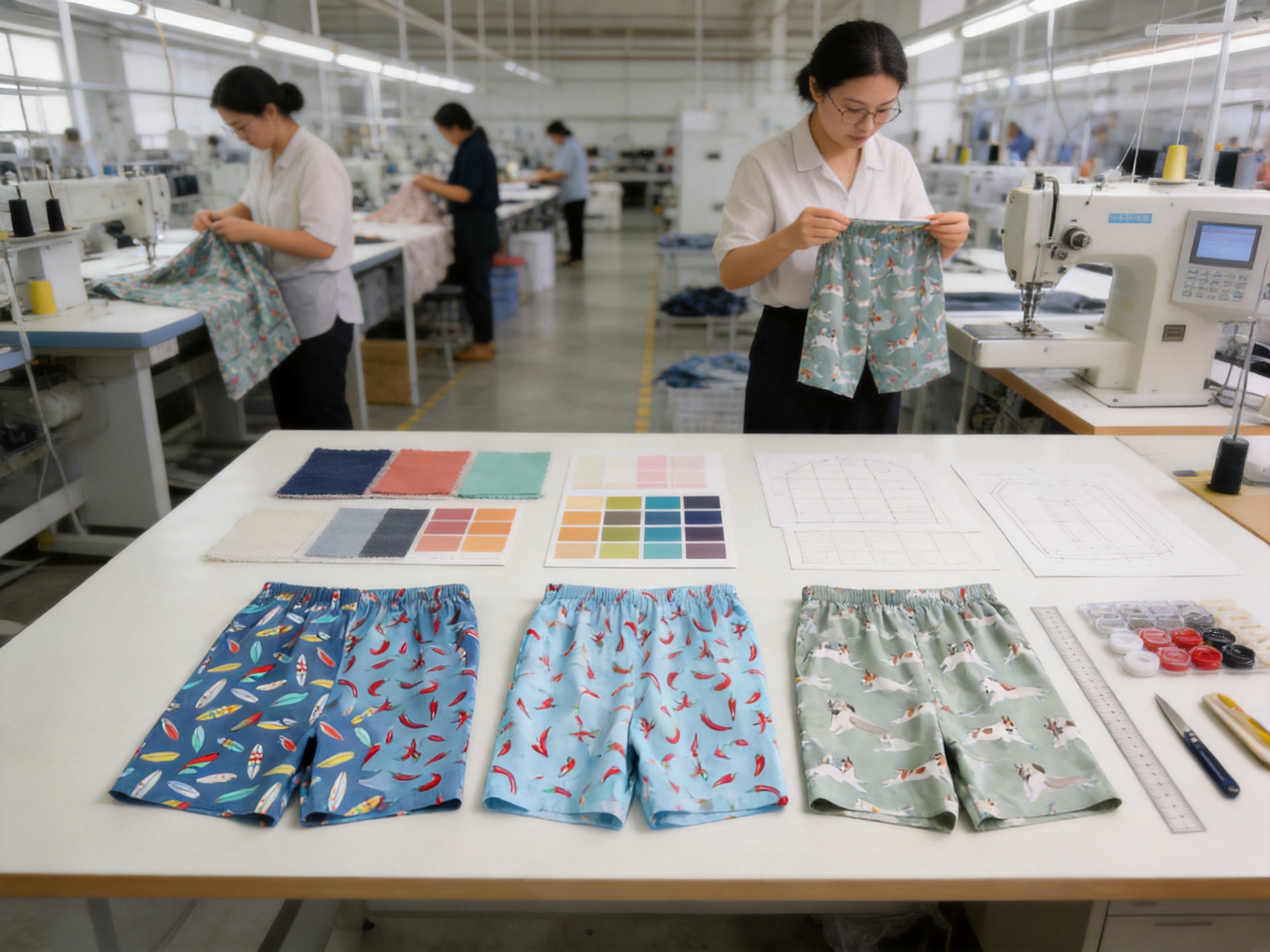
Nantong Tianhong Textile Technology Co., Ltd. was established in 2001 and is located in Nantong, Jiangsu Province, a major textile center in China. The company specializes in the research, manufacturing, and sales of underwear products, with experience serving labels and customers in Europe, North America, and China.
This background is relevant to printed pajama shorts because underwear and sleepwear share several demanding requirements: direct skin contact, repeated washing, comfort-sensitive fit, accurate sizing, soft construction, and consistent production across many units. A supplier familiar with these requirements is better positioned to identify risks that may be missed by a general apparel factory.
The company’s stated focus on natural-fiber fabrics and functional textile research may also support brands seeking breathable, comfortable, or environmentally positioned products. Material development should still be matched to the actual brief. A pajama short intended for hot-weather sleep may need a different fabric from a year-round loungewear item, even when both are described as soft and breathable.
Quality control is not a single final inspection. It begins with material verification and continues through sample approval, cutting, sewing, finishing, packing, and shipment. A systematic approach helps maintain the product features shoppers notice most: smooth comfort, clean appearance, accurate size, stable color, and reliable wash performance.
For private-label buyers, quality control also protects brand reputation. A customer may not know the factory name, but the brand name appears on the label and product page. Defects such as uneven waistbands, incorrect prints, or inconsistent sizing are therefore commercial problems as well as manufacturing problems.
Working with buyers in different regions requires more than production capacity. The supplier needs to communicate clearly about specifications, approvals, shipment planning, packaging, and documentation. Experience across Europe, North America, and China can help a manufacturer understand that market expectations differ in labeling, sizing, compliance, and purchasing cycles.
Brands should ask potential suppliers how they manage time-zone differences, sample revisions, production updates, inspection reports, and changes to approved specifications. A clear communication process is a practical competitive advantage because it reduces delays and prevents assumptions.
Printed pajama shorts compete with several categories, including plain lounge shorts, full-length pajama bottoms, sleep dresses, leggings, and woven boxer-style shorts. The right choice depends on climate, customer preference, price, and the intended role of the product in the collection.
| Product type | Main advantage | Potential limitation | Best positioning |
|---|---|---|---|
| Printed pajama shorts | Lightweight comfort with strong visual identity | Less coverage in cool environments | Warm-weather sleepwear, gifts, and expressive loungewear |
| Plain lounge shorts | Simple styling and broad everyday appeal | Less distinctive on crowded retail shelves | Minimalist basics and coordinated collections |
| Full-length pajama bottoms | More coverage and warmth | Can feel too warm or restrictive in summer | Cool seasons and colder indoor climates |
| Sleep dresses | Loose silhouette and easy dressing | May provide less coverage during movement | Feminine sleepwear and resort-style collections |
| Leggings | Close fit and strong movement support | May feel less breathable for sleeping | Active lounging and layering |
| Woven boxer-style shorts | Structured appearance and airflow | May have less softness or stretch than knit options | Classic menswear-inspired sleepwear |
Printed pajama shorts stand out when the buyer wants a product that is easy to wear but not visually generic. Their strongest advantage is the balance between comfort and design flexibility. The category can support subtle premium prints, colorful novelty patterns, coordinated family products, and limited-edition seasonal releases.
A clear specification reduces misunderstandings and improves the probability of receiving a product that matches the original concept. The document should be specific enough for production but flexible enough to allow the manufacturer to recommend practical improvements.
Begin with the product name, target customer, intended use, and season. State whether the garment is for men, women, children, or a unisex range. The provided product is categorized as Men’s Loungewear, but the same construction concept may be adapted for other size and fit blocks if separately developed.
Include the following information:
• Fabric composition and acceptable alternatives.
• Target fabric weight and width.
• Stretch requirements, if applicable.
• Base size measurements and complete graded size chart.
• Waistband type, width, elastic specification, and drawcord details.
• Inseam, outseam, rise, thigh, and leg-opening measurements.
• Print artwork, repeat size, color references, direction, and placement.
• Stitching, hem, seam, and reinforcement requirements.
• Label content, label position, care instructions, and packaging.
• Inspection standard, test requirements, and acceptable tolerances.
• Order quantity by color and size.
• Sample approval process and expected delivery dates.
A specification should distinguish between fixed requirements and negotiable preferences. For example, a brand may require a particular artwork and label placement but allow the manufacturer to recommend the most suitable print method. This gives the supplier room to improve production efficiency without changing the product identity.
Testing should be selected according to the product’s risks and market. Printed pajama shorts are worn directly against the skin and are commonly washed, so comfort and laundering performance deserve particular attention.
Measure the garment before and after washing according to the agreed care instructions. Check waist, rise, inseam, outseam, thigh, and leg opening. Excessive shrinkage can change the fit, while uneven shrinkage can cause twisting or distortion.
Assess color transfer, fading, rubbing, and print adhesion. The specific test method may depend on the destination market and fabric type. Home-laundering simulations are useful because they reflect the conditions customers are likely to apply.
Soft fabrics can develop pills through friction. The risk may be higher when the garment is worn frequently or washed with rougher items. Testing can help determine whether the fabric is appropriate for the intended quality level and price point.
Inspect seams after repeated movement and washing. The waistband should remain attached, recover its shape, and avoid twisting inside the casing. If the product includes a drawcord, check its attachment and finishing as well.
Review softness, seam bulk, label irritation, and fabric stiffness after printing. A print that feels smooth on the first sample may become harder after curing if the process is not controlled. The final product should be assessed in the same condition in which it will reach consumers.
Printed pajama shorts can support more than one sales channel. In direct-to-consumer stores, they can be presented as an affordable entry product or paired with tops and robes to increase basket value. In department stores, they can form part of a seasonal sleepwear wall. In hospitality and promotional programs, customized prints can reinforce a property, event, or lifestyle theme.
For private-label brands, the product is suitable for capsule collections. A single base fit can be offered in several artwork variations, allowing the range to feel broad without requiring a completely new construction for every option. Matching tops can be developed later if the first short program performs well.
Gift positioning is another opportunity. Printed pajama shorts are easy to package, simple to size when sold in coordinated sets, and visually appealing in product photography. Seasonal motifs can support holiday campaigns, while neutral patterns can remain available throughout the year.
Because the print is a major selling point, photography should show both the full garment and close details. Buyers should be able to see the overall pattern, waistband construction, fabric surface, side profile, and fit. Images should represent the actual production color as accurately as possible.
Product descriptions should identify the fabric composition, fit, care instructions, and intended use. Avoid vague promises such as “perfect for everyone” or unsupported environmental claims. Practical information builds trust and helps customers choose the correct product.
Care instructions should reflect the verified behavior of the actual fabric and print. A general recommendation may include machine washing at an appropriate temperature, avoiding harsh bleaching products, using a gentle cycle when required, and following the approved drying method. The label must provide the legally required instructions for the destination market.
Consumers can often extend the life of printed pajama shorts by washing them with similar colors, turning them inside out when appropriate, avoiding excessive heat, and removing the garment promptly after the cycle. High heat may accelerate shrinkage, weaken elastic, or affect the print surface.
Manufacturers should not promise that a print will remain unchanged forever. Natural wear occurs with laundering and friction. The more useful goal is to select the correct print process, verify performance, provide accurate care instructions, and maintain realistic customer expectations.
A productive supplier conversation should focus on evidence and process. The following questions can help buyers compare manufacturers:
1. Which fabrics are recommended for a lightweight, breathable pajama short, and why?
2. Can the factory provide fabric composition and test documentation for the selected material?
3. Which printing method is suitable for the artwork and expected order quantity?
4. How are print color, scale, placement, and wash performance approved?
5. What measurement tolerances are used for the finished garment?
6. How is waistband recovery checked?
7. What is the process for handling sample revisions?
8. Which quality inspections are performed during cutting, sewing, finishing, and packing?
9. Can the factory support custom labels, packaging, and size ranges?
10. Which certifications or audits apply to the specific factory and product?
11. How are repeat orders controlled when fabric or print lots change?
12. What information is required before quoting and sampling?
The answers should be specific. Statements such as “high quality” or “strict inspection” are less useful than a description of actual checkpoints, documents, tolerances, and approval stages.
Yes. Their short length and lightweight construction can improve airflow and reduce bulk during warm nights. Performance still depends on the fabric, fit, and finishing. A dense textile or stiff print may feel warm even when the garment has short legs.
There is no single best fabric for every market. Cotton-rich, rayon-based, modal-type, bamboo-derived, and blended options may all be suitable when correctly developed. The decision should consider breathability, softness, moisture behavior, stretch, durability, print compatibility, care requirements, and target price.
Yes. OEM/ODM production can support custom artwork, repeat patterns, placement prints, colorways, labels, packaging, and coordinated products. The buyer should provide production-ready artwork or work with the supplier’s design team to finalize the file and physical sample.
Some fabric shrinkage may occur, but the amount should be measured and controlled. Pre-production testing and appropriate fabric finishing help reduce surprises. The finished size chart should reflect verified tolerances, and care labels should match the tested washing method.
Request a physical sample and conduct or commission wash, rubbing, and colorfastness tests suited to the fabric and target market. Inspect the print for fading, cracking, peeling, transfer, stiffness, and changes in hand feel. Approval should be based on the actual textile rather than a digital artwork preview.
No. The supplied product is categorized as Men’s Loungewear, but printed shorts can be developed for women, children, or unisex collections. Each group requires separate fit development, grading, safety review, and labeling. A men’s pattern should not simply be scaled or relabeled for another category.
Potentially, depending on the selected fiber, supplier availability, and certification requirements. The material composition must be verified, and claims such as organic or bamboo-based should be supported by appropriate documentation. Buyers should ask which certification applies to the exact fabric and finished product.
Underwear manufacturers commonly understand skin comfort, soft construction, precise sizing, elastic attachment, wash durability, and close-fitting or relaxed-body patterns. These capabilities are useful for pajama shorts, provided the factory also has the required experience in loungewear silhouettes, printing, packaging, and the buyer’s target market.
Approval should cover fabric, color, print scale, print placement, measurements, waistband, seams, hems, labels, packaging, and care information. A written approval record and retained control sample help prevent unauthorized changes during bulk production.
Printed versions offer stronger visual differentiation and more opportunities for seasonal or themed merchandising. Plain versions may appeal to minimalist shoppers and can be easier to coordinate. The right choice depends on the brand’s visual identity, customer preferences, and collection strategy.
Start with fit and fabric comfort because these directly affect whether the customer wants to wear the garment. Then evaluate waistband performance, print durability, dimensional stability, and construction. A product that looks attractive but feels uncomfortable is unlikely to generate repeat purchases.
Buyers can compare potential suppliers using five categories: product capability, technical process, quality management, compliance support, and communication. Assigning a score to each category can make the decision more objective.
| Selection category | Evidence to request | Suggested buyer action |
|---|---|---|
| Product capability | Relevant pajama, underwear, and loungewear samples | Inspect fit, fabric, print, seams, and finishing |
| Technical process | Specification templates, sample workflow, testing options | Confirm how revisions and approvals are documented |
| Quality management | Inspection checkpoints, tolerance standards, control samples | Agree on a pre-production and final inspection plan |
| Compliance | Current certifications, audit records, material documents | Verify scope, validity, and relevance to the order |
| Communication | Response process, production updates, escalation procedure | Test communication during the sampling stage |
A supplier should not be selected solely on the lowest quotation. A lower price may reflect a lighter fabric, simpler print process, reduced inspection, or less complete packaging. The better comparison is total value: product performance, consistency, documentation, delivery reliability, and the cost of potential returns or rework.
Consumers increasingly examine both how a garment feels and how it is made. Printed pajama shorts can be positioned around comfort, breathable construction, expressive design, and responsible sourcing, but every claim should be supported by product facts.
For example, “lightweight breathable fabric” should correspond to the actual material and construction. “Soft hand feel” should be verified on the finished printed garment, not only on an unprinted fabric swatch. “Certified organic” should be used only when the relevant certification and chain of custody support the claim. Responsible marketing protects consumer trust and reduces regulatory risk.
A manufacturer with documented experience in sustainable fibers, environmental standards, and traceability can help brands prepare stronger product information. The brand remains responsible for how claims are presented to customers, so all supporting documents should be reviewed before publication.
Printed pajama shorts are a commercially flexible product with a strong balance of comfort and visual appeal. Their short, lightweight construction makes them suitable for warm nights and relaxed indoor wear, while customizable prints allow brands to create distinctive seasonal or lifestyle collections. The product performs best when the fabric, fit, print, waistband, and construction are developed as one specification.
For buyers, the most practical next step is to prepare a clear brief and request a development sample. Review the fabric after printing, measure the finished garment, test the waistband, wash the sample, and compare the result against the intended customer and price point. Ask the manufacturer to explain its production controls rather than relying only on product photographs.
Nantong Tianhong Textile Technology Co., Ltd. offers OEM/ODM underwear and textile manufacturing services from Nantong, China, with stated experience in natural-fiber fabrics, functional textile development, international customers, and supply-chain standards. Its capabilities may make it a suitable supplier for brands seeking customized printed pajama shorts, provided the buyer verifies the exact fabric, certification scope, production capacity, quality procedures, and commercial terms for the specific project.
The strongest finished product is not simply the one with the most colorful artwork. It is the one that remains comfortable through repeated wear, keeps its visual character after laundering, fits consistently across sizes, and arrives with the documentation and quality level promised at the beginning of the order.
1. International Organization for Standardization. Textile testing and quality-management principles for apparel production.
2. OEKO-TEX Association. Guidance on textile product safety and harmful-substance testing.
3. Global Organic Textile Standard. Criteria for organic fibers, processing, manufacturing, and chain-of-custody control.
4. Forest Stewardship Council. Principles for responsible forest-based fiber sourcing and certification.
5. WRAP. Principles for responsible production, labor practices, and workplace compliance.
6. Business Social Compliance Initiative. Frameworks for social compliance and supply-chain assessment.
7. American Society for Testing and Materials. Standard methods for textile colorfastness, dimensional change, seam performance, and fabric durability.
8. International Labour Organization. Guidance on decent work, occupational safety, and responsible garment manufacturing.
9. Nantong Tianhong Textile Technology Co., Ltd. Company information and product-development materials supplied for this article.

Copyright © Nantong Tianhong Textile Technology Co., Ltd. All Rights Reserved.
 Room 806, Building D, Jingyang Plaza, Chongchuan District, Nantong City, Jiangsu Province,china




 English
 Español
 русский
 عربى
عربى