Content
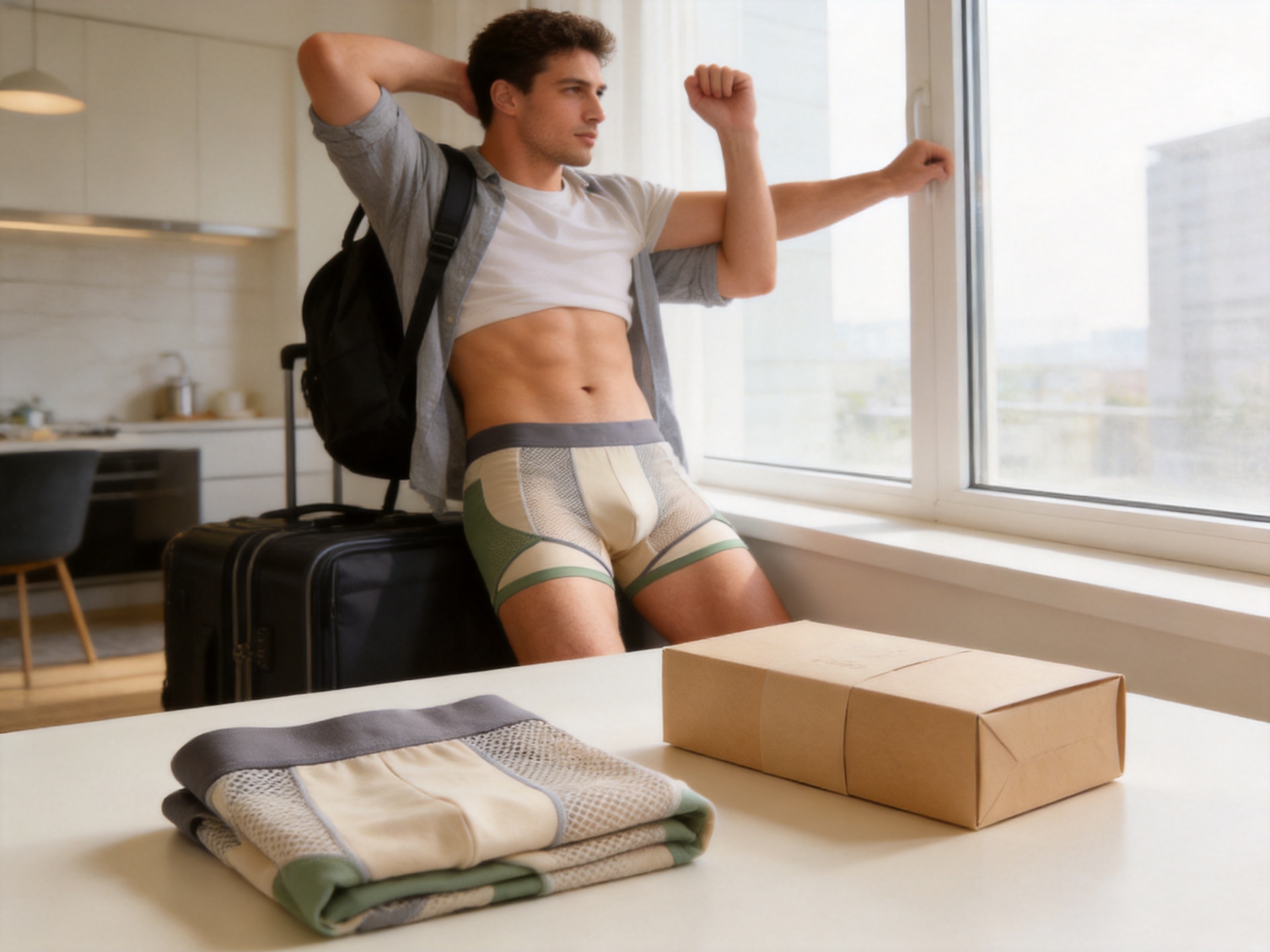
Modern underwear is expected to do much more than provide basic coverage. Consumers increasingly look for garments that combine comfort, breathability, moisture management, durability, responsible material choices, and an attractive fit. Retailers and private-label brands, meanwhile, need products that can be customized, manufactured consistently, and supported by a reliable supply chain. Mesh Panel Men's Boxer Briefs respond to these needs through a carefully considered combination of bamboo mesh, bamboo jersey, moisture-wicking performance, and a secure elastic waistband.
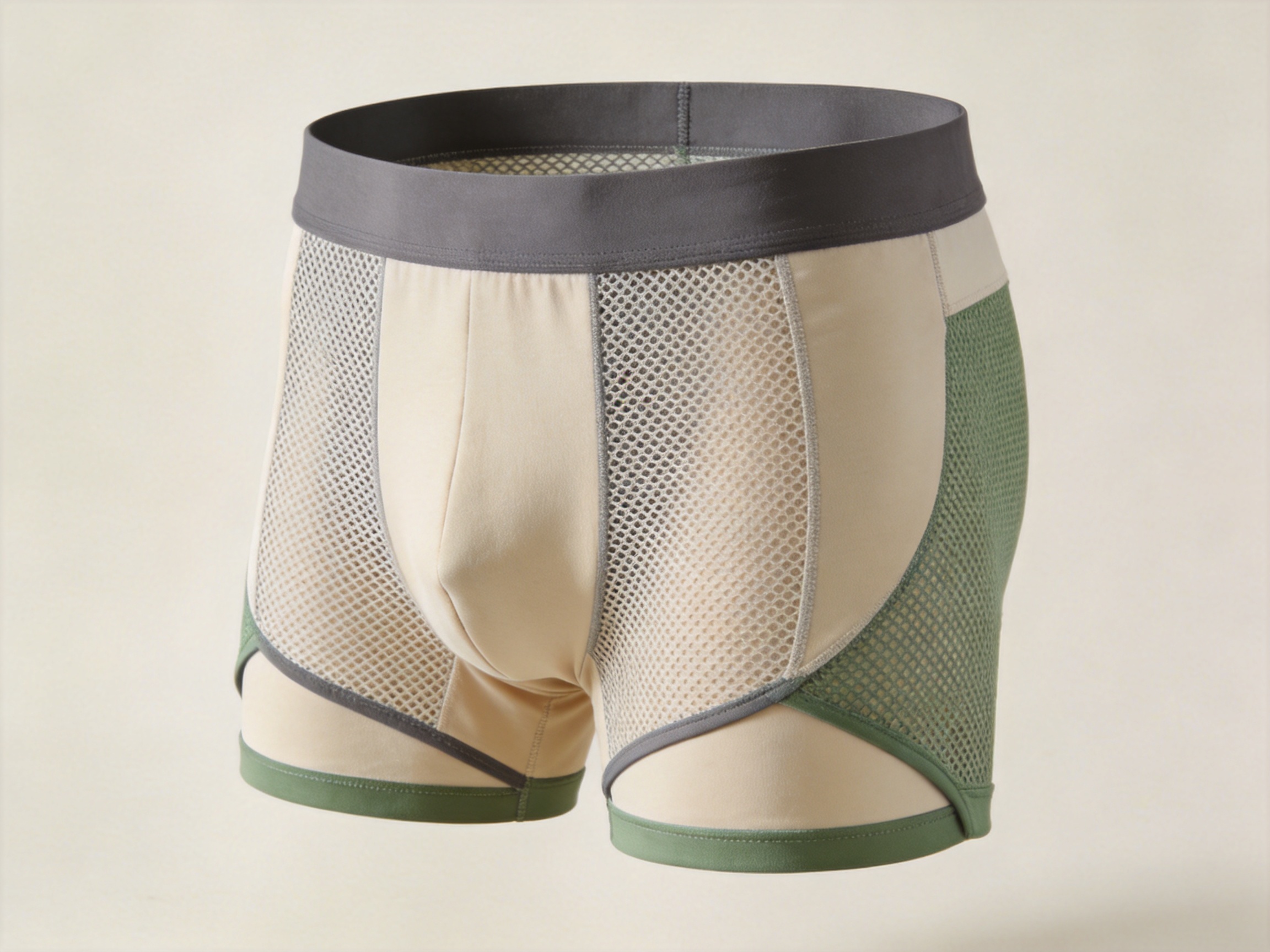
Designed under product reference THDY-035, these boxer briefs are developed for men who value all-day comfort and a fresher wearing experience. The strategically integrated mesh panel encourages airflow, while the bamboo-based fabric system helps manage perspiration. The result is an underwear product suitable for daily wear, commuting, travel, leisure, and moderate physical activity.
Behind the product is Nantong Tianhong Textile Technology Co., Ltd., an underwear manufacturer established in 2001 in Nantong, China, one of the country’s important textile production centers. The company specializes in the research, manufacturing, and sales of underwear products, offering OEM and ODM services to labels and buyers in Europe, North America, and China. Its experience in natural-fiber fabrics, functional textiles, product customization, and supply chain management supports the development of premium breathable underwear for international markets.
Men’s underwear has evolved from a simple foundational garment into a performance-oriented apparel category. Traditional briefs, loose boxers, and early boxer briefs often prioritized coverage or basic fit, but they did not always address heat accumulation, moisture, friction, or the need for improved movement. Today’s consumers are more aware of fabric composition and garment construction. They expect underwear to feel soft against the skin, remain stable during movement, and provide comfort in changing temperatures.
Boxer briefs have become popular because they combine the supportive profile of briefs with the extended leg coverage of boxers. Their close-fitting shape can help reduce fabric movement, while the longer silhouette offers coverage and may help minimize friction between the upper thighs. However, close-fitting underwear can also become uncomfortable if it traps heat or retains moisture. For this reason, ventilation and moisture management are central design considerations.
Mesh Panel Men’s Boxer Briefs address this challenge with a breathable construction based on bamboo mesh and bamboo jersey. The two materials work together to create a balance between airflow, softness, coverage, and everyday practicality. The mesh element supports ventilation, while the jersey component contributes to a smooth and comfortable body-contact surface.
The product is therefore positioned not simply as another pair of boxer briefs, but as a functional underwear solution for consumers who want a more comfortable experience without sacrificing a secure fit.
Mesh Panel Men’s Boxer Briefs are developed with bamboo mesh and bamboo jersey. Their core performance concept is straightforward: allow air to circulate, help manage perspiration, reduce the feeling of irritation, and maintain a stable fit throughout the day.
The bamboo mesh panel is the defining product feature. Mesh construction creates an open structure that encourages airflow through selected areas of the garment. This can be especially valuable in underwear, where heat and moisture may accumulate during extended wear. The mesh panel adds functional differentiation and gives brands an opportunity to offer a more performance-focused product within their underwear collections.
Bamboo jersey complements the mesh by providing a softer, smoother material for areas requiring greater coverage and comfortable contact with the body. The combination avoids relying on one fabric for every part of the garment. Instead, the construction uses different textile structures according to the needs of specific zones.
A moisture-wicking bamboo fabric system helps move perspiration away from the skin and supports a drier wearing environment. Although fabric performance depends on fiber composition, knitting, finishing, garment construction, and care conditions, the product is designed around efficient moisture management as one of its primary benefits.
The elastic waistband provides a secure fit without requiring complicated adjustment. A properly engineered waistband should remain stable during normal movement while avoiding unnecessary pressure. This feature is essential because even a breathable fabric will not create a satisfactory product if the garment shifts, rolls, or feels restrictive.
In product positioning, the boxer briefs can be presented as premium breathable underwear, organic bamboo underwear, sustainable underwear, performance underwear, or customized private-label underwear, depending on the buyer’s market and verified material certifications.
Breathability is one of the strongest advantages of a mesh-panel construction. The open structure of bamboo mesh supports air exchange in areas where heat may otherwise build up. Improved ventilation can contribute to a fresher sensation during long periods of sitting, walking, commuting, or everyday activity.
Compared with a fully dense fabric construction, a strategically placed mesh panel may offer a more effective balance between coverage and airflow. Consumers who find conventional underwear too warm may appreciate this difference. For brands, breathability also provides a clear and understandable product message that can be communicated through packaging, online descriptions, and retail merchandising.
Breathability is particularly relevant in warm climates, during travel, and in active lifestyles. It may also improve the perceived comfort of the garment when worn under trousers, workwear, uniforms, or casual clothing. The design does not depend solely on thinness. Instead, it uses fabric structure as part of the performance solution.
Perspiration can negatively affect the comfort of underwear by creating a damp feeling, increasing friction, and making the garment feel heavier. The bamboo-based fabric system in these boxer briefs is designed to help manage moisture efficiently. By supporting the movement of perspiration away from the skin and encouraging evaporation, the fabric can help the wearer feel drier.
Moisture management is especially important in close-fitting garments because the material remains near the body during wear. A suitable wicking structure can make the difference between underwear that feels acceptable for a short period and underwear that remains comfortable throughout a full day.
For product developers, moisture management also creates a strong point of differentiation. Many underwear products compete primarily through price or appearance. A technically considered moisture-wicking design gives brands an opportunity to compete through performance and user experience instead.
Underwear is worn directly against the skin, making softness a fundamental requirement. Bamboo jersey is selected for its comfortable hand feel and smooth surface. The product concept emphasizes reducing irritation and creating a pleasant next-to-skin experience.
Comfort is influenced by more than fiber selection. Seams, waistband pressure, panel placement, garment dimensions, stitch quality, fabric weight, and finishing all contribute to the final result. A professional underwear manufacturer must therefore consider the entire product system rather than treating fabric as an isolated component.
The combination of bamboo jersey and mesh can support a more refined comfort profile. The jersey offers a smooth foundation, while the mesh contributes ventilation without requiring the entire garment to use an open structure. This zoned approach can help maintain a balance between softness, coverage, and airflow.
A secure fit is essential for boxer briefs because the garment is designed to remain close to the body. The elastic waistband helps keep the product in place during regular movement. Stability can reduce the need for repeated adjustment and can contribute to a more confident wearing experience.
The waistband must be integrated carefully with the body of the garment. Its elasticity, width, recovery, attachment method, and finishing influence how it feels after repeated wear and laundering. Manufacturing experience is important because small differences in waistband construction can affect both comfort and perceived quality.
For private-label buyers, waistband design may also provide an opportunity for customization. Branding, color, woven labels, printed marks, and packaging can be developed according to the buyer’s requirements, subject to production specifications and order conditions.
Friction is a common source of discomfort in close-fitting underwear. It may result from fabric movement, rough seams, excessive moisture, poor fit, or unsuitable panel placement. The product is designed with comfort and irritation reduction in mind, using soft bamboo-based materials and a stable boxer-brief silhouette.
A smooth fabric surface can help create a more comfortable contact layer. Properly controlled seams and finishing can further support comfort. The aim is not merely to make the underwear soft when first removed from its packaging, but to help it remain comfortable through daily movement and extended use.
For consumers, reduced irritation is a practical benefit. For brands, it is also a meaningful quality attribute because comfort-related dissatisfaction is one of the reasons customers may not repurchase underwear. A product that performs well in everyday use can support stronger customer confidence and brand loyalty.
Bamboo-based underwear has strong appeal among consumers who are interested in natural-fiber apparel and more responsible textile choices. Bamboo materials can be positioned as part of a broader sustainability strategy, particularly when supported by traceable sourcing, credible certifications, responsible processing, and transparent product communication.
It is important for brands to make material and environmental claims accurately. The exact sustainability profile of a garment depends on the type of bamboo fiber, the manufacturing process, chemical inputs, energy use, water management, dyeing, finishing, packaging, transportation, and product lifespan. Buyers should therefore work with manufacturers that can provide relevant documentation and certification information for the specific product.
The company’s stated focus on environmentally friendly functional fabrics and traceable supply chain management provides a foundation for responsible product development. Certifications and standards associated with the company include FSC, OCS, OEKO-TEX 100, GOTS, WRAP, and BSCI. The applicability of any specific certification should be confirmed for the exact fabric, production order, and finished garment.
Bamboo mesh combines the appeal of bamboo-based textiles with the functional structure of mesh knitting. This combination is suitable for underwear because it addresses several common concerns at the same time: excessive heat, moisture retention, bulk, and the need for comfortable movement.
Mesh is not necessarily intended to replace every other fabric in a garment. In many successful apparel products, mesh is used selectively. A panel can be placed where additional airflow is valuable while preserving denser jersey fabric in areas where coverage, softness, or support are more important. This creates a more purposeful construction than a uniform fabric layout.
Bamboo jersey provides a complementary surface. Its smooth appearance can support a premium visual presentation, while its soft touch is suitable for areas that remain in direct contact with the body. The combination can be adapted for different weights, colors, sizes, and brand identities according to development requirements.
From a product-development standpoint, the use of two related bamboo fabric structures can also create a cohesive material story. Retailers can explain that the underwear uses a coordinated bamboo textile system rather than a random combination of materials. This makes the functional concept easier for consumers to understand.
The men’s underwear market includes cotton boxer briefs, synthetic performance underwear, modal garments, basic jersey styles, and low-cost blended products. Mesh Panel Men’s Boxer Briefs compete by combining several desirable attributes instead of relying on a single feature.
| Product consideration | Mesh Panel Bamboo Boxer Briefs | Basic dense-fabric boxer briefs | General synthetic performance styles |
|---|---|---|---|
| Airflow | Supported by a strategically integrated mesh panel | Depends primarily on fabric weight and fit | May vary according to knit structure and finishing |
| Moisture management | Designed around moisture-wicking bamboo fabric | Varies by fiber and construction | Often a central performance feature |
| Next-to-skin feel | Bamboo jersey and soft textile construction | Can range from soft to coarse depending on quality | May feel smooth but can be less natural to some consumers |
| Material positioning | Natural-fiber and sustainability-oriented product story | Often positioned around familiarity and value | Often positioned around technical performance |
| Fit stability | Supported by an elastic waistband and close boxer-brief silhouette | Depends on pattern and waistband quality | Depends on pattern, stretch, and elastic recovery |
| Brand differentiation | Combines bamboo, mesh, breathability, and comfort | May require stronger styling or price differentiation | Often differentiated through technical claims |
This comparison does not mean that one fiber or construction is ideal for every consumer. Instead, it shows how the product occupies a distinctive position. It offers a natural-fiber story while retaining a performance-oriented design. It emphasizes breathability without abandoning coverage. It seeks softness while also addressing moisture management.
Compared with basic dense-fabric boxer briefs, the mesh panel can provide a clearer ventilation advantage. Compared with some fully synthetic performance products, bamboo materials may appeal to consumers who prefer a softer or more natural-feeling textile experience. Compared with inexpensive underwear, the product has more opportunities for value creation through material selection, construction, comfort, certification, and customization.
Nantong Tianhong Textile Technology Co., Ltd. was established in 2001 and is located in Nantong, Jiangsu Province, China. Nantong is widely recognized as an important textile industry hub, providing access to textile knowledge, manufacturing resources, skilled labor, and supporting supply networks.
More than two decades of operation provide a practical foundation for underwear development. Experience in the category helps a manufacturer understand the relationship between fabric selection, pattern engineering, sewing operations, finishing, quality control, packaging, and delivery. These factors are especially important for boxer briefs because the garment combines stretch materials, close-fitting dimensions, curved seams, elastic components, and direct skin contact.
A manufacturer with category experience can also help buyers identify potential issues earlier in the development process. These may include excessive waistband pressure, leg opening instability, seam irritation, mesh distortion, color inconsistency, shrinkage, or poor recovery after laundering.
The company provides OEM and ODM products and services. OEM production allows a buyer to manufacture according to established specifications, branding requirements, packaging instructions, and quality standards. ODM support can be useful when a buyer wants assistance with product concepts, fabric selection, construction details, sampling, or adaptation of an existing design.
For Mesh Panel Men’s Boxer Briefs, customization may involve fabric composition, mesh placement, color, waistband design, logo application, labeling, packaging, size range, stitching details, and product presentation. The exact scope depends on order quantity, technical feasibility, sampling approval, and production planning.
OEM and ODM support is valuable because underwear brands often need more than a finished garment. They need a repeatable product platform that can be modified for different markets. For example, a buyer may want a core breathable boxer brief in several colors, seasonal collections, extended sizes, or coordinated products for a wider men’s underwear range.
The company focuses on sustainable development and environmentally friendly functional fabrics. This orientation is relevant to the product because its primary value comes from the relationship between fiber choice and garment performance.
Functional fabric development involves understanding yarn characteristics, knitting structures, weight, elasticity, moisture behavior, drying, colorfastness, pilling, dimensional stability, and finishing. For bamboo mesh boxer briefs, these considerations must be balanced carefully. A mesh that is too open may compromise coverage or stability, while a mesh that is too dense may reduce the intended ventilation benefit.
The bamboo jersey must also be selected and finished to work with the mesh panel. Differences in stretch, recovery, shrinkage, or weight between the two materials can affect garment shape. Careful development helps the finished product remain visually balanced and comfortable after production and laundering.
Traceability is increasingly important in international apparel sourcing. Buyers want greater visibility into material origins, production stages, factory practices, testing, and documentation. Traceable supply chain management can help support more reliable purchasing decisions and more accurate sustainability communication.
The company states that it focuses on traceable supply chain management. In practice, buyers should establish documentation requirements at the beginning of a project. These may include fiber certificates, transaction documents, test reports, approved lab-dip records, production specifications, inspection records, and packaging confirmations.
A traceable process is particularly valuable when the product is marketed using terms such as organic, sustainable, certified, or environmentally responsible. Such terms should be connected to verifiable evidence rather than used only as promotional language.
The company’s stated certifications and standards include FSC, OCS, OEKO-TEX 100, GOTS, WRAP, and BSCI. These standards represent different areas of concern, including forest-related material responsibility, organic content, harmful-substance testing, organic textile processing, workplace practices, and social compliance.
Certification requirements vary according to the material, facility, production chain, and customer program. A buyer should confirm which certificate applies to the specific order and whether the finished product can carry a particular claim. Correct certification management protects both the buyer and the manufacturer from inaccurate labeling.
Social compliance is also relevant to brand reputation. Retailers and consumers increasingly expect apparel suppliers to maintain responsible working conditions. Standards and audits can support a broader approach to ethical manufacturing, although buyers should review the scope, validity, and current status of any audit or certification.
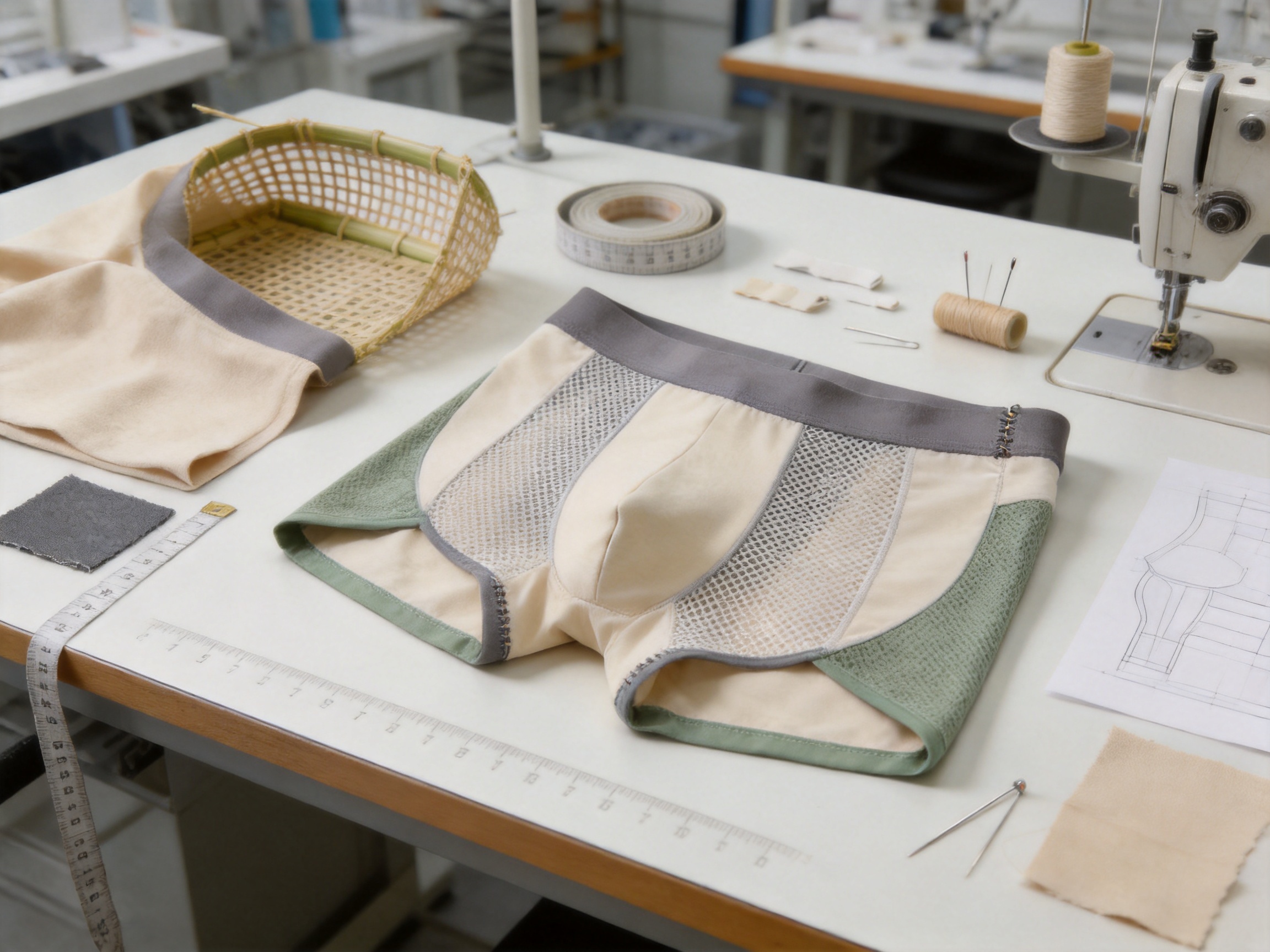
Manufacturing begins with a clear product brief. The brief should define the intended market, target consumer, garment silhouette, fabric requirements, color palette, size range, branding, packaging, performance expectations, and inspection criteria.
For this product, the brief would normally identify bamboo mesh and bamboo jersey as key materials. It should also specify the desired breathability concept, moisture-management positioning, waistband construction, seam requirements, and acceptable tolerances. Clear specifications reduce misunderstandings and make sample evaluation more objective.
Fabric selection involves reviewing composition, weight, stretch, recovery, hand feel, color, dimensional stability, and performance characteristics. The mesh and jersey should be evaluated both separately and together. A fabric that appears suitable by itself may not perform correctly when combined with another structure.
Material verification can include composition testing, colorfastness evaluation, shrinkage checks, pilling assessment, stretch and recovery testing, and harmful-substance testing where applicable. If a buyer requires organic or other certified claims, the relevant documentation should be reviewed before production.
Pattern engineering determines how the boxer briefs sit on the body and how the mesh panel integrates with the overall silhouette. The pattern must account for stretch, body movement, rise, leg length, pouch shaping, side seams, waistband attachment, and size grading.
Panel placement is a particularly important design decision. The mesh should be positioned where it can contribute to airflow without compromising support, modesty, or durability. The final layout may vary according to the target market and intended use.
Pattern grading must maintain a consistent fit across the size range. Simply enlarging or reducing one base size is not always sufficient because body proportions can change across sizes. Experienced technical teams review the relationship between waist, hip, rise, leg opening, and length to produce a more balanced fit.
After fabric approval, the materials are prepared for cutting. Mesh requires careful handling because its open structure may be more sensitive to distortion, snagging, or stretching than a dense jersey. Cutting accuracy is important because small inconsistencies can affect seam alignment and final appearance.
Panel preparation should maintain the direction, grain, stretch orientation, and color consistency of each material. If the mesh and jersey have different stretch directions, the cutting plan must account for this difference. Correct preparation supports a more stable garment during sewing and use.
Sewing operations bring the separate components together. The sequence may include joining body panels, attaching the mesh section, constructing the leg openings, applying the waistband, reinforcing stress points, and trimming or covering seams as required.
Seam construction should be selected according to comfort, strength, appearance, and production efficiency. Underwear seams must be durable enough for repeated laundering while remaining comfortable against the skin. Excessive bulk or rough finishing can reduce the value of an otherwise high-quality fabric.
The waistband is assembled with particular attention to elasticity and recovery. It should be attached evenly around the garment so that the finished product does not twist or create inconsistent pressure. Logo application, if required, should also be evaluated for durability and comfort.
Finishing may include thread trimming, pressing, laundering or other approved treatments, measurement checks, visual inspection, folding, labeling, and packaging. The garment should be reviewed for defects such as skipped stitches, open seams, fabric holes, uneven mesh, color variation, waistband twisting, stains, incorrect labels, or measurement deviations.
Quality control can be performed at multiple stages rather than only at the end of production. In-process checks may identify issues while they are still easier to correct. Final inspection confirms whether the finished goods meet the approved sample, technical package, and buyer requirements.
A consistent inspection system is especially important for export orders. International buyers may have detailed standards for appearance, measurements, packaging, labeling, carton marking, and sampling procedures. Early agreement on these requirements can help reduce delays and disputes.
Quality control for bamboo mesh boxer briefs should cover both visible appearance and functional performance. A garment may look attractive but still fail to meet expectations if the waistband loses recovery, the mesh distorts, or the seams become uncomfortable after washing.
| Quality area | What should be reviewed | Why it matters |
|---|---|---|
| Fabric composition | Fiber content, approved materials, and applicable certificates | Supports accurate labeling and product claims |
| Fabric appearance | Color, surface uniformity, holes, streaks, and contamination | Protects visual quality and consumer confidence |
| Mesh construction | Panel alignment, openness, stability, and absence of snags | Maintains breathability and garment integrity |
| Measurements | Waist, rise, leg length, opening, and overall dimensions | Supports consistent fit across production |
| Seams | Stitch density, strength, neatness, and comfort | Reduces failures and irritation during wear |
| Waistband | Attachment, elasticity, recovery, twisting, and pressure | Maintains secure fit and comfort |
| Colorfastness | Resistance to washing, rubbing, perspiration, and light where relevant | Helps preserve appearance during use |
| Packaging | Labels, folding, polybags, cartons, and shipping marks | Supports retail readiness and logistics accuracy |
Testing procedures should be agreed with the buyer based on the destination market and product requirements. The final inspection method may include acceptable quality limits, measurement tolerances, sample sizes, and laboratory tests. A professional manufacturing relationship depends on transparent communication about these standards before bulk production begins.
One of the strongest advantages of working with an OEM and ODM manufacturer is the ability to adapt the product to a buyer’s commercial strategy. Mesh Panel Men’s Boxer Briefs can serve as a base design for multiple market positions.
Material customization may involve different bamboo jersey weights, mesh structures, stretch levels, colors, and finishes. Buyers can evaluate how each variation influences softness, airflow, opacity, support, and cost. Where certified or organic claims are required, documentation should be integrated into the development process from the beginning.
Fit customization can include changes to rise height, leg length, waistband width, pouch construction, leg opening, and overall compression. Different markets may prefer different silhouettes. Some consumers want a close athletic fit, while others prefer a more relaxed boxer-brief profile.
Branding customization can include woven labels, printed labels, waistband logos, hangtags, inserts, color systems, and retail packaging. A premium presentation can reinforce the product’s material and performance story. Packaging should communicate benefits clearly without making claims that cannot be verified.
Size customization is also important. A brand may require a standard size range or may wish to develop extended sizing. Consistent grading and fit approval are critical because underwear customers are particularly sensitive to size accuracy and comfort.
Seasonal and regional customization can create additional opportunities. Lightweight breathable styles may be promoted for warm-weather collections, while a denser bamboo jersey variation may be suitable for cooler seasons. Different colors and packaging systems can be developed for department stores, e-commerce, specialty underwear retailers, or private-label programs.
Sustainability is a major consideration in textile purchasing, but it should be approached with precision. Bamboo underwear can be attractive to consumers seeking natural-fiber products, yet the environmental impact depends on the complete lifecycle of the material and garment.
Responsible communication should distinguish between verified facts and general product benefits. For example, a brand may state the confirmed fiber composition and cite applicable certifications. It should avoid broad claims such as “zero impact” or “completely eco-friendly” unless those statements are supported by robust evidence.
Durability is also part of sustainability. A comfortable garment that maintains its shape and performance through repeated use can provide greater practical value than a product that must be replaced frequently. Quality construction, appropriate care instructions, and reliable materials all contribute to longer product use.
Manufacturing efficiency, responsible workplace practices, traceable materials, and appropriate packaging should be considered together. The company’s focus on environmentally friendly functional fabrics and traceable supply chain management aligns with this broader approach.
For buyers, the most effective sustainability strategy is usually a combination of verified material information, responsible sourcing, quality control, realistic claims, and clear consumer care guidance. This approach is more credible than focusing on one material label while ignoring the rest of the supply chain.
Correct care helps preserve the comfort and appearance of bamboo mesh boxer briefs. The final care label should be based on fabric testing and the approved production specification. In general, consumers should follow the manufacturer’s instructions regarding washing temperature, detergent, tumble drying, ironing, and bleaching.
Because mesh is an open textile structure, consumers should avoid practices that may cause snagging or excessive abrasion. Washing with similar garments and using suitable laundry settings may help protect the fabric. The waistband and elastic components also benefit from avoiding unnecessarily harsh treatment.
Clear care instructions can support customer satisfaction. They help consumers understand how to maintain the garment and may reduce preventable complaints related to shrinkage, color change, or distortion. For retailers, care information should be consistent across the garment label, packaging, website, and customer service materials.
The wearing experience is shaped by the combination of airflow, softness, moisture management, fit stability, and freedom of movement. These benefits are most valuable when they work together. Breathability without a secure fit may be frustrating, while a stable fit without moisture management may feel uncomfortable in warm conditions.
Mesh Panel Men’s Boxer Briefs are suitable for a wide range of retail and private-label applications. They can be positioned as everyday underwear for consumers who want a more comfortable basic garment. They may also be offered as a premium upgrade for customers willing to pay more for bamboo materials and functional construction.
The product is relevant to active lifestyle collections, although it should not be marketed as specialized sportswear unless the design and testing support that claim. Its breathability and moisture-wicking concept may appeal to consumers who walk, travel, commute, work in warm environments, or spend long periods seated.
Travel and businesswear markets can also benefit from lightweight, breathable underwear. Consumers often value garments that remain comfortable over long days and that pack efficiently. The product’s bamboo jersey and mesh construction can provide a distinctive story for travel-focused apparel collections.
Private-label retailers can use the boxer briefs as part of a broader bamboo underwear assortment. Coordinated products may include men’s briefs, women’s underwear, children’s underwear, undershirts, sleepwear, or other breathable basics, provided each design is developed for its specific fit and performance requirements.
Geographically, the product can be adapted for customers in Europe, North America, China, and other international markets. Fit, labeling, certification, packaging, and consumer communication should be adjusted according to local requirements and market expectations.
A successful underwear product depends on the relationship between design and manufacturing. A creative concept may fail if the fabric cannot be sourced consistently, the mesh is difficult to sew, the waistband is unstable, or quality standards are unclear. Conversely, a capable factory can help turn a general concept into a repeatable commercial product.
Nantong Tianhong’s experience in underwear research, manufacturing, and sales provides an integrated foundation for product development. Its OEM and ODM services allow buyers to approach the product as a complete project rather than as a simple order for finished garments.
The company’s relationships with clients in Europe, North America, and China indicate experience serving different commercial environments. International experience can help with communication, documentation, production planning, and awareness of buyer expectations. Each project still requires detailed confirmation, but an established export-oriented manufacturer can provide an important starting point.
Research and innovation are also central to the company’s stated mission. For a product category influenced by changes in fiber technology, sustainability expectations, body comfort, and retail competition, ongoing development is valuable. Manufacturers that continue improving fabrics and construction methods are better positioned to support brands seeking meaningful differentiation.
For brands, the product offers several commercial advantages. First, it has a clear story: breathable bamboo mesh boxer briefs designed for comfort and moisture management. Second, it can be adapted through OEM and ODM services. Third, it aligns with consumer interest in natural-fiber materials and responsible sourcing. Fourth, it can be placed at different price levels depending on fabric, packaging, customization, and certification requirements.
A clear product story supports online merchandising. Product pages can explain the function of the mesh panel, the role of bamboo jersey, the purpose of moisture-wicking construction, and the benefits of the elastic waistband. Images, size information, care instructions, and accurate technical details should support these claims.
Retailers may also use the product to create a premium tier within their men’s underwear assortment. Instead of competing only on price, the retailer can offer customers a choice between basic underwear and a more technically considered bamboo-based style.
Repeat purchase potential is another important consideration. Underwear is a replenishment category, and consumers who find a comfortable fit may return for additional colors or multipacks. Consistent quality and stable sizing are essential to realizing this opportunity.
For wholesale buyers, the product can be developed as a core program with seasonal color updates. For private-label brands, it can serve as a recognizable signature style that communicates comfort, sustainability, and functional design.
Before placing a production order, buyers should confirm the technical and commercial details of the project. The following checklist can help organize discussions with the manufacturer.
| Development stage | Recommended buyer confirmation |
|---|---|
| Concept | Target market, consumer profile, positioning, and intended retail price |
| Materials | Bamboo fiber type, jersey and mesh specifications, colors, stretch, and certificates |
| Fit | Size chart, base size, grading method, rise, leg length, and waistband requirements |
| Performance | Breathability, moisture-management expectations, colorfastness, shrinkage, and durability tests |
| Branding | Logo placement, labels, waistband marks, hangtags, inserts, and packaging |
| Sampling | Prototype review, fit comments, fabric approval, revisions, and final pre-production sample |
| Production | Minimum quantities, lead time, inspection method, packaging, and shipping documentation |
| Compliance | Required standards, audit documents, restricted-substance requirements, and market labeling |
Taking time to confirm these points can reduce production risk. It also helps ensure that the final product reflects the buyer’s intended positioning rather than becoming a generic interpretation of the original concept.
The product uses a bamboo mesh panel with an open textile structure that supports airflow. The mesh is combined with bamboo jersey so that the garment can provide ventilation while maintaining coverage and a soft next-to-skin surface.
The stated materials are bamboo mesh and bamboo jersey. Exact fiber percentages, fabric weights, stretch levels, and finishing details should be confirmed in the technical specification for the specific production order.
The bamboo-based fabric system is designed to wick and manage perspiration, helping the wearer feel drier and more comfortable. Actual performance depends on fabric construction, garment fit, activity level, climate, and care practices.
Yes. The product is designed for daily comfort and can be used for commuting, work, travel, leisure, and other ordinary activities. Buyers seeking to market it for specialized athletic use should confirm that the product has the testing and construction required for that claim.
The elastic waistband helps keep the boxer briefs securely in place during movement. Its comfort depends on width, elasticity, recovery, attachment, and the relationship between the waistband and the garment pattern.
As an OEM and ODM product, it can be discussed for customization in areas such as fabric, color, mesh placement, sizing, waistband design, branding, labels, packaging, and fit. The available options should be confirmed according to order volume and technical requirements.
Buyers can discuss certification requirements with the manufacturer. The company’s stated certifications and standards include FSC, OCS, OEKO-TEX 100, GOTS, WRAP, and BSCI. The specific applicability of a certification must be verified for the material and finished product involved in the order.
Bamboo-based textiles can support a natural-fiber and sustainability-oriented product position, but environmental performance depends on the full supply chain, processing method, energy use, water management, finishing, packaging, and product lifespan. Environmental claims should be based on verified information.
Buyers should approve the fabric, color, measurements, fit, mesh placement, waistband, labels, packaging, testing requirements, certifications, inspection standards, and pre-production sample. Written specifications are strongly recommended.
Nantong Tianhong Textile Technology Co., Ltd. is located in Nantong, Jiangsu Province, China. Nantong is an important center for textile production and supply chain activity.
The company states that it has developed long-term partnerships with clients in Europe, North America, and China. Its services include OEM and ODM manufacturing for underwear products.
The main advantage is the combination of bamboo-based materials, a breathable mesh panel, moisture-wicking design, a soft jersey surface, and a secure elastic waistband. This combination gives the product a clear position between basic underwear and purely synthetic performance garments.
Mesh Panel Men’s Boxer Briefs offer a thoughtful response to the changing expectations of the underwear market. Their design combines bamboo mesh for airflow, bamboo jersey for softness and coverage, moisture-wicking construction for a drier sensation, and an elastic waistband for a stable fit.
The product’s competitive value comes from the interaction of these features. It is not dependent only on a natural-fiber label, a mesh panel, or a performance claim. Instead, it brings together material selection, textile structure, fit, comfort, and manufacturing expertise in one underwear solution.
For buyers, the product also represents a flexible OEM and ODM opportunity. It can be adapted through fabric specifications, colors, sizing, branding, packaging, certifications, and market-specific requirements. This flexibility allows retailers and private-label brands to develop an underwear collection that is both commercially distinctive and aligned with consumer interest in breathable, comfortable, and responsibly developed garments.
Nantong Tianhong Textile Technology Co., Ltd. supports this product concept through long-term textile industry experience, underwear manufacturing capabilities, functional-fabric development, international customer experience, and a stated commitment to sustainable development and traceable supply chain management. Its awareness of standards including FSC, OCS, OEKO-TEX 100, GOTS, WRAP, and BSCI further supports structured product development, subject to order-specific verification.
As the underwear market continues to move toward comfort, performance, customization, and more responsible sourcing, bamboo mesh boxer briefs have strong potential as a premium everyday product. With accurate specifications, careful sampling, controlled production, and transparent communication, they can provide a reliable foundation for brands seeking to offer modern breathable underwear with meaningful functional and material differentiation.
1. Company product information for Mesh Panel Men’s Boxer Briefs, product reference THDY-035.
2. Company information for Nantong Tianhong Textile Technology Co., Ltd., including manufacturing history, OEM and ODM services, textile focus, and international partnerships.
3. General textile quality-control principles for knitted fabrics, stretch garments, underwear construction, and apparel inspection.
4. General guidance on bamboo-based textile materials, moisture management, fabric structure, and responsible product communication.
5. General reference materials concerning FSC, OCS, OEKO-TEX 100, GOTS, WRAP, and BSCI standards and certification practices.

Copyright © Nantong Tianhong Textile Technology Co., Ltd. All Rights Reserved.
 Room 806, Building D, Jingyang Plaza, Chongchuan District, Nantong City, Jiangsu Province,china


 English
 Español
 русский
 عربى
عربى