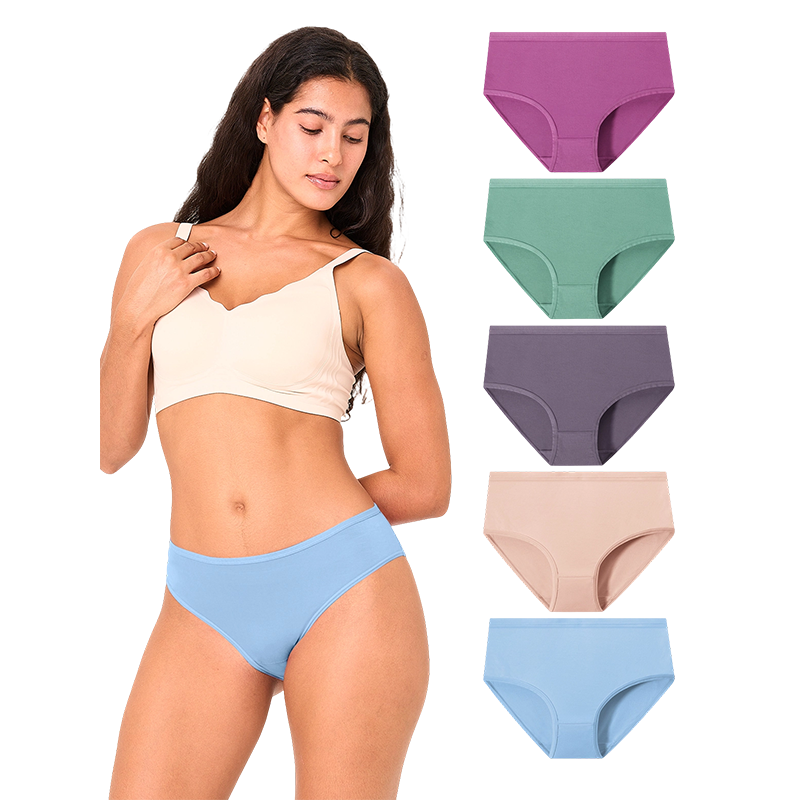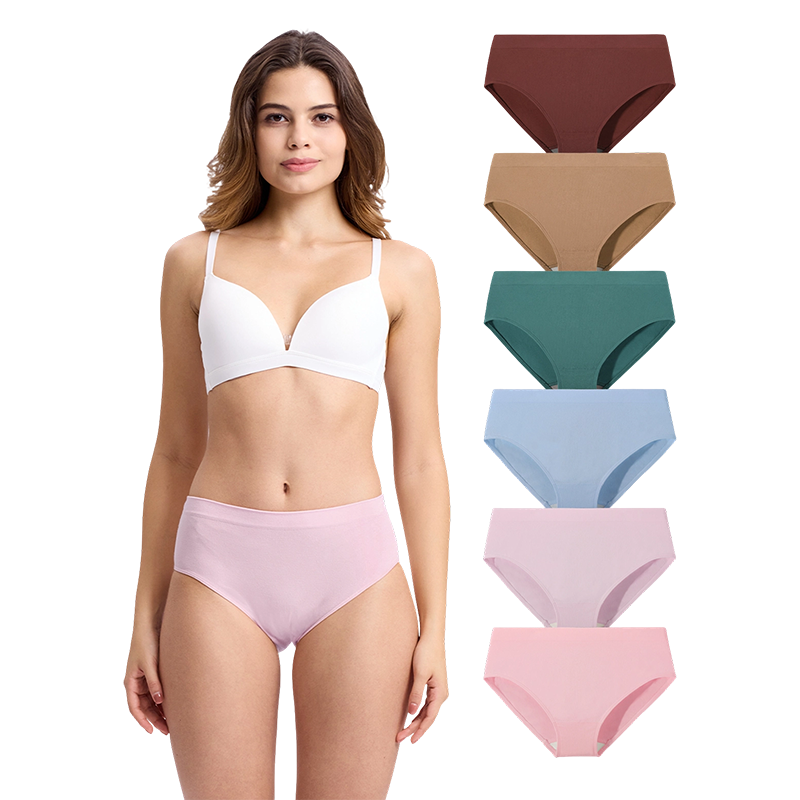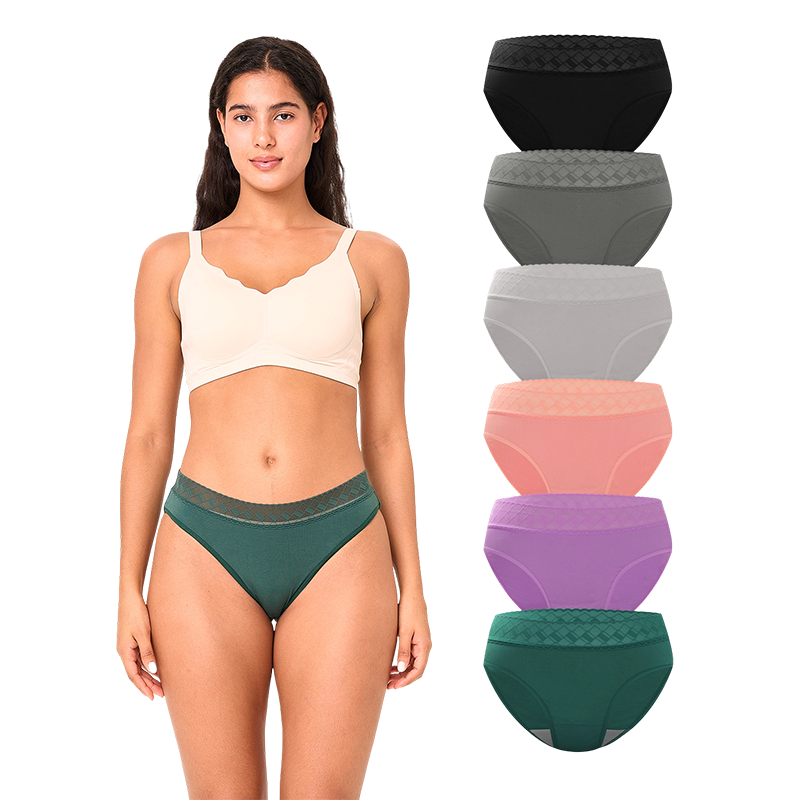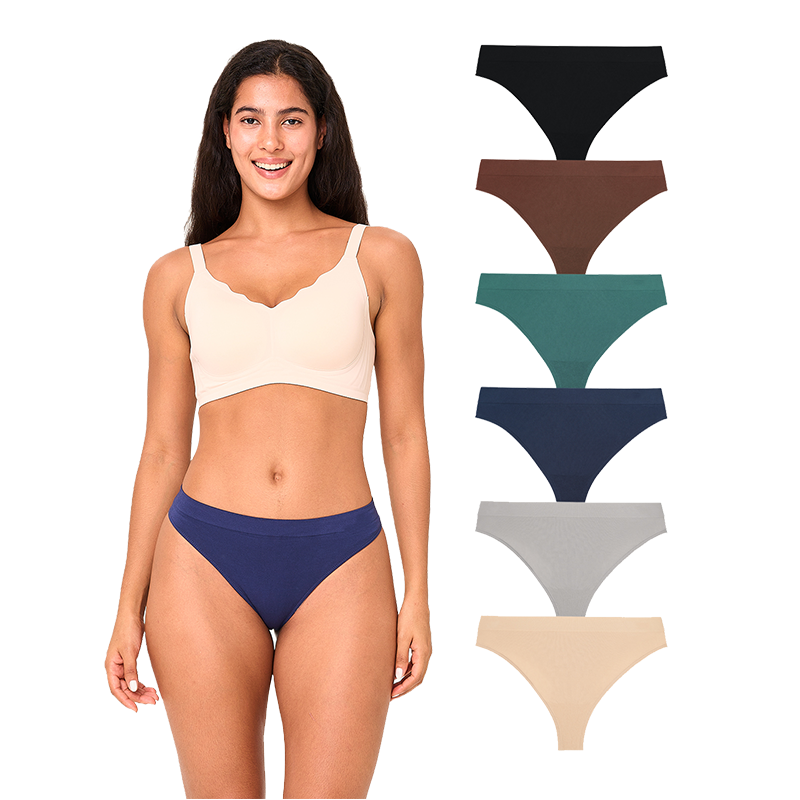
Content
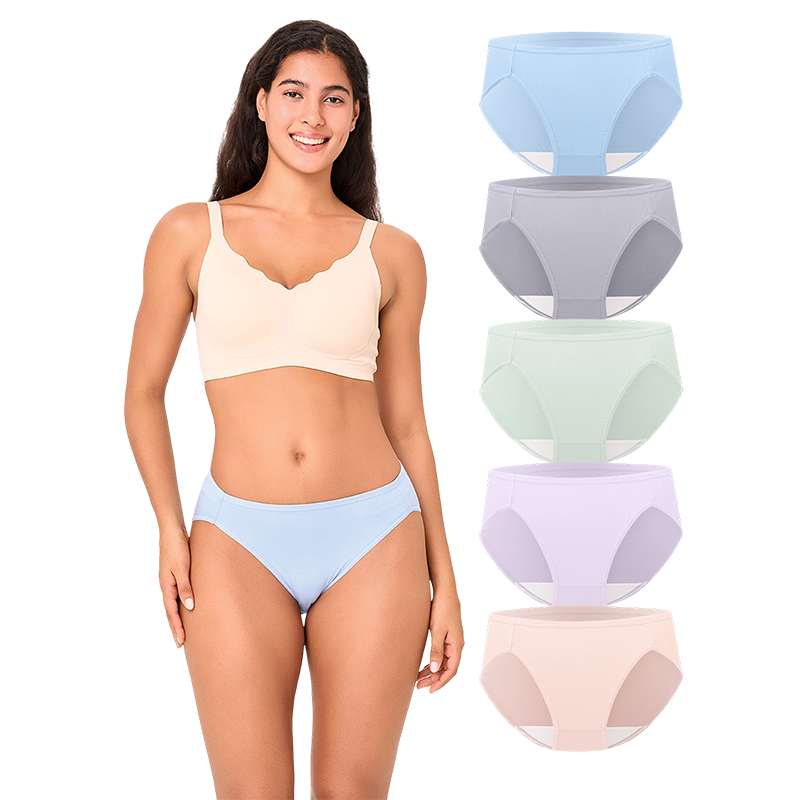
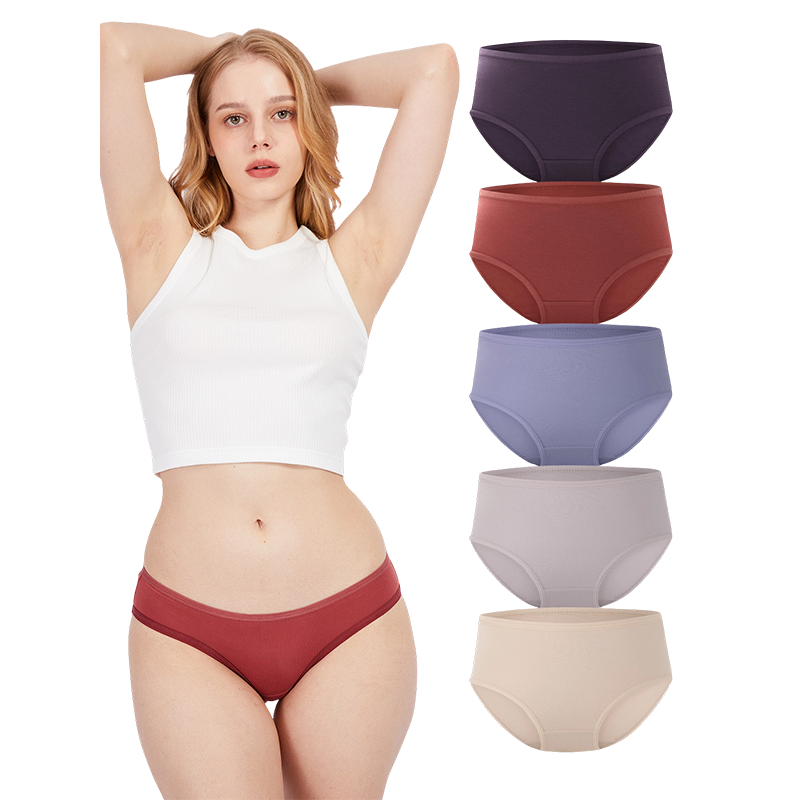
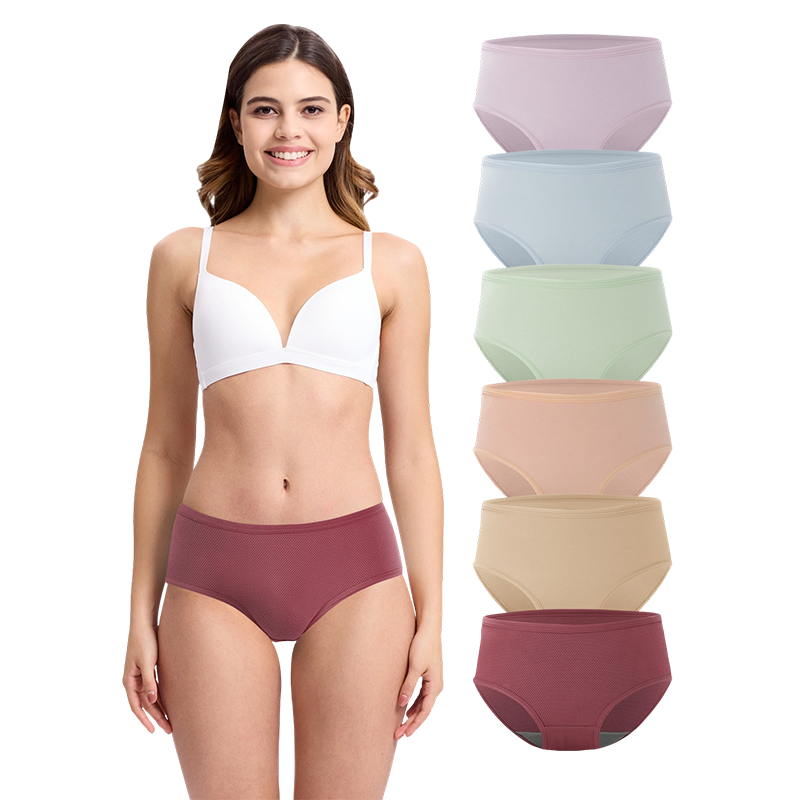
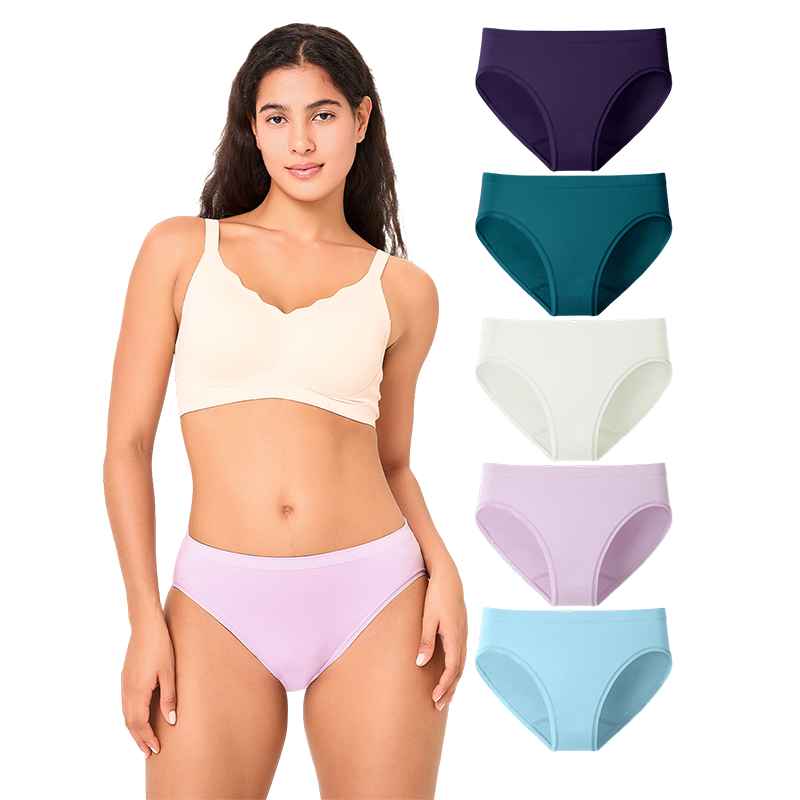
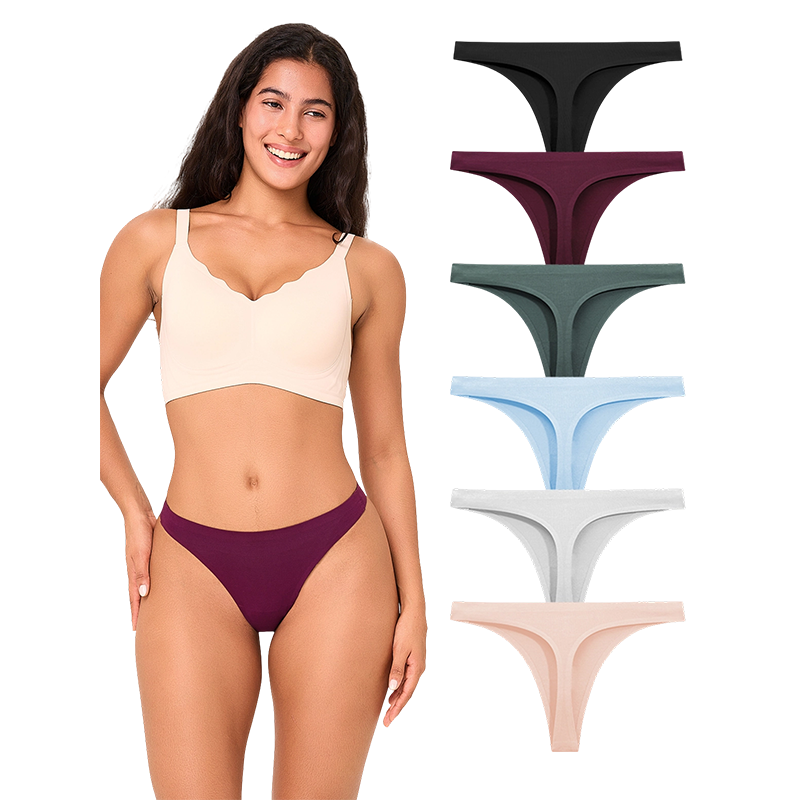
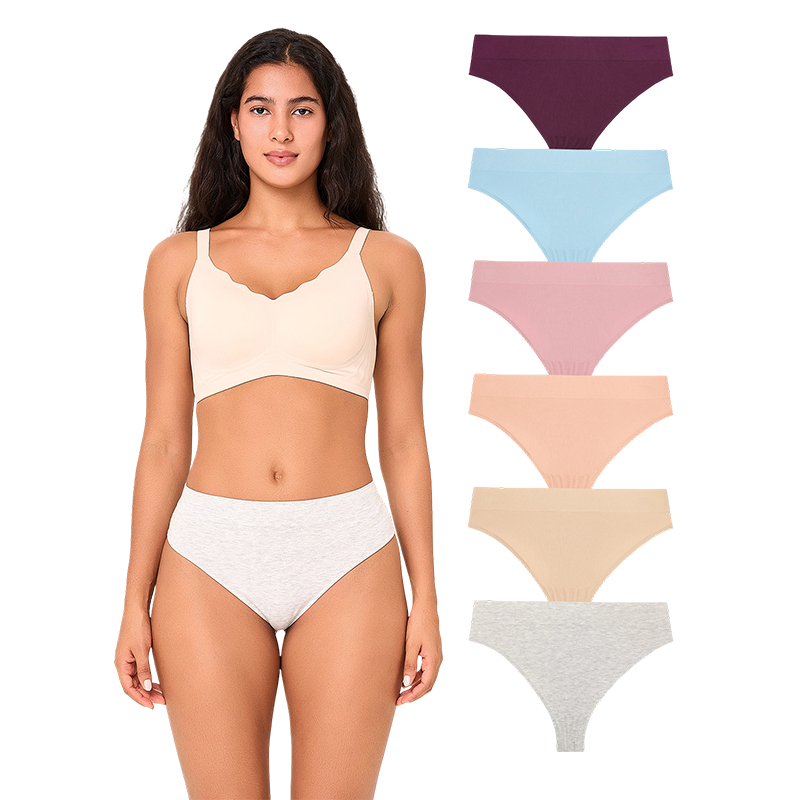
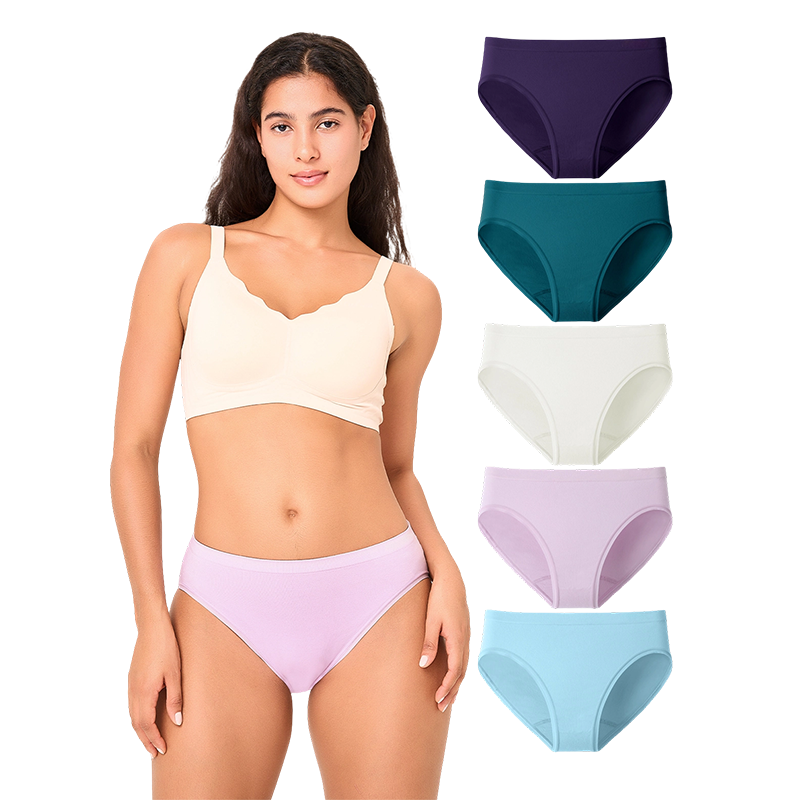
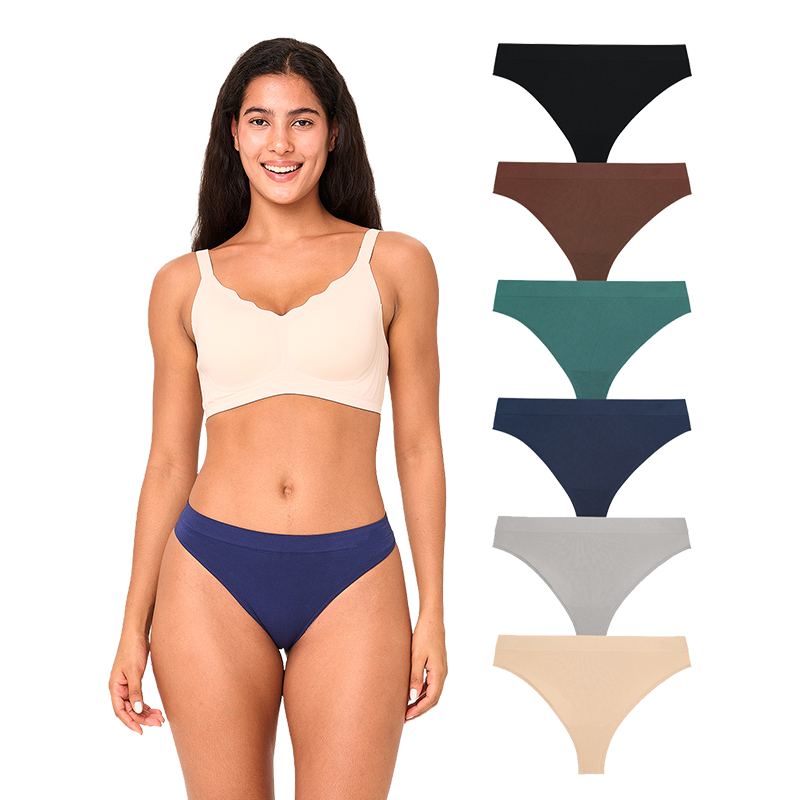
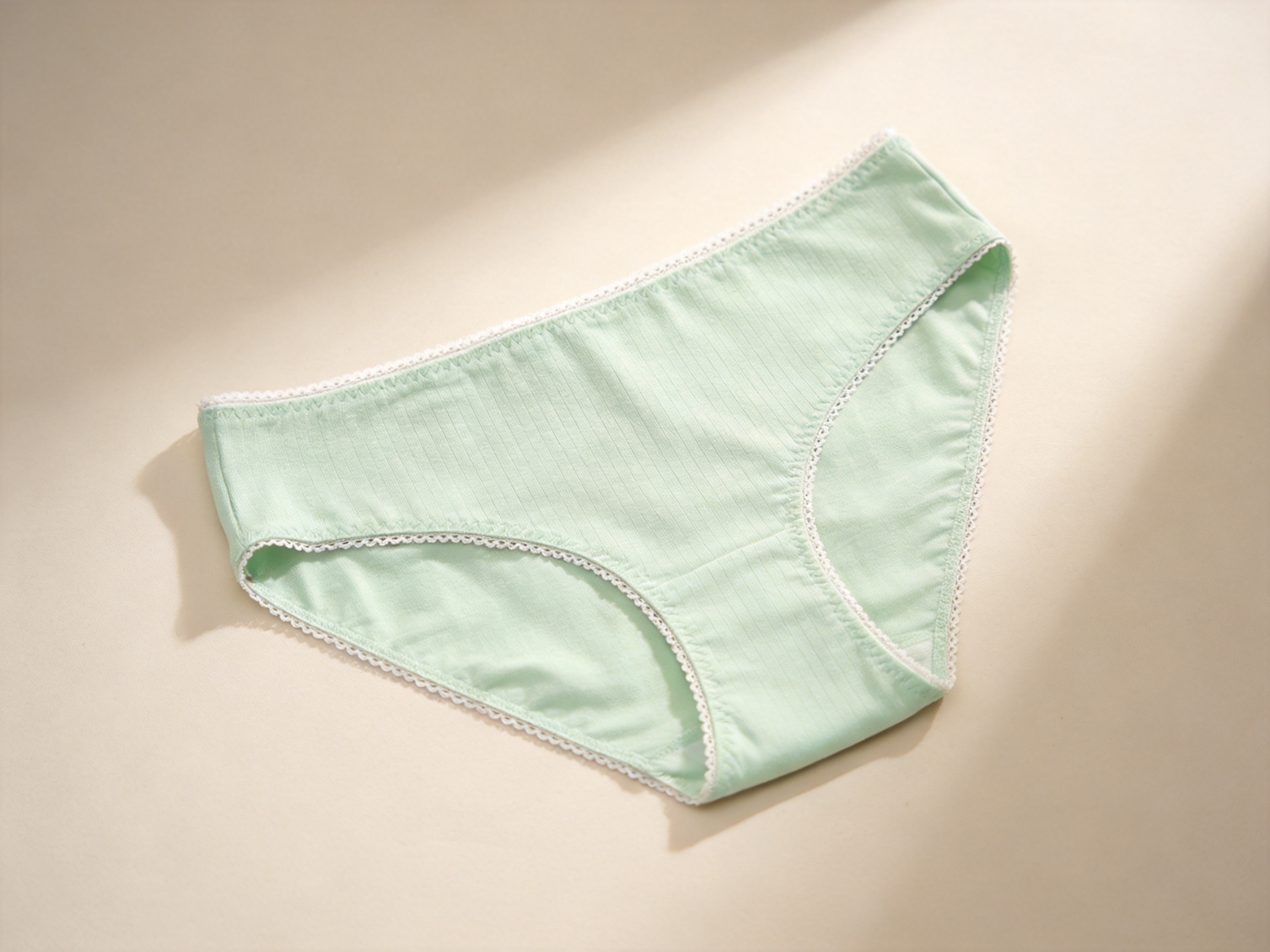
Lace Elastic Trim Bikini Underwear is a practical premium underwear option for women who want breathability, moisture management, soft stretch, and a feminine finish in one garment. Its construction combines bamboo viscose stretch drop-needle jersey with lace elastic trim, creating a lightweight brief that supports everyday comfort without restrictive leg pressure. The fabric is designed to help move moisture away from the skin, improve airflow, and provide a smooth, flexible fit.
Compared with conventional polyester-rich or poorly finished underwear, this bikini brief offers a stronger comfort proposition through its bamboo-based fiber content, carefully processed stretch material, high-temperature steam-shrunk lace and needle edges, and no-constriction leg opening. It is also suitable for OEM and ODM development because the product can be adapted through fabric composition, colors, trims, sizing, packaging, labeling, and production specifications.
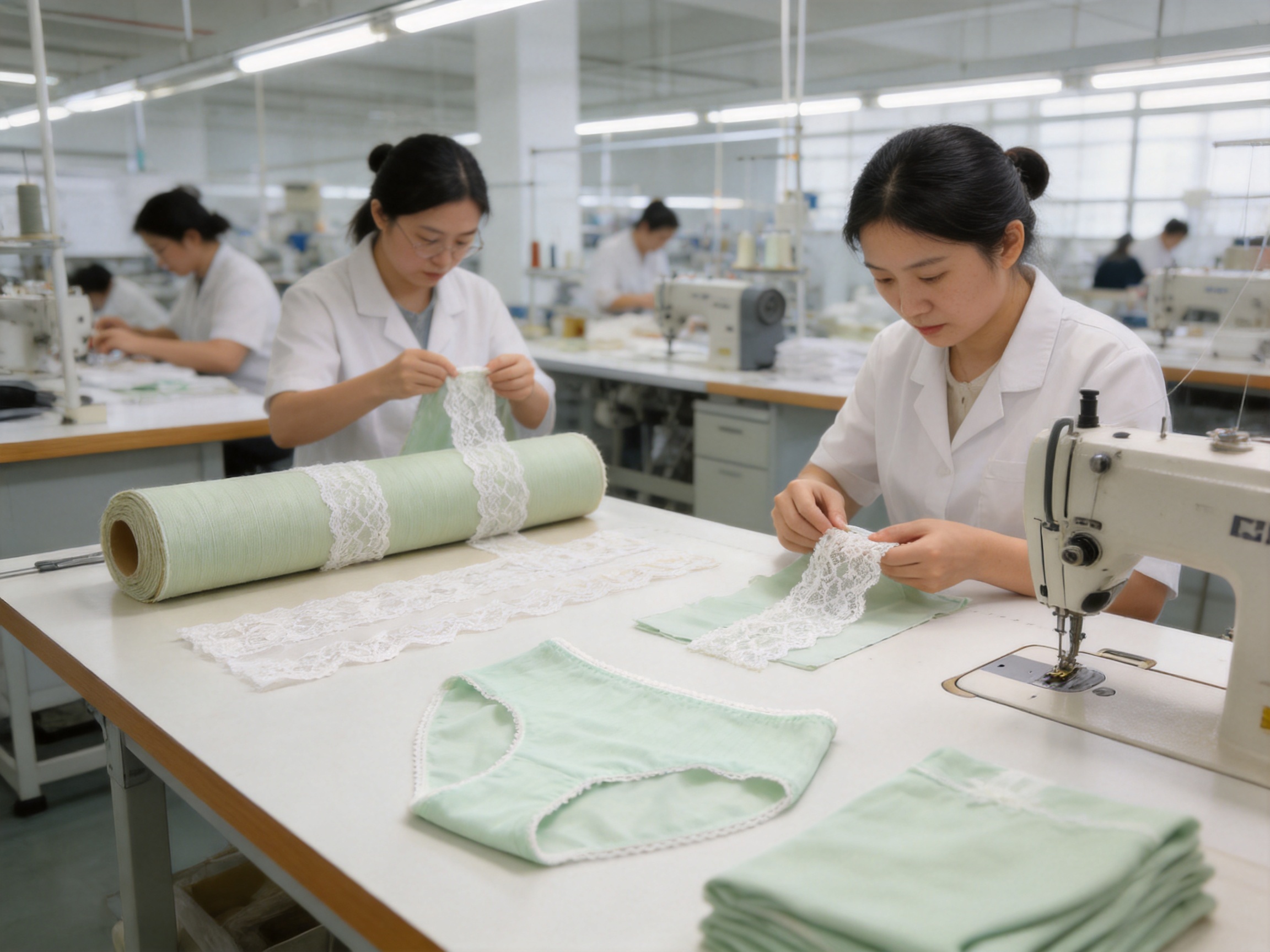
Nantong Tianhong Textile Technology Co., Ltd. manufactures this type of underwear through an integrated process covering fabric selection, cutting, sewing, lace application, finishing, quality inspection, and order coordination. Its experience in underwear manufacturing, functional natural-fiber fabrics, traceable supply chain management, and international compliance systems makes it a suitable manufacturing partner for retailers, private labels, wholesalers, and established apparel brands seeking premium breathable underwear.
| Product element | Specification or benefit |
|---|---|
| Product type | Women’s bikini underwear |
| Reference code | THDY-029 |
| Main fabric | Bamboo viscose stretch drop-needle jersey |
| Decorative and functional trim | Lace elastic trim |
| Fit feature | Flexible bikini silhouette with reduced leg constriction |
| Comfort features | Breathability, moisture management, soft stretch, lightweight hand feel |
| Specialized finishing | High-temperature steam shrinking for needle and lace edges |
| Customization pathway | OEM/ODM development for fabrics, colors, trims, labels, packaging, and specifications |
Women’s underwear buyers are increasingly looking for more than a basic garment. They want softness against the body, dependable stretch recovery, breathable materials, attractive styling, and construction that remains comfortable during long periods of wear. A successful product must perform in everyday situations such as commuting, office work, travel, light activity, warm weather, and rest.
Lace Elastic Trim Bikini Underwear addresses these needs through a balanced design. The bikini cut provides moderate coverage while maintaining a lighter, less bulky profile than many full-coverage briefs. Bamboo viscose jersey contributes a smooth and breathable surface. Stretch fibers help the garment follow body movement. Lace elastic trim gives the brief a refined appearance while also contributing to the edge finish.
This combination is commercially useful because it bridges several product categories. It can be positioned as everyday underwear, premium basics, sustainable underwear, comfort-focused lingerie, or a feminine giftable product. Retailers can place it in a bamboo underwear collection, a natural-fiber range, a breathable essentials line, or an elevated women’s basics assortment.
The product also responds to a common weakness in inexpensive underwear: a garment may look attractive on a product page but become uncomfortable after several hours of wear. Leg openings can press into the skin, lace may curl, elastic may lose shape, and fabric may trap heat. The construction details of this bikini brief are intended to reduce those problems before the product reaches the consumer.
Daily underwear remains close to the skin for many hours, so fabric selection and edge finishing have a direct influence on satisfaction. Bamboo viscose is valued for its soft handle and moisture-management characteristics. In a stretch jersey, it can create a fluid fabric that moves naturally rather than feeling rigid or heavy.
The product’s drop-needle jersey structure adds visual and tactile interest while preserving the flexibility expected from a bikini brief. Depending on the final fabric weight and blend ratio, the material can be developed for different seasons and market positions. A lighter construction may suit warm climates and summer collections, while a denser version can provide additional coverage for year-round basics.
Comfort does not depend on fabric alone. The relationship between the fabric, elastic, stitch tension, gusset construction, and pattern shape determines how the brief behaves on the body. The no-leg-constriction approach helps reduce pressure at the upper thigh. When combined with appropriate size grading and controlled sewing tension, it can support a smoother, more natural fit.
Lace is often associated with decorative lingerie, but it can also be used as a precise functional trim. On this design, lace elastic creates a more polished edge than a plain elastic finish. It adds texture and visual softness without requiring heavy embellishment, bulky appliqué, or complicated ornamentation.
For brands, this detail provides flexibility in product positioning. A simple colorway with narrow lace trim can appeal to customers seeking refined everyday underwear. A richer lace pattern, contrast color, or coordinated bra pairing can move the product toward a lingerie-inspired collection. The base silhouette remains commercially accessible while the trim offers a clear point of differentiation.
Lace selection should be evaluated against the final end use. Buyers should consider lace width, stretch percentage, recovery, pattern scale, softness, colorfastness, and compatibility with the main fabric. A manufacturer with experience in lace application can help prevent mismatched tension between the trim and jersey body.
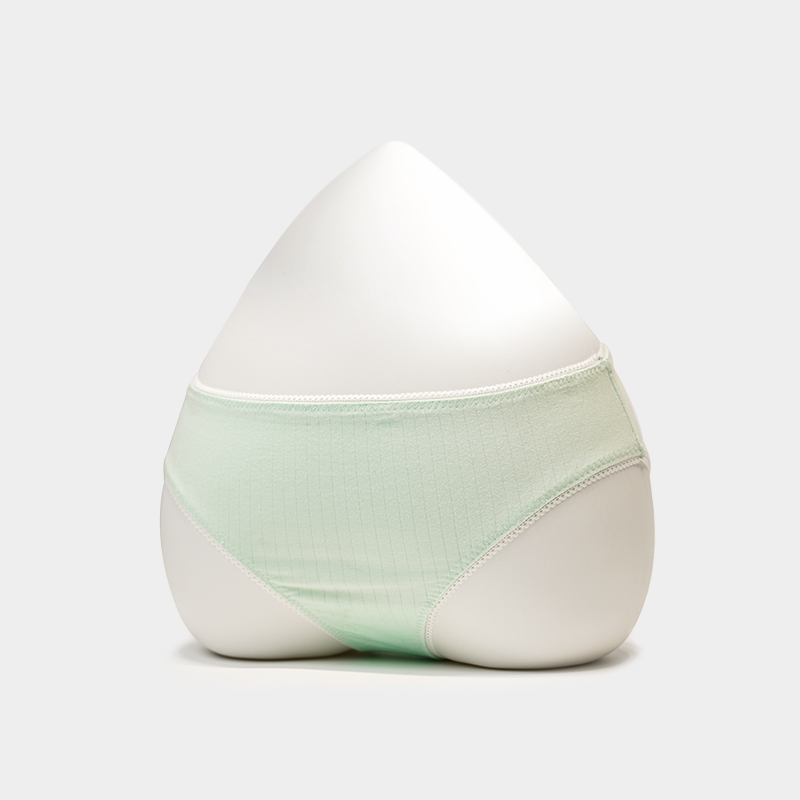
Lace Elastic Trim Bikini Underwear
The main fabric is bamboo viscose stretch drop-needle jersey. Each part of this specification matters. Bamboo viscose identifies the regenerated cellulosic fiber used in the fabric. Stretch content supports movement and fit retention. Jersey construction provides a flexible knitted surface. Drop-needle detailing adds a distinctive texture and can help create a more premium visual identity.
Underwear fabric must feel comfortable during direct, prolonged contact with the skin. Bamboo viscose is commonly selected for its smooth hand feel and soft drape. Compared with rougher or poorly finished materials, it can provide a more pleasant first touch and a less abrasive wearing experience.
Softness depends on more than the fiber name. Yarn quality, knitting parameters, finishing chemistry, washing conditions, fabric weight, and storage all influence the final result. This is why a responsible manufacturer evaluates the finished fabric rather than relying only on a raw-material description. The production team can check hand feel, surface uniformity, stretch behavior, recovery, and dimensional stability before bulk cutting.
Breathable underwear allows heat and humidity to move away from the body more effectively than dense, poorly ventilated constructions. Bamboo viscose is often selected for products that prioritize airflow and moisture comfort. The knitted jersey structure also provides flexibility and a relatively light wearing experience.
Moisture-wicking performance should be communicated accurately. The garment can help manage perspiration and maintain a fresher feeling, but performance varies with fiber blend, fabric weight, finishing, environmental conditions, body activity, and garment care. For commercial development, buyers should request fabric test results and evaluate samples in realistic use conditions.
The product information also identifies antimicrobial benefits associated with the bamboo fabric. Marketing teams should distinguish between the natural characteristics of the fiber and a separately tested antimicrobial treatment. If a brand intends to make a regulated or measurable antimicrobial claim, it should request appropriate laboratory documentation for the exact fabric and finished garment.
Stretch allows the bikini brief to adapt to movement and different body shapes. However, stretch without recovery can lead to sagging, loose leg openings, and an untidy appearance after repeated wear. A balanced stretch system is therefore essential.
During product development, the manufacturing team should assess the fabric’s crosswise and lengthwise stretch, recovery after extension, growth after repeated movement, and dimensional change after laundering. The elastic trim must be tested with the main fabric so that neither component overwhelms the other. If the lace contracts more than the jersey, it may create tension at the edge. If it is too loose, the brief may fail to stay in position.
Drop-needle jersey can create fine linear details, open-looking textures, or subtle pattern effects within the knitted surface. This gives the fabric a more developed appearance than a completely plain jersey. The detail can be understated enough for everyday underwear while still helping a product stand apart from basic commodity styles.
Texture also affects production. Needle settings, yarn tension, machine condition, and finishing parameters must be controlled to maintain consistency across the fabric roll. A skilled factory checks for dropped stitches, uneven columns, holes, barre effects, color variation, and distortion before the fabric is released for cutting.
The lace elastic trim contributes to both appearance and fit. It can create a smooth transition between the body fabric and the skin while giving the leg and waist edges a decorative finish. Correct attachment is essential. Stitch density, thread selection, seam allowance, elastic tension, and machine speed all affect the final result.
Too much tension during sewing can cause the trim to pull the fabric into waves. Too little tension can create looseness or poor recovery. The production line must establish a repeatable setting that matches the lace’s stretch characteristics. Inspection should include the full circumference of each finished opening, not only the front or back panel.
Many consumers identify leg pressure as a major reason for rejecting underwear. A tight edge can leave marks, interfere with movement, or become uncomfortable during sitting and walking. The no-leg-constriction feature of this bikini style is intended to provide a gentler transition at the upper thigh.
Achieving this result involves several decisions: the leg curve must be correctly graded, the lace elastic must have appropriate tension, the seam should not become bulky, and the finished opening must remain stable. A product can only deliver the intended comfort if pattern engineering and sewing execution support the design concept.
The triangle needles and lace edges undergo high-temperature steam shrinking. This finishing step is important because lace and knitted jersey can respond differently to heat, moisture, and mechanical tension. Controlled steam shrinking helps stabilize the edge and reduce later distortion.
The process must be managed carefully. Excessive heat or steam can damage delicate fibers, flatten texture, alter color, or reduce elastic performance. Insufficient treatment may leave the edge vulnerable to further shrinkage during laundering. The correct parameters depend on material composition, lace construction, machine conditions, and the intended care instructions.
After steam shrinking, the production team should check edge length, appearance, elasticity, seam flatness, and dimensional consistency. The finished garment should be evaluated after laundering as well as before laundering. This approach helps identify problems that may not be visible during initial inspection.
Although the visible lace trim attracts attention, internal construction strongly affects wearing comfort. The gusset should be cleanly attached, secure, and free from rough thread ends or bulky seam intersections. Stitching should remain stable under stretch without creating excessive stiffness.
Brands should decide whether the gusset uses the same bamboo viscose blend, a complementary cotton or bamboo-based fabric, or another material chosen for a particular performance requirement. The decision should match the product’s comfort claims, target price, care instructions, and certification strategy.
Premium breathable underwear competes against several product types: basic cotton briefs, polyester lace briefs, low-cost seamless underwear, modal or viscose basics, and heavily decorated lingerie. Lace Elastic Trim Bikini Underwear does not need to replace every category. Its strength is the combination of natural-fiber comfort, flexible fit, feminine styling, and manufacturing adaptability.
| Comparison factor | This bikini brief | Common weakness in lower-cost alternatives |
|---|---|---|
| Main material direction | Bamboo viscose stretch jersey with a soft, breathable hand | Polyester-heavy fabrics may feel warmer or less absorbent to some users |
| Edge treatment | Lace elastic trim with controlled attachment | Rigid elastic or poorly matched trim can create pressure and visible marks |
| Leg comfort | Designed to reduce leg constriction | Tight openings may dig into the upper thigh |
| Texture and appearance | Drop-needle texture and feminine lace detail | Plain basics may offer limited visual differentiation |
| Finishing control | Steam shrinking for lace and needle edges | Unstabilized edges can distort after washing |
| Brand development | Suitable for OEM/ODM modifications | Catalog-only suppliers may provide limited customization |
Cotton remains a familiar underwear material, but a standard cotton brief may not provide the same drape, texture, or moisture-handling profile as a bamboo viscose stretch jersey. Cotton products can also vary substantially in softness, weight, shrinkage, and recovery. The bamboo-based design gives brands an alternative story for customers who want a natural-fiber-inspired product with a more fluid fit.
The comparison should remain product-specific. Not every bamboo fabric is automatically superior to every cotton fabric. Buyers should assess fiber quality, blend ratio, fabric weight, finishing, testing, and care performance. The advantage of this product lies in its complete construction rather than in a single fiber label.
Polyester is widely used in lingerie because it offers strength, color retention, and cost efficiency. However, some consumers prefer cellulosic fibers for their softer hand and moisture comfort. The bamboo viscose body of this bikini brief can provide a more breathable and natural-feeling alternative while preserving the visual appeal of lace.
The design is also less dependent on dense synthetic decoration. The lace is used as a trim rather than covering the entire garment, allowing the main fabric to remain soft and flexible against most of the body.
Seamless underwear is valued for its low-profile appearance under clothing, but it may offer less decorative character. The lace-trim bikini is intended for consumers who want visible craftsmanship and a more feminine aesthetic. It can occupy a space between plain seamless basics and elaborate lingerie.
For retailers, the two categories can coexist. Seamless products may serve fitted clothing and minimal visibility, while lace-trim bamboo briefs can serve everyday comfort, coordinated sets, and premium basics. Offering both increases range depth without forcing one silhouette to meet every consumer need.
Nantong Tianhong Textile Technology Co., Ltd. was established in 2001 in Nantong, Jiangsu, a major textile center in China. The company specializes in the research, manufacturing, and sales of underwear products. Its capabilities include OEM and ODM services for labels operating in Europe, North America, and China.
For buyers, a manufacturer’s value is measured by more than production capacity. Product development communication, fabric sourcing, sampling accuracy, process control, compliance documentation, and delivery coordination all influence the success of a private-label underwear program. Tianhong’s stated focus on natural-fiber fabrics, functional materials, sustainability, and traceable supply chain management supports this broader development requirement.
OEM production is useful when a buyer has established technical specifications, approved artwork, and a defined product design. ODM development is useful when the buyer wants to adapt an existing style or develop a new concept with factory support. Lace Elastic Trim Bikini Underwear can be used as a starting point for both routes.
Possible development adjustments include:
• Bamboo viscose and stretch-fiber ratios.
• Fabric weight and surface texture.
• Lace width, pattern, color, and recovery.
• Bikini rise and coverage.
• Waist and leg opening construction.
• Gusset material and dimensions.
• Thread color and stitch appearance.
• Size range and grading rules.
• Woven labels, printed care labels, hangtags, and packaging.
• Color collections for seasonal or permanent programs.
• Retail, wholesale, and e-commerce presentation requirements.
The most efficient development process begins with a clear technical package. A buyer should provide target measurements, size charts, fabric preferences, color standards, trim references, care requirements, packaging details, and expected order quantities. The factory can then identify practical adjustments before sample approval.
The company focuses on sustainable development and environmentally friendly functional fabrics. That direction is relevant to brands seeking premium breathable underwear rather than commodity products. Natural-fiber projects often require closer attention to shrinkage, color variation, fiber traceability, finishing chemistry, and certification scope.
Buyers should ask which certification applies to each material and production stage. A factory may hold or work with standards including FSC, OCS, OEKO-TEX Standard 100, GOTS, WRAP, and BSCI, but the exact certificate, license, transaction certificate, product scope, and validity period must be confirmed for the relevant order. Certification claims should be based on current documentation rather than general company statements.
International buyers need consistent quality as well as reliable social and environmental compliance. The company identifies certifications and audit systems including OEKO-TEX Standard 100, GOTS, WRAP, BSCI, FSC, and OCS within its business profile. These systems can support buyer due diligence when properly matched to the materials and production facilities involved.
For this bikini brief, quality control should cover at least five stages:
1. Incoming material inspection. Fabric rolls, lace, elastic, thread, labels, and packaging components should be checked against approved specifications. Inspectors can review color, width, weight, stretch, recovery, defects, and quantity.
2. Pre-production approval. The factory should confirm the approved sample, measurement chart, sewing method, lace placement, shade standard, and packaging instructions before bulk production.
3. In-line inspection. Production staff should monitor cutting accuracy, panel matching, seam quality, trim tension, stitch density, and garment measurements during sewing.
4. Finishing inspection. Steam-shrunk edges, loose threads, stains, holes, skipped stitches, uneven lace, and pressing marks should be identified before packing.
5. Final inspection. Finished garments should be checked by sampling or according to the buyer’s inspection protocol. Measurements, appearance, labeling, packing quantity, carton marks, and workmanship should be verified.
This staged approach is more effective than relying only on a final inspection. Problems are less expensive to correct when they are identified during fabric preparation or early sewing rather than after an entire order has been completed.

A disciplined workflow helps brands move from a promising reference style to a commercially ready underwear collection. The following sequence can be adapted to the buyer’s order size and product complexity.
Decide whether the product will be sold as premium breathable underwear, organic bamboo underwear, sustainable everyday lingerie, comfort-focused basics, or a feminine gift set. The market position determines fabric weight, packaging, color palette, price level, certification requirements, photography, and communication style.
Do not use “organic bamboo underwear” as a blanket claim unless the fiber and finished product documentation support it. Bamboo viscose and organically sourced bamboo are not interchangeable terms. The brand should verify the fiber origin and applicable certification before printing claims on labels or packaging.
Request fabric swatches and lace samples. Compare softness, opacity, stretch, recovery, surface texture, color, and laundering behavior. Hold the lace against the jersey to check whether the materials create a balanced appearance and compatible tension.
At this stage, buyers should also confirm the desired hand feel. “Soft” can mean smooth, brushed, cool, fluid, or lightly textured depending on the target customer. A written description and physical reference sample reduce misunderstandings during development.
The technical package should include a flat sketch, construction notes, measurement chart, tolerances, fabric composition, fabric weight, trim details, color standards, stitch requirements, label placement, packaging, and care instructions. If a specific certification is required, identify it before production rather than after the order is placed.
Size grading deserves special attention. A bikini brief must maintain coverage, leg comfort, and gusset placement across the full size range. Simply enlarging or reducing a base size may produce poor results. The pattern team should review rise, leg curve, front and back coverage, elastic length, and gusset proportions at every size.
Try the prototype on an appropriate fit model or use a controlled fitting review. Assess the garment while standing, sitting, walking, and bending. Check whether the leg opening rolls, presses, gaps, or shifts. Examine the lace edge for irritation, tension, and visual balance.
Launder the prototype according to the intended care method. Review shrinkage, color change, seam stability, elastic recovery, lace appearance, and fabric hand after washing. A product that performs well before laundering but loses shape after the first wash will generate returns and damage customer trust.
The pre-production sample should represent the actual materials, trims, construction, labels, and finishing process planned for bulk production. Approval should be documented with photographs, measurements, comments, and a signed sample or digital approval record.
Any change after approval should be reviewed. Substituting lace, yarn, thread, elastic, or packaging can alter performance and appearance. A controlled change process helps preserve consistency across repeat orders.
Bulk production should follow the approved process parameters. The factory should control shade lots, fabric relaxation, cutting markers, panel bundling, sewing line settings, steam-shrinking conditions, pressing, and packing.
Because bamboo viscose jersey can respond to moisture, heat, and tension, fabric relaxation and dimensional control are particularly important. Cutting fabric immediately after unrolling may create measurement variation if the material has not stabilized. The correct relaxation time depends on the fabric structure and factory process.
Supplier evaluation should combine product evidence, manufacturing evidence, and business evidence. A polished catalog is not enough. Buyers should ask practical questions before committing to a commercial program.
| Evaluation area | Questions to ask |
|---|---|
| Fabric | What is the exact fiber composition, fabric weight, width, stretch, recovery, and shrinkage? |
| Lace trim | How is lace tension controlled, and how does the trim perform after washing? |
| Sampling | Can the factory provide development samples, size sets, and pre-production samples? |
| Testing | Which tests are available for colorfastness, dimensional stability, harmful substances, and fabric performance? |
| Compliance | Which current certificates or audit reports apply to the requested product and facility? |
| Customization | Can the supplier modify fabric, lace, sizing, labels, packaging, and color range? |
| Production control | How are in-line defects, shade variation, measurements, and final packing monitored? |
| Repeat orders | How are approved materials and specifications archived for future production? |
A buyer should also evaluate communication speed and technical clarity. Underwear development involves many small decisions, including seam placement, elastic tension, gusset shape, label position, and measurement tolerance. A supplier that responds with precise recommendations can reduce sampling time and prevent avoidable production errors.
Care instructions should protect both the fabric and the lace trim. The final label must be based on verified testing for the actual garment, not a generic instruction copied from another product. In many cases, gentle machine washing or hand washing, mild detergent, moderate water temperature, and avoidance of harsh bleaching can help preserve color, elasticity, and lace appearance.
Consumers should be advised to avoid excessive heat unless the care label permits it. High heat can affect stretch fibers and elastic recovery. Strong mechanical action may also distort delicate lace. Air drying in a shaded, ventilated area is often preferable to high-temperature tumble drying, subject to the approved care instructions.
Product pages should communicate benefits accurately and specifically. Useful wording may include “bamboo viscose stretch jersey,” “lace elastic trim,” “designed for reduced leg constriction,” “breathable everyday construction,” and “moisture-managing fabric characteristics.” Avoid absolute medical or hygiene claims unless they are supported by current, product-specific testing and permitted in the intended sales market.
A high-performing product page can begin with the primary benefit: soft, breathable bikini underwear with lace trim for everyday comfort. The second section can explain the material. The third can show construction details such as the leg opening, gusset, and lace edge. A size guide should appear close to the purchase button, followed by care instructions and certification information where applicable.
Images should show the fabric texture, lace attachment, front and back silhouette, inside construction, and scale on the body. Close-up photography is particularly useful because it helps shoppers judge whether the lace looks soft, whether the jersey is opaque enough, and whether the product has the premium finish promised by the description.
Private-label brands can use the style as a foundation for a signature bamboo underwear collection. The collection may include several colors, matching bras, higher-rise versions, fuller back coverage, or alternative lace widths. Consistent fabric and trim standards can create a recognizable product family.
Retailers can position the brief in a premium basics area or a natural-fiber assortment. The moderate bikini cut gives the product broad appeal, while the lace trim adds a visual reason to choose it over a plain brief. Color planning can include essential neutrals, soft seasonal tones, and limited-edition shades.
Online sellers benefit from a clear comfort story and detailed product education. Bamboo viscose, drop-needle texture, lace elastic, and steam-shrunk finishing provide tangible talking points for product descriptions, comparison charts, email campaigns, and social media content.
Brands serving wellness-oriented consumers may use the product in curated comfort collections. The breathable material direction and feminine styling can support a broader lifestyle message, provided all environmental and performance claims remain accurate and documented.
The product combines bamboo viscose stretch drop-needle jersey, lace elastic trim, a reduced-constriction leg design, and high-temperature steam shrinking for the lace and needle edges. These features address comfort, appearance, edge stability, and everyday wear rather than focusing on decoration alone.
Bamboo viscose is a regenerated cellulosic fiber made from bamboo-derived raw material through a manufacturing process. Product descriptions should use the exact fiber terminology supplied by the approved material documentation. Claims about organic sourcing, environmental performance, or certification require separate verification.
The supplied product information describes antimicrobial benefits associated with the bamboo fabric. The level and type of antimicrobial performance depend on the fiber, finishing, testing method, and finished garment. A brand should obtain current laboratory evidence before making a specific measurable or regulated antimicrobial claim.
The design is intended to reduce leg constriction through lace elastic trim and an appropriate leg-opening construction. Actual comfort depends on lace selection, tension, size, body shape, and sewing quality. Fit testing and post-wash evaluation should be completed before bulk approval.
Yes. The style is suitable for OEM and ODM development. Buyers can discuss fabric composition, fabric weight, colors, lace pattern, trim width, sizing, gusset construction, labels, packaging, and other technical details with the manufacturer.
It can be developed for a broader size range, but the pattern should be graded specifically for each size. Rise, back coverage, leg curve, gusset dimensions, and elastic length should be reviewed rather than scaled mechanically from a single base size.
Relevant checks may include fiber composition, fabric weight, dimensional stability, colorfastness to washing and rubbing, stretch and recovery, seam strength, lace attachment, harmful-substance testing, and finished-garment measurements. The exact test list should match the destination market and buyer requirements.
The correct care method must appear on the approved care label. Buyers should validate the instructions through testing. Gentle washing, mild detergent, avoidance of harsh bleach, and controlled drying are commonly considered for delicate stretch and lace products, but the final instruction must reflect the actual garment.
The breathable bamboo viscose jersey and moisture-management characteristics make it a suitable candidate for warm-climate underwear collections. Fabric weight, garment coverage, color, humidity, activity level, and individual preference still influence comfort.
That depends on the raw-material sourcing and current certification documentation. Bamboo viscose alone does not automatically establish an organic claim. Brands should verify the fiber source, certification scope, chain of custody, and labeling requirements before using the term “organic.”
Confirm the approved sample, exact fabric composition, lace specification, size chart, measurement tolerances, colors, packaging, labels, care instructions, testing requirements, certification documents, minimum order quantity, delivery schedule, inspection standard, and change-control procedure.
A premium underwear product is created through a sequence of controlled decisions. Fiber selection influences moisture comfort and hand feel. Knitting affects texture and stretch. Pattern engineering determines coverage and pressure. Lace selection affects both appearance and fit. Steam shrinking influences edge stability. Sewing controls durability and comfort. Inspection protects consistency across the order.
When one stage is ignored, the product can lose the advantage promised by its materials. A high-quality bamboo jersey can still result in an uncomfortable brief if the leg elastic is too tight. Attractive lace can still look poor if it is attached unevenly. A well-designed pattern can still become unstable if the fabric is cut before relaxation. Manufacturing strength means controlling the interaction between these details.
Nantong Tianhong’s experience in underwear manufacturing and its focus on natural-fiber and functional-fabric development give buyers a platform for managing this interaction. The company’s OEM/ODM orientation is particularly relevant to brands that need more than a ready-made catalog style. Buyers can use the reference product as a starting point, then refine the fabric, fit, trim, and presentation for a defined market.
Lace Elastic Trim Bikini Underwear offers a strong balance of comfort, femininity, and product-development flexibility. Bamboo viscose stretch drop-needle jersey supports a soft and breathable wearing experience. Lace elastic trim provides an elevated appearance. The no-leg-constriction design responds to a common consumer complaint. High-temperature steam shrinking helps stabilize delicate edges when correctly controlled.
For brands seeking premium breathable underwear or an organic bamboo underwear direction, the most important next step is verification. Request fabric and trim samples, confirm the fiber and certification documentation, test stretch and laundering performance, approve a complete pre-production sample, and define quality standards before bulk production.
With a structured development process and a capable OEM/ODM partner, this bikini brief can become more than a single catalog item. It can form the basis of a coordinated women’s underwear collection built around breathable materials, refined lace details, responsible sourcing, and dependable everyday comfort.
1. Product specification and technical description for Lace Elastic Trim Bikini Underwear, reference THDY-029.
2. Company information and manufacturing profile of Nantong Tianhong Textile Technology Co., Ltd.
3. International Organization for Standardization, textile care labeling and textile testing principles.
4. OEKO-TEX Association, Standard 100 principles for testing textiles for harmful substances.
5. Global Organic Textile Standard, requirements for organic fibers, processing, manufacturing, and labeling.
6. Organic Content Standard, chain-of-custody principles for products containing certified organic material.
7. Forest Stewardship Council, responsible fiber sourcing and chain-of-custody guidance.
8. WRAP, principles for ethical and socially responsible apparel manufacturing.
9. Business Social Compliance Initiative, supply chain social compliance assessment principles.
10. General textile quality-control practices for fabric inspection, dimensional stability, colorfastness, stretch recovery, and finished-garment inspection.

Copyright © Nantong Tianhong Textile Technology Co., Ltd. All Rights Reserved.
 Room 806, Building D, Jingyang Plaza, Chongchuan District, Nantong City, Jiangsu Province,china

 English
 Español
 русский
 عربى