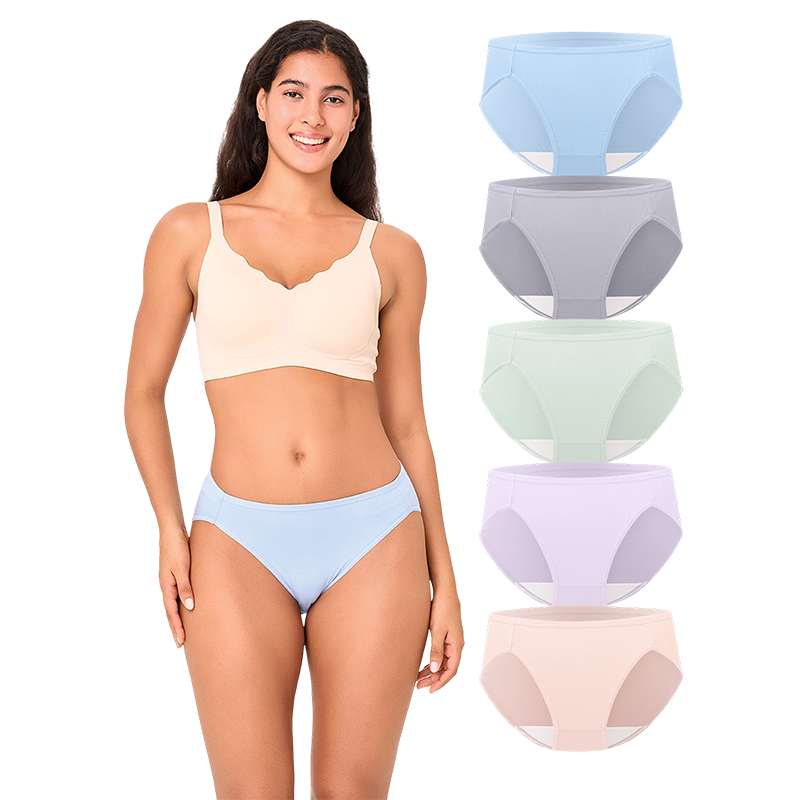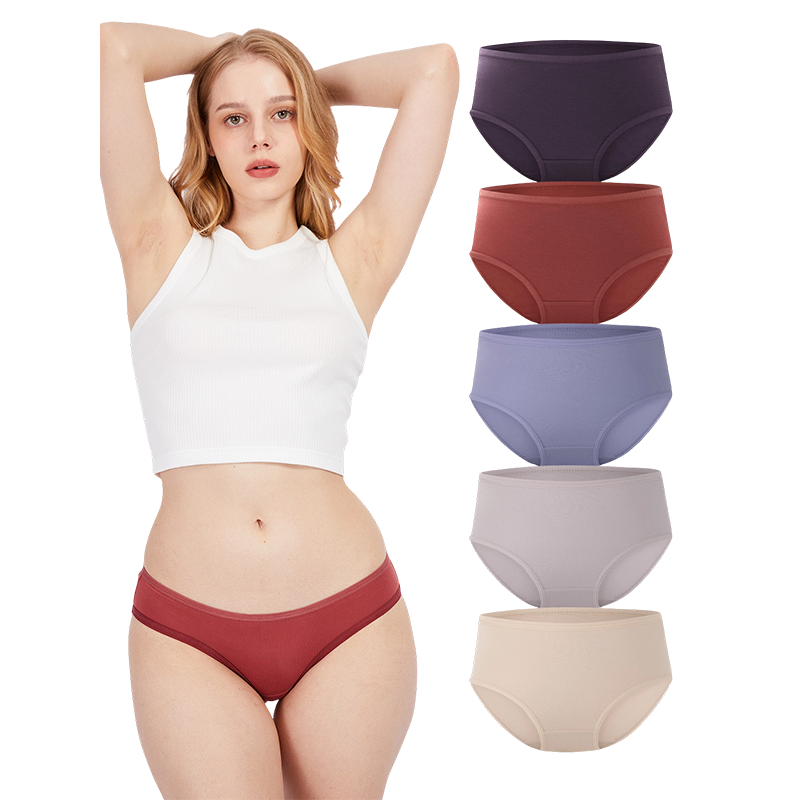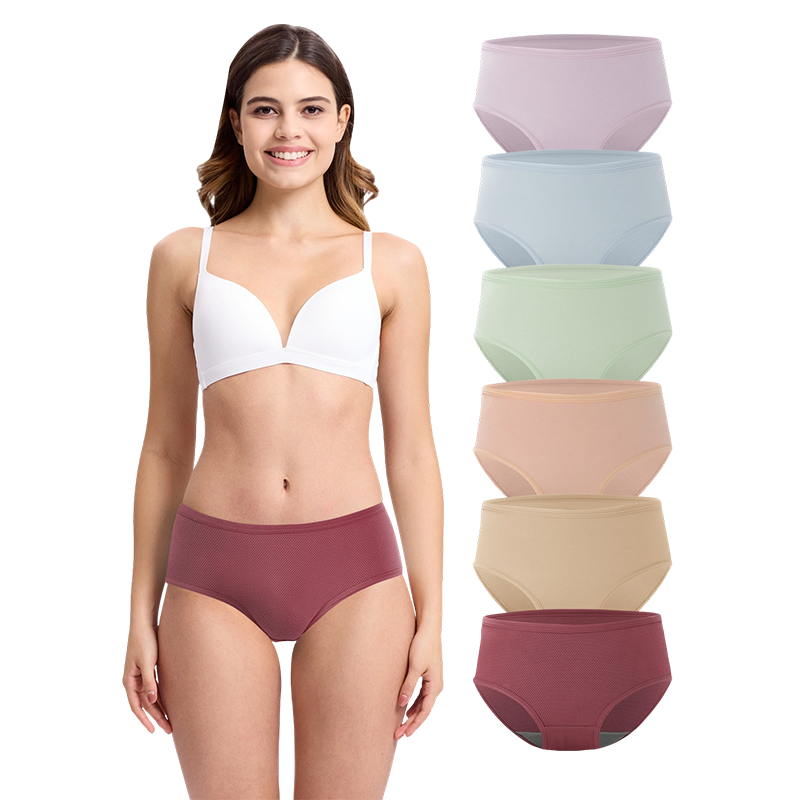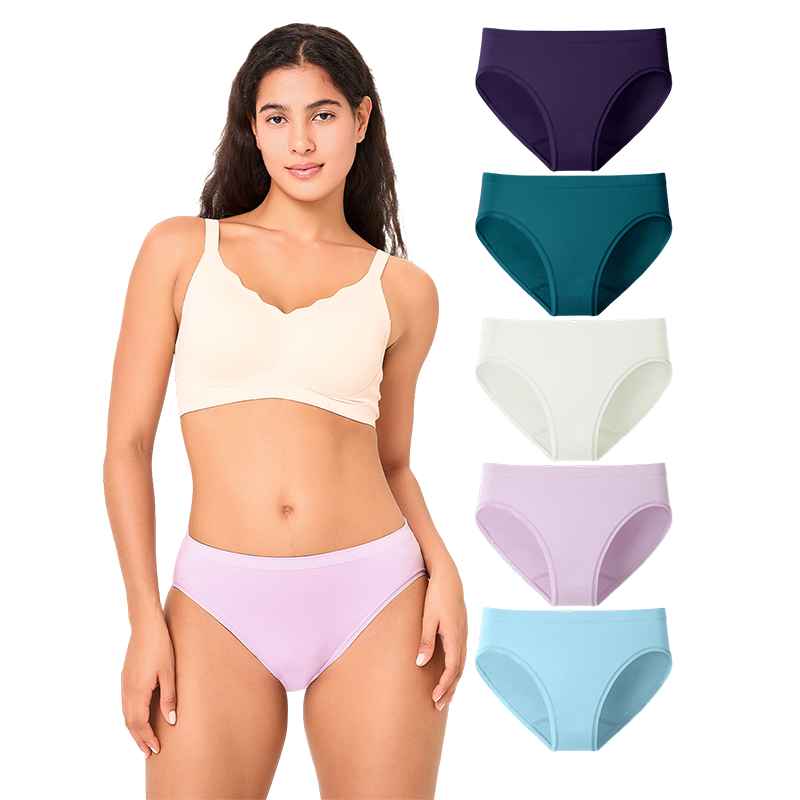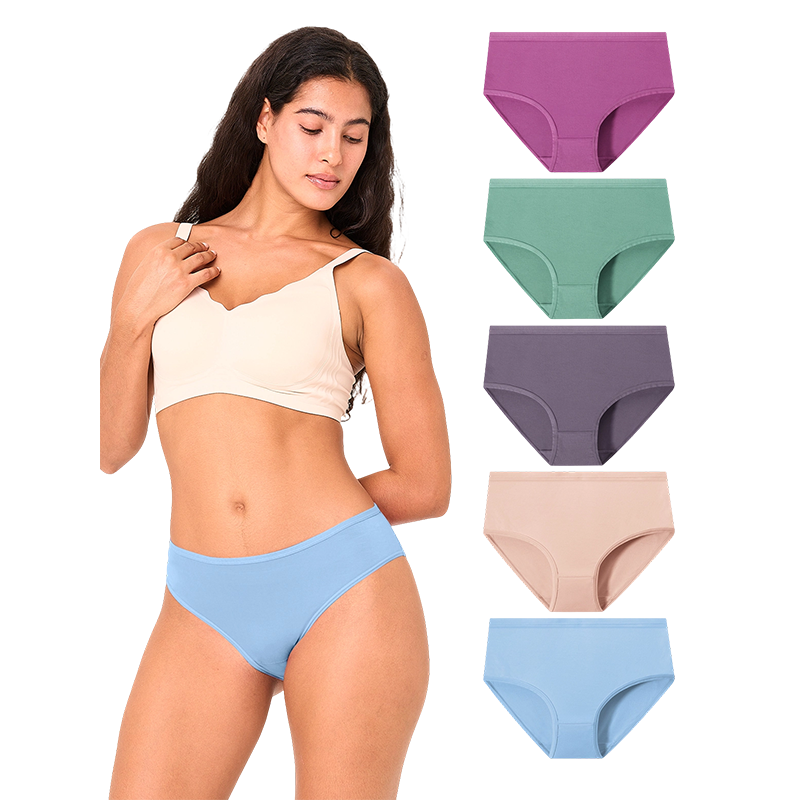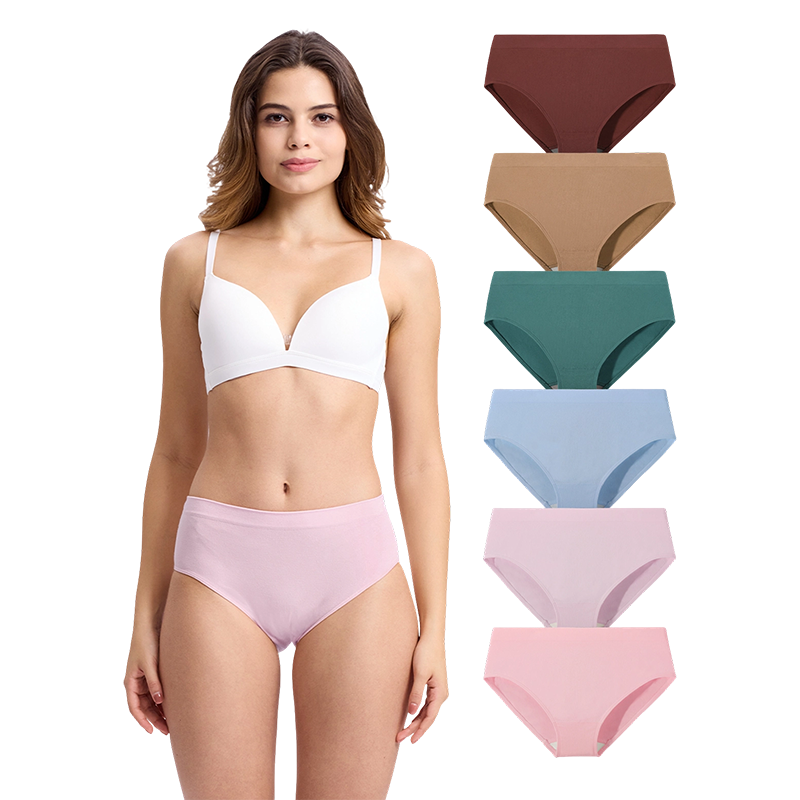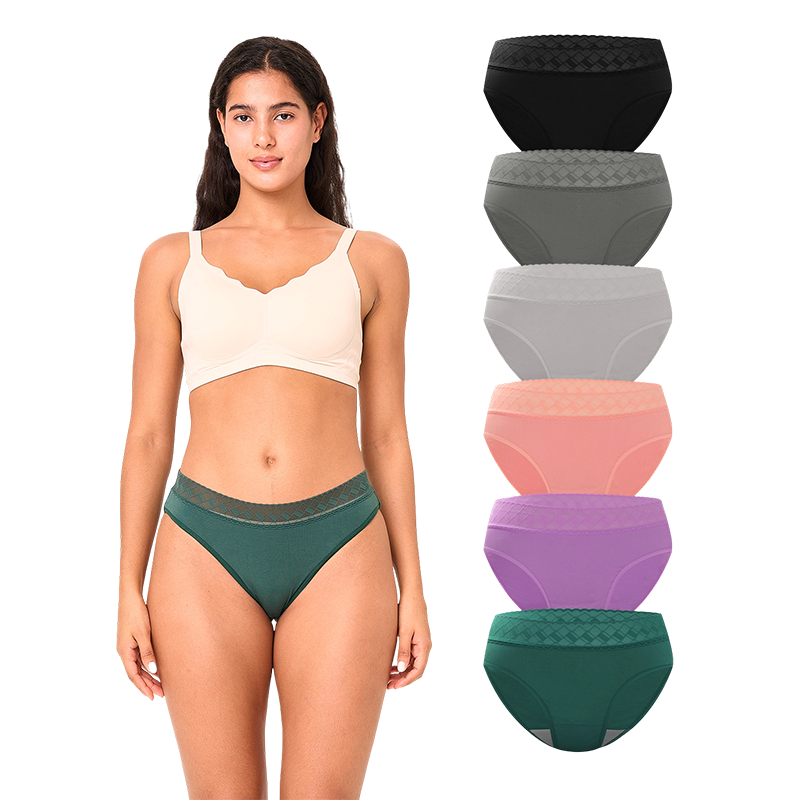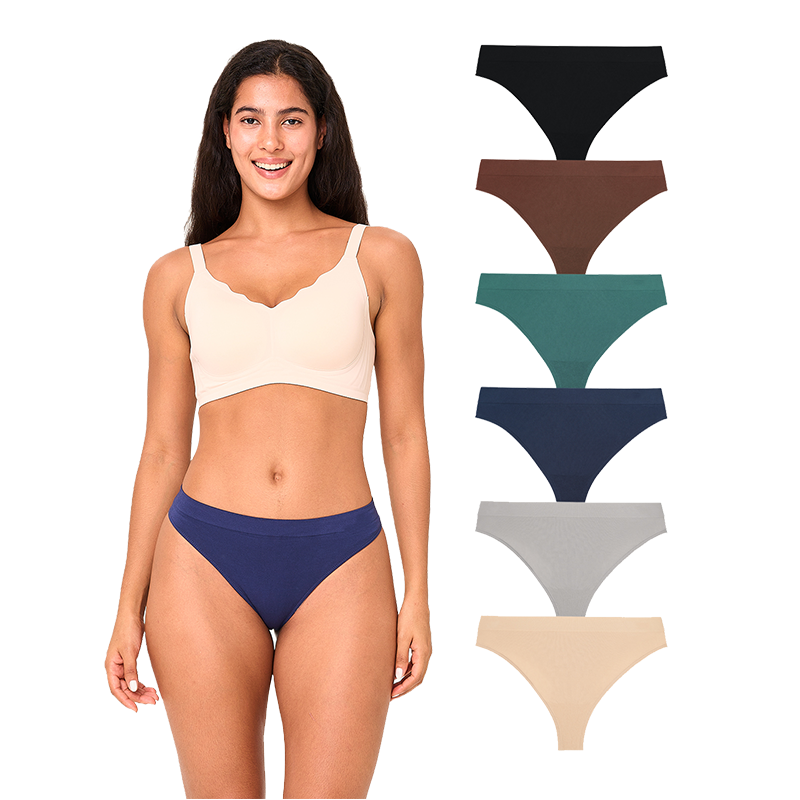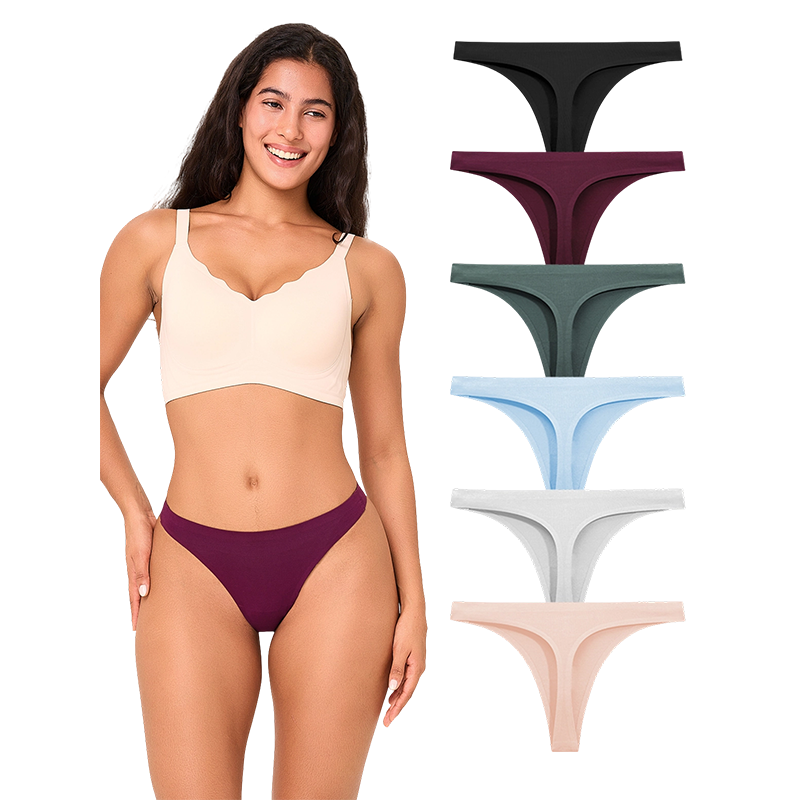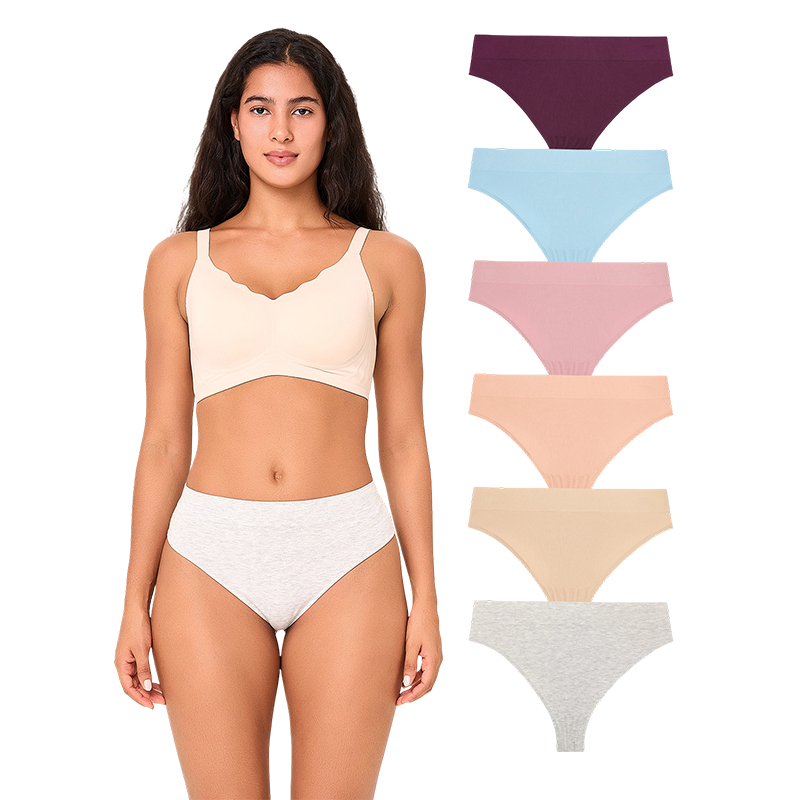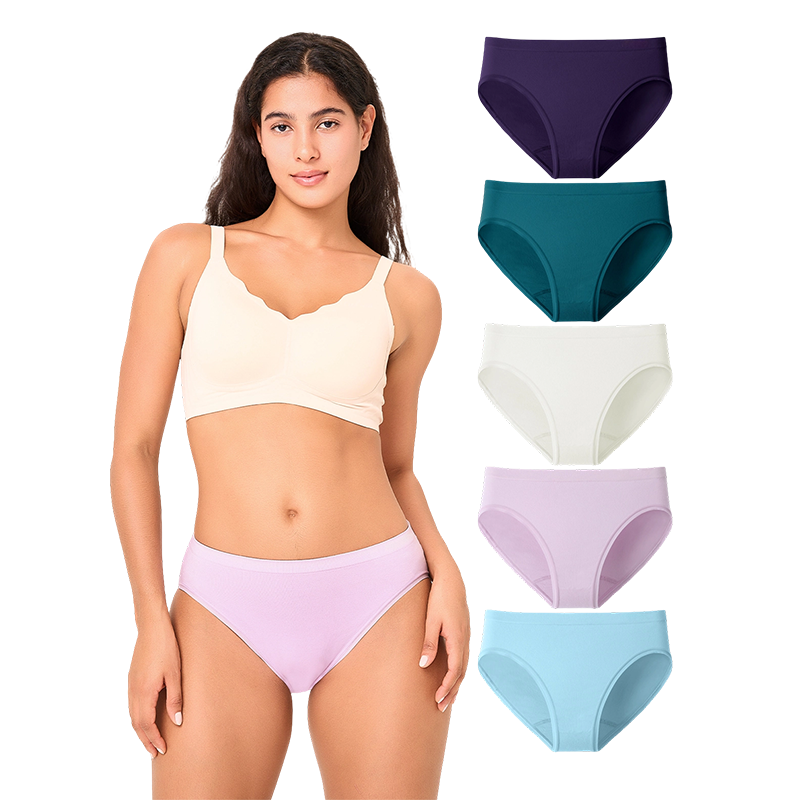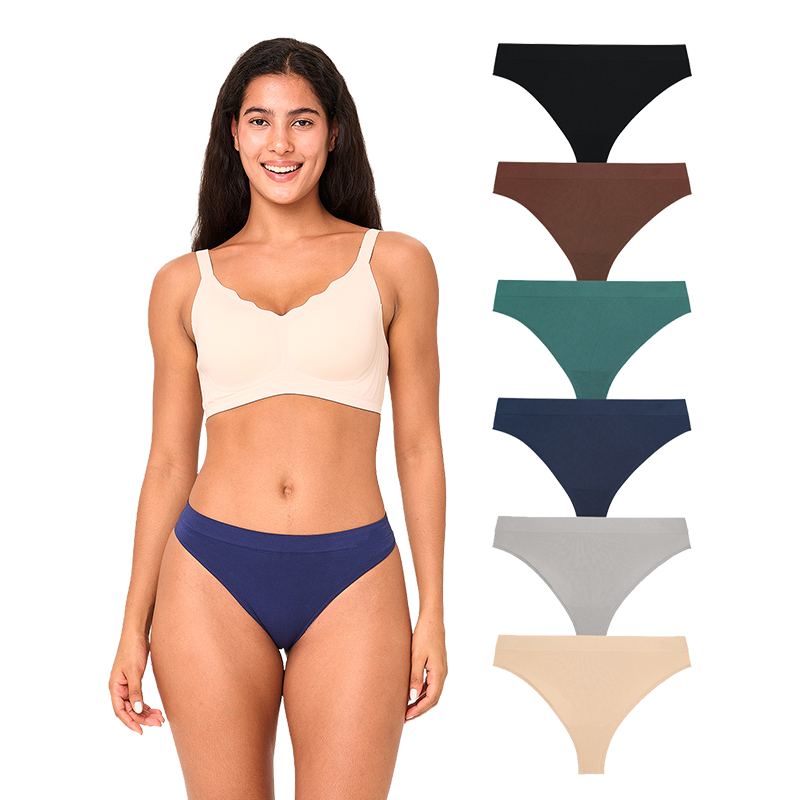
Content
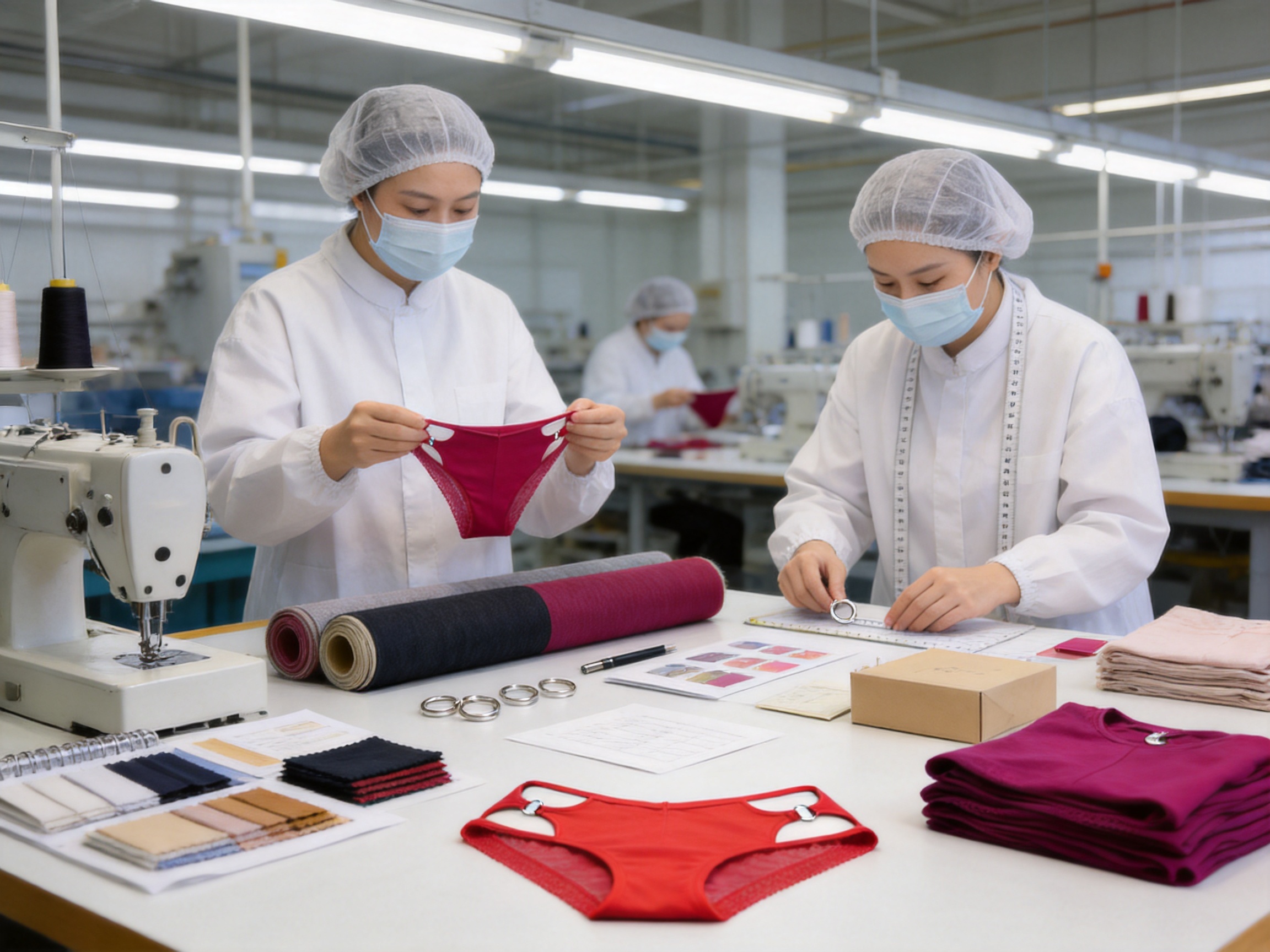
Quick Answer: Ladies’ Metal Ring Briefs combine a flattering triangular brief silhouette with a decorative metallic ring at the front. They are designed for buyers who want women’s underwear that feels comfortable enough for regular wear while offering a more distinctive appearance than a conventional brief. The product’s strongest selling points are its eye-catching front detail, curve-enhancing shape, premium hand feel, and suitability for private-label, OEM, and ODM development. For brands, retailers, and lingerie distributors, the best sourcing results come from confirming ring quality, fabric composition, lining, size grading, colorfastness, packaging, and compliance requirements before production.
Manufactured by Nantong Tianhong Textile Technology Co., Ltd., the style is identified as THDY-041 and is positioned within the women’s briefs category. Its clean triangular construction and carefully placed metal detail create a modern alternative to plain everyday underwear. The manufacturer’s experience in underwear research, production, OEM/ODM service, sustainable fabric development, and supply-chain management also gives buyers a practical foundation for customized collections.
Women’s underwear buyers increasingly look for products that serve more than one purpose. A brief must provide comfort, fit, hygiene, and reliable construction, but customers also expect attractive design and a sense of personal style. Ladies’ Metal Ring Briefs answer that demand through a simple visual feature: a metallic ring integrated into the front of the garment.
The ring creates a focal point without requiring excessive decoration. Instead of relying on heavy lace, large prints, or complex trims, the design uses one controlled metallic accent to produce a refined and contemporary appearance. This makes the product suitable for collections positioned between basic underwear and fashion lingerie.
The triangular shape supports the visual balance of the design. It follows the natural lines of the body, gives the front a more sculpted appearance, and helps the brief look less bulky than some traditional full-coverage styles. Depending on the selected fabric, rise, and back coverage, the same basic design can be developed for everyday underwear, occasion-oriented lingerie, boutique collections, or private-label fashion programs.
Product positioning: Ladies’ Metal Ring Briefs are best presented as premium fashion briefs with practical comfort features, rather than as ordinary basic underwear or highly specialized shapewear.
| Product element | Practical meaning for buyers |
|---|---|
| Product name | Ladies’ Metal Ring Briefs |
| Product code | THDY-041 |
| Category | Women’s Briefs |
| Main design feature | Decorative metallic ring at the front |
| Silhouette | Triangular brief design with a curve-conscious shape |
| Product promise | Style, comfort, premium feel, and intimate elegance |
| Manufacturing model | OEM and ODM development for brands and distributors |
| Product reference | THDY-041 |
This product profile gives buyers a starting point, but a commercial order should include a detailed technical specification. The fabric composition, fabric weight, lining material, elastic recovery, ring finish, size range, color options, packing method, labeling, and test requirements should all be confirmed during sampling.
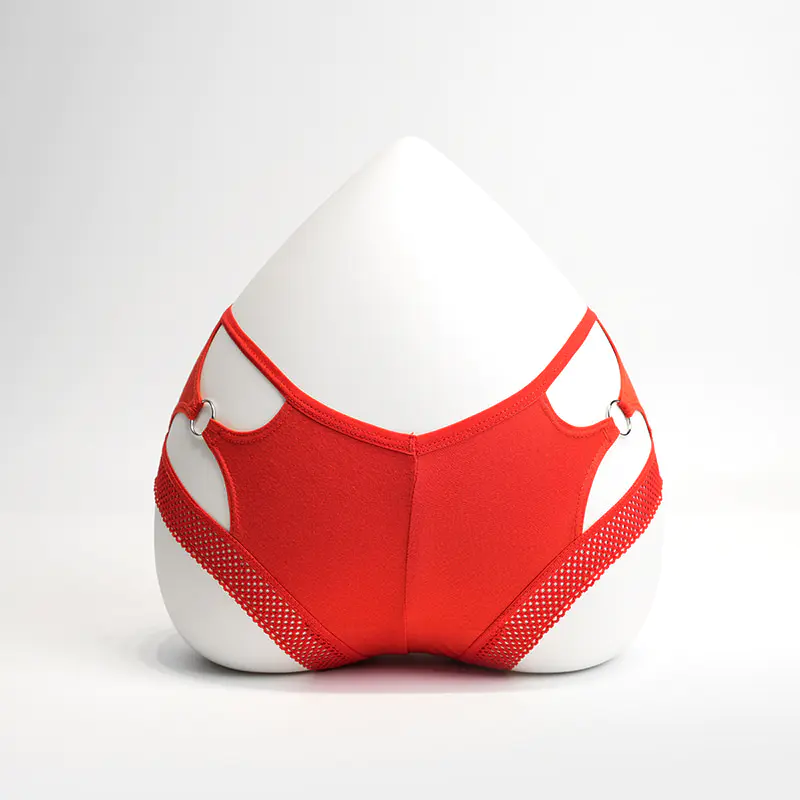
Ladies' Metal Ring Briefs
The front ring immediately separates this brief from a standard solid-color panty. A small hardware detail can make a product more recognizable in a product catalog, online store, showroom, or retail display. This is useful for brands that want a recognizable signature element without creating a complicated garment that increases production risk.
The ring can also support a premium price position. Customers often associate metal hardware, clean finishing, and carefully controlled details with a more considered product. The result does not depend on excessive ornamentation. A restrained feature can communicate modern design more effectively than multiple decorative elements competing for attention.
Some fashion underwear designs prioritize appearance so heavily that they become difficult to wear for extended periods. The triangular brief structure offers a more practical foundation. When the garment is correctly graded and the front ring is securely attached, the product can retain an attractive appearance without becoming unnecessarily complicated.
The design is also adaptable. A brand can develop the same concept in smooth stretch fabric, soft microfiber, bamboo-based fabric, recycled synthetic blends, or other approved materials, provided that the selected fabric supports the construction. A matte fabric can create a quiet luxury effect, while a satin-look or lightly lustrous fabric can make the metallic element more prominent.
For underwear companies, one successful design can become the base for a coordinated product family. The same ring detail may be applied to a matching bra, bralette, suspender style, bodysuit, or nightwear item. The triangular brief can also be offered in several colors, finishes, and coverage options while retaining a consistent identity.
This type of modular product development helps brands reduce the need to create every style from the beginning. It also gives sales teams a stronger story when presenting a complete collection to retailers.
“Comfortable” is not created by a product description alone. It depends on fabric, pattern shape, seam placement, elastic quality, lining, finishing, and fit testing. Buyers evaluating Ladies’ Metal Ring Briefs should treat comfort as a measurable product-development target.
The fabric should feel soft against the skin and should recover after stretching. A premium hand feel may come from fiber selection, yarn quality, finishing treatment, or fabric construction. A soft fabric that loses shape after washing will not deliver lasting comfort, so hand feel must be considered together with durability.
Because the available product information does not specify the exact fiber composition of THDY-041, buyers should request a material sheet before making material-related claims. If a bamboo, organic cotton, recycled fiber, or other sustainable textile is selected for a customized version, the composition and certification status should be documented for the relevant production lot.
Women’s briefs need enough stretch to follow body movement without creating pressure. Excessive tension can cause discomfort and visible marks, while insufficient recovery can create sagging and poor garment shape. The fabric and elastics should be tested after repeated extension and laundering.
A useful development process includes measurements taken before and after wash testing. Buyers should compare waist and leg opening dimensions, fabric recovery, seam stability, and the position of the front ring. This helps identify issues before bulk production.
Seams should be smooth, secure, and appropriate for close-to-skin wear. The inner finish is especially important because a decorative outer appearance cannot compensate for rough thread ends or abrasive seam allowances. Depending on the fabric and target price, the manufacturer may recommend different seam constructions, covered elastics, folded edges, or specialized stitching.
The metallic ring must be attractive, stable, and comfortable. Its dimensions, shape, surface treatment, weight, and attachment method all affect the user experience. The ring should not have sharp edges, exposed burrs, unstable plating, or excessive movement that could cause irritation.
The ring should also be evaluated after washing and normal wear. Buyers should ask whether the hardware is suitable for the planned care method and whether the finish is resistant to discoloration, peeling, or corrosion under expected conditions. If the product is intended for frequent wear, hardware testing deserves the same attention as fabric testing.
The triangular front is one of the defining characteristics of this design. It creates a clean visual line and can provide a flattering fit when the pattern is correctly developed for the target market.
Fit is influenced by more than a single size label. The pattern must account for waist position, hip depth, front rise, gusset width, back coverage, leg opening angle, and stretch direction. A garment labeled medium may fit very differently depending on whether it has high elasticity, moderate elasticity, or limited stretch.
For a commercial program, brands should define the intended fit in practical terms. For example, a brief may be designed as:
The product description presents THDY-041 as a triangular design that accentuates curves. That positioning should be supported by actual fit samples on a representative range of body types. Buyers should not rely only on a flat measurement chart or a single fit model.
A professional size range requires more than scaling every measurement proportionally. Bodies change in different ways as sizes increase, so waist, hip, rise, gusset, and leg opening measurements may need independent grading rules.
Brands should request a complete size chart and approve a size-set sample before production. The size-set review should assess both static fit and movement. Models or testers should walk, sit, bend, and wear the brief under normal garments. Feedback should be recorded by size so that pattern corrections are specific rather than based on general impressions.
| Fit checkpoint | What to inspect | Potential issue if incorrect |
|---|---|---|
| Waist position | Whether the brief stays in place without excessive pressure | Rolling, slipping, or uncomfortable compression |
| Leg openings | Whether edges lie flat and allow movement | Digging, gaping, or visible lines |
| Gusset | Width, length, lining, and secure attachment | Reduced comfort or poor hygiene performance |
| Front rise | Coverage and alignment with the intended silhouette | Pulling, exposure, or distorted appearance |
| Back coverage | Whether the shape matches the product positioning | Unexpected riding up or insufficient support |
| Metal ring placement | Stability and comfort during movement | Twisting, irritation, or visual imbalance |
Material selection should begin with the product’s intended use, target price, climate, care method, and brand positioning. A breathable fabric may be preferred for warm climates, while a smooth stretch textile may be selected for a seamless appearance under clothing. A soft natural-fiber blend may appeal to consumers seeking a more natural hand feel, while a technical synthetic blend may provide stronger shape recovery.
Nantong Tianhong Textile Technology Co., Ltd. describes its business as covering underwear research, manufacturing, sales, OEM/ODM services, sustainable development, environmentally friendly functional fabrics, and traceable supply-chain management. The company also identifies certification systems and social compliance programs including FSC, OCS, OEKO-TEX 100, GOTS, WRAP, and BSCI within its broader product and operating framework.
Certification claims should always be matched to the specific material, factory, product, and production order. A company may have access to certified materials or hold facility-related certifications, but that does not automatically mean every product contains certified fiber. Buyers should request current documentation and confirm the scope before using certification language on packaging or marketing materials.
“Organic bamboo underwear” and “premium breathable underwear” are valuable search terms for brands and manufacturers serving consumers interested in softness, breathability, and sustainable materials. However, THDY-041 is described as using premium materials without a stated fiber composition. The product should therefore be marketed with exact material wording only after the composition has been confirmed.
If a buyer develops a bamboo-based version, the finished product should be described accurately according to the actual fiber type and applicable textile-labeling rules. Bamboo-derived regenerated cellulose is not the same as raw bamboo fiber, and environmental statements should not imply benefits that cannot be supported by documentation.
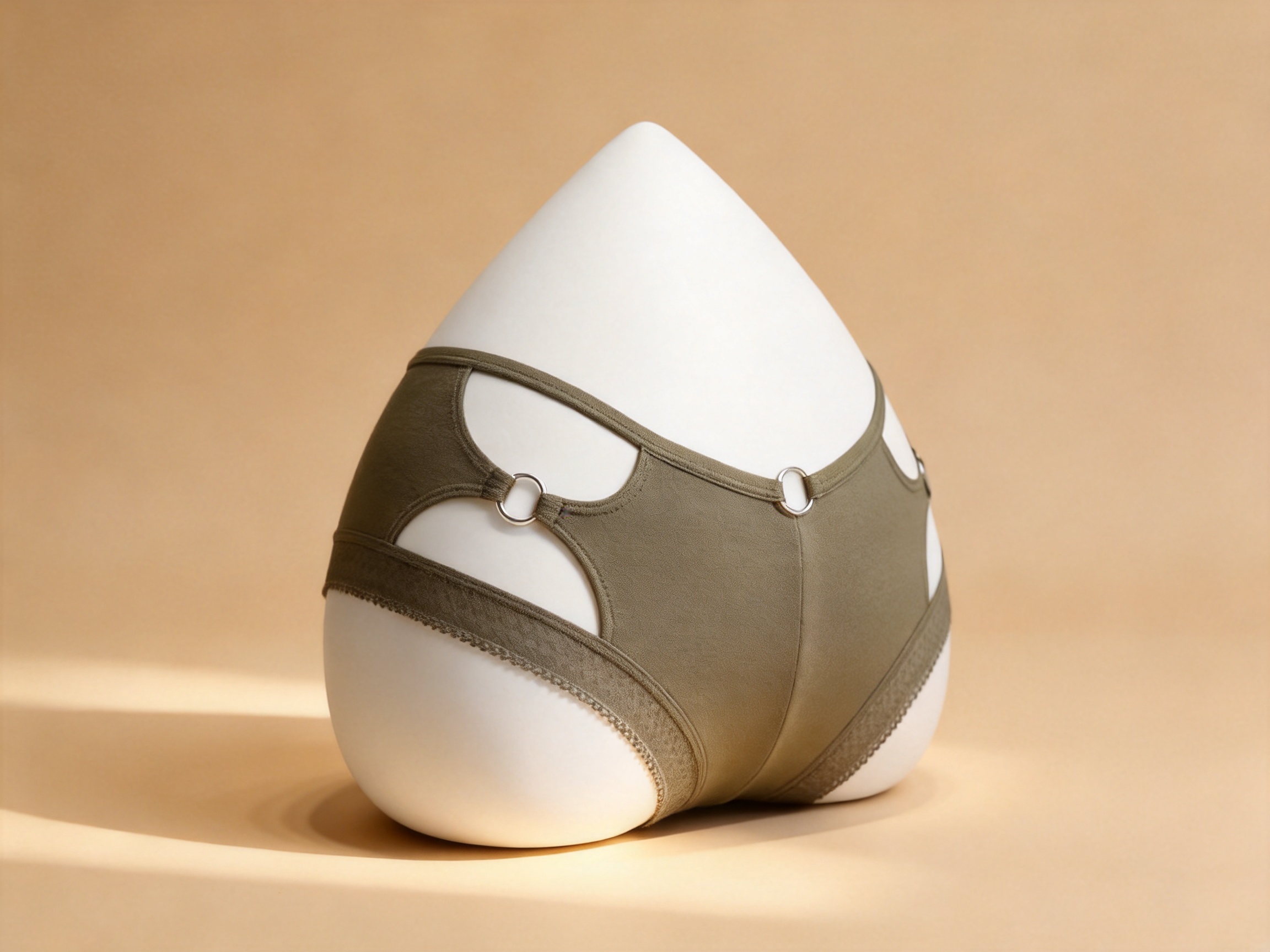
A distinctive design is only valuable when a factory can reproduce it consistently. Metal hardware, triangular panels, stretch fabrics, and intimate-wear finishing require coordination across pattern development, sewing, inspection, and packaging.
An experienced underwear manufacturer can help convert a visual reference into a manufacturable product. The development process may include fabric selection, pattern engineering, hardware sourcing, sample construction, fit corrections, sewing-method evaluation, and pre-production approval.
For THDY-041, the main development questions include the exact location of the ring, the method used to attach it, the degree of front coverage, the selected gusset construction, and the desired balance between fashion appearance and everyday comfort. These decisions should be captured in a technical pack rather than left to verbal instructions.
OEM buyers generally provide a design direction, brand identity, or existing specification and ask the factory to manufacture the item under their own label. For Ladies’ Metal Ring Briefs, OEM options may include:
ODM services are useful for brands that want to launch a product quickly but do not have a complete technical design. The manufacturer can provide a base style, then adapt proportions, materials, colors, trims, and packaging to fit the buyer’s target market.
An ODM program should still include buyer approval at key stages. The customer should review the initial sample, revised sample, size set, fabric approval, hardware approval, packaging sample, and pre-production sample. Clear approval records reduce the risk of misunderstandings during bulk manufacturing.
Quality control is strongest when it is distributed across the production process rather than limited to a final inspection. Fabric inspection should occur before cutting. Cutting accuracy should be checked before panels enter sewing. In-line inspection should monitor seams, elastics, gussets, and hardware attachment. Final inspection should verify measurements, appearance, labeling, packing, and carton quantities.
| Production stage | Recommended control points |
|---|---|
| Material receiving | Fiber composition documents, shade, width, weight, stretch, and hardware condition |
| Fabric inspection | Surface defects, holes, color variation, contamination, and roll consistency |
| Pattern and cutting | Marker efficiency, grain direction, size separation, and panel accuracy |
| Sewing | Stitch density, seam strength, thread tension, elastic application, and clean trimming |
| Hardware attachment | Ring position, edge safety, attachment strength, finish, and movement |
| Final inspection | Measurements, appearance, labeling, cleanliness, folding, and packaging |
Competition in women’s underwear is not based on appearance alone. Buyers compare comfort, price, minimum order quantities, delivery reliability, quality consistency, customization capability, documentation, and after-sales communication.
Plain briefs can be highly practical, but they often compete mainly on price and fabric. A metal ring provides a recognizable design feature that can help a product stand out in crowded digital catalogs. It may also support a stronger visual presentation in e-commerce photography and boutique displays.
Highly decorated lingerie may require more trims, more complex sewing operations, and more demanding quality control. The THDY-041 concept uses a relatively focused design statement. This can make the product easier to coordinate with different fabrics and color stories while preserving a fashion-forward appearance.
A private-label buyer can use the style as a premium anchor item within a broader underwear assortment. Basic briefs may attract price-sensitive customers, while the ring brief gives the collection an elevated option. The design can also function as a cross-selling item when paired with a matching top or complementary sleepwear.
Nantong is located in Jiangsu Province, one of China’s important textile manufacturing regions. Nantong Tianhong Textile Technology Co., Ltd. states that it has operated since 2001 and serves clients in Europe, North America, and China. Its stated experience in underwear production, OEM/ODM services, natural and functional fabrics, and supply-chain management can be relevant to buyers seeking a long-term manufacturing relationship rather than a one-time trading transaction.
International experience can also help with communication around specifications, packaging, shipping documentation, labeling, inspection, and production schedules. These capabilities should still be confirmed during commercial discussions, especially for a new buyer or a new product category.
The buyer and manufacturer first confirm the product purpose, silhouette, size range, fabric direction, colors, hardware, target cost, packing, and delivery expectations. Sketches, reference samples, measurement charts, and written comments should be consolidated into one development file.
The manufacturer evaluates fabrics and trims for compatibility. The fabric must provide the required stretch and recovery, while the ring must match the design scale and surface finish. The gusset lining, thread, elastic, label, and packaging materials should also be selected at this stage.
A pattern technician develops the brief according to the approved measurements and desired fit. The pattern includes seam allowances, elastic application, gusset construction, ring placement, and production markings. The first pattern should be treated as a development version rather than a final production standard.
The sample room produces an initial sample. This sample is assessed for appearance, balance, comfort, hardware placement, and construction feasibility. Changes may be made to the front shape, ring position, seam lines, elastic tension, or coverage.
Fit testing should include more than standing in front of a mirror. Testers should move normally and assess whether the ring remains comfortable, whether the garment shifts, and whether the edges create pressure. The product should also be evaluated under the type of clothing with which it is expected to be worn.
Once the sample and size set are approved, the factory prepares the production version. The approved sample, measurement chart, color standard, material specification, workmanship standard, and packaging instructions should be retained as reference documents.
Bulk production follows the approved specifications. Inspection teams monitor workmanship, dimensions, shade consistency, hardware attachment, and packing. Any deviations should be recorded and resolved before shipment.
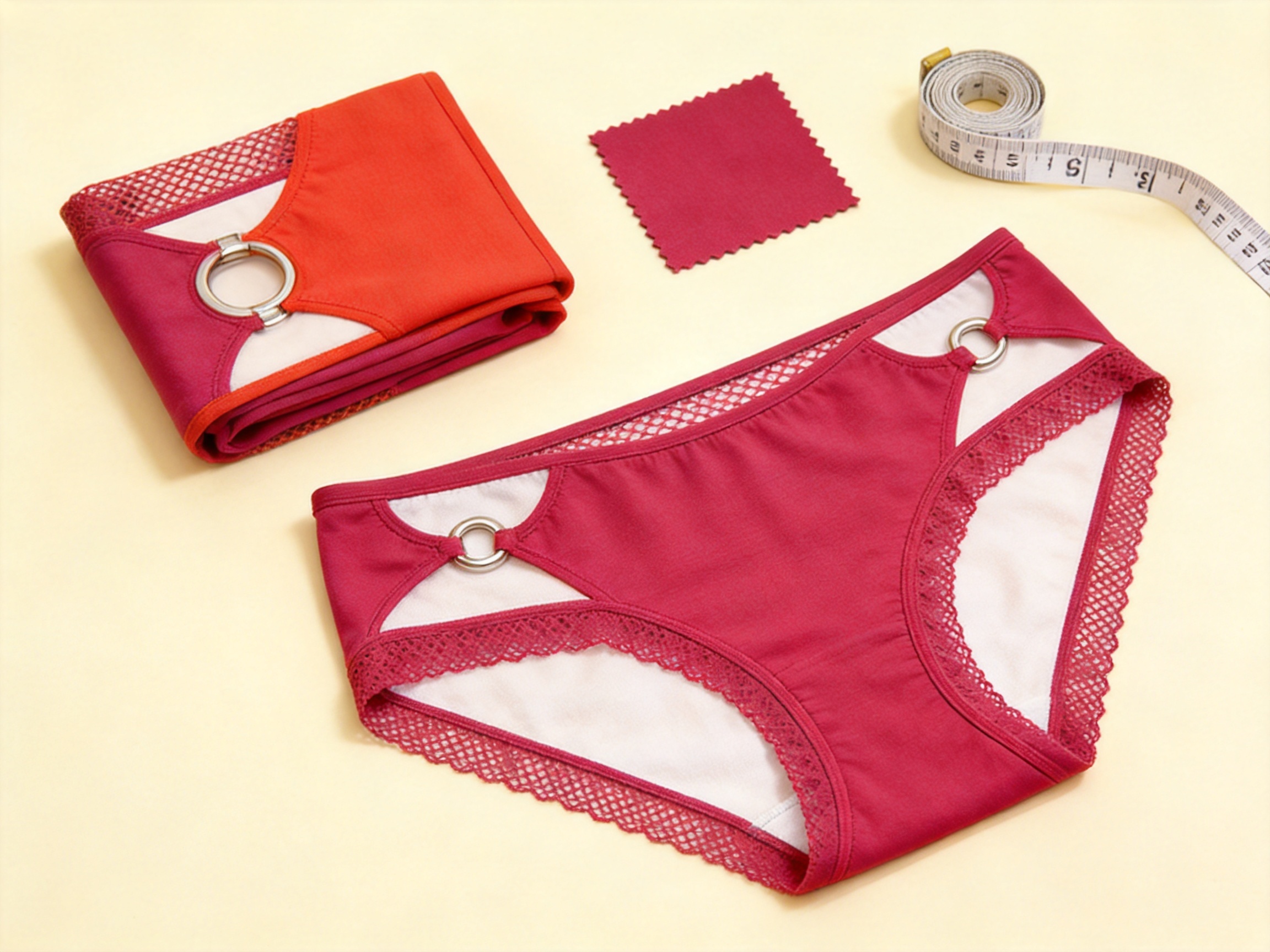
Buyers can reduce delays and quality disputes by asking focused questions before approving the order. The following checklist is suitable for retailers, distributors, lingerie brands, and sourcing agents.
Confirm the product code, silhouette, coverage, rise, size range, and intended use.
Confirm fiber content, stretch, weight, lining, hand feel, and care instructions.
Confirm ring material, color, dimensions, finish, attachment, and safety testing.
Confirm labels, logos, packaging, barcodes, carton marks, and folding method.
Confirm inspection standards, measurement tolerances, test reports, and defect limits.
Confirm minimum order quantity, sample charges, lead time, payment terms, and shipping responsibilities.
Packaging should protect the garment while supporting the intended product position. A premium women’s brief may be folded in a way that keeps the metal ring visible without allowing it to press into the fabric. If the ring is placed under heavy pressure during transport, it could create marks or distort the garment.
Retail packaging should communicate the essential information clearly. Depending on the market, this may include product name, size, fiber content, care instructions, country of origin, brand information, and barcode. Labeling requirements vary by destination, so the buyer should confirm the relevant rules before artwork approval.
For e-commerce, the product should be photographed from front, back, detail, and packaging angles. The metallic ring is a key selling feature, so its shape and finish should be represented accurately. Digital product descriptions should avoid claiming “organic,” “bamboo,” “breathable,” “hypoallergenic,” or “sustainable” unless the claim is supported by the exact materials and applicable evidence.
Care instructions depend on the final fabric and hardware selection. A general recommendation may include gentle washing, avoiding harsh bleach, separating dark colors, and allowing the garment to dry according to the label. However, the final care label must be based on actual product testing.
Metal hardware should be checked for compatibility with washing and drying conditions. If a ring has a special coating or plated finish, aggressive detergents, high heat, and prolonged moisture may reduce its appearance. Brands should validate the selected care instructions through laundering tests before printing labels.
Consumers should also avoid cutting or removing the ring, as doing so may damage the garment structure. If the product is designed with a removable hardware component, that feature must be explained clearly in the care and use instructions.
Ladies’ Metal Ring Briefs are premium women’s briefs designed with a modern triangular silhouette and a refined metallic ring at the front. The distinctive detail adds contemporary appeal, while the carefully developed shape is intended to follow the body’s natural curves. Soft, premium materials provide a comfortable hand feel, making the style suitable for fashion-led underwear collections, boutique retail, private-label programs, and OEM/ODM development.
For customized orders, buyers can discuss fabric composition, color, size range, branding, packaging, ring finish, and matching lingerie styles with the manufacturer. Material and sustainability claims should be based on the confirmed composition and current supporting documentation.
They are women’s briefs featuring a triangular design and a decorative metallic ring at the front. The style combines a fashion-oriented detail with a practical underwear silhouette.
They can be suitable for regular wear when the fabric, seams, elastic, gusset, and ring are properly engineered. Buyers should evaluate the final sample for comfort, movement, washing performance, and hardware safety before making broad everyday-wear claims.
The available product information describes the style as using premium materials but does not state a specific fiber composition. An organic bamboo version may be possible through customization, but the exact material and certification status must be confirmed before marketing the product as organic bamboo underwear.
Customization may be possible for ring color, finish, size, shape, and placement, depending on supplier availability and production requirements. Each change should be tested for comfort, attachment strength, appearance, and laundering performance.
Yes. The manufacturer provides OEM/ODM services, which may include custom labels, colors, fabrics, packaging, size ranges, and coordinated product development. Commercial details such as minimum order quantity and lead time should be confirmed directly for the selected specification.
A technical pack should include drawings, measurements, tolerances, fabric composition, color references, seam details, hardware specifications, label placement, packaging instructions, and inspection requirements. It should also identify the approved sample used as the production standard.
Inspect the ring for smooth edges, consistent finish, secure attachment, correct placement, and resistance to movement. Test the complete garment after washing and repeated wear. The hardware should not cause irritation or leave sharp exposed areas.
The metallic ring gives the product a recognizable fashion detail, while the triangular shape creates a more styled appearance. A basic brief may compete mainly on price and function; this design can also support visual differentiation and a premium collection position.
Yes. Multiple colors can be developed if the selected fabric and trims are available in the required shades. Buyers should approve lab dips, bulk shade standards, and hardware color coordination before production.
Online listings should emphasize the verified product features: women’s brief construction, triangular silhouette, metallic front ring, premium hand feel, available customization, and intended comfort. Search terms such as “premium breathable underwear” or “organic bamboo underwear” should be used only when the specific product meets the relevant material description.
Buyers should request documents relevant to the exact product and supply chain, such as textile safety, organic content, responsible forestry, social compliance, or factory audit documentation. The scope, validity, issuing organization, and covered materials should be checked before using certification logos or claims.
The visual simplicity of Ladies’ Metal Ring Briefs should not be confused with manufacturing simplicity. Close-fitting underwear requires precise pattern work, consistent stretch control, clean inner finishing, and reliable component attachment. A small error in ring placement or elastic tension can change both comfort and appearance.
Nantong Tianhong Textile Technology Co., Ltd. brings a stated history dating to 2001 and operates from Nantong, Jiangsu Province, a major textile manufacturing area. Its stated capabilities include underwear research, manufacturing, sales, OEM/ODM services, sustainable material development, and supply-chain management. The company also reports partnerships with customers in Europe, North America, and China.
For buyers, the practical value of these capabilities lies in the ability to connect product design with manufacturing execution. A suitable supplier should be able to discuss not only how the brief looks, but also how the fabric behaves, how the hardware is secured, how the pattern is graded, how quality is inspected, and how the product will be packed and delivered.
The strongest sourcing decision is based on evidence: approved samples, test reports, production records, clear communication, and consistent inspection results. Those elements help transform a visually attractive concept into a dependable commercial product.
Ladies’ Metal Ring Briefs offer a strong combination of modern styling and practical product potential. The metallic front ring gives the style immediate visual identity, while the triangular brief shape provides a foundation for comfort-focused pattern development. Compared with plain underwear, the design has greater shelf and catalog appeal. Compared with highly elaborate lingerie, it offers a more controlled construction concept that can be adapted across fabrics, colors, and price levels.
For brands seeking premium breathable underwear, organic bamboo underwear, or customized women’s briefs, the key step is to match marketing language with verified product specifications. The base design can support sustainable or breathable material programs, but the final claim must follow the actual fabric composition and certification documentation.
Through OEM/ODM development, buyers can customize the style for their target customer, brand image, and distribution channel. A disciplined process covering fabric selection, hardware testing, pattern grading, wear evaluation, quality control, packaging, and compliance gives the product a stronger chance of performing well in the market.
1. Product specification and descriptive materials for Ladies’ Metal Ring Briefs, product code THDY-041.
2. Nantong Tianhong Textile Technology Co., Ltd. company information concerning underwear manufacturing, OEM/ODM services, textile research, and supply-chain management.
3. General textile product development practices for intimate apparel, including fit approval, fabric testing, dimensional stability, and workmanship inspection.
4. General guidance for textile fiber-content labeling, care instructions, product safety documentation, and responsible marketing claims.
5. General certification frameworks referenced in sustainable and socially responsible textile manufacturing, including FSC, OCS, OEKO-TEX 100, GOTS, WRAP, and BSCI.
Suggested presentation standard: body text at a minimum of 16px with approximately 2 line-height; H2 headings at 22px and bold; H3 headings at 16px and bold; all text left-aligned for clear product and sourcing communication.

Copyright © Nantong Tianhong Textile Technology Co., Ltd. All Rights Reserved.
 Room 806, Building D, Jingyang Plaza, Chongchuan District, Nantong City, Jiangsu Province,china


 English
 Español
 русский
 عربى