Content

Bamboo viscose-dyed men’s briefs are designed for buyers who want soft, breathable, sweat-wicking underwear with a refined appearance and dependable construction. This style uses 40s bamboo viscose-dyed jersey, an active seam around the front U-shaped area, a loose leg opening, and detailed needlework at the waistband and leg openings. These features support comfort, body wrapping, moisture management, durability, and a distinctive color effect.
The product is particularly suitable for private-label underwear brands, wholesalers, retailers, uniform programs, and e-commerce businesses seeking an organic bamboo underwear option with a premium presentation. Compared with ordinary cotton briefs or low-cost synthetic styles, the product offers a softer hand feel, natural-fiber positioning, breathable fabric construction, and a more differentiated dye appearance.
Nantong Tianhong Textile Technology Co., Ltd. manufactures this product through an OEM/ODM model. Its strengths include underwear research and manufacturing experience since 2001, bamboo and other natural-fiber development, customized production, supply-chain management, and quality systems associated with standards such as FSC, OCS, OEKO-TEX 100, GOTS, WRAP, and BSCI. Buyers should confirm the exact certification scope, testing documentation, minimum order quantity, color options, sizing, packaging, and production lead time during product development.
The product, identified as THDY-016, is a men’s brief made from 40s bamboo viscose-dyed jersey. Its design combines a smooth natural-fiber fabric with construction details intended to improve movement and fit. Rather than relying only on fabric softness as a selling point, the brief uses an active seam in the front U-shaped area, a looser leg opening, and reinforced decorative needlework.
This combination gives buyers several points to communicate to customers:
These features place the brief between basic everyday underwear and a more premium natural-fiber product. It can be presented as a comfort-focused essential, a sustainable-fiber product, or a refined private-label underwear style, depending on the buyer’s sales channel and target customer.
The term “40s” generally refers to the yarn count used in the fabric. It gives buyers a useful indication of the yarn fineness and fabric positioning, although yarn count alone does not determine final garment quality. The finished result also depends on knitting structure, fabric weight, dyeing control, finishing, sewing accuracy, and inspection standards.
For a men’s brief, a 40s bamboo viscose jersey can provide a balanced platform for softness, flexibility, and close-to-body comfort. Jersey construction is naturally suitable for underwear because it can stretch with the body and recover after movement when the appropriate yarn combination and finishing process are used.
Bamboo viscose is widely used in underwear because it has a smooth hand feel and a comfortable surface against the skin. It is also well suited to lightweight and breathable apparel applications. The fabric’s soft touch allows a brand to offer a premium sensory experience without depending on heavy embellishment or complex styling.
For consumers, the most important benefits are often practical. Underwear is worn for long periods, placed next to sensitive skin, and expected to remain comfortable during sitting, walking, commuting, work, exercise, and sleep. A soft, breathable jersey can help support that use case.
Buyers should describe bamboo viscose accurately. Bamboo viscose is a regenerated cellulosic fiber made by processing bamboo-derived cellulose into a usable textile fiber. It should not automatically be described as mechanically processed bamboo fiber. Sustainability claims should match the fiber documentation and relevant certification records supplied for the specific order.
The briefs are described as having unique coloration from the bamboo viscose dyeing process. This gives the product a visual point of difference compared with plain commodity underwear. Subtle variations in tone can make each garment look less uniform and more artisanal, provided the effect is controlled within an agreed production standard.
For private-label buyers, dye development should be handled through approved lab dips, color standards, and production shade tolerances. A unique appearance can be attractive, but excessive shade variation may create customer complaints or mismatched sets. The best commercial approach is to define the intended visual effect before bulk production and approve a reference sample.
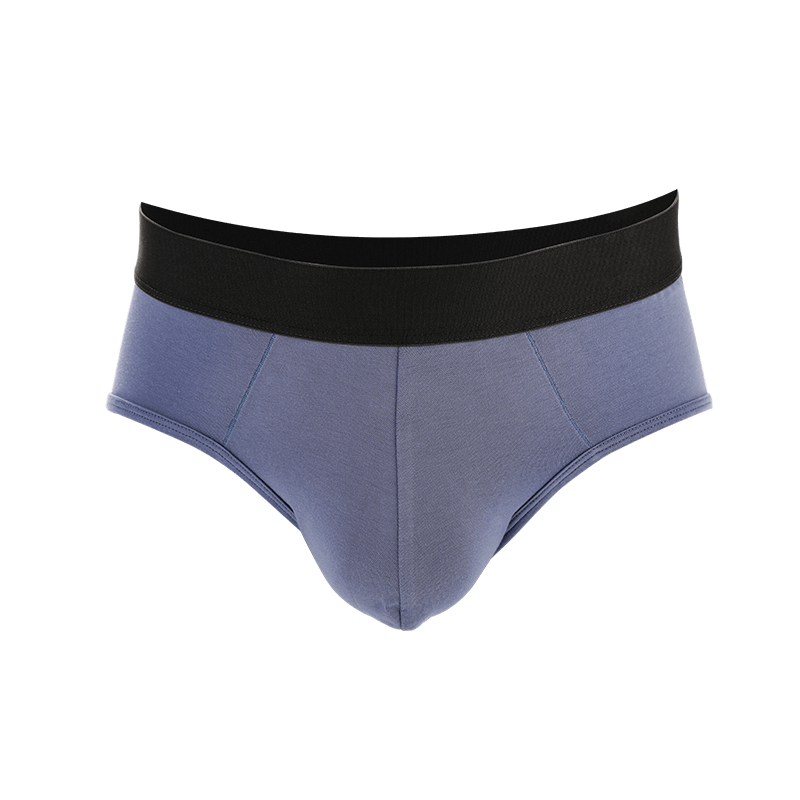
Bamboo Viscose-Dyed Sweat-Wicking Men's Briefs
The front U-shaped area is stitched to the main body using an active seam. This construction detail is central to the product’s comfort proposition. It helps create a shaped front section while maintaining a flexible connection with the rest of the brief.
A well-executed active seam can contribute to improved body wrapping and a more organized front fit. It may also reduce the need for excessive fabric tension across the front panel. For customers, the practical result is a brief that feels more deliberately engineered than a simple one-piece pattern.
Seam comfort depends on more than the seam name. Buyers should evaluate thread selection, stitch density, seam allowance, seam placement, tension control, and the finish on the inside of the garment. A smooth internal finish is especially important in underwear because the seam remains in constant contact with the wearer’s skin.
The product information describes a loose ankle or leg opening. In the context of men’s briefs, this indicates a less restrictive opening around the lower edge of the garment. The purpose is to improve freedom of movement and reduce pressure around the upper thigh or groin area.
A loose opening must still retain enough structure to prevent excessive rolling or loss of shape. The correct balance depends on the rib or binding construction, elastic recovery, stitch quality, fabric stretch, and size grading. Buyers should test the brief on multiple body types rather than approving the opening based on a single sample.
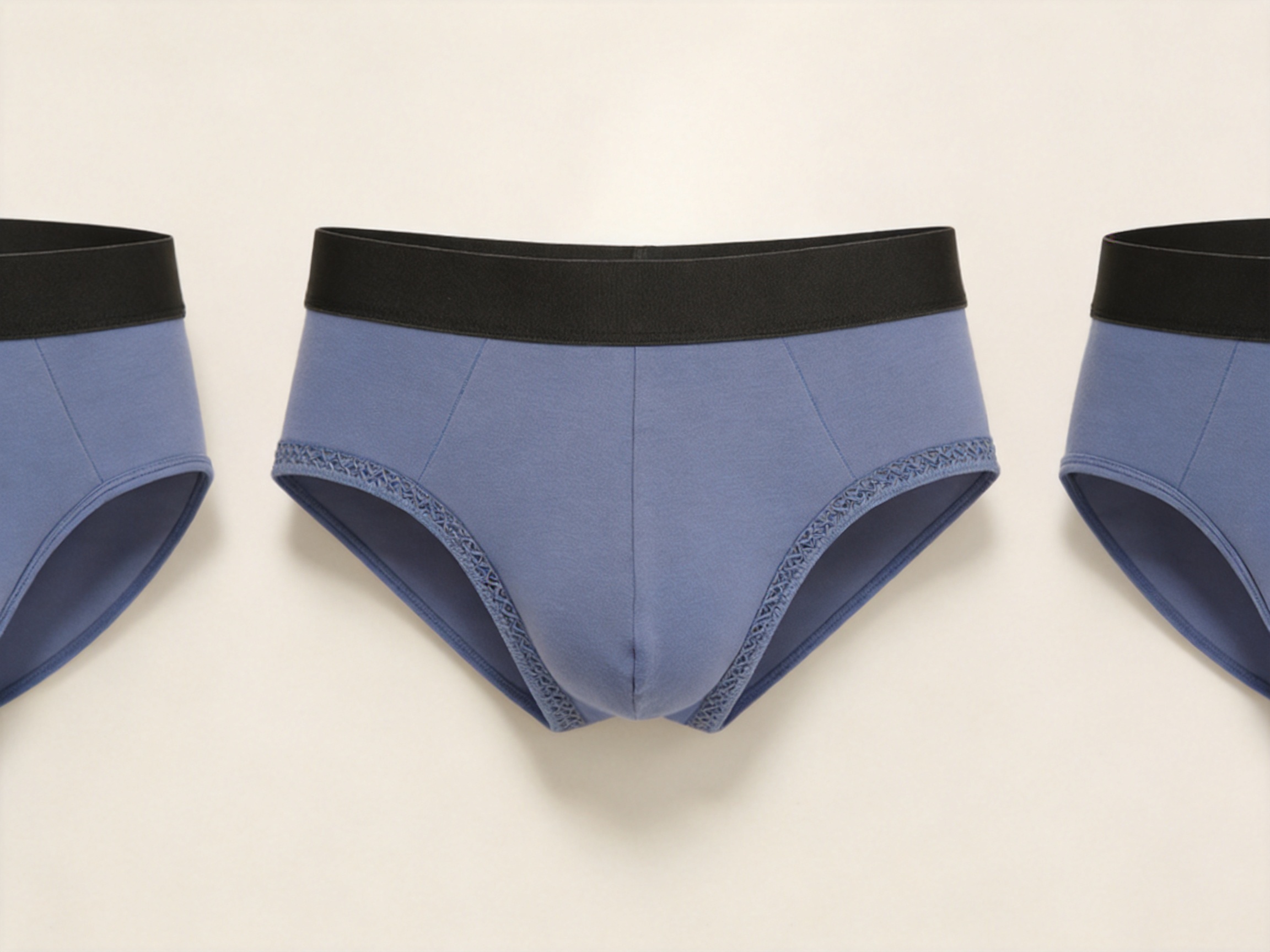
Mongolian needlework is used to add intricate details to the waistband and leg openings. The needlework gives the product a more distinctive finish and can reinforce the brand’s premium design language. Decorative work is particularly useful for buyers that want to distinguish a bamboo underwear line from plain white-label basics.
Detailed stitching should remain comfortable and secure. The key inspection points include loose threads, skipped stitches, uneven tension, puckering, sharp thread ends, and inconsistent placement. The decorative effect should support the garment instead of creating hard or irritating areas.
| Buying consideration | Bamboo viscose-dyed men’s briefs | Basic cotton briefs | Low-cost synthetic briefs |
|---|---|---|---|
| Surface feel | Soft, smooth, and suitable for a premium comfort position | Comfortable when properly knitted and finished, but quality varies widely | Can feel smooth, but may be less natural in hand feel |
| Breathability positioning | Strong natural-fiber and breathable-fabric appeal | Familiar breathable-fiber option | Depends heavily on fiber blend and fabric construction |
| Moisture-management message | Can be marketed around a sweat-wicking, breathable comfort profile | Absorbs moisture, but drying performance varies | May dry quickly, but can feel less soft or less natural |
| Appearance | Distinctive dyed coloration with decorative construction details | Usually more conventional unless specially finished | Often relies on printed or performance-oriented styling |
| Brand differentiation | Strong fit for natural-fiber, sustainable, and premium private-label ranges | Competitive in mass-market basics | Competitive for price and technical-performance positioning |
| Customization potential | Suitable for OEM/ODM color, label, packaging, and product development requests | Widely available but may be less distinctive | Suitable for technical styles, depending on factory capability |
This comparison does not mean that bamboo briefs are the best choice for every customer. Cotton may be more suitable for a value-focused range, while synthetic blends may be preferred for fast-drying athletic underwear. The advantage of this product is its combination of a natural-fiber story, soft hand feel, visual character, and construction-focused design.
A private-label brand can use this style as a hero product for a bamboo collection or as an upgraded alternative to basic men’s briefs. The product has enough material and construction detail to support a premium product page without requiring an overly complicated silhouette.
Brand owners can build the range around several messages: breathable everyday comfort, naturally inspired materials, moisture-conscious design, and refined craftsmanship. Packaging can reinforce the product’s material story through clear fiber descriptions, care instructions, and verified certification information.
The brand should avoid making unsupported claims such as “chemical-free,” “completely biodegradable,” or “zero-impact.” A responsible product page can state that the briefs use bamboo viscose and provide relevant certification details when documentation applies to the fabric or finished garment.
Wholesalers need products that are easy for retailers to explain and display. Bamboo briefs offer a familiar sustainability and comfort story, while the dyed coloration and needlework provide visual interest on a sales rack or online catalog.
Distributors should request a complete wholesale information pack containing the size chart, fabric composition, available colors, packaging options, carton dimensions, product weight, care label information, sample policy, minimum order quantity, and production schedule. These details make it easier to quote accurately to retail customers.
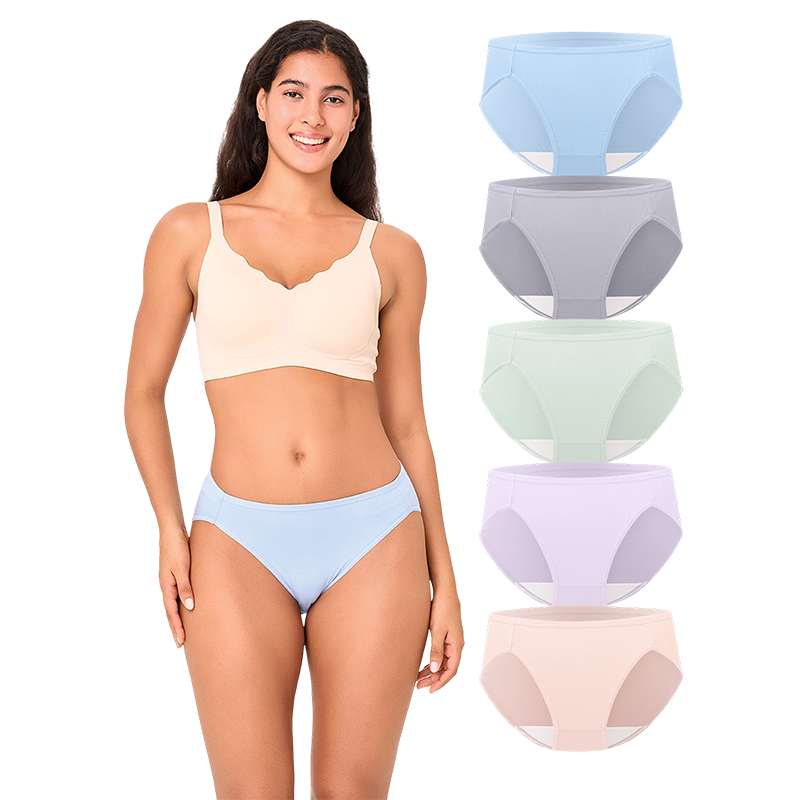
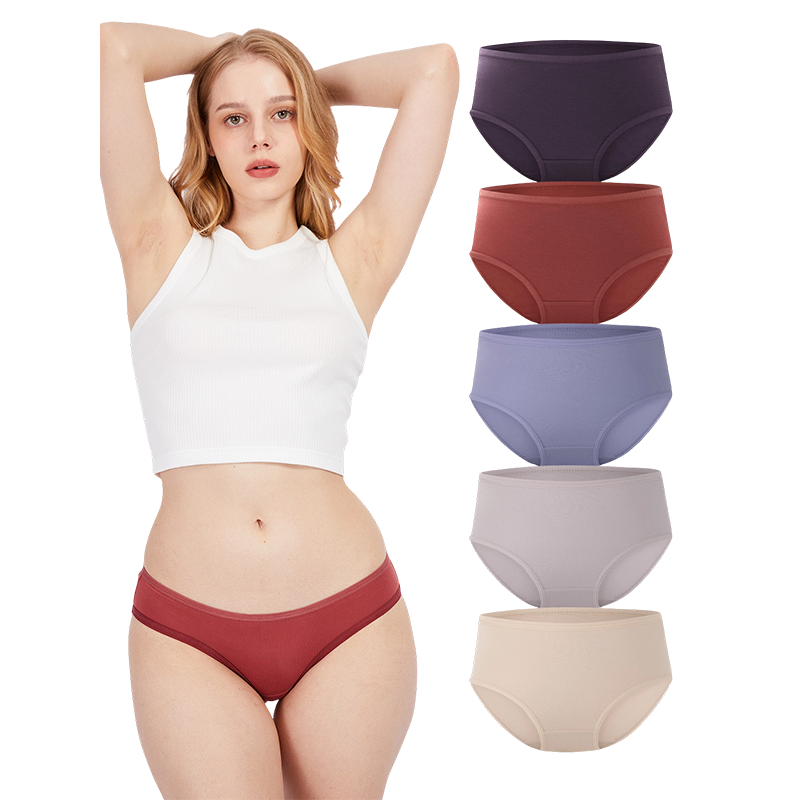
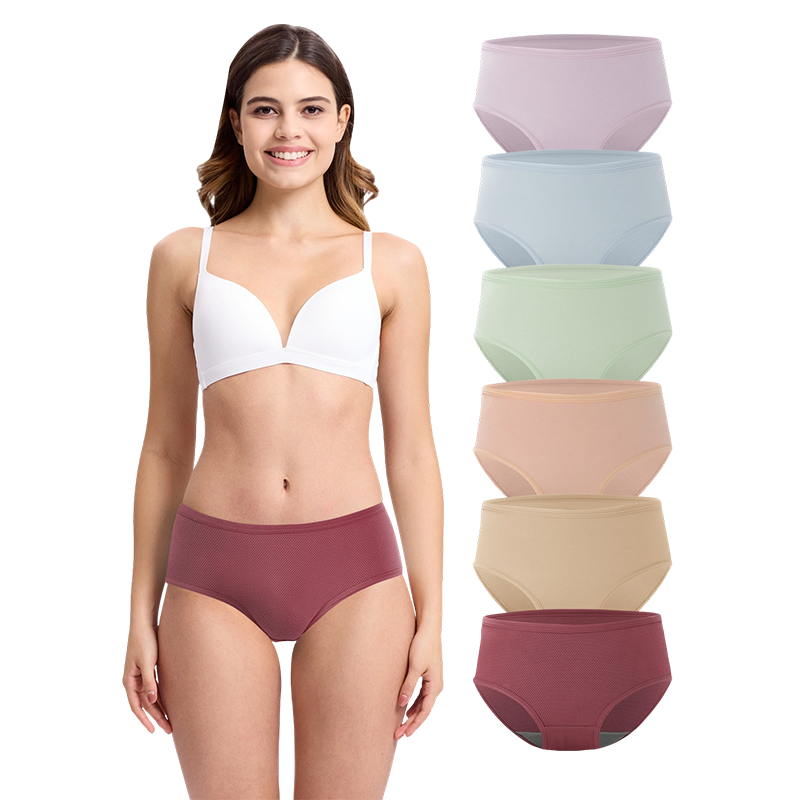
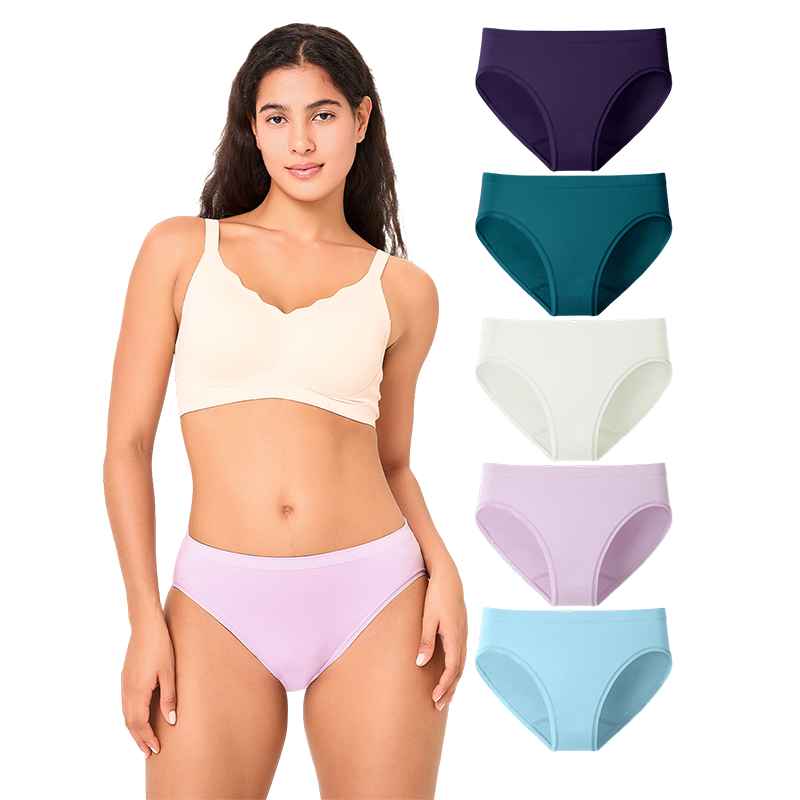
Online sellers need to translate physical comfort into precise content. Product photography should show the waistband, front U-shaped seam, leg openings, surface texture, and coloration. Close-up images are valuable because they allow shoppers to see the construction details that justify a premium price.
The product description should explain fit without exaggerating. Useful information includes whether the style is close-fitting or relaxed, how the leg opening sits, whether the waistband is covered or exposed, and whether the size chart reflects body measurements or garment measurements.
Search-focused copy can naturally include terms such as “premium breathable underwear,” “organic bamboo underwear,” “bamboo men’s briefs,” “sweat-wicking men’s underwear,” and “OEM bamboo underwear manufacturer.” Keyword usage should remain readable and should match the evidence available for the product.
Soft underwear made from bamboo viscose can fit wellness-oriented retail programs, resort stores, lifestyle subscription boxes, and comfort-focused gift collections. The visual effect of the dyed jersey and detailed finishing can support a more elevated presentation than ordinary promotional underwear.
Bulk buyers in these sectors should pay special attention to size inclusivity, packaging, repeat-order consistency, and replacement availability. If the product will be distributed as part of a uniform or guest amenity program, durability and laundering tests should be completed before volume purchasing.
Nantong Tianhong Textile Technology Co., Ltd. was established in 2001 in Nantong, Jiangsu Province, a major textile industry area in China. The company specializes in the research, manufacturing, and sales of underwear products. This experience gives the manufacturer a base for handling the practical requirements of underwear production, including pattern development, fabric sourcing, sewing, finishing, inspection, packaging, and order coordination.
Long-term manufacturing capability matters because underwear has narrow tolerances in fit and comfort. A small change in elastic tension, seam placement, fabric recovery, or size grading can affect the customer’s experience. A factory familiar with underwear-specific production is better positioned to identify these details during development.
The company provides OEM and ODM products and services for established labels. OEM production is useful when a buyer already has a defined design, specification, logo, and packaging concept. ODM development is suitable when a buyer wants to start from an existing product platform and customize materials, colors, labels, packaging, or construction details.
For this bamboo brief, an effective development process can include the following stages:
This structured approach reduces the risk of receiving a product that matches the general concept but misses important commercial details.
The company focuses on sustainable development, environmentally friendly functional fabrics, and traceable supply-chain management. That focus supports buyers who are building underwear collections around natural fibers and responsible sourcing.
Traceability should be treated as a process rather than a marketing slogan. Buyers can ask for fiber-origin information, mill details, dyeing records, production batch identification, test reports, and certification documents relevant to the order. The level of documentation should match the customer’s claims and regulatory obligations in the destination market.
The company’s product and management capabilities are associated with standards such as FSC, OCS, OEKO-TEX 100, GOTS, WRAP, and BSCI. These standards cover different areas, so they should not be treated as interchangeable.
Buyers should request the current certificate number, issuing body, validity period, certificate scope, and the facility or product covered. A factory-level certification does not automatically mean that every fabric, color, or finished product carries the same certification.
Fabric inspection should address width, weight, shade consistency, surface defects, holes, slubs, streaks, pilling risk, stretch, and recovery. Bamboo viscose jersey may require careful handling because knitted fabrics can relax or distort between knitting, dyeing, finishing, cutting, and sewing.
Buyers should approve a fabric standard that records the intended hand feel, color appearance, width, weight, and dimensional stability. The standard should be retained for bulk inspection and future repeat orders.
The dyed appearance is one of the product’s selling points, so color control is commercially important. The factory and buyer should agree on a reference sample, acceptable shade range, and the intended level of visual variation.
Colorfastness testing should be selected according to the intended market and care instructions. Common areas for evaluation include washing, rubbing, perspiration, and water exposure. Darker or more complex shades may require additional attention because they can show more visible transfer or fading if the dyeing and finishing process is not properly controlled.
Inspection should cover the active seam, front U-shaped panel, waistband attachment, leg openings, decorative needlework, and inside seam comfort. The garment should be checked for skipped stitches, broken threads, open seams, puckering, uneven seam allowances, loose ends, and sharp or irritating thread tails.
Stretch testing at the leg openings and waistband is also useful. The garment should return to its intended shape after repeated extension. Testing should reflect the buyer’s intended use rather than relying only on a visual inspection.
Size measurements should be taken using a consistent method. Important points may include waist relaxed measurement, waist extended measurement, front rise, back rise, side length, leg-opening width, pouch dimensions, and overall length. The exact measurement list should be agreed before sampling.
Because jersey fabric stretches, buyers should distinguish between relaxed garment measurements and recommended body measurements. A size chart that does not explain this difference can lead to avoidable returns in online retail.
Before placing a bulk order, buyers should prepare a written specification instead of relying on product photographs or verbal descriptions. The following checklist can be used during quotation and sample approval.
| Specification area | Questions to confirm |
|---|---|
| Fiber content | What is the exact fiber composition? Is bamboo viscose supported by relevant documentation? |
| Fabric | Is the fabric 40s bamboo viscose-dyed jersey? What are the target weight, width, stretch, and recovery requirements? |
| Color | Which colors are available? Is the unique coloration a controlled effect or a standard solid shade? |
| Construction | How is the active seam positioned? What finish is used inside the front U-shaped area? |
| Fit | Are the leg openings relaxed, regular, or close-fitting? Which body measurements correspond to each size? |
| Needlework | What decorative stitching is required at the waistband and leg openings? Is placement standardized? |
| Branding | Can the buyer customize labels, hangtags, packaging, color cards, and carton marks? |
| Testing | Which colorfastness, dimensional stability, fiber, harmful-substance, and performance tests are required? |
| Certification | Which current certificates apply to the fabric, production facility, or finished product? |
| Order planning | What are the minimum order quantities, sample charges, lead times, payment terms, and reorder conditions? |
A written checklist helps both sides identify differences between a development sample and the final production order. It also gives the buyer a basis for comparing suppliers on more than unit price.
The strongest positioning is based on the combined experience of wearing the brief: soft fabric, breathable construction, sweat-wicking appeal, a comfortable active seam, and a relaxed leg opening. The product should be presented as an upgraded essential rather than as a novelty item.
Product pages can use a concise value proposition such as: “Soft bamboo viscose-dyed jersey, engineered with an active front seam and relaxed leg openings for breathable everyday comfort.” This statement is specific, understandable, and connected to the actual product details.
The keyword “organic bamboo underwear” can attract buyers who are looking for sustainable materials, but it must be used carefully. Bamboo viscose and organic certification are separate claims. If the product is to be sold as organic, the buyer should verify whether the fiber and finished product meet the required organic standard.
A safer product description can say “bamboo viscose men’s briefs” unless the relevant organic certification has been confirmed. Once documentation is available, the brand can state the certified fiber or product claim precisely.
“Sweat-wicking” should be supported by the actual fabric composition, construction, and any performance test data. A product can be breathable and comfortable without making an absolute claim that it keeps every wearer dry in every condition.
For practical marketing, explain the intended use: daily wear, warm-weather comfort, commuting, travel, light activity, and relaxed home wear. If the product has not been tested for intensive sports use, it should not be positioned as a technical athletic brief.
Care instructions should be finalized according to the actual fabric and dyeing process. Bamboo viscose jersey generally benefits from gentle handling, moderate washing temperatures, and avoidance of harsh treatment. The final care label should be based on supplier recommendations and validation testing rather than copied from another product.
Care communication is part of quality management. A premium brief can receive poor reviews if customers do not understand how to protect the color, elastic, and soft finish.
Nantong is located in Jiangsu Province and is recognized as an important textile manufacturing area in China. For an underwear buyer, the value of a textile hub lies in access to supporting capabilities such as yarns, knitted fabrics, dyeing, sewing, packaging, testing, logistics, and related production services.
Location alone does not guarantee quality. The more useful question is whether the manufacturer can coordinate these resources under a controlled product-development process. Nantong Tianhong’s stated focus on underwear research, manufacturing, OEM/ODM service, natural fibers, and traceable supply management is relevant because the buyer can discuss the garment as a complete product rather than as an isolated fabric purchase.
A suitable supplier should also communicate clearly about what it controls directly and what is handled by approved partners. This distinction matters for dyeing, certification, testing, social compliance, and repeat-order consistency.
Check the softness, surface smoothness, fabric density, color appearance, waistband comfort, and general balance of the garment. Compare the sample with the agreed product brief rather than judging it only by appearance.
Turn the brief inside out and inspect the active seam, front panel, waistband join, leg-opening finish, thread ends, and decorative needlework. Underwear should feel comfortable on the inside, not merely look attractive from the outside.
Stretch the brief gently in the waist and leg openings. Simulate sitting, walking, bending, and rising. Check whether the front panel remains appropriately positioned and whether the leg openings become too tight or too loose after movement.
Wash a sample according to the proposed care label and compare it with an unwashed control sample. Review color change, shrinkage, twisting, pilling, seam stability, waistband recovery, and surface softness. If the buyer plans to sell internationally, testing should reflect the markets and claims used in the sales materials.
Request more than one sample when possible. Compare samples from different production batches or color lots to evaluate consistency. The product’s dyed appearance may naturally vary, but the acceptable range must be commercially defined.
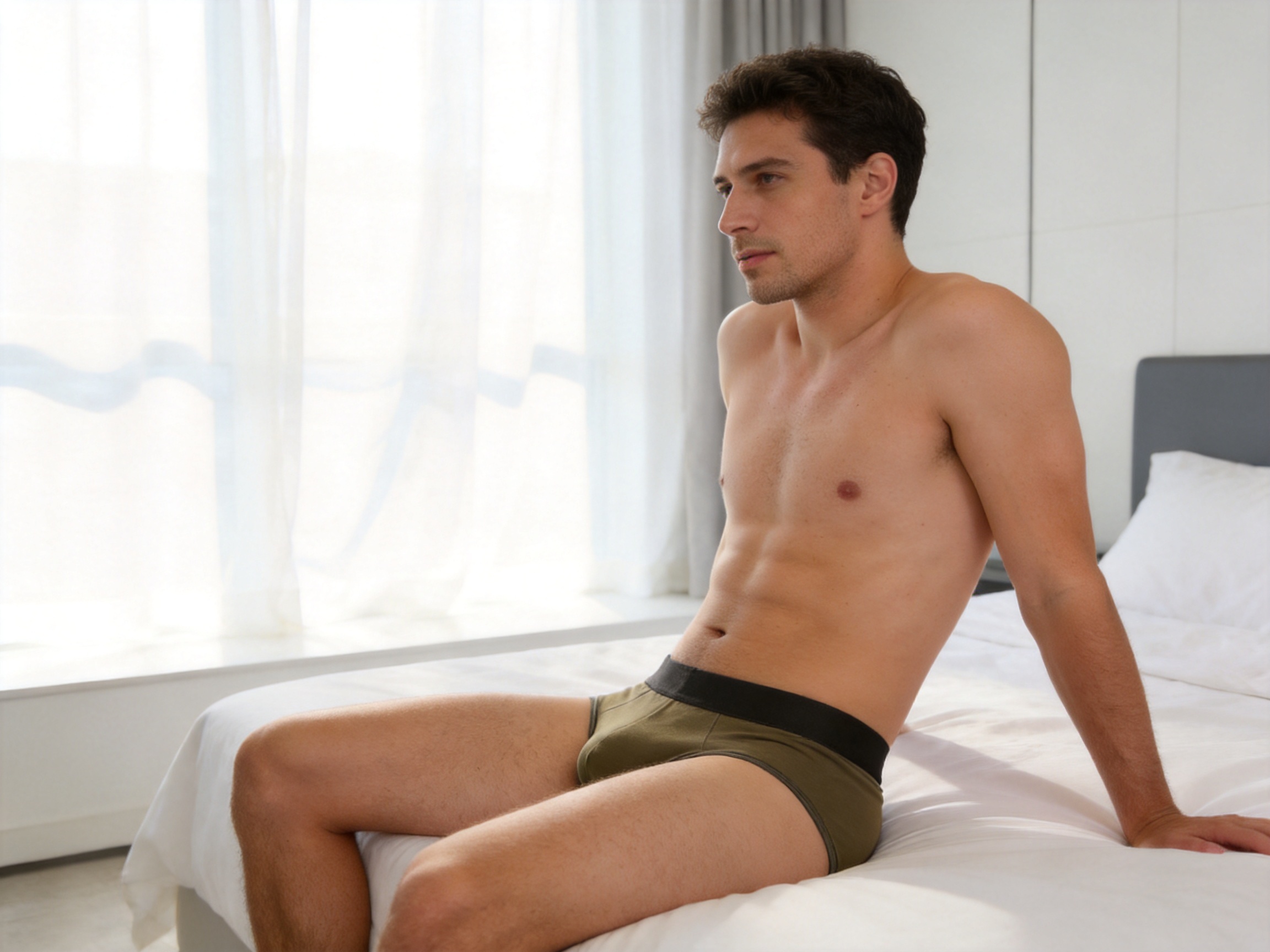
The product uses 40s bamboo viscose-dyed jersey. Buyers should confirm the complete fiber composition, fabric weight, stretch content if any, and testing documentation before placing a production order.
The product is designed and positioned as breathable underwear. Its jersey construction and bamboo viscose content support a soft, comfortable wearing experience. Actual breathability depends on fabric weight, knitting structure, finishing, garment fit, and the wearer’s environment.
The product is described as sweat-wicking. Buyers should request performance information if they need to make a formal moisture-management claim, especially for sports, workwear, or regulated markets.
The active seam connects the front U-shaped area to the main body. It is intended to improve the front structure, comfort, and body wrapping while allowing the garment to move with the wearer.
The design uses loose leg openings rather than a strongly restrictive opening. The final fit still depends on size, fabric recovery, elastic or binding construction, and grading. Buyers should review the measurement chart and test the sample on more than one body type.
The product has a unique coloration associated with the bamboo viscose dyeing process. Buyers should approve a color reference and acceptable tolerance so that the finished appearance remains consistent with the intended product concept.
Yes. The manufacturer provides OEM/ODM services, making the product suitable for customized labels, packaging, colors, sizing, and selected construction details. Minimum order quantities and customization limits should be confirmed for each project.
That wording should be used only when the relevant fiber and product documentation supports it. Bamboo viscose is not automatically organic-certified. Buyers should verify the applicable OCS, GOTS, or other certification scope before using an organic claim.
The company identifies standards and programs including FSC, OCS, OEKO-TEX 100, GOTS, WRAP, and BSCI. The correct certification depends on the material, product, facility, and order. Buyers should request current documents and confirm that they cover the specific goods being purchased.
An effective listing can mention bamboo viscose-dyed jersey, soft breathable comfort, the active front seam, relaxed leg openings, sweat-wicking positioning, and detailed waistband and leg-opening needlework. It should also include accurate fiber content, size information, care instructions, and any verified certifications.
Ask for the fabric composition, available colors, sample cost, minimum order quantity, size range, packaging options, logo process, test reports, certification scope, production lead time, payment terms, and shipping information. Providing a target quantity and destination market will help the manufacturer prepare a more useful quotation.
The briefs offer sweat-wicking and breathable comfort positioning, but buyers should not assume that they are technical sports underwear without appropriate testing. For intensive athletic use, request moisture-management, drying, stretch-recovery, abrasion, and wash-durability evaluations.
A successful underwear program depends on more than the first sample. Buyers need a supplier that can maintain the approved fabric, repeat colors, reproduce the fit, document quality checks, and respond to changes in market demand.
This product offers a useful platform for long-term development because its core concept can be extended without losing its identity. A buyer may develop additional shades, alternative waistband treatments, new packaging, broader sizing, coordinated women’s or children’s underwear, or different bamboo-fiber jersey weights while keeping the natural-fiber positioning consistent.
The manufacturer’s experience with OEM/ODM products allows the buyer to decide how much of the design should remain standard and how much should be customized. A smaller brand may begin with an existing brief and custom packaging. A larger label may request a dedicated pattern, exclusive color, special waistband, new size grade, and full testing program.
Repeat-order control should include an approved sample, approved fabric standard, color reference, measurement chart, packaging file, label artwork, inspection procedure, and change-control record. If a material or process changes, the buyer should receive advance notice and a new approval sample when appropriate.
For buyers seeking premium breathable underwear with a natural-fiber story, this bamboo viscose-dyed men’s brief is a strong product candidate. Its main advantages are not based on one isolated feature. They come from the combination of soft 40s bamboo viscose jersey, sweat-wicking positioning, controlled dyed coloration, active front construction, loose leg openings, and detailed needlework.
The product is most suitable when the sales strategy values comfort, fabric story, appearance, and responsible sourcing rather than the lowest possible unit cost. It can serve as a core style for a bamboo underwear collection, an upgraded men’s brief for a private-label brand, or a differentiated item for wholesalers and online retailers.
Before purchasing, buyers should verify the exact composition, color tolerance, size grading, certification scope, performance testing, minimum order quantity, packaging requirements, and production schedule. They should also approve a pre-production sample and conduct a wash and fit review. These steps turn a promising product concept into a dependable commercial item.
Bamboo viscose-dyed men’s briefs answer a specific market need: comfortable everyday underwear that combines a soft natural-fiber feel with visible construction details and a more premium appearance. The active seam gives the front area a defined structure, the loose leg opening supports easier movement, and the dyed jersey creates a recognizable visual identity.
Nantong Tianhong Textile Technology Co., Ltd. adds value through underwear manufacturing experience, OEM/ODM development, natural-fiber and functional-fabric focus, and supply-chain and compliance awareness. Buyers that need reliable private-label production should evaluate the company through samples, documentation, testing, communication, and repeat-order controls rather than price alone.
When the product claims are matched to verified specifications, this style can compete effectively in the premium breathable underwear and bamboo men’s briefs categories. Its strongest commercial message is direct: soft bamboo viscose comfort, thoughtful construction, distinctive coloration, and a manufacturing partner prepared to support customized underwear development.
1. Product specification supplied for THDY-016, Bamboo Viscose-Dyed Sweat-Wicking Men’s Briefs.
2. Nantong Tianhong Textile Technology Co., Ltd. company information and manufacturing profile.
3. General textile quality-control principles for knitted jersey fabrics, garment seams, colorfastness, dimensional stability, and apparel inspection.
4. Organic Content Standard documentation principles for textile supply-chain verification.
5. Global Organic Textile Standard principles for organic fibers, processing, environmental management, and social criteria.
6. OEKO-TEX Standard 100 principles for harmful-substance testing in textile products.
7. Forest Stewardship Council principles for responsible forest-based materials and certified supply chains.
8. WRAP principles for responsible apparel and textile manufacturing.
9. BSCI social-compliance assessment principles for international supply chains.

Copyright © Nantong Tianhong Textile Technology Co., Ltd. All Rights Reserved.
 Room 806, Building D, Jingyang Plaza, Chongchuan District, Nantong City, Jiangsu Province,china

 English
 Español
 русский
 عربى