Content

Premium bamboo viscose satin boxers are a strong choice for buyers seeking soft, breathable, moisture-managing underwear with a more refined appearance than conventional cotton or basic synthetic styles. The men’s luxurious boxers described here use bamboo viscose filament fabric with a smooth satin finish, creating a lightweight, silk-like hand feel while supporting everyday comfort.
The product is particularly suitable for private-label retailers, underwear brands, hospitality programs, uniform suppliers, and distributors looking for an OEM/ODM manufacturing partner. Its main advantages are the smooth fabric surface, natural breathability associated with bamboo viscose, moisture-wicking performance, durable filament construction, sophisticated styling, and customization potential. Nantong Tianhong Textile Technology Co., Ltd. combines long-term underwear manufacturing experience, product research, OEM/ODM services, functional fabric development, and quality-management certifications to support commercial production.
Best buying decision: Select bamboo viscose satin boxers when softness, breathable comfort, premium presentation, and private-label flexibility matter more than the lowest possible unit price. Before placing a production order, confirm fabric composition, weight, colorfastness, shrinkage, waistband construction, size grading, packaging, testing documentation, and certification requirements.
Men’s underwear buyers increasingly expect more than basic coverage. They want underwear that feels comfortable for long working days, performs well during movement, fits neatly under trousers, and presents a premium image at retail. Fabric choice has a direct effect on each of these requirements.
Bamboo viscose is valued for its soft touch and fluid drape. When made into a filament satin fabric, it can provide a particularly smooth surface with a polished visual effect. This makes it different from ordinary knitted cotton boxers, which may feel familiar and breathable but often have a more matte appearance and a less fluid hand. The satin construction also supports a premium product story for brands that want to position underwear as refined, tactile, and giftable.
The featured product, identified as THDY-045, is designed around this combination of comfort and presentation. It is described as men’s luxurious boxers made from bamboo viscose Heaven Silk Satin. The product information also identifies the material as bamboo viscose Tencel satin fabric and bamboo viscose filament. For commercial buyers, the exact fiber blend and construction should be confirmed in the technical specification before production, because “bamboo viscose,” “Tencel,” and blended satin fabrics can refer to different compositions and performance profiles.
That verification step does not reduce the value of the concept. It helps a buyer turn a compelling product idea into an accurate product specification. A reliable manufacturer should be able to provide the composition, fabric construction, weight, finishing method, care instructions, and available testing documents needed for product development and market compliance.
| Product element | Commercial significance |
|---|---|
| Product reference | THDY-045, useful for sampling, quotation, internal approval, and production tracking. |
| Product category | Men’s boxers within a broader underwear manufacturing range. |
| Primary material positioning | Bamboo viscose filament satin with a soft, smooth, silk-like hand feel. |
| Comfort features | Breathability, moisture management, lightweight softness, and a gentle surface against the skin. |
| Market positioning | Premium everyday underwear, private-label collections, luxury basics, and elevated giftable apparel. |
| Manufacturing model | OEM/ODM development for brands, distributors, retailers, and other professional buyers. |
| Visual assets | Product photography and additional product images are available for catalog, review, and merchandising use. |
The product combines several features that commercial buyers commonly seek in a premium underwear program: a differentiated fiber story, a luxurious hand feel, a polished appearance, and the opportunity to develop a consistent collection around the same material platform.
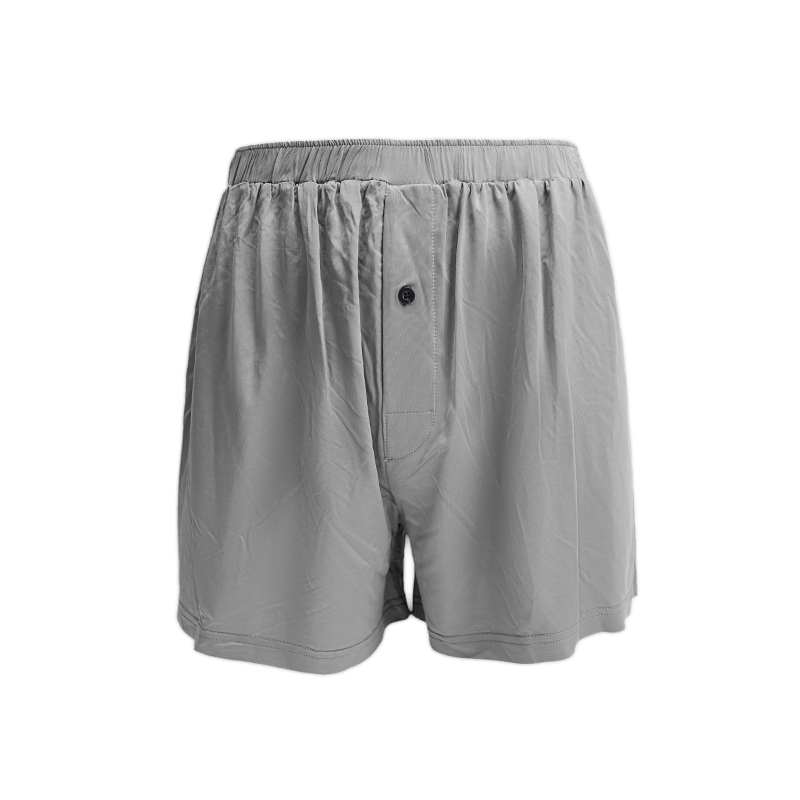
Men's Luxurious Boxers
The first advantage is tactile. Bamboo viscose is widely selected for its soft hand, and a satin finish can make the fabric feel especially smooth when it touches the body. This matters because underwear remains in close contact with the skin for many hours. A rough or stiff fabric can create friction, discomfort, and dissatisfaction even when the garment is correctly sized.
The smooth surface of the featured boxer concept supports a premium comfort message without relying on excessive decoration. For a brand, that can be useful. The product can communicate quality through fabric performance and construction rather than through complicated trims that increase cost or create additional pressure points.
Breathability is a major purchase consideration in men’s underwear. A breathable fabric allows heat and moisture to move away from the skin more effectively than a dense, poorly ventilated material. Bamboo viscose is often chosen for its comfortable moisture-handling properties and soft, airy feel.
Breathability should not be treated as a guarantee of identical performance in every climate. Fabric weight, weave, finishing, garment fit, lining, waistband design, and color can all influence the wearer’s experience. Buyers should request fabric test data and evaluate finished samples under realistic conditions. Even so, a lightweight bamboo viscose satin platform gives a manufacturer a strong starting point for a breathable premium product.
Moisture management is closely related to comfort. During commuting, travel, work, or light physical activity, the body produces heat and perspiration. A fabric that feels damp for an extended period may become clingy or uncomfortable. The product information positions these bamboo viscose boxers as moisture-wicking and capable of helping the wearer stay cool and dry.
For responsible product communication, brands should use specific language supported by testing. Instead of making broad performance promises, a label or product page can explain that the fabric is selected for its breathable, moisture-managing feel and that final performance depends on construction and care. This approach is more credible and easier to support with laboratory results.
Many underwear collections compete in a crowded basic-apparel market. A satin surface can create a visual distinction through subtle sheen, fluid drape, and a more polished appearance. That difference can help a retailer separate premium boxers from standard jersey or low-cost synthetic products.
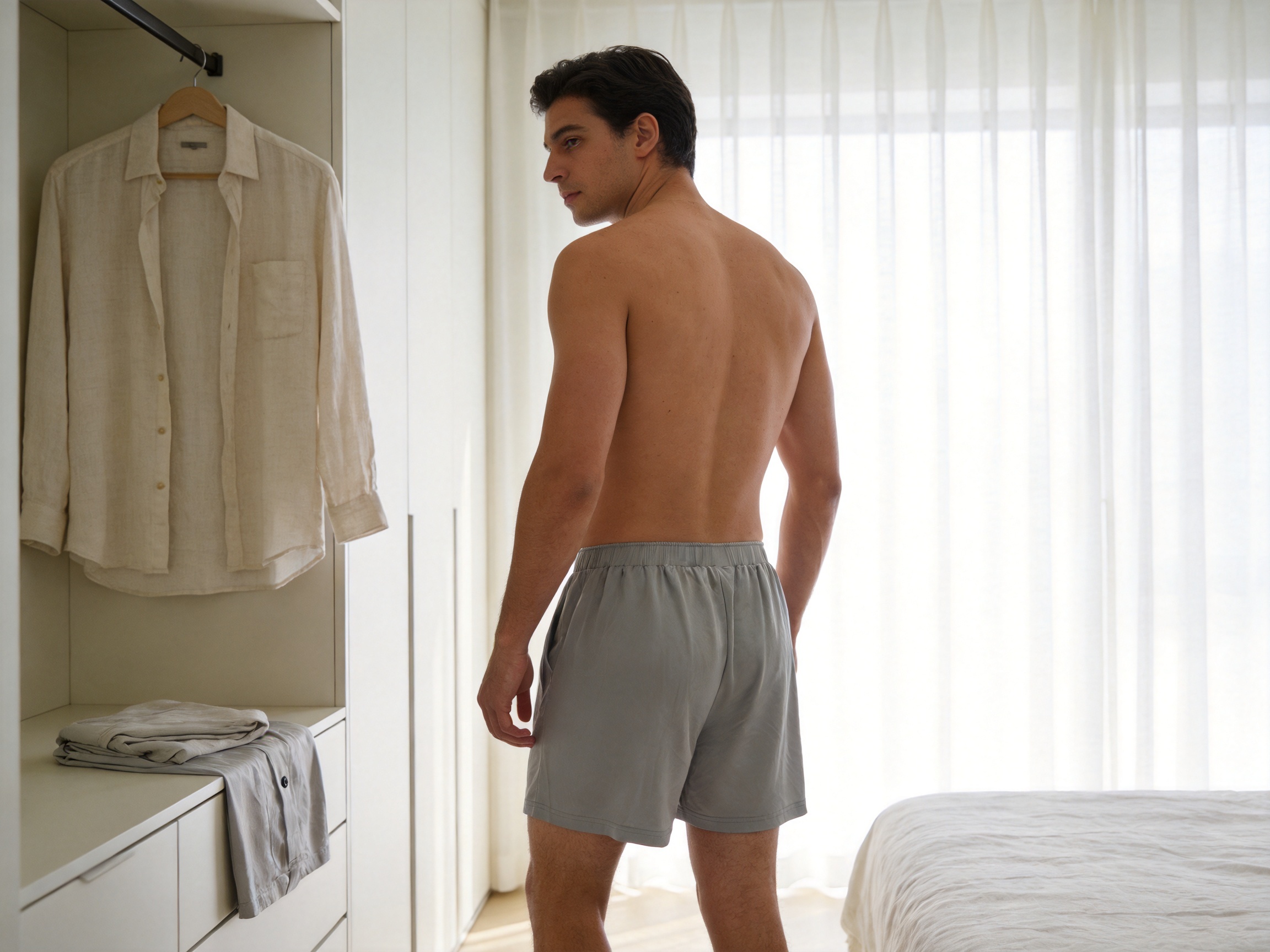
A refined appearance also expands the product’s merchandising possibilities. The boxers can be sold as an elevated daily essential, included in a premium gift set, presented as a travel item, or paired with coordinated robes, shirts, or loungewear. The product does not need loud branding to communicate value. Fabric appearance, color development, packaging, and precise construction can create a quieter luxury message.
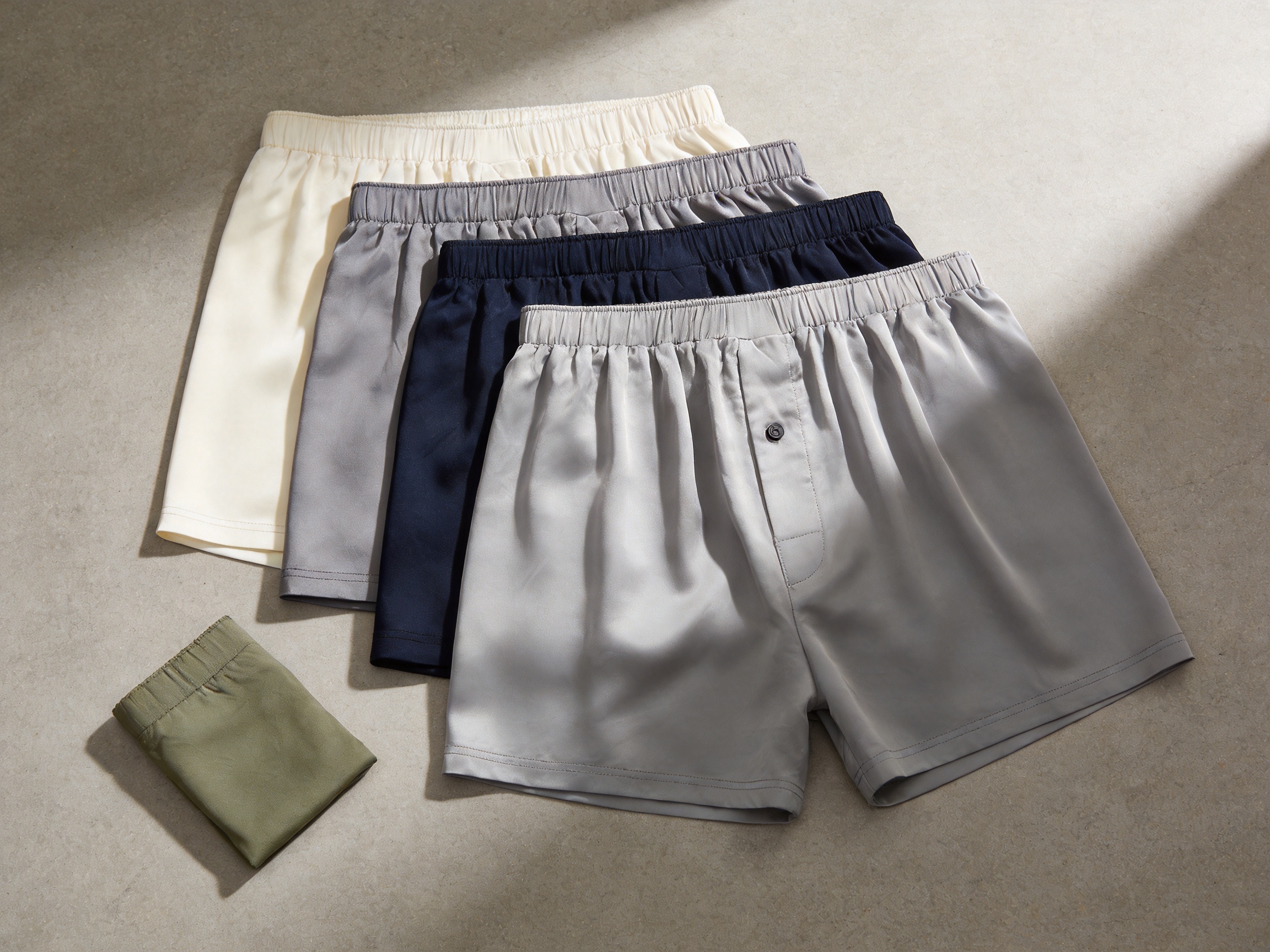
Filament bamboo viscose satin can serve as the foundation for a broader underwear collection. A buyer may develop multiple colors, waistband treatments, packaging formats, rise options, or coordinated silhouettes while maintaining a recognizable fabric identity.
This is valuable for brands that want to build a collection rather than launch a single isolated product. A consistent material platform simplifies storytelling, supports repeat purchases, and makes seasonal color updates easier to manage. The manufacturer can also help assess which changes are suitable for the fabric and which may affect cost, fit, or production stability.
The phrase “bamboo viscose” describes a regenerated cellulosic fiber made by processing bamboo-derived cellulose into a usable textile fiber. The resulting fabric is not simply raw bamboo. It is manufactured through a controlled fiber-making process, then spun, woven or knitted, dyed, finished, and cut into garments.
This distinction is important for accurate retail communication. Buyers should not describe bamboo viscose as untreated natural bamboo or assume that every bamboo textile has the same environmental profile. The production route, chemical management, energy use, wastewater treatment, certification, and blend composition all matter. A professional supplier should provide clear documentation rather than relying only on generic sustainability language.
When bamboo viscose is produced as a filament, the continuous fiber structure can contribute to a smooth surface and clean appearance. In a satin construction, the arrangement of yarns creates a face with a soft luster and fluid handle. These characteristics are particularly suitable for underwear because they combine visual sophistication with a close-to-skin feel.
For men’s boxers, fabric performance is only one part of comfort. Pattern engineering must provide sufficient ease without creating excess bulk. Seams should be positioned to reduce irritation. The waistband must remain secure without feeling restrictive. The leg openings need enough stability to prevent riding up while preserving freedom of movement. A skilled manufacturer evaluates these details together rather than treating fabric selection as the entire product-development process.
A smooth bamboo viscose surface supports a gentle, premium feel against the skin and helps distinguish the product from rougher low-cost materials.
The material platform is suitable for lightweight underwear designed to feel airy during ordinary daily use.
The fabric is positioned to help manage moisture and maintain a fresher wearing experience when supported by appropriate construction.
Satin’s subtle luster and fluid drape create a premium appearance for online and in-store merchandising.
A product description can communicate the concept, but technical review determines whether the garment is ready for production. Buyers should assess the following points during sampling and approval.
Request the exact percentage of bamboo viscose, any Tencel or other cellulosic fiber, elastane, and auxiliary materials. If the product uses “Heaven Silk Satin” as a commercial fabric name, ask for the technical construction behind that name. Confirm whether the material is woven, knitted, or a combination of constructions, and ask for the fabric weight and width.
Clear terminology helps prevent problems with care labels, import documentation, advertising claims, and customer expectations. It also allows the brand to compare quotations from different suppliers on an equal basis.
Boxers must balance comfort with support. A relaxed silhouette may suit sleepwear or loungewear, while a closer silhouette may perform better under fitted trousers. The rise, front shape, side seam position, and leg length all affect the final result.
Brands should define the intended use before approving the pattern. A premium everyday boxer may require a moderate fit that works under business trousers, denim, and casual clothing. A luxury lounge boxer can use more ease and a longer leg. The same satin fabric may support both directions, but the pattern should be developed for the intended wearer and retail position.
The waistband is one of the most noticeable construction areas. It should remain flat, recover after stretching, and avoid excessive pressure. A covered waistband can create a clean luxury appearance, while an exposed branded elastic can provide stronger visual recognition and easier production control.
Buyers should inspect the waistband after repeated stretching, laundering, and drying. Check whether the fabric rolls, whether the stitching remains secure, and whether the waistband twists inside the casing. These tests are simple but highly relevant to customer satisfaction.
Seam allowances, stitch density, thread selection, and finishing affect how the garment feels. A seam that is acceptable on the outside may still create irritation if it is bulky or poorly positioned. The inside of the garment should be inspected during sample approval, not only the front and back appearance.
For a premium product, the inside finish should support the same quality message as the outside. Loose threads, uneven topstitching, skipped stitches, and puckering can undermine the perceived value of a luxurious fabric.
Satin fabrics can show differences in sheen depending on light direction, dye lot, pressure, and finishing. A color that looks correct in a digital image may appear different under retail lighting or outdoors. Approve physical lab dips, strike-offs, and production standards before bulk manufacturing.
Dark shades can be especially attractive in men’s underwear, but they require careful colorfastness testing. Light shades may emphasize surface irregularities or transparency. The manufacturer should help evaluate each color against the fabric’s construction and intended market.
Nantong Tianhong Textile Technology Co., Ltd. was established in 2001 and is located in Nantong, Jiangsu Province, a major textile industry center in China. The company specializes in the research, manufacturing, and sales of underwear products and provides OEM/ODM products and services for established labels.
For a buyer, manufacturing strength is not limited to the existence of sewing equipment. It includes the ability to translate a concept into a stable specification, source suitable fabric, control production, manage quality documentation, and communicate clearly through the approval process. The company’s stated focus on product research, functional fabrics, and customized underwear supports this broader interpretation of manufacturing capability.
Underwear requires specialized knowledge because fit, fabric hand, stretch recovery, seam placement, and hygiene-related quality expectations are closely connected. A factory that regularly develops underwear is more likely to understand the practical problems that can appear between a first sample and bulk production.
Experience also helps with product adaptation. A buyer may request changes to the rise, waistband, leg opening, packaging, label placement, color range, or fabric weight. Each adjustment can affect the others. An experienced development team can identify those relationships before they create costly production revisions.
OEM production is suitable when a brand has its own design, measurements, label requirements, packaging concept, and quality standards. The manufacturer’s role is to turn those specifications into physical samples and repeatable production.
Successful OEM work depends on accurate technical packs, clear approval procedures, and documented tolerances. Buyers should provide measurement charts, artwork files, construction references, packaging instructions, acceptable defect limits, and testing requirements. The factory should confirm which elements are feasible and identify any risks before sampling.
ODM services are useful when a buyer wants to start from an existing product platform and customize it for a target market. The THDY-045 boxer concept can be adapted through color, branding, packaging, pattern details, and collection planning, subject to minimum quantities and development feasibility.
ODM does not mean that every buyer receives an identical product. A professional development process can establish a differentiated specification while using a proven base construction. This approach may reduce development time and help brands move more quickly from product selection to market testing.
The company states that it focuses on sustainable development, environmentally friendly functional fabrics, and traceable supply chain management. These priorities are relevant to buyers seeking premium breathable underwear made with natural or regenerated cellulosic fibers.
Claims should always be matched with documentation. Depending on the material and order, buyers may request fiber-origin records, transaction certificates, chemical-management information, test reports, or certification documents. The company identifies certifications and standards including FSC, OCS, OEKO-TEX 100, GOTS, WRAP, and BSCI within its corporate information. The specific applicability of each standard should be confirmed for the exact fabric, facility, product, and production order.
The company reports long-term partnerships with customers in Europe, North America, and China. This international experience can help a buyer discuss market-specific expectations such as size labeling, packaging language, restricted substances, social compliance, care labels, and inspection procedures.
International experience is most valuable when it is converted into documented process control. Buyers should ask how approvals are recorded, how changes are managed, how production lots are identified, and how nonconforming products are handled. These questions make supplier evaluation more practical than relying on a general reputation statement.
The following workflow provides a useful structure for brands developing bamboo viscose satin boxers.
Decide whether the boxers are intended for daily wear, premium basics, travel, sleepwear, loungewear, gifting, or a fashion-led underwear collection. Define the expected retail price, target age group, climate, body-size range, and primary sales channel.
A product sold through a premium e-commerce store may require different photography, packaging, and color strategy than one sold through a wholesale distributor. The use case also affects the preferred fit and fabric weight.
Request fabric swatches and technical information. Confirm composition, construction, weight, width, finishing, stretch characteristics, color options, and care requirements. Ask whether the satin is woven or knitted and whether elastane is included in the main body or only in the waistband.
Evaluate the swatches under natural light, indoor retail light, and direct touch. Check the face and reverse sides, drape, opacity, crease recovery, seam behavior, and laundering response.
Use a measurement chart that includes waist, hip, front rise, back rise, leg opening, side length, and waistband height. Decide whether the garment should sit low, mid-rise, or high on the waist. Specify the intended ease and the body measurements used for each size.
Fit testing should include more than one body type where possible. A premium boxer should not look attractive only on a single fit model. Assess movement, sitting, walking, bending, and wear under trousers.
Choose the waistband treatment, logo position, label format, color palette, hangtag, folding method, and packaging. A satin boxer already has a strong material identity, so branding should enhance rather than compete with the fabric.
Minimal packaging can communicate modern luxury, while a gift box can support a higher price point. Consider shipping volume, material recyclability, retail display requirements, and local packaging rules before final approval.
Testing should be based on the target market and product claims. Common areas include fiber composition, colorfastness to washing and rubbing, dimensional stability, seam strength, waistband recovery, pilling where relevant, tensile performance, and restricted substances.
If the product will be marketed as organic, certified, hypoallergenic, moisture-wicking, or environmentally preferable, the supporting evidence must match the exact claim. Do not assume that a fiber category automatically proves a finished-product claim.
The pre-production sample should use the intended fabric, trims, labels, color, construction, and packaging. Compare it with the approved reference sample and technical pack. Record all changes in writing.
This stage is the final opportunity to correct fit, shade, stitch appearance, label placement, and packaging before bulk work begins. A signed sample or approved digital record can reduce misunderstandings between the buyer and factory.
Agree on the inspection method, sampling level, defect classification, acceptable quality limits, and shipment documentation. Inspections may cover fabric shade, measurements, stitching, cleanliness, labels, packaging, carton marks, and quantity.
For repeat orders, retain a production standard that includes the approved fabric, color reference, measurement tolerances, construction details, and packaging sample. Consistency is essential when a brand builds customer loyalty around a familiar boxer.
No single fabric is ideal for every buyer. The right choice depends on price, performance expectations, sustainability goals, care requirements, and brand positioning. Bamboo viscose satin is strongest when the product needs a soft hand, premium visual appeal, and a breathable comfort story.
| Material category | Typical advantages | Points for buyer evaluation | Positioning compared with bamboo viscose satin |
|---|---|---|---|
| Conventional cotton jersey | Familiar hand feel, broad availability, and a well-understood care profile. | May feel heavier or less fluid; appearance is usually more casual and matte. | Often stronger for value basics, while satin bamboo viscose can offer a more polished premium presentation. |
| Polyester or microfiber | Lightweight, quick-drying, and often cost-efficient. | Hand feel, heat retention, static, and brand sustainability expectations require review. | May suit performance-focused products, while bamboo viscose satin emphasizes natural-feeling softness and luxury. |
| Modal or other regenerated cellulose | Soft touch, smooth drape, and strong suitability for close-to-skin garments. | Fiber source, blend, finishing, and certification should be verified. | Comparable premium territory; the final decision depends on hand feel, price, sourcing, and product story. |
| Silk | Highly luxurious hand feel and strong premium associations. | Higher material cost, delicate care, and greater sensitivity to wear and laundering. | Bamboo viscose satin can offer a more practical everyday alternative with a silk-like surface effect. |
| Bamboo viscose filament satin | Softness, smooth surface, fluid drape, breathable positioning, and premium appearance. | Composition, testing, shrinkage, colorfastness, and responsible sourcing must be documented. | Well suited to premium everyday underwear and private-label collections seeking differentiated fabric value. |
The table should be used as a product-development guide rather than a universal performance ranking. Finished-garment results depend on the actual specification. A lightweight fabric with poor pattern balance may perform worse than a heavier fabric with excellent construction. Testing and wear trials remain essential.
Searchers looking for premium breathable underwear usually want direct answers about material, comfort, fit, care, sustainability, and supplier capability. Product content should address these questions without making unsupported promises.
Use a concise opening statement such as: “Soft bamboo viscose satin boxers designed for breathable, moisture-managing comfort and a smooth premium feel.” This tells the customer what the product is and why it is different.
Words such as smooth, lightweight, fluid, soft, and silk-like are useful when they accurately reflect the approved sample. Avoid vague descriptions that provide no buying information. Explain whether the fabric is designed for everyday wear, travel, lounging, or formal clothing.
Satin garments should be sold with accurate care instructions based on testing. The final label may recommend a gentle wash, low-temperature laundering, reduced agitation, and careful drying. Do not publish generic care directions until the manufacturer confirms the correct method for the actual fabric and trim package.
If the product is made with bamboo viscose, state the exact fiber name. If a certified organic claim applies, identify the relevant certification and scope. If the product has an OEKO-TEX, FSC, OCS, or other certification, confirm whether the certificate covers the finished product, the fabric, the facility, or the supply chain transaction.
Responsible wording protects the brand and helps customers make an informed decision. It also creates a stronger long-term marketing asset than broad environmental claims that cannot be verified.
Use close-up images of the satin surface, waistband, stitching, label, and packaging. Product photography should show the garment in a natural shape, not only folded. Include measurements and a fit guide. For wholesale buyers, provide a technical sheet, color card, minimum order information, sampling process, and available customization options.
The following checklist can be used during sample approval, pre-shipment inspection, or supplier comparison.
| Inspection area | Questions to ask |
|---|---|
| Composition | Does the actual fiber content match the approved specification and product labeling? |
| Fabric appearance | Is the satin sheen consistent? Are there streaks, weaving defects, shade variations, or surface marks? |
| Hand feel | Does the finished fabric remain soft and smooth after washing or finishing? |
| Measurements | Are waist, rise, leg opening, side length, and waistband height within the approved tolerance? |
| Seams | Are stitches even, secure, clean, and comfortable against the skin? |
| Waistband | Does it recover after stretching, remain flat, and avoid twisting or excessive pressure? |
| Color | Does the bulk shade match the approved standard under suitable lighting? |
| Performance | Have shrinkage, colorfastness, seam strength, and other relevant tests been completed? |
| Labels and packaging | Are fiber information, care instructions, size labels, barcodes, and branding accurate? |
| Cartons and shipment | Are quantities, carton marks, packing methods, and shipping documents correct? |
A fabric-led product can achieve a premium position without adding complicated panels, heavy embroidery, or multiple trims. This may simplify the design while preserving a distinctive customer experience. The value comes from the combination of fiber story, surface appearance, comfort, fit, and finishing.
Underwear is a replenishment category. If customers like the hand feel and fit, they may return for additional colors and replacement pairs. A consistent base fabric makes it easier to create a repeatable product family.
The boxers can be marketed through several routes: direct-to-consumer websites, premium department stores, specialty underwear retailers, hotel and hospitality programs, corporate gifting, travel collections, and curated lifestyle shops. The final positioning should be adapted to the channel rather than presented identically everywhere.
Brands can extend the platform into women’s underwear, children’s underwear, loungewear, sleepwear, robes, camisoles, or coordinated homewear when the fabric and compliance requirements are suitable. The company’s broader category experience includes men’s underwear, women’s underwear, children’s underwear, and other products, creating potential for a more extensive private-label program.
Each category still requires independent fit development and safety review. A fabric that works well for men’s boxers may require different weight, stretch, trim, or construction for another garment type.
What is the exact fabric composition? Ask for percentages, blend details, fabric construction, weight, width, and finishing information.
Can the product be customized? Confirm options for color, waistband, labels, packaging, fit, logo placement, and size range.
What are the minimum order quantities? Request separate quantities for sampling, custom colors, repeat orders, and packaging changes.
What testing is available? Ask about composition, colorfastness, dimensional stability, seam strength, restricted substances, and any claim-specific testing.
Which certifications apply to this order? Confirm the certificate holder, scope, validity, facility, material, and transaction documentation.
How is size grading handled? Request the measurement chart, tolerances, grading increments, and fitting process.
How does pre-production approval work? Establish the sample stages, revision limits, approval records, and responsibility for changes.
What inspection process is used? Discuss internal quality control, third-party inspection, acceptable quality limits, and corrective action.
How are repeat orders controlled? Ask how fabric lots, color standards, patterns, trims, and approved samples are archived.
What are the lead times? Separate the expected timing for fabric development, sampling, bulk production, inspection, packaging, and shipment.
They are designed and positioned as breathable underwear, and bamboo viscose is commonly selected for its soft, airy, moisture-managing feel. Final breathability depends on fabric weight, construction, fit, finishing, and garment design. Buyers should review the actual fabric specification and test finished samples before making a strong performance claim.
The product is described as having a silk-like or satin feel, but the listed material is bamboo viscose filament satin. Silk-like describes the texture and appearance; it does not necessarily mean the product contains natural silk. Confirm the exact fiber composition on the technical sheet and care label.
The main differences are the smoother hand feel, satin appearance, fluid drape, filament construction, and premium positioning. Cotton may remain attractive for buyers who prefer a familiar matte fabric and conventional care profile. The better option depends on the target customer, price point, and intended use.
The manufacturer provides OEM/ODM services, so customization may be available for colors, labels, packaging, sizing, waistband treatments, and selected construction details. Exact options, minimum quantities, tooling requirements, and development fees should be confirmed during quotation.
That claim requires careful verification. Bamboo viscose alone does not automatically prove that the finished product is certified organic. The buyer should confirm the fiber certification, chain of custody, scope of the relevant standard, and whether the finished product qualifies for the intended market claim.
Its soft, smooth surface can be comfortable for many wearers, but individual sensitivity varies. Dyes, finishes, elastane, elastic, detergents, and friction may also affect comfort. Brands should avoid making medical or hypoallergenic claims unless they have appropriate evidence and legal approval for the target market.
Follow the care instructions confirmed for the exact fabric and construction. A gentle, low-temperature wash and careful drying may help protect softness, color, and surface appearance, but the final instruction should come from product testing rather than a generic recommendation.
The breathable and moisture-managing positioning makes them suitable for consideration in warm climates. However, climate performance depends on garment fit, fabric weight, humidity, activity level, and personal preference. A lightweight sample should be tested under the intended conditions before a regional launch.
The company identifies FSC, OCS, OEKO-TEX 100, GOTS, WRAP, and BSCI among its certifications or standards. Buyers should confirm which certification applies to the specific product, material, facility, and order. Certificates should be current and matched to the exact claim used in marketing.
The product is suitable for customers who value soft fabrics, breathable comfort, premium basics, refined appearance, and private-label quality. Commercial targets may include premium underwear brands, e-commerce retailers, department stores, lifestyle companies, hospitality suppliers, and distributors.
Include the product reference, composition target, size range, quantity by color and size, packaging requirements, logo artwork, labeling rules, testing needs, delivery destination, inspection expectations, and desired launch date. A complete request makes it easier for the manufacturer to provide an accurate proposal.
A concise specification brief can help a brand and manufacturer move from a general product idea to a controlled development project. The following format is suitable for initial discussion.
Product: Men’s premium bamboo viscose satin boxers.
Reference: THDY-045 or an agreed customized reference.
Primary benefit: Soft, smooth, breathable, moisture-managing everyday comfort.
Visual direction: Refined satin surface, clean construction, understated premium branding.
Target fit: To be selected as relaxed, regular, or close-fitting based on the intended use.
Material confirmation: Exact bamboo viscose, Tencel, elastane, and other fiber percentages to be documented.
Quality priorities: Color consistency, waistband recovery, seam comfort, dimensional stability, and accurate labeling.
Commercial model: OEM/ODM development with private-label branding and customized packaging.
This brief should be expanded into a technical pack before bulk production. It provides a starting framework but does not replace measurements, construction drawings, test requirements, or approved physical samples.
A premium fabric cannot compensate for inconsistent sizing, weak seams, poor color control, or inadequate communication. Supplier selection should therefore consider product development, factory quality systems, material sourcing, compliance support, responsiveness, and repeat-order control.
Nantong Tianhong’s stated history since 2001, specialization in underwear, OEM/ODM experience, international customer base, functional-fabric focus, and listed certifications make it a relevant supplier for buyers investigating premium breathable underwear production. The next step should be a structured evaluation based on the exact product and target market.
Request samples, verify the material, review the factory’s quality documentation, discuss customization limits, and establish a written approval process. Buyers should compare suppliers on total product value rather than unit price alone. A slightly higher fabric or manufacturing cost may be justified when it produces a better hand feel, more stable fit, stronger compliance documentation, and fewer quality problems after launch.
Men’s bamboo viscose satin boxers offer a practical route into premium underwear because they combine a soft close-to-skin feel with breathable positioning and a more luxurious appearance. The THDY-045 product concept is particularly attractive for brands that want to move beyond ordinary basics while preserving everyday wearability.
The strongest advantages are the smooth bamboo viscose filament surface, silk-like satin presentation, moisture-managing comfort story, and adaptability for OEM/ODM collections. The strongest manufacturing advantages come from the supplier’s long-term underwear specialization, product research focus, customization services, international experience, and stated commitment to functional fabrics, traceability, and recognized standards.
To turn those advantages into a successful commercial product, buyers should insist on accurate fiber documentation, fit testing, fabric and color approval, performance testing, precise packaging information, and clear certification scope. With those controls in place, bamboo viscose satin boxers can serve as a differentiated premium basic for retailers, private-label brands, and distributors seeking comfortable, breathable underwear with a refined market identity.
1. Product information supplied for men’s luxurious bamboo viscose satin boxers, product reference THDY-045.
2. Company information supplied for Nantong Tianhong Textile Technology Co., Ltd., including business history, OEM/ODM services, product categories, and manufacturing focus.
3. Textile fiber and fabric construction terminology for regenerated cellulosic fibers, filament yarns, satin fabrics, and apparel performance evaluation.
4. General quality-control principles for apparel sampling, garment measurement, colorfastness, dimensional stability, seam performance, and pre-shipment inspection.
5. Certification and social-compliance information supplied for standards including FSC, OCS, OEKO-TEX 100, GOTS, WRAP, and BSCI.
6. Practical product-development guidance for private-label underwear, including technical specifications, labeling review, care instructions, testing, and OEM/ODM approval procedures.

Copyright © Nantong Tianhong Textile Technology Co., Ltd. All Rights Reserved.
 Room 806, Building D, Jingyang Plaza, Chongchuan District, Nantong City, Jiangsu Province,china

 English
 Español
 русский
 عربى