Content
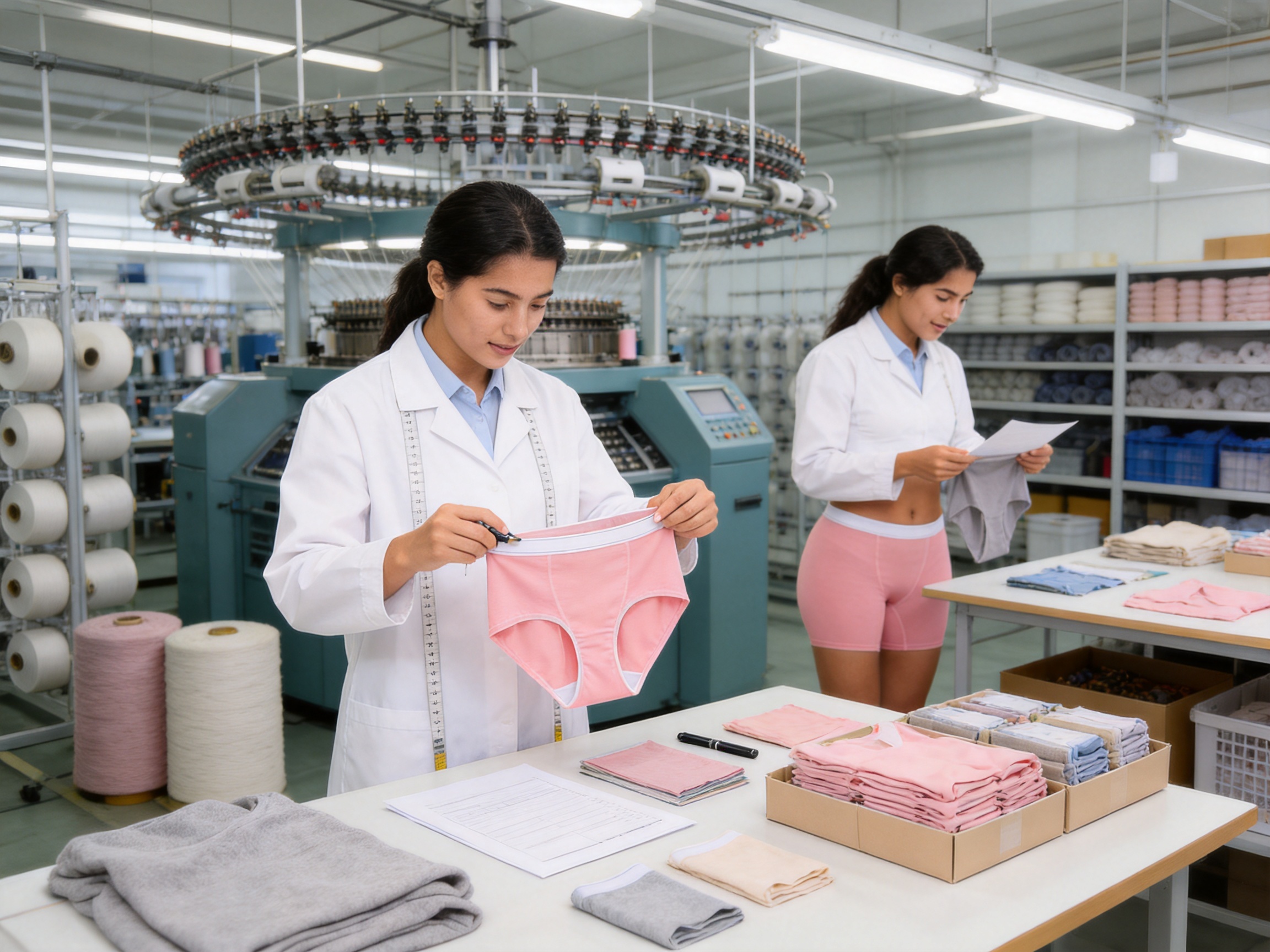
Quick Answer: Women’s Boyshorts made with 80% viscose from bamboo, 15% nylon, and 5% spandex are designed for shoppers who want breathable, lightweight coverage without the bulk, seams, tags, or shifting associated with many conventional underwear styles. The mid-rise waistband sits just below the navel, while the approximately 1.1-inch inseam reaches the upper thigh. A seamless one-piece knit, double-layered gusset, all-over coverage, and subtle heathered appearance make this style suitable for daily wear, skirts, dresses, loungewear, and close-fitting clothing. For retailers and private-label buyers, the product is supported by OEM/ODM experience, sustainable material development, quality certifications, and traceable supply chain management from Nantong Tianhong Textile Technology Co., Ltd.
Women’s boyshorts occupy a useful position between traditional briefs and longer boxer-brief silhouettes. They provide more side and rear coverage than a bikini brief, but they remain short enough to wear comfortably under skirts, dresses, trousers, and relaxed homewear. The design is especially practical for customers who dislike narrow elastic leg openings, visible panty lines caused by bulky seams, or underwear that shifts during a normal day.
This article examines the product from three perspectives: how the construction affects comfort, how bamboo viscose compares with common underwear fabrics, and how a capable manufacturer can turn the design into a reliable private-label or wholesale program. It also covers purchasing questions, quality checkpoints, customization considerations, and customer-facing product information.
The product is built around a simple objective: provide stable coverage with as little irritation and bulk as possible. That objective affects every major component, including the rise, inseam, fabric blend, knitting method, gusset, and waistband.
Many underwear complaints are not caused by the basic shape of the garment. They come from small construction problems: a waistband that rolls, a leg opening that cuts into the skin, a rough label, a center seam that rubs, or fabric that becomes damp and heavy. A well-designed boyshort addresses these problems at the pattern and production stages rather than relying only on a soft fabric claim.
The waistband sits just below the navel, creating a mid-rise profile. This position can be more versatile than an extremely low-rise or high-rise cut. It offers enough front coverage for daily movement while avoiding the restrictive feeling that some wearers associate with underwear extending over the natural waist.
A mid waistband also works across different outfit categories. Under mid-rise trousers, it can provide a balanced fit without excessive fabric above the garment line. Under skirts and dresses, it gives the wearer a secure base layer. For sleepwear or casual clothing, the coverage remains comfortable without resembling a full-length short.
The approximately 1.1-inch inseam sits near the top of the thigh. This length is shorter than many women’s boxer briefs, yet longer than a conventional brief side. The result is a compact boyshort silhouette that provides all-over coverage without adding unnecessary leg fabric.
The short inseam is especially relevant for customers who want a boyshort shape but do not want the garment to extend far down the leg. It can also reduce the chance of the lower edge becoming visible beneath shorter skirts or dresses. Fit remains dependent on body shape, garment size, stretch recovery, and styling, so retailers should provide a size chart and recommend checking the product under the intended outer garment.
Coverage is one of the main reasons customers select a boyshort instead of a brief. The cut covers the front, back, hips, and upper thigh area more fully, offering a secure feel during walking, sitting, commuting, and ordinary daily activities.
All-over coverage does not have to mean a heavy or warm garment. The product combines a short cut with a lightweight bamboo-viscose fabric and a seamless knit structure. This combination is intended to make the garment feel present without becoming cumbersome.
The fiber blend contains 80% viscose made from bamboo, 15% nylon, and 5% spandex. Each component performs a different function. Bamboo viscose contributes a soft, lightweight hand feel and breathability. Nylon supports durability and helps the fabric maintain its knitted structure. Spandex provides stretch and recovery so the boyshorts can follow body movement while returning toward their original shape.
| Material component | Primary contribution | Why it matters in boyshorts |
|---|---|---|
| 80% viscose made from bamboo | Softness, lightness, and breathable comfort | Helps create a smooth everyday layer with a cool, comfortable feel |
| 15% nylon | Structural support and durability | Helps the knit resist premature wear during regular laundering and use |
| 5% spandex | Stretch and recovery | Supports body-hugging comfort and reduces the likelihood of a loose, sagging fit |
Bamboo viscose is commonly selected for next-to-skin garments because it can be soft and smooth when properly processed and knitted. In this product, it forms the dominant portion of the fiber blend, giving the fabric a lightweight hand feel suitable for underwear.
The fabric is also described as breathable and designed to help the wearer stay cooler and fresher throughout the day. Breathability depends on several variables, including yarn characteristics, knit density, garment fit, humidity, activity level, and laundering. A breathable fiber alone cannot guarantee a specific body temperature or moisture result, but a lightweight bamboo-viscose knit can offer a comfortable alternative to dense, heavy fabrics.
The product materials describe the fabric as up to 4.5 times more breathable than cotton. Such a comparison should be presented in marketing materials with the relevant testing method and conditions when available. For responsible product communication, sellers should avoid treating the figure as a universal result for every cotton fabric, climate, or wearer.
Nylon adds support to a predominantly bamboo-viscose blend. Underwear is exposed to repeated stretching, washing, folding, and friction. A modest nylon content can help the knitted fabric maintain its integrity while preserving a soft overall hand feel.
For buyers comparing this garment with a 100% rayon or viscose alternative, the nylon component may be an advantage when long-term shape retention is important. The product is not positioned as a purely natural-fiber garment; it is a performance-oriented blend that balances a bamboo-derived cellulosic fiber with synthetic support fibers.
Spandex allows the garment to stretch across the waist, hips, seat, and upper thighs. It is particularly important in a seamless one-piece knit because the fabric needs to move with the body without relying on multiple stitched panels.
Stretch does not eliminate the need for accurate sizing. A garment that is too small may feel tight even when the fabric has excellent recovery, while a garment that is too large may shift or bunch. Retailers should use actual garment measurements, recommended body measurements, and fit samples when creating a size range.
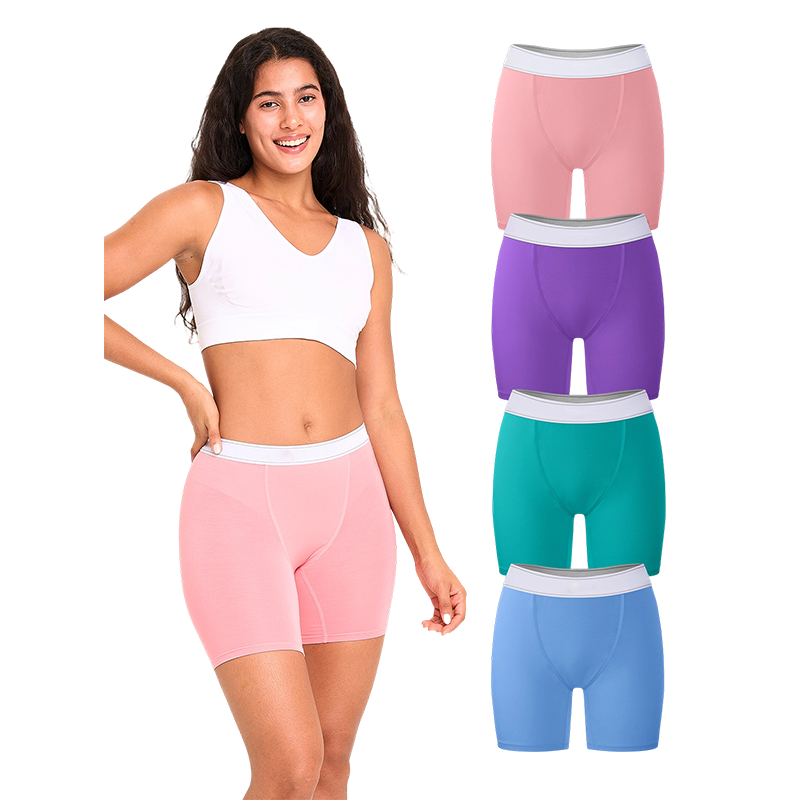
Women’s Boyshorts
The seamless one-piece knit is one of the product’s most important competitive features. Instead of joining numerous fabric panels with visible seams, the garment is formed as a continuous knitted structure. This reduces the number of sewn connections that can create pressure points or rubbing.
The boyshorts are designed without tags. Traditional sewn-in labels can feel scratchy, fold under the waistband, or create a raised area against sensitive skin. Removing the tag supports a cleaner next-to-skin experience and gives private-label buyers more flexibility in selecting alternative care-label solutions, such as printed information or carefully positioned external labeling where permitted by the target market.
A tag-free design is not the same as a completely friction-free garment. The waistband, gusset, leg edge, and fabric surface still need to be evaluated through wear testing. However, eliminating one common source of irritation is a meaningful advantage for everyday underwear.
Seamless construction can help reduce visible lines and hard seam ridges under skirts, dresses, leggings, and lightweight trousers. The result depends on the fabric thickness, edge finish, garment tension, and the fit of the outer clothing. Buyers should test the finished product under representative garments rather than relying on construction terminology alone.
Compared with a traditional multi-panel boyshort, a one-piece knitted design may produce a cleaner appearance and more even stretch. It can also make the garment feel less segmented around the hips and seat, which is useful for customers who prefer a smooth base layer.
For a manufacturer, seamless production requires close control of yarn selection, knitting parameters, sizing, tension, and finishing. Small process changes can affect the final garment’s dimensions and recovery. A professional production system therefore needs documented specifications and inspection checkpoints from sample approval through bulk manufacturing.
Nantong Tianhong Textile Technology Co., Ltd. specializes in underwear research, manufacturing, and sales, with OEM/ODM services for established labels. Its experience with underwear products provides a foundation for managing the technical details of a seamless style, including sample development, material selection, fit confirmation, production coordination, and final quality review.
The product includes a double-layered gusset for comfort. The gusset is the panel or reinforced area positioned at the crotch. It supports hygiene, durability, coverage, and comfort in a region exposed to movement and repeated friction.
A double-layered construction can provide a more substantial barrier than a single thin layer. It may also help the gusset hold its shape during wear and washing. The actual result depends on the fiber content, knit density, dimensions, stitching or integration method, and finishing quality.
A well-designed gusset should lie flat enough to avoid creating a prominent ridge. It should remain secure during movement and should not twist excessively after laundering. It also needs adequate width and length for the selected size range.
For product development teams, gusset evaluation should include seated movement, walking, bending, and repeated wash testing. A garment may feel comfortable while standing in a fitting room but behave differently during a full day of activity.
Private-label brands often focus on fabric composition and appearance, but gusset construction can strongly influence customer reviews and repeat purchases. Buyers should request technical drawings or samples that show the gusset structure, then confirm whether the same construction will be used in bulk production.
Important questions include whether the gusset is integrated into the seamless knit, attached with stitching, double-layered across the full intended area, and checked for loose threads or distortion. These points are useful in a product specification sheet and pre-shipment inspection checklist.
Breathability is a central search intent for bamboo underwear. Customers often want underwear that feels lighter and less clammy during long workdays, travel, warm weather, or extended wear. The bamboo-viscose content and lightweight knitted structure are designed to address this need.
Breathability should be understood as a comfort characteristic rather than a medical claim. The garment does not prevent sweating, eliminate odor, or replace appropriate hygiene practices. It can, however, provide a lighter and more air-permeable layer than some dense or heavily compressed underwear designs.
Daily office or school wear when the wearer remains seated for long periods.
Under skirts and dresses where all-over coverage is preferred.
Warm-weather outfits that benefit from a lightweight base layer.
Travel, when soft, compact underwear is easy to pack and comfortable for extended use.
Relaxing at home or sleeping when a short, non-restrictive silhouette is preferred.
Layering under trousers or casual clothing when a smooth construction is desirable.
Product performance will vary by climate, individual sensitivity, activity level, and fit. Clear retail copy should describe intended comfort benefits without promising outcomes that depend on personal conditions.
Customers rarely compare one garment in isolation. They typically choose between briefs, hipsters, boxer briefs, shapewear, and seamless underwear. The product’s strongest position is as a light-coverage boyshort with a short leg, rather than as compression wear or a full-length boxer brief.
| Underwear type | Typical strength | Possible limitation | Position of this boyshort style |
|---|---|---|---|
| Traditional brief | Compact shape and low fabric usage | Less upper-thigh coverage and potentially narrower leg openings | Provides more coverage around the hips and upper thighs |
| Hipster | Low-to-mid rise with moderate coverage | May offer less rear or thigh coverage than a boyshort | Adds a short leg and all-over coverage |
| Long boxer brief | Extended thigh coverage | Can feel warmer or show below shorter clothing | Uses a shorter approximately 1.1-inch inseam |
| Seamed underwear | Traditional pattern flexibility | More seams may create rubbing or visible lines | Uses a seamless one-piece knit structure |
| Shapewear short | Compression and smoothing | May feel restrictive for all-day casual wear | Prioritizes comfort and coverage rather than compression |
This comparison does not mean that one style is suitable for every wearer. Customers seeking strong compression may prefer shapewear. Customers wanting minimal fabric may choose briefs. The boyshorts are most appropriate for those who want a middle ground: more coverage than a brief, less length than a full boxer brief, and a soft, low-bulk construction.
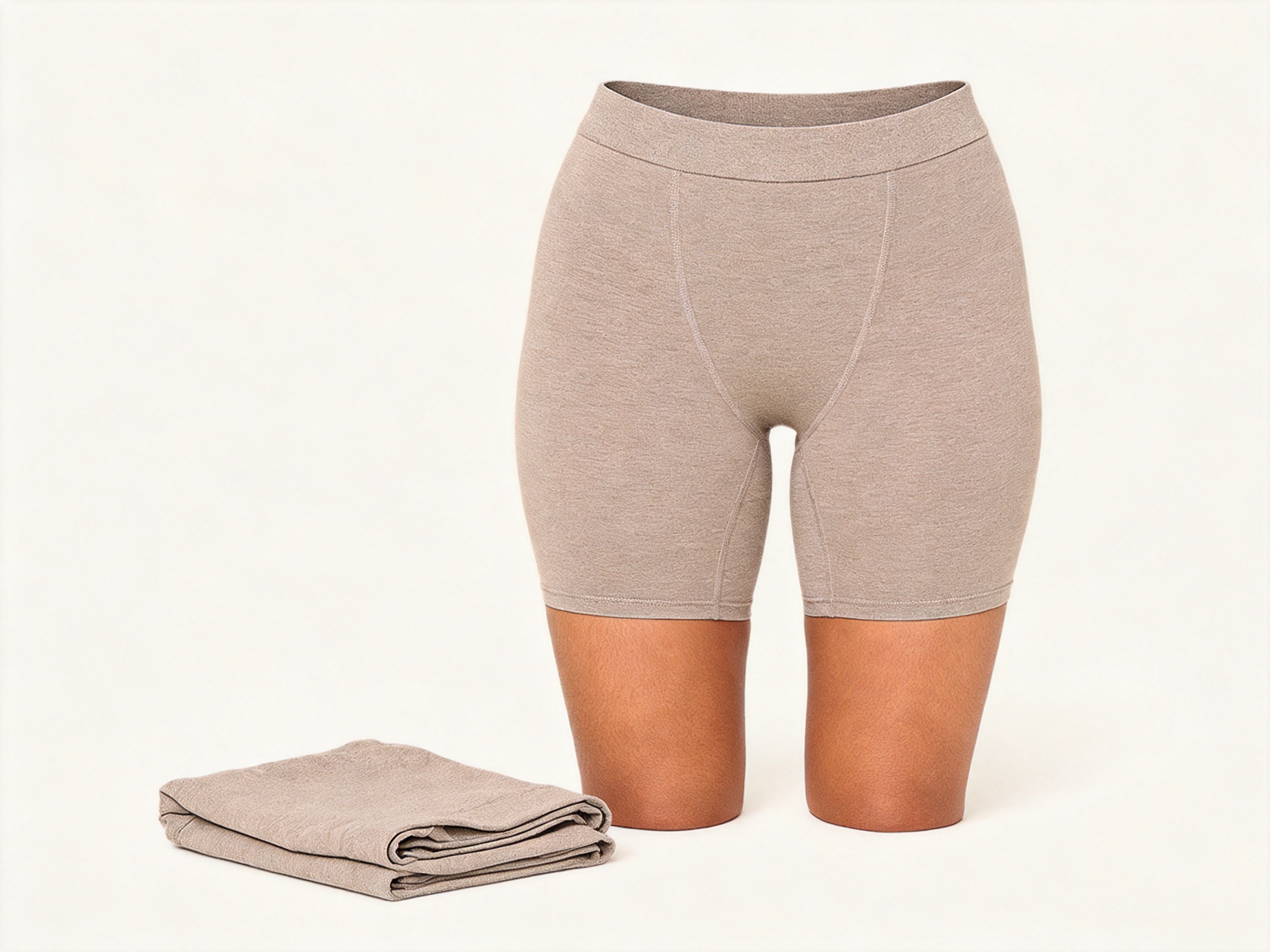
The product is specifically suited to wearing under skirts and dresses. The short leg can provide additional coverage while maintaining a compact outline. For customers who dislike the feeling of bare legs beneath a skirt, boyshorts offer a practical extra layer without requiring a longer slip or full-length short.
A close but comfortable fit is important under lightweight clothing. If the waistband is too tight, it may create pressure or roll. If the seat is too loose, the garment may shift and produce more fabric movement than intended. The leg edge should lie flat without digging into the upper thigh.
Retailers should publish waist and hip measurements, explain how to measure, and identify whether measurements refer to the body or the garment. Because seamless products can stretch across a range, customers may need additional guidance on choosing between two adjacent sizes.
The product has a subtle heathered pattern, which adds visual texture without creating a loud print. Heathered surfaces can help distinguish a basic underwear program from plain solid-color products while remaining easy to coordinate with everyday clothing.
For private-label collections, the heathered appearance can serve as a core visual identity across neutral colors, seasonal shades, or coordinated men’s and children’s underwear programs. Color approval should include checks for shade consistency between production lots, especially when the collection is sold as a matching set.
The product is made with viscose from bamboo and is identified as FSC certified. FSC certification is relevant to responsibly managed forest-based materials and supply chain claims. Buyers should request current certification documentation, scope information, and chain-of-custody details applicable to the specific product or material source.
Certification language needs precision. A bamboo-derived viscose product should not automatically be described as organic unless the applicable material and certification documents support that claim. Bamboo source, chemical processing, fiber production, knitting, dyeing, finishing, and garment assembly are separate stages. Each stage may involve different environmental and social standards.
Nantong Tianhong reports product and operational certifications or standards including FSC, OCS, OEKO-TEX 100, GOTS, WRAP, and BSCI. The relevance of each standard depends on its current validity, certificate scope, facility coverage, and the product being ordered.
| Standard or certification | What buyers should verify | Why verification matters |
|---|---|---|
| FSC | Material source and chain-of-custody scope | Confirms whether the relevant forest-based material claim is properly supported |
| OCS | Applicable organic-content claim and certificate scope | Helps distinguish certified organic content from general sustainability language |
| OEKO-TEX 100 | Certificate number, product class, and validity | Supports assessment of tested harmful substances for the certified product |
| GOTS | Relevant certified organic fiber and processing scope | Shows whether the complete applicable textile chain meets the standard’s requirements |
| WRAP | Facility and social-compliance coverage | Provides information about responsible production practices at the covered site |
| BSCI | Audit status, site, and audit date | Helps buyers evaluate social-compliance monitoring |
Certification documents should be reviewed before marketing claims are published. A responsible factory can help a buyer match wording to the actual certificate rather than using broad environmental language that cannot be substantiated.
A consistent product depends on process control from raw material selection through packing. The following workflow describes the key stages that a professional underwear manufacturer should manage for this style.
The process begins with a technical brief defining the fiber blend, rise, inseam, waistband position, gusset construction, colors, size range, labeling, packaging, and intended market. For this product, the brief should specifically identify the 80% bamboo-derived viscose, 15% nylon, and 5% spandex composition, seamless one-piece knit construction, no-tag requirement, double-layered gusset, and short boyshort leg.
Specifications should also define tolerances. A statement such as “1.1-inch inseam” needs an agreed measurement method and acceptable deviation. The same applies to waistband width, garment length, hip width, gusset dimensions, and stretch recovery.
Yarns should be checked for composition, count, color, strength, uniformity, and suitability for next-to-skin knitting. Bamboo viscose, nylon, and spandex can behave differently during knitting and finishing, so the blend needs to be assessed as a complete system.
Material documentation should be matched to the intended claims. If FSC, OEKO-TEX, OCS, or another standard will appear in sales materials, the buyer and manufacturer should confirm which specific yarns, processes, and production sites are covered.
The boyshort is produced as a one-piece knitted structure. Seamless knitting requires programmed dimensions and controlled yarn tension. The shape needs to accommodate the waistband, seat, crotch, gusset area, leg openings, and transitions between different zones of stretch.
At this stage, technical teams evaluate whether the knit is sufficiently stable without becoming rigid. Too little recovery can lead to stretching out. Excessive tension can create pressure or reduce comfort. The target is an even, flexible structure that follows the body and remains stable during movement.
The double-layered gusset must be formed or attached according to the approved construction. Its edges should be smooth, secure, and free from exposed defects. The gusset should also maintain the intended coverage after washing and stretching.
Sample approval should include front, back, side, and inside views. Buyers should inspect whether the gusset lies flat and whether the interior surface is comfortable against the skin.
Textile finishing can affect softness, color, shrinkage, stretch recovery, and hand feel. The final treatment should be compatible with the bamboo-viscose, nylon, and spandex blend. Dimensional checks after finishing are essential because a seamless garment can change size if finishing conditions are inconsistent.
Where appropriate, the manufacturer should test shrinkage, colorfastness, pilling resistance, stretch recovery, seam or joint security, and appearance after laundering. The exact test methods should be agreed in the purchase specification.
Finished garments should be inspected for holes, knitting faults, uneven edges, discoloration, incorrect labels, measurement deviations, and packaging errors. Inspection can occur during production and again before shipment.
Packaging should protect the garment from dust, moisture, crushing, and color transfer. Private-label buyers should approve the folding method, individual packaging, carton quantities, barcode placement, and care information before bulk packing begins.
Nantong is one of China’s major textile industry hubs. The company profile states that Nantong Tianhong Textile Technology Co., Ltd. was established in 2001 and focuses on the research, manufacturing, and sales of underwear products. The company serves OEM/ODM customers and maintains partnerships with clients in Europe, North America, and China.
For a buyer developing bamboo underwear, a long-term underwear specialization can be more useful than a factory that only offers general apparel production. Underwear requires close attention to skin contact, stretch behavior, gusset fit, waistband comfort, size grading, wash performance, and packaging hygiene.
OEM/ODM support can range from producing a buyer’s existing technical pack to helping develop a new fabric, silhouette, color palette, or packaging system. For this boyshort style, useful development support may include:
Reviewing the intended fit and coverage level.
Adapting the bamboo-viscose blend to a buyer’s target hand feel.
Developing colors with a subtle heathered effect.
Adjusting waistband position or leg length for different markets.
Creating size ranges based on regional body measurements.
Preparing samples for wear, wash, and retail presentation testing.
Coordinating labels, packaging, and certification documentation.
Experience with customers in Europe, North America, and China can help a manufacturer understand that market requirements are not identical. Labeling, packaging, fiber-content wording, testing expectations, sizing conventions, and social-compliance requirements may differ by destination.
Buyers should still provide their own country-specific compliance checklist. A manufacturer’s international experience supports communication and planning, but the importer or brand remains responsible for confirming applicable legal requirements in the destination market.
The company emphasizes traceable supply chain management and sustainable development. Traceability is valuable when a product uses a material claim such as bamboo-derived viscose or FSC certification. It allows buyers to connect the finished garment with the relevant yarn, processing, facility, and documentation.
A practical traceability program should identify approved suppliers, material batches, production dates, inspection records, and shipment information. Buyers can request a documentation flow that shows how raw materials are connected to finished goods without requiring disclosure of confidential supplier details.
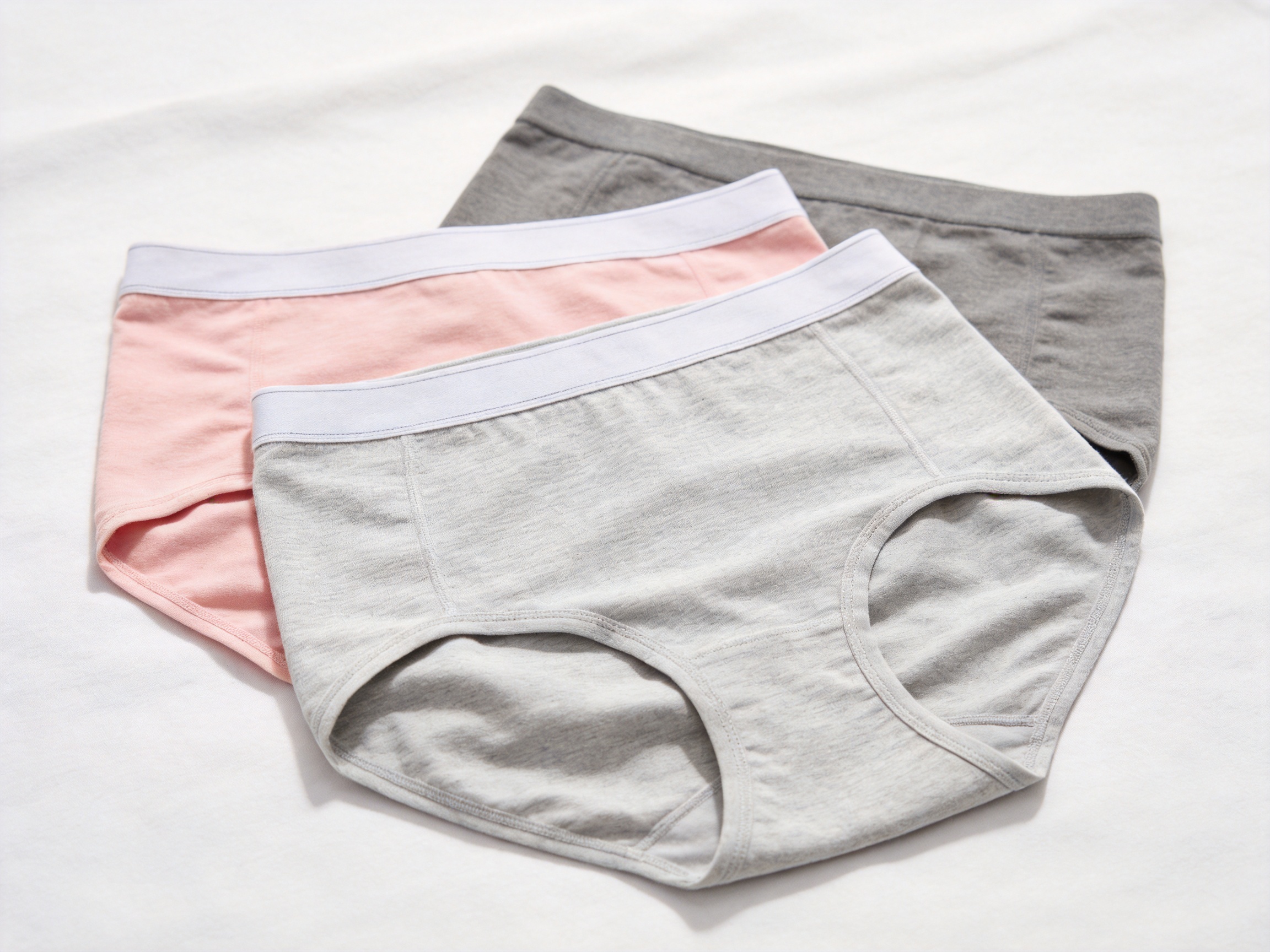
Before placing a large order, buyers should evaluate both the sample and the production system. The following checklist is designed for this specific product category.
Confirm the fiber composition matches the approved specification.
Check the bamboo-viscose fabric for softness, evenness, and unwanted rough areas.
Review the subtle heathered pattern for consistent appearance.
Compare production colors with the approved standard under suitable lighting.
Inspect the fabric for holes, runs, stains, excessive fuzzing, or knitting irregularities.
Measure the waistband, rise, hip, gusset, and approximately 1.1-inch inseam.
Confirm that measurements follow the approved method.
Test stretch and recovery at the waistband and leg openings.
Check whether the garment remains in place during walking, sitting, and bending.
Review the full size range rather than testing only one sample size.
Inspect the seamless one-piece knit from the inside and outside.
Check for rough transitions, loose yarns, hard edges, or irritating areas.
Confirm that no sewn-in tag remains if the approved design is tag-free.
Verify that the double-layered gusset is correctly positioned and securely formed.
Wear-test the product for several hours under representative clothing.
Conduct laundering tests using the proposed care instructions.
Check dimensional change after washing and drying according to the target market’s expected practices.
Inspect colorfastness and surface appearance after repeated washing.
Review pilling and stretch recovery after use simulations.
Confirm that packaging does not compress or distort the garment.
The strongest search terms for this product relate to premium breathable underwear, organic bamboo underwear, bamboo underwear, women’s boyshorts, seamless women’s underwear, and women’s boxer briefs. These keywords should be integrated naturally into product titles, category copy, metadata, comparison content, and FAQs.
Search-focused copy should answer practical questions quickly. Shoppers want to know what the underwear is made from, how high the waistband sits, how long the leg is, whether it has seams, whether it includes a gusset, and which outfits it suits.
A product page can begin with a concise benefit statement, followed by a bullet list of specifications. The page should then explain the fabric, fit, construction, care, and certification claims. Clear measurement information should appear before the purchase decision rather than being hidden in a separate document.
Useful product-page wording may include “women’s bamboo-viscose boyshorts,” “seamless one-piece knit,” “short 1.1-inch inseam,” “mid waistband below the navel,” “double-layered gusset,” and “tag-free comfort.” The phrase “organic bamboo underwear” should be used only when the specific product and supply chain support the organic claim.
Lightweight bamboo-viscose comfort for daily wear.
Short boyshort coverage without the length of a full boxer brief.
Seamless one-piece knit for a smooth, low-bulk feel.
Tag-free construction for fewer common irritation points.
Double-layered gusset for added comfort and coverage.
Subtle heathered texture for a refined everyday appearance.
OEM/ODM development support for brands and retailers.
Retailers should avoid presenting the product as medical underwear, guaranteed odor-control apparel, compression wear, or a substitute for hygiene products. Accurate claims are more useful for customer trust and easier to support with documentation.
A manufacturer offering OEM/ODM services can adapt the product for different brand positions. Customization may cover color, size range, logo presentation, care labeling, packaging, carton configuration, and order quantities. The available options should be confirmed during quotation because minimum order quantities and development charges vary by material, color, and packaging format.
Because the garment is designed without tags, branding needs careful placement. A printed label, external label, packaging card, belly band, or box can communicate brand information while preserving the skin-contact area. The chosen method should be tested for wash durability and compliance with the target market.
Packaging should communicate the material blend, size, care instructions, intended fit, and key design features. A diagram showing the mid-rise waistband and short leg can help shoppers understand the silhouette. Careful wording also reduces the chance that customers mistake the boyshorts for a longer boxer brief or compression short.
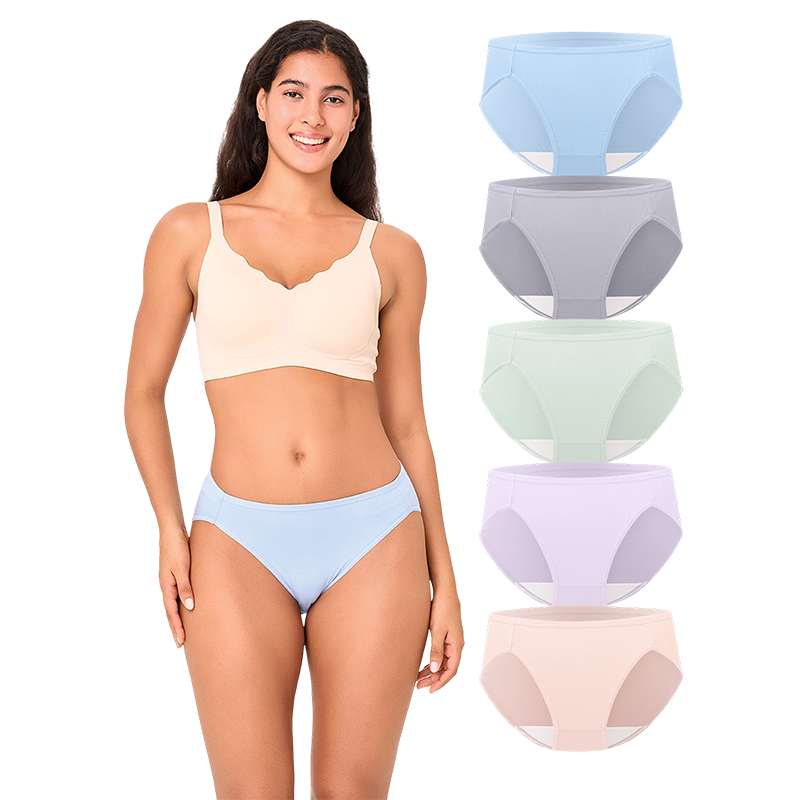
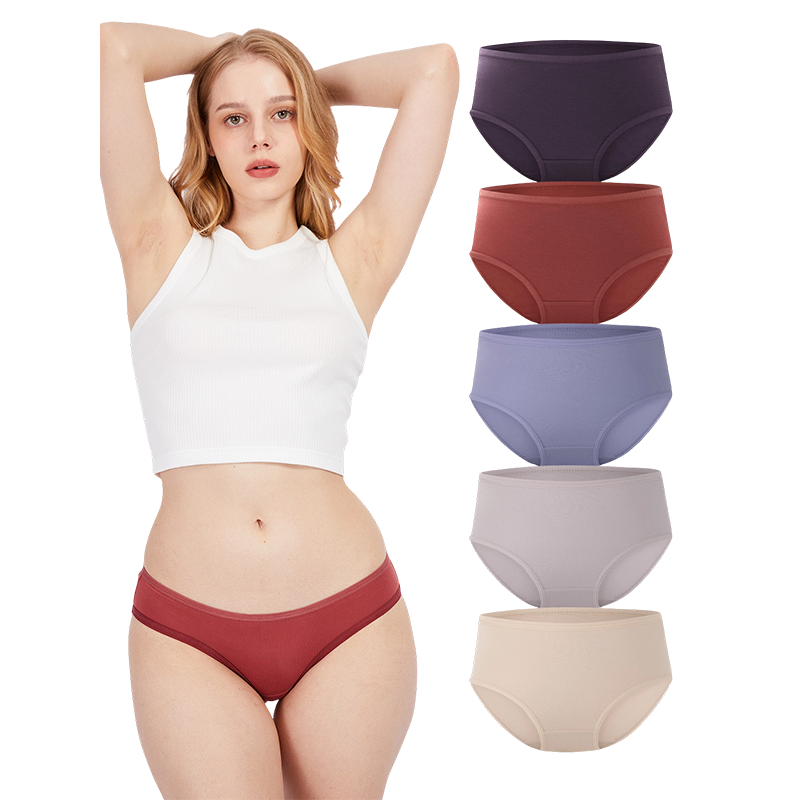
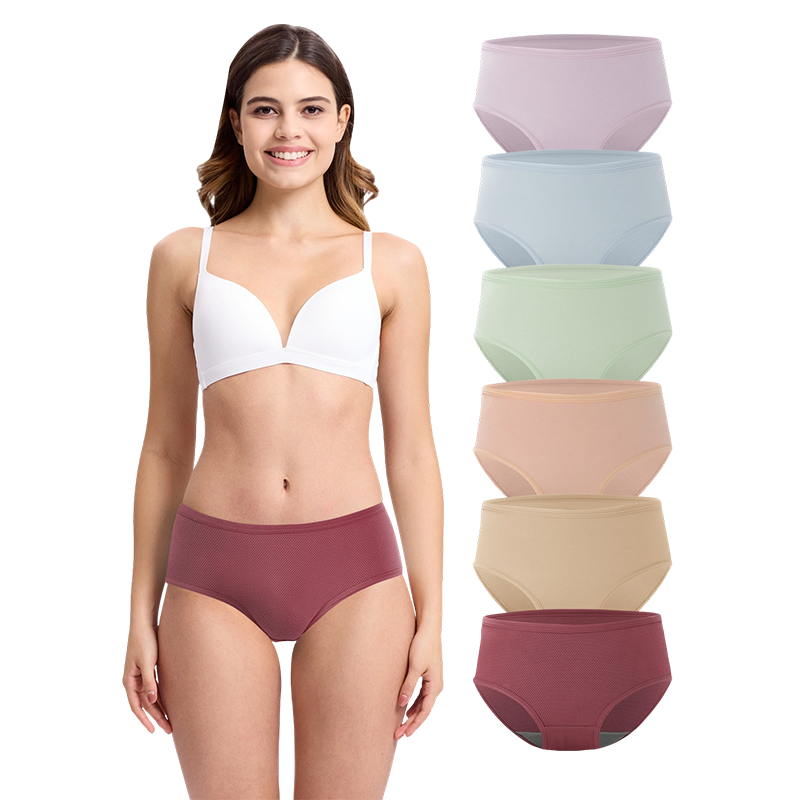
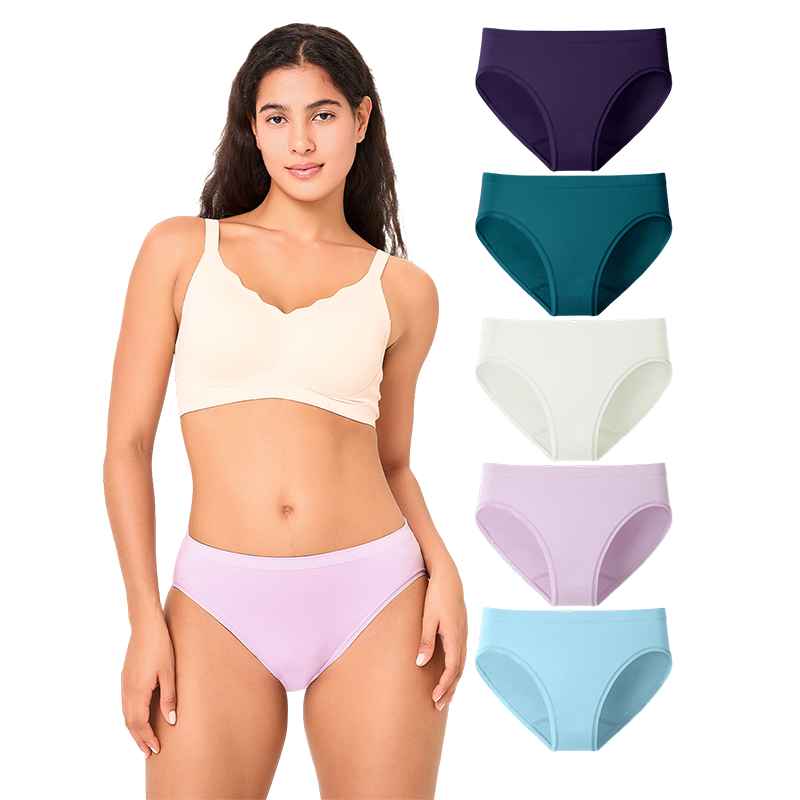
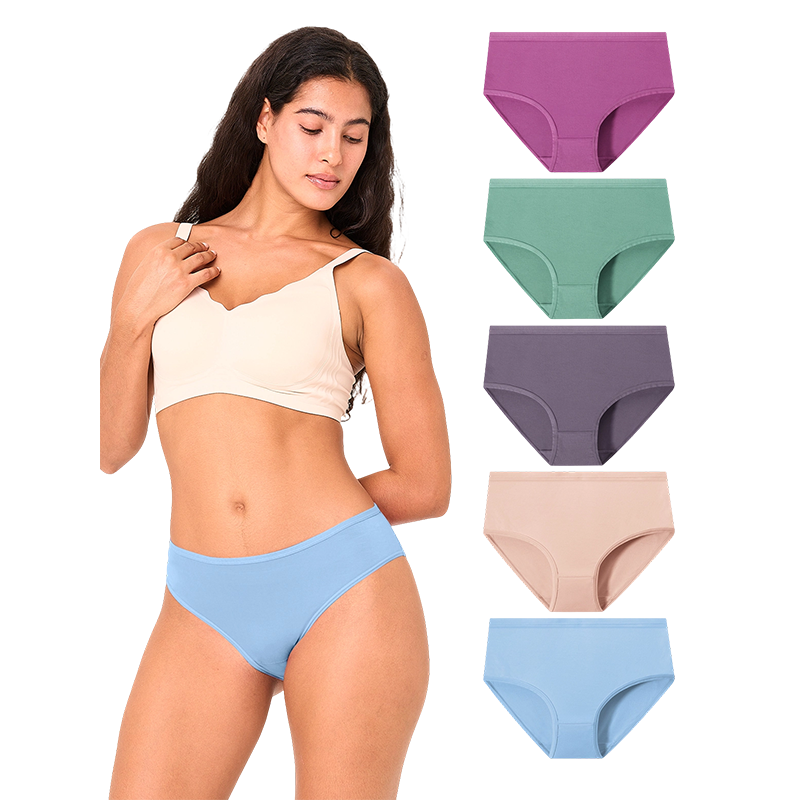
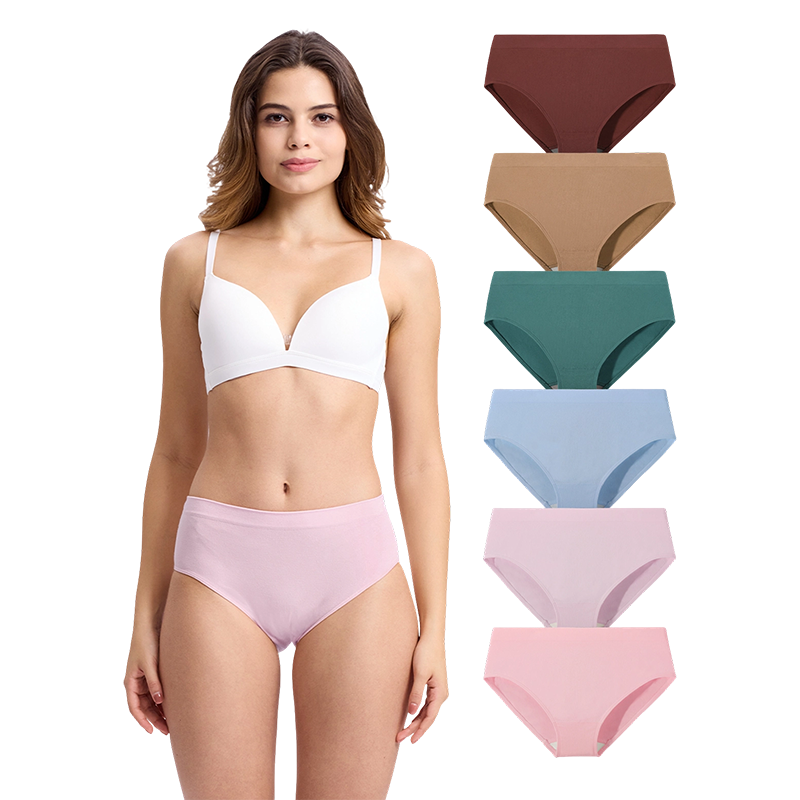
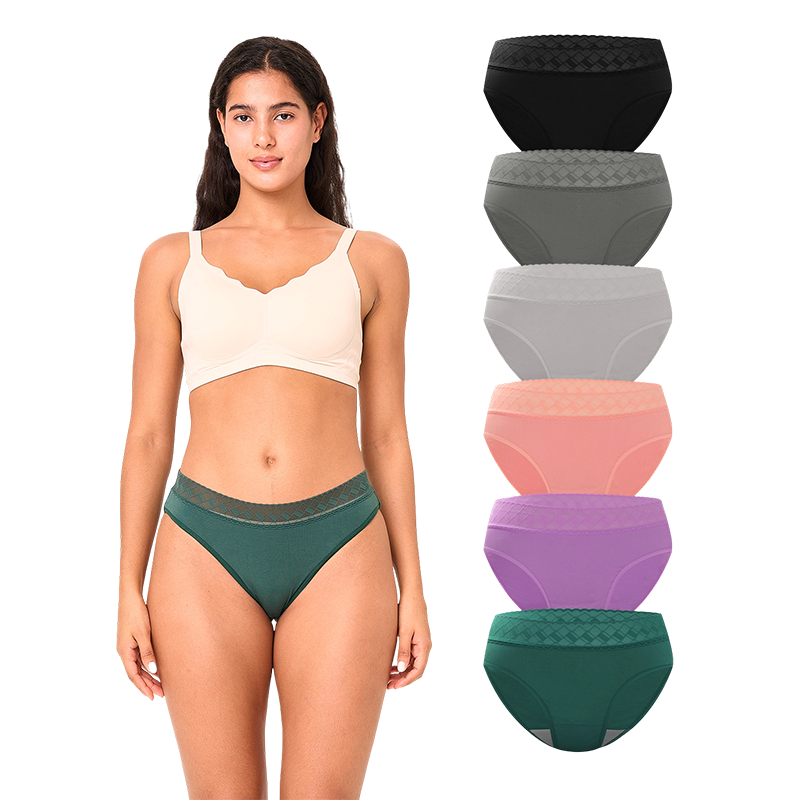
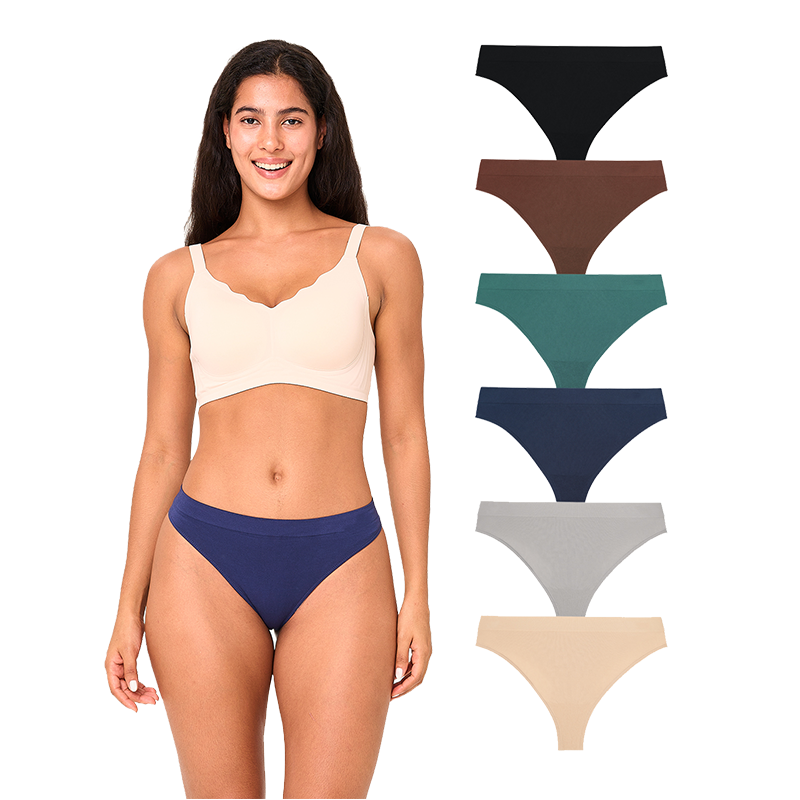
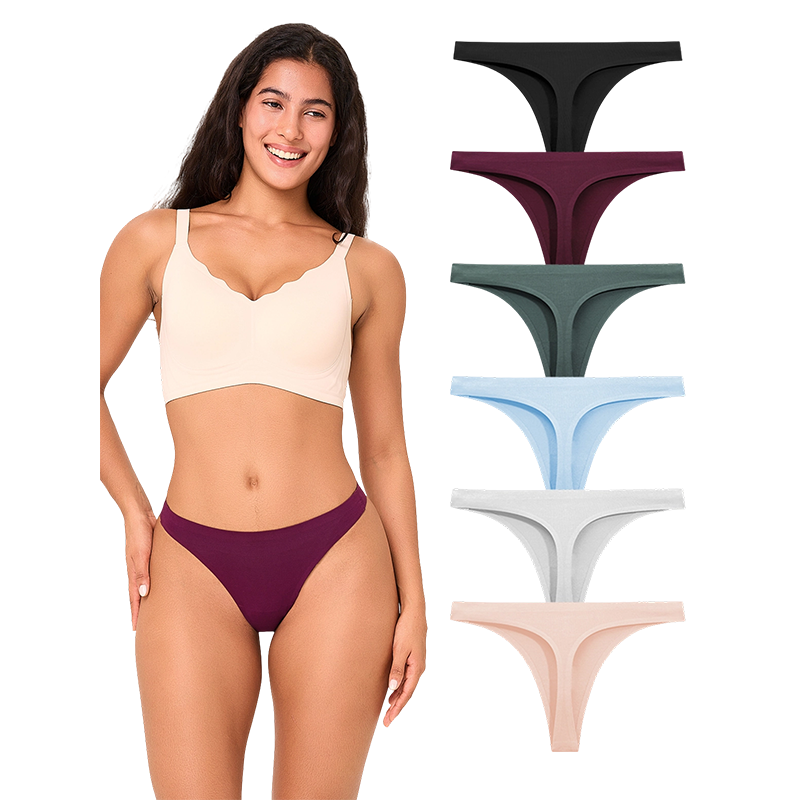
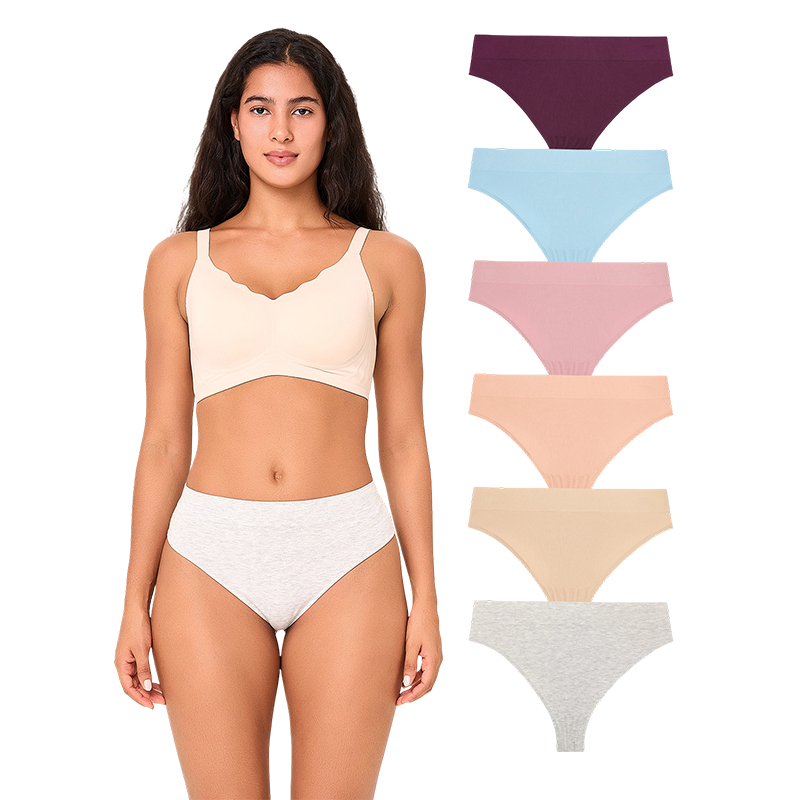
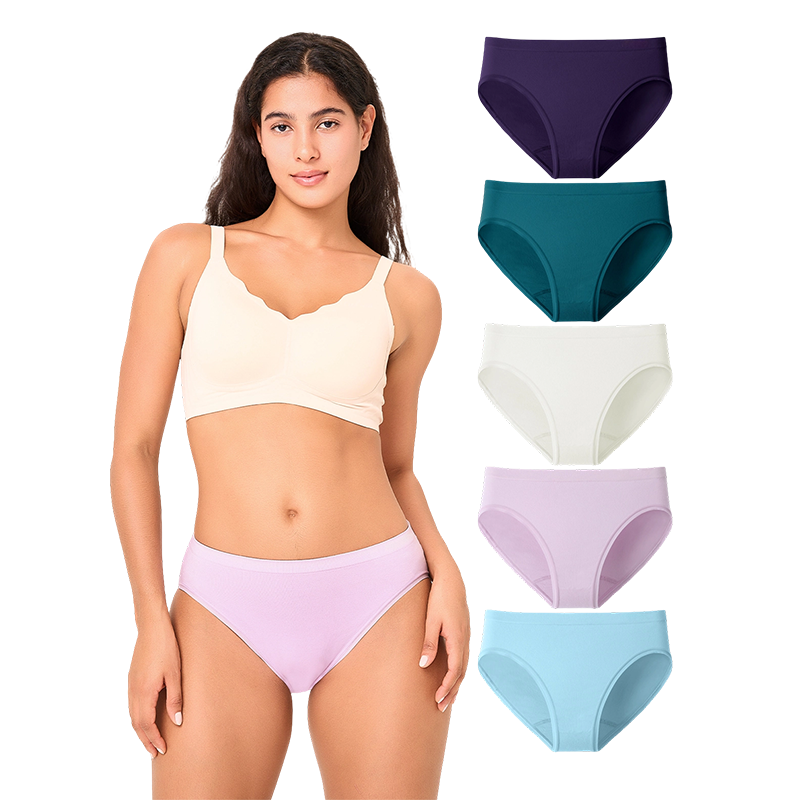
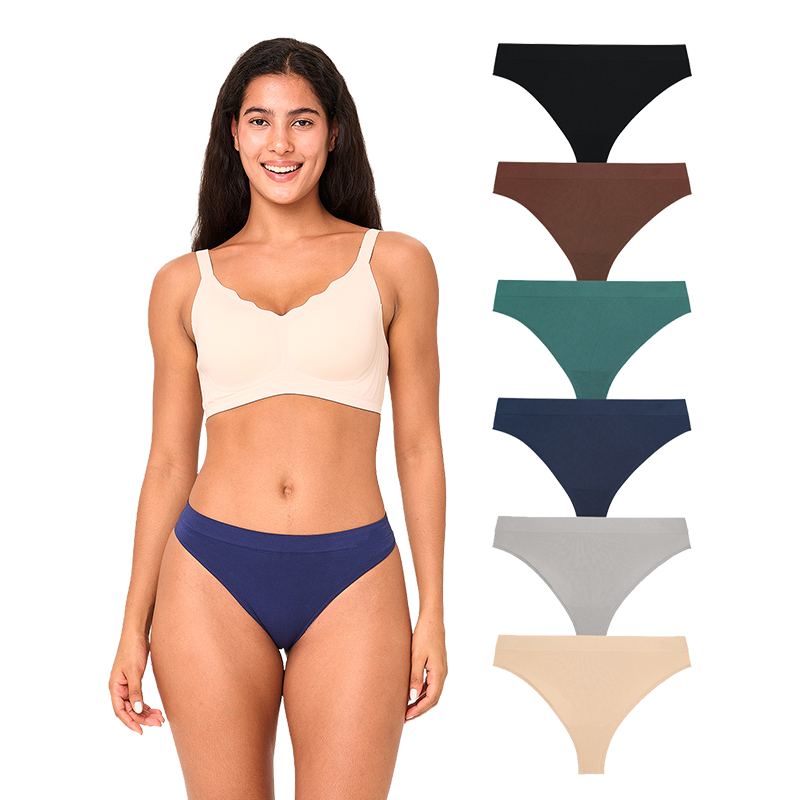
For online retail, the first product image and title should make the shape immediately recognizable. Additional images can show the waistband position, gusset construction, fabric texture, and garment measurements. The four image positions in this article can be used for product photography or technical visuals in a digital catalog.
Women’s boyshorts are underwear with a more extended side and seat coverage than traditional briefs. This product has an approximately 1.1-inch inseam that reaches the top of the thigh, creating a compact boyshort profile rather than a long boxer-brief shape.
The composition is 80% viscose made from bamboo, 15% nylon, and 5% spandex. Bamboo viscose contributes softness and lightweight breathability, nylon supports durability and structure, and spandex provides stretch and recovery.
They are made with a seamless one-piece knit construction. This reduces the number of conventional sewn seams and is intended to create a smooth, low-bulk feel against the skin and beneath clothing.
No. The waistband is designed as a mid waistband that sits just below the navel. The exact position can vary slightly according to body shape, size, and personal fit.
Yes. The product includes a double-layered gusset intended to provide additional comfort and coverage in the crotch area.
Yes. The short leg and all-over coverage make them suitable for wearing under skirts and dresses. Buyers should select the correct size and test the garment with the intended outer clothing to achieve the preferred appearance.
Not automatically. Bamboo viscose identifies the fiber type, while “organic” requires supporting certification or documentation for the relevant material and product. Buyers should confirm the exact certification scope before using an organic claim in retail content.
FSC certification relates to responsibly sourced forest-based materials and supply chain controls. The buyer should request the current certificate and confirm that its scope covers the bamboo-derived material or claim being used for the product.
The manufacturer provides OEM/ODM products and services, so customization can be discussed. Typical options may include colors, sizing, packaging, labels, logo presentation, and technical adjustments. Final options, costs, and minimum order quantities depend on the development brief.
The product is supplied by Nantong Tianhong Textile Technology Co., Ltd., a Nantong-based textile company established in 2001. The company specializes in underwear research, manufacturing, sales, and OEM/ODM services for customers in multiple international markets.
Buyers should approve a pre-production sample, confirm the fiber and certification documents, review measurement tolerances, perform wear and wash testing, inspect the gusset and seamless knit, and establish a written pre-shipment inspection standard.
A focused question list can make development faster and reduce misunderstandings between the brand and factory.
Which bamboo-viscose yarn and certification documents apply to this exact product?
What is the minimum order quantity by color, size, and style?
What measurement method will be used for the 1.1-inch inseam and mid-rise waistband?
How will the double-layered gusset be formed and inspected?
What tests are available for colorfastness, shrinkage, pilling, stretch recovery, and harmful substances?
How are production lots identified for traceability?
Which tag-free branding options are available?
What packaging formats are suitable for e-commerce and retail shelves?
How are pre-production and bulk samples approved?
Which documents will accompany the shipment?
These questions are relevant whether the buyer is launching a new bamboo underwear label, adding women’s boxer briefs to an existing assortment, or sourcing a private-label basic collection.
This women’s boyshort style combines several features that address common underwear problems: a stable mid-rise position, short upper-thigh coverage, a lightweight bamboo-viscose blend, seamless one-piece knitting, no tags, and a double-layered gusset. Its competitive advantage is not based on one material claim alone. The value comes from the way the fiber blend, pattern, construction, and finishing work together.
For consumers, the product offers a practical everyday alternative to narrow briefs and longer boxer briefs. For brands, it provides a clear product story centered on premium breathable underwear, sustainable material sourcing, seamless comfort, and dependable coverage. For wholesale and private-label buyers, Nantong Tianhong’s underwear specialization, OEM/ODM services, certification experience, and traceability focus provide a suitable basis for product development and scaled production.
The strongest purchasing decision will come from combining the product description with evidence: approved samples, measured dimensions, wear testing, wash testing, certification review, and a documented quality standard. That approach protects the comfort promise while giving retailers accurate information for product pages, packaging, and customer support.
1. Product specification supplied for Women’s Boyshorts: fiber composition, fit, construction, gusset, coverage, and intended use.
2. Forest Stewardship Council, certification principles and chain-of-custody guidance for forest-based materials.
3. OEKO-TEX, textile product safety and harmful-substance testing framework.
4. Global Organic Textile Standard, requirements for certified organic fibers and processed textile supply chains.
5. Textile Exchange, guidance on preferred fibers, material claims, and responsible fiber sourcing.
6. World Wide Responsible Accredited Production, principles for responsible manufacturing and workplace practices.
7. Business Social Compliance Initiative, guidance for social-compliance assessment and supply chain improvement.
8. Nantong Tianhong Textile Technology Co., Ltd., company information regarding underwear research, manufacturing, OEM/ODM services, sustainability, certifications, and international customer support.

Copyright © Nantong Tianhong Textile Technology Co., Ltd. All Rights Reserved.
 Room 806, Building D, Jingyang Plaza, Chongchuan District, Nantong City, Jiangsu Province,china


 English
 Español
 русский
 عربى