Content
Sports and running bras are essential performance garments for women who want reliable support, freedom of movement, and lasting comfort during exercise. Unlike ordinary everyday bras, a well-designed sports bra must manage repeated movement, perspiration, changing body temperature, and friction at the same time. It must provide stability without feeling restrictive, remain comfortable during extended wear, and maintain its shape after repeated washing. These requirements make material selection, pattern engineering, knitting technology, sewing precision, and quality control equally important.
The Sports and Running Bras described in this article are developed for active lifestyles and categorized as women's seamless bras. They are made with advanced moisture-wicking fabrics that help move perspiration away from the skin, while breathable construction supports temperature regulation during exercise. Their tailored fit is intended to provide dependable stability without compromising freedom of movement. Strategic seam placement and the absence of irritating tags further improve comfort, particularly during running, fitness training, gym sessions, yoga, cycling, walking, and other activities that involve repeated motion.
Behind the product is Nantong Tianhong Textile Technology Co., Ltd., an established textile and underwear manufacturer based in Nantong, China. Founded in 2001, the company specializes in the research, manufacturing, and sales of underwear products. Its capabilities include OEM and ODM development, functional fabric application, customized product engineering, and supply chain management for customers in Europe, North America, and China. The company’s experience in natural fiber fabrics, environmentally responsible materials, and underwear manufacturing provides a strong foundation for producing performance-focused intimate apparel.
This article examines the product’s design advantages, functional materials, manufacturing processes, quality systems, customization capabilities, and commercial value. It also explains why a specialized manufacturer can offer meaningful advantages over less-focused competitors when developing sports and running bras for private labels, retailers, distributors, and activewear brands.
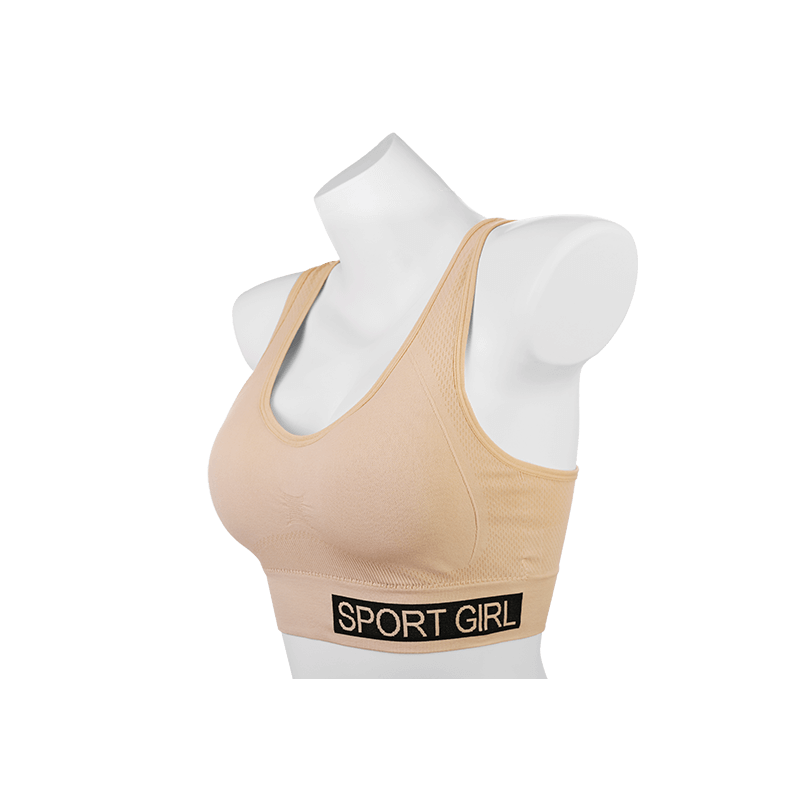
Sports & Running Bras
Exercise creates physical demands that ordinary lingerie is not designed to handle. During running, jumping, interval training, and many team sports, the body experiences repeated vertical and lateral movement. If a bra does not provide sufficient support, the wearer may experience discomfort, distraction, stretching, or excessive pressure. If the garment is too rigid, however, it may restrict breathing and arm movement. The central challenge is to balance support and flexibility through the combined use of fabric, structure, fit, and finishing.
Perspiration is another important consideration. During physical activity, moisture accumulates between the skin and garment. Fabrics that retain moisture can become heavy, warm, and uncomfortable. Damp surfaces may also increase friction, which can lead to chafing around the underbust, shoulders, armholes, and side panels. Sports and Running Bras address this challenge through moisture-wicking fabrics and breathable material construction that help manage perspiration more efficiently than conventional fashion-oriented bra fabrics.
Temperature changes during exercise also influence comfort. The body may heat up quickly at the beginning of a workout and cool down during rest periods. Breathable textiles allow air movement and assist in releasing excess heat. A balanced textile structure can help prevent the trapped, humid feeling associated with dense or poorly ventilated garments. This is particularly important for runners, athletes, and fitness consumers who wear their bras for extended periods.
Seam placement is equally significant. A seam positioned directly over a high-friction area can irritate the skin, especially when the garment is worn during repeated motion. Strategic seam placement reduces unnecessary contact and enables the product to follow the body more naturally. The use of tag-free construction or printed care information can further reduce irritation at the neckline or back area.
These requirements explain why the best sports bras are not simply ordinary bras made from stretch fabric. They are engineered performance garments. Their effectiveness depends on a coordinated process that begins with the selection of suitable yarns and fabrics and continues through pattern development, sample testing, production control, finishing, and inspection.
The primary functional advantage of these Sports and Running Bras is their ability to manage perspiration. Advanced moisture-wicking fabrics are designed to draw moisture away from the skin and distribute it across a larger surface area, where it can evaporate more readily. This helps the wearer remain drier and more comfortable during training.
Moisture management can improve the overall exercise experience in several ways. A drier inner surface feels lighter against the body, reduces the sticky sensation that may occur during intense activity, and supports better comfort during long workouts. Effective moisture movement can also reduce the conditions that contribute to rubbing and chafing. For active consumers, this function is often as important as support because discomfort caused by wet fabric can interrupt concentration and reduce motivation.
Fabric performance depends on more than a surface treatment. Fiber composition, yarn structure, knitting density, finishing methods, and garment construction all influence how quickly moisture moves through the textile. A specialized underwear manufacturer can evaluate these factors together rather than treating moisture wicking as an isolated feature.
Breathability allows air and water vapor to move through the garment. Sports and Running Bras use breathable material structures to help regulate temperature and reduce the accumulation of heat around the bust and underbust areas. This makes the garment suitable for activities ranging from moderate walking to higher-intensity running and gym training.
A breathable bra should not feel excessively open or unstable. The fabric must still provide adequate coverage, elasticity, and recovery. This balance is one of the key differences between a properly engineered performance bra and a basic stretch garment. The manufacturer’s knowledge of knitting, fabric weight, and garment patterning is therefore essential.
Support is a defining feature of any sports bra. The product must help stabilize the bust during movement while preserving natural breathing and upper-body mobility. The tailored fit of these bras is designed to provide stability without compromising freedom of movement.
Support is achieved through the interaction of several components. The body fabric contributes stretch and recovery. The underbust area helps anchor the garment. The cup or front structure helps control movement. Shoulder straps distribute tension, while the back design assists in maintaining the bra’s position. When these elements are correctly balanced, the wearer receives a secure feeling without excessive compression.
Different activities require different support levels. A running consumer may prefer a firmer fit than someone practicing yoga or stretching. OEM and ODM development allows the product structure to be adapted according to the intended activity, target market, size range, and brand positioning. This flexibility is an advantage for buyers who require a product family rather than one universal style.
A sports bra should support the body without making arm movement difficult. This is particularly important in running, strength training, dance, tennis, cycling, and functional fitness. A well-balanced pattern follows the body as it moves, reducing pulling at the shoulder straps, neckline, and side seams.
Seam placement plays a major role in mobility. Seams can be positioned to provide structure where it is needed while avoiding pressure points in areas that bend or rotate frequently. The result is a garment that feels stable during activity but does not constantly remind the wearer that it is being worn.
Chafing is a common concern in active apparel. It may occur when moisture, repeated movement, pressure, and rough garment edges act together. Sports and Running Bras are developed with breathable materials, strategic seams, and tag-free comfort in mind. These features can help create a smoother wearing experience.
The absence of irritating tags is particularly useful for consumers with sensitive skin or for those who participate in long-duration activities. Printed labels or carefully placed information can reduce the number of hard or abrasive components touching the body. Smooth finishing at the neckline, armholes, and underbust area can provide additional comfort.
The women's seamless bra category offers a clean appearance and a close-to-body fit. Seamless or reduced-seam construction can be especially desirable under fitted tops, athletic shirts, and lightweight training layers. It may also reduce the number of raised edges that come into contact with the skin.
Although developed for sports and running, the bras can also be suitable for everyday active lifestyles. Consumers may wear them for commuting, travel, walking, home workouts, low-impact fitness, or casual layering. This versatility increases the garment’s value because one product can serve multiple parts of a modern wardrobe.
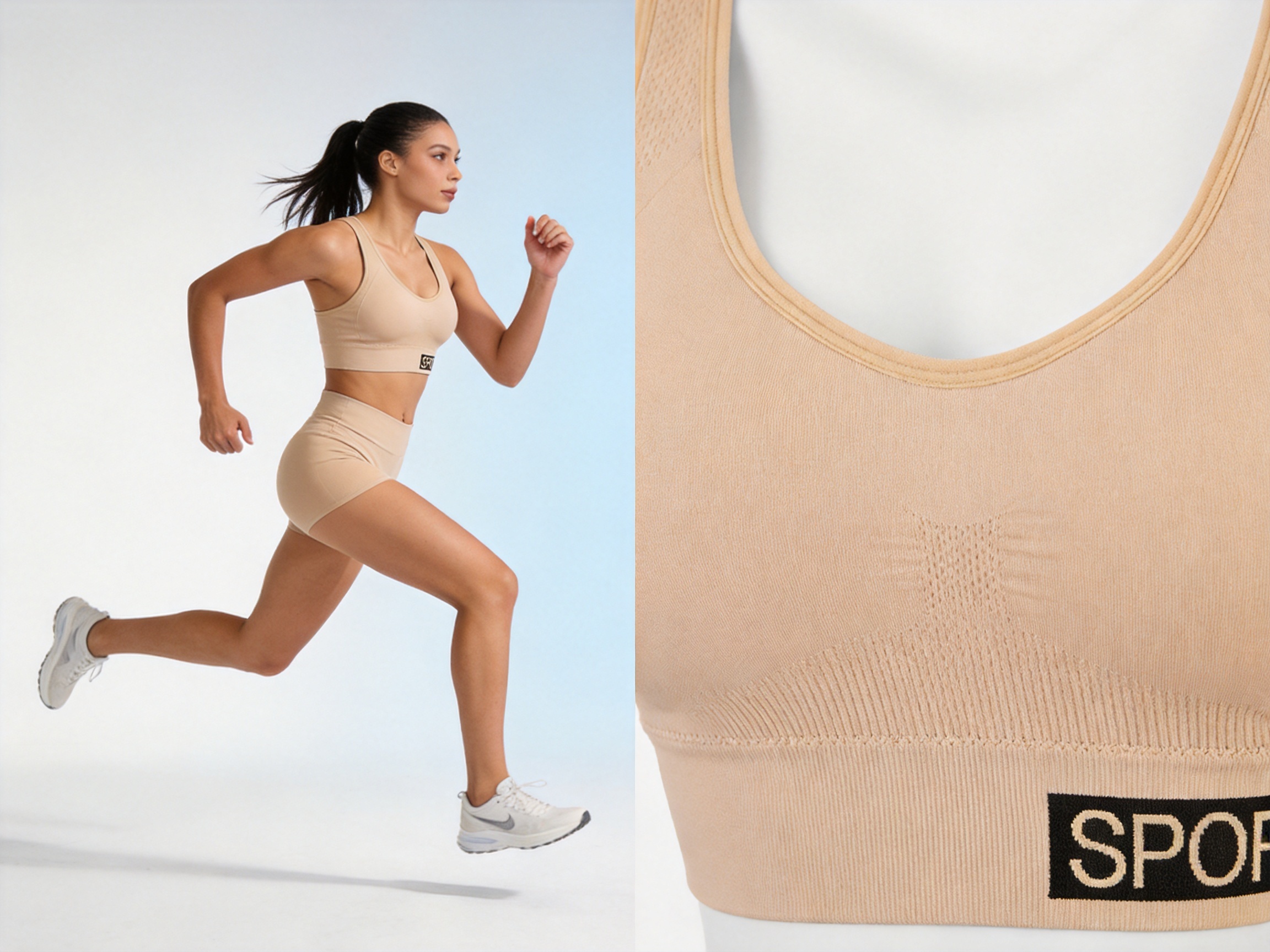
Material selection is one of the most important stages in producing a high-quality sports bra. The chosen fabric must meet several requirements simultaneously: moisture management, softness, stretch, recovery, breathability, dimensional stability, color performance, and wash durability. A fabric that performs well in one area may create compromises in another, so development requires testing and practical evaluation.
Synthetic performance fibers are commonly used in sports underwear because they can provide strong moisture movement, elasticity, durability, and rapid drying. Their performance can be adjusted through yarn selection and knitting structure. Natural and regenerated fibers may also be considered when softness, sustainability, or a distinctive hand feel is a priority. The most appropriate composition depends on the customer’s target market and the performance profile required.
The company’s focus on environmentally friendly functional fabrics and natural fiber development supports product development for customers seeking more responsible material options. Organic or certified fibers may be incorporated where technically appropriate and where the required performance standards can be achieved. Certifications such as FSC, OCS, GOTS, and OEKO-TEX 100 can help support material transparency and responsible sourcing, subject to the specific fabric and product certification scope.
Fabric weight must also be considered. A very lightweight fabric may provide excellent breathability but insufficient coverage or support. A heavier structure may improve stability while reducing ventilation. Through sampling and testing, the manufacturer can identify a suitable balance for different product categories, seasons, climates, and activity levels.
Elastic recovery is particularly important in sports bras. The garment must stretch as the wearer moves and then return to its original dimensions. Poor recovery can lead to looseness, loss of support, and an untidy appearance after repeated wear. Excessive compression, on the other hand, can cause discomfort. Quality development therefore evaluates both stretch and recovery rather than focusing on stretch alone.
Manufacturing begins with an understanding of the customer’s product objective. The development team evaluates the intended activity level, target consumer, retail price, fabric preference, support requirement, size range, color direction, packaging needs, and certification expectations. This stage helps define the product’s technical specification before samples are produced.
For a sports and running bra, the specification may include the desired support level, underbust stability, strap width, neckline height, back construction, coverage, fabric weight, moisture-wicking requirement, and acceptable seam locations. Clear requirements reduce the risk of creating a garment that looks attractive but fails during exercise.
Pattern engineering translates the product concept into a three-dimensional garment. The pattern must account for body movement, fabric stretch, bust shaping, shoulder position, underbust tension, and size grading. A pattern that is too flat may provide insufficient shaping, while one that is too restrictive may limit movement.
Fit development is normally performed through multiple sample rounds. Initial samples help evaluate the overall silhouette and construction. Later samples refine the balance between support, comfort, coverage, and appearance. Testing on appropriate fit models or through customer-approved size specifications can identify issues that are difficult to detect from a flat pattern alone.
Size grading is another specialized step. Each size should preserve the intended fit and support rather than simply being enlarged or reduced mechanically. Bust volume, underbust circumference, shoulder position, strap length, and armhole depth may require coordinated adjustments across the size range. Professional grading helps ensure a more consistent customer experience.
For seamless or reduced-seam products, knitting technology can create integrated zones of stretch, compression, ventilation, and support. Different knitting structures may be used in different areas of the bra. A firmer zone can help stabilize the underbust, while a more open or flexible zone can improve breathability and mobility.
Fabric preparation may include inspection, relaxation, dyeing, finishing, and dimensional stabilization. Fabric relaxation is important because textiles may change slightly after tension is released. If cutting or garment construction takes place before the fabric has stabilized, finished measurements may become inconsistent.
Color development requires attention to shade matching, colorfastness, and production consistency. Activewear is frequently washed, exposed to perspiration, and sometimes used outdoors. Colorfastness testing helps confirm that the product maintains an acceptable appearance during normal care and use.
When cut components are used, accurate cutting is essential for maintaining symmetry and size consistency. The direction of stretch must be controlled so that the finished garment provides the intended support. Incorrect grain or stretch orientation can affect fit, recovery, and comfort.
Components such as straps, elastic bands, labels, thread, molded elements, and packaging materials must also be controlled. Even a high-quality main fabric cannot compensate for a rough elastic edge or poorly selected thread. Component inspection helps ensure that the complete garment meets the intended performance requirements.
Seam construction must balance strength, flexibility, and softness. A seam that is too weak may open during movement, while a seam that is too bulky may create pressure or visible lines. The appropriate stitch type, thread tension, seam allowance, and finishing method depend on the fabric and product structure.
Strategic seam placement is used to reduce friction and support body movement. Seams can be positioned along natural body lines or placed away from areas that experience repeated rubbing. Where possible, low-profile finishing can help create a smoother inner surface. The elimination of irritating tags further supports the product’s comfort objective.
Workers and production technicians must maintain consistent tension during assembly. Uneven tension can lead to puckering, twisting, or inconsistent measurements. Specialized underwear production benefits from operators who understand the behavior of stretch fabrics and the importance of handling delicate elastic materials correctly.
After assembly, the garments may undergo thread trimming, pressing or shaping, measurement checks, appearance inspection, and packaging preparation. Finishing is not merely cosmetic. It can affect the garment’s final dimensions, surface smoothness, and presentation to the customer.
Care labels, size information, folding methods, and packaging formats can be customized for different markets. OEM and ODM buyers may request private labels, retail-ready packaging, barcode systems, color cards, or individual polybags. These details are important for brands that need a product to move efficiently from factory to warehouse and then to retail or e-commerce channels.
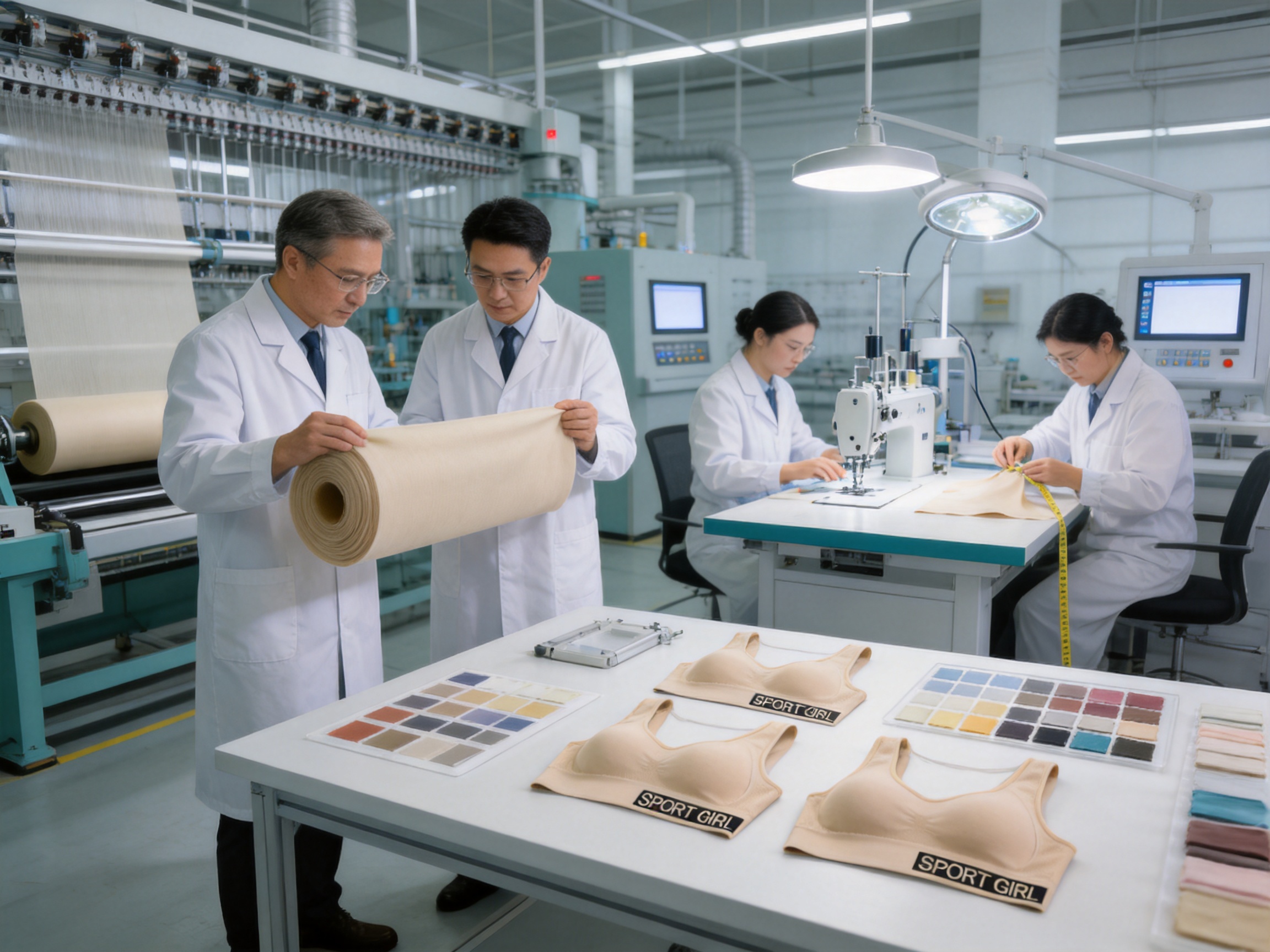
Sports bras are performance products, so quality control should cover both appearance and function. Visual inspection alone cannot confirm whether a bra will maintain support, recover after stretching, or remain comfortable after washing. A robust quality system combines incoming material checks, in-process inspection, finished-product evaluation, and documentation.
Incoming fabric inspection may examine shade, width, weight, stretch, recovery, surface defects, and hand feel. These checks help prevent inconsistent fabric from entering production. For products with specific moisture-wicking or breathability requirements, laboratory or standardized internal testing can provide additional evidence of performance.
During production, inspectors may check seam quality, elastic tension, stitch density, panel alignment, measurements, label placement, and overall appearance. Early detection is valuable because correcting a problem during assembly is usually more efficient than repairing or rejecting a finished batch.
Finished-product inspection may include measurements at key points, stretch testing, recovery observation, seam strength evaluation, colorfastness assessment, and wash testing. Wash tests can reveal shrinkage, distortion, pilling, color change, elastic deterioration, or loss of shape. These results support product improvement and help buyers establish realistic care instructions.
The company’s certifications and compliance framework represent an additional strength. Its products and operations are associated with standards and systems including OEKO-TEX 100, GOTS, OCS, FSC, WRAP, and BSCI, according to the applicable product and facility scope. Such standards can support chemical safety, responsible material sourcing, social compliance, workplace practices, and supply chain credibility. Buyers should confirm the exact certification coverage for each order, material, and production facility.
Traceable supply chain management is also valuable. Traceability can help identify the origin of materials, production stages, quality records, and shipment information. For brands operating in markets with increasing expectations for transparency, this makes it easier to organize documentation and respond to customer or regulatory requirements.
The first competitive advantage is specialization. A company that focuses on underwear understands the fit, elasticity, comfort, hygiene, and construction requirements specific to intimate apparel. A general garment factory may be capable of making simple activewear, but it may not have the same depth of experience in underbust stability, seamless comfort, skin contact, and close-fitting support garments.
The second advantage is integrated product development. Research, fabric selection, pattern engineering, sampling, production, and quality control can be coordinated within a focused manufacturing system. This reduces communication gaps between separate suppliers and helps the customer move more efficiently from concept to approved product.
The third advantage is customization. OEM and ODM services allow buyers to develop products that reflect their own brand identity and market requirements. Customization may include fabric composition, color, size range, support level, back design, strap construction, logo application, packaging, and certification objectives. This is particularly useful for brands that do not want to compete only through generic products.
The fourth advantage is experience with international customers. Long-term partnerships with clients in Europe, North America, and China indicate familiarity with different product expectations, communication styles, documentation needs, and quality requirements. International experience can improve the efficiency of sample approval, production coordination, and shipment preparation.
The fifth advantage is a sustainability-oriented approach. Consumers and retailers increasingly examine the origin of fibers, environmental impact, chemical safety, and social responsibility. The company’s focus on natural fiber fabrics, environmentally friendly functional textiles, and traceable supply chain management gives buyers a foundation for developing more responsible product lines.
The sixth advantage is manufacturing continuity. A stable manufacturer can help a brand maintain consistent fit, fabric performance, colors, and workmanship across repeat orders. Consistency is especially important for underwear because consumers expect replacement products to feel and fit like previous purchases.
| Evaluation Area | Sports and Running Bras from a Specialized Underwear Manufacturer | Potential Limitation of a General Garment Supplier |
|---|---|---|
| Moisture Management | Fabric and construction can be selected specifically for perspiration control and active use. | Moisture performance may not be central to the supplier’s normal product range. |
| Fit and Support | Pattern development can focus on underbust stability, movement, comfort, and size grading. | Patterns may be adapted from general tops without sufficient intimate-apparel specialization. |
| Seam Comfort | Strategic seam placement, low-profile finishing, and tag-free construction can be integrated into development. | Seams and labels may be optimized mainly for appearance or assembly efficiency. |
| OEM and ODM Capability | Brand-specific materials, colors, labels, packaging, and performance targets can be coordinated. | Customization may be limited to basic color or logo changes. |
| Sustainability Support | Natural fiber development, certified materials, and traceability can be considered during sourcing. | Material documentation may be less comprehensive or less integrated. |
| Repeat-Order Consistency | Specialized production records can help preserve fit, fabric, and workmanship standards. | Inconsistent processes may create variation between production batches. |
Running is one of the clearest applications for this product. Runners need a bra that remains stable during repetitive impact while helping control moisture and heat. The tailored fit, breathable materials, and strategic seam placement support a more comfortable experience during short runs, long-distance training, treadmill sessions, and outdoor jogging.
Gym and fitness training also require a balance of support and movement. Weight training, circuit workouts, rowing, and functional exercises involve frequent changes in posture. A bra that stays close to the body without restricting the shoulders can help the wearer transition smoothly between movements.
Yoga, pilates, stretching, and low-impact exercise may require a softer and more flexible fit. In these activities, comfort, breathability, and freedom of movement are often prioritized over maximum compression. The same product family can be developed in different support levels or fabric structures to meet these varied needs.
Cycling and outdoor activity place additional emphasis on moisture management and extended-wear comfort. Consumers may wear their bras for several hours, making fabric softness, drying performance, and reduction of irritation particularly important. Travel and commuting are other practical applications because active consumers often want one bra that can transition from exercise to daily routines.
Retailers can also position these bras as versatile foundation garments. They may be sold as sports underwear, active essentials, seamless base layers, or everyday comfort bras. Clear product communication allows buyers to select the most appropriate market position without limiting the product to a single sport.
Private-label customers can use OEM services to manufacture a sports bra according to an existing design and technical specification. This may be appropriate for brands that already have established patterns, fit blocks, material requirements, and packaging guidelines. The manufacturer’s role is to translate the approved specifications into stable production.
ODM services provide a broader development pathway. A buyer may begin with a general concept, such as a breathable running bra for a specific age group or climate, and collaborate with the manufacturer to refine the fabric, structure, fit, colors, and packaging. This approach can shorten the path from market idea to product sample while benefiting from the manufacturer’s technical experience.
Customization can be organized around several product variables. The first is performance level. A brand may require light support, medium support, or higher support. The second is fabric direction. Some markets may prioritize rapid drying and high elasticity, while others may focus on natural fibers, recycled content, or a soft hand feel. The third is styling, including neckline shape, back design, strap arrangement, color blocking, and logo treatment.
Size inclusivity is another major opportunity. Brands can request broader size ranges and graded patterns that preserve comfort and support across different body shapes. Proper size development is more effective than simply extending measurements from a standard size because body proportions and support needs may change across the range.
Packaging and labeling can also be tailored. Buyers may request hangtags, woven labels, printed care information, recyclable packaging, bilingual instructions, retail barcodes, or e-commerce-friendly presentation. These elements help create a complete brand experience and support more efficient distribution.
Sustainability in underwear manufacturing involves more than selecting a single environmentally preferred fiber. It includes raw material sourcing, chemical management, energy use, water use, production efficiency, worker welfare, packaging, product durability, and supply chain transparency. A durable sports bra that remains wearable for a longer period may reduce replacement frequency and improve the value of the resources used to make it.
The company’s emphasis on natural fiber fabrics and environmentally friendly functional materials supports brands seeking to improve the environmental profile of their collections. Organic bamboo-related textile concepts and other natural fiber directions may be evaluated according to the required softness, breathability, moisture management, durability, and certification criteria.
Certification can help provide structure to sustainability claims. OCS and GOTS may be relevant to organic fiber products, while FSC may apply to certain responsibly managed forest-based material systems. OEKO-TEX 100 addresses harmful substances in certified textile products. WRAP and BSCI relate to social compliance and responsible workplace practices within the applicable scope. Certifications should be reviewed carefully because their validity depends on the specific facility, material, product, and transaction.
Traceability is especially important for brands communicating sustainability to consumers. A documented supply chain can help buyers understand where fibers originate, how fabrics are processed, where garments are assembled, and which quality or social compliance standards apply. Transparent documentation supports more credible product communication than vague environmental language.
Responsible manufacturing also includes efficient production planning. Accurate forecasting, controlled sampling, material management, and stable repeat orders can reduce waste caused by incorrect specifications or rejected goods. A technically capable manufacturer can help buyers make informed decisions before bulk production begins.
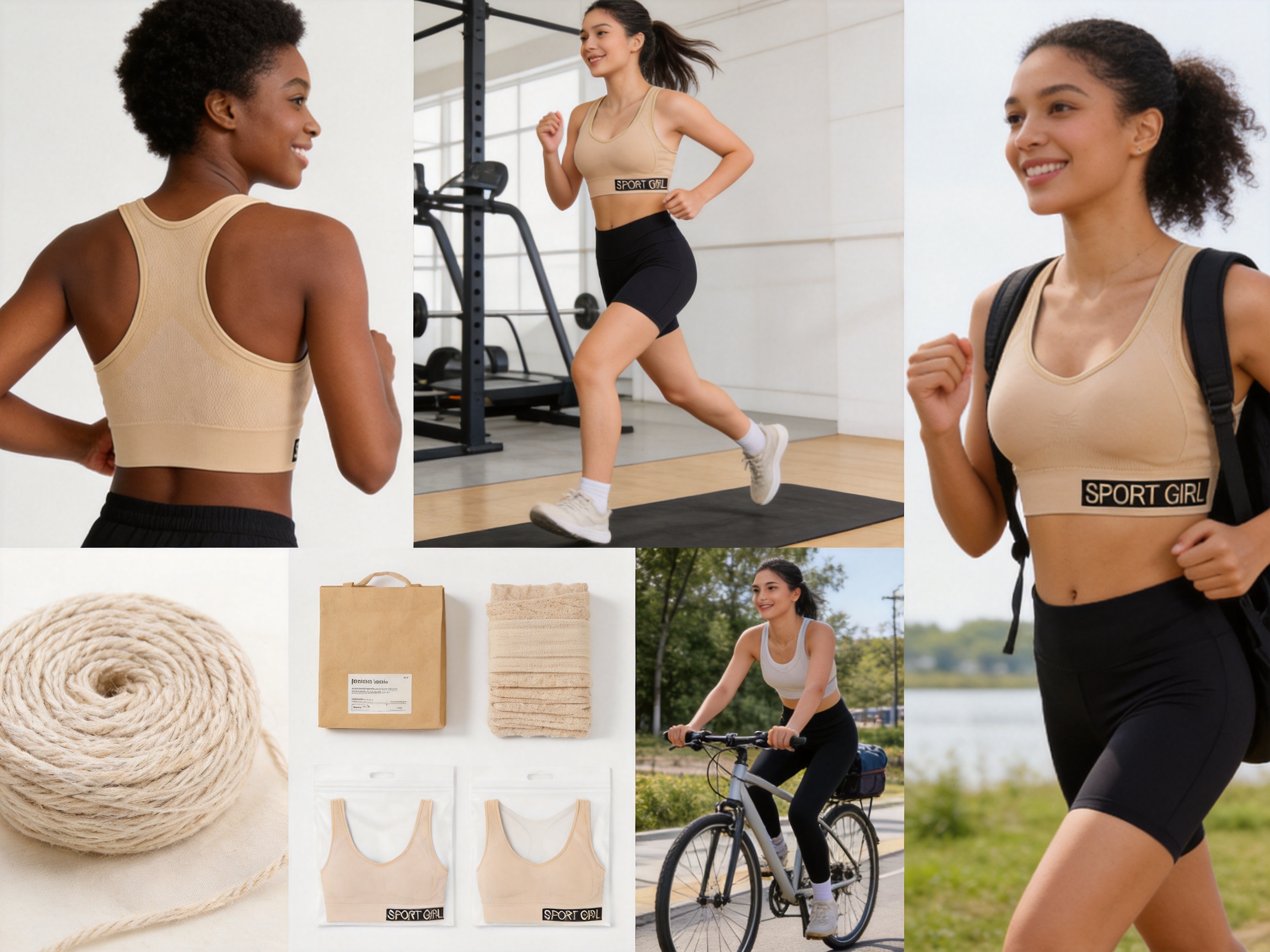
Buyers should begin by defining the intended use. A bra designed for running may require different support and construction from one intended for yoga or everyday wear. The activity level influences the desired compression, strap structure, coverage, and fabric weight.
Next, buyers should review the fabric specification. Important questions include the fiber composition, stretch and recovery performance, moisture-wicking capability, breathability, colorfastness, pilling resistance, and wash durability. If sustainability is part of the product positioning, buyers should also request documentation for the applicable certifications and chain of custody.
Fit evaluation should include more than checking whether the sample looks attractive on a mannequin. The bra should be assessed during arm movement, bending, stretching, jogging, and repeated motion. Reviewers should observe whether the underbust band rolls, whether straps remain in place, whether the neckline shifts, and whether the wearer can breathe comfortably.
Comfort should be checked at all contact points. The inner surface should not contain rough edges, excessive bulk, exposed threads, or irritating labels. The garment should maintain a smooth feeling during dry and perspiring conditions. A sample that feels comfortable for five minutes may perform differently after an hour of activity, so extended wear testing is valuable.
Buyers should also examine construction consistency. Measurements should be compared across multiple samples, not only one unit. Seam alignment, elastic tension, color shade, logo placement, and packaging should remain consistent. Establishing an approved sample and written specification before bulk production helps reduce misunderstandings.
Correct care contributes to the service life of sports underwear. Consumers should follow the care instructions supplied with the final product because washing temperature, detergent selection, drying method, and use of fabric softener can affect elastic recovery and moisture-wicking performance.
Frequent exposure to perspiration and washing places stress on active bras. High-quality materials and controlled manufacturing can help the garment retain its shape and performance, but no textile is immune to poor care. Brands should provide practical instructions that reflect the actual fabric composition and finishing process.
Durability creates value for both consumers and retailers. A bra that maintains support, comfort, and appearance after repeated use is more likely to generate satisfaction and repeat purchases. It may also reduce returns related to premature stretching, seam opening, color change, or fit inconsistency.
Product durability should be considered during development rather than treated as a final inspection issue. The correct yarns, elastic components, seam construction, finishing methods, and wash testing procedures all contribute to long-term performance. A manufacturer with experience in underwear can identify these relationships earlier in the development process.
Sports and Running Bras occupy an attractive position between underwear and activewear. They address a practical consumer need and can be marketed to women who participate in sports, exercise casually, or simply prefer supportive and breathable everyday garments. This broad customer base creates opportunities for retailers, online sellers, fitness brands, lifestyle labels, and professional activewear companies.
A seamless design can support a modern product image because consumers often associate it with smooth comfort and clean styling. Moisture management and breathability provide clear functional benefits that can be explained easily in product descriptions. Support and freedom of movement address the primary concerns of active consumers. Together, these features create a strong foundation for a performance-oriented product story.
OEM and ODM flexibility can help brands differentiate their collections. Rather than selling an undetailed generic sports bra, a brand can specify its own color palette, support level, fit philosophy, sustainability direction, packaging, and customer segment. This can improve brand recognition and reduce direct price comparison.
Reliable manufacturing also helps control commercial risk. Accurate sampling reduces the possibility of launching a product with unresolved fit problems. Consistent quality supports fewer customer complaints and returns. Traceable documentation can help brands answer questions from retailers, consumers, and compliance teams.
They are designed with moisture-wicking fabrics, breathable materials, a tailored fit, and construction intended to provide stability during movement. Strategic seam placement and tag-free comfort help reduce irritation during repetitive activity. The exact support level should be confirmed according to the selected design and activity requirements.
No. They can serve professional athletes, recreational runners, gym users, walkers, travelers, and consumers who prefer supportive everyday underwear. Different support levels and fabric structures can be developed for different activity intensities and customer groups.
Moisture-wicking fabric helps move perspiration away from the skin and distribute it across the textile surface so it can evaporate more efficiently. This can help the wearer feel drier and reduce the uncomfortable sensation of wet fabric during exercise.
Breathable construction supports the movement of air and water vapor through the garment. This helps release excess heat and reduce the buildup of humidity between the skin and fabric. Breathability must be balanced with coverage, elasticity, and support.
A seamless or reduced-seam design can create a smoother appearance and reduce the number of raised edges touching the skin. It may also be more comfortable under fitted clothing. Seamless construction still requires careful engineering to provide sufficient support and dimensional stability.
Yes. OEM and ODM services can support customization of fabrics, colors, sizes, patterns, support levels, labels, logos, packaging, and other product details. The final customization options depend on the design, order requirements, material availability, and production plan.
Buyers can discuss natural fibers, organic materials, environmentally friendly functional textiles, and applicable certifications during product development. The selected material should be evaluated for performance as well as sustainability because a sports bra must still provide appropriate stretch, recovery, moisture management, and durability.
Potentially relevant standards include OEKO-TEX 100, GOTS, OCS, FSC, WRAP, and BSCI, depending on the material, facility, product, and certification scope. Buyers should request current documentation and confirm that the certification applies to the specific order.
Samples should be evaluated for fit, support, breathing comfort, arm movement, perspiration management, seam comfort, strap stability, underbust recovery, wash performance, and appearance. Testing should include realistic activity and extended wear rather than relying only on a brief visual review.
A specification should identify the fabric composition, fabric weight, color standard, size measurements, tolerances, support level, seam and construction details, label requirements, packaging, testing expectations, certifications, and acceptable quality standards. A clear specification improves communication between the buyer and manufacturer.
Sports underwear combines intimate-apparel fit with activewear performance. An experienced manufacturer understands how elastic materials, moisture-wicking textiles, seamless structures, underbust support, seam placement, and repeated washing affect the finished garment. This specialized knowledge can reduce development time and improve consistency.
Sports and Running Bras must perform under conditions that are more demanding than ordinary underwear. They need to manage perspiration, support the body, regulate heat, resist chafing, remain flexible, and maintain their shape through repeated wear and washing. The product described here addresses these needs through advanced moisture-wicking fabrics, breathable materials, tailored fitting, strategic seam placement, and tag-free comfort.
Its value is strengthened by the capabilities of Nantong Tianhong Textile Technology Co., Ltd. The company combines long-term underwear manufacturing experience with OEM and ODM development, functional fabric research, natural fiber expertise, international customer experience, and traceable supply chain management. Its association with recognized quality, environmental, and social responsibility standards provides additional support for brands seeking reliable and responsibly developed products.
For private labels, retailers, distributors, and activewear brands, the product offers more than a basic sports bra. It provides a platform for customized performance underwear with opportunities to refine support, fit, fabric, sustainability, labeling, and packaging for a specific market. By combining product engineering with controlled manufacturing and quality management, a specialized supplier can help customers bring comfortable, breathable, and commercially competitive sports bras to consumers around the world.
1. International Organization for Standardization. Quality management principles and general quality-control practices for textile manufacturing.
2. International Organization for Standardization. Textile testing methods for colorfastness, dimensional stability, and performance evaluation.
3. OEKO-TEX Association. Standard 100 principles for testing textiles for harmful substances.
4. Global Organic Textile Standard. Requirements for organic fibers, processing, manufacturing, and social responsibility.
5. Organic Content Standard. Chain-of-custody and organic-material verification principles.
6. Forest Stewardship Council. Responsible forest management and certified material principles.
7. Worldwide Responsible Accredited Production. Principles for responsible and ethical manufacturing.
8. Business Social Compliance Initiative. Frameworks for social compliance and responsible supply chain management.
9. Textile Research and Apparel Engineering literature concerning moisture management, breathability, elastic recovery, and sportswear comfort.

Copyright © Nantong Tianhong Textile Technology Co., Ltd. All Rights Reserved.
 Room 806, Building D, Jingyang Plaza, Chongchuan District, Nantong City, Jiangsu Province,china


 English
 Español
 русский
 عربى
عربى