Content
Men’s underwear has evolved far beyond the basic requirements of coverage and support. Modern consumers expect underwear to feel comfortable throughout the day, remain fresh during changing conditions, fit naturally under clothing, and reflect a more responsible approach to textile production. Men’s bamboo viscose filament boxers answer these expectations by combining a smooth, silk-like hand feel with breathability, moisture management, flexible comfort, and a refined appearance.
Designed for consumers who appreciate both performance and sophistication, these long silk boxers are made from premium bamboo viscose filament fabric. The material creates a notably soft surface that feels gentle against the skin while offering the visual elegance associated with satin. Unlike conventional underwear fabrics that may feel coarse, overly warm, or restrictive, bamboo viscose filament can deliver a lighter, smoother, and more luxurious wearing experience.
The product is manufactured by Nantong Tianhong Textile Technology Co., Ltd., an experienced textile and underwear producer established in 2001 in Nantong, Jiangsu Province. Located in one of China’s leading textile manufacturing centers, the company integrates product research, fabric development, manufacturing, quality management, and OEM/ODM support. Its experience in natural-fiber textiles and underwear production enables buyers to source a product that balances material innovation, reliable production, and commercial appeal.
These boxers are identified as model THDY-046 and are positioned within the men’s boxer category. Their design concept centers on the use of bamboo viscose filament fabric, sometimes described as bamboo-based satin or bamboo “heaven silk” satin because of its smooth touch and elegant surface. The result is a product suitable for private-label collections, premium underwear ranges, hospitality programs, retail brands, and distributors looking for a distinctive alternative to ordinary cotton or synthetic boxers.
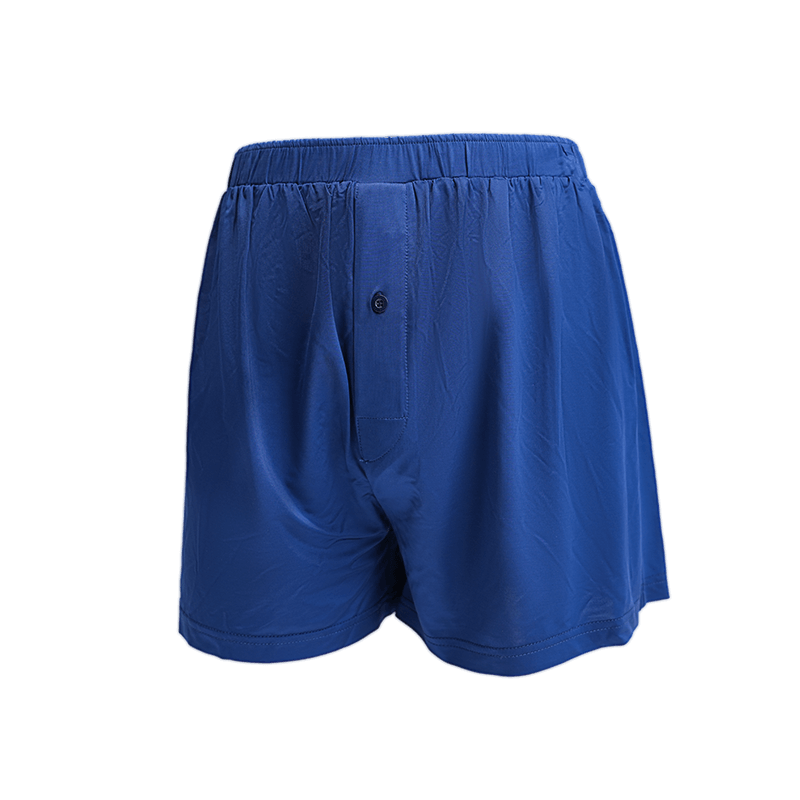
Men's Bamboo Viscose Filament Boxers
The performance of any boxer begins with its fabric. Traditional cotton underwear is widely used because it is familiar, absorbent, and relatively easy to produce. However, cotton can retain moisture, dry slowly, and develop a rougher feel after repeated washing. Standard polyester can dry quickly, but some consumers find it less breathable or less comfortable against the skin. Bamboo viscose filament occupies an attractive middle ground by combining a fluid drape and smooth touch with practical daily performance.
“Filament” refers to the continuous nature of the fiber used in the yarn. Compared with short staple fibers, continuous filaments can create a more even and polished surface. This contributes to the fabric’s soft touch and satin-like appearance. The smoother structure can reduce the sensation of friction, which is particularly valuable in underwear because the fabric remains in constant contact with sensitive skin and moves with the body throughout the day.
Bamboo viscose also has a naturally soft reputation because the regenerated cellulose fiber is engineered into a fine textile form. In a well-developed fabric, this softness is not merely a first-touch impression. It can remain part of the product’s character after repeated use when the fabric is properly knitted or woven, correctly finished, and cared for according to recommended washing instructions.
For a boxer, the fabric must provide more than softness. It needs to support movement, manage heat, maintain shape, and create a polished fit beneath trousers or casual clothing. Bamboo viscose filament is well suited to this purpose because its smooth surface allows the garment to move easily against the body and other layers. Its fluid drape also helps the boxer avoid the stiff, bulky appearance sometimes associated with heavier fabrics.
Comfort is one of the most important purchase factors in men’s underwear. Boxers are worn for long periods, often during work, travel, exercise, relaxation, and sleep. A fabric that feels acceptable for a few minutes may become irritating after several hours if it is rough, stiff, or poorly finished.
The bamboo viscose filament used in this product is designed to provide a silky-smooth hand feel. This makes the boxer appropriate for consumers who prioritize a luxurious sensation without choosing a delicate-looking garment. The fabric’s surface is refined, smooth, and comfortable, helping the product compete with premium satin-style underwear while remaining practical for daily use.
Men’s underwear must help the wearer remain comfortable in warm and humid conditions. A fabric that traps heat or holds excessive moisture can lead to discomfort, particularly during commuting, travel, physical activity, or long workdays. Bamboo-based regenerated cellulose is commonly selected for underwear because of its soft absorbent character and comfortable relationship with moisture.
The fabric in these boxers is promoted for natural breathability and moisture-wicking performance. In practical terms, this means the material can help move perspiration away from the immediate skin surface and support a cooler, drier sensation. It does not eliminate perspiration, but it can contribute to better comfort by managing moisture more effectively than many dense or non-breathable alternatives.
Breathability is also influenced by fabric weight, knitting density, garment construction, waistband design, and finishing. The complete product should therefore be evaluated as a system rather than by fiber content alone. Tianhong’s experience in underwear manufacturing allows these factors to be considered together when developing a finished boxer for a particular market or customer specification.
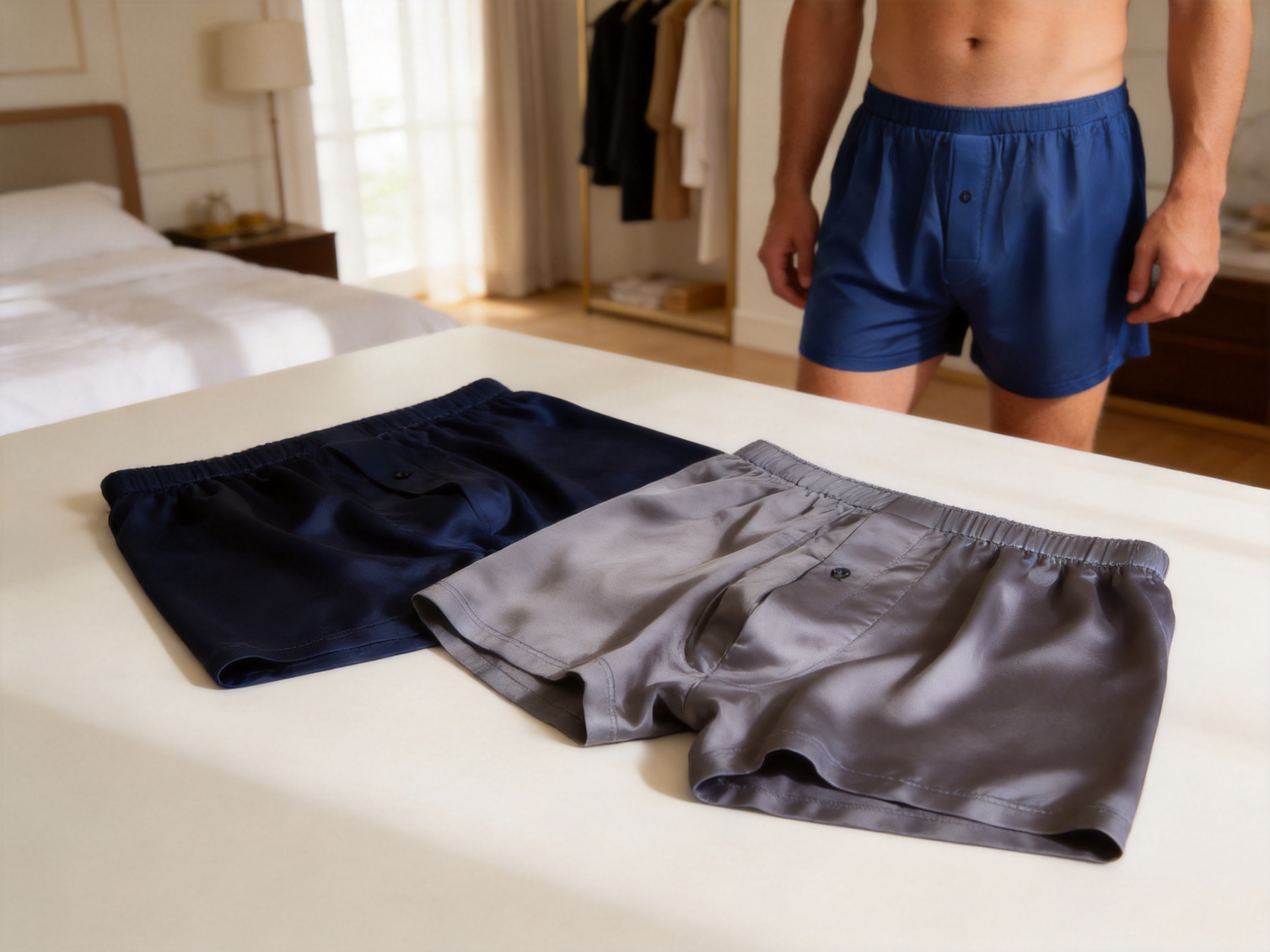
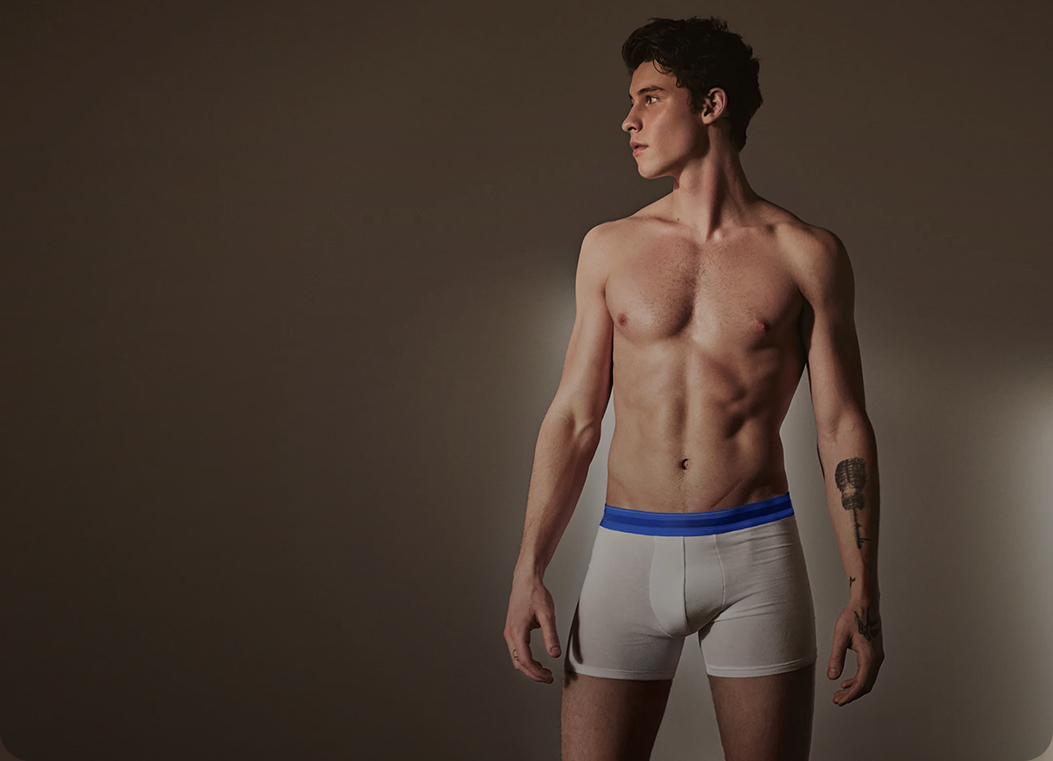
The polished appearance of bamboo viscose filament gives these boxers a more elevated visual identity. The surface can resemble satin, creating a sophisticated look that differentiates the product from plain jersey cotton underwear. This is valuable for brands that want to offer an upgraded basic rather than another standard everyday boxer.
A refined appearance can also improve product presentation in retail and e-commerce. Consumers increasingly judge underwear through photography, packaging, and fabric close-ups before purchasing. A smooth surface, subtle sheen, and elegant drape can communicate quality quickly. The product therefore has appeal not only as a functional garment but also as a visually distinctive addition to a premium underwear assortment.
Competitive advantage in the underwear market comes from a combination of material performance, design, consistency, and supply reliability. No single fabric is ideal for every consumer or climate, but bamboo viscose filament presents several meaningful advantages when compared with ordinary cotton, basic polyester, and lower-grade regenerated fibers.
| Product characteristic | Bamboo viscose filament boxers | Conventional cotton boxers | Basic polyester boxers |
| Surface feel | Smooth, soft, and silk-like | Soft but may become rougher with wear | Can feel smooth but may lack natural softness |
| Breathability | Comfortable and naturally breathable when appropriately constructed | Generally breathable but may feel damp when saturated | Varies widely; dense fabrics may feel warm |
| Moisture comfort | Supports moisture absorption and wicking performance | Absorbs moisture but can dry slowly | Often dries quickly but may feel less comfortable against skin |
| Visual character | Elegant satin-like finish and fluid drape | Matte and familiar appearance | May have a technical or synthetic appearance |
| Premium positioning | Strong fit for elevated everyday underwear | Usually positioned as a basic or natural staple | Often positioned around performance or affordability |
| Skin comfort | Gentle, smooth surface designed for extended contact | Comfortable, depending on yarn and finishing quality | Varies by fiber quality, finishing, and wearer preference |
The table illustrates why bamboo viscose filament can occupy a strong position between everyday basics and luxury underwear. It provides a sensory advantage while also supporting practical performance. For retailers, this creates a clear product story: a boxer that is soft enough for premium positioning, breathable enough for daily wear, and visually distinctive enough to stand apart from ordinary cotton styles.
Cotton remains an important underwear fiber, but it is not always the best solution for consumers who want a sleek, lightweight, and moisture-conscious product. Cotton’s absorbency can be helpful, yet a heavily saturated cotton garment may remain damp for longer. Its surface can also become less smooth over time, especially if washed at high temperatures or dried aggressively.
Bamboo viscose filament offers a more fluid and polished hand feel. The continuous filament structure can reduce surface hairiness and support a cleaner appearance. For customers who want the familiar comfort of a cellulosic fiber but prefer a more luxurious finish, bamboo viscose boxers provide a compelling alternative.
Polyester is often selected for sportswear because of its strength, quick drying, and dimensional stability. However, not every consumer prefers the feel of synthetic fibers in underwear. Some polyester fabrics can feel less breathable, retain odor under certain conditions, or create a warmer sensation when worn for extended periods.
Bamboo viscose filament presents a softer and more skin-friendly alternative for consumers who are seeking a natural-fiber-based experience. It can still support modern moisture-management expectations, but the overall touch is more similar to a fine textile than to a technical sports fabric. This makes the boxer suitable for everyday and premium lifestyle categories rather than only activewear.
Not all regenerated cellulose fabrics deliver the same level of performance. Fiber quality, yarn construction, fabric density, dyeing, finishing, and sewing all influence the final garment. Lower-quality materials may show uneven surfaces, excessive pilling, color inconsistency, or poor recovery after washing.
A professional manufacturer adds value by controlling the process from material selection through finished-garment inspection. This is particularly important for bamboo viscose filament because the product’s competitive appeal depends on its smooth surface, consistent drape, color quality, and comfortable fit. A premium material requires equally careful conversion into a finished product.
The best fabric cannot compensate for poor garment construction. A boxer must be designed around the male body, allowing space for movement while avoiding unnecessary bulk. It should sit comfortably beneath trousers, remain stable during walking, and avoid excessive pressure at the waist or leg openings.
Long silk boxers are intended to provide coverage and freedom of movement. The fluid nature of bamboo viscose filament helps the garment follow the body instead of resisting it. This is beneficial during routine activities such as sitting, standing, climbing stairs, commuting, or relaxing at home.
Movement comfort also depends on pattern design and seam placement. A well-developed pattern reduces pulling and bunching, while smooth and carefully finished seams help minimize irritation. For OEM and ODM buyers, these details can be adjusted according to target market preferences, intended use, and retail positioning.
Underwear should remain discreet beneath outer garments. Excess fabric, rough seams, or a bulky waistband can create visible lines and reduce comfort. The smooth surface and fluid drape of bamboo viscose filament help the boxer slide easily beneath trousers, denim, workwear, and leisure clothing.
This characteristic is especially valuable for consumers who wear fitted clothing or spend long periods seated. A low-friction textile can support a cleaner appearance while reducing the need to repeatedly adjust the garment throughout the day.
The waistband is one of the most important points of contact in a boxer. It must maintain a secure fit without creating excessive pressure. Its width, elasticity, recovery, softness, and attachment method all influence the wearer’s experience.
Seams require similar attention. Uneven stitching, exposed thread ends, or poorly finished joining points can compromise both comfort and durability. Professional production controls help ensure that seams are consistent and that the finished garment meets the customer’s technical requirements. When buyers develop private-label collections, waistband branding, stitching color, labels, packaging, and size grading can be incorporated into the manufacturing specification.
The manufacturer behind THDY-046 has operated in the textile and underwear sector since 2001. This long-term experience is an important strength because underwear manufacturing requires specialized knowledge in fabric behavior, garment engineering, fit development, sewing operations, quality control, and production planning.
Nantong is recognized as a major textile manufacturing hub, providing access to a broad industrial ecosystem that supports yarns, fabrics, dyeing, finishing, accessories, sewing, inspection, and logistics. A company operating in this environment can benefit from established supply-chain relationships while maintaining a focused understanding of underwear production.
Product development is not limited to choosing a fashionable fiber. It involves assessing the relationship among fabric weight, surface finish, stretch, recovery, construction, fit, color, and intended retail price. Tianhong focuses on the research, manufacturing, and sales of underwear products, giving it a foundation for developing styles that respond to market requirements.
For bamboo viscose filament boxers, development may include testing different fabric constructions, evaluating hand feel, reviewing colorfastness, checking dimensional stability, and refining patterns. These activities help turn a material concept into a commercially dependable garment.
OEM and ODM customers may have different requirements. One buyer may need a minimalist private-label product, while another may request custom colors, branded waistbands, special packaging, or a broader size range. A manufacturer with product-development experience can assist with the technical translation of these requirements into samples and production specifications.
Fabric quality has a direct impact on the final product. Important factors include fiber composition, filament uniformity, yarn quality, fabric weight, color consistency, surface smoothness, stretch behavior, and resistance to pilling. These factors must be reviewed before bulk production begins.
A controlled material process helps reduce inconsistencies between sample approval and mass production. It also supports more reliable repeat orders, which is essential for brands that need the same hand feel and appearance across multiple seasons.
For buyers seeking organic or environmentally positioned products, it is important to distinguish between a bamboo-derived regenerated fiber and a certified organic claim. The raw material, processing method, and finished product must meet the relevant requirements before a product is marketed as organic. Tianhong’s stated certification framework includes standards such as FSC, OCS, OEKO-TEX 100, GOTS, WRAP, and BSCI, subject to the specific material, facility, order, and certification scope. Buyers should confirm which certifications apply to each proposed product and production lot.
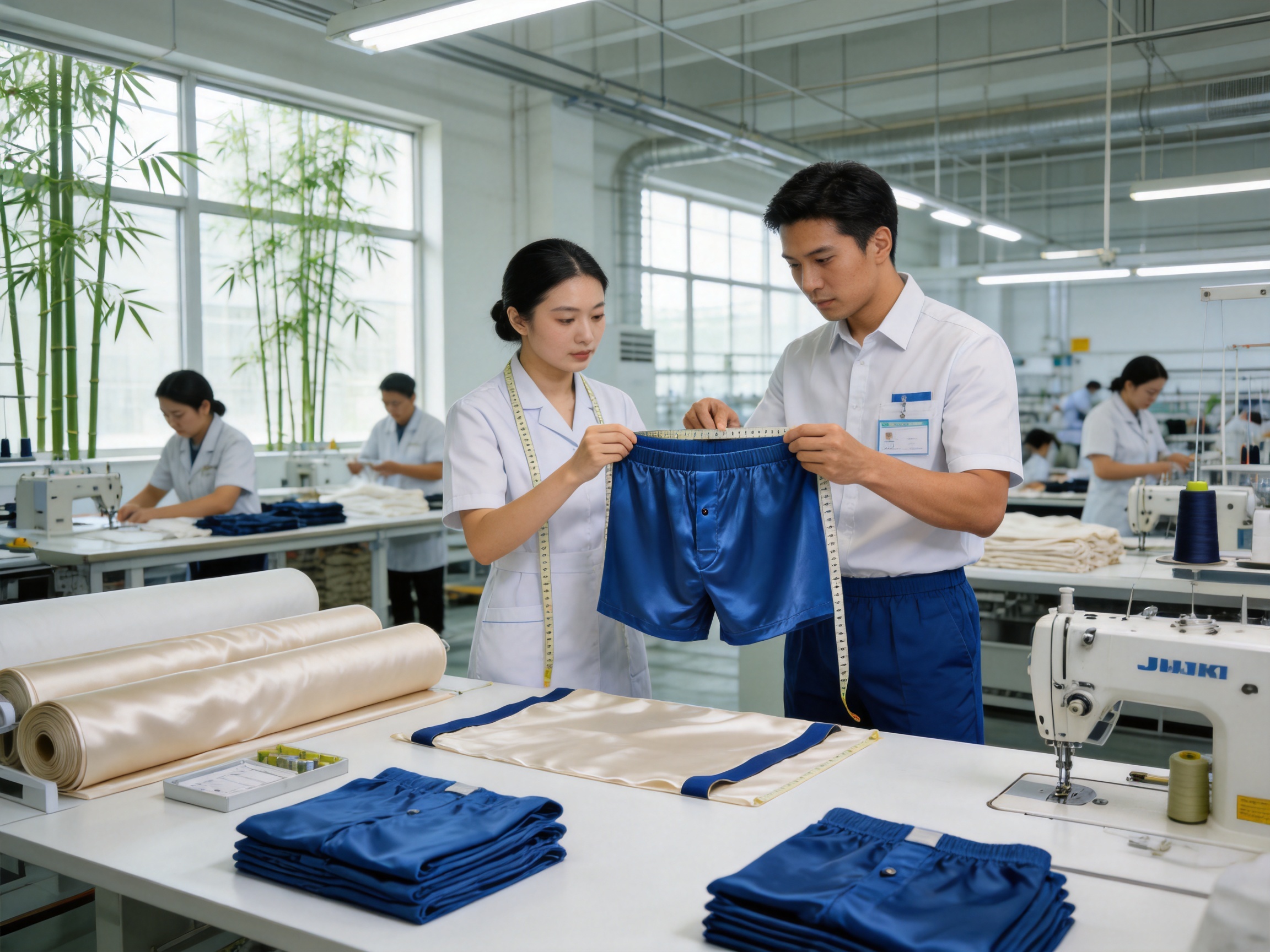
Underwear production requires accuracy because small variations can affect comfort. Cutting must maintain consistent panel dimensions, sewing must control seam allowances, and elastic components must be attached evenly. The production team must also manage fabric tension carefully so that the finished garment does not twist, stretch unevenly, or lose its intended shape.
Manufacturing strength is demonstrated through repeatability. A sample may look attractive, but commercial success depends on producing hundreds or thousands of pieces with consistent measurements, appearance, and workmanship. Standardized operating procedures, production-line supervision, in-process inspection, and final quality checks help reduce variation.
Quality assurance for bamboo viscose boxers should cover both fabric and finished-garment performance. Typical inspection areas include measurements, stitching, seam security, waistband attachment, fabric defects, color uniformity, labeling, packaging, and visual appearance.
Depending on the customer’s requirements, additional testing may address colorfastness to washing and rubbing, dimensional change, pilling resistance, fabric strength, stretch recovery, and restricted substances. OEKO-TEX 100, where applicable, is relevant to the assessment of harmful substances in textile products. Other standards may address forestry-related material sourcing, organic content, social responsibility, or factory management.
These controls provide commercial value beyond compliance. Consistent quality reduces returns, protects a retailer’s reputation, improves customer satisfaction, and makes future reordering more predictable. For international buyers, a structured quality process also simplifies communication because product expectations can be expressed through measurable specifications rather than subjective descriptions alone.
Sustainability has become a central consideration in underwear sourcing. Consumers, retailers, and brand owners increasingly want to understand where fibers originate, how products are made, and whether workers operate in safe and responsible conditions. Bamboo-derived textiles can contribute to a lower-impact product strategy when the full processing chain is managed responsibly.
Bamboo is a rapidly renewable plant resource, but the environmental profile of bamboo viscose depends on how the fiber is regenerated, what chemicals are used, how wastewater is managed, and whether the supply chain is traceable. Responsible sourcing therefore requires more than placing the word “bamboo” on a product label.
Tianhong identifies sustainable development, environmentally friendly functional fabrics, and traceable supply chain management as important areas of focus. The company also reports product and operational relationships with standards including FSC, OCS, OEKO-TEX 100, GOTS, WRAP, and BSCI. These standards cover different aspects of textile production and should not be treated as interchangeable. FSC generally relates to responsible forest-based sourcing, OCS and GOTS address organic content under their respective scopes, OEKO-TEX 100 focuses on harmful-substance testing, WRAP addresses responsible production principles, and BSCI is associated with social-compliance assessment.
For a buyer, this distinction is useful. It enables accurate product communication and prevents sustainability claims from becoming vague or misleading. A responsible sourcing program should document the applicable fiber certification, processing chain, facility certification, testing records, and labeling requirements for the specific order.
A garment’s environmental impact is influenced not only by production but also by how long it remains in use. A comfortable boxer that maintains its appearance and function can encourage longer ownership and reduce premature replacement. Durability depends on fiber quality, construction, dyeing, finishing, laundering, and consumer care.
The product’s combination of a smooth surface, careful manufacturing, and a premium positioning supports the goal of creating underwear that consumers want to continue wearing. Buyers can further improve longevity by selecting suitable washing instructions, avoiding excessive heat, and developing packaging that communicates proper care.
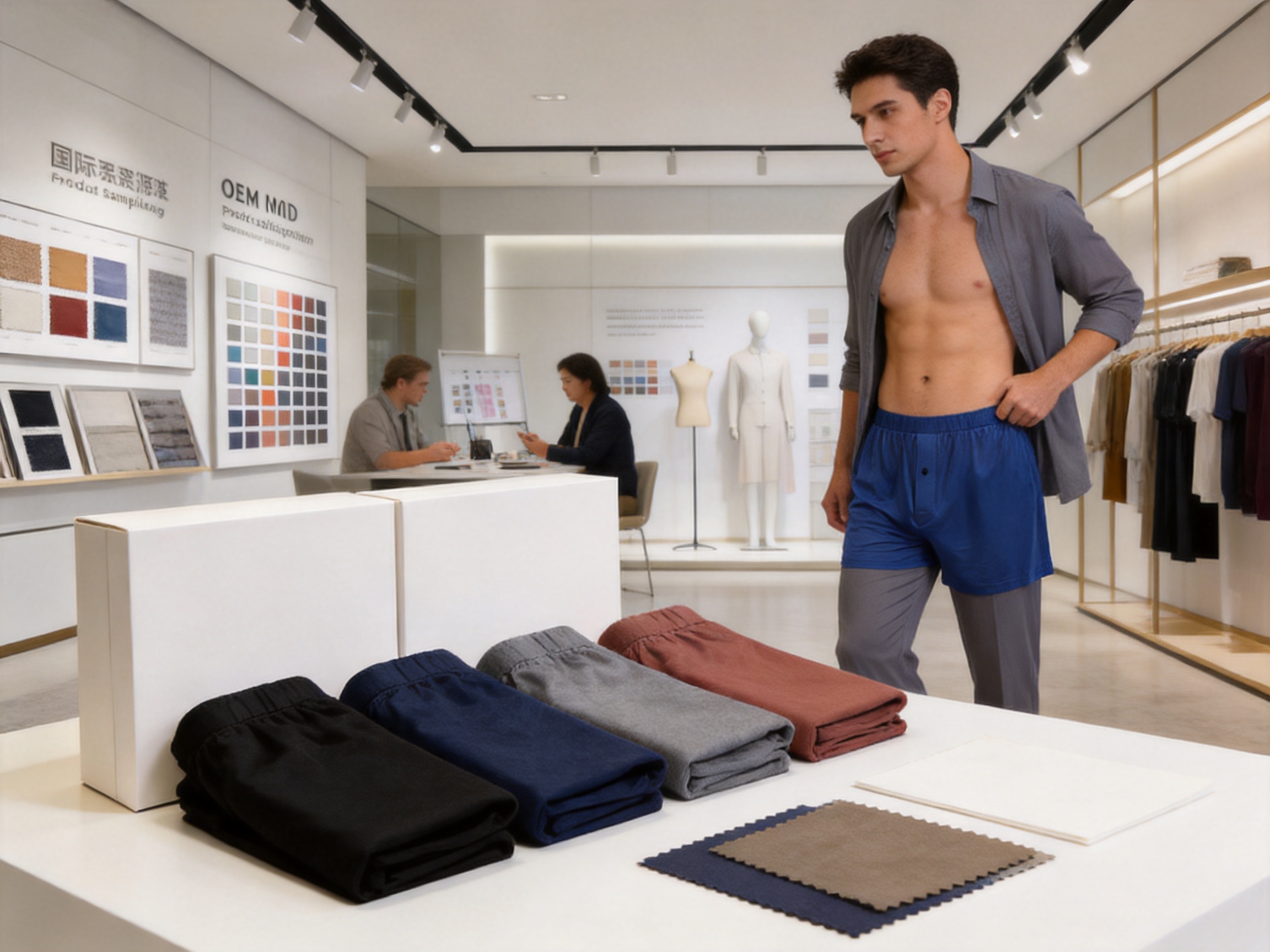
THDY-046 can serve as a foundation for customized underwear programs. OEM customers may use the established product concept while applying their own branding, packaging, color palette, labels, and market specifications. ODM customers can work with the manufacturer to adjust the design, fabric, construction, and presentation to create a more individualized product.
Possible customization areas include logo placement, waistband branding, internal labels, hangtags, carton markings, folding methods, and retail packaging. A premium bamboo boxer can be presented in a minimalist paper package, a gift-oriented box, a multi-pack format, or a practical recyclable sleeve, depending on the customer’s sales channel.
Color selection is another important commercial tool. Neutral shades such as black, navy, charcoal, and white can support an everyday essentials collection, while seasonal colors can create limited editions. Because the fabric has a smooth and refined surface, both solid colors and subtle tonal designs can be effective.
Different markets may use different size standards and fit preferences. Some customers prefer a close, supportive boxer, while others want a more relaxed long-leg silhouette. Buyers can discuss waist measurements, rise, leg length, pouch construction, ease allowance, and grading requirements during sample development.
Accurate size grading is essential for customer satisfaction. A premium fabric cannot overcome an inconsistent fit. Sample approval should therefore include measurements on multiple sizes, wear testing where possible, and confirmation of tolerances before bulk production.
The product can be used as part of a broader natural-fiber underwear collection. A brand might combine long silk boxers with briefs, trunks, sleepwear, undershirts, or women’s and children’s styles made from complementary materials. Consistent color stories, packaging systems, and labeling can create a recognizable collection across categories.
Because the company serves clients in Europe, North America, and China, its experience may be useful to buyers targeting different markets. Nevertheless, each buyer remains responsible for confirming the regulatory, labeling, testing, and product-safety requirements applicable in its destination country.
Retailers need products with a clear point of difference. The bamboo viscose filament boxer offers several easy-to-communicate benefits: softness, breathability, moisture comfort, a satin-like appearance, and a premium natural-fiber story. These benefits can be used in product descriptions, packaging copy, merchandising displays, and online sales pages.
The product can appeal to multiple consumer groups. Professionals may appreciate its comfort under formal clothing. Travelers may value its lightweight feel and moisture management. Consumers with sensitive skin may prefer the smooth surface, although individual skin responses vary and no textile should be presented as a medical treatment. Premium shoppers may be attracted to the combination of natural-fiber positioning and elegant appearance.
For distributors, the product can fill a gap between inexpensive basics and high-priced luxury underwear. Its material story gives sales teams a reason to introduce the product, while its everyday practicality supports repeat purchases. Multi-pack options, coordinated colors, and private-label development can further improve commercial flexibility.
Clear communication helps consumers understand why the product costs more than a basic boxer. Product descriptions should explain that bamboo viscose filament offers a smooth, silk-like touch, breathable comfort, and moisture-management properties. They should also describe the construction and care instructions accurately.
Marketing claims should be supported by the relevant documentation. For example, a product should not be called organic unless the fiber and certification scope support that claim. Similarly, environmental statements should explain whether they refer to the raw material, the manufacturing facility, the finished product, or the supply chain.
Good packaging can highlight the product’s tactile identity through close-up fabric imagery, concise benefit statements, and care information. For online retail, detailed photographs showing the surface, waistband, seams, and drape can help customers recognize the difference between this product and ordinary underwear.
Bamboo viscose garments should be cared for according to the final product’s tested instructions. In general, gentle washing, moderate temperatures, mild detergent, and careful drying can help preserve the fabric’s softness and appearance. Excessive heat, harsh bleaching agents, and aggressive mechanical treatment may shorten the life of the garment or affect color and shape.
Buyers should request confirmed care instructions during product development because the correct recommendations depend on the exact fabric construction, dyeing process, finishing, elastic components, and garment specifications. Care labels should comply with the destination market’s requirements and should be applied consistently across the production run.
Appropriate care supports the product’s long-term value. When consumers understand how to maintain the fabric, they are more likely to preserve its softness, reduce unnecessary replacement, and remain satisfied with the product. This contributes to both customer loyalty and a more responsible consumption cycle.
The difference between a promising textile idea and a successful underwear product lies in execution. Bamboo viscose filament has attractive characteristics, but those characteristics must be protected throughout yarn preparation, fabric formation, dyeing, finishing, cutting, sewing, inspection, and packing.
An experienced manufacturer can identify potential problems earlier. For example, fabric shrinkage must be considered before pattern finalization. Surface appearance must be assessed after dyeing and finishing rather than only in greige form. Elastic recovery must be checked after attachment. Measurements must be reviewed after laundering or testing where required. These steps reduce the risk of receiving a garment that differs substantially from the approved sample.
Tianhong’s combined focus on research, production, sales, sustainable fabrics, and OEM/ODM services provides a broad platform for product development. Its history since 2001 also indicates experience with changing market expectations, international customer requirements, and the continuing evolution of textile technology.
The company’s stated relationships with European, North American, and Chinese customers demonstrate an international orientation. Its commitment to traceable supply-chain management and recognized textile and social-responsibility standards can give buyers a stronger basis for supplier evaluation. Certification should always be verified for the specific facility and product, but the presence of a structured compliance approach is a positive factor in sourcing decisions.
They are men’s boxers made with bamboo-derived regenerated cellulose fibers formed into a continuous filament textile. The fabric is designed to provide a smooth, soft, breathable, and silk-like wearing experience.
Yes. Their comfort, fluid drape, and moisture-management characteristics make them suitable for everyday use, work, travel, relaxation, and sleep. The exact performance depends on the final fabric construction and garment specifications.
Bamboo viscose filament generally offers a smoother surface and more satin-like appearance than ordinary cotton. It can also provide a different moisture experience, with a soft and breathable feel. Cotton remains a useful fiber, but bamboo viscose is attractive to consumers seeking a more luxurious texture.
The product is designed to have a silk-like touch and satin-style appearance. It is not natural silk, however. Bamboo viscose is a regenerated cellulose fiber with its own performance, care, and labeling requirements.
The product is promoted for moisture-wicking and breathable comfort. Actual moisture performance is influenced by fiber quality, fabric structure, finishing, garment fit, and environmental conditions. Buyers can request relevant performance testing for their specific version.
Bamboo is a renewable plant resource, but the environmental profile of bamboo viscose depends on the complete manufacturing process, including regeneration chemistry, energy use, wastewater management, and supply-chain traceability. Responsible claims should be based on verified documentation and applicable certifications.
Yes. OEM and ODM services can support customization of branding, labels, packaging, colors, sizes, fit, waistband details, and other specifications. Final options depend on order requirements, sample approval, and production feasibility.
Potentially relevant standards include FSC, OCS, OEKO-TEX 100, GOTS, WRAP, and BSCI. Each standard addresses different issues, and not every certification applies to every product. Buyers should confirm the exact certification scope before making claims.
Consumers should follow the care label on the finished garment. Gentle washing, moderate temperatures, mild detergent, and avoidance of excessive heat are commonly helpful for preserving softness, color, and shape, but the final instructions should be based on product testing.
The product is suited to consumers who want comfortable everyday underwear with a premium hand feel. It may appeal to professionals, travelers, natural-fiber shoppers, premium basics customers, and anyone seeking an alternative to conventional cotton or synthetic boxers.
The product is identified as THDY-046 and belongs to the men’s boxer category. Buyers should use the model number when requesting samples, specifications, customization, and quotations.
Men’s bamboo viscose filament boxers provide a strong combination of comfort, appearance, and practical performance. Their smooth surface and satin-like drape create a premium sensory experience, while breathability and moisture-management properties support everyday wear. Compared with ordinary cotton and basic polyester alternatives, the product offers a distinctive position for brands that want to combine natural-fiber appeal with an elevated visual identity.
The value of THDY-046 extends beyond its fabric composition. Its commercial potential is supported by specialized underwear manufacturing, product-development capability, OEM/ODM flexibility, and a stated commitment to sustainable materials and traceable supply-chain management. Since 2001, the manufacturer has built experience in textile research, underwear production, and international customer service from its base in Nantong, a major textile center.
For retailers, distributors, and private-label brands, the product can serve as a premium everyday essential with a clear and understandable selling proposition. For consumers, it offers a smoother, more breathable, and more luxurious alternative to ordinary boxers. With appropriate material verification, careful construction, responsible certification, and accurate product communication, bamboo viscose filament boxers can become a valuable part of a modern men’s underwear collection.
1. Product specification materials for THDY-046, Men’s Bamboo Viscose Filament Boxers.
2. General textile information concerning regenerated cellulose fibers and bamboo-derived viscose fabrics.
3. Textile testing principles for colorfastness, dimensional stability, pilling, fabric strength, and restricted substances.
4. FSC principles for responsible forest-related material sourcing.
5. Organic Content Standard principles for verifying organic fiber content.
6. Global Organic Textile Standard principles for organic textiles and responsible processing.
7. OEKO-TEX Standard 100 principles for testing harmful substances in textile products.
8. WRAP principles concerning responsible production and workplace practices.
9. BSCI-related guidance concerning social-compliance assessment in global supply chains.
10. Manufacturer information concerning textile research, underwear production, OEM/ODM services, sustainable materials, and international customer cooperation.

Copyright © Nantong Tianhong Textile Technology Co., Ltd. All Rights Reserved.
 Room 806, Building D, Jingyang Plaza, Chongchuan District, Nantong City, Jiangsu Province,china

 English
 Español
 русский
 عربى
عربى