Content
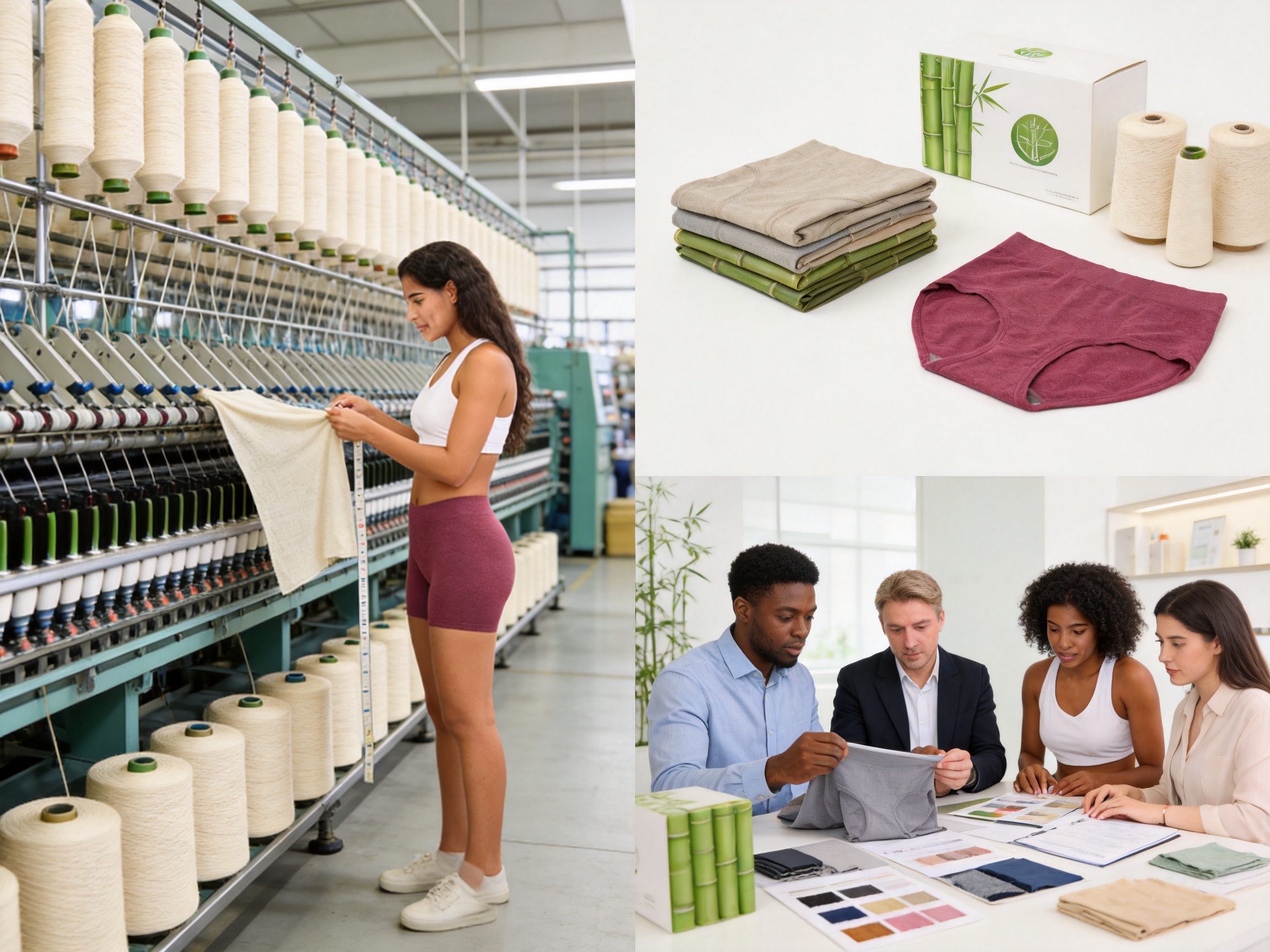

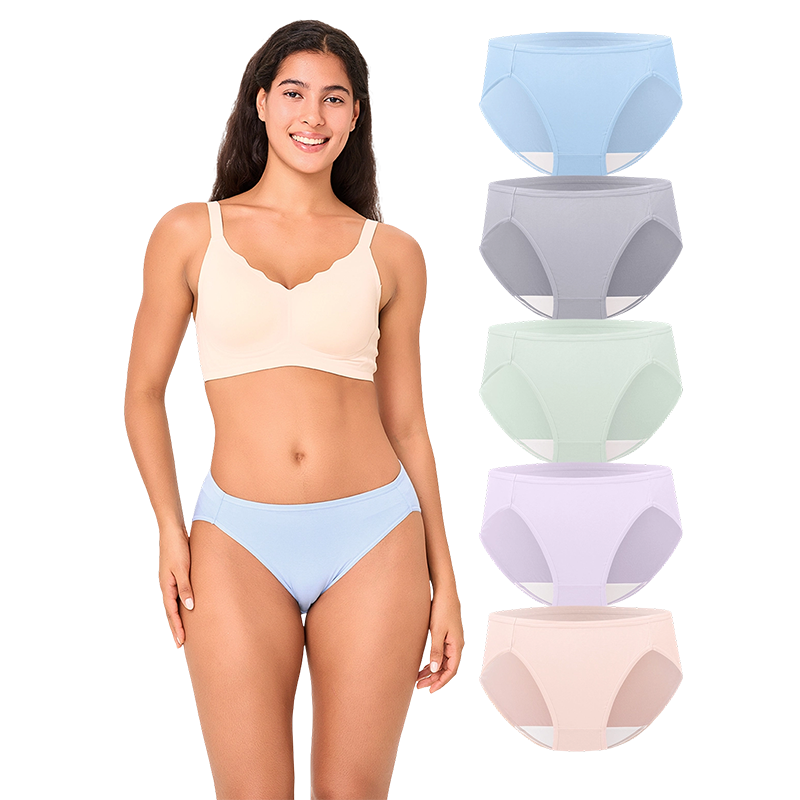
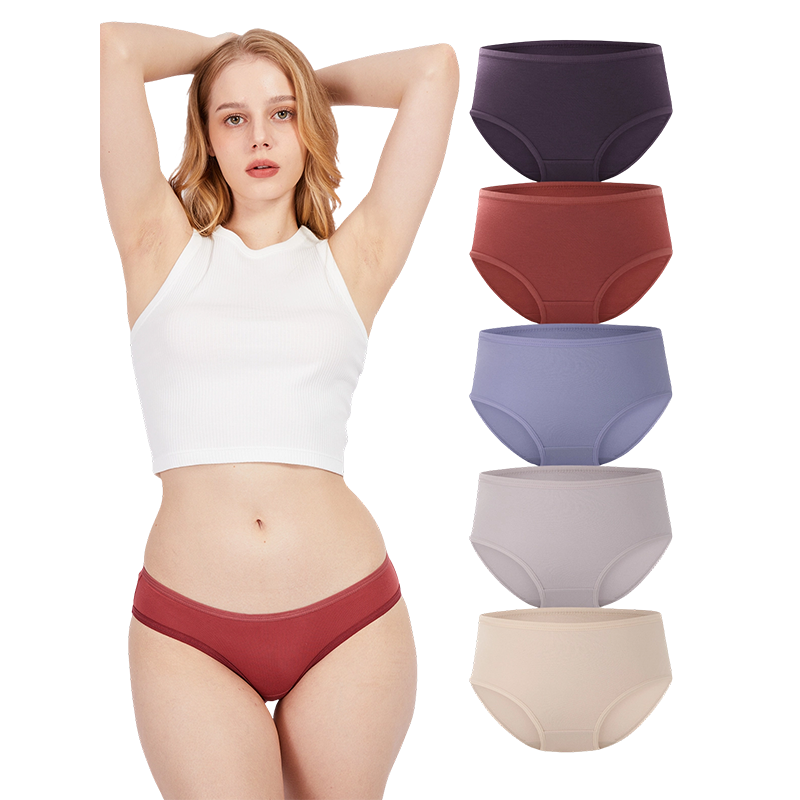
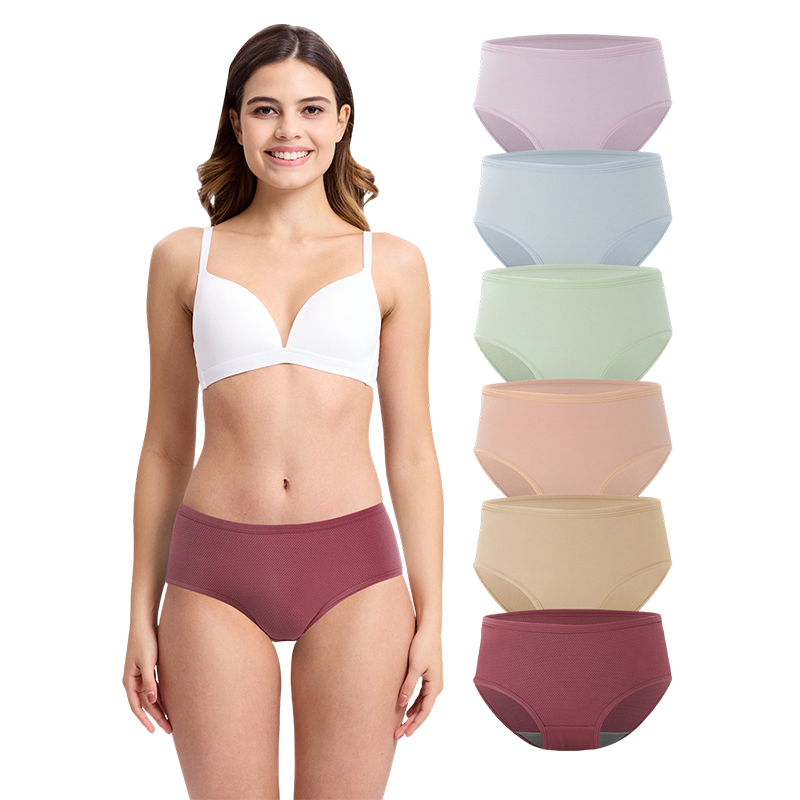
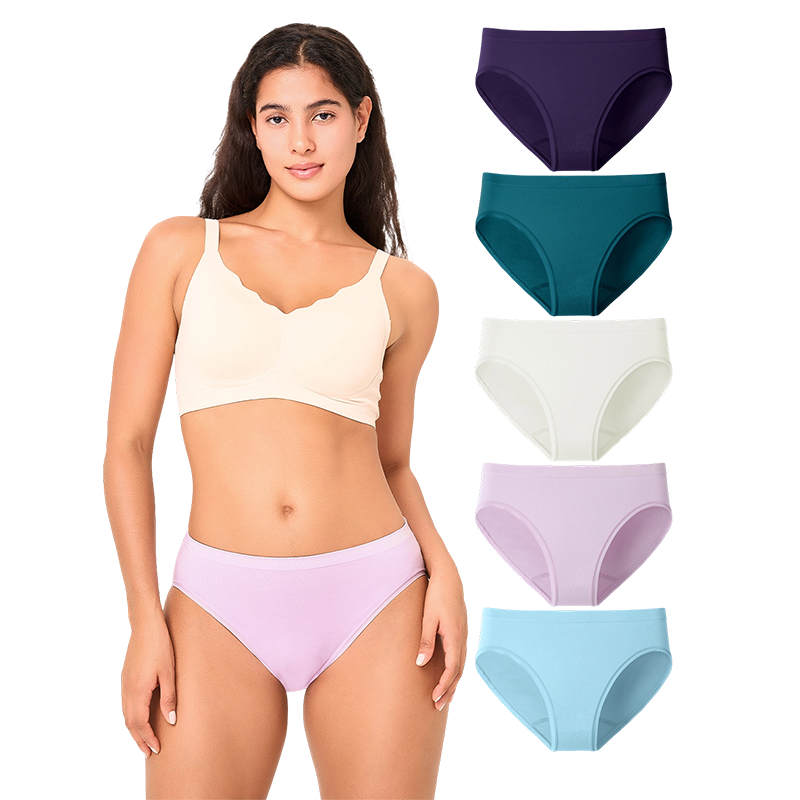
Women’s underwear must provide more than basic coverage. It needs to move comfortably with the body, remain smooth beneath clothing, manage heat and moisture throughout the day, and maintain its shape after repeated wear and washing. For brands, retailers, and distributors, it must also meet consistent quality standards, support efficient production, and offer a design that answers real consumer needs. Women’s Seamless Boyshorts are developed around these requirements, combining a soft bamboo-viscose-rich fabric composition, a seamless one-piece knit construction, a wide natural-waist waistband, longer leg coverage, and a double-layered gusset.
Made from 80% viscose made from bamboo, 15% nylon, and 5% spandex, these women’s boyshorts are designed as a comfortable alternative to conventional briefs, short panties, and basic boxer briefs. The silhouette delivers all-over coverage while the 6–7-inch inseam helps reduce the discomfort associated with thigh friction. A seamless construction minimizes bulky seams and eliminates interior tags, making the garment especially suitable for everyday wear under short skirts, dresses, trousers, and other clothing where comfort and a smooth fit matter.
Behind the product is Nantong Tianhong Textile Technology Co., Ltd., a China-based underwear manufacturer with experience in research, manufacturing, sales, and OEM/ODM services. Established in 2001 and located in Nantong, Jiangsu Province, the company operates in one of China’s major textile manufacturing regions. Its capabilities include product development, functional fabric applications, sustainable material programs, quality management, and customized production for international customers.
This article examines the product’s material advantages, construction details, comfort performance, application potential, manufacturing strengths, certification approach, and suitability for private-label and customized underwear programs.
Women’s Seamless Boyshorts are positioned between traditional underwear and fitted short bottoms. They retain the intimate comfort expected from underwear while adding greater leg coverage and more secure positioning. This makes the style useful for consumers who want protection against thigh chafing, improved coverage beneath dresses, or a less restrictive alternative to narrow-sided briefs.
The garment’s design is centered on practical comfort. The wide waistband sits at the natural waist instead of resting low on the hips, helping create a stable fit for daily movement. The longer leg length extends approximately 6–7 inches along the inseam, covering more of the upper thigh than conventional briefs. This additional length can help reduce direct skin-to-skin contact and friction during walking, commuting, exercise, travel, or extended periods of sitting.
The seamless one-piece knit construction is another defining feature. Instead of relying on multiple cut-and-sew panels joined by prominent seams, the garment is formed through a seamless knitting approach. This reduces the number of potential irritation points and supports a smooth appearance under clothing. The absence of tags further contributes to a cleaner interior and reduces the chance of scratching or pressure against sensitive skin.
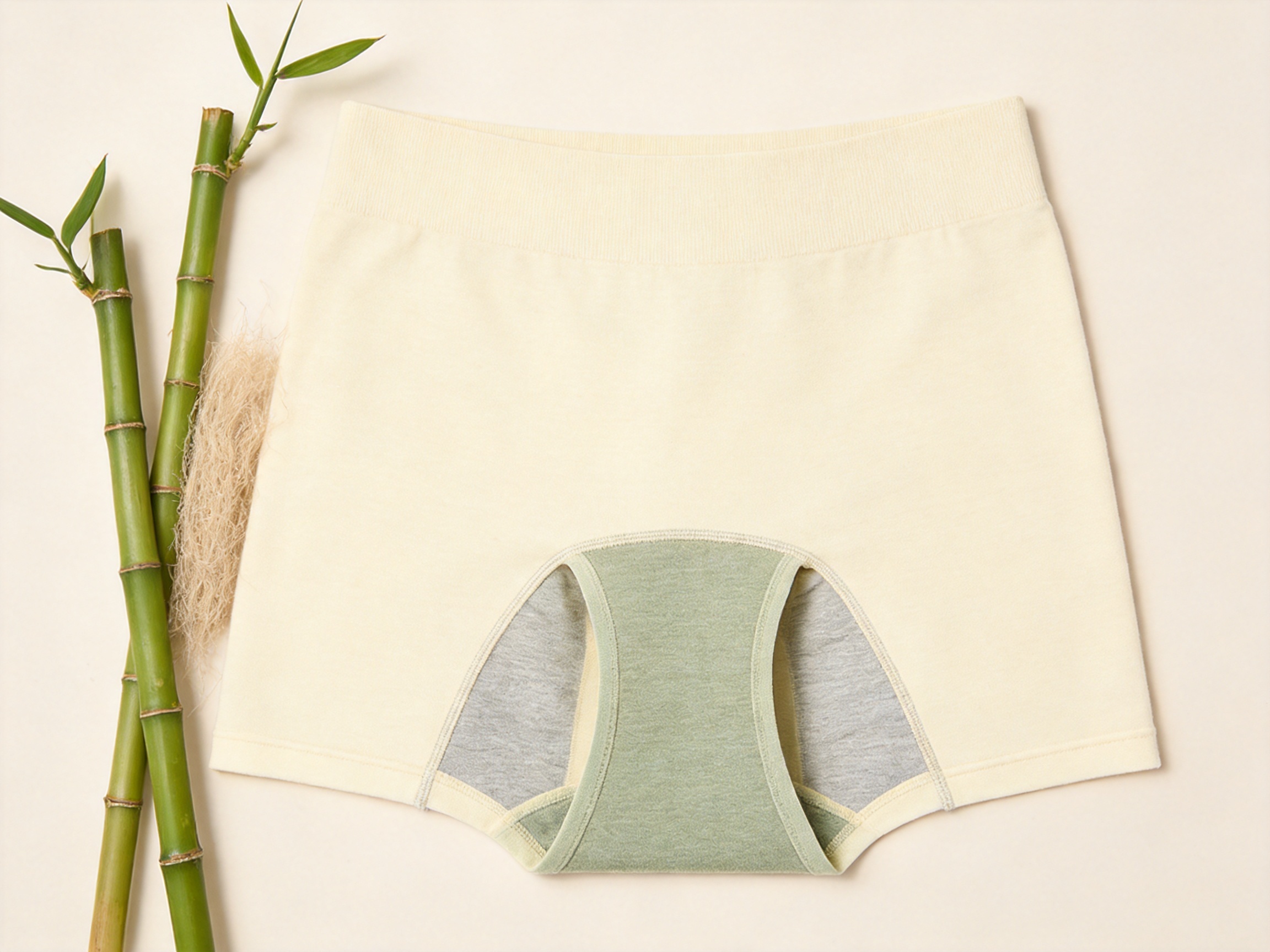
A double-layered gusset adds another level of function. The gusset is designed to improve comfort, provide additional coverage, and support the practical hygiene expectations of everyday underwear. Together, the gusset, breathable fabric, flexible stretch, and seamless body create a balanced product for customers who prioritize comfort without wanting a loose or shapeless garment.
| Product element | Design or material detail | Consumer benefit |
| Primary fiber | 80% viscose made from bamboo | Soft hand feel, lightweight comfort, and breathability |
| Supporting fibers | 15% nylon and 5% spandex | Durability, recovery, stretch, and fit stability |
| Waistband | Wide waistband designed to sit at the natural waist | Stable positioning and reduced rolling or adjustment |
| Leg length | Approximately 6–7-inch inseam | More coverage and support against thigh chafing |
| Construction | Seamless one-piece knit | Fewer irritating seams and a smooth under-clothing profile |
| Interior details | No tags and double-layered gusset | Improved comfort and practical everyday wearability |
| Certification emphasis | FSC-certified material program | Greater traceability and a stronger sustainability proposition |
The fabric composition is one of the main reasons these boyshorts stand apart from many conventional underwear products. The garment uses 80% viscose made from bamboo, combined with nylon and spandex. This blend is designed to unite the softness and lightness associated with bamboo-derived viscose with the structural benefits of synthetic performance fibers.
Viscose made from bamboo is widely valued for its smooth, soft hand feel. In an underwear application, this tactile quality is important because the fabric remains in close contact with the skin for long periods. A fabric that feels smooth and lightweight can help improve the overall wearing experience, particularly for consumers who dislike rough textures, stiff elastic, or heavy materials.
The bamboo-viscose-rich fabric is also described as highly breathable and capable of offering up to 4.5 times more airflow than cotton under the referenced product positioning. Airflow performance can be valuable in underwear because heat and moisture often accumulate in areas with limited ventilation. A lightweight, breathable textile may help the wearer feel cooler and fresher during busy mornings, long workdays, travel, and warm-weather use.
It is important to understand the role of the complete blend rather than focusing on a single fiber. Bamboo viscose contributes softness and a lightweight feel, while nylon can support abrasion resistance and fabric durability. Spandex introduces stretch and recovery, helping the garment accommodate body movement and return toward its original shape. The resulting blend is more practical for a close-fitting underwear product than a fiber system designed only for softness.
Underwear is worn directly against the body, so fabric comfort is a fundamental product requirement rather than a secondary feature. The high percentage of bamboo-derived viscose gives the boyshorts a smooth touch that can appeal to consumers looking for an alternative to standard cotton underwear. The soft surface is especially compatible with a seamless design because the fabric and construction work together to reduce the sensation of hard edges or bulky joins.
Softness also supports the product’s potential for everyday use. Consumers may wear the garment during work, errands, travel, relaxation, or sleep. A versatile underwear style should feel unobtrusive in each of these situations. The lightweight bamboo viscose composition helps position the product as an all-day basic rather than a garment reserved for a particular occasion.
Breathability is a major differentiator in the women’s underwear market. Traditional underwear made from dense or less ventilated materials may feel warm, especially when worn under close-fitting clothing. The product’s bamboo-viscose-rich knit is designed to promote airflow, helping reduce the heavy or stuffy sensation that can occur during extended wear.
The stated airflow comparison of up to 4.5 times more than cotton provides a clear marketing point for brands, although actual performance may vary according to knit density, garment size, testing method, environmental conditions, and care history. For responsible product communication, brands should present this figure alongside relevant test documentation when making formal performance claims.
From a consumer perspective, the central message is simple: the fabric is intended to feel light, breathable, and suitable for daily use. From a brand perspective, breathability provides a strong product story that can be communicated through packaging, product pages, retail training, and seasonal campaigns.
The 5% spandex content helps provide elasticity for a close but flexible fit. Women’s boyshorts need to move with the wearer while retaining sufficient coverage. Stretch allows the garment to accommodate walking, bending, sitting, and other normal activities without creating unnecessary pressure.
Nylon contributes additional support to the blend. It can help the textile withstand repeated movement and daily laundering more effectively than a soft fiber used alone. The combination of spandex and nylon is therefore important to the product’s balance: bamboo viscose supports comfort, spandex supports flexibility, and nylon supports durability and structural performance.
Many underwear complaints are related to seams, labels, waistband movement, or insufficient coverage. The one-piece seamless knit construction addresses several of these issues at the design level. By reducing the number of stitched joins, the garment can provide a smoother interior and a cleaner exterior appearance.
Compared with conventional multi-panel underwear, a seamless design may offer several practical advantages. There are fewer prominent seams to press against the skin, fewer visible lines beneath clothing, and fewer areas where seam bulk can accumulate. This is particularly relevant when the boyshorts are worn under fitted skirts, lightweight dresses, leggings, or slim trousers.
The seamless approach also supports the product’s positioning as a low-maintenance everyday essential. Wearers do not need to constantly adjust the garment to manage uncomfortable seams or shifting panels. The design is intended to remain comfortable and secure while the wearer moves through different activities.
| Common consumer concern | Design response in the boyshorts | Potential product advantage |
| Thigh friction | Longer 6–7-inch inseam | Additional coverage between the upper thighs |
| Waistband movement | Wide waistband at the natural waist | More stable positioning during daily movement |
| Visible underwear lines | Seamless one-piece knit | Smoother appearance beneath clothing |
| Itching from labels | Tag-free interior | Fewer hard or irritating interior details |
| Limited gusset protection | Double-layered gusset | Added coverage and comfort in a key wear area |
| Heat accumulation | Lightweight bamboo-viscose-rich fabric | Breathable feel for extended wear |
The product description specifically positions these boyshorts as suitable under short skirts and dresses. This application is important because consumers often want underwear that offers additional confidence and coverage without becoming visibly bulky. The longer leg helps cover more of the upper thigh, while the seamless knit aims to reduce the appearance of harsh lines.
The style may also be useful beneath loose dresses, tunics, long shirts, and other garments where the wearer wants a secure base layer. It is not limited to one fashion category. Its all-over coverage and neutral everyday function make it suitable for multiple wardrobes and age groups within the adult women’s market.
A well-designed underwear product should remain in place without requiring repeated pulling, smoothing, or repositioning. The wide waistband, stretch blend, and longer-leg silhouette work together to support this objective. The natural-waist position can help prevent the garment from feeling excessively low, while the boyshort profile offers more material to remain aligned with the body.
No garment fits every body in exactly the same way, and final performance depends on accurate sizing, grading, and wear preferences. Nevertheless, the construction provides a practical foundation for a stable fit. For brands, this is a meaningful selling point because reduced adjustment directly influences consumer satisfaction and repeat purchase potential.
One of the clearest advantages of a boyshort silhouette is its coverage. Narrow-sided briefs may be preferred by some wearers, but they can leave more of the upper thigh exposed. Women who experience thigh chafing or who simply prefer greater coverage may find a longer inseam more comfortable.
The approximately 6–7-inch inseam is long enough to cover a substantial part of the upper thigh while remaining short enough to function as underwear beneath everyday clothing. This creates a useful middle ground between traditional briefs and full-length shorts. The garment is designed to support all-over coverage without the weight or bulk of a longer base layer.
Chafing can be influenced by heat, moisture, movement, clothing friction, skin sensitivity, and individual body shape. The boyshorts do not eliminate every possible cause of irritation, but their longer legs create a fabric barrier that may reduce direct contact between the thighs. The lightweight, breathable composition is also intended to help the garment feel more comfortable in warm or active conditions.
The product is designed for situations in which underwear may be worn for many consecutive hours. During a long workday, commuting period, shopping trip, travel schedule, or social event, small discomforts can become increasingly noticeable. A tag-free interior, soft fabric, stable waistband, and smooth knit construction help address the common sources of distraction.
For this reason, the product can be marketed as an everyday comfort solution rather than a specialized performance garment. It is appropriate for busy mornings, long days away from home, casual activities, and relaxed indoor wear. The emphasis is on consistent, dependable comfort without constant adjustment.
The gusset is a small but important part of underwear construction. It influences comfort, coverage, and the overall feeling of security. The double-layered gusset in these boyshorts provides an additional layer in a high-contact area, helping create a more substantial and comfortable base.
For product developers, gusset construction should be considered alongside fabric softness and seam placement. A soft main body cannot fully compensate for an uncomfortable gusset. The double-layer design demonstrates attention to the functional details that consumers may not always see but frequently notice through wear.
The product includes a subtle heathered pattern. Heathering creates visual texture by blending tones within the fabric rather than relying on a loud print or complicated decoration. This supports a simple, understated appearance that can work across multiple collections and consumer preferences.
A heathered surface may also be commercially useful for private-label brands. It gives a basic underwear style a refined visual identity without making the product overly seasonal. The garment can be presented as a minimalist essential, a comfort-focused collection item, or part of a natural-fiber underwear range.
The restrained appearance is compatible with a wide range of packaging and merchandising strategies. Brands can emphasize softness, breathability, sustainable material sourcing, seamless construction, or everyday coverage while keeping the visual language clean and easy to understand.
Sustainability is increasingly important in underwear sourcing, but responsible sustainability communication requires clarity. These boyshorts use viscose made from bamboo and are identified as FSC certified. FSC certification can support a stronger sourcing and traceability story for eligible forest-based materials and related supply chains.
The product’s sustainability proposition is not based solely on the word “bamboo.” It also involves the company’s broader focus on environmentally friendly functional fabrics and traceable supply chain management. Nantong Tianhong reports certifications and standards including FSC, OCS, OEKO-TEX 100, GOTS, WRAP, and BSCI across its product and manufacturing activities. The exact applicability of each certification should be confirmed for the specific material, production order, and finished product before it is used in consumer-facing claims.
For buyers, this distinction is important. A transparent supplier should be able to clarify which certification applies to the fiber, yarn, fabric, facility, social-compliance program, or finished garment. Such documentation helps brands create more accurate product pages and reduces the risk of overstating environmental claims.
Traceable sourcing gives brands more information about where materials come from and how they move through the supply chain. In the underwear sector, this can support internal sustainability targets, customer inquiries, retailer compliance requirements, and product-level documentation.
Traceability can also improve consistency. When material sources, production steps, and quality checkpoints are documented, suppliers and buyers have a clearer basis for reviewing variations in color, hand feel, stretch, dimensions, and performance. This is particularly valuable for repeat orders, because a recognizable product must remain consistent across seasons and production batches.
Nantong Tianhong Textile Technology Co., Ltd. was established in 2001 and is located in Nantong, Jiangsu Province, a region widely associated with textile production and supply-chain expertise. More than two decades of operating experience provide a foundation for understanding the practical requirements of underwear development, bulk production, quality coordination, and international customer service.
The company specializes in the research, manufacturing, and sales of underwear products. This combination is significant because product development and production are closely connected in the underwear industry. A design may look attractive in a specification sheet but require adjustments to knit density, stretch recovery, waistband structure, gusset construction, grading, or finishing before it can perform reliably in bulk.
By combining research and manufacturing capabilities, a supplier can evaluate a product more holistically. Material selection, construction, comfort, appearance, production feasibility, and cost control can be considered together rather than handled as disconnected steps.
The company provides OEM and ODM products and services for established labels. OEM production allows a buyer to provide a design, specification, or brand direction for manufacturing. ODM support can offer a developed product concept that the customer adapts to its own market, size range, labeling, packaging, or color requirements.
Women’s Seamless Boyshorts are well suited to both models. Under an OEM program, a brand may request specific colors, waistband branding, packaging, size grading, or fiber documentation. Under an ODM program, the existing product concept can serve as a starting point for a customized bamboo-viscose underwear collection.
A capable OEM/ODM supplier should be able to discuss minimum order quantities, sample development, color approval, measurement tolerances, packaging specifications, production lead times, inspection procedures, and certification documents. These commercial details are essential to converting a good product idea into a reliable market launch.
The company’s stated mission is to become a global leader in natural-fiber fabrics and underwear products through continued research and innovation. This direction aligns with the product’s focus on bamboo viscose, breathable construction, seamless knitting, and practical comfort.
Innovation in underwear does not always require a dramatic visual change. It can involve improving fiber selection, balancing softness with durability, reducing irritation points, refining fit, optimizing the gusset, or developing more traceable material systems. These incremental improvements can make a significant difference to consumers who wear underwear every day.
Nantong Tianhong has built long-term partnerships with clients in Europe, North America, and China, according to the supplied company information. Experience with customers in different markets can help a manufacturer understand varied expectations for labeling, packaging, sizing, documentation, compliance, and product communication.
International underwear buyers typically require more than a finished garment. They may need fabric composition records, testing reports, color standards, technical specifications, social-compliance information, packing instructions, and production updates. A supplier familiar with these requirements can help reduce communication gaps during development and bulk manufacturing.
| Manufacturing capability | Relevance to this product | Value for buyers |
| Research and development | Supports bamboo-viscose fabric and seamless product innovation | More opportunities for customized comfort and performance |
| Underwear manufacturing experience | Applies to fit, gusset, waistband, stretch, and construction details | Better alignment between design and production feasibility |
| OEM service | Enables production to a buyer’s specifications | Suitable for private-label and branded collections |
| ODM service | Provides a developed product concept for adaptation | Can shorten the path from idea to market sample |
| International partnerships | Experience serving Europe, North America, and China | Familiarity with varied customer and market expectations |
| Certification-oriented systems | Supports material, quality, environmental, and social documentation | Greater confidence during supplier qualification |
| Traceable supply-chain focus | Connects material sourcing with production information | Useful for responsible sourcing and product transparency |
The product’s manufacturing strength comes from applying the right process to the right comfort objective. Seamless one-piece knitting is not simply a visual feature; it is a production method that shapes the garment with fewer separate components. When carefully controlled, this method can support smooth transitions, reduced seam bulk, and efficient integration of stretch zones and body coverage.
For this style, production quality depends on accurate yarn selection, knitting control, garment dimensions, stretch recovery, waistband stability, gusset construction, and finishing. Each stage can influence the final wearing experience. A variation in knit tension may affect fit. An inconsistency in yarn or dyeing may alter hand feel. Incorrect finishing may reduce softness or affect dimensional stability.
An experienced manufacturer must therefore coordinate material preparation, knitting, inspection, finishing, and packing. The process should be supported by clear technical specifications and quality checkpoints. For OEM/ODM buyers, this makes the sample approval stage especially important. The approved sample becomes a reference for bulk production and helps define the expected appearance, measurements, stretch, color, and construction.
The 80/15/5 fiber blend requires controlled material preparation. Bamboo-derived viscose, nylon, and spandex each contribute different properties, and the blend must be managed to achieve the intended balance between softness, strength, and elasticity.
Fabric control may include checking composition documentation, yarn quality, color consistency, fabric weight, stretch, recovery, surface appearance, and dimensional behavior. Buyers should confirm the testing procedures and acceptance standards with the supplier during product development. Clear requirements help ensure that the production team understands which characteristics are most important for the finished garment.
The seamless knitting process forms the main body as a one-piece structure. This reduces the dependence on multiple cut panels and can help create a cleaner interior. However, seamless products still require precise dimensional control. The garment must be knitted to accommodate the intended size range and body shape while maintaining sufficient stretch and recovery.
Construction decisions such as waistband width, leg opening tension, gusset placement, and body length influence fit. The 6–7-inch inseam must remain consistent with the product specification, while the waistband needs to sit comfortably at the natural waist without excessive pressure. These details should be evaluated through measurement inspection and wear testing during development.
After knitting and assembly-related operations, finishing processes help prepare the garment for delivery. Inspection may focus on holes, dropped stitches, uneven tension, color variation, stains, loose threads, dimensional issues, and incorrect labeling. The tag-free design should also be checked to ensure that no unwanted interior labels or rough components remain.
Packaging is another part of quality presentation. For private-label customers, the garment may require branded labels, folded presentation, size stickers, care instructions, polybags, cartons, or retail-ready packaging. A manufacturer experienced in OEM/ODM programs can coordinate these requirements with the production schedule and buyer approval process.
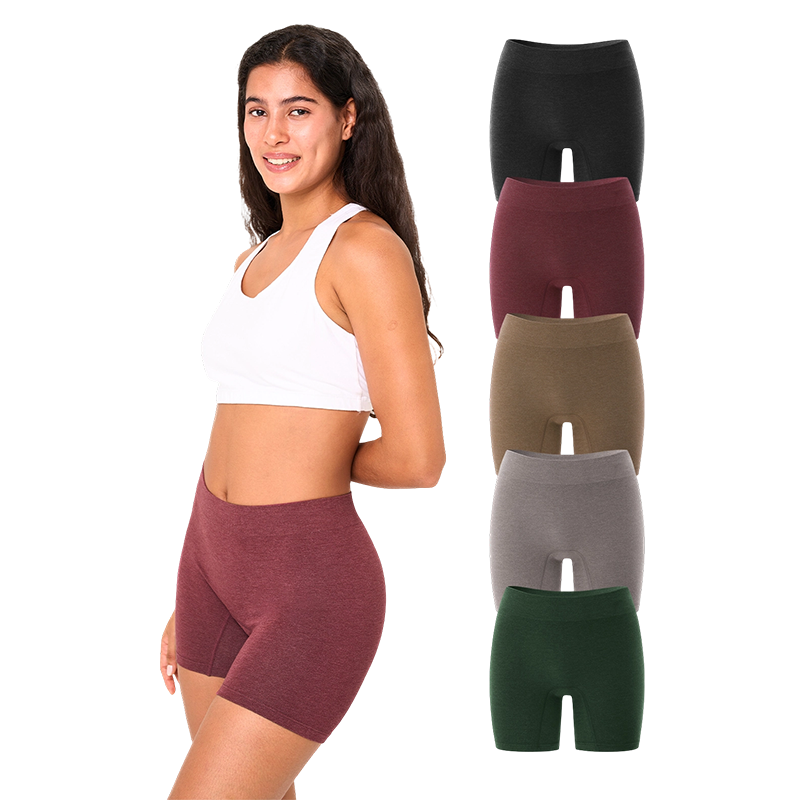
Women's Seamless Boyshorts
Women’s Seamless Boyshorts are not intended to replace every type of underwear. Different consumers prefer different levels of coverage, rise, leg length, fabric weight, and styling. The product’s competitive advantages become clearest when compared with common alternatives.
Traditional briefs generally have shorter leg coverage and may leave more of the upper thigh exposed. The boyshort silhouette provides a longer leg and therefore may be more suitable for consumers concerned about thigh friction or seeking additional coverage under dresses and skirts.
The wider waistband and natural-waist position also create a different fit experience from low-rise briefs. Consumers who prefer underwear that feels more secure around the waist may find this design more comfortable. At the same time, the stretch blend prevents the garment from becoming rigid or restrictive.
Cotton boyshorts are popular for their familiar natural hand feel, but they may be heavier or less airflow-focused depending on the fabric construction. The bamboo-viscose-rich blend offers a lightweight alternative with a smooth surface and a stated airflow advantage under the product’s positioning.
The nylon and spandex components also give the fabric a different performance profile. The result is designed to provide softness without sacrificing the stretch and recovery expected from a close-fitting garment. Buyers should still evaluate actual test results, care performance, and customer preferences before making broad comparative claims.
Some women’s boxer briefs use multiple panels and prominent seams to create their shape. These constructions can provide support, but seam placement may become noticeable under fitted clothing or during extended wear. The one-piece seamless knit seeks to deliver a smoother alternative with fewer potential irritation points.
The seamless format also contributes to a visually clean product. For fashion brands and retailers, this can make the style easier to position as a premium comfort essential. The subtle heathered appearance adds texture without requiring elaborate prints or decorative details.
These boyshorts should not be confused with firm-control shapewear. Their purpose is comfort, coverage, breathability, and everyday wear rather than body compression. The spandex content supports stretch and fit, but the product is designed to feel flexible rather than restrictive.
This distinction gives the garment a broader daily-use opportunity. Consumers may wear it for ordinary routines without the pressure or heat associated with some control garments. Brands can therefore present it as an underwear basic with coverage benefits, not as a specialized shaping product.
The product can serve several retail and wholesale applications. It may be included in a sustainable underwear collection, a breathable basics range, a seamless comfort line, a travel underwear assortment, or a seasonal warm-weather program.
Its design also supports cross-channel sales. In e-commerce, the product’s features can be communicated through product photography, fit diagrams, fabric information, and detailed bullet points. In physical retail, the style can be grouped with bamboo underwear, seamless underwear, anti-chafing products, or everyday essentials.
For private-label customers, the product offers a strong foundation for brand differentiation. A buyer may customize the color palette, waistband branding, size range, packaging, care label, and collection story while retaining the core advantages of bamboo viscose, seamless knitting, and longer coverage.
The boyshorts may appeal to consumers who prefer:
• Soft, lightweight underwear for extended daily wear.
• More upper-thigh coverage than traditional briefs provide.
• A longer-leg style that can help reduce thigh friction.
• Underwear suitable beneath short skirts and dresses.
• A tag-free interior and fewer irritating seams.
• A natural-waist waistband with a stable fit.
• Bamboo-derived viscose and a sustainability-oriented material story.
• A subtle heathered appearance rather than a bold decorative print.
Retailers can build product messaging around “soft bamboo comfort,” “seamless all-day coverage,” “breathable everyday underwear,” “longer-leg anti-chafing comfort,” or “tag-free comfort beneath dresses and skirts.” Each message should be supported by the actual product specification and any required testing or certification documentation.
Brands should avoid suggesting that the product guarantees a medical outcome or eliminates all irritation. A more accurate approach is to explain how the longer inseam, breathable fabric, smooth construction, and double-layered gusset are designed to support comfort and reduce common sources of discomfort.
A product with a clear core identity can still be adapted for different markets. OEM and ODM customers may consider modifications to the following areas:
• Color development for seasonal, neutral, or brand-specific palettes.
• Size grading for different regional markets and customer groups.
• Waistband width, branding, and logo application.
• Packaging format for e-commerce, department stores, or subscription programs.
• Care labels and fiber-content communication.
• Collection coordination with camisoles, briefs, tank tops, or other bamboo-fiber underwear.
• Material documentation and certification presentation.
• Retail positioning, product naming, and assortment architecture.
Customization should be managed carefully because changes to yarn, color, knit density, waistband structure, or sizing can affect product performance. A professional development process should include sample revisions, measurement review, wear evaluation, and final approval before bulk production.
| Customization area | Questions for development | Why it matters |
| Size range | Which markets and body measurements will be served? | Ensures fit relevance and reduces returns |
| Color | Are colors seasonal, permanent, or brand-specific? | Supports collection planning and consistency |
| Waistband | Is branding printed, woven, or omitted? | Influences comfort, identity, and appearance |
| Packaging | Will the product be sold online, in stores, or in multipacks? | Determines presentation and logistics requirements |
| Certification | Which claims require product-specific documentation? | Supports accurate compliance and marketing |
| Quality standards | What are the agreed tolerances for measurements and defects? | Creates a clear bulk-production benchmark |
When sourcing women’s seamless underwear, buyers should evaluate more than the visual appearance of a sample. The most important qualities are often related to how the garment behaves after movement, washing, and repeated wear.
Fit should be assessed across the target size range. The waistband should sit at the intended natural-waist position without excessive rolling or pressure. The leg openings should remain comfortable and should not cut into the skin. The inseam should correspond to the stated 6–7-inch specification, subject to agreed measurement tolerances and size grading.
Stretch and recovery should also be reviewed. The garment needs to stretch sufficiently for movement but should not remain permanently distorted after wear. The seamless knit should be inspected for uniformity, and the heathered appearance should be consistent across the garment.
The double-layered gusset requires particular attention. Buyers should confirm that it is correctly positioned, securely integrated, smooth against the body, and consistent from size to size. The tag-free interior should be checked during physical wear testing because even small rough points can affect comfort in intimate apparel.
Before approving bulk production, buyers may request:
• Fiber composition confirmation.
• Fabric and garment dimensional measurements.
• Stretch and recovery evaluation.
• Color and appearance approval.
• Seamless knitting and gusset inspection.
• Wash and dimensional stability testing.
• Colorfastness testing where relevant.
• Packaging and labeling review.
• Certification and supply-chain documentation.
• Wear testing on representative sizes.
These checks help connect the product promise with actual production performance. They also provide a documented reference for future repeat orders.
Proper care instructions help maintain the comfort and appearance of bamboo-viscose-rich underwear. The final care label should be confirmed by the manufacturer according to the tested fabric and finishing process. In general, consumers should follow the supplied instructions, avoid unnecessarily harsh treatment, and use washing and drying methods appropriate for stretch underwear.
Care communication is especially important for seamless products because excessive heat, rough handling, or unsuitable washing conditions may affect elasticity, dimensions, surface appearance, or softness. Clear instructions can help consumers preserve the garment’s intended fit and extend its useful life.
Brands should also communicate the difference between a soft fabric and a disposable product. Bamboo viscose, nylon, and spandex are selected to create a comfortable and functional blend, but all textiles benefit from appropriate laundering and storage. Better care education can improve satisfaction and reduce avoidable product complaints.
Certification can help buyers evaluate a supplier’s commitment to material sourcing, environmental practices, workplace standards, and product safety. Nantong Tianhong identifies FSC, OCS, OEKO-TEX 100, GOTS, WRAP, and BSCI among the standards associated with its certification portfolio.
Each standard has a different purpose, and buyers should verify the current scope, certificate holder, facility coverage, transaction documentation, and product applicability. A certification should be presented accurately rather than used as a general statement covering every product or every stage of the supply chain.
For this product, FSC certification is particularly relevant to the bamboo-derived material story. Additional testing or certification may be needed depending on the customer’s market, claims, and regulatory requirements. A responsible manufacturer should be able to discuss which documents are available and how they relate to the specific order.
Responsible manufacturing also includes social-compliance management, supply-chain visibility, quality control, and communication. These factors influence the reliability of the final product just as much as the fiber blend and garment design.
Premium does not have to mean excessive decoration or complicated construction. In everyday underwear, premium value often comes from the details that improve daily life: softer fabric, better airflow, a more stable fit, greater coverage, smoother construction, and reliable production consistency.
Women’s Seamless Boyshorts combine these details in a coherent product concept. The bamboo-viscose-rich fabric provides a soft and lightweight hand feel. The nylon and spandex blend supports durability and flexibility. The wide natural-waist waistband encourages a stable fit. The longer inseam provides meaningful coverage. The seamless one-piece knit reduces interior irritation and visible lines. The double-layered gusset adds practical comfort.
For brands, the product also provides a well-rounded marketing story. It can be positioned around breathable comfort, sustainable material sourcing, anti-chafing coverage, seamless design, or all-day wear. These messages are relevant to a broad group of consumers and can be adapted to different price points and retail environments.
The manufacturer’s OEM/ODM experience strengthens the commercial proposition. Buyers can source an established product concept while exploring customization and private-label opportunities. The company’s research focus, textile-sector location, international partnerships, and certification-oriented approach provide additional support for a structured sourcing program.
Different markets may emphasize different product benefits. In warm climates, breathability and airflow may be the leading message. In markets where dresses and skirts are common, longer coverage and reduced thigh friction may be more important. For sustainable-lifestyle customers, bamboo-derived viscose and FSC-related traceability may be central. For online shoppers, the combination of seamless construction, tag-free comfort, and a natural-waist waistband may drive purchase decisions.
A flexible product description can therefore be adapted without changing the core garment. However, the wording should remain factual. Claims about airflow, certification, environmental performance, or durability should be connected to appropriate documentation and test methods.
International brands should also review size charts, labeling language, care symbols, packaging regulations, and market-specific textile requirements. An experienced OEM/ODM supplier can support these discussions, but the final responsibility for market compliance should be clearly assigned between the buyer and manufacturer.
They are made from 80% viscose made from bamboo, 15% nylon, and 5% spandex. The bamboo-derived viscose is intended to provide softness and breathability, nylon contributes structural support and durability, and spandex provides stretch and recovery.
They are designed for everyday and extended wear. The lightweight fabric, tag-free interior, seamless construction, wide waistband, and double-layered gusset are intended to support comfort throughout busy mornings, long workdays, travel, and other daily activities.
The inseam is approximately 6–7 inches. This longer leg length provides more upper-thigh coverage than traditional briefs and is designed to help reduce thigh friction.
The longer leg creates a fabric barrier between more of the upper thighs, which may help reduce skin-to-skin friction. Individual results can vary according to body shape, activity, heat, moisture, and clothing.
It means the main body is formed through a seamless knitting construction rather than being assembled from many separate fabric panels with prominent seams. This is intended to create a smoother fit, reduce potential irritation points, and minimize visible lines under clothing.
No. The product is designed without tags, helping create a cleaner interior and reducing the possibility of irritation from a sewn-in label.
A natural-waist position can provide a more secure and stable fit for consumers who do not prefer low-rise underwear. The wide waistband is intended to distribute pressure more comfortably and reduce the need for repeated adjustment.
The double-layered gusset adds coverage and comfort in a high-contact area. It contributes to the garment’s practical everyday design and should be evaluated for smoothness, placement, and construction during product development.
Yes. Their longer leg length provides additional coverage, while the seamless construction is designed to create a smoother appearance beneath clothing. They can be used as an everyday underwear layer beneath skirts, dresses, trousers, and other garments.
The supplied specification identifies the material as viscose made from bamboo and notes FSC certification. The term “organic” should only be used when the specific fiber and finished product have the required organic certification and documentation. Buyers should confirm the exact certification scope before making an organic claim.
The product is identified as FSC certified, and the manufacturer reports a broader focus on environmentally friendly functional fabrics and traceable supply-chain management. Buyers should request product-specific certificates and supporting documents for their intended claims.
As an OEM/ODM product, customization may be discussed for areas such as colors, sizes, waistband branding, packaging, labels, care instructions, and collection coordination. Specific options, minimum quantities, development charges, and lead times should be confirmed directly during the quotation and sampling process.
The boyshorts offer a different combination of features: a bamboo-viscose-rich blend, longer leg coverage, a wide natural-waist waistband, seamless one-piece construction, no tags, and a double-layered gusset. The product is positioned as a lightweight, breathable, coverage-focused alternative to shorter traditional briefs.
Yes. Nantong Tianhong Textile Technology Co., Ltd. provides OEM and ODM products and services for labels and international customers. The company’s capabilities include underwear research, manufacturing, sales, and customized supply-chain support.
The company is located in Nantong, Jiangsu Province, China. Its listed address is Room 806, Building D, Jingyang Plaza, Chongchuan District, Nantong City, Jiangsu Province, China.
Buyers can prepare a product brief covering target markets, sizes, colors, packaging, branding, certification needs, estimated order volume, delivery requirements, and testing expectations. The manufacturer can then discuss sample development, specifications, pricing, production planning, and documentation.
Women’s Seamless Boyshorts answer several important needs in modern women’s underwear: softness, breathability, coverage, fit stability, reduced irritation, and everyday versatility. The 80% bamboo-derived viscose composition gives the product a lightweight and smooth foundation, while nylon and spandex support durability, stretch, and recovery. The wide natural-waist waistband, 6–7-inch inseam, seamless one-piece knit, tag-free interior, and double-layered gusset are practical details designed to improve the complete wearing experience.
Compared with shorter briefs, the boyshort silhouette offers more upper-thigh coverage and may help reduce friction. Compared with heavily seamed underwear, the seamless construction provides a smoother and less intrusive alternative. Compared with heavier basic fabrics, the bamboo-viscose-rich blend offers a breathable comfort story that is suitable for long days and warm conditions.
For buyers, the product also benefits from the manufacturing foundation of Nantong Tianhong Textile Technology Co., Ltd. Established in 2001, the company combines underwear research, production, OEM/ODM services, international customer experience, sustainable material development, and traceable supply-chain management. Its reported certification portfolio and focus on continuous innovation further support its position as a potential supplier for premium breathable underwear programs.
For brands seeking a versatile private-label style, these boyshorts offer a strong balance between consumer comfort and commercial adaptability. They can become part of a bamboo underwear collection, a seamless essentials line, an anti-chafing assortment, or a broader sustainable intimate-apparel program. With accurate documentation, careful quality control, and thoughtful customization, the product is well positioned for customers who expect underwear to feel comfortable, look clean, and perform reliably throughout the day.
1. Product specification for Women’s Seamless Boyshorts: fiber composition, construction, waistband, inseam, gusset, certification, and intended use.
2. Manufacturer-provided company information for Nantong Tianhong Textile Technology Co., Ltd., including company history, location, OEM/ODM services, international partnerships, and textile manufacturing focus.
3. Manufacturer-provided information concerning FSC, OCS, OEKO-TEX 100, GOTS, WRAP, and BSCI certification programs and responsible supply-chain management.
4. General textile product-development principles relating to fiber blending, seamless knitting, stretch recovery, garment fit, gusset construction, and quality inspection.
5. General responsible-sourcing guidance concerning certification scope, material traceability, product-specific documentation, and accurate sustainability communication.
Contact information for business inquiries: info@tianhongtextile.com.cn
Telephone: +86-13646275534

Copyright © Nantong Tianhong Textile Technology Co., Ltd. All Rights Reserved.
 Room 806, Building D, Jingyang Plaza, Chongchuan District, Nantong City, Jiangsu Province,china

 English
 Español
 русский
 عربى
عربى