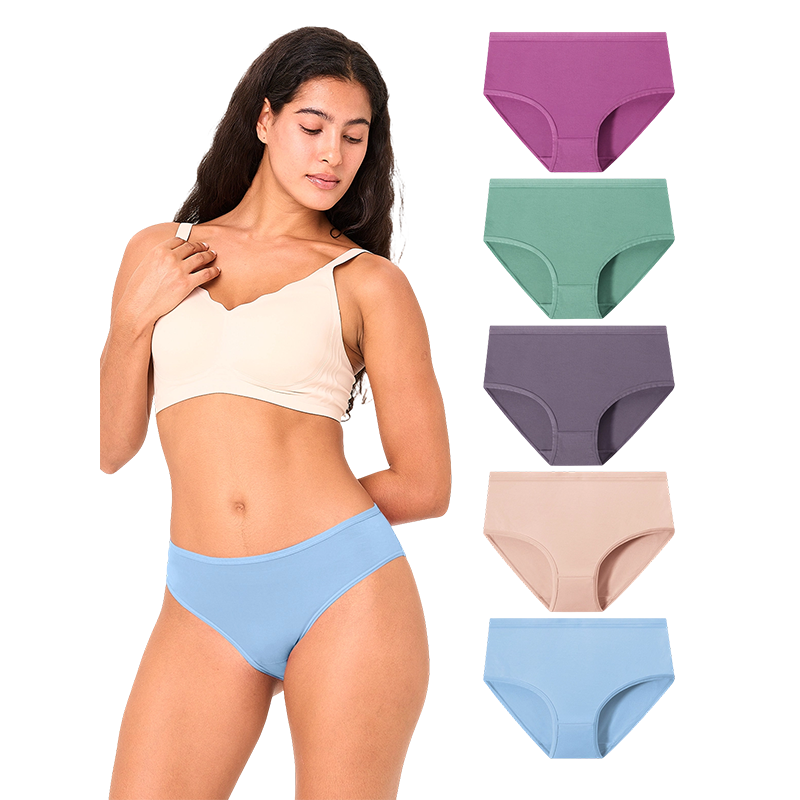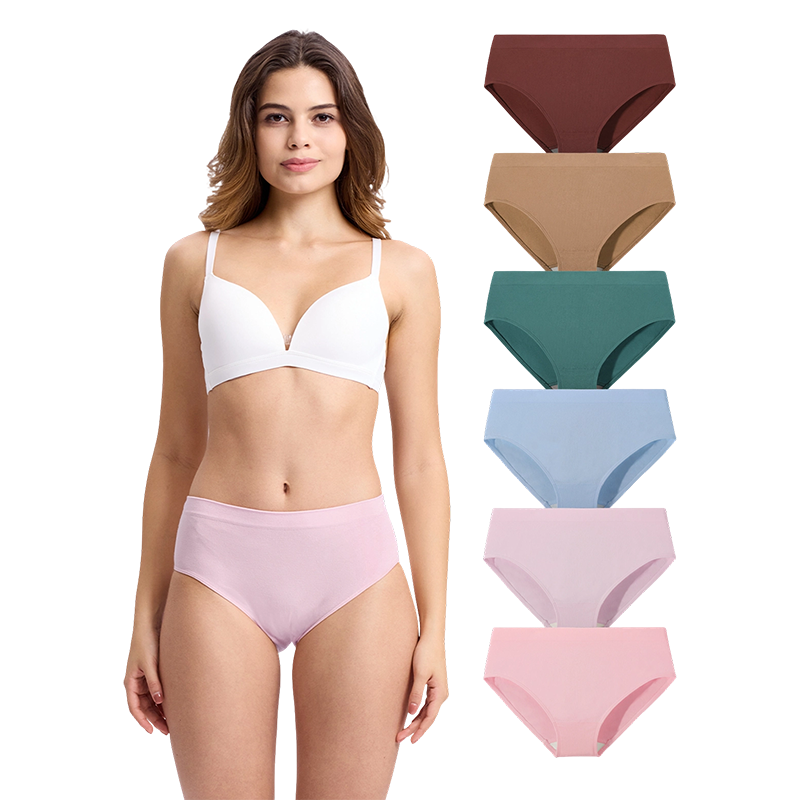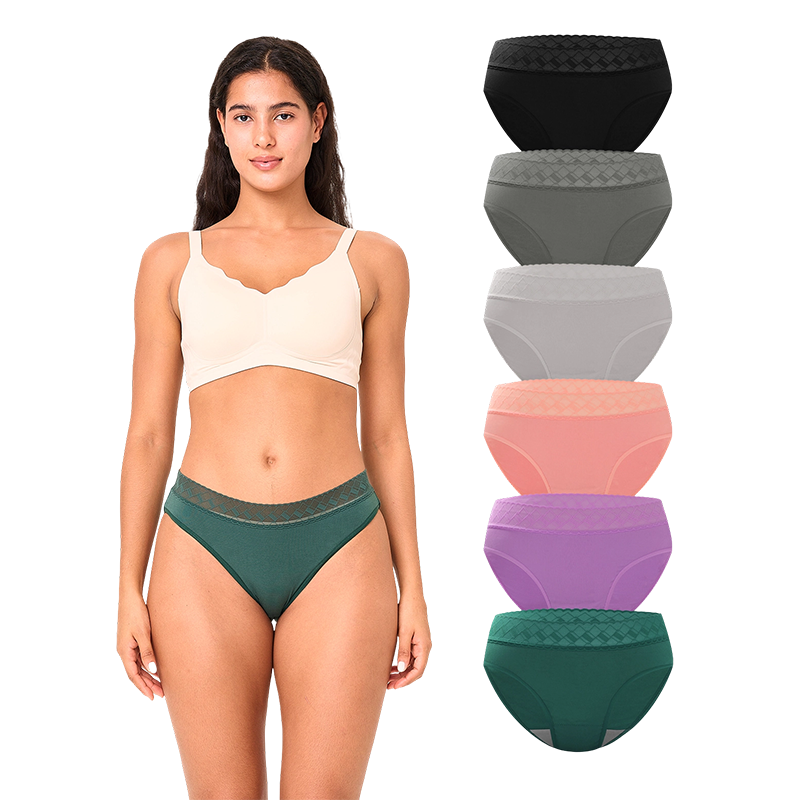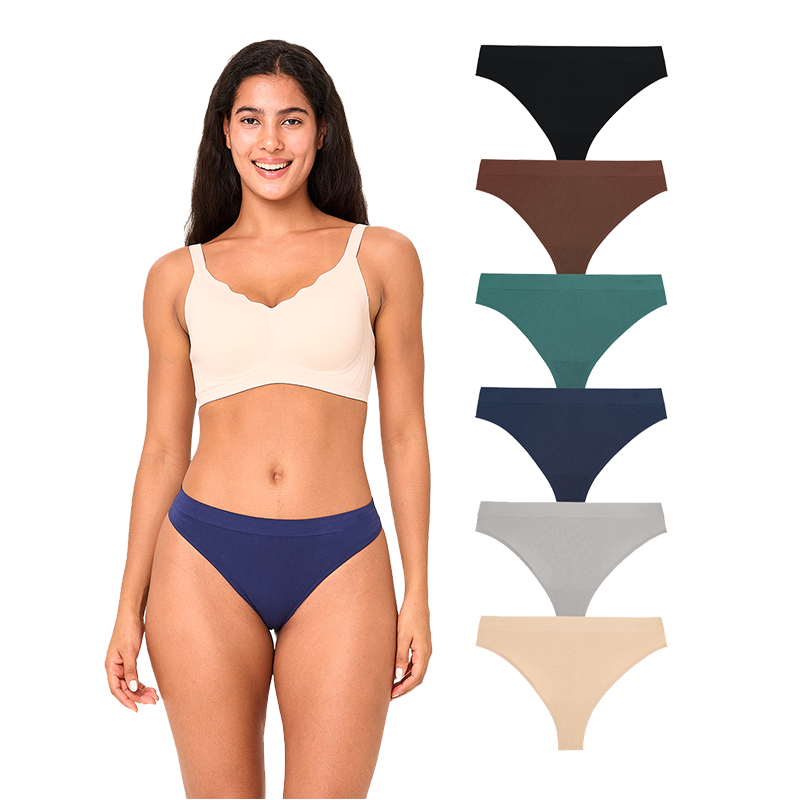
Content
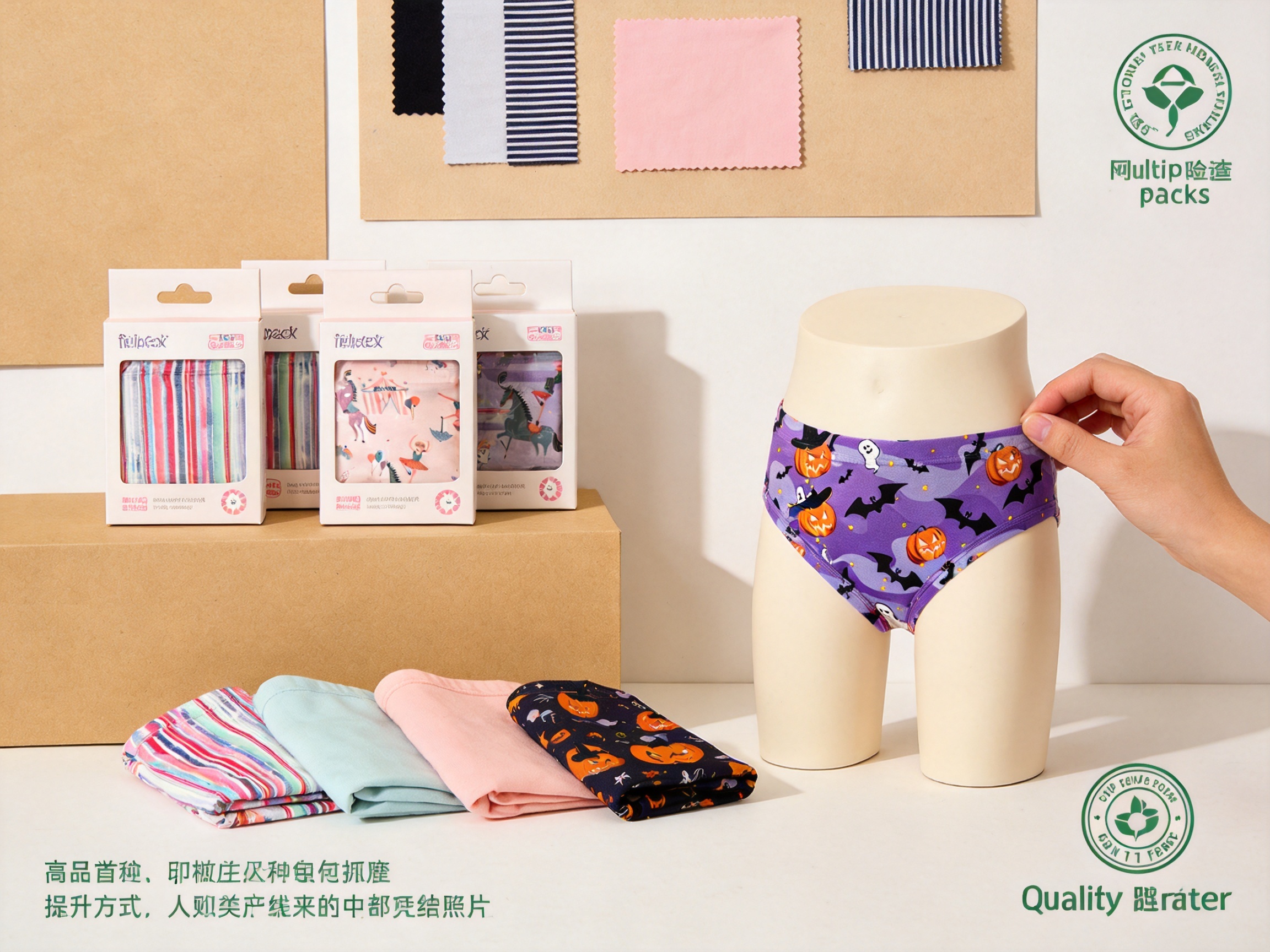
Children’s underwear must do more than provide basic coverage. It should feel comfortable against sensitive skin, remain securely in place during everyday movement, withstand frequent washing, and appeal to children through friendly, age-appropriate design. Girls’ Briefs with Cartoon Prints, product reference THDY-020, are developed around these practical and emotional needs. The style combines printed fabric, a continuous fold-over waistband, self-fabric binding at the leg openings, and cheerful cartoon artwork in a brief silhouette designed for girls.
For parents, retailers, private-label buyers, and apparel brands, the product offers a balanced combination of comfort, visual appeal, production practicality, and customization potential. The design is simple enough for efficient manufacturing but detailed enough to stand out from plain basic briefs. Its construction focuses on smooth transitions around the waist, a close fit around the legs, and durable finishing at areas that experience repeated stretching and washing.
The product is manufactured by Nantong Tianhong Textile Technology Co., Ltd., a textile and underwear enterprise established in 2001 in Nantong, Jiangsu Province, China. The company specializes in the research, manufacturing, and sales of underwear products and provides OEM and ODM services for customers in Europe, North America, and China. Its experience in underwear production, functional fabrics, sustainable development, and traceable supply chain management supports the development of children’s underwear for different markets and brand requirements.
This article examines the product’s construction, comfort advantages, design value, manufacturing strengths, quality considerations, customization opportunities, and suitability for wholesale and private-label programs. It also explains how the briefs can compete effectively with ordinary children’s underwear by combining playful graphics with thoughtful finishing and a professional production system.
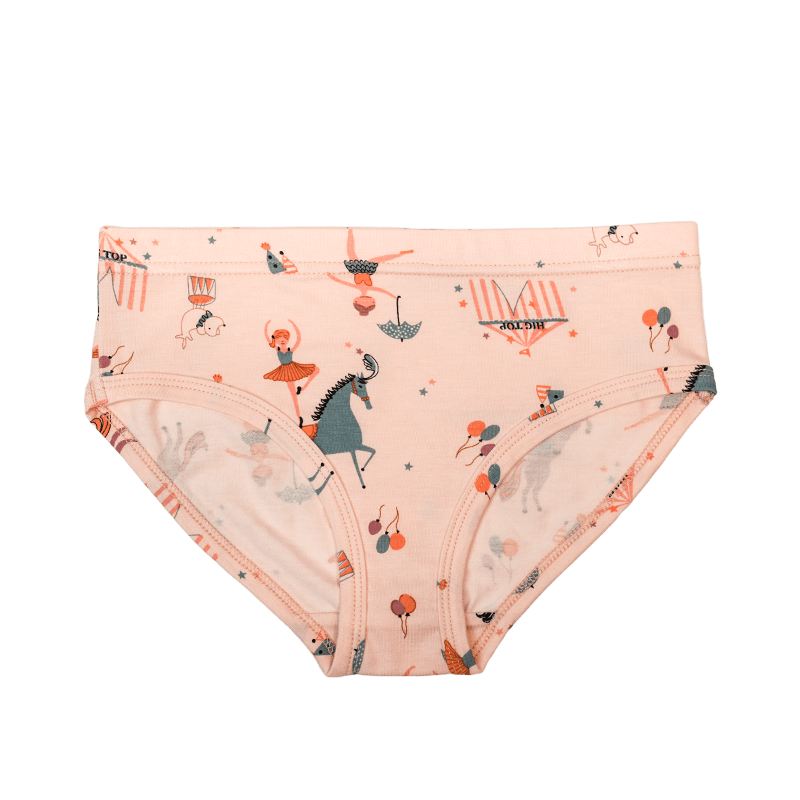
Girls' Briefs with Cartoon Prints
Girls’ Briefs with Cartoon Prints are children’s briefs featuring a printed fabric surface and a playful cartoon design. The style is intended for girls’ underwear collections and can be positioned as an everyday basic, seasonal fashion item, character-inspired range, or colorful multipack product. The reference number for this model is THDY-020.
The brief silhouette provides familiar coverage and a practical shape for daily wear. Unlike overly complicated children’s underwear designs, the product uses a straightforward construction that makes it easy to wear, easy to coordinate with children’s clothing, and suitable for repeated production in different colors, prints, and size ranges. This simplicity is valuable for brands seeking a reliable core product that can be updated through surface design and fabric development.
The most important design elements include printed fabric, a continuous waistband, folded waistband edges, and self-fabric binding at the leg openings. Together, these components contribute to a close and comfortable fit. The waistband follows the body without creating an unnecessarily rigid structure, while the bound leg openings help the garment remain positioned during movement.
The cartoon print gives the product a strong visual identity. Children often respond positively to friendly shapes, animals, characters, and colorful motifs, while parents generally look for garments that are practical, washable, and comfortable. By combining these two expectations, the briefs can appeal to both the end user and the purchasing decision-maker.
For a retailer, the product can be presented as a cheerful everyday essential. For a private-label brand, it can become a foundation for a broader girls’ underwear collection. For an OEM customer, the style offers opportunities to modify fabric composition, print artwork, color palette, labeling, packaging, and size specifications while retaining the basic construction advantages.
The printed fabric is the first feature a child is likely to notice. Cartoon prints can make a practical garment feel more personal and enjoyable. They help transform underwear from an invisible necessity into a product that reflects a child’s preferences and sense of fun.
Print development also gives buyers flexibility. A single brief pattern can support multiple collections by changing the artwork. Animal illustrations, fantasy motifs, fruit, flowers, stars, hearts, simple geometric figures, or other child-friendly designs can be considered according to the target market. Seasonal colorways can also be introduced without requiring a completely new garment structure.
Compared with plain children’s briefs, printed versions can create stronger shelf impact and improve the visual variety of a product range. Compared with highly elaborate garments, the printed brief remains practical and cost-conscious. This balance is particularly useful for multipacks, value-focused retail programs, and private-label collections that require a clear design story without excessive construction complexity.
The continuous waistband is designed to extend smoothly around the waist. A consistent waistband structure helps distribute pressure instead of concentrating it at isolated points. This is important for children, who may be active throughout the day and sensitive to tight or irregular elastic pressure.
The waistband works together with folded edges to create a smooth transition between the waist finish and the body of the garment. A well-controlled transition can reduce the feeling of a rough or intrusive edge. It also helps the brief maintain a clean appearance when worn beneath everyday clothing.
For buyers comparing children’s underwear suppliers, waistband execution is an important quality consideration. A waistband that twists, rolls, or loses recovery quickly can reduce comfort and shorten product life. A continuous construction with careful sewing control offers a stronger foundation for consistent wear performance.
The fold-over waistband is intended to contour the waist while helping prevent discomfort. Its construction creates a finished edge that can sit smoothly against the body. This feature is especially relevant in children’s underwear because the waist area experiences frequent bending, sitting, running, and stretching.
A smooth fold-over finish may also support a cleaner silhouette under dresses, skirts, shorts, school uniforms, and sleepwear. When underwear has bulky or uneven finishing, it can create visible lines or uncomfortable pressure beneath outer garments. A streamlined waistband helps the product remain discreet while maintaining its intended fit.
The design is practical for both the user and the manufacturer. It provides a recognizable finishing detail without adding unnecessary decorative components. For private-label development, the waistband can remain consistent across a collection while print, color, labeling, or fabric content changes from one product group to another.
The leg openings use self-fabric binding to support a closer and more personalized fit around the legs. Instead of leaving the edge unfinished or relying on a less coordinated trim, the fabric-bordered opening creates a neat visual and functional finish.
Leg openings must balance two needs. They should remain secure enough to prevent excessive shifting, but they should not feel restrictive. Self-fabric binding allows the opening to follow the body while maintaining a finished edge. Proper width, stretch control, stitch selection, and tension management are essential to achieving this balance.
The bound leg openings also contribute to durability. The edge is exposed to repeated stretching during dressing, movement, and laundering. A carefully constructed binding can help protect the fabric edge and reduce the likelihood of premature fraying or distortion.
The brief silhouette is widely recognized and easy for children to understand. It offers practical coverage while remaining compact enough for daily wear. The shape can be used as part of schoolwear, homewear, sleepwear, or general children’s underwear programs.
Because the silhouette is familiar, it can reduce product education requirements in retail environments. Parents know what to expect from a brief, and children can generally put it on without complicated closures or adjustable components. The absence of unnecessary hardware also reduces potential discomfort and simplifies care.
Comfort is one of the primary advantages of this product concept. Children’s skin can be sensitive to abrasive seams, rough edges, excessive pressure, and poorly controlled fabric tension. The construction of THDY-020 addresses several of these concerns through smooth waistband treatment and fabric-bound leg openings.
The fold-over waistband helps create a gentler transition at the waist. Rather than presenting a hard or exposed edge, the folded construction is intended to sit smoothly against the body. This can improve the wearing experience during long school days, active play, travel, and sleep.
The self-fabric binding at the leg openings helps the briefs stay in place without relying exclusively on excessive tightness. A garment that shifts repeatedly can cause irritation and require adjustment. A garment that is too tight can also be uncomfortable. The goal is a balanced fit in which the openings remain secure while allowing normal movement.
Fabric selection remains important. Printed fabric must provide suitable softness, stretch, recovery, breathability, and color performance for children’s underwear. Depending on the customer’s requirements, the fabric platform may be evaluated for natural fiber content, blended fiber performance, moisture management, hand feel, and wash durability.
The product can also support comfort-focused brand positioning. A buyer may describe it as a playful everyday brief with a smooth waist, secure leg fit, and child-friendly print. This message is more meaningful than relying on visual design alone because it connects the appearance of the product with clear functional benefits.
Fit should always be confirmed through samples and size-specific testing. Children’s body proportions vary by age and market, and a successful size chart must account for waist measurement, hip measurement, rise, leg opening, and garment stretch. Nantong Tianhong’s OEM/ODM approach allows customers to discuss these specifications during development rather than relying only on a generic standard.
Children’s underwear is a competitive category with many low-cost products. The strongest differentiation does not necessarily come from adding more decoration. It often comes from improving the details that influence comfort, durability, fit consistency, and purchasing confidence.
Many basic briefs use simple elastic or minimal edge treatment. Although these approaches can be economical, they may produce a less coordinated appearance or create pressure points if not carefully controlled. The self-fabric binding used at the leg openings gives this product a more integrated finish. It visually connects the opening to the body fabric and supports a neat, finished appearance.
The fold-over waistband also offers a more considered alternative to a rough or exposed top edge. This does not mean that every competing construction is unsuitable, but it does give buyers a clear feature to communicate. The product can be positioned around smooth finishing and comfortable contouring rather than price alone.
Some children’s underwear products emphasize plain functionality and offer little visual excitement. Others rely heavily on decorative elements that may increase complexity or create additional comfort concerns. Girls’ Briefs with Cartoon Prints occupy a practical middle ground. The cartoon print provides visual interest, while the brief shape and simple construction remain suitable for regular wear.
This balance can help retailers build collections that are appealing without becoming difficult to manage. A buyer can introduce several prints based on one proven construction, creating assortment variety without a completely different technical package for every design.
Children’s underwear is washed frequently. Products that look attractive at first but lose shape, fade quickly, or develop loose edges may generate dissatisfaction. The bordered leg openings and controlled waistband construction are intended to support durability in areas that receive repeated stress.
Durability depends on fabric quality, thread selection, stitch density, sewing accuracy, print process, finishing, and care conditions. A professional manufacturer can manage these factors through production standards and inspection procedures. This gives the product a stronger foundation than unstructured, inconsistent supply from sources that do not specialize in underwear.
Generic children’s briefs may be available in many markets, but they often provide limited customization. An OEM/ODM manufacturer can help brands adapt the product to their own identity. Print artwork, color, fabric, size chart, label, packaging, and assortment structure can be reviewed as part of a coordinated development process.
Customization is particularly valuable when a brand wants to create a recognizable girls’ underwear program rather than resell a completely standard item. The product’s basic construction can serve as a stable platform, while the surface design and merchandising language evolve according to customer needs.
Underwear production requires specialized knowledge. Small differences in tension, seam placement, elastic recovery, fabric stretch, and pattern balance can strongly affect comfort. Nantong Tianhong has specialized in underwear products since 2001, providing an experience base relevant to the development of children’s briefs.
A manufacturer with a long-term focus on underwear is better positioned to understand the technical requirements of close-fitting garments. This includes the relationship between fabric behavior and pattern dimensions, the handling of stretch materials, the importance of smooth seams, and the need for consistent production across different sizes.
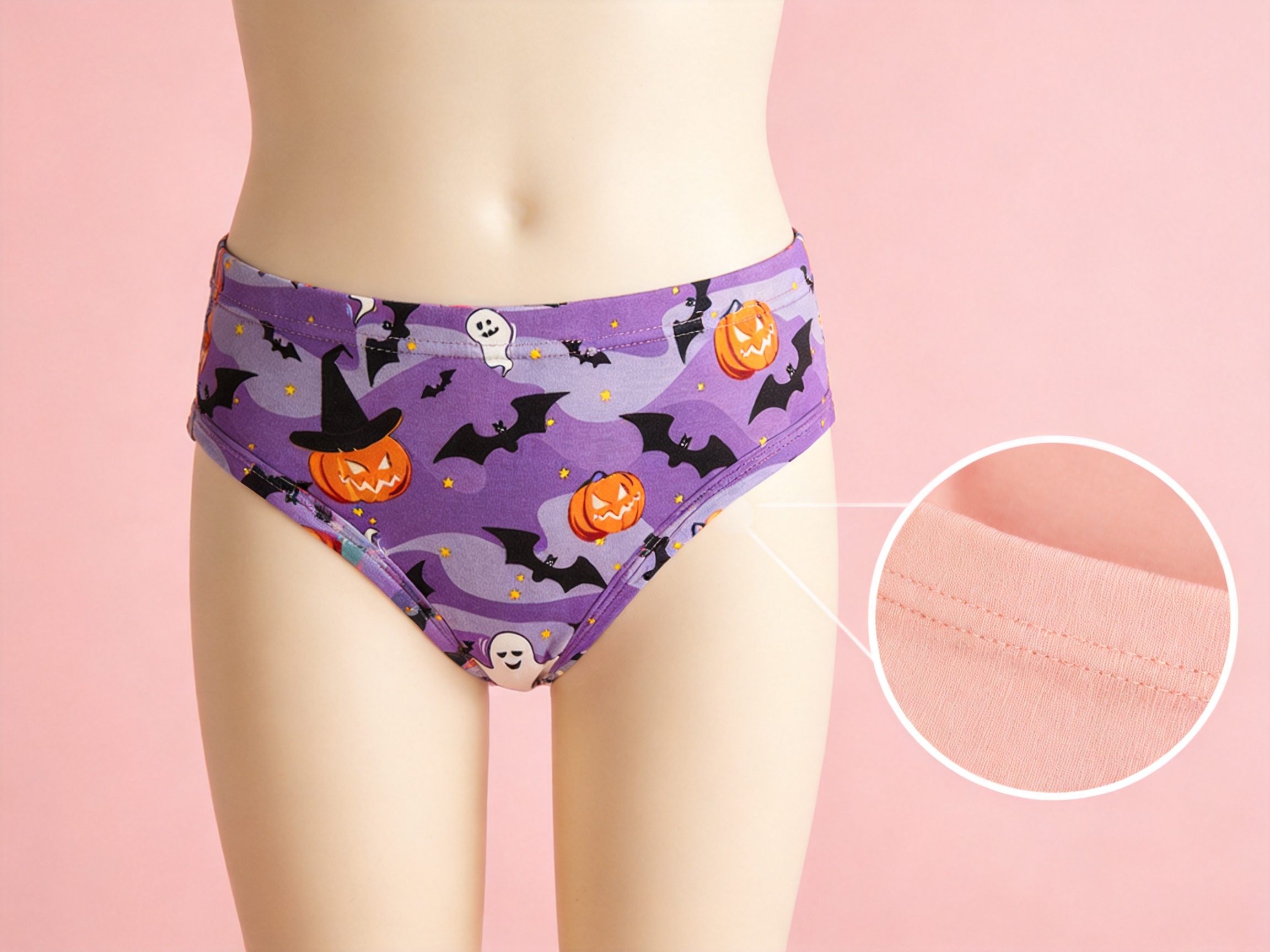
A professional manufacturing process begins before cutting and sewing. Product development includes reviewing the intended market, customer requirements, fabric selection, target cost, size range, print placement, construction details, and packaging expectations. For a children’s style, the development process should also consider comfort, safety, wash performance, and age-appropriate appearance.
The technical team can examine the relationship between the pattern and the selected fabric. A fabric with higher stretch may require different dimensions from a fabric with limited stretch. Waistband and leg-opening measurements must be considered together with fabric recovery. If these elements are not balanced, the garment may become loose during wear or feel too tight when first put on.
Sample development allows buyers to review the actual product before bulk production. During this stage, adjustments may be made to the rise, hip width, waistband height, leg opening, print scale, binding width, stitch appearance, and overall hand feel. This iterative process is essential for obtaining a product that meets the brand’s expectations rather than simply matching a basic illustration.
Printed fabric requires attention to both appearance and performance. The print should be appropriate for children’s products and compatible with the fabric construction. Color clarity, repeat accuracy, hand feel, wash resistance, and alignment are all important considerations.
Fabric inspection can help identify issues such as uneven color, holes, stains, distortion, inconsistent stretch, or print defects before the material reaches the cutting stage. Careful material control reduces waste and helps maintain consistency across production batches.
For customers interested in environmentally conscious collections, fabric development may include natural fiber or lower-impact material options. Nantong Tianhong focuses on environmentally friendly functional fabrics and sustainable development. Depending on the selected material and customer specifications, buyers can explore fabric programs that support a more responsible product story.
Pattern accuracy is essential in children’s underwear because small dimensional changes can affect the fit significantly. The front, back, gusset, waistband, and leg-opening areas must be coordinated so that the finished garment maintains the intended shape.
Cutting accuracy supports consistency across pieces and sizes. When printed fabric is used, cutting may also require attention to print direction, repeat placement, and visual balance. A reliable cutting process helps prevent mismatched panels, distorted motifs, and variations between garments in the same production lot.
Size grading is another important step. A single base size must be adapted to other sizes in a way that preserves comfort and proportion. The rise, leg opening, waist measurement, and coverage should develop logically as the size changes. Professional technical review can help ensure that the product remains wearable across the intended age range.
Sewing operations should be organized around the construction requirements of the product. The waistband must be attached evenly, the fold-over edge must remain smooth, and the leg-opening binding must follow the curve without puckering or excessive tension.
Operators need to control fabric handling and stitch formation carefully. Stretch fabrics can become distorted if they are pulled too strongly during sewing. Insufficient tension control can result in wavy edges, while excessive tension can create tight areas that affect comfort. Balanced machine settings and experienced operators are therefore important to the final result.
Thread ends, seam allowances, stitch density, and seam alignment should be controlled throughout production. These details may not be visible in product photography, but they influence the garment’s durability and the child’s comfort. A clean interior is especially important for underwear because the garment remains in direct contact with the body.
Quality control should take place at multiple stages rather than only at the end of production. Incoming fabric and trim inspection can identify material problems early. In-process inspection can detect sewing or construction deviations before they are repeated across a large quantity. Final inspection can confirm appearance, measurements, labeling, packaging, and overall workmanship.
Typical inspection points for this style may include print clarity, fabric defects, color consistency, waistband continuity, leg-opening symmetry, seam quality, loose threads, measurement tolerance, and general cleanliness. The exact inspection plan can be adjusted according to the customer’s quality requirements and market regulations.
For international buyers, consistent documentation and communication are also valuable. Clear specifications, approved samples, packaging instructions, and inspection criteria help reduce misunderstandings between the brand and the factory. A traceable supply chain supports better accountability during development and production.
Nantong Tianhong Textile Technology Co., Ltd. was established in 2001 and is located in Nantong, a major textile industry center in Jiangsu Province, China. The company specializes in underwear research, manufacturing, and sales. Its long-term focus gives it relevant experience in the development of products that require soft fabrics, close-fitting construction, elastic performance, and repeated laundering.
The company provides OEM and ODM products and services for recognized labels. OEM production allows a customer to provide specifications or an approved design for manufacturing. ODM development can provide broader support, including product concepts, fabric choices, construction suggestions, sample development, and production coordination. This flexibility is useful for both established brands and buyers building a new underwear line.
Its customer base includes partners in Europe, North America, and China. Experience across different markets can support a better understanding of varied expectations concerning fit, labeling, packaging, quality, sustainability, and compliance. International product development often requires careful communication because size systems, consumer preferences, and regulatory requirements differ from one region to another.
The company also emphasizes sustainable development, environmentally friendly functional fabrics, and traceable supply chain management. These areas are increasingly important in the underwear sector. Buyers and consumers want to understand not only how a product looks and feels, but also how materials are sourced, how production is managed, and whether the supply chain can provide credible information.
Nantong Tianhong’s product and management systems are associated with standards and certifications including FSC, OCS, OEKO-TEX 100, GOTS, WRAP, and BSCI. Certification scope and applicability should be confirmed for the specific fabric, product, facility, and order. Nevertheless, the company’s attention to recognized standards demonstrates an understanding of the quality, environmental, social responsibility, and supply chain issues relevant to modern apparel purchasing.
These strengths support the development of girls’ briefs in several ways. Technical underwear experience contributes to better construction decisions. Material knowledge supports fabric selection. OEM/ODM capability enables customization. International experience improves communication with overseas buyers. Sustainability and certification awareness help brands develop products that fit contemporary market expectations.
Children’s underwear should be developed with careful attention to material safety. Fabrics, dyes, prints, threads, labels, and packaging components should be selected according to the intended market and applicable requirements. Buyers should communicate any restricted-substance policies, testing expectations, or certification needs at the beginning of the project.
OEKO-TEX 100 is one example of a textile safety standard recognized by many buyers. Other standards may relate to organic content, responsible forestry, social compliance, or manufacturing conditions. The correct certification depends on the product claim being made. A brand should not describe a product as organic, sustainable, certified, or environmentally friendly unless the claim is supported by appropriate documentation.
Natural fiber fabrics can offer a soft hand feel and may support certain sustainability narratives when responsibly sourced. Functional blends may offer advantages in stretch, recovery, durability, drying time, or shape retention. The best material choice depends on the customer’s priorities, target price, climate, use conditions, and certification requirements.
Print selection also matters. Child-friendly artwork should be visually appropriate and produced with processes suitable for the fabric. The print should remain attractive after normal care. Buyers may request wash testing, rubbing tests, colorfastness evaluation, or other product-specific assessments before approving bulk production.
Sustainability is not limited to fiber content. It can include efficient pattern layout, reduced cutting waste, durable product life, responsible chemical management, packaging optimization, energy use, wastewater management, and supply chain traceability. A durable garment that remains wearable through repeated use can also contribute to more responsible consumption.
Girls’ Briefs with Cartoon Prints can be customized in several ways while retaining the main comfort-focused structure. The first opportunity is artwork. A buyer may provide original illustrations, licensed artwork, seasonal motifs, or a color direction. Artwork should be reviewed for repeat size, placement, color limitations, and compatibility with the selected printing process.
Color customization can help a brand create a coordinated collection. Soft pastel shades may suit one market, while bright primary colors may be preferred in another. A multipack can combine several prints or use one print in several colorways. The assortment can be organized by age group, season, character theme, or retail price level.
Fabric customization is another important option. Customers may compare different fiber compositions, weights, stretch levels, and surface finishes. A lighter fabric may suit warm climates, while a more substantial construction may be preferred for certain seasons. The final choice should be confirmed through hand-feel review, fit testing, and wash evaluation.
Labels and packaging can be adapted for private-label programs. Woven labels, printed care labels, size markings, hangtags, polybags, cartons, and multipack packaging can carry the customer’s branding. Packaging should remain practical and should communicate size, fiber content, care instructions, and other required information clearly.
Size ranges can also be developed according to the buyer’s market. International children’s sizing is not uniform, so brands should provide a clear measurement chart and approve samples for the relevant size range. The factory can discuss grading, tolerances, and measurement points to help ensure consistency.
Additional construction changes may be possible depending on order quantity and technical feasibility. These could include waistband height, binding width, gusset dimensions, seam specifications, or alternative fabric finishes. Any modification should be evaluated for comfort, appearance, cost, production stability, and compliance before approval.
The product can be positioned as a cheerful, comfortable everyday brief for girls. Its strongest retail message is the combination of cartoon appeal and practical fit. This makes it suitable for children’s underwear departments, family apparel stores, online marketplaces, private-label websites, and multipack programs.
For retail presentation, the print should be visible enough to communicate the product concept quickly. Product photography can show the front and back views, waistband detail, leg-opening finish, fabric surface, and packaging. Buyers may also emphasize softness, secure fit, easy care, and playful artwork in product copy.
Multipacks can increase purchase convenience and create opportunities for coordinated storytelling. A pack may contain several different cartoon prints or a consistent design in multiple colors. The best format depends on the target retail channel and the customer’s purchasing habits.
The product can also be used as an entry style in a broader underwear collection. A brand may begin with printed briefs and later add plain colors, matching camisoles, sleepwear, training items, or seasonal designs. Maintaining consistent waistband and binding treatments across the collection can create a recognizable fit identity.
Compared with products that depend solely on licensed characters, original cartoon artwork can offer greater flexibility and reduce some licensing limitations. However, artwork must still be reviewed carefully to avoid copying protected designs. A professional product development process can help coordinate artwork approval and production requirements.
Before placing a large order, buyers should evaluate a complete sample rather than judging the print alone. The sample should be reviewed on a child-appropriate mannequin or through an approved fit process. Measurements should be taken at the waist, hip, rise, leg openings, and key seam locations.
The waistband should be checked for smoothness, recovery, twisting, and pressure. The folded edge should remain even around the body. The leg openings should be examined for symmetry, binding width, stretch, and the absence of puckering. Interior seams should be inspected for loose threads, rough areas, or excessive bulk.
Wash testing is especially important. The buyer should follow the intended care instructions and examine the sample after repeated washing and drying. Areas to review include print appearance, color change, shrinkage, waistband recovery, leg-opening stability, seam strength, and overall shape retention.
Wear testing can provide additional information that visual inspection cannot. A small group of suitable testers or a professional fit review can identify whether the brief rides up, shifts during movement, feels tight, or causes irritation. Feedback should be recorded by size and body proportion because a construction may perform differently across the size range.
Packaging and labeling should also be approved before production. Information may include fiber content, care instructions, size, country of origin, brand identity, safety information, and required local markings. The exact requirements depend on the destination market.
| Evaluation Area | Girls’ Briefs with Cartoon Prints | Common Basic Briefs | Potential Buyer Benefit |
|---|---|---|---|
| Visual design | Playful cartoon print with collection flexibility | Often plain or visually limited | Stronger child appeal and shelf presentation |
| Waist finish | Continuous fold-over waistband | May use a simple exposed elastic finish | Smoother transition and more coordinated appearance |
| Leg openings | Self-fabric binding for a close fit | May use minimal edge treatment | Neater finish and improved edge durability |
| Product use | Designed for everyday girls’ underwear collections | General-purpose basic use | Clearer positioning for children’s retail programs |
| Customization | Print, color, fabric, size, label, and packaging options | May offer limited adaptation | Better support for private-label development |
| Manufacturing support | OEM/ODM development from an underwear specialist | May come from a general apparel supplier | More focused technical communication |
| Sustainability options | Potential access to environmentally focused fabric programs and recognized standards | Depends on supplier capability | More flexibility for responsible product strategies |
The project normally begins with a discussion of the customer’s target market, product concept, size range, fabric expectations, artwork, quantity, packaging, delivery requirements, and quality standards. Clear communication at this stage helps prevent avoidable changes later.
The buyer and manufacturer can review fabric samples, print references, color standards, and artwork files. If the buyer has sustainability or certification requirements, these should be discussed before material approval. Print scale and placement should be considered in relation to the brief pattern and the final size range.
A development sample allows the customer to evaluate the construction. Comments may address the waistband, leg openings, garment measurements, fabric hand feel, print appearance, sewing quality, and packaging presentation. Several rounds of sampling may be required for a precise result.
The approved sample should be checked for fit, comfort, appearance, wash performance, and construction stability. If changes are made, the technical specifications should be updated so that the bulk production team works from the final approved information.
Once materials, samples, specifications, and packaging are approved, production can proceed. Material inspection, cutting, sewing, print control, in-process inspection, finishing, final inspection, and packing should be coordinated according to the agreed production plan.
After final approval, the products are packed and prepared for shipment. Post-production feedback can help improve future orders. Because the product is suitable for repeat development, later orders may introduce new prints, colors, or fabric options while retaining the approved fit and construction.
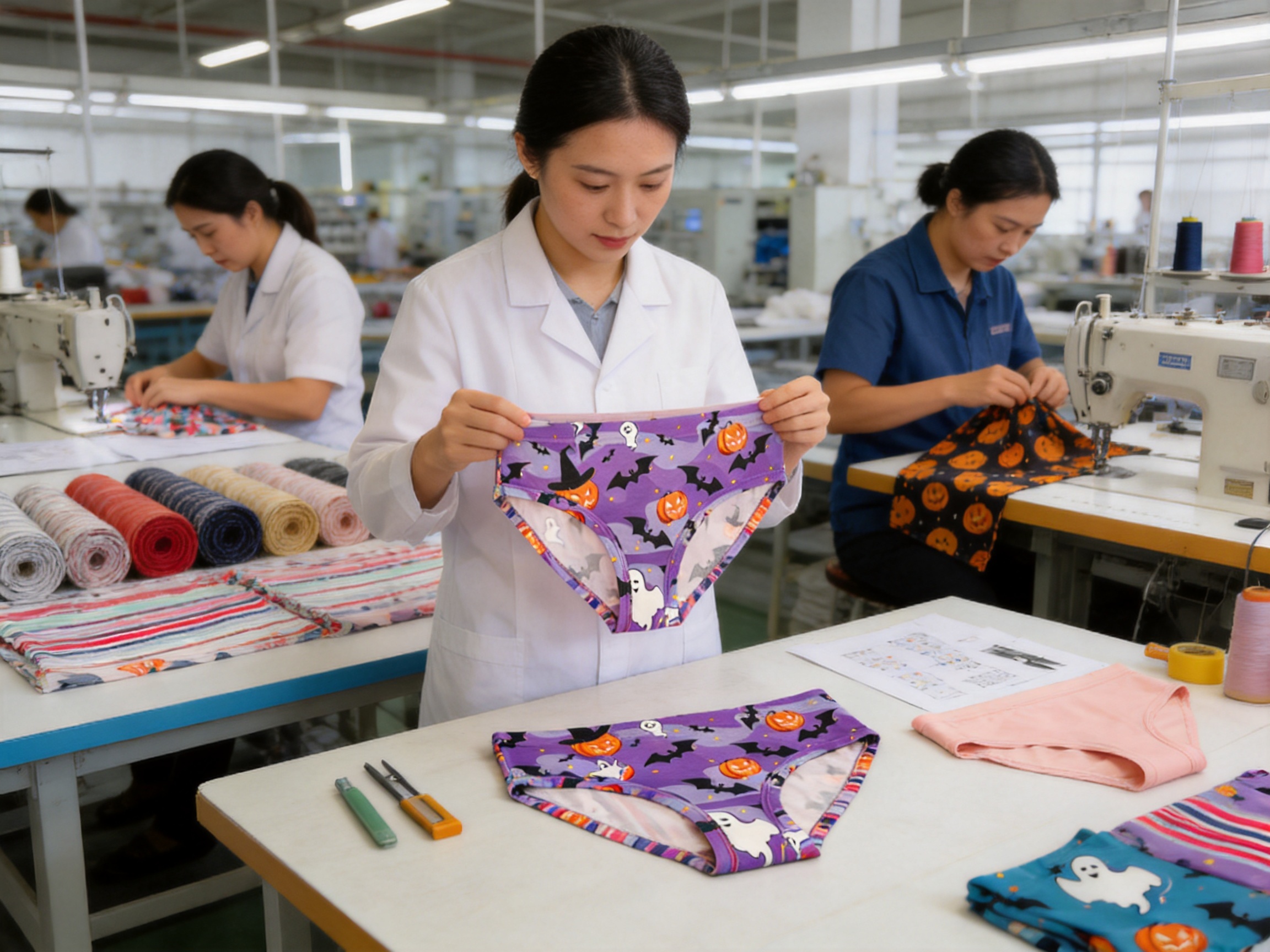
Nantong is located in Jiangsu Province, one of China’s important textile and apparel production regions. A textile industry hub can provide access to fabric suppliers, printing resources, sewing expertise, testing services, accessories, packaging, and logistics networks. This industrial environment can support efficient coordination during product development and bulk manufacturing.
Supply chain management is particularly important for children’s underwear because the product combines fabric, print, thread, labels, packaging, and multiple quality requirements. Delays or inconsistencies in one component can affect the complete order. A manufacturer with established industry connections and experience can help coordinate these elements more effectively.
Traceability also supports better buyer confidence. A clear record of materials, production steps, inspections, and approvals can help brands answer questions from customers, retailers, and compliance teams. It also makes it easier to identify the source of a problem and take corrective action when necessary.
For international customers, communication is another supply chain advantage. Product specifications should be recorded in clear technical documents, including measurements, tolerances, fabric composition, print references, sewing details, packaging requirements, and inspection standards. This documentation creates a common reference for all parties involved.
The final care instructions should be based on the approved fabric, print, and construction. In general, children’s underwear benefits from care practices that protect the fabric and preserve elasticity. Buyers should confirm the recommended washing temperature, drying method, ironing limitations, and use of bleaching agents with the manufacturer.
Appropriate care can help maintain the appearance of cartoon prints and preserve the recovery of the waistband and leg openings. Excessive heat, harsh chemicals, or unsuitable drying methods may accelerate fading, shrinkage, or elastic deterioration. Clear care labeling helps parents maintain the product correctly.
Durability is also influenced by the garment’s intended use. A brief designed for everyday wear should be tested under repeated laundering and normal movement. The goal is not only to create an attractive first impression but also to provide a product that remains comfortable and presentable throughout its useful life.
The product reference is THDY-020. It is a girls’ brief style with cartoon prints, a continuous fold-over waistband, and self-fabric binding at the leg openings.
The brief silhouette provides practical coverage, while the smooth waistband and fabric-bound leg openings are intended to support comfort and a secure fit during daily movement. The construction does not rely on complicated closures or excessive decoration.
Yes. Cartoon printing provides an adaptable design platform for private-label collections. Buyers can discuss artwork, colorways, print scale, and assortment planning with the manufacturer. Any third-party or licensed artwork must be properly authorized by the buyer.
Fabric options can be discussed as part of OEM or ODM development. Customers may review different fiber compositions, stretch levels, weights, hand feels, and sustainability requirements. The selected fabric should be confirmed through sampling and performance evaluation.
Construction modifications may be possible depending on technical feasibility, order quantity, and the desired production specifications. Waistband height, binding width, measurements, and seam details should be reviewed during the sampling stage.
Nantong Tianhong Textile Technology Co., Ltd. provides OEM and ODM products and services. This may include development support, fabric selection, print coordination, sampling, production, labeling, packaging, and quality management according to the customer’s project requirements.
The company’s supplied information identifies standards and certifications including FSC, OCS, OEKO-TEX 100, GOTS, WRAP, and BSCI. Buyers should confirm the current validity, scope, facility coverage, and applicability to the specific material and product before making a certification-related claim.
Buyers should approve a complete sample using the intended size chart and should review waist, hip, rise, leg-opening, and coverage measurements. Fit testing, movement evaluation, wash testing, and comparison with an approved reference sample are recommended before bulk production.
Yes. The brief format and cartoon print concept are well suited to multipacks. A pack can combine different prints, colorways, or coordinated designs. Packaging and assortment details should be confirmed according to the target market and retail channel.
Important points include fabric and print quality, color consistency, waistband smoothness, leg-opening symmetry, binding attachment, seam strength, loose threads, measurements, wash performance, labeling, and packaging accuracy.
Potential buyers include children’s apparel brands, underwear retailers, private-label companies, importers, wholesalers, department stores, online retailers, and distributors seeking a customizable girls’ brief program.
Underwear requires specialized control of stretch fabrics, close-fitting patterns, elastic recovery, seam comfort, edge finishing, and repeated-wash performance. A manufacturer focused on underwear is more familiar with these technical relationships than a supplier that produces only general apparel.
Girls’ Briefs with Cartoon Prints offer a practical product concept for the children’s underwear market. The playful print provides immediate visual appeal, while the brief silhouette remains familiar and functional. The continuous fold-over waistband is designed to contour the waist smoothly, and the self-fabric binding at the leg openings supports a neat, secure fit.
The product’s advantages over ordinary basic briefs are found in its balance of style, comfort, construction, and customization potential. It can provide stronger shelf appeal than plain underwear without depending on complicated decorative details. Its edge finishes create a more coordinated appearance and may support better comfort and durability when produced with appropriate materials and sewing control.
The manufacturing strengths of Nantong Tianhong Textile Technology Co., Ltd. further support the product’s commercial potential. Since its establishment in 2001, the company has focused on underwear research, manufacturing, and sales. Its OEM/ODM services, international customer experience, attention to functional and environmentally friendly fabrics, and supply chain management capabilities make it suitable for buyers seeking more than a standard catalog item.
For the best result, customers should treat the product as a coordinated development project. Fabric, print, pattern, waistband, leg openings, sizing, labeling, packaging, testing, and inspection should be confirmed together. With careful sampling and clear specifications, the style can become a reliable foundation for colorful girls’ underwear collections, multipacks, and private-label programs.
In a competitive market, children’s underwear succeeds when it satisfies children, parents, retailers, and brand managers at the same time. This product addresses those expectations through cheerful design, comfort-focused finishing, everyday practicality, and professional manufacturing support.
1. Product development information for Girls’ Briefs with Cartoon Prints, product reference THDY-020.
2. Company profile and manufacturing information supplied by Nantong Tianhong Textile Technology Co., Ltd.
3. General textile and apparel quality management principles for fabric inspection, garment construction, measurement control, and final inspection.
4. General guidance on children’s apparel product safety, textile testing, colorfastness, care labeling, and restricted-substance management.
5. General information concerning FSC, OCS, OEKO-TEX 100, GOTS, WRAP, and BSCI certification frameworks and responsible supply chain practices.

Copyright © Nantong Tianhong Textile Technology Co., Ltd. All Rights Reserved.
 Room 806, Building D, Jingyang Plaza, Chongchuan District, Nantong City, Jiangsu Province,china

 English
 Español
 русский
 عربى
عربى