Content
Modern consumers expect sleepwear to do more than provide basic nighttime coverage. They want softness, breathability, practical design, responsible material choices, and dependable quality in one garment. Retailers and private-label brands, meanwhile, need products that can be customized, manufactured consistently, and supported by a reliable supply chain. The Polyester Bamboo Fabric Women’s Pajamas answer these needs by combining bamboo viscose fabric with recycled polyester in a practical two-piece design.
Designed for women’s loungewear collections, the pajama set is made to support comfortable sleeping, relaxed mornings, travel, and everyday home use. Its fabric construction balances the gentle hand feel associated with bamboo viscose and the durability associated with recycled polyester. The top includes a bamboo overlay that supports breathability, while the matching pants feature pockets on both sides and an adjustable drawstring waistband.
This combination gives the product a clear position in a competitive sleepwear market. It is not simply a soft pajama set, nor is it only a sustainability-focused garment. It is a commercially practical product that brings together comfort, functionality, material innovation, and manufacturing flexibility. For brands seeking premium breathable underwear and loungewear, it provides a strong foundation for OEM and ODM development.
The Polyester Bamboo Fabric Women’s Pajamas are a two-piece women’s sleepwear and loungewear set developed under product reference THDY-012. The design uses viscose derived from organically grown bamboo together with polyester fabric, including recycled polyester. This blend is selected to create a soft, comfortable, and more responsible alternative to conventional synthetic-heavy sleepwear.
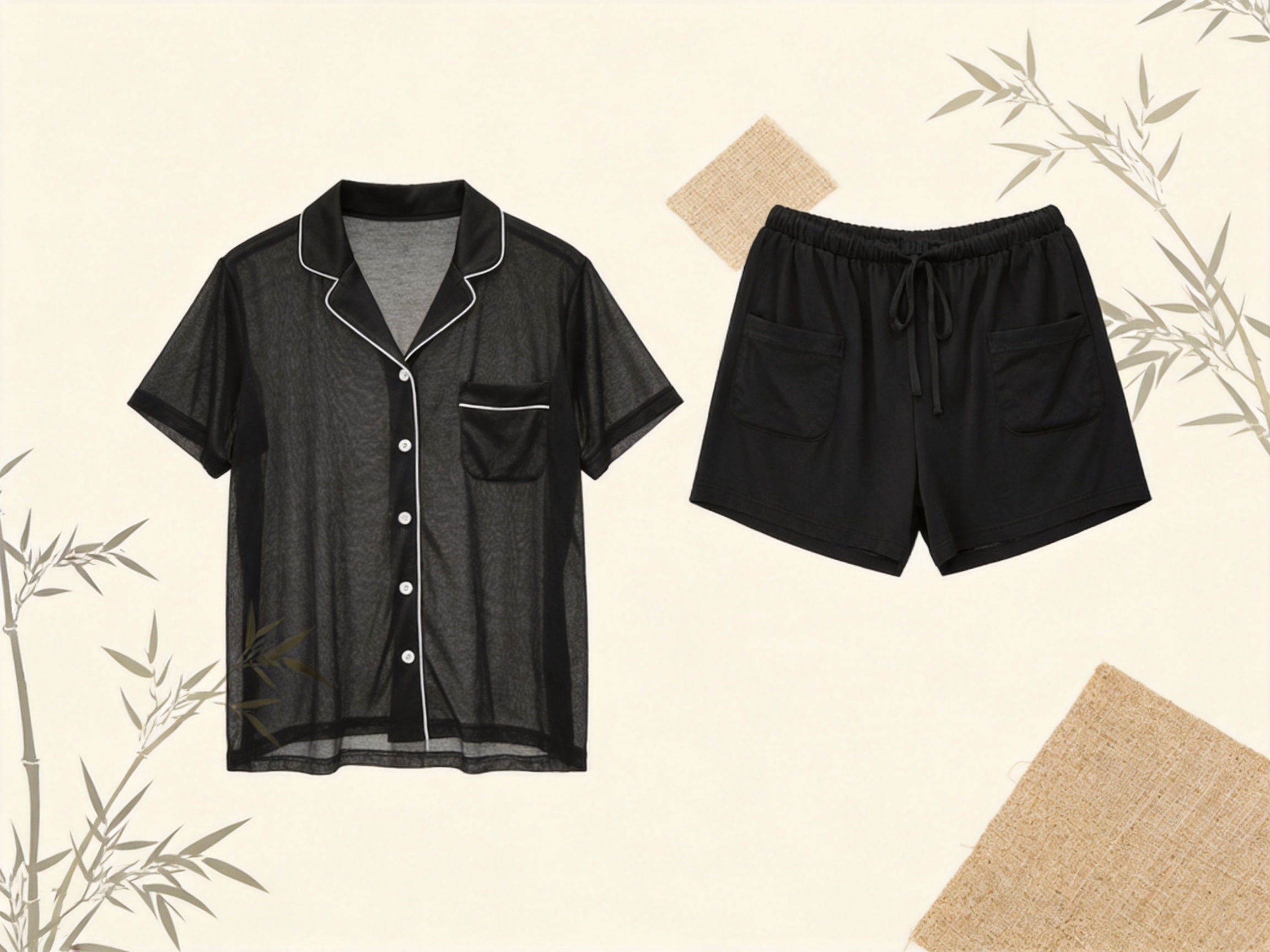
The product consists of a top and matching pants. The top uses a bamboo overlay intended to improve breathability and provide a smooth, gentle sensation against the skin. The pants are designed for relaxed movement and include two side pockets, giving the wearer a convenient place to carry small personal items or warm the hands while relaxing.
An adjustable drawstring waistband allows the wearer to modify the fit according to personal preference. This detail is particularly useful in sleepwear, where comfort and freedom of movement are more important than a rigid, structured silhouette. It also makes the garment more adaptable across different body shapes and daily activities.
| Product Attribute | Details |
|---|---|
| Product type | Women’s two-piece pajamas and loungewear |
| Product reference | THDY-012 |
| Main materials | Viscose derived from organically grown bamboo and polyester |
| Sustainability feature | Use of recycled polyester and bamboo-based viscose |
| Top detail | Bamboo overlay designed for a breathable, soft feel |
| Pants detail | Two practical side pockets |
| Waist detail | Adjustable drawstring waistband |
| Application | Sleepwear, home lounging, private-label collections, and retail programs |
| Manufacturing model | OEM and ODM development support |
These elements give the pajama set a balanced value proposition. The material story appeals to consumers interested in natural and recycled fibers, while the pockets and drawstring provide tangible everyday benefits. The product is therefore suitable for brands that want to communicate comfort and sustainability without sacrificing practicality.
Fabric selection determines much of a pajama garment’s performance. Sleepwear remains in direct contact with the skin for extended periods, often during hours when the body naturally changes temperature. A suitable fabric must feel comfortable, allow appropriate air circulation, maintain its appearance after repeated care, and provide enough structural stability for long-term use.
Bamboo viscose is valued in apparel for its smooth surface and soft handle. When used in a sleepwear construction, it can contribute to a gentle sensation that is especially appropriate for garments worn while resting. Its fluid drape can also help create an elegant, relaxed silhouette rather than a stiff or overly structured appearance.
Recycled polyester contributes a different set of performance characteristics. It can provide strength, dimensional stability, and resistance to the wear that occurs during regular washing and use. In a blended fabric, recycled polyester helps reinforce the garment while supporting a material strategy that makes use of recovered polyester resources.
The combination is more versatile than relying on either fiber alone. Bamboo viscose contributes softness and comfort, while recycled polyester supports durability and product longevity. The result is a fabric platform that can meet the expectations of modern loungewear shoppers who want a pleasant touch but also expect their garments to remain usable over time.
It is important to present the material responsibly. Bamboo viscose is not the same as untreated bamboo fiber, because the bamboo is processed into regenerated cellulose fiber. Likewise, recycled polyester remains a polyester fiber, although it is produced using recovered polyester inputs. Clear and accurate material communication helps brands build consumer trust and avoid exaggerated environmental claims.
Softness is one of the first qualities consumers notice when selecting pajamas. A rough or rigid surface can interfere with relaxation, especially when the garment is worn overnight. The bamboo-based component in this product is intended to create a smooth and comfortable hand feel suitable for direct skin contact.
The fabric’s softness also supports the premium positioning of the garment. Consumers often associate a pleasant touch with better quality, provided that the garment maintains its comfort after washing. The combination of bamboo viscose and polyester is designed to balance a luxurious sensation with greater practical resilience than an extremely delicate fabric might offer.
The bamboo overlay on the top adds a further comfort-focused detail. It gives the upper garment a distinctive material feature while contributing to the product’s breathability story. The overlay can also help differentiate the design from basic pajama sets that use one uniform fabric throughout.
For private-label buyers, this softness provides useful marketing potential. Product descriptions can focus on a smooth hand feel, relaxed comfort, and a gentle nighttime experience, while avoiding unsupported medical or performance claims. The emphasis should remain on the physical characteristics of the fabric and the intended use of the garment.
Breathability is an important consideration in sleepwear because a garment that feels too warm or restrictive can reduce comfort. The bamboo overlay is designed to support air circulation and a more comfortable wearing experience. This makes the product suitable for customers who prefer lightweight, breathable loungewear rather than heavy or densely constructed pajamas.
A breathable garment can be useful across multiple situations. It may be worn during sleep, while reading, during relaxed weekends, or while working from home. This versatility increases the product’s potential value because the consumer does not need to reserve it exclusively for nighttime use.
The product should not be described as guaranteeing temperature regulation for every wearer or climate. Personal comfort depends on room temperature, individual physiology, garment fit, and fabric weight. Nevertheless, the material combination and bamboo overlay provide a credible foundation for positioning the set as breathable and suitable for comfortable lounging.
Compared with conventional pajama styles made entirely from heavier synthetic fabrics, this design offers a softer and more air-conscious alternative. Compared with very lightweight natural-fiber garments that may lack durability, the polyester component can offer additional structural support. This balance is one of the product’s principal advantages over more narrowly focused competitors.
The side pockets on the pants add a practical function that is often missing from women’s sleepwear. Pockets allow the wearer to keep small essentials nearby when moving around the home. They may hold a phone, tissue, key, remote control, or other lightweight personal item.
Pockets also contribute to the product’s transition from sleepwear to loungewear. A pajama set without pockets may be comfortable but less useful during everyday home activities. By adding pockets, the garment becomes more suitable for preparing breakfast, relaxing outdoors in a private setting, or completing simple household tasks.
From a product-development perspective, pockets provide a clear feature that can be highlighted in retail copy, packaging, and sales presentations. They are easy for consumers to understand and offer immediate practical value without making the garment appear complicated.
The adjustable drawstring waistband is another important comfort feature. A fixed waistband may feel too tight for some wearers or too loose for others, particularly when body measurements and preferred wearing positions vary. A drawstring gives the consumer more control over the fit.
This feature is especially appropriate for pajamas because many users prefer a relaxed fit at the waist. The drawstring can be adjusted before sleeping, after meals, or during extended periods of sitting. It supports comfort without requiring a highly structured waistband system.
The adjustable design also improves the commercial flexibility of the garment. While proper sizing remains essential, an adaptable waistband can help the product accommodate minor differences in body shape and personal preference. Brands can present this as a comfort-oriented feature rather than a substitute for accurate size grading.
The women’s sleepwear market includes cotton pajamas, modal sets, polyester satin garments, fleece products, and other blended-fabric options. Each category has its own strengths. The Polyester Bamboo Fabric Women’s Pajamas are differentiated by combining several desirable features in one commercially accessible product.
Single-fiber products often emphasize one primary benefit. Cotton pajamas may be familiar and comfortable but can require careful construction to maintain softness and shape. Basic polyester pajamas may be durable and cost-effective but can feel less natural against the skin. Very delicate regenerated-cellulose garments may offer exceptional softness but require additional attention to long-term durability.
The bamboo-polyester blend seeks a middle position. It provides a soft, smooth surface while using polyester to improve strength and practical performance. This balance can make the product more attractive to consumers who do not want to choose between comfort and durability.
Many basic pajama sets include only a top and pants, with minimal attention to daily convenience. The side pockets and adjustable waistband give this product more functional value. These details are simple, but they directly respond to common consumer expectations.
Functional details also support stronger differentiation at the point of sale. In a crowded online marketplace, a product description that mentions breathable bamboo fabric, recycled polyester, two side pockets, and a drawstring waistband can communicate benefits quickly and clearly.
The inclusion of recycled polyester gives brands an opportunity to reduce reliance on virgin polyester inputs within the product composition. Bamboo-based viscose also supports a natural-fiber storytelling direction when communicated accurately. Together, these materials can appeal to consumers seeking more responsible choices.
Sustainability should be understood as a product-system issue rather than a single-fiber claim. The overall impact of a garment also depends on manufacturing, transportation, care, product lifespan, packaging, and end-of-life options. A durable garment that is worn frequently may offer greater practical value than a less durable garment marketed only through a sustainability label.
The product can be positioned in several ways depending on the buyer’s strategy. It may be sold as premium women’s pajamas, breathable bamboo loungewear, eco-conscious sleepwear, or a versatile homewear set. This flexibility helps brands adapt the product to different price points, seasonal campaigns, and customer groups.
Retailers can highlight comfort during sleep, while lifestyle brands can emphasize relaxed home dressing. Sustainable collections can focus on bamboo viscose and recycled polyester, and gift-oriented collections can present the set as a practical premium product.
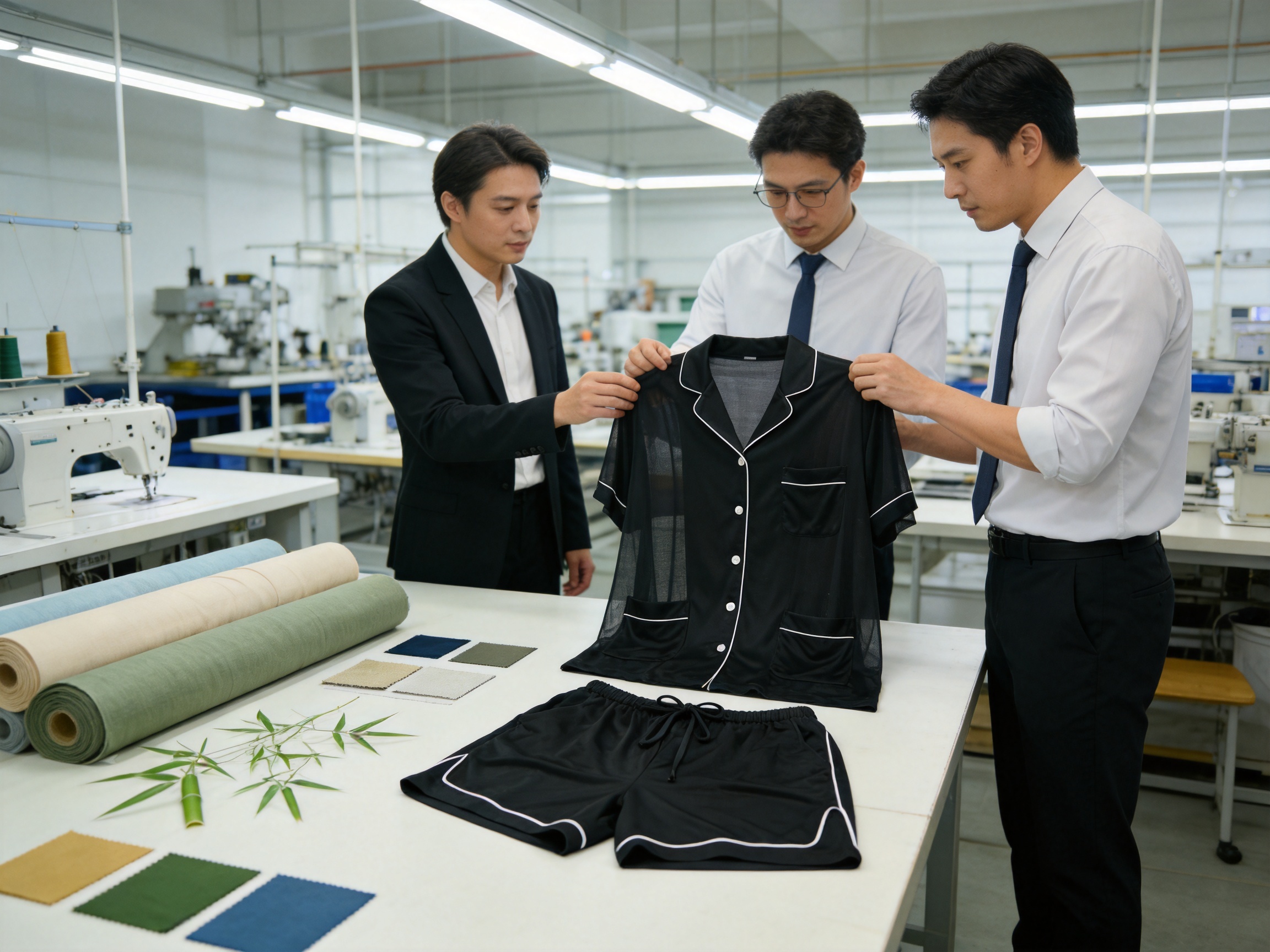
A high-quality product depends not only on its design but also on the manufacturer’s ability to control fabric sourcing, cutting, sewing, finishing, inspection, and shipment. Nantong Tianhong Textile Technology Co., Ltd. was established in 2001 in Nantong, Jiangsu Province, a major textile industry center in China. The company specializes in the research, manufacturing, and sales of underwear products.
Its experience in underwear production is relevant to the development of women’s pajamas because sleepwear requires careful attention to comfort, seam quality, fit, fabric behavior, and finishing details. A manufacturer familiar with intimate apparel can better understand the importance of soft construction and reliable production consistency.
The company provides OEM and ODM services for established labels and maintains partnerships with customers in Europe, North America, and China. This international business experience supports a more structured approach to product development, communication, quality expectations, and delivery coordination.
Research and development are particularly important for blended-fabric products. Bamboo viscose and recycled polyester may respond differently during cutting, sewing, washing, and finishing. Production teams must understand the fabric’s stretch, recovery, drape, shrinkage behavior, surface appearance, and response to heat and moisture.
A manufacturer with product research capabilities can help buyers assess the material combination before bulk production. Sample development can be used to review the hand feel, proportions, pocket placement, waistband construction, seam appearance, and overall fit. This reduces the risk of discovering significant problems only after production begins.
ODM support can also help brands refine the design beyond the existing product reference. Possible development directions may include neckline changes, sleeve variations, pant-leg proportions, contrast overlays, updated pocket shapes, new colorways, alternative drawstring treatments, and coordinated family collections. Any modification should be evaluated through samples and technical review.
Material traceability is increasingly important for brands that make environmental or ethical claims. The company focuses on sustainable development, environmentally friendly functional fabrics, and traceable supply chain management. These priorities can help buyers request more detailed information about material composition, sourcing, production processes, and supporting documentation.
For products using bamboo-based viscose and recycled polyester, documentation should be reviewed carefully. Buyers may request fiber content information, transaction records where applicable, certification documentation, test reports, and production batch records. Clear documentation supports accurate labeling and helps brands communicate the product’s attributes responsibly.
A traceable supply chain also improves operational control. It can help identify the source of fabrics and trims, monitor approved materials, maintain consistency between sampling and bulk production, and support corrective action if a quality issue appears.
Quality management for pajamas should address both measurable specifications and user experience. Measurements must be checked against approved size charts, while the fabric and sewing must be evaluated for comfort, appearance, and durability.
Important inspection points may include fabric shade, surface defects, holes, stains, uneven dyeing, seam puckering, skipped stitches, loose threads, pocket symmetry, waistband construction, drawstring security, label placement, and garment measurements. The inspection process should be aligned with the buyer’s approved sample and technical package.
The company’s product portfolio and certification framework includes standards such as FSC, OCS, OEKO-TEX 100, GOTS, WRAP, and BSCI, according to the provided company information. The applicability of any specific certification depends on the material, facility, product scope, transaction, and current documentation. Buyers should confirm the relevant certification status for the exact order rather than assuming that every product carries every standard.
Consistency is essential for private-label programs. A successful first sample is not enough if later production varies in color, measurements, fabric weight, or sewing quality. A mature manufacturer should use approved standards, production instructions, and inspection procedures to reduce variation across batches.
Consistency is especially important for customers ordering repeated seasonal collections. A brand may want the same pajama design in multiple colors or may reorder the product after several months. Maintaining reference samples, material specifications, color standards, and measurement tolerances can help preserve the identity of the collection.
The product is suitable for companies that want to launch a private-label women’s sleepwear collection without developing every element from the beginning. OEM service can support production according to a buyer’s existing design, brand requirements, packaging instructions, and approved materials. ODM service can provide a starting design that may be adapted to a specific market or customer profile.
Customization can cover many parts of the product program. Buyers may request brand labels, care labels, packaging, color selections, size ranges, print treatments, embroidery, fabric adjustments, and coordinated products. The feasibility of each request should be confirmed during technical development because changes may affect minimum quantities, lead time, cost, testing, and production complexity.
For retailers, the existing design features provide a useful base. The bamboo overlay can become a recognizable collection signature. The pockets and drawstring can remain standard across colorways, helping create a consistent product identity. Additional garments such as robes, camisoles, shorts, or men’s and children’s coordinating pieces may also be considered for a broader loungewear program.
Brand positioning should match the product’s actual strengths. A premium comfort position can focus on the smooth hand feel, relaxed fit, and breathable design. An environmentally conscious position can emphasize the use of bamboo viscose and recycled polyester while using accurate qualification language. A functional homewear position can highlight pockets, adjustability, and versatility.
Brands should avoid presenting the garment as a medical product or making absolute claims about health, allergy prevention, guaranteed cooling, or environmental impact. Responsible product communication is more persuasive when it is specific. Statements about bamboo-based viscose, recycled polyester, breathable construction, and adjustable comfort are clearer and easier for consumers to understand.
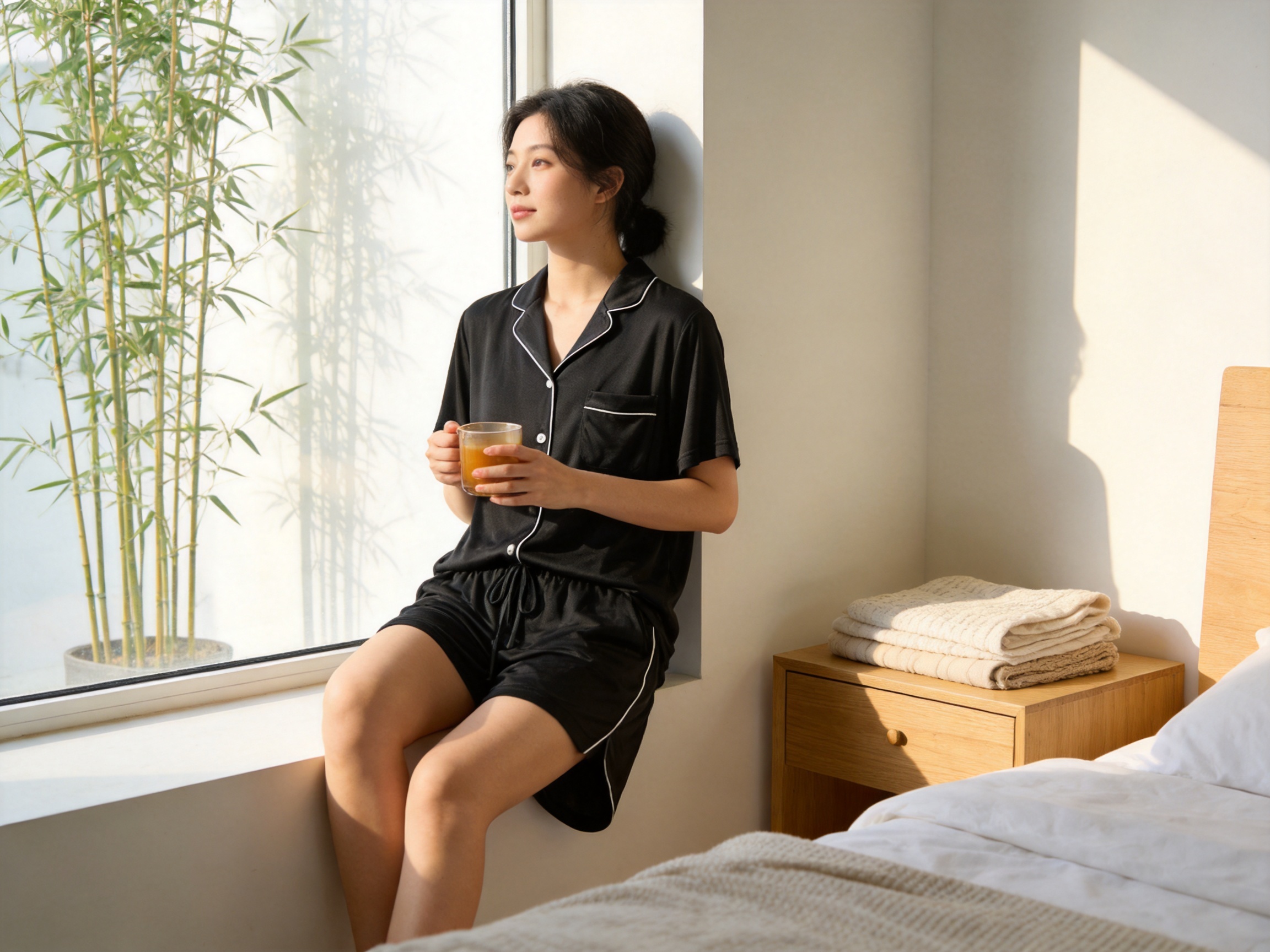
A strong retail story can begin with the consumer’s daily experience. The wearer wants to relax in a garment that feels soft, moves comfortably, and does not appear disposable after a few uses. The product responds with a two-piece design made from a bamboo-polyester blend, a breathable top overlay, practical side pockets, and a drawstring waist.
The second part of the story can explain the material choices. Bamboo viscose contributes a smooth and gentle feel, while recycled polyester supports durability and more responsible resource use. The message should explain that the fabric is engineered for a balance of comfort and performance rather than relying on a single benefit.
The final part of the story can introduce manufacturing credibility. Nantong Tianhong Textile Technology Co., Ltd. brings experience in underwear production, product research, OEM and ODM development, international customer service, and supply chain management. This gives buyers a production partner capable of supporting both the physical product and the commercial requirements behind it.
The product’s recycled polyester component can contribute to durability, but appropriate care remains important. Exact care instructions should be confirmed through fabric testing and the approved production specification. In general, brands should provide clear washing, drying, ironing, and storage instructions suitable for the final fabric construction.
Clear care information helps consumers preserve softness, color, shape, and fit. It also reduces the likelihood of avoidable damage caused by excessive heat, harsh chemicals, or unsuitable drying methods. The final label should reflect verified test results and the actual composition of the garment.
Durability is an important part of responsible apparel design. When a garment remains comfortable and wearable for longer, the consumer may use it more frequently and replace it less often. This is why the combination of soft bamboo viscose and reinforcing recycled polyester has commercial significance beyond the initial purchase.
Brands can support longevity by selecting appropriate thread, reinforcing stress points, checking pocket openings, and verifying the waistband and drawstring construction. These details are small but important because pajamas are washed repeatedly and may be worn for extended periods at a time.
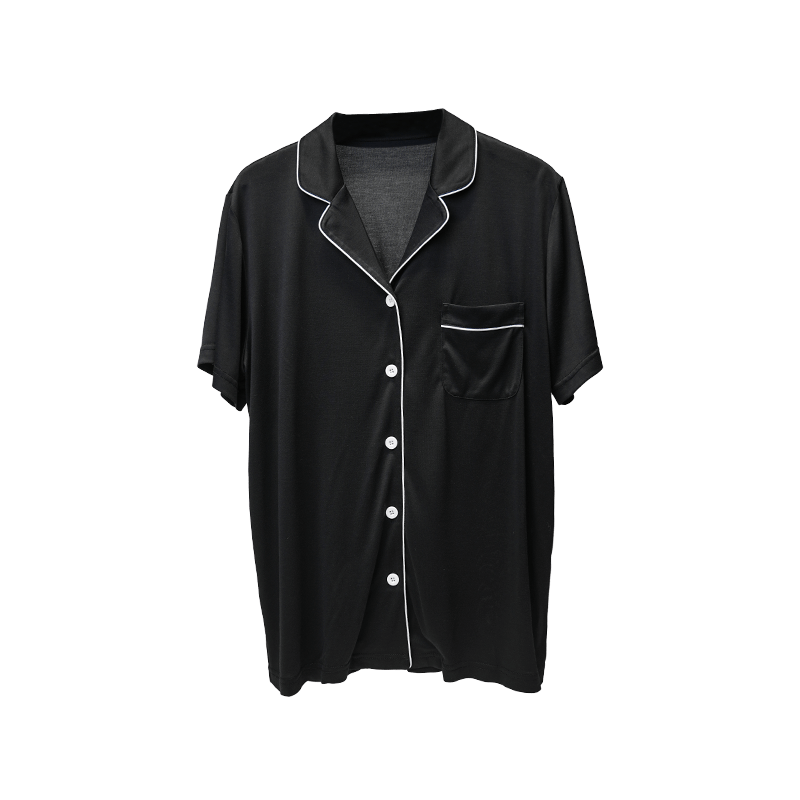
Polyester Bamboo Fabric Women's Pajamas
In a premium sleepwear collection, the product can be presented as a refined alternative to ordinary pajama sets. The smooth bamboo-based fabric, relaxed silhouette, and overlay detail can support an elevated visual identity. Premium packaging, carefully selected colors, and precise labeling can further strengthen this positioning.
For sustainable apparel programs, the key message is the use of bamboo-derived viscose and recycled polyester. Buyers should verify the relevant chain-of-custody or material documentation before making certified claims. Even without overstating the environmental benefits, the material combination gives the collection a credible responsible-design direction.
The pockets and relaxed fit make the garment suitable for homewear programs that extend beyond sleeping. Consumers increasingly seek clothing that feels comfortable indoors but remains presentable for daily routines. The set can serve this need when supported by suitable styling, colors, and fit options.
Women’s pajamas are suitable for holiday, birthday, bridal, wellness, and seasonal gift collections. Bamboo-polyester fabric can provide a premium material story, while the practical features make the product useful rather than purely decorative. Seasonal color development and packaging customization can help brands create limited editions.
Before bulk production, buyers should establish a complete technical package. This should include the approved fabric composition, fabric weight, color standards, measurement chart, tolerance range, construction details, label instructions, packaging requirements, and testing expectations.
Fit approval should be based on samples evaluated on appropriate size models or mannequins. The top and pants should be assessed while standing, sitting, walking, and lying down if possible. Attention should be given to arm movement, waistband comfort, pant length, pocket position, drawstring length, and the relationship between the top and bottom proportions.
The overlay should be reviewed for smooth attachment, clean seam finishing, and consistent appearance. Because it is a visible design feature, even minor puckering or uneven stitching can affect perceived quality. The pocket openings should be tested for accessibility and strength without making the side seams bulky.
Fabric testing may include composition verification, colorfastness, dimensional stability, pilling resistance, seam strength, abrasion resistance, and restricted-substance testing, depending on the destination market and buyer requirements. Testing should be performed through suitable laboratories or approved internal procedures.
Pre-production samples should be made using the actual bulk fabric and trims whenever possible. Substituting development materials can create misleading results because different fabric lots may vary in hand feel, shrinkage, shade, or sewing behavior. Approval should be based on a sample that represents the expected production standard.
Competitive pricing does not necessarily mean choosing the lowest-cost fabric or removing useful features. A better strategy is to create a product whose material story, comfort, and functionality justify its target price. The bamboo-polyester blend provides a differentiated basis for pricing, while the simple two-piece construction helps control unnecessary complexity.
Manufacturing efficiency can be improved through stable pattern development, standardized construction methods, efficient cutting layouts, and coordinated sourcing of fabrics and trims. A manufacturer with established underwear production experience can use existing technical knowledge to support these efficiencies while still accommodating brand-specific requirements.
For buyers, total cost should include more than the unit price. Sampling, testing, packaging, freight, inspection, compliance, defect risk, and reorder reliability all influence the final commercial result. A supplier that can support product development and quality control may help reduce hidden costs associated with communication errors and inconsistent production.
The words “bamboo” and “recycled” attract attention, but they should be used precisely. Product labels and marketing materials should identify the actual fiber composition and avoid implying that the garment is made from raw bamboo or that it is automatically biodegradable. Bamboo viscose is a regenerated cellulose fiber, and recycled polyester is a recycled synthetic fiber.
Brands should also distinguish between a product containing recycled material and a product that has achieved a specific recycled-content certification. If a buyer intends to use a certification mark or make a percentage claim, the necessary documentation should be confirmed for the exact material and order.
Responsible communication can still be appealing. A brand may explain that the pajama set combines a bamboo-derived regenerated fiber with recycled polyester to balance softness, breathability, durability, and resource-conscious design. This approach is informative, credible, and less vulnerable to accusations of greenwashing.
The company’s stated focus on sustainable development, environmentally friendly functional fabrics, and traceable supply chain management provides a useful foundation for these conversations. Buyers can work with the manufacturer to determine which claims are supported by current records and which should remain general product descriptions.
Quality assurance should begin before fabric enters production. The supplier and buyer should confirm fabric composition, shade, weight, width, construction, and test status. Any approved fabric standard should be recorded so that bulk material can be compared against the development sample.
During cutting, panels should be checked for alignment, shade variation, and visible defects. During sewing, operators and inspectors should pay attention to seam allowance, stitch density, topstitching, pocket attachment, overlay connection, and drawstring insertion. Inline inspection can identify problems before they spread across a large quantity.
After sewing, garments should be checked for loose threads, stains, measurement variation, missing components, and appearance. Final inspection should verify packing quantities, size ratios, labeling, carton marks, and buyer-specific requirements. A systematic process helps protect both the manufacturer and the brand.
Quality is not limited to appearance. Functional checks should confirm that the waistband adjusts smoothly, the pockets are securely attached, the garment remains comfortable during movement, and the fabric retains an acceptable appearance after appropriate laundering tests.
China remains one of the world’s important textile and apparel manufacturing centers because its supply chain includes fabric mills, trim suppliers, dyeing facilities, testing services, garment factories, logistics providers, and technical professionals. Nantong’s location within Jiangsu’s textile industry network provides access to this broader manufacturing ecosystem.
For overseas buyers, an experienced supplier can simplify communication between material development and garment production. This is especially useful for fabrics with specialized content, such as bamboo viscose and recycled polyester blends. The buyer can discuss product goals with a team familiar with fabric behavior, apparel construction, and export-oriented production.
International experience can also support more effective coordination on documentation, packaging, inspection, and shipping. Buyers still need to provide clear instructions and conduct appropriate due diligence, but an established supplier relationship can make each development cycle more organized.
The company’s history, beginning in 2001, indicates long-term participation in the underwear industry. Its stated OEM and ODM capabilities are relevant for brands that need either faithful production of an existing design or collaborative development of a new collection.
It is a women’s two-piece pajama and loungewear set consisting of a top and matching pants. The design is intended for sleep, relaxation, and comfortable home use.
The product uses viscose derived from organically grown bamboo together with polyester fabric, including recycled polyester. The exact percentages should be confirmed in the final technical specification and product labeling.
The bamboo-based component is selected for a smooth, soft hand feel, while the bamboo overlay on the top supports a breathable and comfortable wearing experience. The adjustable drawstring waistband also allows the wearer to personalize the fit.
Yes. The pants have pockets on both sides, providing convenient storage for small personal items and increasing the garment’s usefulness as everyday loungewear.
Recycled polyester can contribute to durability and fabric stability while using recovered polyester resources. In this product, it complements the softness of the bamboo viscose and helps create a balanced material construction.
No. Although it is designed as sleepwear, the relaxed fit, breathable construction, side pockets, and adjustable waistband also make it suitable for lounging and everyday homewear.
OEM and ODM development can support customization of colors, labels, packaging, sizing, styling details, and other product requirements. Each request should be reviewed for feasibility, minimum quantities, testing, and lead-time implications.
That depends on the exact materials, production facilities, transaction records, and certification documents associated with the order. Buyers should verify the applicable documentation before using certification marks or making specific percentage-based claims.
Buyers should confirm the fabric composition, fabric weight, color standards, size chart, measurement tolerances, care instructions, packaging, labeling, testing requirements, inspection procedures, minimum order quantity, production schedule, and shipping terms.
It combines bamboo-derived viscose with recycled polyester, includes a breathable bamboo overlay, and adds two side pockets and an adjustable drawstring waistband. These features provide a stronger balance of softness, breathability, durability, and practical use.
The recycled polyester component is intended to contribute additional durability and stability. This gives the product a more balanced construction for repeated use, although the final performance depends on fabric specifications, garment construction, and care.
The product is associated with Nantong Tianhong Textile Technology Co., Ltd., a textile and underwear manufacturer based in Nantong, Jiangsu Province, China. The company provides research, manufacturing, sales, OEM, and ODM services.
The pajama set can be considered for women’s sleepwear, premium loungewear, sustainable apparel, homewear, gift programs, private-label collections, and international retail channels.
A suitable description can focus on soft bamboo-derived viscose, recycled polyester, breathable construction, practical side pockets, and an adjustable waistband. Marketing language should remain accurate and avoid absolute claims that cannot be verified through testing or documentation.
Private-label brands need products that are attractive to consumers but also manageable within a larger commercial system. The Polyester Bamboo Fabric Women’s Pajamas offer a recognizable material story, a clear functional design, and multiple customization opportunities. These qualities can help a brand create a differentiated collection without introducing excessive design complexity.
The product is also suitable for brands at different stages of development. An emerging label may use the design as a foundation for a first sleepwear launch, while an established retailer may adapt it into a seasonal color range or a broader bamboo-fabric collection. The same core product can be positioned through different packaging, styling, and communication strategies.
From the manufacturing side, the company’s experience in underwear, focus on sustainable materials, international customer relationships, and OEM/ODM capabilities provide useful support for product development. Buyers can collaborate on details while benefiting from an established production framework.
The strongest competitive advantage is the product’s balance. It does not depend on a single selling point. Softness appeals to comfort-focused consumers, breathability supports sleepwear performance, recycled polyester contributes durability, pockets improve everyday function, and the drawstring waistband enhances fit flexibility. Together, these features create a more complete value proposition.
The Polyester Bamboo Fabric Women’s Pajamas are designed for consumers who want comfortable, breathable, practical, and more responsible loungewear. By combining viscose derived from organically grown bamboo with recycled polyester, the product balances a soft hand feel with durability and fabric stability. The bamboo overlay adds a distinctive breathable detail, while the side pockets and adjustable drawstring waistband make the garment more useful in everyday life.
Compared with conventional sleepwear, the set offers a broader combination of comfort and functionality. Compared with single-fiber alternatives, it provides a balanced material approach. Compared with basic pajama designs, it offers stronger differentiation for retail and private-label programs.
Nantong Tianhong Textile Technology Co., Ltd. supports the product with experience in underwear research, manufacturing, sales, OEM and ODM development, sustainable fabric initiatives, and traceable supply chain management. Its location in Nantong, an important Chinese textile center, further supports access to industry resources and production expertise.
For brands seeking premium breathable underwear, bamboo-based loungewear, or sustainable women’s sleepwear, this product provides a practical platform for development. With accurate material communication, careful quality control, appropriate testing, and thoughtful customization, it can become a durable and commercially appealing part of a modern apparel collection.
1. Company product information for THDY-012, Polyester Bamboo Fabric Women’s Pajamas.
2. Company profile and manufacturing information for Nantong Tianhong Textile Technology Co., Ltd.
3. General textile industry guidance on regenerated cellulose fibers and bamboo-derived viscose.
4. General apparel quality-control practices for fabric inspection, garment measurement, seam evaluation, and final inspection.
5. General sustainability guidance concerning recycled polyester, material traceability, certification scope, and responsible environmental marketing.
6. General product-development practices for OEM and ODM sleepwear and underwear manufacturing.

Copyright © Nantong Tianhong Textile Technology Co., Ltd. All Rights Reserved.
 Room 806, Building D, Jingyang Plaza, Chongchuan District, Nantong City, Jiangsu Province,china


 English
 Español
 русский
 عربى
عربى